


Electrical Troubleshooting in Allen: Find the Real Problem, Not Just the Symptom
The fault traced to where it starts, with a clear written summary before any repair begins.
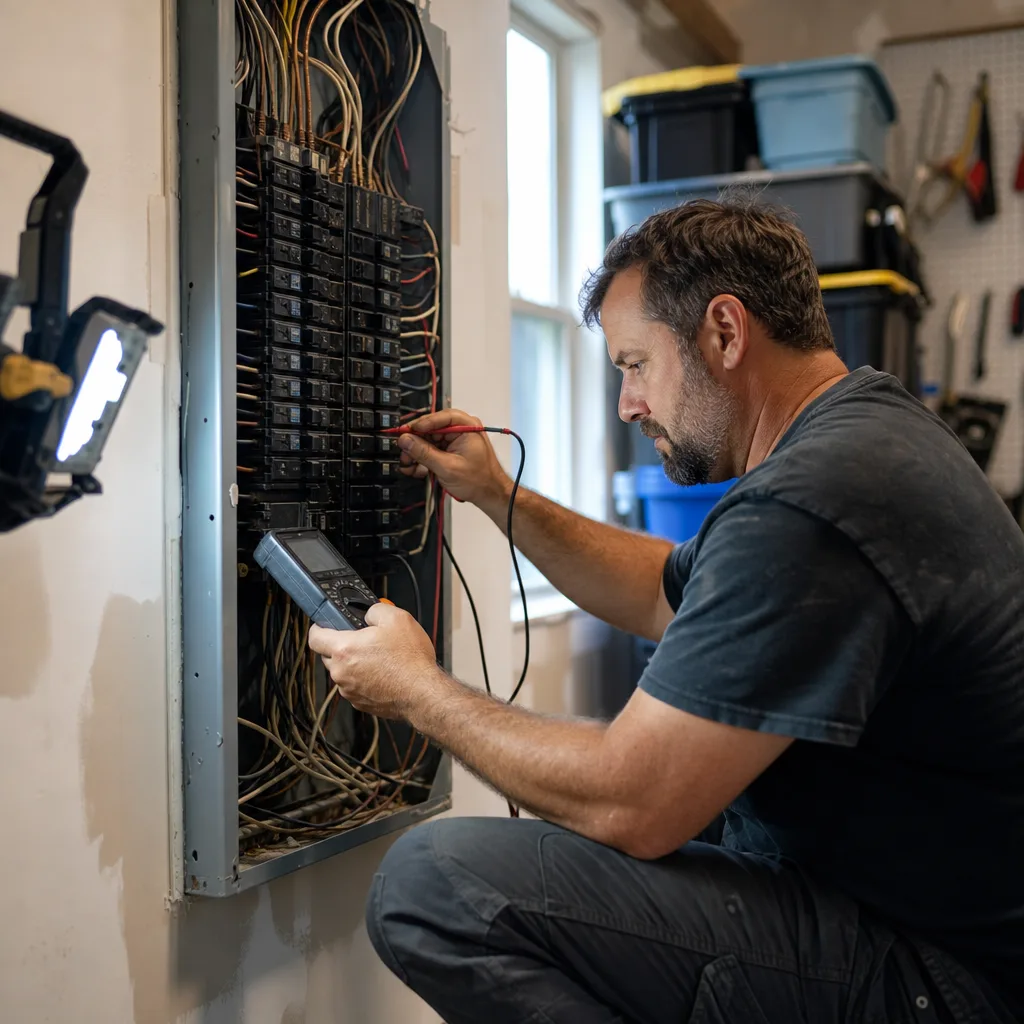
What’s Covered on This Page
- What Electrical Troubleshooting Finds
- Signs You Need an Electrician Now, Not Later
- When You Don’t Need to Call an Electrician
- What Happens During and After the Visit
- How Diagnostic Pricing Works and What Drives It
- Can a breaker that trips at night but works fine during the day still be a real problem?
- Why does my breaker trip only when certain appliances run together?
- Does a home warranty or builder coverage affect whether I should call for troubleshooting?
What Electrical Troubleshooting Finds
A breaker that trips isn’t broken. It’s doing its job. It shuts off power because something on that circuit asked for more than it should, or because current went somewhere it shouldn’t. If you just flip it back on, or swap the breaker for a new one, you haven’t answered the real question, which is why it tripped. Good troubleshooting answers that question.
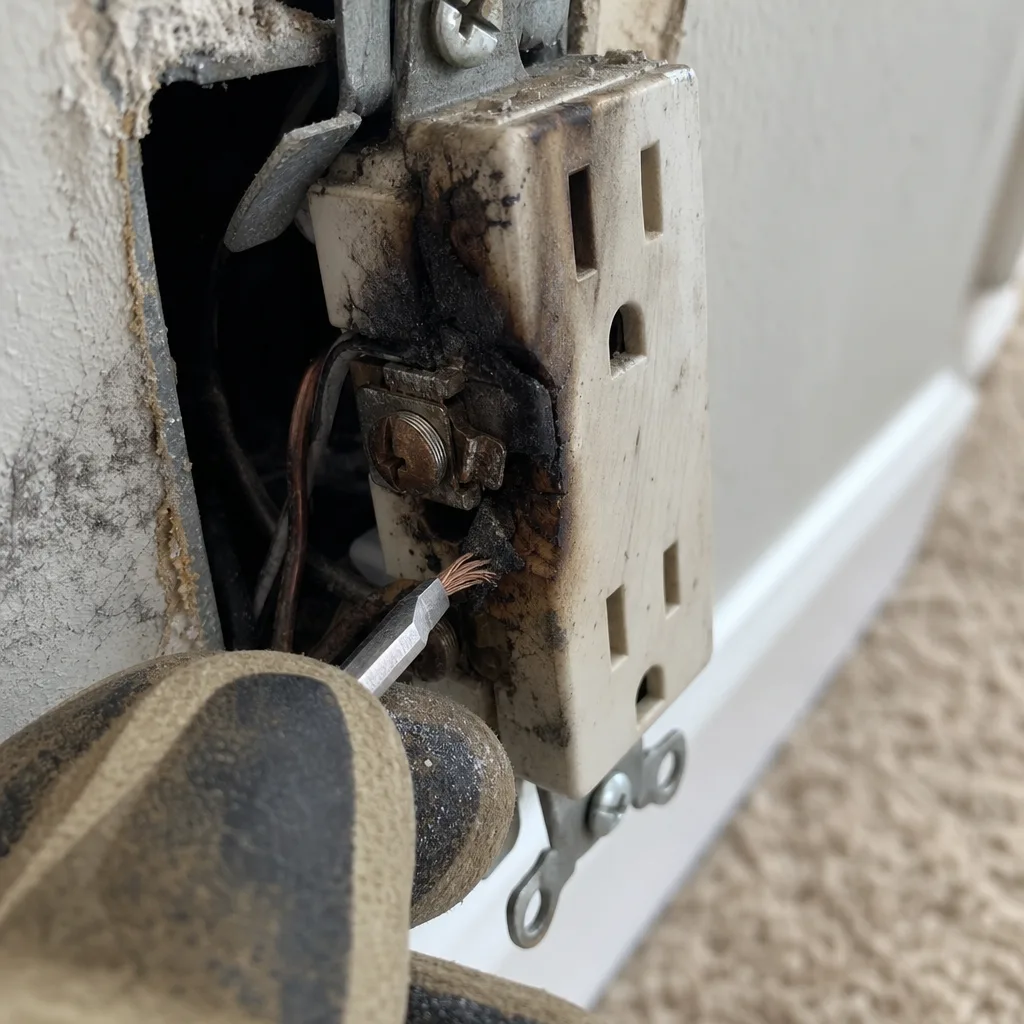
Here’s what usually sits behind the symptoms people call about:
- A dead outlet. Sometimes it’s a tripped GFCI outlet in another room, like the garage, a bathroom, or outside, that feeds this one. Sometimes a wire has worked loose from the back of the outlet, or the outlet itself has worn out.
- A breaker that keeps tripping. It could be too much load on one circuit, like a space heater and a hair dryer running at the same time. It could also be a short, a ground fault, or a breaker that’s worn and tripping too easily.
- Lights that flicker, or power that comes and goes. This often points to a loose connection at a fixture, a switch, a wire splice, or inside the panel. These faults are the hardest to pin down because they don’t always show up while someone’s looking.
- A warm switch plate or a buzzing outlet. Heat and buzzing usually mean a connection that’s loose or carrying more than it should.
- Lights that dim in one part of the house while they brighten in another. This can point to a problem with the neutral wire, either in your home’s wiring or on the utility side.
That’s why guessing gets expensive. Let’s say an outlet in your living room goes dead. You buy a new one and put it in, and it’s still dead. Now you’ve spent money and an afternoon, and the real cause, maybe a loose splice in a box two outlets upstream, is still there. Tracing the circuit finds the spot that failed, so the repair goes where it belongs.
North Texas homes add their own wrinkles. Wiring and junction boxes in the attic go through big swings from summer heat to winter cold, and that kind of stress can loosen connections over time. Storm season brings power surges that can damage outlets, breakers, and the electronics plugged into them. A good diagnosis looks at the whole path the power takes, not just the outlet you’re pointing at.
When our team finishes troubleshooting, you get a written summary of what we found and what we recommend. It tells you what failed, where it is, and what your next steps are. That way you’re making the call with real facts in hand. Any repairs are a separate decision, and they’re not part of the diagnosis itself. You’ll know the full picture before anything else happens.
Signs You Need an Electrician Now, Not Later
Most electrical problems can wait a day or two for a scheduled visit. A few can’t. The simple way to tell the difference is to ask yourself one question: is there heat, smoke, or sparking? If the answer is yes, it’s not a “later” problem.
Call an electrician right away if you notice any of these:
- A burning smell, or a smell like hot plastic, near an outlet, a switch, or your panel.
- Scorch marks or brown or black stains on an outlet cover or switch plate.
- Sparks when you plug something in or flip a switch, beyond a tiny blue flash.
- An outlet, a switch, or the panel cover that feels hot to the touch.
- A breaker that trips again the moment you reset it.
- A tingle or a mild shock when you touch an appliance, a faucet, or a light switch.
- Lights all over the house that suddenly go very bright or very dim at the same time.
- Water near your panel or outlets after a storm, a roof leak, or a burst pipe.
Until help gets there, stop using that circuit. If you can reach the panel safely and it’s dry, switch off the breaker for that area and leave it off. Don’t keep resetting a breaker that keeps tripping. It’s telling you something’s wrong, and forcing it back on just puts more stress on the wiring. If you ever see smoke or flames, get everyone out of the house and call 911 first.
Now for the honest part. Plenty of electrical hiccups don’t need a pro today, and some don’t need one at all:
- A breaker that tripped once while you ran a space heater and a hair dryer on the same circuit. Unplug one, reset it, and move on.
- A dead outlet that comes back after you reset a GFCI outlet elsewhere in the house.
- One lamp that flickers. Try a new bulb, and make sure it’s screwed in tight, before you call anyone.
- A light switch that feels a little loose but isn’t warm and works fine.
Then there’s the middle ground. A breaker that trips every few days, lights that flicker now and then, or an outlet that works one day and not the next aren’t emergencies. But they also won’t fix themselves. These on-and-off faults usually point to a connection that’s slowly working loose, and loose connections tend to get worse with time, not better. It makes sense to book a visit this week instead of waiting for the problem to grow into one of the urgent signs above.
Storm season in North Texas deserves a special mention. If a close lightning strike or a power surge leaves outlets dead, breakers tripped, or electronics fried, it’s worth having the circuits checked, even if most things seem to work again. Surge damage isn’t always easy to see from the outside.
If you’re in Allen and something on that first list sounds familiar, you don’t have to sit and wonder until Monday. Same-day service is available, and there’s no extra charge for nights or weekends. Our licensed technicians will find the cause and give you the written summary we talked about above, so you know exactly where things stand before you decide on any repair.
When You Don’t Need to Call an Electrician
Not every electrical problem needs a diagnosis. Some problems aren’t in your wiring at all. Others have an answer you can find in five minutes. Here’s when you can save your money.
The whole house goes dark, and so does the street. Look out the window or check with a neighbor. If their lights are out too, the problem is on the utility side. Report it to Oncor, the company that runs the power lines in Allen, and wait it out. An electrician can’t fix a grid outage. It’s a different story if only your house is dark and your neighbors still have power. Then the problem could be your main breaker or the line coming into your home, and that’s worth a call.
The same appliance causes trouble everywhere you plug it in. Say a space heater, an old vacuum, or a window unit trips a breaker or a GFCI outlet in every room. That points to the appliance, not your wiring. Here’s a quick test. Plug a lamp into the outlet that “failed.” If the lamp works fine, the outlet is probably okay. Repair or replace the appliance instead.
A smoke detector won’t stop chirping. That steady chirp every minute or so is almost always a low battery. Hardwired smoke detectors have a backup battery too, so swap that out first. If the chirping keeps going after you change the battery, check the date on the back of the unit. Smoke detectors wear out with age.
New LED bulbs flicker or buzz on a dimmer. Many older dimmer switches were made for old-style bulbs and don’t get along with LEDs. You usually don’t need troubleshooting for this. Use bulbs marked “dimmable,” or put in a dimmer made for LEDs, and the flicker goes away.
You already know what you want. Maybe you need an outlet where there isn’t one, a ceiling fan in place of an old light, or a dedicated circuit for a new freezer in the garage. None of that is troubleshooting, because nothing is broken. You’re asking for installation. Book that job directly so you’re not paying to diagnose a problem you don’t have.
Your home is new and still under the builder’s coverage. Allen has plenty of newer subdivisions. If your house was built recently and an outlet or circuit acts up, check your builder’s paperwork first. Wiring defects in a new home are often the builder’s job to fix, and you shouldn’t have to pay for them out of pocket.
- Power out on the whole street: report it to Oncor.
- One appliance trips things everywhere: fix or replace the appliance.
- A chirping smoke detector: change the battery, then check the unit’s age.
- LEDs flickering on a dimmer: use dimmable bulbs or an LED-rated dimmer.
- A new outlet, fan, or circuit: book installation, not diagnosis.
- A newer home with a wiring problem: call your builder first.
Did you try the simple fix and the problem came back? Or does anything on the urgent list above sound familiar? Then you’ve ruled out the easy answers, and the next step is tracing the fault to its source.
Not sure what your Electrical troubleshooting project needs? Ask us.
Call Today, Get Service Today. Xtreme Air Services — Allen is ready to help.
What Happens During and After the Visit
A troubleshooting visit has one job: find the cause of your electrical problem. That means you should know what you’re paying for before anyone opens a panel, and you should still be in charge of what happens after.
You can help the visit go faster. A few minutes of prep before the technician arrives saves time, and with tricky faults it can save money too.
- Write down what you’ve noticed. Note which outlets or lights act up, what was running when the breaker tripped, and roughly what time of day it happens.
- Note what you’ve already tried. If you reset a GFCI outlet, changed a bulb, or flipped a breaker, say so.
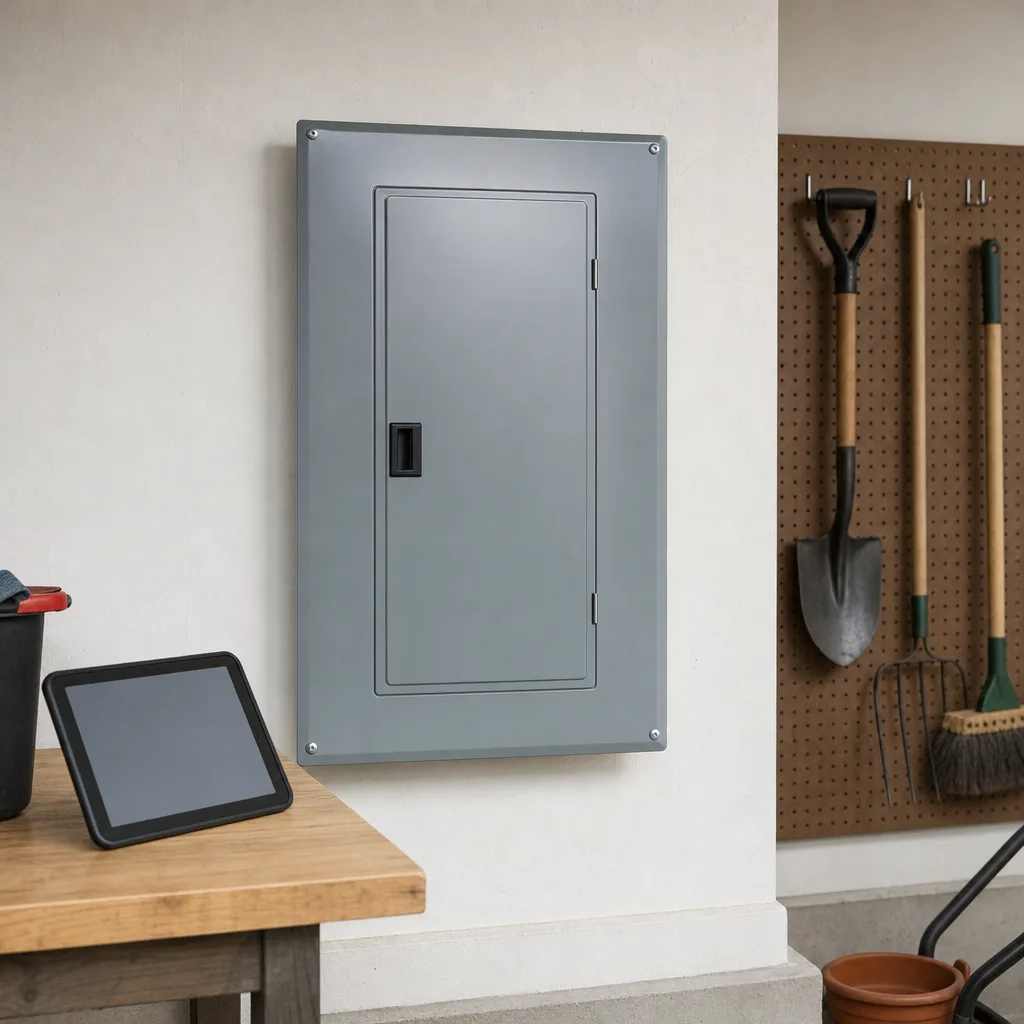
- Clear a path to your electrical panel. In many Allen homes it’s in the garage, often behind storage bins or a workbench.
- Make the trouble spots easy to reach. If the problem seems tied to the attic, keep the access hatch clear.
- Leave a breaker off if you switched it off for safety. Tell the technician which one it was.
On-and-off faults are the hardest kind to catch, because they don’t always act up while someone’s watching. Your notes give the technician a place to start, so less time goes to hunting.
Here’s what it costs. The most common troubleshooting job is tracking down a dead outlet, a tripping breaker, or a fault that comes and goes. That job runs $100-$200. Troubleshooting in general ranges from $100-$350. There’s also a $26-$99 service-call fee, and it’s credited toward the repair if you go ahead with Xtreme Air Services.
Four things move the price up or down:
- How complex the fault is.
- The size of your home and how many circuits it has.
- How easy it is to reach the problem.
- Whether the job needs special test equipment.
A breaker that trips every time the microwave runs is usually a simpler job. A fault that comes and goes somewhere in a two-story house with wiring in a hot attic usually takes more work to trace.
The visit covers the on-site diagnosis and the written summary we described earlier. It doesn’t cover any repairs. That line matters. You aren’t signing up for a repair just because you let someone find the problem.
After the visit, you have three choices. If the fix is something you’re comfortable with, like replacing a worn-out outlet, you can handle it yourself. You can also get a second opinion with the summary in hand. Or you can have our team do the repair, and you’ll see the price before any work starts. If you go with us, the service-call fee is credited toward that repair.
Most repairs found during troubleshooting are smaller jobs. For a bigger one, like a panel replacement or rewiring part of the house, financing is available. It isn’t usually offered for the troubleshooting visit itself.
Our licensed, background-checked technicians work out of our office at 1333 W McDermott Dr in Allen. Same-day service is available, and there’s no extra charge for nights or weekends. If a breaker won’t stay on or an outlet has gone quiet, you’ll get real answers and an upfront price before you decide anything.
Call 469-299-8996
Watch Our Video
See How We Handle Electrical troubleshooting in Allen
Xtreme Air Services — Allen
How Diagnostic Pricing Works and What Drives It
With troubleshooting, the finding is the work. Swapping a bad outlet takes minutes. Figuring out which outlet, splice, or breaker failed is the part that takes skill, testing, and time. That’s why electricians charge for diagnosis instead of giving it away.
Across the trade, you’ll usually run into one of three pricing setups.
- Hourly billing. You pay for the time it takes, plus parts. This can be fair for a quick find. On a fault that comes and goes, though, the clock keeps running while the electrician hunts, and you won’t know the total until the end.
- A flat diagnostic fee. You know the price of the diagnosis before anyone starts, no matter how long the tracing takes. That puts the risk of a slow find on the contractor, not on you.
- A “free” estimate. This works well when the job is already clear, like putting in a ceiling fan. For a fault nobody has found yet, a free visit usually means the cost of the diagnosis shows up somewhere else, often in the repair price.
You’ll often see a service-call fee too. It covers the drive and the first look. Some companies keep it no matter what happens next. Others credit it toward the repair, which is how ours works, as we covered above.
Why can’t anyone give you one exact number over the phone? Because the same symptom can have very different causes. A dead bedroom outlet might be a tripped GFCI two rooms away. It might also be a loose splice behind a wall in a two-story home. A fair answer on the phone is a range, and the real price comes once the technician sees your setup.
Before you hire anyone in Allen, ask these questions. Any contractor you can trust will answer them without dodging.
- Is the diagnosis a flat price or billed by the hour? If it’s hourly, is there a cap?
- Is the service-call fee credited toward the repair if I go ahead?
- Will I get the findings in writing, or just a verbal answer?
- Will I see and approve the repair price before any work starts?
- Do you charge more for nights or weekends?
- Is the electrician licensed in Texas? Electricians here are licensed through the Texas Department of Licensing and Regulation (TDLR), and you can ask for the license number.
Watch for a few warning signs. One is a diagnosis that’s “free” but comes with a big repair push. Another is hourly billing with no cap on a fault that might take a while to catch. A third is a price that changes after the work is already done. Paying a fair, known fee to find the real cause almost always costs less than paying twice for the wrong fix.
Here’s how we handle it. You get upfront flat-rate pricing, and you approve it before work starts. Once you know what you’re paying for and what you’re not, you can make the call on the repair with no surprises.
Frequently Asked Questions
Common questions about Electrical troubleshooting
Can a breaker that trips at night but works fine during the day still be a real problem?
Yes, an on-and-off breaker trip is still worth checking even if it seems to fix itself. These intermittent faults usually come from a connection that’s slowly working loose, often from the heat swings common in Allen attics. They tend to get worse over time, so a short visit now can catch it before it becomes an urgent issue.
Why does my breaker trip only when certain appliances run together?
This usually means too much load is being pulled on one circuit at the same time. Running a space heater and a hair dryer together is a common example that overloads a single circuit. If it only happens with that one combination, it’s often a simple fix like moving one appliance to a different outlet rather than a wiring problem.
Does a home warranty or builder coverage affect whether I should call for troubleshooting?
Yes, if your home is newer, check your builder’s paperwork before paying for a diagnostic visit. Allen has many newer subdivisions, and wiring defects in a recently built home are often the builder’s responsibility to fix at no cost to you.
Ready to Get Started?
Call (469) 299-8996 Today, Get Service Today.