


EV Charger Installation in Allen: Is Your Panel Ready?
Level 2 home chargers wired on their own circuit, with your panel checked first so the charger runs at full speed.
What’s Covered on This Page
- Panel Capacity Decides Your EV Charger Installation Cost
- Why a Licensed Electrician Is Required, Not Optional
- When You Don’t Need a Full Dedicated Circuit
- What Happens During a Home Charger Installation
- Questions to Ask Before You Hire an Electrician
- How long does an EV charger installation take?
- Can I install an EV charger myself to save money?
- Will installing an EV charger overload my home’s electrical system?
- Does my homeowner’s insurance care about EV charger installation?
Panel Capacity Decides Your EV Charger Installation Cost
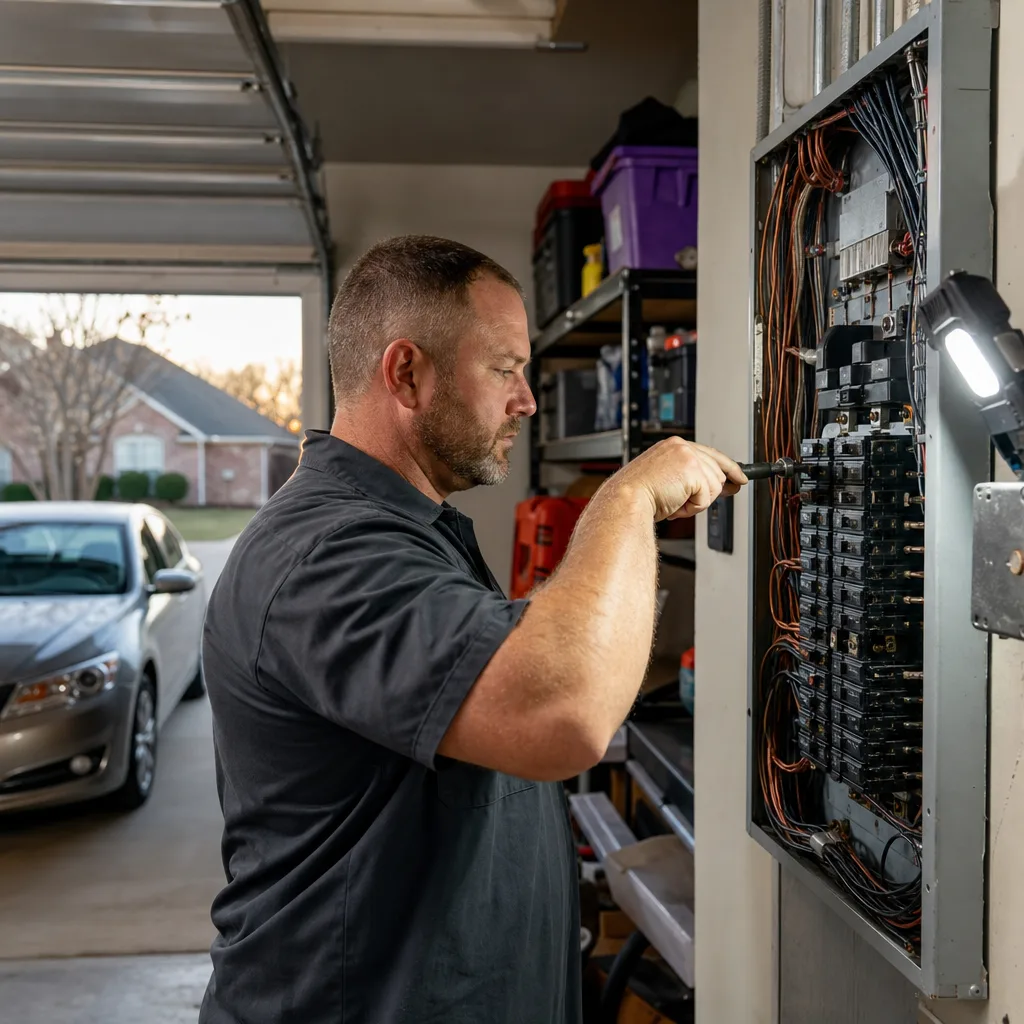
You’ve probably seen EV charger quotes all over the map. That’s because the charger is the easy part. The real question is whether your panel can feed one more big load without strain. A Level 2 charger pulls steady power for hours at a time. That’s a lot to ask of a panel that’s already running your AC, water heater, dryer, and oven.
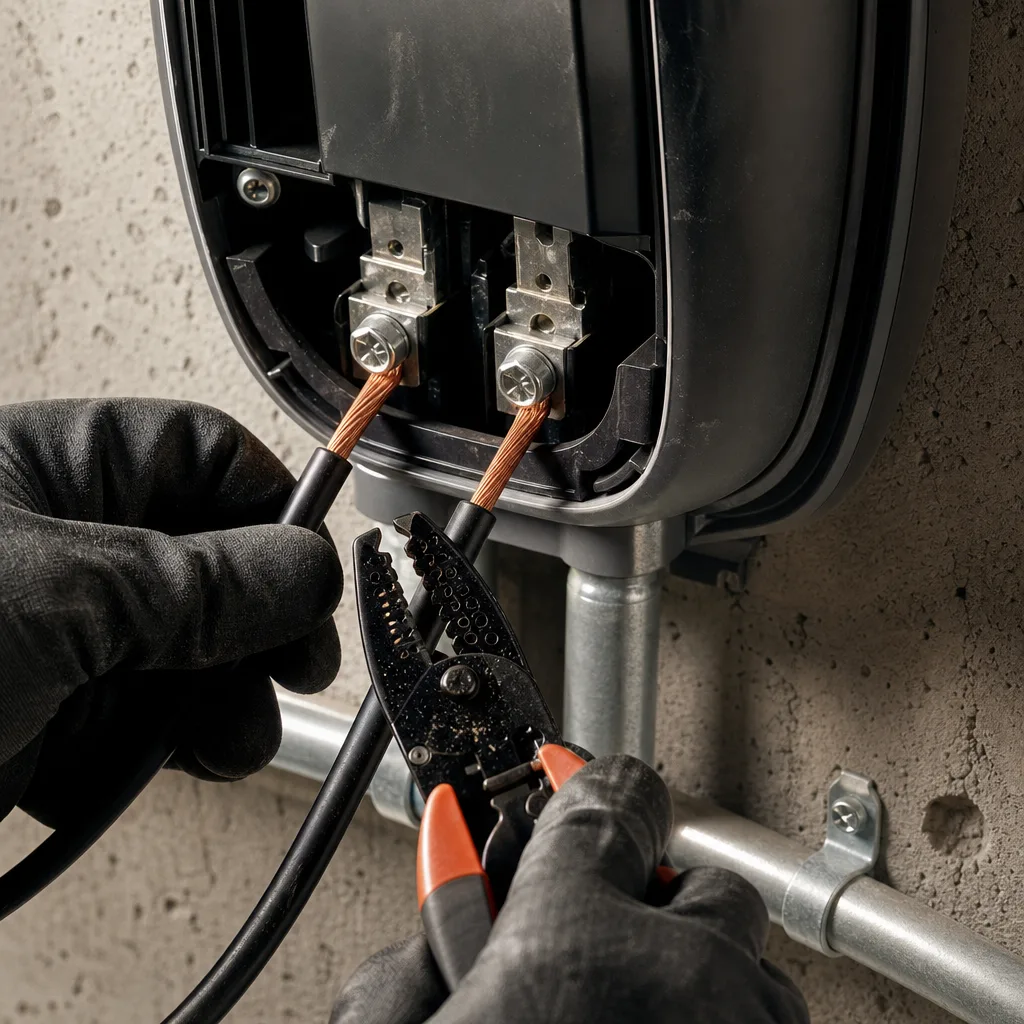
Here’s how our pricing breaks down. EV charger work typically runs $500 to $2,500. Our most common job is installing a Level 2 home charger on a dedicated circuit from the panel, mounted, connected, and tested, for $900 to $1,700. That price includes the dedicated circuit, professional installation, mounting, and startup and testing. It doesn’t include the charger if you’re not supplying one, panel upgrades, trenching, code corrections, or permits unless we state them in your quote.
So what pushes a job up or down? These are the things we look at:
- Panel capacity: whether there’s room for a new double breaker and enough spare power for a long, steady load.
- Distance from the panel: a garage that shares a wall with the panel needs far less wire than a driveway spot on the other side of the house.
- Charger amperage: a higher-amp charger needs a bigger breaker and heavier wire, since code sizes a charging circuit above what the charger draws.
- Wall and conduit routing: an open garage wall is quick, while finished drywall, brick, or an outdoor run takes more time and material.
- Code upgrades and permits: older wiring or missing safety pieces may need to be brought up to current code first.
You can get a rough feel for your panel yourself. Open the door and look at the main breaker at the top. It’s usually marked 100 or 200. Then count the open slots. A 200-amp panel with empty spaces usually leaves you in good shape. A 100-amp panel that’s packed full, or one where breakers already trip when the AC kicks on in July, is a sign you may need more capacity.
A tight panel doesn’t always mean a full upgrade. Sometimes a lower-amp charger still covers your daily driving just fine overnight. In other cases a subpanel or an electrical panel upgrade is the right call, and we’ll price that separately so you can see exactly what you’re paying for.
You’ll get upfront pricing before any work starts, with no surprises. Our $26 to $99 service-call fee is credited toward the job if you move forward with Xtreme Air Services. If a panel upgrade turns a simple install into a bigger project, flexible financing is available on qualifying installations and larger jobs, on approved credit.
Why a Licensed Electrician Is Required, Not Optional
A Level 2 charger isn’t like hanging a ceiling fan. It runs on 240 volts and pulls heavy power for hours at a time, often all night while you sleep. That steady load is exactly what exposes a loose connection, an undersized wire, or the wrong breaker. A licensed electrician knows how to build a circuit that handles it safely for years.
In Texas, electrical work has to be done by electricians licensed through the Texas Department of Licensing and Regulation. A new 240-volt circuit for an EV charger in Allen also needs a permit and an inspection. That isn’t red tape for its own sake. The inspector is a second set of eyes checking the work before you start charging your car in the garage every night.
Here’s what a licensed electrician gets right that a shortcut often misses:
- Wire and breaker sizing. Code sizes a charging circuit above what the charger draws, which was covered above. Getting this wrong means a wire that runs hot night after night.
- Tight, proper connections. A terminal that’s even a little loose can heat up under a long load. That’s how scorch marks and melted outlets happen.
- The right protection. Many charging setups need specific breaker or ground-fault protection depending on the charger and where it’s mounted, inside the garage or outdoors.
- Plug-in vs. hardwired. If you go with a plug-in charger, the outlet has to be rated for heavy, constant use. A cheap outlet from the hardware store isn’t built for that.
- Permit and inspection. A licensed contractor pulls the permit and handles the inspection, so the work is on record.
North Texas heat makes all of this matter more. An attached garage in Allen can get very hot on a July afternoon, and heat is hard on wiring and breakers that are already working near their limit. A circuit that’s sized and connected right has room to spare. One that’s barely getting by has none.
There’s also your home itself to think about. If you ever sell, a buyer’s inspector may ask whether the charger circuit was permitted. If something goes wrong, unpermitted electrical work can raise hard questions with your insurance company. A permitted, inspected install keeps you out of that spot.
Now for the honest part. You don’t always need an electrician. If you drive a short commute and you’re fine with Level 1 charging, you can plug the cord that came with your car into a regular 120-volt outlet. It’s slow, but for some folks it covers daily driving just fine. If that outlet is old, loose, warm to the touch, or shares a circuit with a freezer or shop tools, have it checked before you rely on it every night.
Once you want faster Level 2 charging, though, it’s licensed work. Xtreme Air Services is a fully licensed and insured electrical contractor, and our licensed, background-checked technicians handle EV charger installs as part of our electrical work. You get the circuit done right the first time, permitted and inspected, with nothing left for you to worry about later.
When You Don’t Need a Full Dedicated Circuit
Not every EV owner needs a brand-new circuit run from the panel. Sometimes you can skip it, and sometimes it’s smarter to wait. Here are the cases where we’d tell you to hold off, even though it means less work for us.
- Your car has a small battery. Many plug-in hybrids only go a few dozen miles on electric power. The regular-outlet charging we covered above can often refill that overnight, so a new circuit would mostly buy you speed you’d never use.
- You already have a 240-volt outlet in the garage. Some homes have a dryer outlet out there, or one left over from a welder, air compressor, or shop tool. If it’s on its own breaker and nothing else shares it, it may be able to feed a plug-in charger. The catch is that the wire, breaker, and outlet all have to handle hours of steady charging, and plenty of older outlets weren’t built for that. Checking an existing outlet is a much smaller job than running a new circuit.
- You charge somewhere else most days. If your workplace has chargers, or there’s a public station on your regular route, home charging may only need to top you off. A slower setup can be plenty.
- You’re renting or planning to move soon. A permanent circuit stays with the house. If you’re not staying long, a cord you can unplug and take with you might make more sense for now.
- A bigger electrical project is coming. If you’re already planning a panel upgrade, a standby generator, a garage remodel, or a new workshop, wait and plan the charger at the same time. That way the wire gets run once, the panel gets sized for everything together, and you’re not paying for two separate jobs.
There’s also a middle ground. If your panel is tight, a lower-amp charger, like the option we mentioned in the cost section, can still fill your battery overnight without forcing a full upgrade. You still get a proper circuit, just a smaller one sized to what your panel can spare.
Want a simple way to decide? For one normal week, write down how many miles you drive each day. Then notice how much charge your car gets back overnight on the outlet you already have. If you wake up full, or close to it, with room to spare, you don’t need more charging speed yet. If you’re starting mornings short, or you dread the weekend road trip to see family, that’s your sign it’s time to step up.
One thing we won’t tell you to skip is a quick look at any outlet you plan to charge from every night. An outlet that feels warm, looks scorched, holds the plug loosely, or shares a circuit with a freezer or shop tools isn’t ready for that job, no matter how few miles you drive. Getting it checked is a small step, and it means you can keep using the setup you’ve got with real confidence.
Not sure what your EV charger installation project needs? Ask us.
Call Today, Get Service Today. Xtreme Air Services — Allen is ready to help.
What Happens During a Home Charger Installation
Most Level 2 installs finish the same day. You won’t be living with an open wall or a half-done job for a week. Here’s how a typical install day goes, and the few things you can do ahead of time to make it smoother.
Before we show up, think about where you park. Which side of the car is the charge port on? Do you back in or pull in nose-first? The charger should sit where the cable reaches the port without stretching across the floor where someone could trip on it. If you already bought a charger, keep it in the box and have it ready. If you haven’t picked one yet, tell us when you call. The charger itself isn’t part of the install price unless you get it through us.
Clear a few feet of space by the panel and along the wall where the charger will go. Garages fill up with bikes, shelves, and holiday bins fast, and a clear path saves time.
On install day, the work usually goes in this order:
- Look at the panel and the route. The technician confirms there’s room for the new breaker and decides the cleanest path for the wire, whether that’s through an open garage wall, inside finished drywall, or in conduit along the outside of the house.
- Approve the price. You see the upfront price and approve it before any work starts, so there’s no meter running.
- Shut off the power for a while. Part of the job means working inside the panel with the power off. Plan for some appliances to be off during that stretch, and let the family know so nobody’s surprised when the TV goes dark.
- Run the dedicated circuit. The new breaker goes in and the wire runs from the panel to the charger location, sized the way we covered earlier.
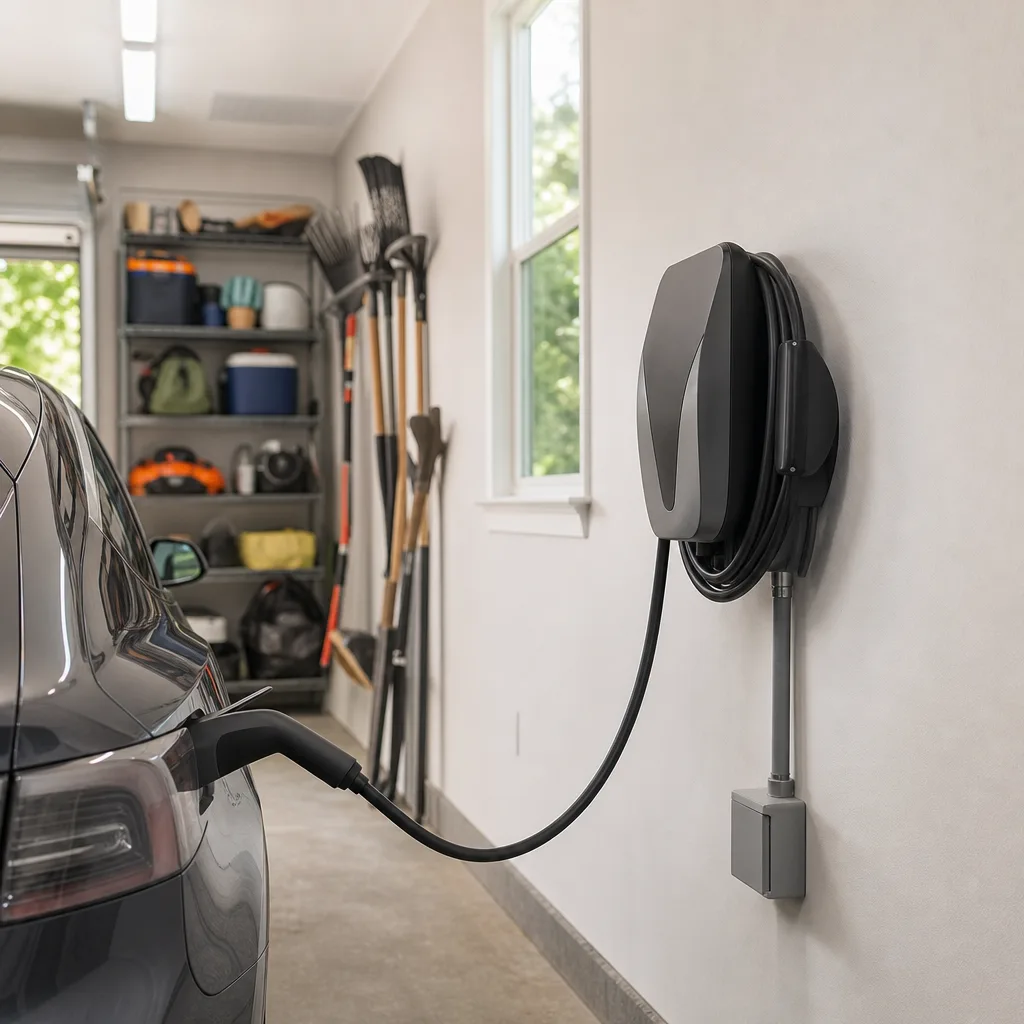
- Mount and connect. The charger, or a heavy-duty outlet for a plug-in unit, is mounted level and secure at a comfortable height, then wired in.
- Start up and test. Power comes back on, the charger gets checked, and then the real test happens: plugging in your car and making sure it starts charging.
That last step matters more than people think. A charger that powers on isn’t the same as a charger that charges your car. Watching the car accept a charge before anyone packs up is how you know the job is done right the first time.
Many chargers also come with an app for scheduling and tracking your charging. If yours does, have your Wi-Fi password handy so you can get it connected while everything’s fresh. Setting charging to run overnight is an easy habit to start on day one.
If a permit was pulled for your job, the city inspection happens after the install. You don’t need to arrange it yourself. That’s part of having a licensed contractor handle the work.
Xtreme Air Services has an office on W McDermott Dr in Allen, and our licensed, background-checked technicians handle EV charger installs as part of our electrical work. Tell us what car you drive, where you park, and how big your panel is, and we’ll walk you through what your install will look like before anyone picks up a tool.
Watch Our Video
See How We Handle EV charger installation in Allen
Xtreme Air Services — Allen
Questions to Ask Before You Hire an Electrician
You’ll probably get more than one quote, and they won’t all look alike. A few good questions will show you who looked at your home and who’s guessing. Here’s what we’d ask if we were in your shoes.
- Are you licensed through TDLR, and are you insured? Ask for the license number and check it yourself. It takes a couple of minutes. Insurance protects you if something gets damaged while work is happening in your garage.
- Did you check my panel before giving me a price? A quote given over the phone, before anyone asks about your main breaker or open slots, is a guess. Since panel room is what really sets the cost, a serious installer asks about it first.
- What amperage do you recommend, and why? A good answer ties back to your car, your daily miles, and what your panel can spare. If the answer is just “the biggest one,” keep asking.
- What exactly is included, and what isn’t? Get it in writing. Does the price cover the charger? Permits? A panel upgrade if one turns up? Two quotes that look $400 apart can end up even once you see what each one leaves out.
- What happens if the job grows? Ask how you’ll find out if the installer opens your panel and finds a problem. You want a new price you can approve before more work starts, not a bigger bill at the end.
- Will you pull the permit? This was covered above, but it’s worth asking out loud. Hesitation here is a red flag.
- Who’s coming to my house? You’re letting someone into your home and your garage. It’s fair to ask whether the technician is an employee and whether the company screens its people.
- Will you test it with my car before you leave? A charger that lights up isn’t proof it works. Ask whether they’ll stay until your car is charging.
Watch for a few warning signs too. Be careful with a price that seems too good while the details stay vague, with someone who wants cash only and no paperwork, or with an installer who brushes off your question about the inspection. Those shortcuts tend to show up later, usually when you’re trying to sell the house or file a claim.
Here’s how we’d answer those same questions. Xtreme Air Services is a licensed and insured electrical contractor, and the technician who shows up is background-checked. You’ll see upfront pricing, with what’s included and what’s excluded spelled out, before any work starts. If a panel upgrade or code correction comes up, you’ll get that price separately so you can decide. Our service-call fee is credited toward the job if you go ahead with us, and financing is available on qualifying installations and larger jobs, on approved credit.
Ask us any of these when you call. If an answer doesn’t make sense, ask again. A good electrician won’t mind explaining it twice.
Frequently Asked Questions
Common questions about EV charger installation
How long does an EV charger installation take?
Most Level 2 charger installs finish in a single day. The technician checks your panel, runs the dedicated circuit, mounts the charger, then tests it with your car before leaving. If your panel needs an upgrade first, that adds a separate visit since it’s priced and scheduled on its own.
Can I install an EV charger myself to save money?
You can plug a Level 1 cord into an existing 120-volt outlet without an electrician, but a true Level 2 charger needs licensed work. It runs on 240 volts for hours at a time, and Texas requires a TDLR-licensed electrician plus a permit and inspection for that kind of circuit. Skipping that step can leave you with a wire that runs hot or an unpermitted job that raises questions later if you sell your home.
Will installing an EV charger overload my home’s electrical system?
It can, if your panel is already full or your main breaker trips during heavy summer AC use. A Level 2 charger pulls steady power for hours, which is a lot to add to a panel already running your AC, water heater, dryer, and oven. Checking your panel’s main breaker rating and open slots before you buy a charger tells you whether you’re in good shape or need more capacity.
Does my homeowner’s insurance care about EV charger installation?
Yes, unpermitted electrical work can raise problems with your insurance company if something goes wrong later. A permitted, inspected install puts the work on record, so you’re not left explaining undocumented wiring during a claim or a home sale.
Ready to Get Started?
Call (469) 299-8996 Today, Get Service Today.