


HVAC System Maintenance in Allen: Know What’s Included Before You Book
A full inspection, cleaning and safety check on every visit, so you know exactly what you're paying for.
What’s Covered on This Page
- What Counts as HVAC System Maintenance
- Signs Your System Needs Maintenance, Not Repair
- What Happens During a Maintenance Visit
- What Maintenance Costs and What’s Included
- When to Schedule Maintenance in Allen
- How long does a typical maintenance visit take?
- Can I do any of the maintenance myself to save money?
- Will maintenance stop my system from breaking down completely?
- Do I need maintenance on a brand-new HVAC system?
What Counts as HVAC System Maintenance
People use “maintenance,” “tune-up,” and “service call” to mean different things, so it helps to know what you’re paying for. Maintenance is preventive. Your system is running, maybe not perfectly, and you want someone to look it over, clean what’s dirty, and catch small problems while they’re still small.
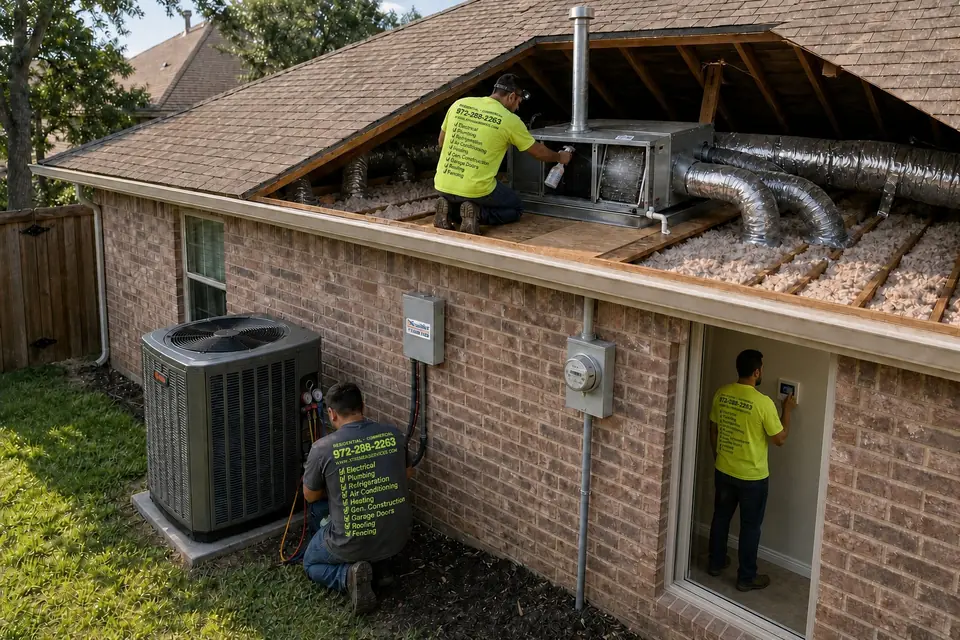
At Xtreme Air Services, routine maintenance on one system includes a full inspection, cleaning, and a performance and safety check. That’s the job. Repair parts and corrective work found during the visit aren’t part of it. We quote those separately, so you know the price before any extra work happens.
What gets looked at? A solid maintenance visit in this trade usually focuses on the parts that wear out or clog up first:
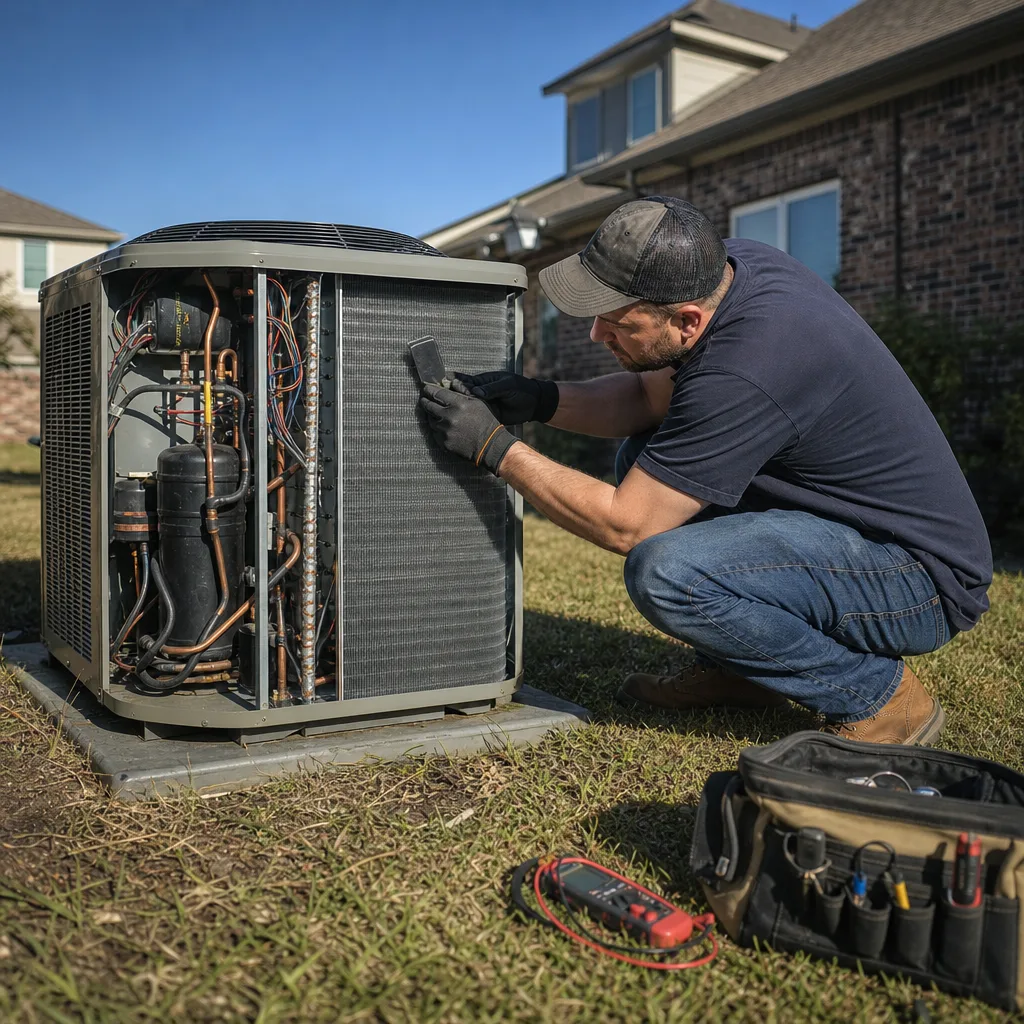
- Outdoor condenser coil: dirt and lawn debris packed into the fins make the unit work harder to get rid of heat.
- Indoor evaporator coil and blower: dust buildup here cuts airflow, so rooms cool slower and the system runs longer.
- Condensate drain line: the small pipe that carries water away from the indoor unit. When it clogs, water backs up into the drain pan.
- Electrical connections and capacitors: loose wires and weak capacitors are common reasons an AC won’t start on a hot afternoon.
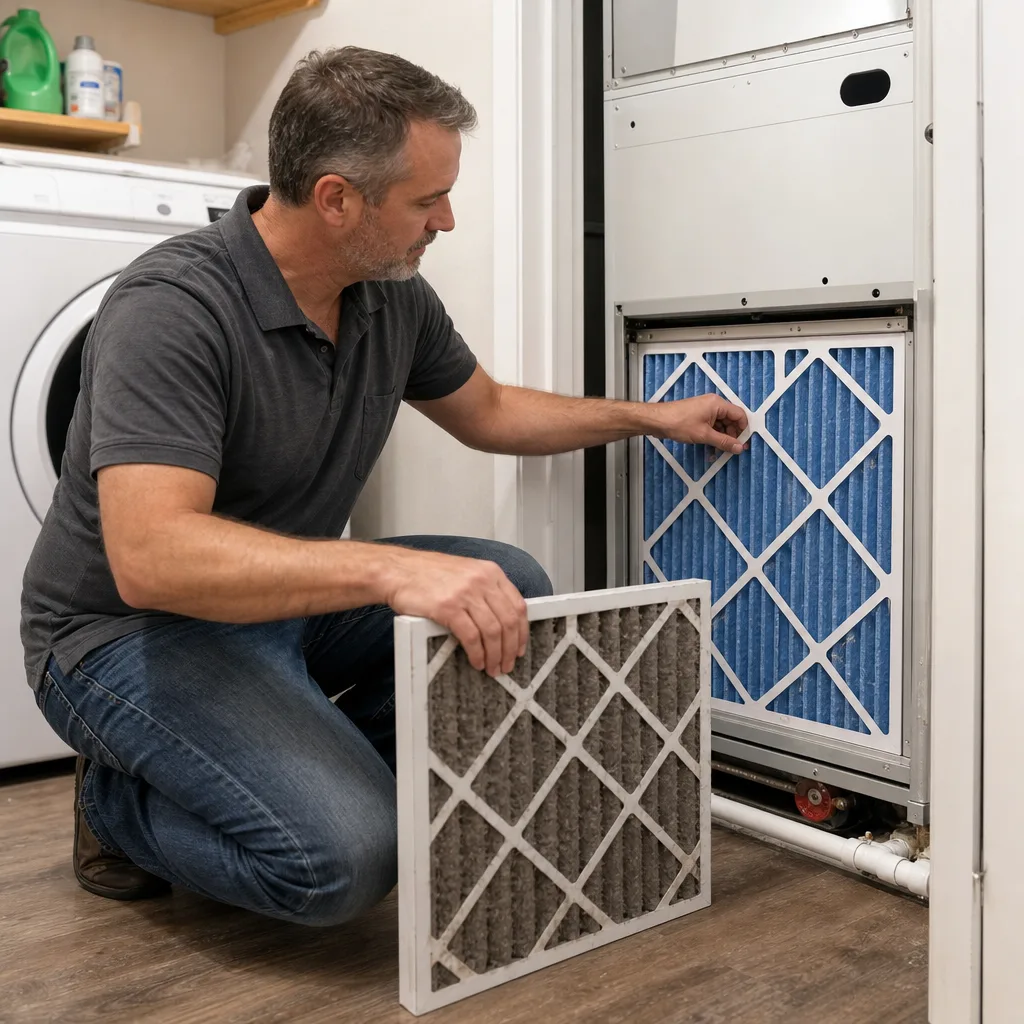
- Air filter: a clogged filter chokes airflow and strains the whole system.
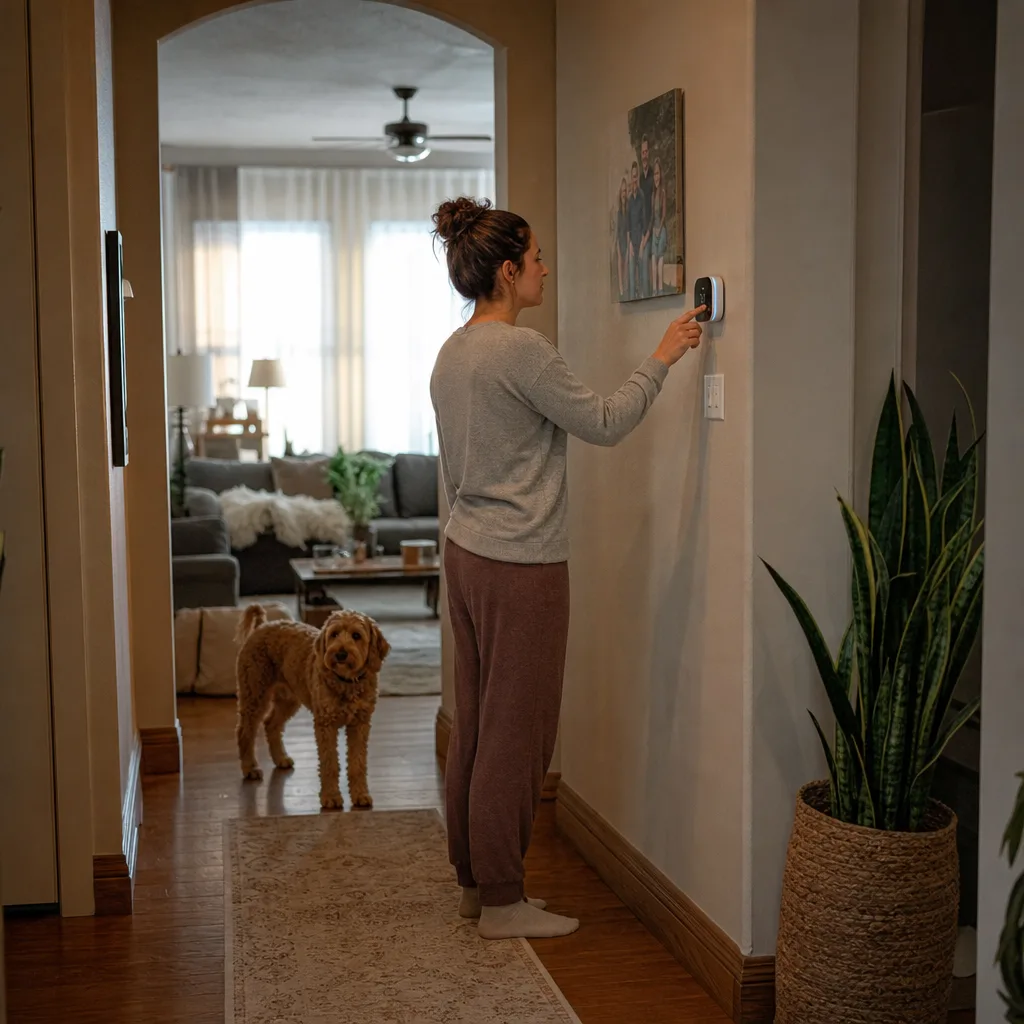
- Thermostat: making sure it reads the room correctly and tells the system what to do.
- Heating side: burners, flame sensor, and venting on a gas furnace, or the heat strips and controls on a heat pump.
In Allen, many homes have the air handler or furnace up in the attic, with the drain line running right through it. In a North Texas summer, that attic gets brutally hot, and your AC may run most of the day for months at a time. That’s a lot of hours on the same parts. A clogged drain line up there can also show up as a water stain on the ceiling below. That’s why the cleaning part of maintenance matters. It’s not busywork.
Here’s what maintenance isn’t. It won’t fix a system that’s already blowing warm air, tripping the breaker, or refusing to turn on. If that’s where you are, you need a repair visit, not a tune-up. Adding refrigerant isn’t routine maintenance either. A system that’s low on refrigerant has a leak somewhere, and finding and fixing that leak is repair work. Air duct cleaning is also its own separate service, apart from a standard maintenance visit.
So when you compare companies, ask one simple question: what exactly is included? A clear answer tells you whether you’re getting a real inspection and cleaning or just a quick look and a sticker on the unit.
Signs Your System Needs Maintenance, Not Repair
Most systems don’t go from perfect to broken overnight. They drift. The house takes a little longer to cool, the bill creeps up, and the vents seem a bit weaker than last year. That slow slide is exactly what maintenance is built for. Your system still works. It just needs cleaning and a close look before small wear turns into a breakdown.
Book maintenance if you notice any of these while your system is still running:
- It’s been more than a year since anyone looked at it, or you just moved in and don’t know its history.
- It runs longer than it used to before the thermostat is satisfied, especially on mild days.
- Your summer bills are higher than last year, but your habits haven’t changed.
- Airflow feels a little weaker, or some rooms lag behind the rest of the house.
- You smell a dusty or musty odor for a minute or two when the system kicks on.
- The outdoor unit is packed with grass clippings, leaves, or dirt.
- The heat hasn’t run since last winter, and the first cold front is coming.
None of these mean something is broken. They mean your system is working harder than it should. In an Allen summer, when your AC may run most of the day for months, a little extra strain adds up fast.
Some signs mean you’re past the tune-up stage. We already covered warm air, a tripping breaker, and a system that won’t start. Add these to that list. If you see them, call for a repair visit instead:
- Ice on the refrigerant lines or the indoor coil.
- Water dripping from the ceiling, or a wet spot under the indoor unit.
- A burning or electrical smell.
- Grinding, screeching, or loud banging from either unit.
- The system turns on and off every few minutes without cooling the house.
There’s a gray zone, and that’s normal. Say your AC still cools but sounds a bit louder than it did last summer. That could be a dirty fan or a loose panel, which a maintenance visit would catch. It could also be a motor starting to wear out. If you’re not sure, don’t guess. Just tell us exactly what you’re seeing and hearing when you call. That helps get the right visit on the schedule.
Before you call anyone, check a few things yourself. They cost nothing and sometimes fix the problem:
- Change the air filter if it looks gray or clogged. A dirty filter alone can cause weak airflow and longer run times.
- Make sure the thermostat is set to cool or heat, not just fan, and swap the batteries if it uses them.
- Look around the outdoor unit and clear away leaves, toys, or overgrown plants.
If a fresh filter and a clean thermostat setting fix it, great. You may not need anyone today. If the system still runs long, smells off, or just doesn’t feel right, that’s your cue for maintenance.
What Happens During a Maintenance Visit
A maintenance visit has three parts: a little prep on your end, the inspection and cleaning, and a straight talk about what was found. You stay in control the whole time. Nothing beyond the maintenance itself happens without your okay.
Before the technician shows up, a few minutes of prep makes the visit faster and more thorough:
- Clear a path to the indoor unit. If it’s in the attic, make sure the pull-down stairs aren’t blocked by boxes, shelves, or a car parked under them in the garage.
- Clear a couple of feet around the outdoor unit and unlock the side gate.
- Find your filter size, or set out a spare filter if you keep some on hand.
- Write down anything you’ve noticed, like a room that won’t cool, a new noise, or a smell, and when it happens.
- Put pets in another room so the door can stay open while the tech goes in and out.
During the visit, the tech works through the parts we covered earlier. A good visit in this trade is more than a look and a wipe-down, though. It includes testing while the system runs. That usually means checking the temperature of the air going into the system against the air coming out of your vents. It means measuring how much power the motors and compressor pull compared to what they’re built for. A motor working harder than it should often shows up on a meter before you’d ever hear it. On a gas furnace, it also means checking the flame and the venting, so combustion gases leave your home the way they’re supposed to.
Then comes the cleaning, the part that brings back lost performance. Coils get cleared, the drain line gets flushed, and the filter gets checked or swapped. With an attic system, much of this work happens up in that heat, so give the tech room and time. A visit that’s over in a few minutes probably skipped the testing.
After the work, you should get a plain-English rundown. What got cleaned? How did the readings look? Is anything starting to wear? Most findings fall into three groups: it’s fine, keep an eye on it, or it needs attention now.
If something needs fixing, it isn’t part of the maintenance price. We quote it separately with upfront flat-rate pricing, and you approve it before any work starts. You can say yes, wait until later, or take time to think it over. No meter running, and no pressure. Our licensed and insured technicians are background-checked and drug-tested, and they’re there to tell you what they found, not to talk you into something.
Before the tech leaves, it’s worth asking a few questions:
- Did anything look worn or close to failing?
- Is there anything I should watch for before next season?
- What filter should I buy, and how often should I change it in my home?
- If you found a repair, how urgent is it, and what happens if I wait?
Clear answers to those questions are the real value of the visit. You walk away knowing where your system stands, before the next long North Texas summer puts it to work.
Ready when you are – get in touch today.
Call Today, Get Service Today. Xtreme Air Services — Allen is ready to help.
What Maintenance Costs and What’s Included
Routine HVAC system maintenance on one system with Xtreme Air Services typically runs $100 to $200. That’s our most common maintenance job, and it covers the full inspection, cleaning, and performance and safety check we described earlier. Across all maintenance work, our typical range is $100 to $300.
Why the wider range? A few things move the price up or down:
- How many systems or units you have. One system is one job. If your home has two, say one for upstairs and one for downstairs, each one needs its own inspection and cleaning.
- How easy the equipment is to reach. An air handler in a cramped corner of a hot attic takes more time and care than one in a hallway closet or garage.
- How much buildup or neglect there is. A system that gets looked at every year cleans up faster than one that’s gone several summers with a packed outdoor coil and a dusty blower.
- Whether it’s a one-time visit or part of a maintenance plan. We offer preventative maintenance plans, and that choice affects what you pay. Ask about it when you call so you can compare both options for your home.
Here’s how the service-call fee works. Our service-call fee is $26 to $99, and it’s credited toward the repair if you go ahead with Xtreme Air Services. So if your maintenance visit turns up a problem and you approve the fix, that fee goes toward the repair. It isn’t a separate charge stacked on top. When you book, ask how the fee applies to your visit so you know the full picture before the tech arrives.
What’s not in the maintenance price? Repair parts and any corrective work the visit uncovers. Those get quoted separately with upfront flat-rate pricing, and nothing happens until you say yes. If the tech finds a weak capacitor, you’ll hear what it is, what it costs to replace, and how soon it matters. Then you decide.
Financing isn’t typically offered for a maintenance visit, since it’s a smaller job. If maintenance does turn up a bigger repair, or you end up talking about replacing an older system, financing is available on larger repairs and replacements.
When you’re comparing prices around Allen, a lower number doesn’t always mean a better deal. Ask every company the same questions. What exactly gets cleaned? Do you test the system while it runs? Is the service-call fee separate, and is it credited toward repairs? Will I get a price on any repair before the work starts? A company that answers clearly up front is usually the one that’ll be clear with you later too.
That’s the whole point of maintenance. You pay a known amount to find out where your system stands while it’s still running. You get a fair price on anything that needs attention, and you make the call on your own schedule, not in the middle of a July breakdown.
Watch Our Video
See How We Handle HVAC system maintenance in Allen
Xtreme Air Services — Allen
When to Schedule Maintenance in Allen
The best time for maintenance is before your system’s busy season starts. You want it done while the weather’s mild and your schedule’s your own. That’s the whole idea of this page: find out where your system stands while it still runs, not after it quits on the first 100-degree afternoon.
In Allen, that usually means two windows each year:
- Spring, for the cooling side. Book after the last cold snap but before the heat settles in. Your AC is about to run hard for months, so this is the visit that counts most in North Texas.
- Fall, for the heating side. Book before the first real cold front rolls through. Furnaces and heat pumps can sit idle all summer, and the first chilly night is a bad time to find out something’s wrong.
If you have a heat pump, both visits matter even more. A heat pump cools in summer and heats in winter with the same outdoor unit, so it works nearly year-round. A gas furnace paired with an AC splits the load between two pieces of equipment, but each one still needs its own check before its season.
Why not just wait until summer? Because that’s when everyone else calls too. Once the heat hits, schedules fill with breakdowns and no-cool calls. A spring visit is easier to plan around, and if the tech spots a part that’s starting to wear, you have time to decide on it calmly. You won’t be sweating it out in a hot house.
A few situations call for booking sooner, whatever the season:
- You just bought your home. You don’t know how the last owner treated the system, so a first visit gives you a baseline.
- You have two systems. Many Allen homes have one unit for upstairs and one for downstairs. Book both on the same visit so you aren’t scheduling twice.
- A hailstorm just came through. Hail can bend the thin metal fins on your outdoor unit, which blocks airflow. If you see dents or flattened fins after a storm, have it looked at before the heat arrives.
- It’s been more than a year. If you can’t remember the last visit, it’s been too long.
If you’d rather not keep track of the calendar yourself, ask about our preventative maintenance plans when you call. A plan puts your visits on a regular schedule so the spring and fall checks don’t slip.
And if you’re reading this in the middle of July because something already feels off, don’t wait for spring. Call anyway. We’ll help you sort out whether you need maintenance or a repair, and same-day service is available, with no extra charge for nights or weekends.
Call now
Frequently Asked Questions
Common questions about HVAC system maintenance
How long does a typical maintenance visit take?
Plan for about 45 minutes to an hour for one system. Attic units in Allen take a bit longer since the tech needs room to work in the heat and check the full drain line and coil. A visit that wraps up in just a few minutes probably skipped the performance testing that catches early problems.
Can I do any of the maintenance myself to save money?
Yes, a few basic steps help before you ever call. Changing a dirty air filter, making sure the thermostat is set correctly, and clearing leaves or debris from around the outdoor unit are all things you can check yourself. If those fixes don’t solve weak airflow or long run times, that’s your sign to book a real maintenance visit.
Will maintenance stop my system from breaking down completely?
Maintenance lowers the odds of a sudden breakdown, but it can’t guarantee one won’t happen. Cleaning coils, checking electrical connections, and testing performance catches a lot of wear before it causes a failure. A part can still fail between visits, which is why catching early signs like weak airflow or longer run times matters just as much as the scheduled checkup.
Do I need maintenance on a brand-new HVAC system?
Yes, even a new system benefits from its first seasonal check. A baseline inspection tells you how the system performs when everything is still fresh, so any changes later are easier to spot. This matters most if you just bought a home in Allen and don’t know how well the system was cared for before you moved in.
Ready to Get Started?
Call (469) 299-8996 Today, Get Service Today.