


Transfer Switch Installation in Allen: Safe, Code-Compliant Generator Hookups
Automatic or manual transfer switches installed to code, so your generator powers your home safely.
What’s Covered on This Page
- Why a Transfer Switch Is Required, Not Optional
- Automatic vs. Manual Transfer Switches: Choosing the Right Fit
- When You Don’t Need a Transfer Switch
- What Happens During Installation and Testing
- Permits and Code Compliance in Allen
- Do I need an electrician to install a transfer switch?
- Can I install a transfer switch myself?
Why a Transfer Switch Is Required, Not Optional
Transfer switch installation isn’t about convenience. It’s about stopping something called backfeed. Your home’s wiring connects to the power grid through your meter. Say you plug a generator into a dryer outlet with a cord that has a plug on both ends. Power doesn’t just stay in your house. It can flow out through the meter and onto the lines outside.
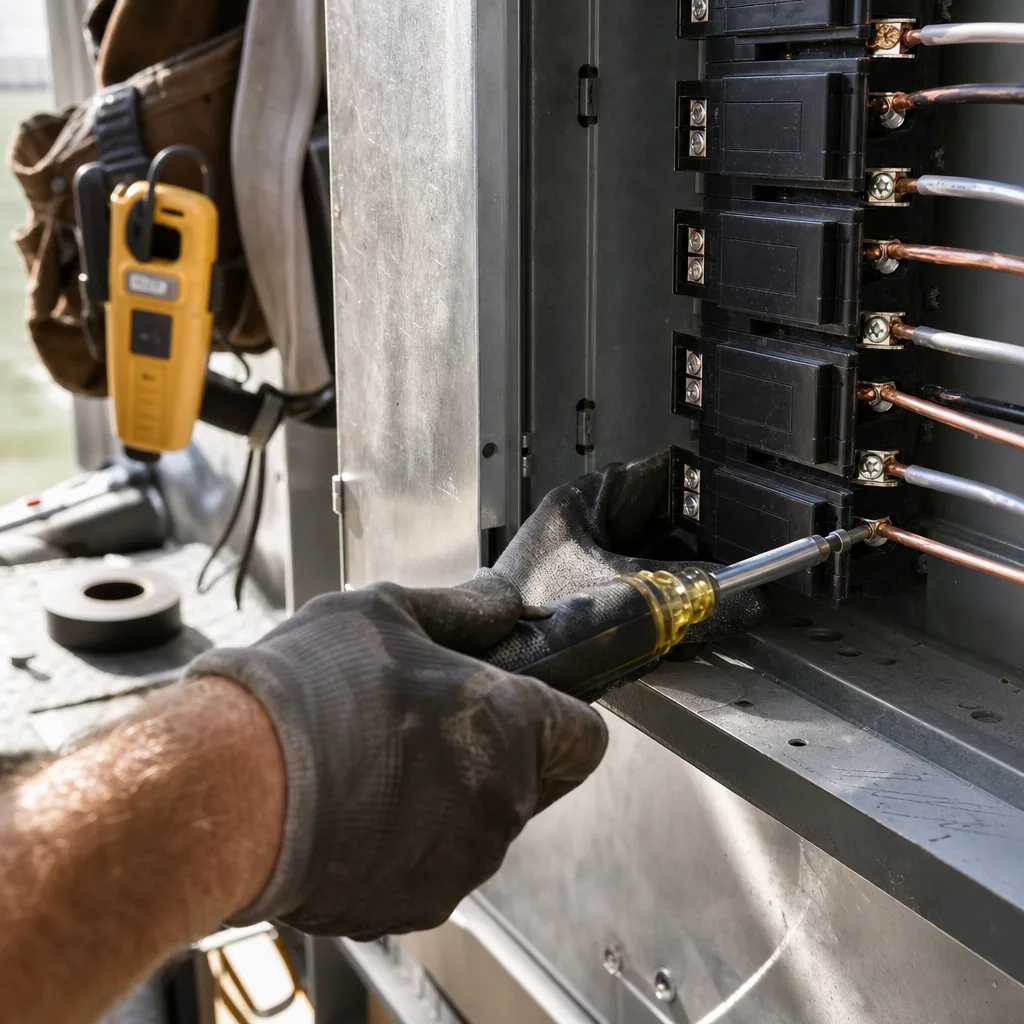
That’s where it gets dangerous. The transformer on the pole or the green box in your yard works in both directions. It can take the small voltage from your generator and boost it to thousands of volts on the line. A lineworker who thinks that line is dead could be hurt or killed. Your neighbors’ homes on the same transformer can be put at risk too. Whether your Allen home went up in the 1980s or sits in a newer subdivision, it’s tied to Oncor’s lines the same way. A homemade hookup on your street affects more than just you.
Backfeed can also hurt you when the power comes back. If grid power returns while your generator is still tied into the same wiring, the two sources can clash. That can wreck the generator, damage your wiring, or start a fire.
A transfer switch fixes all of that. Here’s what it does:
- It cuts your home off from the grid before any generator power reaches your circuits.
- It makes it impossible for grid power and generator power to feed your home at the same time.
- It lets you pick which circuits to run, like the fridge, furnace blower, or garage door. With a manual switch you flip it yourself. An automatic switch does it on its own when the power drops.
- It gives you a setup an inspector can sign off on, instead of a cord and a guess.
Electrical code reflects this. Any generator connected to a home’s wiring has to be kept apart from utility power. That’s why a permit and a licensed electrician are usually part of the job. It’s not red tape. It’s the step that keeps the people working on the lines safe.
Now for the straight answer on when you don’t need one. Maybe you run a portable generator in the yard and plug a fridge, a lamp, and a phone charger straight into the generator using heavy outdoor cords. In that case, nothing ties into your house wiring, so there’s nothing to backfeed. For a short outage, that setup can be enough, and you don’t need to pay for a switch.
A switch starts to make sense when you want power for things that are wired into the house. Think of your furnace blower during a winter freeze, ceiling lights, a garage door opener, or whole circuits. You can’t reach those with an extension cord. When spring hail and thunderstorms roll through Allen and knock out power, those are usually the things people miss most.
Xtreme Air Services is a licensed and insured electrical contractor. When we put in a manual or automatic transfer switch, it’s connected to your panel and tested before we call it done. You’ll know your generator is helping your home, not putting anyone on the other end of the line at risk.
Automatic vs. Manual Transfer Switches: Choosing the Right Fit
The short answer is that your generator usually decides for you. A portable generator pairs with a manual transfer switch. A permanent standby generator pairs with an automatic one. Both keep your home safely cut off from the grid. The difference is who does the work when the lights go out: you or the switch.
A manual switch puts you in charge. When the power drops, you roll your portable generator outside, start it, and plug its cord into a power inlet on the outside wall. Then you go to the switch next to your panel and flip over the circuits you want to run. When grid power comes back, you flip them back and shut the generator down. It takes a few minutes, and you have to be home to do it.
An automatic switch does all of that on its own. It watches the power coming into your home. When it senses an outage, it tells your standby generator to start, then moves your home over to generator power. When the grid comes back steady, it switches back and lets the generator cool down and shut off. You don’t have to touch a thing, even if you’re asleep or out of town.
- A manual switch is likely the right fit if you already own a portable generator, you’re usually home during storms, you don’t mind stepping outside to start it, and you mainly want the fridge, furnace blower, a few lights, and the garage door covered.
- An automatic switch is likely the right fit if you have or plan to buy a standby generator, you travel often, someone in your home relies on powered medical equipment, or you want power back without anyone going out into bad weather to make it happen.
Here’s a real-life way to think about it. Picture a summer storm knocking out power on a 100-degree Allen afternoon while you’re stuck in traffic across town. With a manual setup, your home stays dark and starts heating up until you get there. With an automatic setup, the house is already back on by the time you pull into the driveway. If that gap matters to you, that’s your answer.
Switch type is also one of the biggest things that changes your price, along with how many circuits you want covered, how much room your panel has, and how far the switch sits from the generator. A manual switch is usually the simpler job. An automatic switch has more parts and has to talk to the generator, so it takes more work to set up.
Whichever you pick, the switch is connected to your panel and tested before the job is called done. That way you’ll know it works before the next storm, not during it.
When You Don’t Need a Transfer Switch
We already covered the most common case. If everything plugs straight into the generator with cords, there’s nothing to backfeed. That isn’t the only time a switch is the wrong buy, though. Here are a few more times we’d tell you to hold off or go a different way.
You don’t own a generator yet and you aren’t sure you’ll get one. A transfer switch does nothing by itself. Pick your backup plan first. Some folks find a battery power station that charges phones and runs a CPAP or a small fridge is all they need for a few hours. That kind of unit plugs in like any appliance, so no switch is involved.
You’re planning a standby generator soon. An automatic switch is part of a standby setup. If you put in a manual switch now and buy a standby unit next year, you may end up replacing the switch you just paid for. If the bigger generator is on your list, wait and plan both together.
Your generator is too small for the things you want to run. A small portable unit may handle a fridge and some lights. It may not be able to start a well pump, an electric water heater, or central air on a hot Texas afternoon. A switch won’t make a weak generator stronger. If the generator can’t carry the load, fix that first, or you’ll pay for circuits you can’t use.
You rent your home. Wiring changes to the panel belong to the owner. Don’t have anything installed without your landlord’s written okay. Stick with cords or a battery unit, or ask the owner to handle it.
Your outages are rare and short. If your power drops for an hour or two a couple of times a year, a cooler and a flashlight might be enough. A switch earns its keep when outages run long or happen during heat waves or hard freezes, when you need the furnace blower, the fridge, or medical equipment running.
You already have one. Many homes, especially those with an older standby generator, already have a switch next to the panel. Before you buy a new one, check what’s there. If it works, you may only need generator maintenance or a load test, not a new install.
If none of these fit you, and you want wired-in things like lights, the furnace blower, or the garage door working during an outage, that’s when a transfer switch is the right call.
Thinking about Transfer switch installation? Let’s talk.
Call Today, Get Service Today. Xtreme Air Services — Allen is ready to help.
What Happens During Installation and Testing
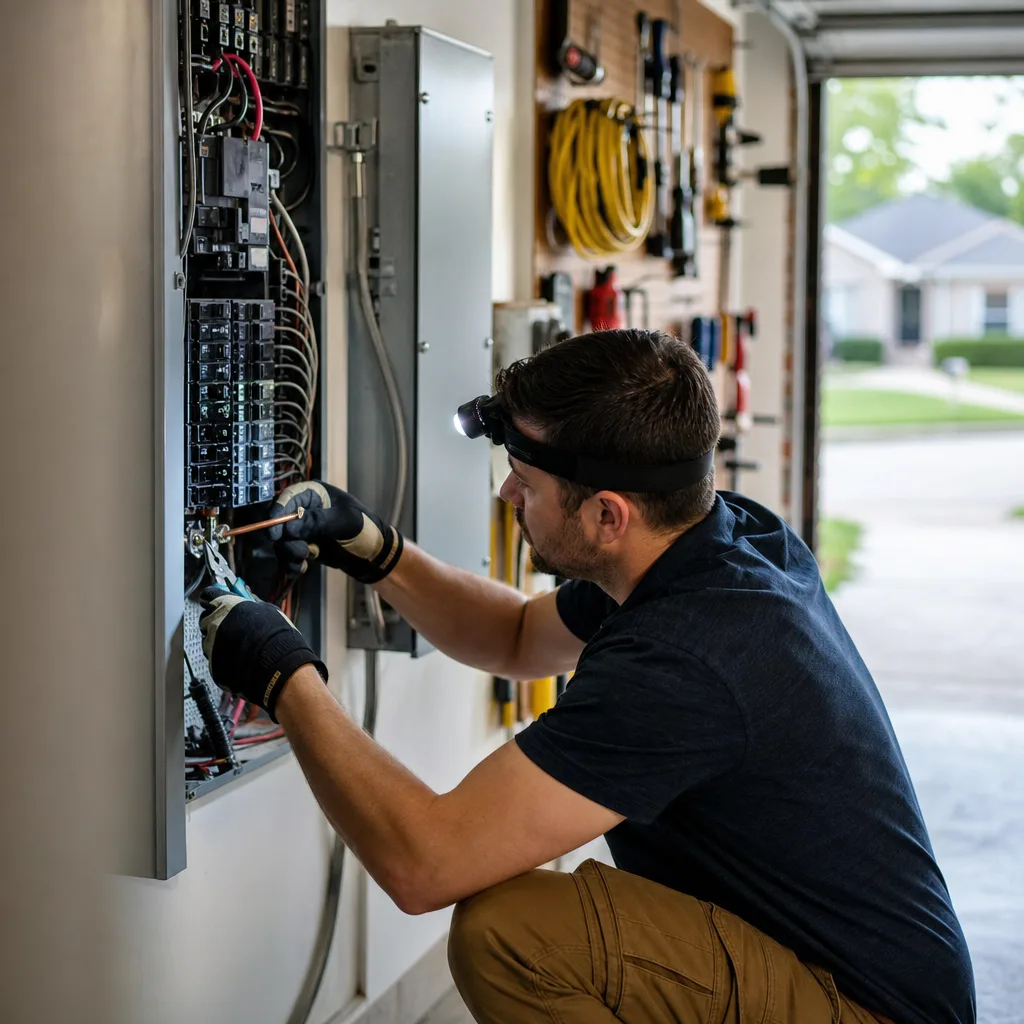
Here’s the short version. Your power is shut off for part of the day while the switch goes in next to your panel. The circuits you picked get wired through it, and then the whole setup is tested by faking an outage. With Xtreme Air Services, most jobs finish the same day, and the switch is connected and tested before we call it done.
A typical install goes in this order:
- Look at your panel and plan. The electrician checks how much room your panel has, what shape it’s in, and where your generator will sit. You’ll go over which circuits matter most to you, like the fridge, the furnace blower, the garage door, and a few lights.
- Shut off the power. The main power to your home is turned off so the panel can be worked on safely. Plan on no lights or outlets for a few hours.
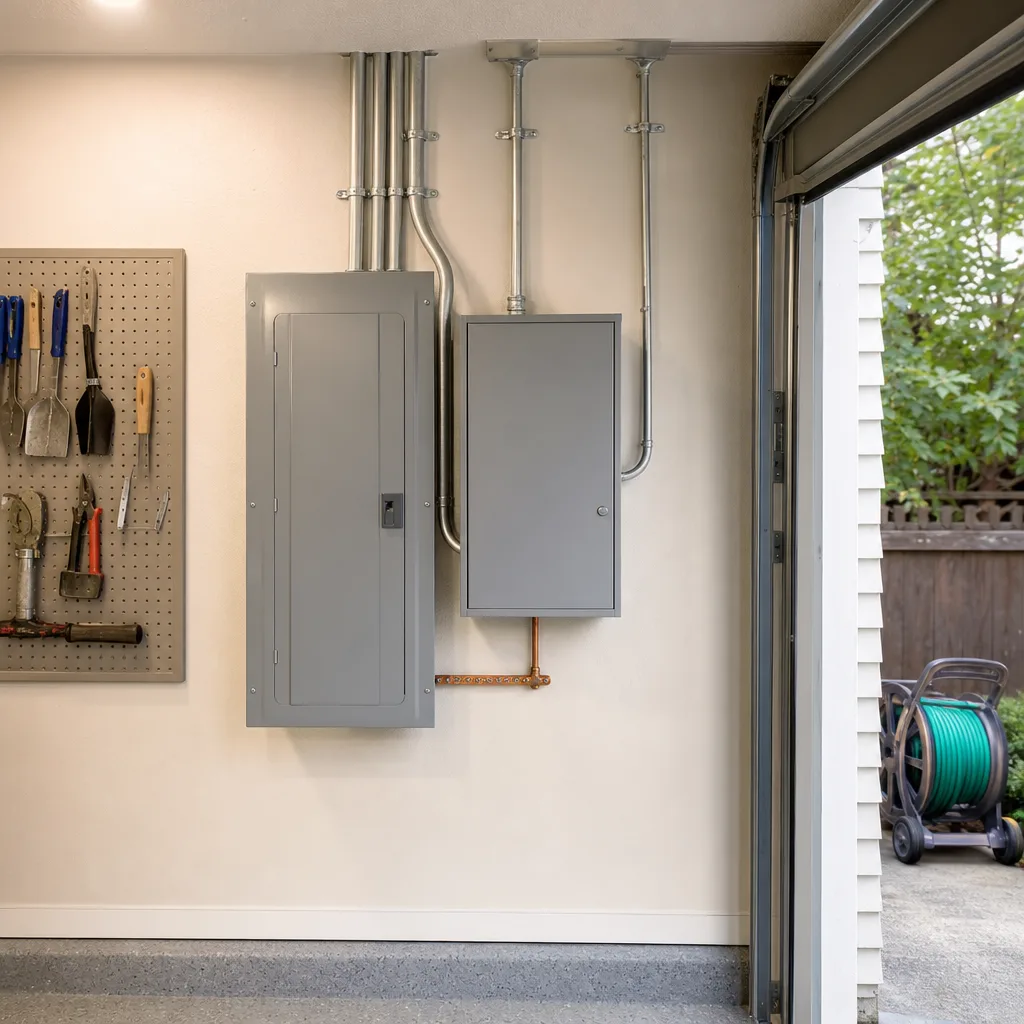
- Mount the switch. A manual switch usually goes right beside your panel. An automatic switch is often placed between your meter and your panel so it can see when grid power drops.
- Move the circuits. With a manual switch, each circuit you picked is moved from the panel into the switch. With an automatic switch, the switch is wired to handle the circuits or the whole home, based on what your generator can carry.
- Connect to the generator. For a portable generator, a power inlet box goes on an outside wall so you can plug in with one cord. For a standby generator, power and control wires run from the switch to the unit. The farther away the generator sits, the longer that run.
Testing is where you get your peace of mind. A good test does more than flip the switch once. It shows that the generator powers the right circuits, that grid power and generator power can’t both reach your home at the same time, and that everything goes back to normal when the grid returns. With an automatic switch, that means cutting utility power on purpose and watching the generator start and take over on its own, then shutting back down after power comes back.
If your job needs a permit, an inspector may also come look at the work. That visit can happen after the install day, so ask about timing up front.
Know what’s in the job before it starts. The install includes the transfer switch and materials, professional installation, the connections, and testing. It doesn’t include the generator itself, panel upgrades, code corrections, or permits unless they’re stated in your quote. If your panel is full or has older problems, you’ll want to hear about that before work begins, not halfway through.
A little prep makes the day go smoother:
- Clear a path to your panel and to the outside wall where the generator will hook up.
- Write down the make and wattage of your generator, or the model you plan to buy.
- Make a short list of the things you can’t go without during an outage.
- If anyone in your home uses powered medical equipment, plan for the hours the power is off.
Getting this done before hail and thunderstorm season hits Allen in the spring gives you time to try the setup once on a calm day. That way, the first time you really use it won’t be in the dark.
Watch Our Video
See How We Handle Transfer switch installation in Allen
Xtreme Air Services — Allen
Permits and Code Compliance in Allen
In Allen, a transfer switch job almost always needs an electrical permit, because it changes how your panel is wired. The permit isn’t there to slow you down. It gets a second set of trained eyes on your work, so the switch keeps your home cut off from the grid and won’t cause trouble down the road. Check with the City of Allen for current rules and fees before work starts.
In Texas, electricians are licensed by the Texas Department of Licensing and Regulation (TDLR). In most cases the licensed electrical contractor doing the work is the one who pulls the permit and meets the inspector. Ask about that up front, so you’re not left handling city paperwork on your own.
When the inspector comes out, they’re mainly checking things you can’t easily see yourself:
- The switch is a listed product made for this job, and it’s installed the way the maker’s instructions say.
- Wire and breaker sizes match the generator and the circuits being run.
- The neutral and ground wires are set up so current can’t take a wrong path back through your home.
- The outdoor power inlet for a portable generator is weatherproof and mounted in a safe spot.
- There’s clear working space in front of the panel and the switch.
- Everything is labeled, so you or anyone after you can tell what controls what.
A standby generator adds more to the list. It may need its own placement review, plus a separate permit for the gas line if it runs on natural gas. Placement rules usually cover how close the unit can sit to windows, doors, and your property line, because exhaust has to stay away from where people breathe. If your Allen home sits in a neighborhood with an HOA, you may also need its approval before a standby unit goes in the side yard. Get that sorted out first so nobody has to move a concrete pad later.
Older homes deserve a quick word. If your house went up in the 1980s or early 1990s, the inspector may spot an older problem in the panel that has nothing to do with the switch, like missing grounding or a crowded panel with no open spaces. Those fixes count as code corrections or panel upgrades, which aren’t part of the base install. It’s better to learn about them from a walkthrough before the job than from an inspector afterward.
Before you hire anyone, ask these questions:
- Who pulls the permit, and is the permit fee in my quote or billed separately?
- Will someone be there for the inspection, or do I need to be home?
- If the inspector flags something, what does fixing it cost, and who pays?
- Can you look at my panel first and tell me now if it needs work?
A passed inspection gives you a record that the work was done to code. That can matter for your insurance after a storm claim and when you go to sell your home. Xtreme Air Services is a licensed and insured electrical contractor, so you can ask us every one of these questions and get a straight answer before any work begins.
Frequently Asked Questions
Common questions about Transfer switch installation
Do I need an electrician to install a transfer switch?
Yes, you need a licensed electrician for this job. A transfer switch ties into your home’s panel and has to keep generator power and grid power from ever meeting, which is exactly what electrical code requires a trained person to set up and test. In Allen, that work also needs a permit, so an inspector can confirm the wiring, breaker sizing, and grounding are all done safely.
Can I install a transfer switch myself?
You shouldn’t, even if you’re handy with tools. A mistake inside the panel can let generator power backfeed onto the grid, which can injure utility crews working on the lines and put your neighbors’ homes at risk. Because code requires a permit and inspection for this work, a self-install also risks getting flagged later, which can complicate an insurance claim or a home sale down the road.
Ready to Get Started?
Call (469) 299-8996 Today, Get Service Today.