


Central Air Conditioning Installation in Carrollton, Sized and Quoted Right
Central air sized to your home from day one, with what's included, what isn't, and the permits explained up front.
What’s Covered on This Page
- Know When Full Installation Is the Right Call
- Rule Out a Repair Before You Commit to Replacement
- Get the Right Size System With a Cooling Load Calculation
- What Happens During a Central Air Conditioning Installation
- What Drives the Cost of Your Installation
- How long does a central air conditioning installation take?
- Do I need a permit to replace my AC system in Carrollton?
- Can I just replace the outdoor unit and keep my old indoor coil?
- What should I do if some rooms in my house never get cool?
Know When Full Installation Is the Right Call
Not every AC problem means you need a new system. We’d rather tell you that up front than sell you something you don’t need. Here’s how to tell the difference.
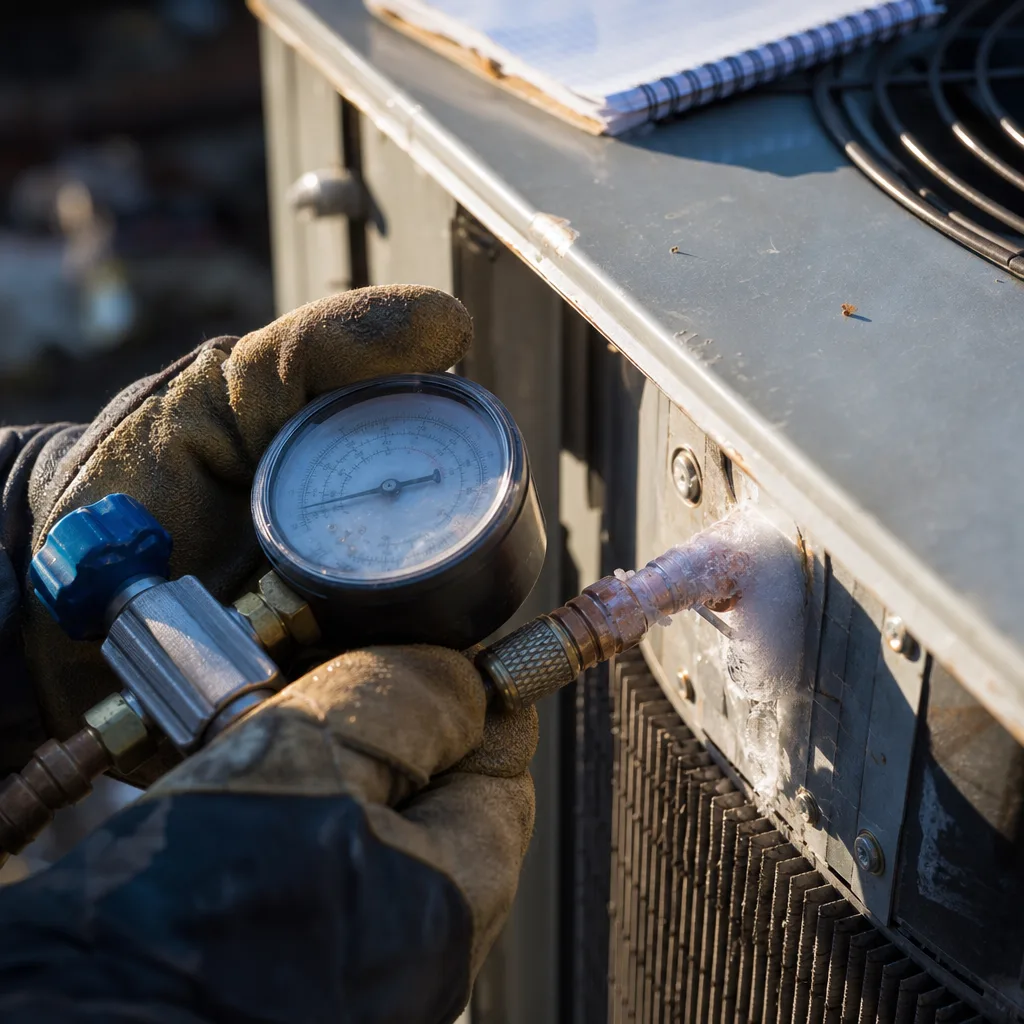
Start with repair if your system is fairly young and the fix is small. These problems usually don’t call for a new system:
- A bad capacitor or contactor. These are small electrical parts that help the unit start, and swapping one is a quick fix.
- A clogged condensate drain line that’s causing water near your indoor unit or tripping a safety switch.
- A dirty filter or dirty coils that are choking your airflow.
- A thermostat that’s failing or set up wrong.
If that sounds like your situation, call us for a repair visit. Our service-call fee runs $26-$99, and it’s credited toward the repair if you go ahead with Xtreme Air Services. You aren’t stuck paying twice just to find out what’s wrong.
A full installation starts to make more sense when you notice these signs:
- Your system is getting up in years, and the repair bills keep coming. Each fix buys you less time than the last one.
- The compressor has failed. It’s the heart of the outdoor unit, and replacing it on an older system often costs a big part of what a new system would.
- Your indoor coil keeps leaking refrigerant. Topping it off again and again doesn’t fix a leaking coil. It just delays the next call.
- Your system runs on R-22, an older refrigerant that’s no longer made. Recharging it gets harder and pricier every year.
- Some rooms never cool down, the system runs nonstop on hot afternoons, or your summer electric bills keep climbing even though your habits haven’t changed.
North Texas summers are hard on older equipment. In many Carrollton homes, the indoor coil and air handler sit up in the attic, where heat builds up on long July days. A worn system already working near its limit has little room left when it’s fighting both the heat outside and a hot attic above.
There’s one more trap to watch for. Some homeowners replace just the outdoor unit and keep the old indoor coil to save money. The trouble is that the two parts are built to work as a matched pair. A new condenser connected to an old, mismatched coil may not cool the way it should or reach the efficiency on its label, and the old coil can fail soon after. That’s why our standard installation includes a new condenser and coil together. You get a system built to work as one unit from day one.
If you aren’t sure which side of the line you’re on, that’s fine. A technician can look at your system’s age, its repair history, and the failed part, then walk you through both options in plain English. That way you can make the call that fits your home and your budget.
Rule Out a Repair Before You Commit to Replacement
A new system is a big decision, so make sure you need one first. Some AC trouble that looks serious has a simple cause. A few minutes of checking can save you a service visit, and it can certainly save you from replacing a system that still has years left in it.
Before you call anyone, look at these things yourself:
- The air filter. Pull it out and hold it up to the light. If you can’t see through it, swap it for a fresh one. A clogged filter can make a healthy system feel weak.
- The thermostat. Make sure it’s set to Cool, the fan is on Auto, and the set temperature is below the room temperature. If the screen is blank or dim, try new batteries.
- The outdoor unit. Grass clippings, leaves, and cottonwood fluff can pack into the fins on the outside. Look for anything blocking airflow around the unit, like a fence, a bush, or stacked yard gear.
- The vents and returns. Closed registers or furniture pushed against a return grille can starve the system of air.
If one of those was the problem and your home cools down again, you’re done. You don’t need us, and that’s a good outcome.
If your home still isn’t cooling, the next step is a real diagnosis, not a sales pitch. Here’s what to ask any technician who looks at your system, including ours:
- Which part failed, exactly? You should hear a specific answer, like a compressor, a coil leak, or a motor. “It’s just old” isn’t a diagnosis.
- How old is the system, and what refrigerant does it use? Both change what a repair is worth.
- What does the repair cost, and what does a new system cost? Get both numbers side by side so you can compare them yourself.
- If you fix it, what else is likely to wear out soon? A good tech will tell you what they see, even if the answer is “nothing right now.”
Clear answers to those questions put the decision back in your hands. If a technician can’t explain why replacement beats repair for your system, you have every right to ask for a second opinion before you spend thousands of dollars.
Timing matters too. If your system is still running but showing its age, you don’t have to rush. Many Carrollton homeowners plan a replacement for spring or fall. That way the work isn’t happening during a heat wave when the house is already hot and every hour feels urgent. A planned replacement gives you time to compare options and pick the efficiency level that fits your budget, without making the choice under pressure.
Sometimes the honest answer is a repair, and we’ll tell you that. When the answer is a full installation, you’ll know exactly why, because you’ll have seen the failed part, the system’s age, and both prices before you agree to anything.
Get the Right Size System With a Cooling Load Calculation
Once you know you need a new system, size is the choice that matters most. A well-sized system keeps your home cool and dry. A badly sized one can feel wrong from the first summer, even if it’s brand new and top of the line.
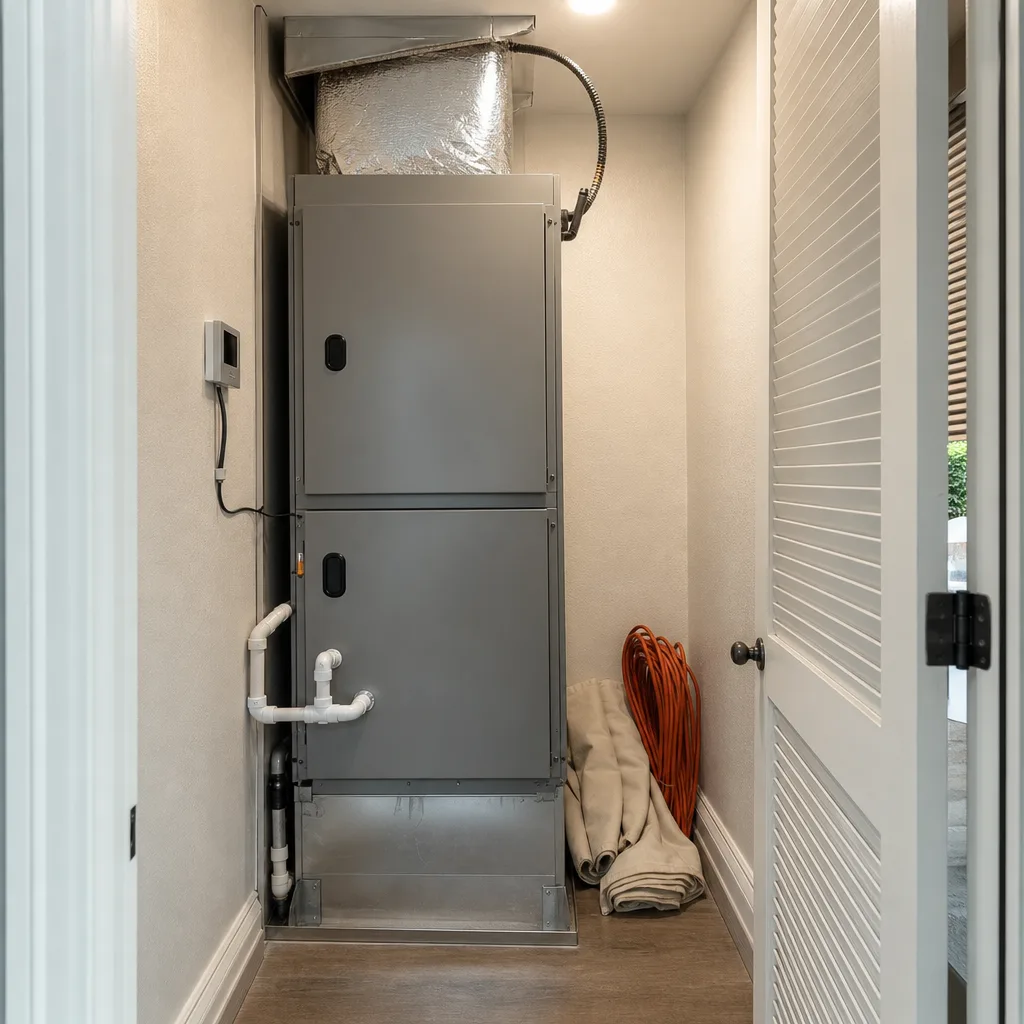
AC size is measured in tons. One ton means the system can remove 12,000 BTUs of heat from your home each hour. A BTU is a basic unit of heat. Most homes need somewhere between a couple of tons and five tons, and the right number depends on far more than square footage.
Bigger isn’t better. An oversized system cools the air fast, hits the thermostat setting, and shuts off before it has time to pull moisture out of the air. Your home can end up cool but clammy. It also turns on and off over and over, which wears parts faster and wastes power. An undersized system has the opposite problem. It runs nonstop on the hottest afternoons and still can’t catch up.
That’s why a cooling load calculation matters. It’s a room-by-room look at how much heat your home gains, often called a Manual J. Instead of guessing from square footage, it accounts for things like:
- How much insulation is in your attic and walls
- How many windows you have, how big they are, and which way they face
- How much afternoon sun hits the house, and how much shade you get from trees or neighbors
- Where your ductwork runs, since ducts in a hot attic pick up heat on the way to your rooms
- How tightly the house is sealed against outside air
- How many people live there, plus heat from appliances and lighting
Don’t just copy the size of your old unit. Your home may have changed since it went in. New windows, added attic insulation, a sealed-up house, or a room addition can all shift how much cooling you need. The old unit may also have been the wrong size from the start. Matching it means repeating that mistake for another 15 years or more.
Your ducts need to fit the system too. If a larger unit pushes more air than your ducts were built to carry, you can get loud vents, weak airflow in far rooms, and strain on the blower. A good sizing check looks at the ducts along with the equipment, so you know about any duct changes before the job starts, not after.
Sizing also affects your price. Tonnage and efficiency are two of the biggest things that move the cost of an installation up or down. The right size keeps you from paying for capacity your home can’t use.
Xtreme Air Services offers cooling load calculations as part of AC system consultation. Whoever you hire, ask these questions before you sign:
- Did you measure my home, or are you going by the old unit’s label?
- What size do you recommend, and what in my home drove that number?
- Will my current ducts handle this system, or do they need changes?
If the answer to the first question is a quick look at the old unit and a guess, keep asking. You’re about to live with this system for a long time, so it should be sized for your home, not for a rule of thumb.
Have questions? We’re happy to help.
Call Today, Get Service Today. Xtreme Air Services — Carrollton is ready to help.
What Happens During a Central Air Conditioning Installation
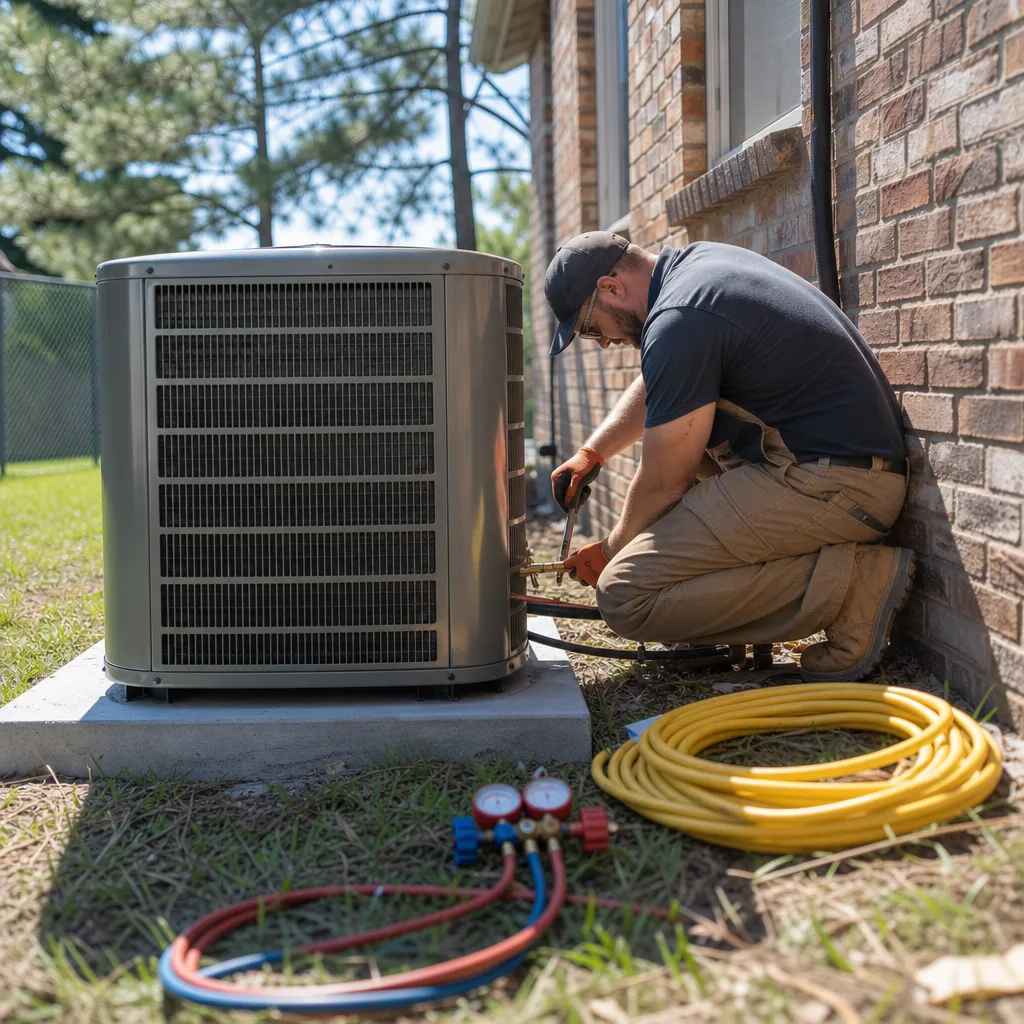
A standard like-for-like replacement is often finished in a single day. That means the new system goes where the old one sat and uses the existing connections. Speed isn’t what you’re paying for, though. The steps that are hard to see are the ones that decide whether your new system cools well for years or starts having trouble early.
Here’s what a proper installation includes, in order:
- Recovering the old refrigerant. It gets pumped out with recovery equipment, not released into the air. Federal rules require it.
- Taking out the old equipment. That’s the outdoor condenser and the indoor coil, which in many Carrollton homes sits on top of the furnace up in the attic.
- Setting the new condenser. It goes on a level pad with enough open space around it to breathe.
- Installing the new coil. It’s fitted to your furnace or air handler and sealed so air doesn’t leak around it.
- Connecting the refrigerant lines. The copper lines that run between the indoor and outdoor units are joined and sealed.
- Pressure testing and pulling a vacuum. The lines are filled with nitrogen to check for leaks. Then a vacuum pump pulls out air and moisture. Moisture left in the lines can damage a new compressor over time.
- Wiring and drainage. The power connection and thermostat wiring get hooked up. So does the condensate drain that carries water away from the coil.
- Startup and testing. The system is charged to the maker’s specs, then run while the installer checks pressures, airflow, and how cold the air is coming out of your vents.
The attic part of that list matters a lot here. On a North Texas summer afternoon, an attic gets brutally hot. That’s hard on the crew, and it’s not when anyone does their most careful work on a coil connection or a drain line. It’s one more reason the spring or fall timing mentioned earlier pays off if your system can wait.
Our standard installation covers the equipment and materials, professional installation, standard connections, startup and testing, and haul-away of your old unit. Duct, electrical, and plumbing changes aren’t part of a standard job. Neither are code corrections or permits, unless your estimate says so. If your home needs any of those, you should hear about it before the work starts, not halfway through the day.
Before the installer packs up, walk through these with them:
- Feel the air at a few vents, including the room farthest from the unit. It should be noticeably cool, and the airflow should feel steady.
- Ask what the startup readings showed and whether the refrigerant charge was set by measurement.
- Check that the condensate drain is connected, and that the attic coil has its overflow protection in place.
- Make sure your thermostat is set up and that you know how to use it.
- Ask whether a permit applies to your address and who’s handling it.
A good installer won’t mind any of those questions. You’re the one living with this system, so you should know it was done right the first time before anyone drives away.
Watch Our Video
See How We Handle Central air conditioning installation in Carrollton
Xtreme Air Services — Carrollton
What Drives the Cost of Your Installation
Our typical price range for central air conditioning installation is $5,500-$13,000. Our most common job runs $7,000-$10,000. That’s a standard like-for-like replacement that uses your existing connections with no major modifications. The price includes a new condenser and coil, not just the outdoor unit.

Where your home falls in that range comes down to a handful of things:
- Size and efficiency. Tonnage sets how much cooling you’re buying, and the right number comes from the load calculation covered above. Efficiency is rated by SEER2, which tells you how much cooling you get for each unit of electricity. A higher SEER2 system costs more up front and less to run every month.
- Brand and model. Basic single-stage units cost less than variable-speed systems. A variable-speed system runs at lower speeds for longer stretches, which evens out temperatures and pulls more humidity out of the air. As a Trane Comfort Specialist, we can walk you through Trane options at different levels.
- Ease of access. A coil in a roomy attic with a clear path is quicker work than one wedged into a tight attic corner or a cramped closet.
- The condition of what’s already there. Worn ductwork, wiring that can’t handle the new unit, or a tired drain setup may need work before a new system can run right.
- Code upgrades and permits. If parts of your current setup don’t meet today’s code, they have to be brought up to it.
- Custom fabrication. Sometimes a new coil needs custom sheet metal to fit your furnace or air handler properly.
Higher efficiency pays off most when a system runs hard for months at a time, and that’s exactly what a North Texas summer asks of it. Still, the top model isn’t right for every home or every budget. If you plan to move in a few years, a mid-range system may make more sense. Ask to see two or three options side by side, with the difference in monthly running costs explained in plain English.
The items left out of a standard job, like duct, electrical, and plumbing changes, code corrections, and permits, are the ones most likely to change your final number. You should see them written out before anyone starts work. With our upfront flat-rate pricing, you approve the price before we begin. There’s no meter running and no surprise line on the bill.
If the total is more than you want to pay all at once, we offer flexible financing on qualifying installations and larger jobs, on approved credit. That can help you pick the system that’s right for your home instead of the one that fits this month’s checking account.
Before you sign with anyone, get clear answers to these:
- Is this price for a matched condenser and coil, or the outdoor unit only?
- What size and SEER2 rating am I getting?
- What isn’t included, and what would those items cost if my home needs them?
Call 469-269-6099
Frequently Asked Questions
Common questions about Central air conditioning installation
How long does a central air conditioning installation take?
A standard like-for-like replacement is usually finished in a single day. That means your new system goes where the old one sat and uses the existing electrical, refrigerant line, and drain connections. Jobs take longer when ductwork, electrical, or code corrections are needed, so ask upfront if your home might need any of that.
Do I need a permit to replace my AC system in Carrollton?
It depends on the scope of your job, so ask before work starts. Your installer should tell you whether a permit applies to your address and who is responsible for pulling it. Permits and code corrections are not part of a standard installation price unless your estimate says so.
Can I just replace the outdoor unit and keep my old indoor coil?
You can, but it usually costs you later. The outdoor condenser and indoor coil are built to work as a matched pair, so pairing a new condenser with an old coil can hurt cooling performance and shorten the life of that old coil. A standard installation replaces both together so the system works as one unit from day one.
What should I do if some rooms in my house never get cool?
Uneven cooling often points to a sizing or airflow problem rather than a dying system. It can mean the unit was never sized right for your home, or that ductwork can’t carry enough air to far rooms. A cooling load calculation that checks your ducts along with the equipment can identify the real cause before you pay for a repair that won’t fix it.
Ready to Get Started?
Call (469) 269-6099 Today, Get Service Today.