


Furnace Replacement in Carrollton: Know Before You Replace
An honest way to tell if your furnace is worth one more repair, and what a full replacement includes.
What’s Covered on This Page
- Signs Your Furnace Needs Replacement, Not Repair
- When Repair Still Makes More Sense Than Replacement
- What a Furnace Replacement Includes in Carrollton Homes
- Questions to Ask Before You Hire a Furnace Replacement Company
- What Happens on Furnace Replacement Day
- How long does a furnace last before I should plan on replacing it?
- Can I keep my current thermostat after a furnace replacement?
- Will a furnace replacement fix uneven heating in my home?
- Do I need to replace my air conditioner at the same time as my furnace?
Signs Your Furnace Needs Replacement, Not Repair
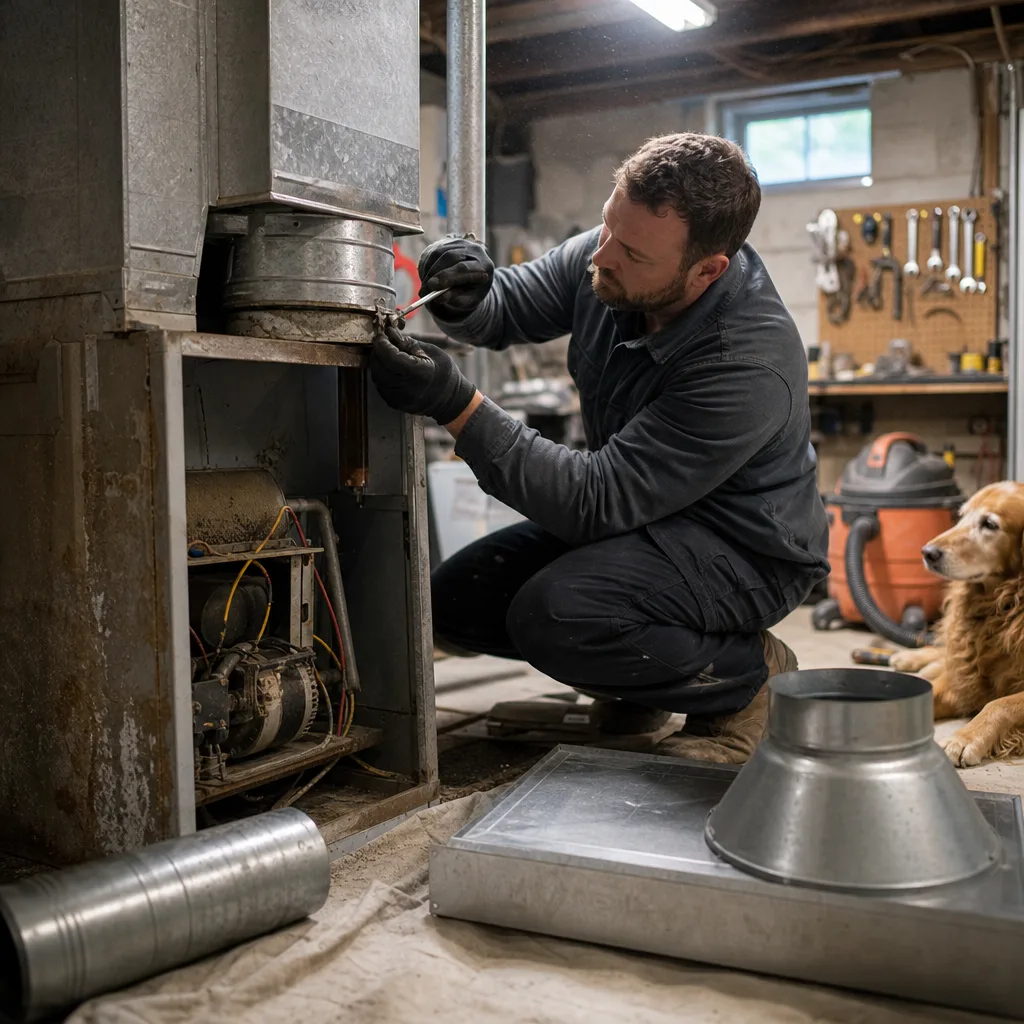
We’ll start with the honest part. A lot of furnace problems are simple fixes. A worn ignitor, a dirty flame sensor, a bad blower motor, or a failed control board can all be replaced without touching the rest of the system. If your furnace is fairly young and it’s been reliable up to now, a repair is often the smart move, and you shouldn’t let anyone talk you out of it.
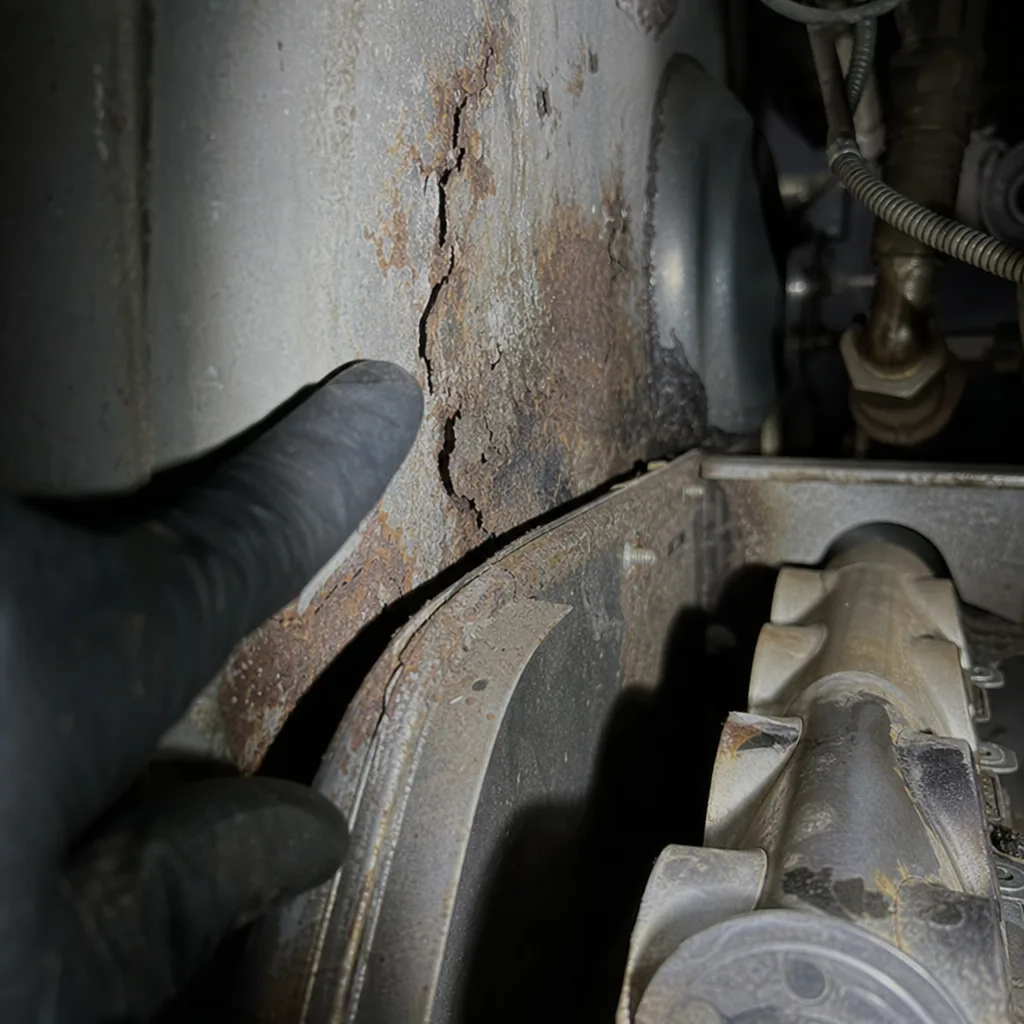
Replacement is a different conversation. It comes up when the furnace itself is wearing out, not just one part. Here’s what that tends to look like:
- It’s old. Look for the manufacture date on the data plate inside the furnace door. If it’s the original unit in an older home, every new repair is going into equipment near the end of its life.
- It keeps breaking. One service call each winter is normal wear. Two or three calls a season, each for a different part, means the system is failing one piece at a time.
- The repair costs add up fast. If the repair you’re quoted, plus what you’ve spent over the past couple of years, is getting close to the cost of a new furnace, you’re paying to keep an old machine alive.
- A safety problem shows up. A cracked heat exchanger can let combustion gases, including carbon monoxide, mix with the air in your home. On most furnaces that crack isn’t worth repairing, and replacing the furnace is the safe fix.
- Your home never feels even. Some rooms are cold, others are stuffy, and the furnace runs and runs to catch up. Worn parts and outdated equipment often can’t move heat the way they used to.
- Your gas bills creep up while your habits stay the same. Older furnaces lose efficiency as they age. A newer furnace with a higher AFUE rating, which is the share of your gas that turns into heat, wastes less.
There’s a North Texas twist to all of this. Here, the furnace often sits in the attic, where it bakes through long summers and then gets pushed hard when a sudden cold front drops temperatures overnight. Months of attic heat followed by a few hard days of work is tough on older wiring, motors, and controls. That’s why a furnace that limped through a mild December can quit on the first real freeze.
Picture this. Your furnace is the one that came with the house. Last winter you replaced the ignitor. This fall it was the inducer motor. Now it’s short-cycling, clicking on and off, and the back bedroom won’t warm up. Any one of those problems is fixable. Together, they tell you where this is heading.
When our technicians look at your system, we’ll show you what we find and tell you plainly whether we’d repair it or replace it if it were our own home. If a repair will get you several more good winters, that’s what we’ll recommend. The choice is always yours to make.
When Repair Still Makes More Sense Than Replacement
Not every furnace problem is a reason to buy a new one. If any of these fit your situation, a repair is usually the better use of your money.
- Your furnace is fairly young and has a clean track record. If a furnace has run fine for years, its first breakdown is almost always one part failing, not the whole system wearing out.
- The fix is small compared to the cost of a new furnace. A part swap that buys you several more reliable winters is a good trade, and you should take it.
- You’re planning to move in the next year or two. A new furnace won’t pay you back that fast in lower gas bills. A solid repair keeps your family warm until you hand over the keys.
- Your AC is old too, and you’ll probably replace it soon. In most homes, the furnace’s blower also pushes the cooled air from your AC through the same ducts. Repairing the furnace now and replacing both systems together later can work out better than doing them a year apart.
- The real problem is the ductwork, not the furnace. In a lot of North Texas homes the ducts run through a hot attic, where they can come loose, sag, or get crushed. A healthy furnace can’t heat a room if the air never reaches it. Duct repair or duct sealing may solve the cold bedroom without touching the furnace.
If your heat just stopped, check a few simple things before you call anyone. They take five minutes, and they don’t need any tools.
- Thermostat. Make sure it’s set to Heat, the setting is a few degrees above the room temperature, and the batteries aren’t dead.
- Air filter. A clogged filter can choke the airflow until the furnace overheats and shuts itself off. Put in a fresh one and see if the heat comes back.
- Power. Most furnaces have a switch nearby that looks like a regular light switch. Make sure it’s on and that the breaker for the furnace hasn’t tripped.
- Furnace door. Many furnaces won’t run if the front panel isn’t seated tight. Someone may have bumped it while changing the filter.
If one of those gets your heat running again, you just saved yourself a service call. That’s a good outcome, and nobody should make you feel otherwise.
It’s also fine to wait. If your older furnace still starts every time, heats the house evenly, and checks out safe, you don’t have to replace it this week just because of its age. A heating tune-up before the cold weather sets in can catch worn parts early. It also gives you time to compare options and set aside money, so you can replace the furnace on your schedule instead of during the first hard freeze.
The point is simple. Replace the furnace when it’s done, not when it’s merely inconvenient. If a repair, a new filter, or a bit of patience will carry you through, that’s the right call for your home.
What a Furnace Replacement Includes in Carrollton Homes
Once you know your furnace is done, the next question is simple: what am I paying for? Here’s the straight answer. A furnace replacement covers the new equipment, the work to put it in, and getting the old one out of your house. Our most common job is a standard like-for-like replacement that uses your existing connections with no major modifications. That job runs $4,600 to $6,300. Across all furnace replacements, the typical range is $3,800 to $8,000.
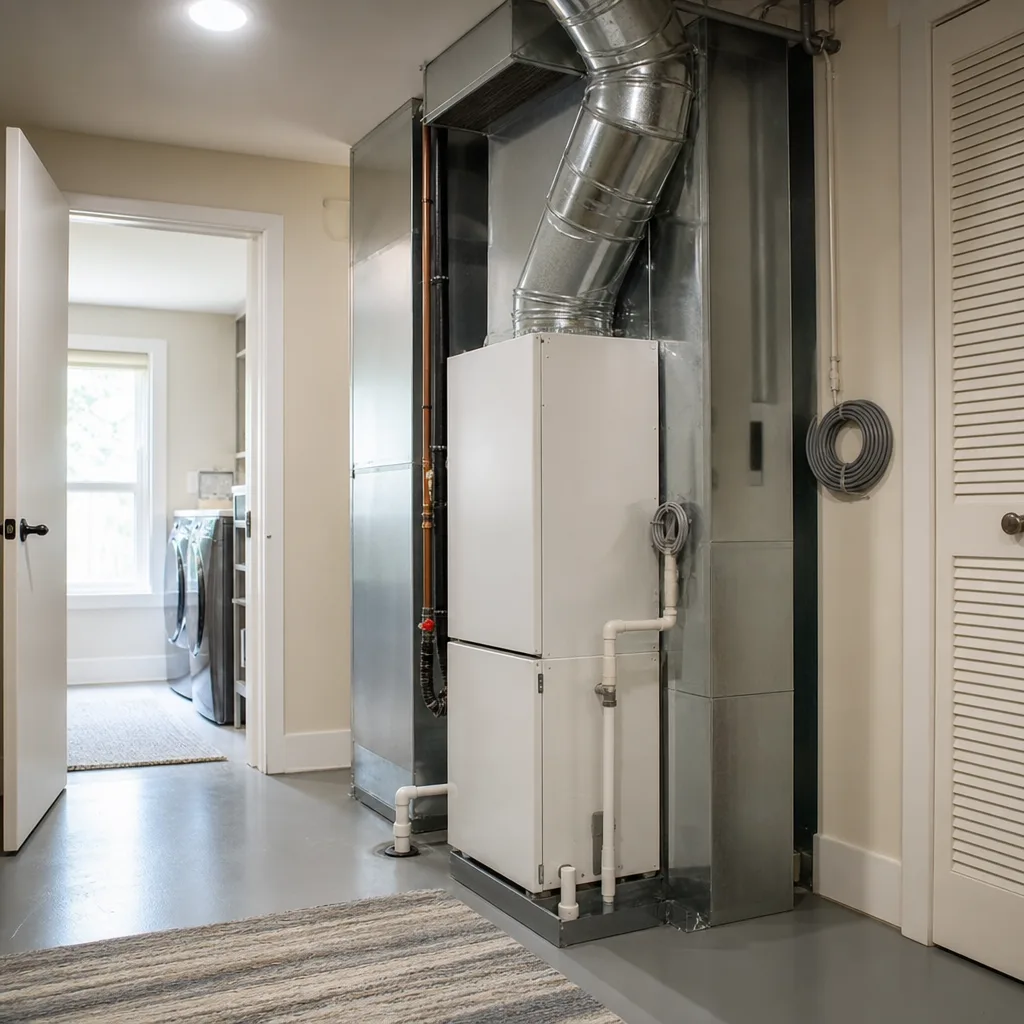
Here’s what’s included:
- The new furnace and materials. This is the equipment itself plus the parts needed to install it.
- Professional installation by our licensed and insured technicians.
- Standard connections. The new furnace gets hooked up to the gas, power, venting, and ductwork you already have.
- Startup and testing. The furnace is fired up and checked so you know it’s heating your home the way it should.
- Haul-away of the old unit. You don’t have to figure out what to do with a dead furnace sitting in your garage.
Some work isn’t included unless it’s spelled out in your quote. That covers changes to your ducts, electrical, or plumbing, code corrections, and permits. Why does this matter? If your old furnace went in years ago, the venting, gas line, or wiring might not line up with what’s required today. Fixing that is real work, and you should see it listed on its own line, not buried in one big number.
These are the things that push the price up or down:
- Size and capacity. A furnace has to match your home. One that’s too big or too small wastes money and leaves you uncomfortable.
- Efficiency. A higher AFUE rating costs more up front and burns less gas every winter after that.
- Brand and model. As a Trane Comfort Specialist, we can walk you through Trane furnace options at different efficiency levels.
- Ease of access. A furnace tucked into a tight attic space, which is common in North Texas homes, takes more time and care to swap out than one in a hall closet.
- Condition of your existing ductwork, wiring, and plumbing.
- Code upgrades and permits.
- Custom fabrication. If the new furnace doesn’t line up with your existing ducts, custom sheet metal may be needed to make it fit right.
You’ll get upfront pricing and see your price before any work starts, so there’s no meter running and no surprise at the end. There’s a $26 to $99 service-call fee, and it’s credited toward the repair if you move forward with Xtreme Air Services.
If paying for it all at once is the hard part, flexible financing is available on qualifying installations and larger jobs, on approved credit. That way you can replace the furnace when it needs replacing, not when your savings account says so.
Whoever you hire, ask three questions before you sign. Is the furnace sized for my home? What’s left out of this price? Who handles the permit? A good contractor answers all three without hesitating.
Not sure what your Furnace replacement project needs? Ask us.
Call Today, Get Service Today. Xtreme Air Services — Carrollton is ready to help.
Questions to Ask Before You Hire a Furnace Replacement Company
You’ve already got the three quick questions about sizing, exclusions, and permits. These go one level deeper. A good company won’t mind any of them, and the way they answer tells you a lot about how they’ll treat your home.
- Are you licensed in Texas, and can I see the number? Heating and air contractors in Texas are licensed through the Texas Department of Licensing and Regulation. Ask for the license number and look it up yourself. Ours is HVAC License #TACLA29023C, and we’re glad to hand it over.
- How did you figure out the size? “Same as the old one” isn’t a real answer. Your old furnace may have been too big from day one, or your home may have changed since then. New windows, added attic insulation, or a closed-in patio all change how much heat your house needs. Ask what they looked at in your home to land on that number.
- Will this furnace work with my air conditioner? In most homes, the furnace blower also moves your cooled air in summer. If the new furnace doesn’t match your AC, you can end up with weak airflow or a damp, sticky house come July. Ask them to name the AC it’s being paired with and confirm the two fit together.
- What do you check before you leave? Startup and testing should mean more than “it turned on.” Ask what they test on the gas, the venting, and the airflow, and whether they’ll walk you through it. You should know your furnace is running safely before the truck pulls away.
- Who’s coming into my home? Some companies sell the job and send whoever’s free. Ask who does the install. Our team members are background-checked and drug-tested, because you deserve to know who’s in your attic and around your family.
- What if I need this on a weekend? Cold fronts don’t wait for Monday. Ask if nights or weekends cost more. With us, there’s no extra charge for nights or weekends.
A few answers should make you pause. Be careful if someone quotes you a firm price over the phone without seeing your furnace, your attic, or your ducts. The same goes for anyone who pushes you to sign today or says the deal goes away tomorrow. A furnace is a big decision. A company that respects you will give you a clear written price and the time to think it over.
Pay attention to how you feel during the visit, too. Did they explain things in plain English? Did they answer your questions, or talk around them? Did they mention repair as an option when it made sense? That’s usually how the rest of the job will go.
Our office is on East Trinity Mills Road right here in Carrollton. We’re licensed and insured, we’re a Trane Comfort Specialist, and your neighbors have given us a 4.8-star reputation across more than 2,900 reviews. Ask us every question on this list. We’ll look at your furnace, tell you straight whether it’s time to replace it, and show you the price before any work starts.
Call 469-269-6099
Watch Our Video
See How We Handle Furnace replacement in Carrollton
Xtreme Air Services — Carrollton
What Happens on Furnace Replacement Day
A like-for-like furnace swap is often a one-day job. You’ll lose heat for part of that day, so it helps to plan ahead. If a cold front is in the forecast, put out a space heater for the kids or pets, and keep it a safe distance from anything that can burn.
A few minutes of prep the night before makes the day go smoother:
- Clear a path to the furnace. If it’s in the attic, move boxes away from the pull-down ladder and the area around the unit.
- Make room in the garage or hallway below the attic opening. The old furnace has to come down and the new one has to go up.
- Put pets in a closed room. Doors will be opening and closing all day.
- Know where your gas meter and breaker panel are, in case anyone asks.
Most replacements follow the same basic order. First the gas and power to the old furnace get shut off. Then the old unit gets disconnected from the gas line, the vent pipe, the wiring, and the ductwork, and it’s carried out. In a lot of Carrollton homes the furnace sits in the attic, and that’s usually the slowest part of the day. Carrying a heavy box across attic joists and down a folding ladder takes care, and it can’t be rushed.
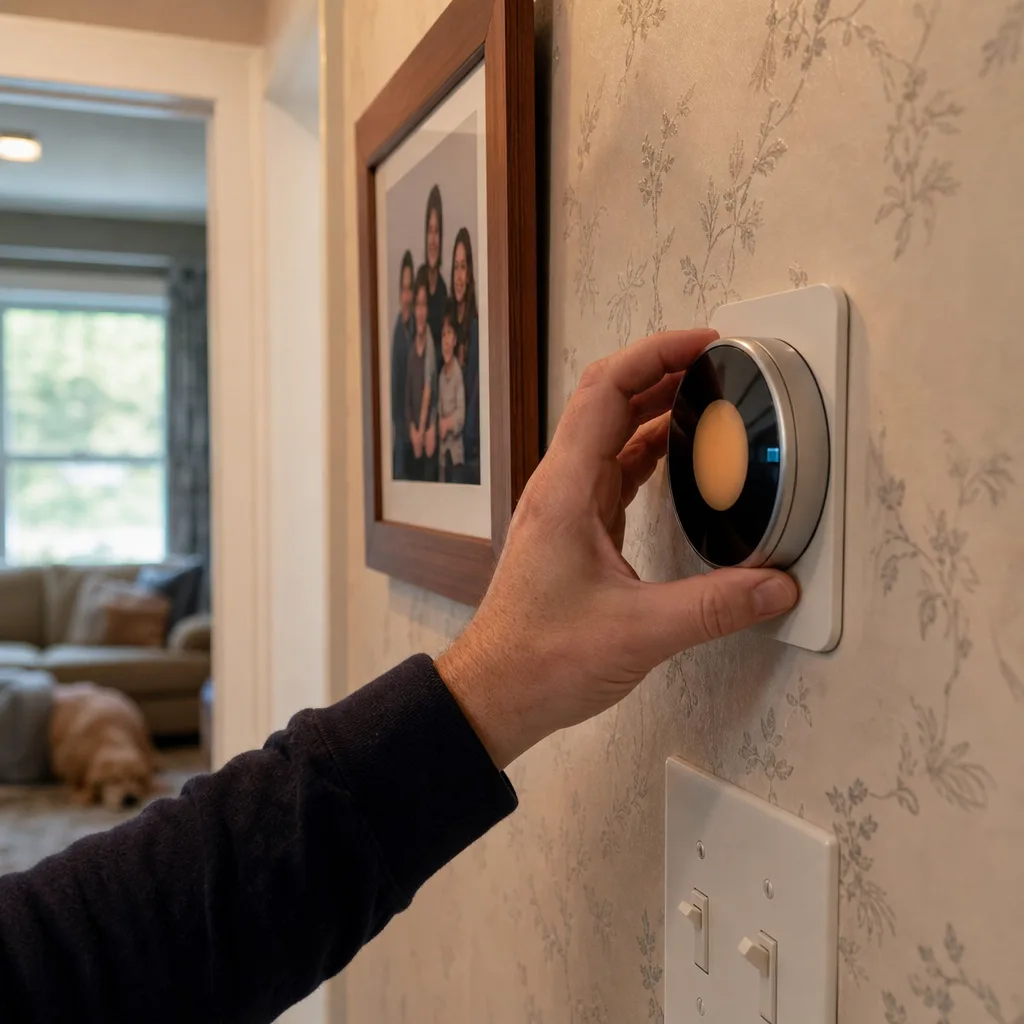
Next the new furnace gets set in place and leveled. It’s hooked up to your existing gas line, vent, wiring, and ducts. The thermostat gets connected so it can talk to the new equipment. If you’re moving up to a high-efficiency furnace, it may need a new plastic vent pipe and a drain line for the water it makes. That’s a modification, so it should already be listed in your quote, as covered above.
Then comes startup. The furnace is fired up and run through a full heating cycle. A good installer checks a few key things before calling it done:
- Gas connections are tested for leaks.
- The vent pulls exhaust out of your home the way it should.
- The gas pressure and the flame are set right for that furnace.
- Air is moving through your ducts and warm air is reaching your rooms.
- The air is tested for carbon monoxide near the furnace.
Before the crew leaves, you should get a quick walkthrough. Ask them to show you where the filter goes, what size it is, and how often to change it. Ask what the thermostat settings mean. Ask what to do if the furnace ever shuts off on its own. The old furnace goes with them. You shouldn’t find it sitting in your driveway.
Your first night with the new furnace might smell a little like burning dust. That’s normal. Factory oils and a little dust burn off the new parts the first few times it runs, and the smell should fade within a day or so. A strong gas smell is different. If you smell gas, leave the house and call your gas company right away.
By bedtime, you should be able to stand under a vent in the coldest room in the house and feel steady, warm air. That’s the whole point of the day. It should feel quieter and more even than the furnace you just retired.
Frequently Asked Questions
Common questions about Furnace replacement
How long does a furnace last before I should plan on replacing it?
Most furnaces last 15 to 20 years before major parts start failing one after another. If yours is the original unit in an older Carrollton home, every new repair is going into equipment near the end of its life. Check the manufacture date on the data plate inside the furnace door to see where yours stands.
Can I keep my current thermostat after a furnace replacement?
In most cases, yes. Your existing thermostat gets reconnected to the new furnace as part of a standard installation. If you’re upgrading to a high-efficiency model or changing systems, it’s worth asking upfront whether your thermostat is still compatible.
Will a furnace replacement fix uneven heating in my home?
It depends on the cause. A worn-out furnace that can’t keep up often does cause uneven heating, and a new one should solve it. But if your ductwork is loose, sagging, or crushed in the attic, a new furnace alone won’t fix a cold back bedroom. That’s a duct problem, not a furnace problem, and it’s worth checking both before you decide.
Do I need to replace my air conditioner at the same time as my furnace?
Not always, but it’s worth planning for if your AC is also getting old. The furnace blower usually moves the cooled air from your AC through the same ducts, so pairing mismatched equipment can mean weak airflow or a sticky house in summer. If your AC still has good years left, repairing the furnace now and replacing both together later often works out better than doing them a year apart.
Ready to Get Started?
Call (469) 269-6099 Today, Get Service Today.