


Chiller Installation in Frisco: What Commercial Property Owners Need to Know
Commercial chiller replacement sized for your building, with what's included and excluded explained before work starts.
What’s Covered on This Page
- Chiller Installation Is a Commercial Project, Not a Residential One
- Signs an Aging Chiller Needs Replacement
- How Xtreme Air Services Sizes and Installs a Chiller
- What a Standard Chiller Installation Includes and Excludes
- Questions to Ask Before You Hire a Chiller Installer
- How long does a building go without cooling during a chiller swap?
- Can I keep using my old chiller while I plan a replacement?
- What happens to the refrigerant from my old chiller during removal?
- Does a new chiller need a bigger electrical service than the old one?
Chiller Installation Is a Commercial Project, Not a Residential One
Let’s clear this up first, because it saves you time. A lot of people search for chiller installation when what they really want is a new air conditioner. That’s an easy mix-up, but the two are very different jobs.
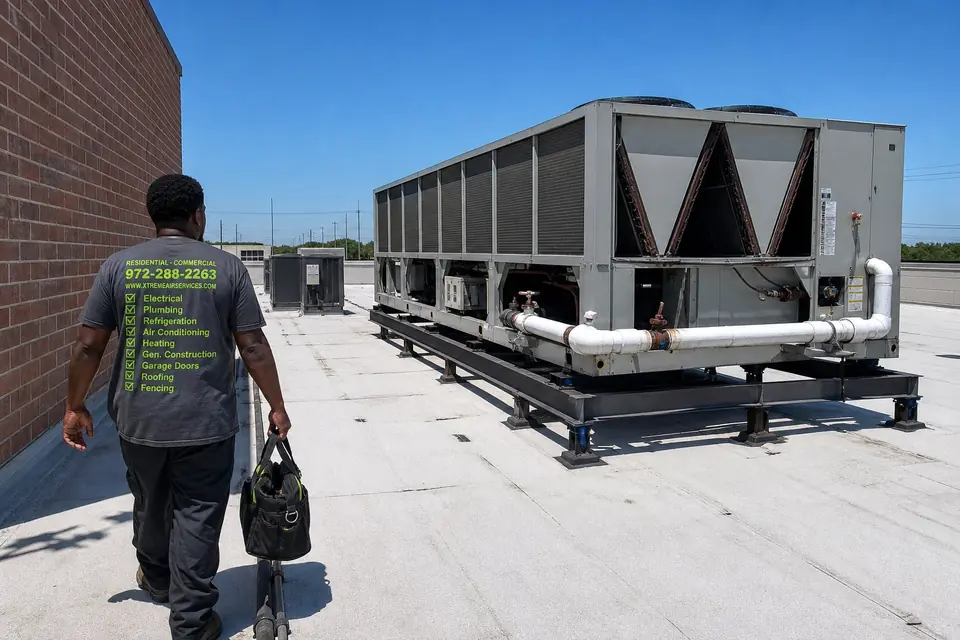
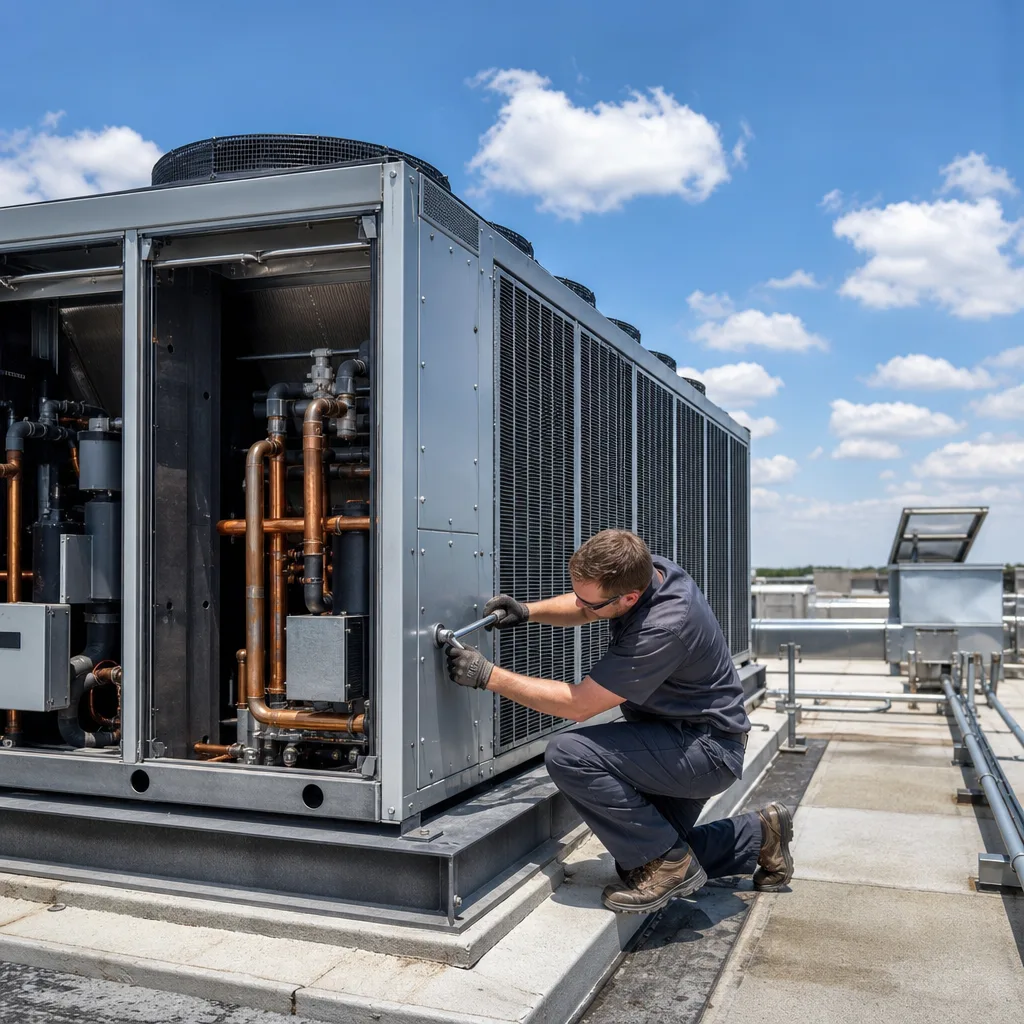
A chiller doesn’t blow cold air into a room. It chills water, then pumps that water through pipes to air handlers and coils all over a building. Those coils cool the air. One chiller can serve many floors, a whole school, or a production line. That’s why you’ll find chillers in mechanical rooms and on rooftops of larger commercial buildings, not beside a house.
Your home almost surely uses a split system. That means an outdoor condenser or heat pump, an indoor coil, and copper lines carrying refrigerant between them. Some homes use ductless mini-splits instead. Either way, the refrigerant cools the air directly. There’s no chilled water loop.
Not sure which one you have? Here’s how to tell in a couple of minutes:
- You likely have a split system if a single outdoor unit sits next to your home or business and thin copper lines run from it into the building.
- You likely have a chiller plant if you see large insulated water pipes, circulating pumps, a dedicated mechanical room, or a cooling tower on the roof or grounds.
- You likely have rooftop units if your building has boxy packaged units on the roof that each feed their own section of ductwork. That’s common in strip retail and smaller offices, and it isn’t a chiller either.
- You likely have a specialty unit if the word chiller came from a pool, a wine room, or a single piece of shop equipment. Those are small, specialized units, not a building chiller.
If you’re a homeowner, the honest answer is that you don’t need a chiller, and nobody should sell you one. What you probably want is a central air conditioning installation or an AC replacement. If you’re adding cooling to a garage, an addition, or a room the ducts don’t reach, a ductless mini-split installation is usually the better fit. Both of those are their own jobs with their own pages, and they cost a small fraction of a chiller project.
If you own or manage a commercial building, the picture changes. When your building already runs on chilled water, replacing that chiller is a big mechanical project. It touches piping, pumps, electrical service, controls, and often the roof or the mechanical room layout. When you’re planning a new building or a central plant upgrade, a chiller may be the right call for the size of space you need to cool.
That’s who the rest of this page is for: building owners, facility managers, and businesses whose tenants, equipment, or inventory depend on steady cooling through a North Texas summer. For them, a chiller isn’t a comfort upgrade. It’s what keeps the building open.
Signs an Aging Chiller Needs Replacement
Chillers don’t usually die all at once. They wear down over years, and the warning signs show up in your repair bills, your energy bills, and your tenants’ complaints long before the machine stops. If you catch those signs early, you get to plan a replacement on your schedule instead of scrambling during a heat wave.
Here’s what to watch for:
- Repairs are coming closer together. One service call a year is normal. When you’re calling for the same compressor, the same leak, or the same controls fault every few months, the machine is telling you something.
- It can’t keep up on the hottest days. A chiller that holds fine in spring but lets the building drift warm every summer afternoon has likely lost capacity. In North Texas, those peak days are exactly when you need it most.
- Your energy bills keep climbing. If your building’s use hasn’t changed but your power costs have, an older chiller working harder to do the same job is a common reason.
- It runs on an older refrigerant. Some older chillers use refrigerants that have been phased out. That makes every leak repair harder to source and more costly to fix, and it doesn’t get easier with time.
- Parts are getting hard to find. When a repair turns into a weeks-long wait for a part that’s no longer made, your building is exposed the whole time.
- Leaks, corrosion, or worn tubes keep showing up. Heat exchanger tubes and seals wear out. Once they start failing in more than one spot, patching them becomes a losing game.
- Your building changed, but the chiller didn’t. New tenants, added server rooms, kitchens, or production equipment can push a chiller past what it was sized for. Sometimes it isn’t broken. It’s just too small now.
- The controls are outdated. Old controls can’t talk to a modern building automation system, so you lose the ability to see problems early or run the plant efficiently.
Now the honest part. One of these signs on its own doesn’t mean you need a new chiller. If your unit has been well maintained and you’ve had one bad failure, a solid repair may give you years of good service. Replacing a chiller is a big investment, and nobody should push you into it because of a single breakdown.
The time to start planning is when two or three of these show up together. Say your chiller is getting older, you’ve had three repair calls this past year, and the second floor runs warm every August afternoon. That’s a pattern, not bad luck. A good way to weigh it is to add up what you’ve spent on repairs lately, look at where your energy costs are headed, and compare that against what a replacement would cost over the years you plan to own the building.
Timing matters here, too. A chiller replacement takes planning, equipment lead time, and often crane work or mechanical room changes. If you start the conversation in the fall or winter, you can schedule the work during cooler months when the building can get by with less cooling. Waiting until the old unit quits in July leaves you with fewer choices and a hot building while you wait.
How Xtreme Air Services Sizes and Installs a Chiller
A good chiller install starts with the right size. If a chiller is too big, it cycles on and off, wears out sooner, and wastes power. If it’s too small, it can’t hold the building on a 105-degree afternoon. Chillers are rated in tons. One ton equals 12,000 BTUs of heat removed per hour, so this is a measurement of how much heat the machine can pull out of your building, not how much it weighs.
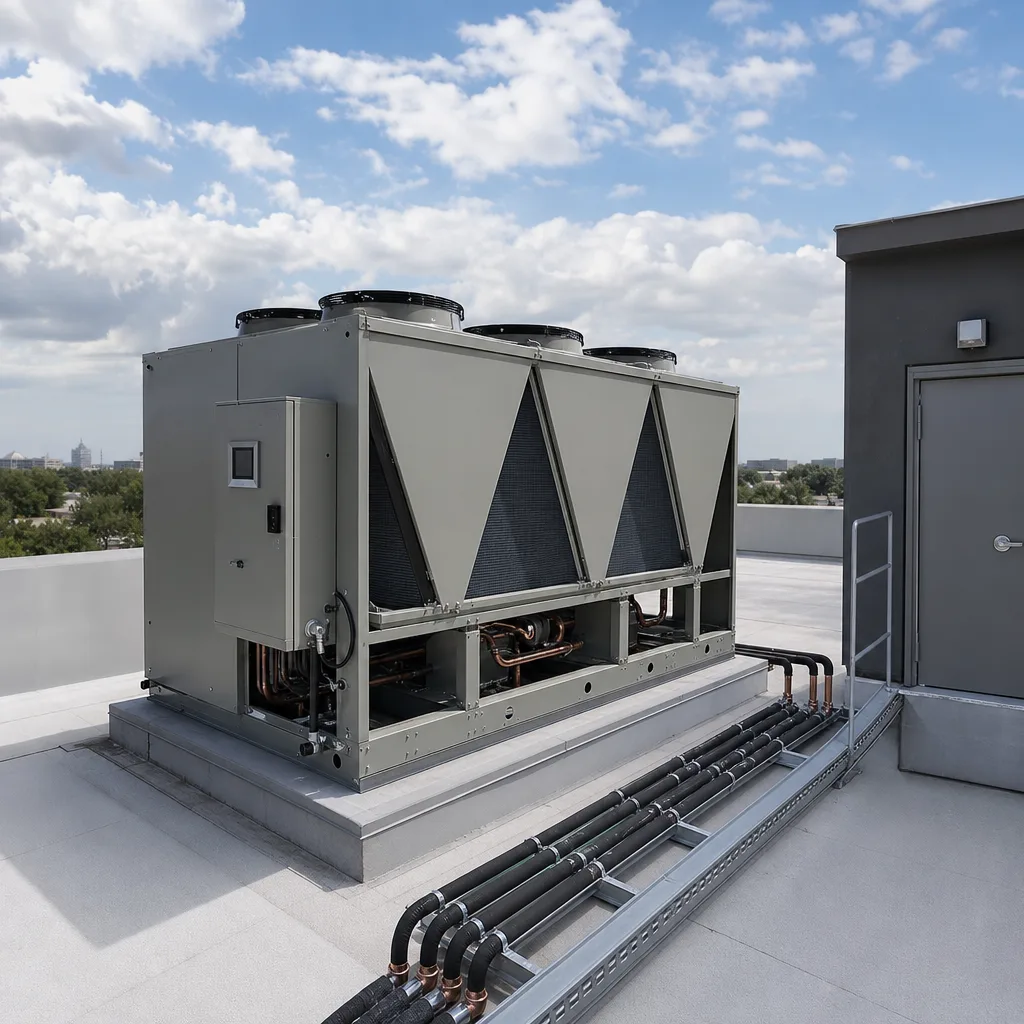
Matching the old chiller’s tonnage only works if the old one was sized right and your building hasn’t changed. That’s why cooling load calculation is one of the services we offer. It’s a room-by-room look at how much heat your building takes on, so your new chiller is sized for the building you have today.
Here’s what shapes the size, the scope, and the price of your job:
- Size, capacity, and efficiency. More tons and higher efficiency cost more up front, and higher efficiency can lower your power bills over the years you own the building.
- Brand and model. Different equipment lines carry different prices and lead times.
- Ease of access. A rooftop unit that needs a crane, or a mechanical room with a tight doorway, adds time and planning.
- The condition of what’s already there. Old piping, wiring, or connections that aren’t up to the job need work before the new chiller can go in.
- Code upgrades and permits. Some older setups need changes to meet current requirements.
- Custom fabrication. When the new unit doesn’t line up with the old connections, parts may need to be built to fit.
You’ll get upfront flat-rate pricing that you approve before any work starts. You won’t see a meter running, and you won’t get a surprise bill halfway through.
Your installation includes the equipment and materials, professional installation, standard connections, startup and testing, and haul-away of the old unit. Startup and testing means the chiller gets run and checked under real conditions before we call it done. You aren’t left to find problems on the first hot day.
Some items aren’t included unless your quote says so. These are duct, electrical, or plumbing modifications, code corrections, and permits. If your job needs any of them, you’ll see them spelled out before you approve anything.
Our most common chiller job is a like-for-like replacement that uses the existing connections with no major changes. That job runs $42,000 to $96,000. Chiller projects overall range from $15,000 to $150,000, depending on the factors above. Flexible financing is available on qualifying installations and larger jobs, on approved credit.
A chiller job touches more than one trade. Piping, pumps, electrical service, and building controls all have to work together. Xtreme Air Services is one licensed and insured team for HVAC, plumbing, electrical, and refrigeration, under HVAC License #TACLA29023C. If your project needs piping installation or electrical work, you don’t have to line up a second contractor and hope the two crews get along. Our technicians are background-checked and drug-tested, and we’re a Trane Comfort Specialist. Our home office is at 6160 Warren Pkwy in Frisco.
Call 469-490-3595
Ready when you are – get in touch today.
Call Today, Get Service Today. Xtreme Air Services — Frisco is ready to help.
What a Standard Chiller Installation Includes and Excludes
You already know the basic split between what’s in a standard job and what’s extra. The harder question is whether your job is really standard. A like-for-like swap sounds simple. But a chiller sits in the middle of a whole system, and the old machine’s surroundings decide how simple it really is.
Standard connections means the new chiller hooks up to the piping, power, and controls you already have, in about the same spot, with no rework. Your job moves past that line when something around the chiller has to change. Here’s where that most often happens on commercial buildings:
- The new unit has a different footprint. Pipe connections may sit in a new spot, or the pad or roof curb may not fit. That can mean pipe changes or custom parts.
- Your electrical service is too small. A bigger or more efficient chiller may need a different breaker, new wire, or panel work before it can run.
- Your pumps are tired. If the pumps that move chilled water are worn or sized for the old setup, swapping only the chiller can leave you with a new machine that still can’t move enough water.
- Your controls don’t match. A new chiller may need wiring or programming to work with your building automation system.
- The water loop is dirty. Years of scale and rust inside the pipes can foul a new chiller fast. Cleaning or treating the loop is often smart, but it’s its own line item.
- Getting the old unit out is hard. A tight mechanical room, a rooftop that needs a crane, or a street closure for lifting all add time and planning.
None of these mean someone is padding your bill. They’re real parts of the job that a quote can’t price until someone looks at your building. The risk is a quote that stays quiet about them, then they show up as change orders after the old chiller is already gone.
Before you sign with anyone, ask these questions and get the answers in writing:
- Is this quote for a true like-for-like swap, and what would make it not one?
- Who pulls the permits, and is that cost in the price or separate?
- How is refrigerant from the old chiller handled and recovered?
- Does startup include checking the chiller with my pumps and controls running, or just the chiller by itself?
- If you find a problem with my piping or wiring once the work starts, how will you tell me, and will I approve the cost before you go on?
- How long will my building be without cooling, and what’s the plan if that runs long?
A contractor who answers those plainly is one you can plan around. If the answers are vague, the price probably is too.
You’ll get our scope spelled out up front, including anything outside a standard job, so you can approve it before work begins. That way your budget and your downtime hold no surprises.
Call 469-490-3595
Watch Our Video
See How We Handle Chiller installation in Frisco
Xtreme Air Services — Frisco
Questions to Ask Before You Hire a Chiller Installer
Price matters, but the crew behind the price matters more. A chiller will cool your building for many years, and how well it’s set the first time shapes every one of those years. These questions help you sort the contractors who do this work from the ones who’d be learning on your building.
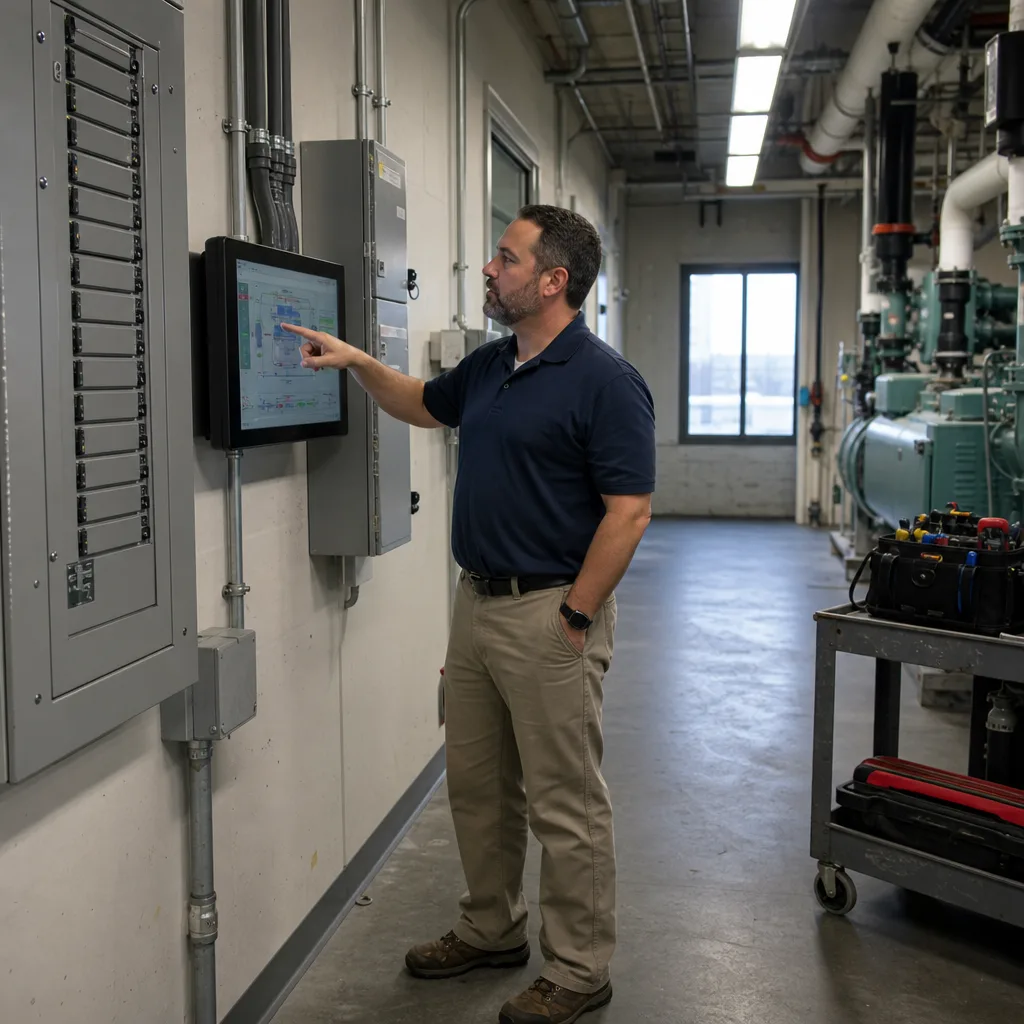
- Are you licensed for this work in Texas, and can I check it? The Texas Department of Licensing and Regulation (TDLR) licenses HVAC contractors. A real contractor will give you the number right away, and you can look it up yourself in a few minutes.
- Can you send a certificate of insurance before work starts? A chiller swap can involve cranes, rooftops, and heavy rigging. If something gets damaged, you want their policy covering it, not yours.
- Who will be on my job? Ask if it’s their own crew or a subcontractor, and who runs the site day to day. You want one name and one phone number you can call.
- Are the people handling refrigerant certified? Federal EPA rules require certification to recover and handle refrigerant. Ask to see it.
- Will you check my building’s cooling load, or just match the old tonnage? As covered above, the old chiller’s size may not fit the building you have today.
- What’s the lead time on the equipment, and when would you order it? Large commercial chillers aren’t always sitting in a warehouse. A good installer builds the schedule around that wait so your building isn’t left exposed.
- Who handles the crane, the lift plan, and any parking lot or road closures? Someone has to plan the lift and coordinate it. You don’t want to find out on install day that nobody did.
- What will you hand me when it’s done? Ask for the startup readings, control settings, equipment details, and manuals. That record helps whoever services the chiller next.
- Have you done chiller or central plant work on buildings like mine? An office, a school, and a production floor each load a chiller differently. Ask for examples of similar commercial work.
Watch for a few red flags, too. Be careful with anyone who gives you a firm price over the phone without seeing your mechanical room or roof, won’t put the scope in writing, or pushes you to sign today. A contractor who can’t tell you who’ll be doing the work is another warning sign. Any one of these is a good reason to slow down.
It’s also completely fair to get more than one quote on a project this size. A contractor who’s confident in the work won’t mind the comparison. If they get defensive about it, you’ve learned something useful.
You can ask us every one of these questions. We’re licensed and insured, and we’ll give you a straight answer on each one. Because one team at Xtreme Air Services handles HVAC, plumbing, electrical, and refrigeration, the people answering your piping and electrical questions are the same people doing that work. You’ll get upfront flat-rate pricing to approve before anything starts, so you know who’s on your job and what it costs before the old chiller comes out.
Call 469-490-3595
Frequently Asked Questions
Common questions about Chiller installation
How long does a building go without cooling during a chiller swap?
It depends on your building’s layout and access, but the goal is always to keep downtime as short as possible. Jobs with easy access to the mechanical room or roof move faster than ones needing a crane or a tight lift plan. Ask your contractor for a clear timeline in writing before work starts, so you can plan around it.
Can I keep using my old chiller while I plan a replacement?
Yes, if it’s still running safely, but watch for warning signs like repeated repair calls or struggling on the hottest days. Many building owners keep an aging chiller going for a season while they plan equipment lead times and schedule the swap for cooler months. The key is catching the warning signs early instead of waiting for a summer breakdown.
What happens to the refrigerant from my old chiller during removal?
It gets recovered by a certified technician, not vented into the air. Federal EPA rules require refrigerant handling certification, so it’s worth asking any installer to show proof of that certification before they start. This matters most with older chillers running refrigerants that are harder to source for repairs.
Does a new chiller need a bigger electrical service than the old one?
Sometimes, especially if the new unit is larger or more efficient than what you had. Your electrical panel and wiring need to match the chiller’s power draw, and that’s checked before installation, not after. If your building’s electrical service hasn’t been updated in years, this is worth asking about during your quote.
Ready to Get Started?
Call (469) 490-3595 Today, Get Service Today.