


Commercial HVAC Installation in Frisco: What the Job Involves
New commercial systems scoped and sized for your building, with what's included and what costs extra laid out first.
What’s Covered on This Page
- Signs Your Frisco Building Needs New Installation, Not Repair
- When Repair or Duct Work Solves the Problem Instead
- How a Commercial Installation Project Is Scoped and Sized
- What’s Included in the Installation and What Costs Extra
- Permits and Licensing Requirements for Commercial Projects in Frisco
- What is the $5,000 rule for HVAC systems?
- What does a commercial HVAC installer do on the job?
- Why do commercial HVAC installation quotes vary so much between contractors?
Signs Your Frisco Building Needs New Installation, Not Repair
Most business owners don’t wake up wanting a new HVAC system. You get there one service call at a time. Here are the signs that you’ve crossed the line from fixing to replacing.
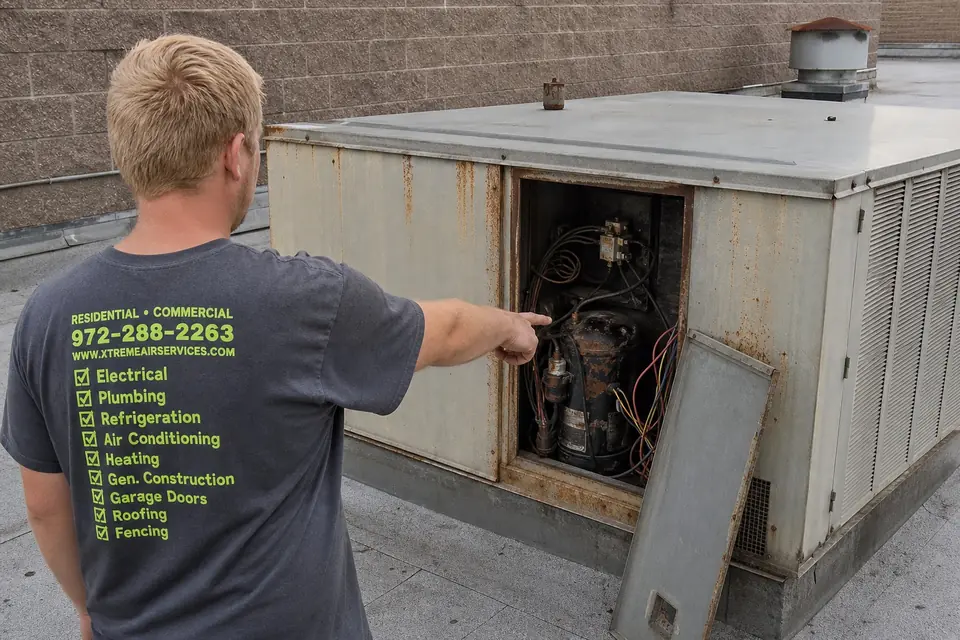
- The same unit keeps breaking. If a technician is on your roof every few months, each repair is buying you less time. Add up what you’ve spent this year and ask whether that money would be better spent on equipment that runs.
- A major part failed on old equipment. A dead compressor or a cracked heat exchanger on a young unit is worth fixing. On a unit near the end of its life, it’s often the moment to replace it.
- Your system uses R-22 refrigerant. R-22 is no longer made for new equipment, so the supply that’s left keeps getting harder to find and more expensive. A leak on an R-22 system can turn into a big bill fast.
- It can’t keep up when it’s hottest. If your space creeps warmer every afternoon from June through September, your equipment may be undersized, worn out, or both. Long, hot Texas summers are hard on rooftop units that are already tired.
- Your energy bills are climbing and usage hasn’t changed. Older equipment works harder to do the same job. Newer high-efficiency systems are rated by SEER2, which is simply a measure of how much cooling you get for each dollar of electricity.
- Your building changed, but the HVAC didn’t. A tenant build-out, new walls, more staff, a commercial kitchen, or a server closet all change how much heating and cooling a space needs. A system sized for the old layout won’t serve the new one well.
- Parts are hard to get. When a repair means waiting weeks for a discontinued part, your business is sitting in the heat the whole time.
Picture a retail space where the back room is always hot, the front is always cold, and customers notice. That’s often not a broken part. It’s a system that no longer matches the building, and no repair will fix that.
Now, the honest part. You don’t need a new system just because something stopped working. A failed capacitor, a bad fan motor, a clogged drain line, or a dirty coil are normal repairs, even on older equipment. If your unit is still fairly young, has a clean repair history, and cools your space evenly, fix it and keep running. Replacing good equipment early wastes money you could put back into your business.
The tough cases sit in the middle: a unit that’s getting older, one or two big repairs, and bills that are slowly rising. That’s when you want someone to look at the whole picture, not just the broken part. When we look at your system, we’ll explain what we found and what each option costs, clearly and upfront, so you can make the call that’s right for your building and your budget.
When Repair or Duct Work Solves the Problem Instead
A lot of comfort problems aren’t caused by the unit on your roof. They’re caused by how the air gets from that unit to your rooms. If your equipment is healthy and making cold air, putting in a new one won’t fix air that never reaches the right place. You’d pay for a new system and still have the same hot office.
Here’s how to tell. Stand under a supply vent in the problem room and feel the air. If it’s cold but weak, or barely moving, the trouble is usually in the ducts or the airflow setup, not the equipment.
These problems can look like a failing system, but duct work, balancing, or controls usually fix them:
- Leaky or loose ducts. A joint that’s pulled apart above a drop ceiling can dump cold air into the space overhead instead of your room. Duct sealing or repair gets that air back where you paid for it to go.
- Crushed or kinked flex duct. One pinched run can starve a whole office. Re-hanging or replacing that section is a small job.
- Too little return air. After walls go up or a space is split, some rooms can’t push air back to the unit. Adding or resizing a return often fixes rooms that feel stuffy and stay warm.
- Air that was never balanced. Dampers inside the ducts control how much air each area gets. If nobody set them after a remodel, one side of the building gets too much and the other gets too little. HVAC system balancing adjusts them to match how you use the space now.
- One thermostat trying to run two very different areas. A sunny storefront and an interior back room don’t need the same thing. Zoning, or better controls, can let each area ask for what it needs.
- Controls that are set wrong. A schedule that shuts the system off too early, a thermostat in a bad spot, or a stuck setting can make good equipment look bad.
Heat matters here too. In a North Texas summer, ducts running through a hot roof space or across the roof itself can soak up a lot of heat before the air ever reaches you. Ducts with worn or missing insulation can make a healthy unit seem weak. Fixing the insulation and sealing the ducts often brings that cooling right back.
Duct work also isn’t wasted if you replace your system later. New equipment still needs good ducts to do its job. If your ducts are leaking or badly laid out, a new unit hooked up to them will struggle in the same rooms. So when your equipment still has life left, fixing the air path first is the smarter order.
If the unit cools fine, the repair history is clean, and the trouble is that some rooms are hot while others are cold, start with the ducts, the balance, and the controls. Save the new system for when the equipment itself is the problem.
How a Commercial Installation Project Is Scoped and Sized
A good installation starts with the right size. Get the size wrong and even brand-new equipment will leave your space uncomfortable. Commercial systems are measured in tons. One ton of cooling equals 12,000 BTUs per hour, and a BTU is just a unit of heat. The question is how much heat your building takes on during a long North Texas summer day in Frisco.
Copying the number on the old unit isn’t a good way to answer it. That unit may have been sized for a different tenant, or sized wrong from day one. A proper cooling load calculation looks at what really heats your space:
- How many people are inside and for how many hours a day
- Lights, computers, kitchen equipment, and server closets, which all give off heat
- Windows and storefront glass, especially glass that faces west into the afternoon sun
- Insulation and the roof above you
- How the space is split up, such as open sales floor, private offices, or back rooms
Bigger isn’t better. An oversized unit cools the air fast, shuts off, and starts again a few minutes later. That short cycling wears out parts, and it doesn’t run long enough to pull moisture out of the air, so the space feels cool but clammy. An undersized unit runs nonstop and still falls behind on the hottest afternoons.
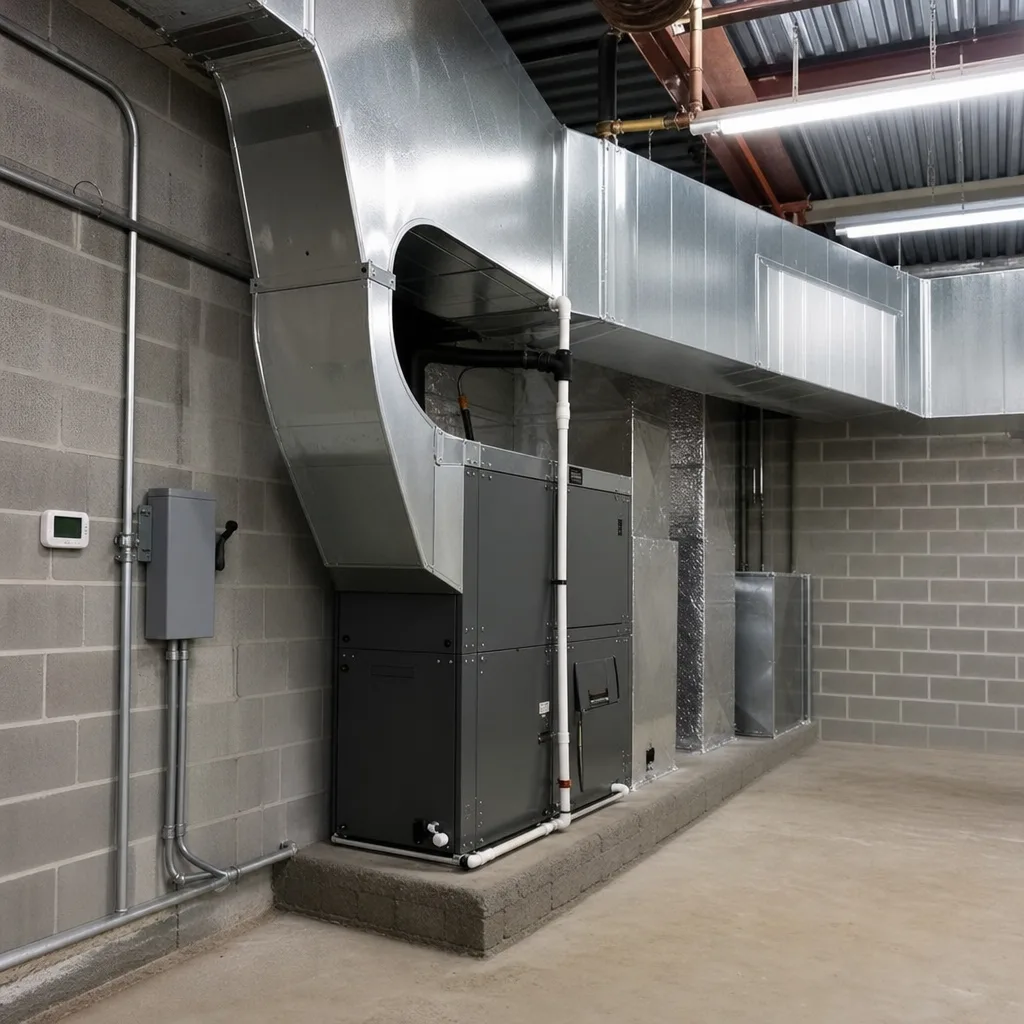
Once the size is set, the rest of the scope depends on what’s already in place. Can the new unit sit on the existing roof curb, or does it need an adapter? Can the crew reach the roof easily, or will a crane be needed? Is the electrical service big enough for the new equipment? Are the ducts in shape to carry the air? Each answer can move the price up or down.
Here’s what that looks like in real numbers for Xtreme Air Services. Our most common commercial HVAC installation is a standard like-for-like job that uses existing connections with no major modifications. That job typically runs $28,000 to $64,000 and covers equipment and materials plus professional installation, startup, and testing. Across all commercial installations, the typical range is $10,000 to $100,000, depending on tonnage and scope.
What moves your number within that range: equipment size and capacity, efficiency ratings like SEER2 and AFUE, brand and model, how easy the unit is to reach, the condition of your existing ductwork, wiring, and plumbing, code upgrades, permits, and any custom fabrication. A higher SEER2 rating usually costs more up front, but it gets more cooling out of each dollar of electricity over the life of the system.
That list matters, because it’s where quotes from different contractors stop being comparable. Before you sign with anyone, ask:
- Was the size based on a load calculation or on the old unit’s tag?
- Are permits, crane time, and curb adapters in this price?
- What happens if the ducts or electrical need work once the job starts?
- Who hauls away the old equipment?
- Can the work be scheduled around your business hours?
If a larger job doesn’t fit your budget all at once, flexible financing is available on qualifying installations and larger jobs, on approved credit.
Need help with Commercial HVAC installation?
Call Today, Get Service Today. Xtreme Air Services — Frisco is ready to help.
What’s Included in the Installation and What Costs Extra
The installation price covers the swap itself, as listed above. That means the new equipment, getting it connected, starting it up, testing it, and hauling off the old unit. What costs extra is anything your building needs beyond a straight swap. Here’s what those extras look like in real life, so none of them catch you off guard.
- Duct changes. A new rooftop unit doesn’t always have its supply and return openings in the same spot as the old one. If they don’t line up, the ducts below need new fittings, or the roof curb needs an adapter. That counts as duct modification, and sometimes custom fabrication.
- Electrical changes. Newer equipment can call for a different breaker size, a new disconnect switch next to the unit, or heavier wire. If your existing wiring doesn’t match what the new unit needs, that work gets added.
- Plumbing changes. A condensate drain line that’s cracked, too small, or routed the wrong way has to be fixed. Units with gas heat may need the gas line moved or resized to meet the new connection.
- Code corrections. Codes change over the years. An old install may have been fine when it went in but not meet today’s rules for things like clearances, disconnects, or drain routing. Once the old unit comes off, those items have to be brought up to code before the new one can pass inspection.
- Permits. Your city sets the rules for mechanical permits and inspections based on where your building sits. Permit fees aren’t part of the base price unless your quote says so.
So why aren’t these just built into the price? Because every building is different. If we rolled a guess into everyone’s number, most owners would pay for work their building doesn’t need. Keeping the extras separate lets a like-for-like job stay at a like-for-like price.
Most of these extras can be spotted before you ever get a number. A good walk-through covers the roof curb, the disconnect, the drain line, the gas connection, and the ducts you can reach. If a contractor quotes your job without looking at those things, the surprises are still out there. They just haven’t been found yet.
Before you sign with anyone, ask for these three things:
- Each likely extra listed on its own line, in writing, so you can see what’s base price and what isn’t.
- A clear note on whether permits are included or billed separately.
- An answer, before work starts, on how anything hidden will be handled and priced. That could be a rusted curb or a damaged duct found once the old unit is lifted off.
With Xtreme Air Services, you get upfront flat-rate pricing that you approve before work starts, so there’s no meter running while the crew is on your roof. You’ll know what the swap costs, what the extras cost, and why, before you decide. That’s how a big project for your business stays a decision you made, not a bill that happened to you.
Watch Our Video
See How We Handle Commercial HVAC installation in Frisco
Xtreme Air Services — Frisco
Permits and Licensing Requirements for Commercial Projects in Frisco
A commercial HVAC installation in Frisco needs two things before your new unit can run for good. The work needs a permit from the city, and the people doing it need to hold the right Texas licenses. Skip either one and you can end up with a failed inspection, a delayed opening, or trouble with your landlord or insurance later.
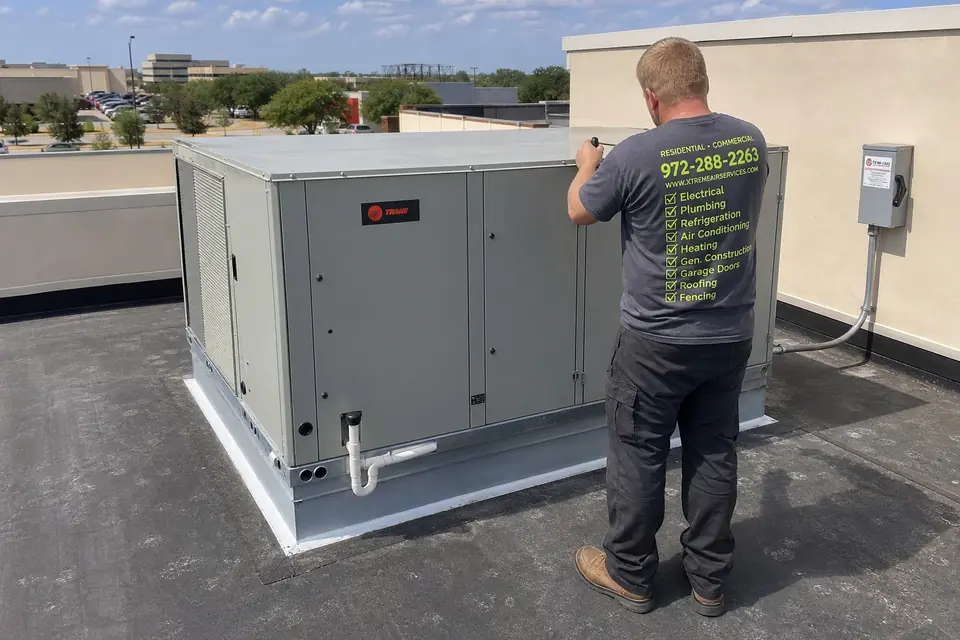
In Texas, air conditioning and refrigeration contractors are licensed by the Texas Department of Licensing and Regulation, or TDLR. That license isn’t a formality. It means the contractor has met the state’s requirements and is on record if something goes wrong. Xtreme Air Services is licensed and insured, and our HVAC license number is TACLA29023C. You can look up any contractor’s license on the TDLR website in about a minute, and it’s worth doing before you sign anything.
Texas HVAC licenses also come in different classes, and some classes limit how large a system the contractor can work on. On a big rooftop job, ask what class of license your contractor holds and whether it covers the size of equipment you’re installing.
The permit is how the city makes sure the work is safe and matches current code. The City of Frisco sets the rules for mechanical permits and inspections inside its limits. In most cases the licensed contractor applies for the permit, and an inspector checks the finished work before it’s signed off. Permit fees sit outside the base install price unless your quote says otherwise, as covered above.
Here’s what an inspector is likely to look at on a commercial rooftop swap:
- Safe electrical hookup, including the right breaker size and a disconnect switch near the unit
- Clearance around the equipment so it can be serviced safely
- A condensate drain that’s sized and routed the right way
- Gas line connections, if the unit has gas heat
- How the unit is secured to the roof curb
- Smoke detector shutdown in the ductwork, when the system is large enough to require it
Electrical and gas changes bring in other trades, and each one has its own Texas license. If your new unit needs a bigger breaker or a moved gas line, those parts of the job need a licensed electrician or plumber, not just an HVAC tech. Xtreme Air Services handles HVAC, plumbing, and electrical under one roof, so you’re not juggling three companies and three schedules to get one unit through inspection.
If you lease your space, check your lease before the job starts. Many commercial leases require the landlord’s written approval for rooftop work and proof of the contractor’s insurance. Getting that paperwork sorted early keeps the crane, the crew, and the inspection on schedule.
Frequently Asked Questions
Common questions about Commercial HVAC installation
What is the $5,000 rule for HVAC systems?
It’s a simple test some contractors use to decide between repair and replacement. Multiply the age of your unit by the repair cost. If the total is over $5,000, replacement is usually the better value. On an older rooftop unit, a $2,000 repair on a 10-year-old system crosses that line, which points toward a new installation instead.
What does a commercial HVAC installer do on the job?
A commercial HVAC installer sizes the system for your building, removes the old unit, sets the new one, and connects it to your power, ducts, and drain lines. This includes a cooling load calculation, checking the roof curb and electrical service, startup and testing of the new equipment, and hauling away the old unit. Any extra duct, electrical, or plumbing work needed to make the connection is scoped separately.
Why do commercial HVAC installation quotes vary so much between contractors?
Quotes vary because the scope behind the number is rarely the same. One contractor may size the unit off a load calculation, while another just matches the old unit’s tag. Ask whether permits, crane time, and curb adapters are included, since those extras can shift a quote by thousands of dollars without changing the equipment itself.
Ready to Get Started?
Call (469) 490-3595 Today, Get Service Today.