


Boiler Replacement in Frisco: A Specialized Job Done Right
Boiler replacements for hot-water heating systems, with what's included and when a failing boiler becomes an emergency.
What’s Covered on This Page
- Boiler Replacement Is a Different Job Than Furnace Replacement
- Signs Your Boiler Needs Replacing, Not Another Repair
- When a Failing Boiler Is an Emergency
- What a Standard Boiler Replacement Includes
- What Drives the Price Up or Down
- How long does a boiler replacement take?
- Can I keep using radiators or radiant floors while I wait for a replacement?
- Will my boiler replacement need a permit in Frisco?
- Does hard water in Frisco affect how long a new boiler lasts?
Boiler Replacement Is a Different Job Than Furnace Replacement
Here’s the simple difference. A furnace warms air and blows it through ducts. A boiler warms water and pumps it through pipes to baseboard heaters, radiators, or tubing under your floors. When the boiler goes, you’re not just swapping a box. You’re working on a sealed water loop that has to be filled, pressurized, and balanced again.
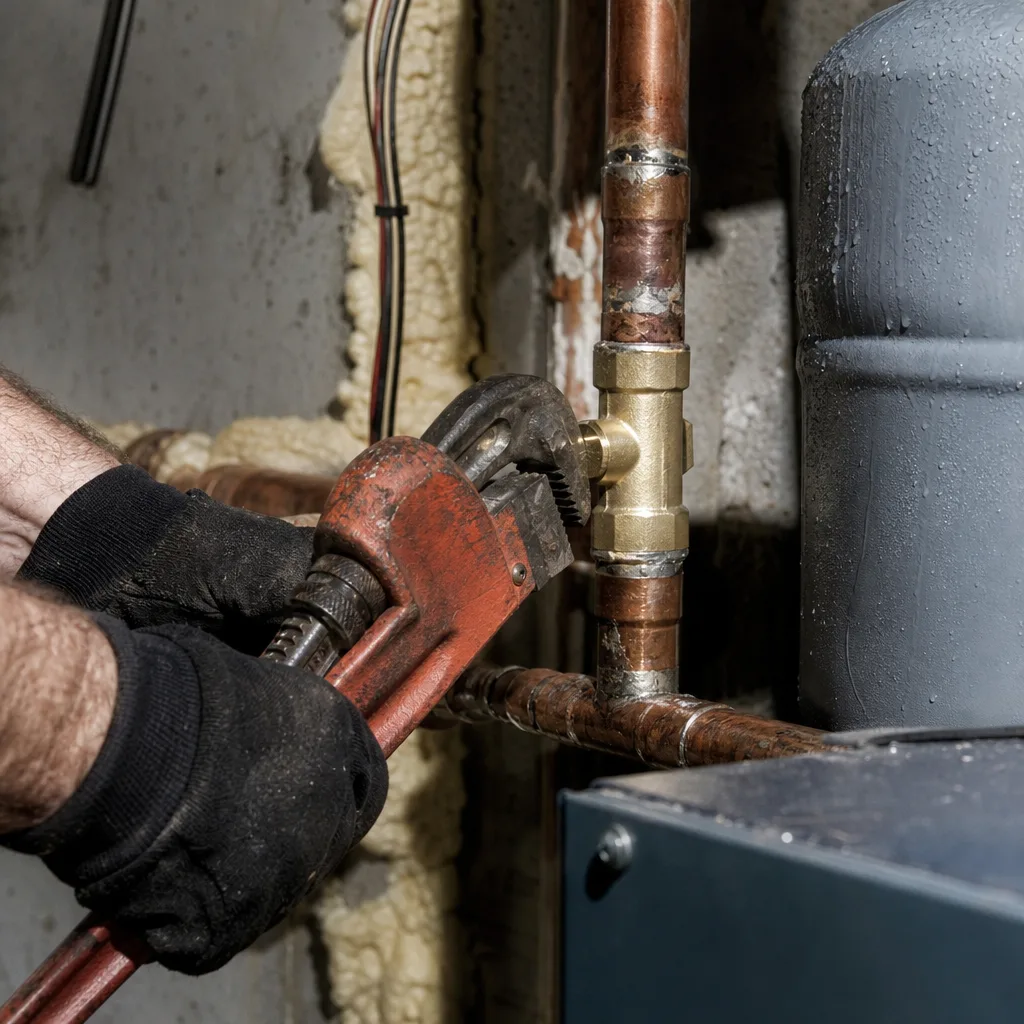
That matters in Frisco. Most homes here heat with forced air, usually a furnace or heat pump tied to the AC system. So if you have a boiler, you’re probably in a custom home with radiant floors, an older property, or a commercial building. Not every heating company works on these systems, and the ones that mostly install furnaces may not be set up for one.
Here’s what a boiler swap involves that a furnace swap doesn’t:
- Sizing to your heat loss and your heat type. Radiant floors run on cooler water than baseboard heaters, and the new boiler has to match what your system needs, not just the size of the old unit.
- The parts around the boiler. Circulator pumps, the expansion tank, the air separator, the pressure relief valve, and the fill valve all affect how the new boiler runs. Old parts can hold back new equipment.
- Venting changes. Older boilers often vent through a metal flue. High-efficiency condensing boilers vent through plastic pipe and make acidic water, called condensate, that needs a proper drain. Switching types can change the venting.
- Flushing the old water. Years of sludge and mineral scale build up in the pipes. A new boiler with a smaller heat exchanger can clog fast if that gunk isn’t cleaned out first, and North Texas hard water doesn’t help.
- Filling, purging, and testing. The loop gets refilled, air gets bled out so you don’t hear banging or gurgling, pressure gets set, and each zone and control gets checked.
Efficiency works differently too. You’ll see boilers rated by AFUE, which just means how much of the fuel you pay for turns into heat in your home. Condensing boilers rate much higher on paper, but they only hit those numbers when the water coming back to them is cool enough. Radiant floors usually do that well. Some baseboard systems run hotter and won’t get the full benefit. A good installer should tell you which one fits your setup, not just sell you the highest number.
A boiler replacement also touches more than one trade. There’s the gas line, the water piping, and the electrical controls and pumps. Xtreme Air Services handles boiler replacement along with hydronic heating installation, radiant heating installation, piping installation, gas line work, and electrical service. One team can cover the whole job without you coordinating three different companies.
Before you hire anyone, ask three things. Did they figure out your home’s heat loss? Does the plan include flushing the system? Will the venting or condensate drain need to change? Clear answers to those tell you a lot about who you’re dealing with.
Signs Your Boiler Needs Replacing, Not Another Repair
Not every boiler problem means you need a new boiler. A lot of what goes wrong is a single part that can be fixed. The real question is whether the boiler itself is wearing out, or just something attached to it.
Here’s an easy way to think about it. If the boiler’s pumps, valves, or controls fail, that’s usually a repair. If the boiler’s own body starts to fail, especially the heat exchanger where the flame heats the water, that’s usually the end of the road.
Repair usually makes sense when:
- A circulator pump stops working, so the boiler fires but the heat doesn’t move through the house.
- The pressure relief valve drips. It might be a bad valve, or a waterlogged expansion tank pushing the pressure too high.
- The thermostat, a zone valve, or the ignition part fails.
- The boiler is fairly young and hasn’t needed much work before.
Replacement starts to make more sense when you notice these:
- Water leaking from the boiler itself. A leak from a pipe fitting is often a quick fix. A leak from the boiler’s body or a cracked heat exchanger usually can’t be fixed in a way that holds up.
- Low pressure that keeps coming back. If you keep adding water and the gauge keeps dropping, the water is going somewhere. Once the cause traces back to the boiler, patching it rarely lasts.
- Repairs stacking up. One service call a year is normal. A new part every few months means the whole unit is wearing out at once.
- Parts that are hard to find. Older boilers can need parts that are discontinued, which means longer waits and higher costs every time something breaks.
- Some rooms or zones stay cold even after repairs, or the boiler struggles to keep up when it’s really cold outside.
- Gas bills going up while you’re using the heat about the same.
Age matters too. Many boilers run 15 years or more. An old boiler isn’t automatically done, but age plus any of the signs above makes it harder to justify spending money on another repair.
A common rule of thumb in the trade is to compare the repair cost to the value left in the boiler. If a big repair costs about half of what a new boiler would, and your boiler is already older, that money usually does more good going toward a replacement.
Timing matters in Frisco. Winters here are mostly mild, so your boiler may sit idle for weeks at a time. Then a hard cold front blows through and it has to run full blast. That sudden heavy load is often when a worn boiler finally shows what shape it’s really in. If yours limped through the last cold snap, don’t wait for the next one to find out.
If you’re not sure which side of the line you’re on, start with an honest look at the boiler before anyone talks about replacing it. Xtreme Air Services handles boiler repair and boiler safety inspections, along with boiler replacement. If a repair is the right call, that’s what you should hear. If the boiler is done, you should hear exactly why, in plain English, so you can make the decision yourself.
When a Failing Boiler Is an Emergency
Most boiler trouble can wait a day or two for a scheduled visit. Some of it can’t. Here’s how to tell which one you’re looking at.
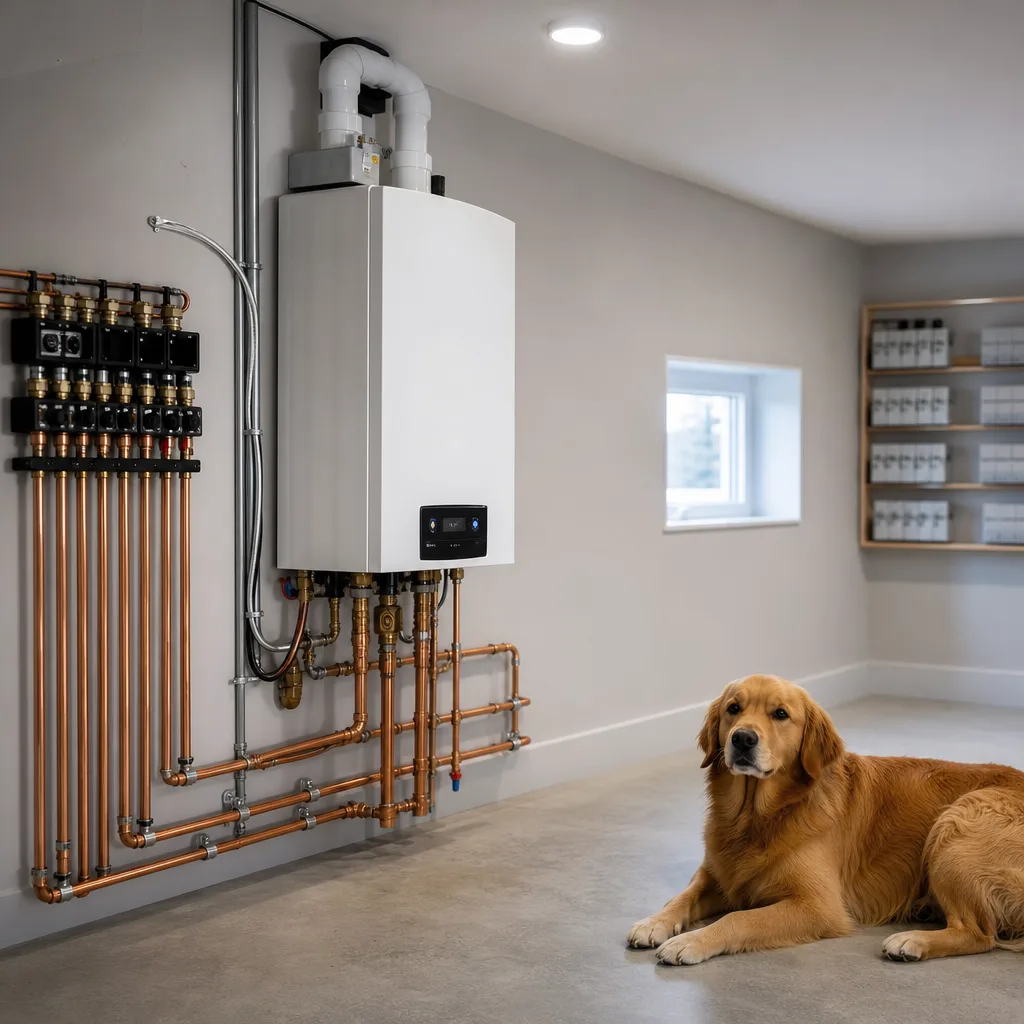
Some problems are a safety issue first and a boiler issue second. If you smell gas, see soot or scorch marks around the boiler, or your carbon monoxide alarm goes off, follow your gas utility’s emergency instructions right away. Once everyone’s safe, our team can come out for gas leak detection and carbon monoxide testing to find out what happened.
Call the same day if you see any of these:
- Water pouring or spraying from the boiler or its piping. This is more than a slow drip. On a slab home with radiant floors, water can travel under flooring before you notice it.
- The pressure gauge is in the red, or the relief valve keeps shooting out hot water. That valve is doing its job, but something is pushing the pressure too high.
- Loud banging, rumbling, or a boiling-kettle sound that keeps getting worse.
- No heat at all when a hard freeze is coming. A hydronic system is full of water, and pipes or floor tubing that sit cold through a freeze can be damaged.
- No heat in a commercial building. Tenants, staff, and anything that can’t get cold all depend on that boiler.
These can usually wait for a regular appointment:
- Pressure that’s a little low but holding steady.
- One room or zone running cooler during mild weather.
- A slow drip from a fitting that a bucket can handle for now.
- Light gurgling, which usually means air in the lines.
If you’re not sure which list you’re on, call and describe what you see and hear. Talking it through is often enough to tell whether it’s tonight’s problem or next week’s.
An emergency also doesn’t mean you have to buy a new boiler on the spot. The first job is to make things safe and stop the damage. The bigger decision comes after that, once someone has looked at the boiler, the pumps and valves around it, and the condition of the water in your loop. A boiler swapped in a hurry is how people end up with the wrong size, or a new unit clogging on old sludge. A good emergency visit buys you time to make the replacement decision the right way.
Xtreme Air Services answers the phone around the clock, and same-day service is available for Frisco homes and businesses. There’s no extra charge for nights or weekends, and you get flat-rate pricing before any work starts. The $26-$99 service-call fee is credited toward the repair if you go ahead with us.
Call 469-490-3595
Ready when you are – get in touch today.
Call Today, Get Service Today. Xtreme Air Services — Frisco is ready to help.
What a Standard Boiler Replacement Includes
Once you know the boiler is done, the next question is simple: what am I paying for? Here’s what a standard job covers, what it doesn’t, and why two boiler quotes in Frisco can look so different.
Our most common boiler replacement is a like-for-like swap. The new boiler connects to your existing piping, gas, and electrical connections with no major changes. That job runs $9,200-$15,500. Across all boiler replacements, our typical range is $6,000-$22,000.
A standard replacement includes:
- The new boiler and the materials to install it
- Professional installation
- Standard connections to your existing system
- Startup and testing, so you know it’s running right before we leave
- Haul-away of the old boiler
A standard replacement doesn’t include these unless your quote says so:
- Changes to your plumbing, electrical, or duct work
- Code corrections on parts of the system that don’t meet current code
- Permits
That list matters. The boiler is only one piece of a hydronic system. The pipes, pumps, valves, venting, and wiring around it decide whether your job stays a simple swap or becomes something bigger. Two homes can get the same boiler and pay very different prices because of what’s around it.
These are the things that move the price up or down:
- Size and efficiency. A bigger boiler costs more. So does a higher AFUE rating, which means more of the gas you buy turns into heat.
- Brand and model. Different boilers come with different features and price points.
- Ease of access. A boiler in an open garage or mechanical room is easier to swap than one in a tight closet or crawl space.
- Condition of what’s already there. Worn piping, old wiring, or tired pumps and valves may need work before a new boiler can run well.
- Code upgrades. If parts of an older setup don’t meet current code, they’ll need to be brought up to it.
- Permits, plus any custom fabrication when the new boiler doesn’t line up with the old connections.
The biggest swing usually comes from switching boiler types. Going from an older boiler to a high-efficiency condensing model can mean new venting and a condensate drain, as covered above. That’s no longer like-for-like, so it lands higher in the range. It can still be the right choice, especially with radiant floors. You should just see that cost written out before you agree to it.
With Xtreme Air Services, you get upfront flat-rate pricing approved before any work starts. There’s no meter running and no surprise line items at the end. If something outside the standard job is needed, like a code correction or a permit, it should be on your quote before you sign. If it isn’t, ask.
A new boiler is a big expense, and it often comes at a bad time. Flexible financing is available on qualifying installations and larger jobs, on approved credit, so you don’t have to put off a needed replacement because of the upfront cost.
When you compare quotes, compare what’s included, not just the total. A lower number that leaves out haul-away, startup testing, or permits isn’t really lower. Ask each company to spell out what’s in, what’s out, and what could change once the old boiler comes out.
Watch Our Video
See How We Handle Boiler replacement in Frisco
Xtreme Air Services — Frisco
What Drives the Price Up or Down
You’ve seen the factors that move a boiler quote. The useful question now is which ones apply to your home. Most of the swing between the low and high end comes from a few things you can figure out before anyone starts work.

Start with size, because bigger isn’t better. A lot of older boilers were oversized when they went in. An oversized boiler costs more up front. It also turns on and off in short bursts, which wears it out faster and wastes gas. When the new boiler is sized to your home’s real heat loss, it sometimes comes in smaller than the old one. That can bring your price down, not up. If a quote just matches the old unit’s size, ask why.
Then look at how your boiler is set up. Picture two Frisco homes. In the first one, the boiler sits in an open garage, the pipes line up, and the pumps are in good shape. That job tends to stay a simple swap. In the second, the boiler is wedged into a tight closet and the owner wants a condensing model, so the venting has to change and the old pumps need replacing. Same kind of equipment, very different day of work. Most of the price difference comes from that.
Some things can’t be fully seen until the old boiler comes out. Fittings can be more corroded than they looked. The water in the loop can be full of sludge that takes more flushing than expected. A good quote doesn’t pretend these risks don’t exist. It tells you what happens if they show up, and it makes clear you’ll approve any added work before it’s done.
Commercial buildings add their own costs. Larger boilers, multiple units, building controls, and scheduling the work so tenants or staff aren’t left without heat all affect the price. If you run a business, ask how the job will be phased and how long the building will be without heat.
Timing affects your choices too, even when it doesn’t change the rate. Our team charges no extra for nights or weekends, so an emergency won’t cost more by the hour. But replacing a boiler in the middle of a freeze leaves you less time to compare options, weigh an upgrade, or line up financing. If your boiler is showing the warning signs above, planning during mild weather gives you room to decide without pressure.
These questions will tell you where your job is likely to land:
- Is this a like-for-like swap, or does the venting, piping, or wiring have to change?
- Is the new boiler sized to my heat loss or just to the old unit?
- Do my pumps, expansion tank, and valves need replacing now?
- What happens to the price if you find corrosion or heavy sludge?
- Are permits and code corrections on this quote, or separate?
If you get straight answers to all five, you’ll know your number before the work starts, not after.
Frequently Asked Questions
Common questions about Boiler replacement
How long does a boiler replacement take?
Most like-for-like boiler swaps take about one day from start to finish. If your job needs venting changes, pump replacement, or heavy flushing for old sludge, plan on extra time since those steps happen before the new boiler can be filled, purged, and tested.
Can I keep using radiators or radiant floors while I wait for a replacement?
It depends on what’s failing. If a pump or valve quit but the boiler body is fine, you may still get partial heat while you schedule a visit. If the boiler itself is leaking or losing pressure, keep an eye on it and get it looked at soon, since a hard freeze can damage pipes or floor tubing in a system that loses heat.
Will my boiler replacement need a permit in Frisco?
Many boiler replacements do require a permit, and that should be spelled out on your quote before work starts. Since requirements can vary by jurisdiction, ask your installer to confirm permit needs for your property up front rather than finding out after the job is done.
Does hard water in Frisco affect how long a new boiler lasts?
Yes, North Texas hard water speeds up scale and sludge buildup inside boiler piping. That’s why flushing the old system before installing a new boiler matters so much here, since a new unit’s smaller heat exchanger can clog fast if old mineral buildup isn’t cleared out first.
Ready to Get Started?
Call (469) 490-3595 Today, Get Service Today.