


Generator Repair in Frisco: Fix the Four Most Common Failures Fast
Standby and portable generators diagnosed and repaired, starting with the four failures we see most.
What’s Covered on This Page
- Generator Repair in Frisco Starts With Finding the Right Fault
- Standby Generators Fail Differently Than Portable Units
- What Happens During a Generator Repair Visit
- When a Dead Generator Can’t Wait
- Checks You Can Try Before Calling a Technician
- Is it easy to fix a generator myself?
- What is the 80% rule for generators?
- What do you call someone who repairs generators?
Generator Repair in Frisco Starts With Finding the Right Fault
Your power went out, and the generator you counted on didn’t kick on. Maybe it cranked and died. Maybe it sat there with a red light blinking. Either way, you need generator repair, and you need it done right the first time. Here’s the honest truth: the fix itself is rarely the hard part. Finding the right fault is. Once the real cause is found, most generators are back up and running on the first visit.
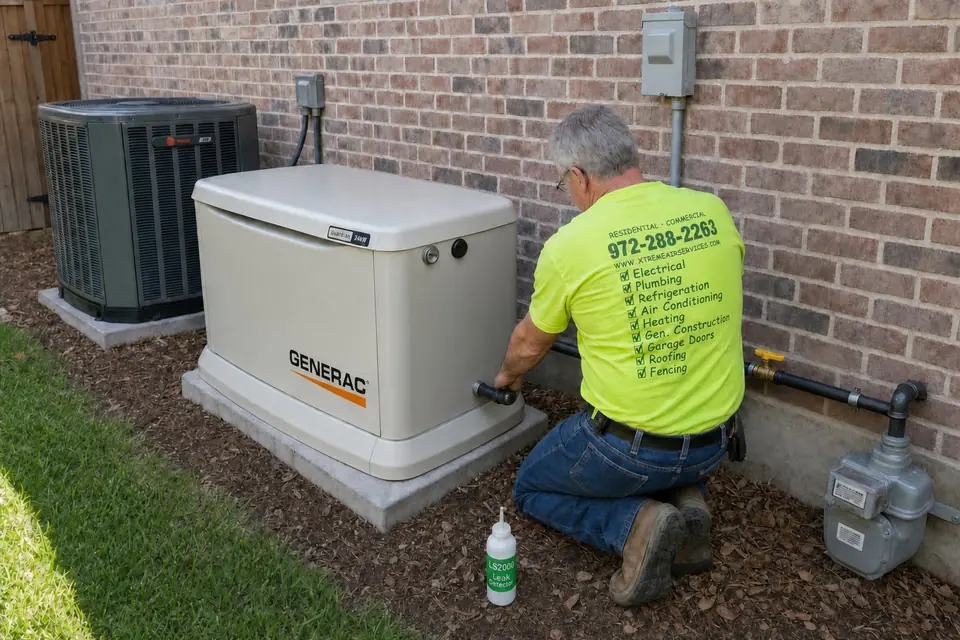
That’s how our team at Xtreme Air Services works on generators in Frisco. We find what failed, replace that part, and then prove the unit starts and carries your home’s load before we call it done.
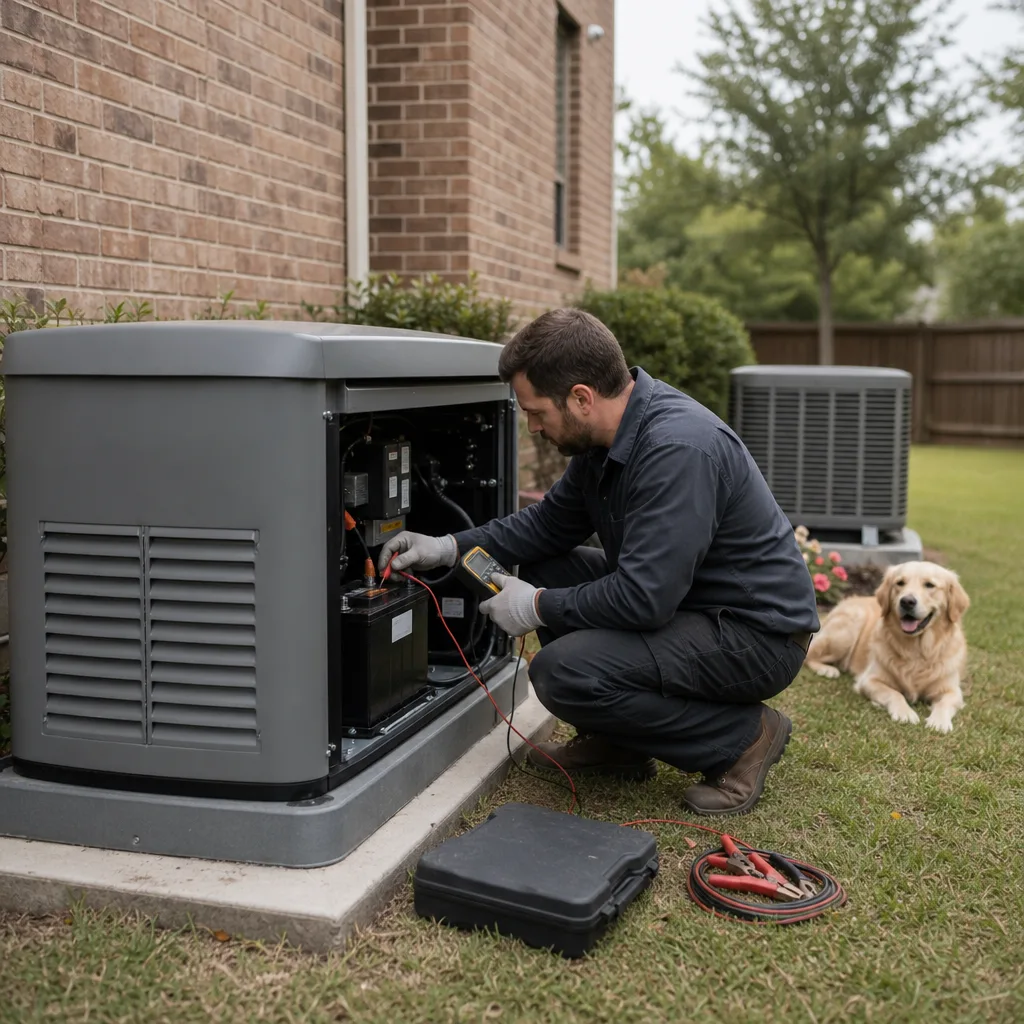
A generator that won’t run almost always points back to one of these four areas:
- Battery: Your standby unit needs a strong battery to turn the engine over. A weak or worn-out battery is one of the most common reasons a generator won’t start, especially after it has sat through a long, hot North Texas summer.
- Fuel: The engine can’t run without steady fuel. That could mean low gas pressure, an empty propane tank, a closed valve, or old fuel in a portable unit that has gone stale.
- Controls: The controller is the generator’s brain. It reads sensors and shuts the unit down when something looks wrong. A bad sensor, a loose wire, or a transfer switch problem can stop a healthy engine cold.
- Starting system: Even with good fuel and a good battery, a failed starter, spark plug, or relay can keep the engine from firing.
Why does the order matter so much? Because symptoms overlap. A generator that cranks but won’t catch could have a fuel problem, a spark problem, or a sensor telling the engine to quit. If someone guesses, you might pay for a new starter when the real problem was a $10 sensor wire. Testing first means you pay for the part that failed, and nothing else.
Starting isn’t the finish line, either. A generator can idle just fine with no load, then stall the moment your AC, fridge, and well pump all ask for power at once. That’s why a repair isn’t finished until the unit runs under real load. That’s the test that tells you it’ll hold up during the next storm.
Frisco sees spring hail and severe thunderstorms, summer heat that pushes a generator hard, and winter freezes that can knock out power for days. Each one puts a different strain on your unit, so the fault after a summer outage may not match the fault after a winter one. A careful diagnosis keeps the repair matched to what really happened to your generator.
You’ll work with licensed and insured, background-checked technicians, and same-day service is available. There’s no extra charge for nights or weekends, so you won’t pay more just because your power went out on a Saturday.
Standby Generators Fail Differently Than Portable Units
The kind of generator you own changes where the trouble usually hides. A standby unit and a portable unit both run on an engine, but they live very different lives. So when one won’t start, the likely culprit isn’t the same.
A standby generator is the permanent unit bolted to a pad beside your house. It’s tied into your home’s wiring through a transfer switch and usually runs on natural gas or propane. When the power drops, it’s supposed to sense the outage, start on its own, and switch your home over without you lifting a finger. Most run a short self-test on a set schedule, often weekly, to keep the engine ready.
That automatic design is the whole point. It’s also why standby failures tend to be quiet ones. The unit can sit through months of good weather with a battery slowly weakening, a sensor drifting, or a transfer switch contact wearing out. You won’t notice until the lights go out and nothing happens. Common standby trouble looks like this:
- A warning light or error code on the controller, and the unit refuses to start
- The engine starts, but your house never switches over to generator power
- The unit runs its self-test fine, then struggles or shuts down once your home’s load hits it
- Your home stays on generator power after the utility comes back, because the transfer switch didn’t return
Because so much of a standby unit is controls and switching, these problems often need someone who can read the controller and test the transfer switch. Pulling the cord harder won’t fix any of that.
A portable generator lives in your garage until you need it. You roll it out, fill it with gas, start it by hand or with a key, and run cords or a hookup to power what you need. Its biggest enemy is time spent sitting. Gasoline goes stale in a few months, and old fuel can leave a gummy film in the carburetor. That’s the small part that mixes fuel and air. Once it clogs, the engine may sputter, surge, or refuse to start at all.
Here’s the honest part. If your portable unit sat all year with old gas in it, you may not need us. Draining the old fuel and filling it with fresh gas fixes it more often than people expect. If it still won’t run after that, or the carburetor is gummed up, that’s when a repair makes sense.
The bigger question with a portable is often how it connects to your home. Running extension cords through a cracked door is one thing. Powering your home’s circuits is another. That takes a proper portable generator hookup with a transfer switch, so the generator’s power stays in your house and doesn’t feed back onto the utility lines.
Either way, the work follows the same idea from above. Find the fault for your type of unit, replace what failed, then confirm it starts and carries load. If you’re not sure which kind of problem you have, telling us whether it’s a standby or a portable unit and what you saw when it failed is a great place to start.
What Happens During a Generator Repair Visit
When you call us about your generator, a visit has three jobs. We find the fault, replace the part that failed, and then make sure your generator starts and carries load. Most calls are fixed on the first visit, so the goal is to leave you with backup power you can trust, not a list of things to come back for.
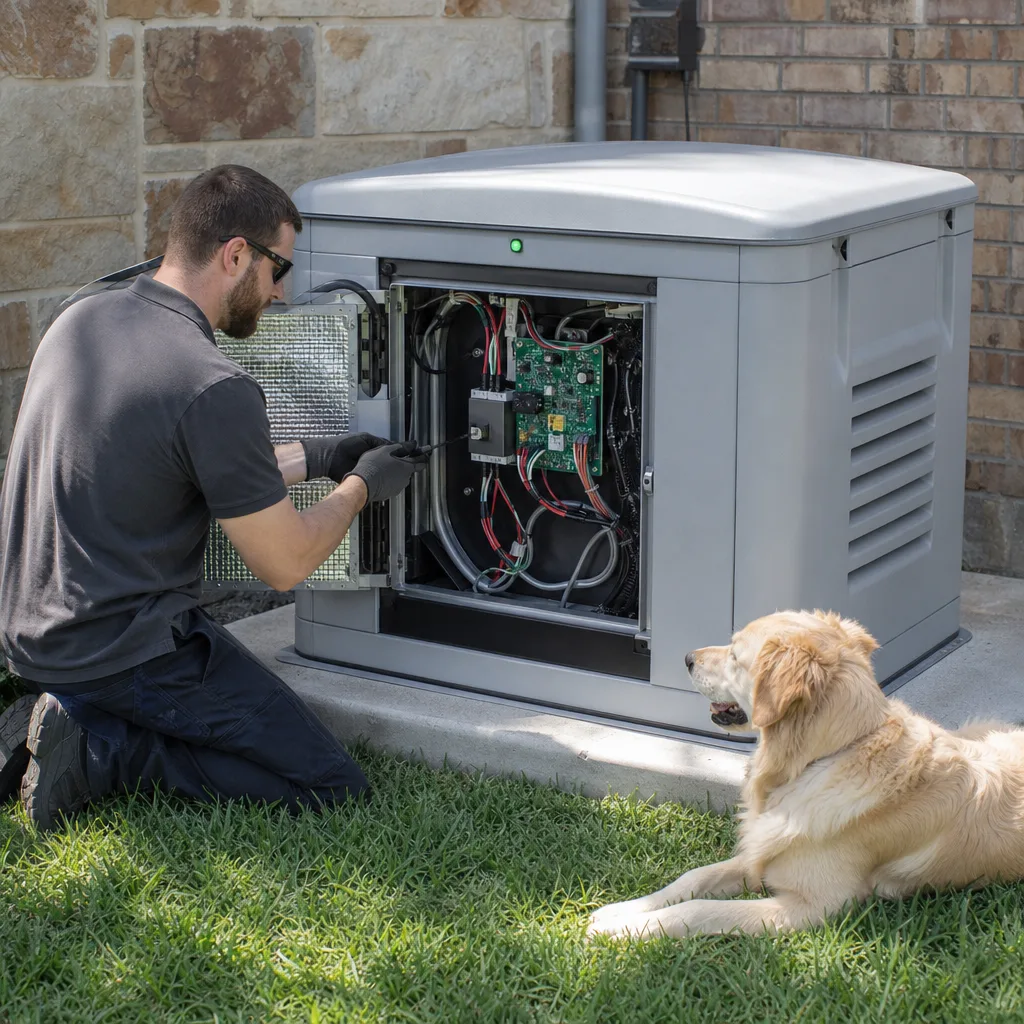
You can save time before we arrive. Write down anything the controller shows, like a warning light or an error code. Think about what happened when it failed. Did it crank and die, never start at all, or run without switching your house over? If you know the brand, size, and fuel type, note those too. And if the unit is behind a locked gate or near a dog run, let us know so we can get to it easily.
Here’s how the money works, in plain numbers. There’s a service-call fee of $26 to $99. If you go ahead with the repair with Xtreme Air Services, that fee is credited toward the repair. You won’t pay it twice.
Generator repairs typically run $200 to $900. The most common job is finding a battery, fuel, controls, or starting fault, replacing the failed part, and testing the unit. That usually lands between $200 and $525. You’ll get upfront flat-rate pricing and approve it before any work starts, so there’s no meter running while we work.
What moves your price up or down?
- What caused the failure. A worn battery is a smaller job than a failed control part.
- Your generator’s brand and size.
- Whether the part is easy to get.
- How easy it is to reach the unit.
- After-hours timing. This one won’t cost you more with us, because there’s no extra charge for nights or weekends.
It also helps to know where the line is. Your repair price includes the diagnosis, the labor, the standard replacement part, and testing. It doesn’t include major components, a full unit replacement, code upgrades, or permits. If your generator needs any of those, we’ll quote it separately so you can decide with the full picture in front of you.
Say your standby unit sat silent during a spring storm and the controller shows a fault light. You call, tell us what you saw, and get a clear price before anything changes hands. We replace the part that failed. Then you watch your generator start and take on your home’s load, so you know it’s ready before the next round of North Texas weather rolls through Frisco.
Not sure what your Generator repair project needs? Ask us.
Call Today, Get Service Today. Xtreme Air Services — Frisco is ready to help.
When a Dead Generator Can’t Wait
Not every dead generator is an emergency. The real question is simple. What happens if the power goes out again before it’s fixed? If the answer is “not much,” you’ve got time. If the answer is “a lot,” you don’t.
Here’s the honest side first. If the utility power is back on, the forecast is clear, and nobody in your home depends on electricity for their health, you can likely book a regular visit. The same goes for a portable unit that probably just needs fresh gas, like we covered above. Try that first. There’s no reason to treat a calm week like a crisis.
Waiting gets risky when one of these is true for you:
- Storms are in the forecast. Frisco’s spring storm season can bring outages one after another, so a generator that failed this week may be needed again in a few days.
- Someone in your home relies on powered medical equipment, like an oxygen concentrator or a CPAP machine.
- It’s the middle of a Frisco summer or a hard freeze, and you have babies, older family members, or pets at home who can’t handle the heat or cold for long.
- You run a business or work from home, and a lost day means lost money, lost data, or a cooler full of spoiled stock.
- Your house is stuck on generator power even though the utility is back, which points to the transfer switch problem we mentioned earlier.
- You notice a fuel smell, a burning smell, or a unit that keeps starting and shutting down over and over. That’s a sign to stop guessing and have it checked.
Picture this. Your standby unit failed its weekly self-test on Tuesday, and the weather report shows another line of storms rolling into North Texas by Friday. You could wait and hope the grid holds. Or you could get it fixed while the lights are still on and you’re not working in the dark.
That timing is the whole point of owning a generator. It’s there for the one night you need it. A repair done before the outage costs the same as one done during it, but it spares you the hot, dark hours in between.
Same-day service is available, and there’s no extra charge for nights or weekends. So if your generator gives out on a Saturday evening, you won’t pay more for bad timing. You’ll get a licensed and insured, background-checked technician who finds the real fault, gives you a clear price before any work starts, and doesn’t leave until your generator starts and carries your home’s load.
Call now: 469-490-3595
Watch Our Video
See How We Handle Generator repair in Frisco
Xtreme Air Services — Frisco
Checks You Can Try Before Calling a Technician
Before you call anyone, take five minutes and walk out to your generator. A good number of no-start problems come down to a switch, a setting, or a valve that got bumped. These checks don’t need tools, and they don’t need you to open anything up. If one of them gets your generator running, you’ve saved yourself a service call, and that’s a good day.
For a standby unit, start here:
- Look at the controller screen. Is it set to Auto? If someone switched it to Off or Manual during a test or a yard project, the unit won’t start on its own when the power drops.
- Check the generator’s own main breaker. Many units have one right on the unit. If it tripped, the engine can run while your house gets nothing.
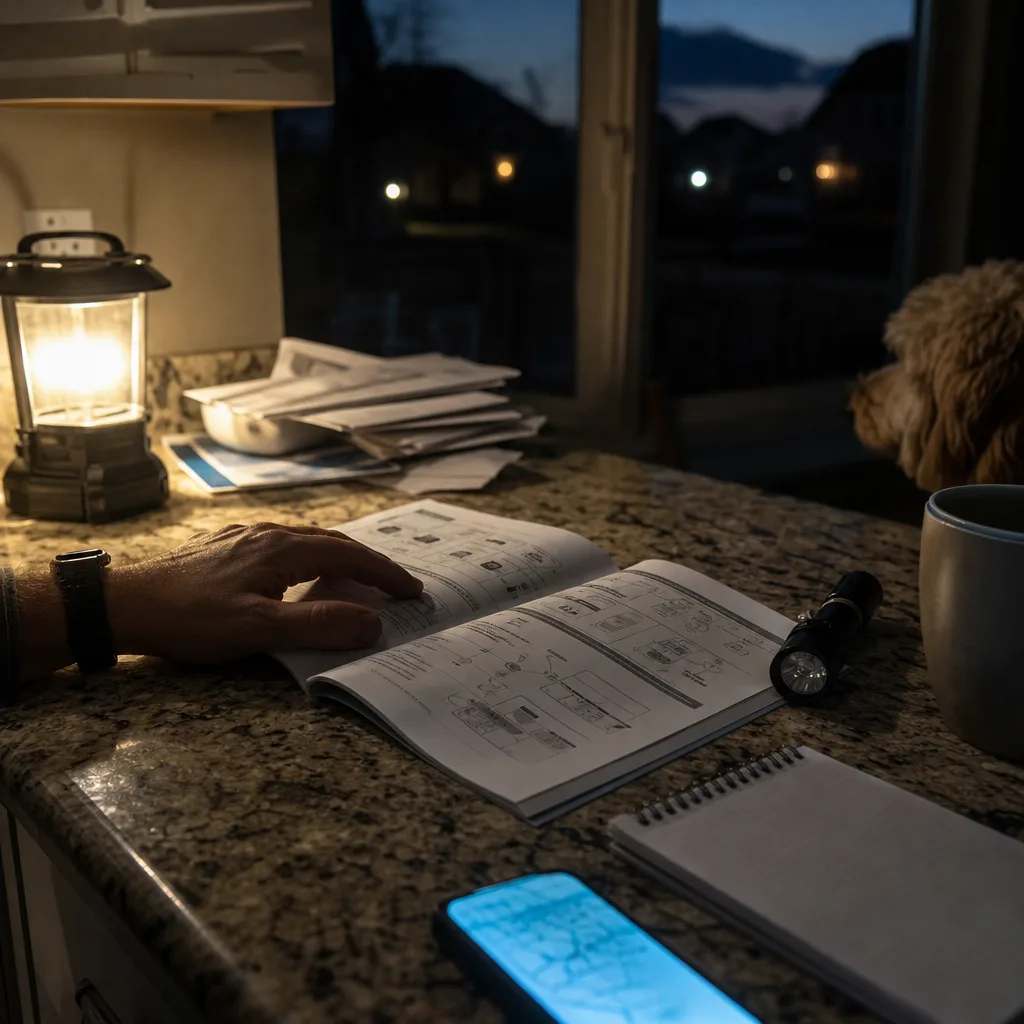
- Write down any error code or warning light. Your owner’s manual explains what each code means and whether it can be cleared. Some codes are simple reminders. Others mean the unit shut itself down on purpose, and you shouldn’t clear those over and over.
- Make sure the fuel is getting there. On propane, check the tank gauge. On natural gas, make sure the shutoff valve near the unit is open. A valve that got closed during other work is an easy miss.
- Clear the area around the unit. After a Frisco spring storm, leaves, branches, and hail debris can pile up against the vents. Grass clippings and wasp nests can block airflow too. A generator that can’t breathe may shut down to protect itself.
For a portable unit, the checks are simpler. Make sure the fuel valve and choke are set the way your manual says to start it. Check the oil, because many portables won’t start when the oil is low. And if it sat all year, fresh gas is the first thing to try, like we covered above.
One more quick look for either kind: check the battery terminals on a standby unit, or the spark plug wire on a portable, from the outside. If you see white or green crust on the terminals, or a wire that’s clearly loose, you’ve likely found your clue. Just look. Don’t pull wires or scrape the posts with the unit live.
If you’ve gone through this list and the generator still won’t start, won’t switch your house over, or keeps throwing the same code, you’re past the easy fixes. That’s when testing beats guessing. Your notes from these checks will help a technician get to the real fault faster, so keep them handy.
Frequently Asked Questions
Common questions about Generator repair
Is it easy to fix a generator myself?
Some fixes are easy, but most are not worth the risk. Simple checks like confirming the controller is set to Auto, the breaker hasn’t tripped, or the fuel valve is open are safe to try yourself. Anything past that, like opening the control panel, testing the transfer switch, or working near gas fittings, needs a trained technician. Those parts carry real electrical and fuel hazards, so it’s best to stop and call once the easy checks don’t solve it.
What is the 80% rule for generators?
The 80% rule means you should size a generator so your expected load uses no more than 80% of its rated output. Running a generator at or near its full capacity for long periods puts extra strain on the engine and can shorten its life. This matters most when a generator carries your whole home’s load at once, like your AC, fridge, and well pump all drawing power together. That’s also why a proper repair tests the unit under real load, not just at idle, to confirm it can handle what your home needs.
What do you call someone who repairs generators?
Generator repair is handled by a licensed technician trained in both electrical systems and small engines, since a generator combines both. These technicians read controller codes, test batteries and starting systems, and check fuel delivery to find the real cause of a failure. For a standby unit tied into your home’s wiring, the technician also needs to understand transfer switches and how the unit connects to your electrical panel.
Ready to Get Started?
Call (469) 490-3595 Today, Get Service Today.