


Whole-Home Standby Generator Installation in Frisco
Turnkey standby generators sized to your home's real load – gas line, panel, permits and startup handled as one job.
What’s Covered on This Page
- What a Turnkey Whole-Home Standby Installation Includes
- Sizing Your Generator to Your Home’s Real Load
- Gas Line, Panel Distance, and Site Work That Change Your Price
- Permits and Inspections for Generator Installation in Frisco
- When a Portable Generator Is Enough Instead
- Is there a tax credit for a whole-home standby generator?
- What size generator do I need for my home?
- How long does a whole-home generator installation take from start to finish?
What a Turnkey Whole-Home Standby Installation Includes
“Turnkey” means you don’t have to hire three different trades and hope they work well together. You get one job, and at the end your home has backup power that’s hooked up, started, and tested. Here’s what’s included in that job and why each part matters to you.
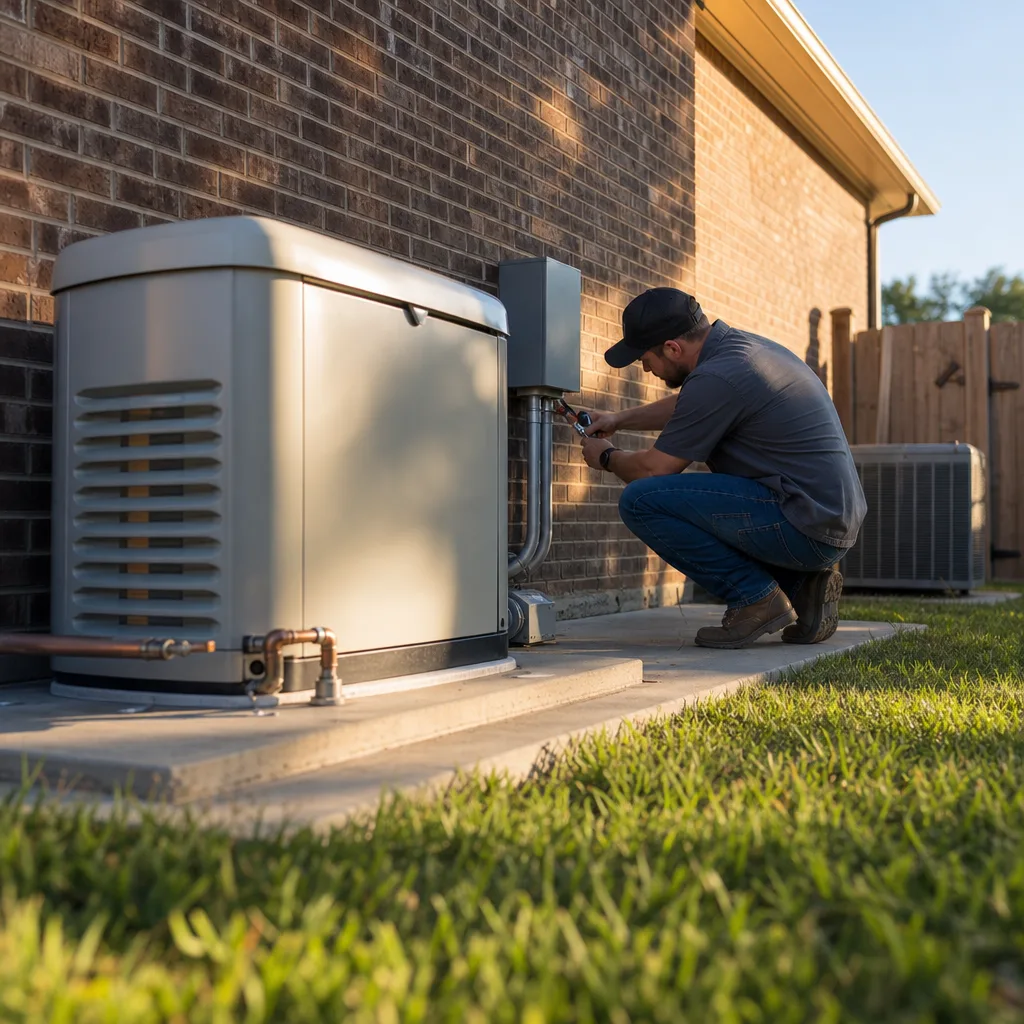
- The generator. This is the unit that sits outside your home and makes power when the grid goes down. Its size, measured in kilowatts (kW), decides how much of your home it can run at once.
- The automatic transfer switch. This is the brain of the system. When the power drops, it senses the outage, unhooks your home from the utility lines, and switches you over to the generator. You don’t have to go outside in a storm and flip anything.
- The pad. The generator needs a level, solid base to sit on. Site prep for the pad is part of the job.
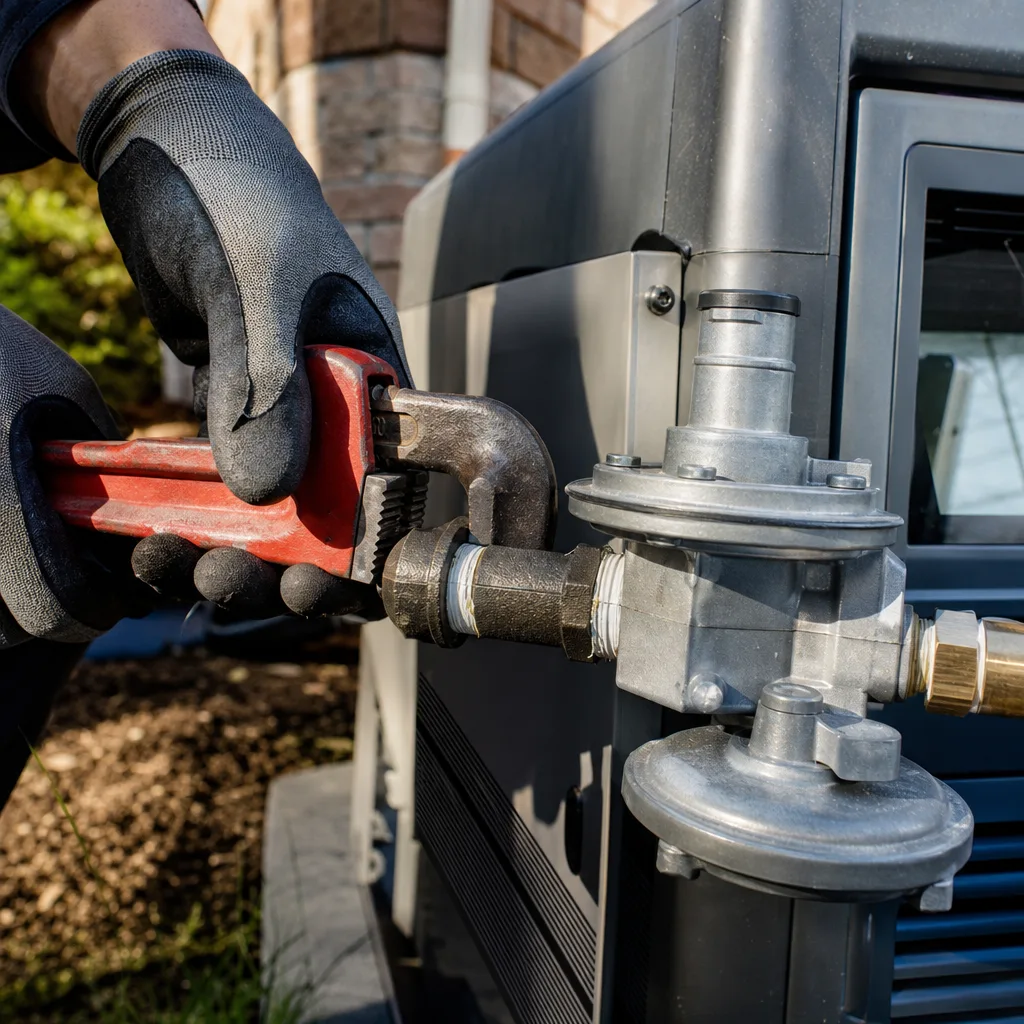
- Gas and electrical connections. The generator gets tied into your natural gas supply and wired to your panel through the transfer switch.
- Startup and testing. Before we call it done, the system gets commissioned and tested so you know it works before the next storm, not during it.
That gas and electrical work is where a lot of installs go sideways, because two different crafts have to meet at one machine. We’re licensed and insured for HVAC, plumbing, and electrical work, so one trusted team handles the gas hookup and the wiring together. If something needs to change on either side, nobody is waiting on another company to show up.
We’d rather be straight with you now than surprise you later. These items aren’t part of the standard turnkey install:
- Extensive gas or electrical service upgrades, like a bigger gas meter or a new electrical service, if your home’s current setup can’t support the generator.
- Landscaping around the generator once it’s in place.
- Code corrections beyond the scope of the job, such as fixing older wiring problems elsewhere in your home.
- Permits, unless your quote says they’re included.
None of these are hidden fees. They’re the parts of a job that change from house to house, so they can’t be priced until someone looks at your home. When you get your quote, check whether permits are listed. If you’re not sure about something on it, ask. A good quote should answer your questions, not raise new ones.
For a sense of scale, our most common job, a whole-home standby generator with transfer switch, gas hookup, and pad, commissioned and tested, runs $10,000 to $14,000. Most installs land somewhere in our typical range of $8,000 to $18,000, depending on things like generator size and how far the gas line and panel are from where the unit sits. Flexible financing is available on qualifying installations, on approved credit, if spreading out the cost helps your budget.
Sizing Your Generator to Your Home’s Real Load
The right generator isn’t the biggest one you can afford. It’s the one that matches what your home really runs when the power’s out. If it’s too small, it can struggle or shut down the moment your AC kicks on. If it’s too big, you’ve paid for power you’ll never use, and size is one of the biggest things that moves your price.
Here’s what that looks like when it goes wrong. A storm knocks out power on a hot August afternoon. The generator starts right up, and the lights and fridge come back on. Then the AC tries to start, the generator overloads, and you’re back in the dark in a house that’s getting hotter by the hour. That’s not a bad generator. That’s a sizing miss.
Sizing starts with your real load, not your square footage. Two Frisco homes the same size can need very different generators. What counts is what’s wired in and running at the same time. These are the loads that matter most:
- Central air conditioning. In a North Texas summer, this is often the heaviest thing your generator has to carry, and it’s usually the reason you wanted backup power in the first place.
- Electric appliances that make heat, like an electric range, oven, dryer, or water heater.
- Pool pumps and EV chargers, which can pull a lot of power for a long time.
- Must-run equipment, like medical devices, a sump pump, or a home office you can’t shut down.
Motors add a twist. Your AC compressor pulls a quick burst of extra power for a second or two when it starts, more than it uses once it’s running. Your generator has to handle that burst, not just the steady load. That’s why adding up the numbers on appliance labels doesn’t tell the whole story.
Your fuel setup matters too. If you cook, heat water, and dry clothes with natural gas, those jobs put far less strain on the generator. An all-electric home needs more generator to do the same things. A bigger generator also burns more gas, so your gas line and pressure have to keep up. That’s part of why the gas side and the electrical side get checked together.
Then there’s a choice only you can make: whole home or just the essentials. Some families want the house to run like the power never went out. Others are happy with the AC, the fridge, the lights, and the Wi-Fi. Both are good answers. Some setups also let big loads take turns, so a smaller generator can still cover the whole house. The type of transfer switch you choose plays into that and into the price.
Xtreme Air Services offers generator sizing consultations and backup power assessments, so you can settle these questions before you buy. Whoever you talk to, ask how they picked your size. A good answer names your actual AC, appliances, and gas setup. If all you hear is your square footage, keep asking.
Gas Line, Panel Distance, and Site Work That Change Your Price
After size, your price comes down to where the generator sits and how far everything has to travel to reach it. Two Frisco homes can pick the same generator and still get quotes thousands of dollars apart. That isn’t padding. It’s the gas pipe, the wire, and the dirt between the unit and your house.
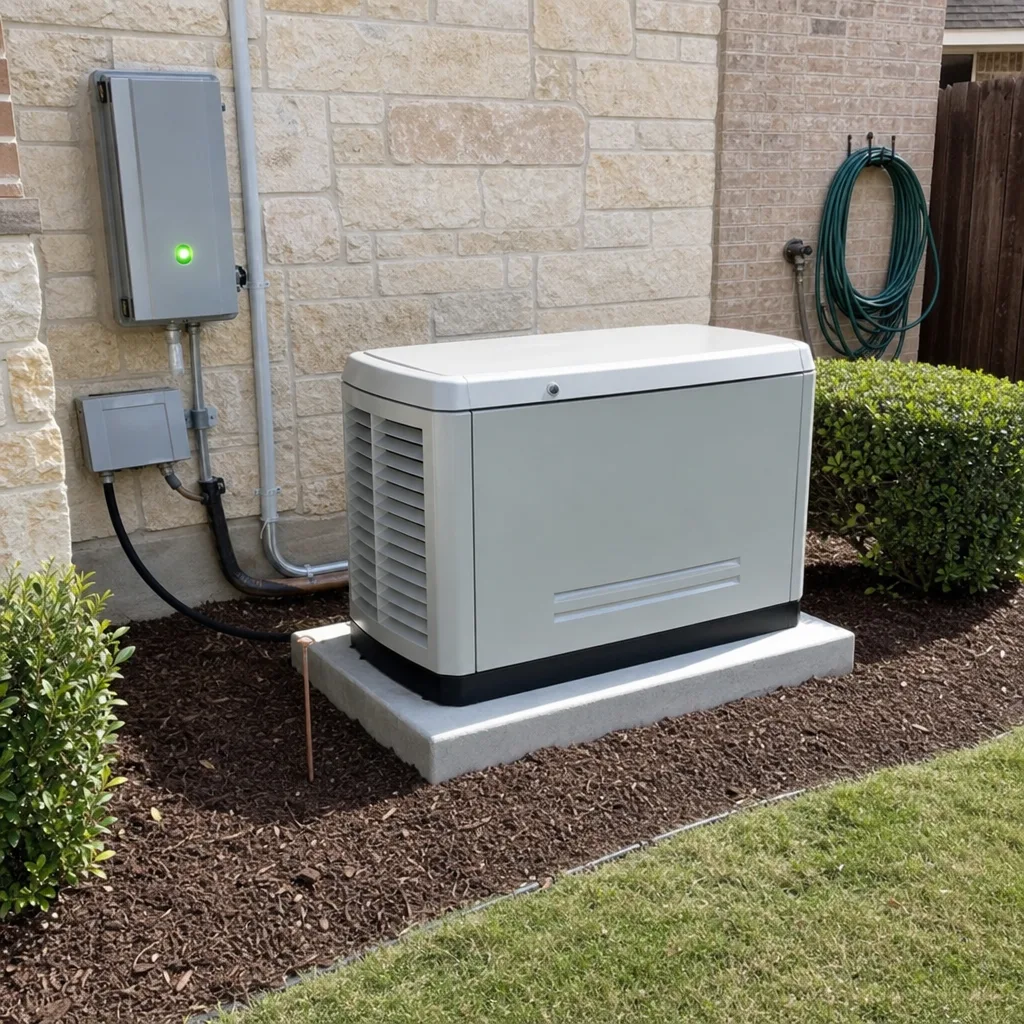
Picture two neighbors. In the first home, the gas meter, the electrical panel, and a flat spot for the generator all sit on the same side of the house, a few feet apart. In the second, the only good spot is across the backyard, past the pool equipment, with a sidewalk in the way. Same generator. Very different job.
Here’s what moves the number up or down.
- The gas line run. A generator needs a steady flow of gas while it runs, and it needs a lot more than a stove or water heater does. The longer the pipe from your meter to the generator, the bigger that pipe may need to be to keep the pressure up. A short run is simple. A long run with turns, or one that has to cross a driveway, adds pipe, digging, and labor. If your meter can’t supply enough gas at all, that’s the bigger upgrade we flagged earlier.
- Distance to your panel. Power has to travel from the generator to the transfer switch and then into your panel. Longer runs need thicker wire so power doesn’t fade along the way, and they may need conduit or a trench. Every extra foot shows up in materials and time.
- Transfer switch type. Some switches replace or sit next to your main panel. Others manage big loads so they take turns. The type that fits your home depends on your panel and the sizing choices you’ve already made, and the switches don’t all cost the same.
- Pad and site prep. The generator has to sit level and stay level. North Texas clay soil swells when it’s wet and shrinks when it’s dry, so a spot that looks flat may still need grading or a better base. Sprinkler lines, fences, and shrubs in the way add work too.
- Placement rules. The manufacturer and local code set how close a generator can sit to windows, doors, vents, and property lines. Sometimes the easiest spot isn’t an allowed spot, and the allowed spot is farther from the gas and the panel.
- Code upgrades. If your panel is full, outdated, or has grounding problems, it may need work before it can take a generator safely. Newer homes often don’t need much. Older setups sometimes do.
Permits round out the list, and as we noted earlier, it’s worth checking whether yours are written into the quote.
Because our team is licensed for both gas and electrical work, we look at the meter, the panel, and the yard on the same visit. That way the route we price is the route we build.
Whoever you hire, ask them to walk your property and show you where the generator, gas line, and wire will go before you sign. A contractor who can point to the path can explain the price. If the quote came from a phone call and a square-footage number, those site costs haven’t been counted yet. They’ll show up later.
Need help with Whole-home standby generator installation?
Call Today, Get Service Today. Xtreme Air Services — Frisco is ready to help.
Permits and Inspections for Generator Installation in Frisco
A standby generator isn’t like plugging in a new appliance. It ties into your gas supply and your electrical panel, and it sits outside your home running a small engine. That’s why a whole-home install in Frisco goes through the city’s permit and inspection process. It isn’t red tape for its own sake. It’s a second set of trained eyes checking the parts of the job you can’t easily check yourself.
Think about what’s at stake if one connection is wrong. A gas fitting that leaks slowly. A transfer switch wired so power can flow back out to the street, where a line worker thinks the wires are dead. A unit set too close to a bedroom window. None of these show up on day one. An inspection is how you catch them before the first real outage, not during it.
Inspectors usually look at a few key areas:
- The gas connection, including the pipe size, the fittings, and a check that nothing leaks.
- The transfer switch and wiring, so your home disconnects from the utility before the generator takes over.
- Grounding and the panel connection, so the system is safe to touch and safe to run.
- Placement, meaning the unit’s distance from windows, doors, vents, and property lines.
A passed inspection also protects you later. If you ever file an insurance claim tied to the generator, or sell your home, a permitted and inspected install is far easier to stand behind than one nobody signed off on. Buyers and their inspectors do ask.
Many Frisco neighborhoods also have a homeowners association. If yours does, check its rules before the pad goes in. Some HOAs want to approve where outdoor equipment sits or how it’s screened from the street. Getting that approval first is a lot easier than moving a generator after it’s been set and piped.
Permits aren’t part of our standard quote unless it says so, as we covered above. So before you sign with anyone, get clear answers to these questions:
- Who pulls the permits, you or the contractor?
- Are permit costs in the quote, or billed separately?
- Who will be there to meet the inspector?
- What happens if the inspector asks for a change?
Licensing matters here too. Gas work and electrical work each fall under their own state licenses in Texas, and an inspector expects the work to match. Xtreme Air Services is licensed and insured for HVAC, plumbing, and electrical work, so both sides of the job are done under the right licenses. Whoever you hire, ask to see their license numbers. A contractor who’s proud of their work won’t mind showing you.
If someone tells you a permit isn’t needed for a whole-home standby generator, treat that as a red flag. Skipping the permit might save a little time up front. It can cost you a lot more later, in safety, in insurance trouble, or when you go to sell.
Watch Our Video
See How We Handle Whole-home standby generator installation in Frisco
Xtreme Air Services — Frisco
When a Portable Generator Is Enough Instead
A whole-home standby generator isn’t the right buy for everyone. If your outages are short and your must-haves are small, a portable generator may cover you for a lot less money. We’d rather tell you that now than sell you more machine than you need.
A portable is probably enough if most of these sound like you:
- Your outages usually last a few hours, not days. You just want to get through the evening.
- Your list is short: the fridge, a few lights, some fans, phone chargers, and the Wi-Fi router.
- You can live without central air for a while, or you’d use a window unit or fans to ride it out.
- You’re home when the power goes out, and you’re able to set the generator up, start it, and refuel it yourself.
- You rent, or you plan to move soon, so a permanent install doesn’t make sense.
- Your budget just doesn’t stretch to a standby system right now, and something is better than nothing.
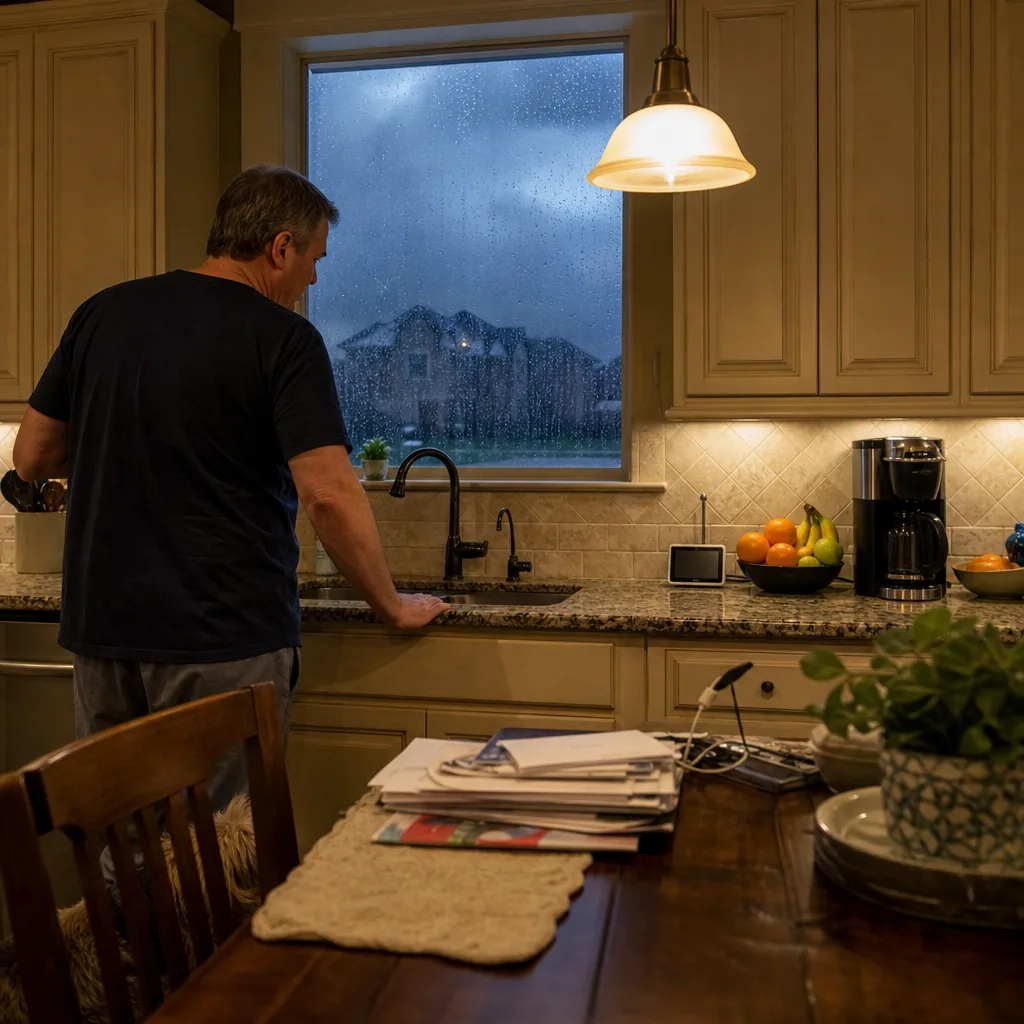
Here’s how that plays out. A spring storm knocks out power for an afternoon. You roll the portable out, plug in the fridge and a couple of fans, and keep your food cold until the lights come back. For that kind of outage, a portable does the job just fine.
Be honest with yourself about the trade-offs, though. A portable won’t start on its own. Someone has to be home, go outside, maybe in the rain, and get it running. It runs on fuel you have to store and refill, and you’ll be refilling it every several hours if the outage drags on. Most portables also can’t carry a central AC system, so on a 105-degree August day in Frisco, your house will keep heating up.
Portables also come with safety rules about where they can run. Read the owner’s manual before the first storm, not during it. And never plug one into a wall outlet or the dryer plug to power the house. That’s the same backfeed danger we covered in the permits section, where power can flow back out to the street.
There’s a middle option some families like. A transfer switch or inlet box lets you plug a portable into your home’s wiring the safe way. It’s still a manual setup, but you can run picked circuits, like the fridge and some lights, without extension cords snaking through the house. Xtreme Air Services offers portable generator hookup and transfer switch installation if that fits you better.
A standby system starts to make more sense when outages tend to last a day or more, when you need the AC running to keep someone safe, or when someone in your home relies on medical equipment. It also makes sense if you travel and want the house protected while you’re gone, or if nobody in your home can safely handle a heavy generator and a fuel can.
If you’re not sure which side you’re on, that’s a fair question to ask before you spend anything. A backup power assessment looks at what you really need to run and how long you need it, so you can pick the option that fits your home and your budget.
Call 469-490-3595
Frequently Asked Questions
Common questions about Whole-home standby generator installation
Is there a tax credit for a whole-home standby generator?
Standard standby generators that run on natural gas usually don’t qualify for federal energy tax credits, since those credits target efficiency upgrades like solar or battery storage. Check with a tax professional about your specific situation before you count on a credit to offset the cost. Some local utilities or insurance providers occasionally offer their own incentives, so it’s worth asking Oncor or your insurer directly.
What size generator do I need for my home?
The right size depends on what you need running at once, not your square footage. Two homes the same size can need very different generators based on central AC, electric appliances, and must-run equipment like medical devices. A sizing consultation looks at your actual AC unit, appliances, and gas setup to land on the right fit, instead of guessing from a square-footage chart.
How long does a whole-home generator installation take from start to finish?
Most turnkey installs involve several steps: site prep for the pad, gas and electrical hookup, the transfer switch, and final startup testing, plus the permit and inspection process required in Frisco. The permit and inspection step can add time depending on how quickly the city schedules the review. Getting a contractor who handles both the gas and electrical work on one visit helps keep the schedule moving instead of waiting on separate crews.
Ready to Get Started?
Call (469) 490-3595 Today, Get Service Today.