


A/C System Repair in Irving: Get a Fair, Fast Fix
Warning signs explained, quick checks to try first, and a repair price that tells you what's included.
What’s Covered on This Page
- What Usually Causes an AC System to Fail
- Signs Your AC Needs a Repair Call Now
- Checks to Make Before You Call
- What Happens During an AC Repair Visit
- What Drives the Cost of an AC Repair
- Can my air conditioner be repaired, or do I need a new system?
- Is it normal for my AC to struggle to keep up only in the afternoon?
- How do I find an AC repair company I can trust?
What Usually Causes an AC System to Fail
When your AC stops cooling, it can feel like the whole system just gave out. That’s rarely what happened. Your air conditioner is a team of parts working together, and it usually only takes one of them to stop the cooling. Here in Irving, your system may run nearly nonstop from late spring into fall. That’s a lot of starts, stops, and heat for the same few parts to handle.
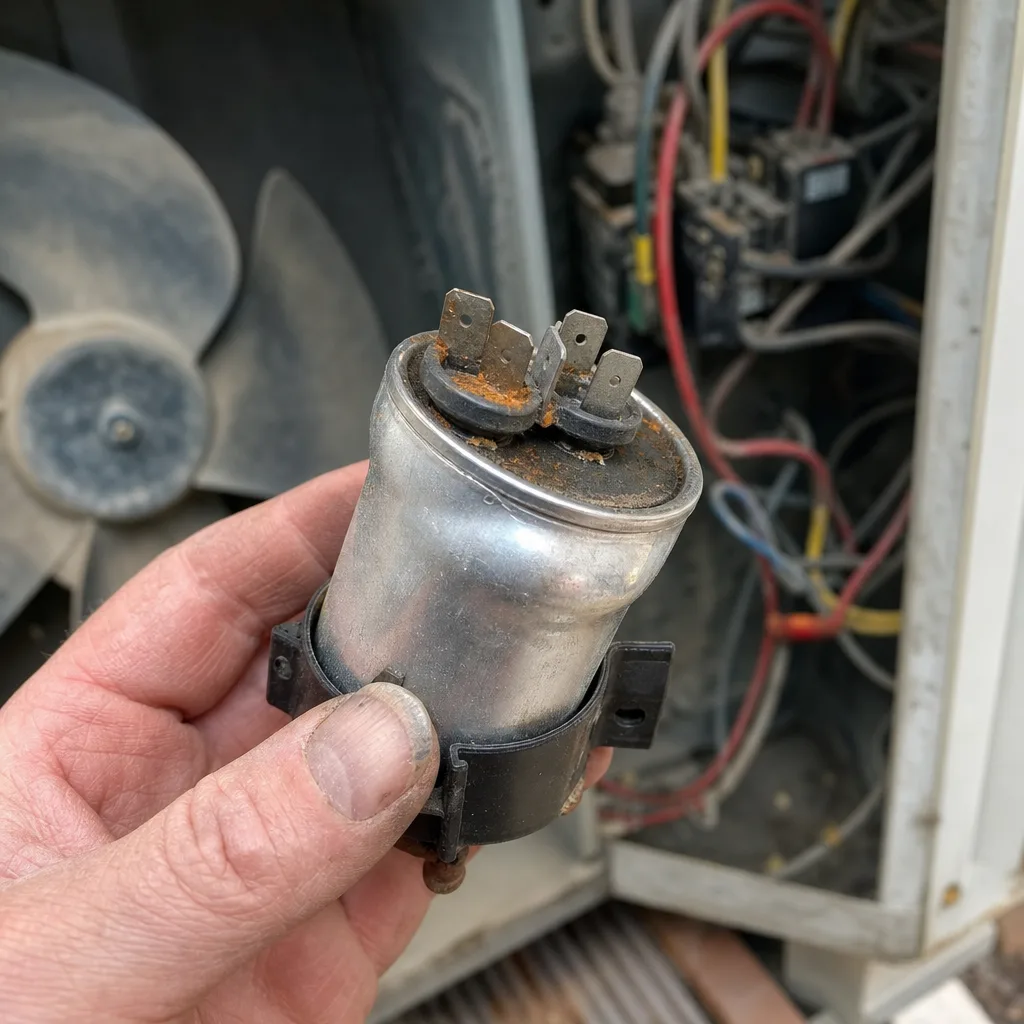
Here are the parts that cause most of the trouble:
- Capacitor. This small part gives your outdoor fan and compressor the jolt they need to start. Heat wears it down over time. When it fails, you might hear a hum outside while the fan sits still, or the unit won’t start at all.
- Contactor and electrical parts. The contactor is a switch that tells the outdoor unit to turn on. Burned contacts, loose wires, or a bad control board can keep the system from running even when the thermostat is calling for cool air.
- Refrigerant leak. Refrigerant carries heat out of your home. It doesn’t get used up, so if it’s low, there’s a leak somewhere. You’ll notice weaker cooling, longer run times, and sometimes ice on the lines.
- Frozen evaporator coil. A dirty filter, low refrigerant, or poor airflow can let the indoor coil drop below freezing. Ice builds up, airflow drops, and warm air starts coming from your vents.
- Clogged condensate drain line. Your AC pulls water out of the air and drains it away. In many homes, the indoor unit sits in the attic. A clogged line can trip a safety switch that shuts the system off, or it can leak water into your ceiling.
- Fan motors. The blower motor inside moves air through your ducts. The fan motor outside pushes heat away from the condenser. A worn motor can mean weak airflow, a burning smell, or a unit that overheats and shuts down.
- Thermostat problems. Sometimes the AC is fine, and it’s just not getting the right signal. Dead batteries, bad wiring, or a failing thermostat can look a lot like a broken system.
- Compressor. This is the heart of the system and the most costly part to replace. It often fails only after something else, like a weak capacitor or low refrigerant, has strained it for a while.
That last point matters. Small problems tend to lead to bigger ones. A clogged filter can freeze a coil. A weak capacitor makes the compressor work harder every time it starts. That’s why the real cause is worth finding, not just the symptom. If a tech only clears the ice and leaves, you’ll likely be back in the same spot next week.
Here’s the good news. Most repair calls come down to a single common failure that’s fixed on the first visit. Your system isn’t doomed just because it quit on a hot afternoon. It usually means one part needs attention, and a trained eye can track it down.
Signs Your AC Needs a Repair Call Now
Your AC usually gives you a warning before it quits completely. If you catch it early, you’re often looking at one part. If you wait, that weak part can start straining everything around it. Here’s what to watch and listen for.
- Warm air from the vents. The system is running and the fan is blowing, but the air coming out isn’t cool. This is the most common reason people call, and it’s worth a call the same day.
- The outdoor unit hums but the fan doesn’t spin. That hum means power is getting there but something isn’t starting. Letting it keep trying puts extra stress on the compressor.
- Ice on the copper lines or the indoor unit. Ice in the middle of a Texas summer means something is off with airflow or refrigerant. Turning the thermostat lower won’t fix it.
- Water where it shouldn’t be. Look for puddles near the indoor unit, a damp spot or stain on the ceiling under the attic, or water dripping from a pipe outside. If your system sits in the attic, a small drip can soak drywall before you notice it.
- A burning, electrical, or musty smell from the vents. A burning smell is never something to wait out. Call today.
- New noises. Grinding, squealing, banging, or rapid clicking usually point to a motor, a belt, or an electrical part that’s wearing out.
- Short cycling. The system turns on, runs a few minutes, shuts off, then starts again. That’s hard on every part, and it usually means something is wrong.
- A breaker that keeps tripping. One trip can happen. If it trips again after you reset it, the problem is in the system, not the panel.
- Your home can’t keep up in the afternoon. The AC runs nonstop, but the house drifts several degrees above your setting during the hottest part of the day.
- A power bill that jumps for no clear reason. If your use hasn’t changed but the bill has, your system may be running longer to do the same job.
Before you call, take two minutes to rule out the easy stuff. Make sure the thermostat is set to cool and set below the room temperature. Swap the batteries if it uses them. Check your air filter, because a filter packed with dust can choke airflow on its own. Then look at the breaker for the AC. If one of those fixes it, great. You just saved yourself a service call.
If none of that does the trick, or you’re seeing any of the signs above, it’s time to have a technician look. A homeowner might notice the house feels a little warm one evening, then wake up to a unit that’s humming and not cooling at all. That first warm evening was the cheaper moment to call.
You also don’t have to wait for Monday to make that call. We offer same-day service, and there’s no extra charge for nights or weekends. If your AC acts up on a Saturday night in July, you’ll pay the same as you would on a Tuesday morning.
Checks to Make Before You Call
You’ve already checked the thermostat, the filter, and the breaker. If the house is still warm, a few more quick checks can save you a service call. They can also make the repair go faster if you do need one.
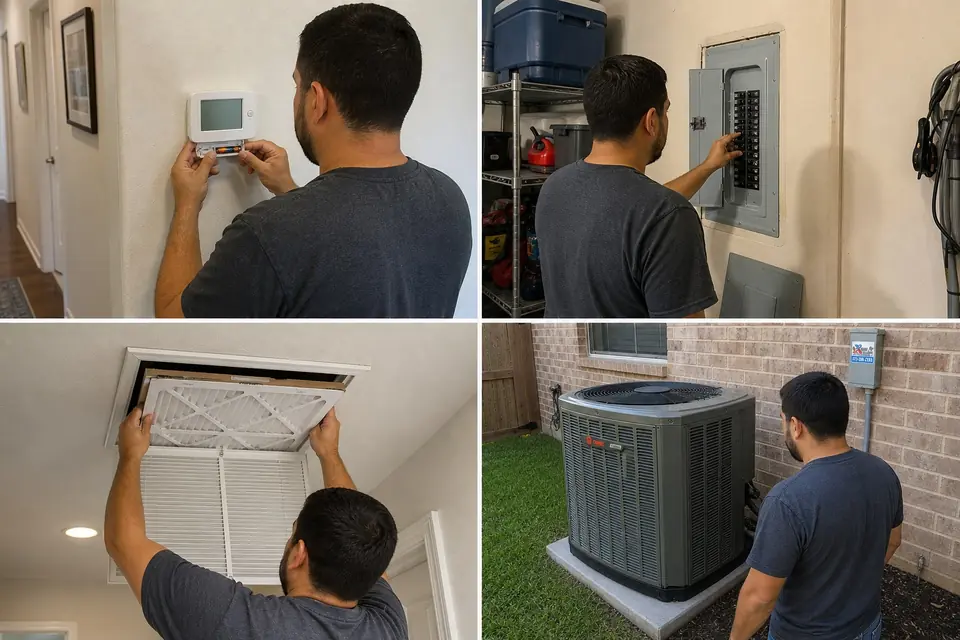
- Give it five minutes. Many thermostats have a built-in delay that keeps the outdoor unit from restarting right away. If you just changed the setting or flipped the breaker back on, wait a few minutes before you decide it’s broken.
- Look at the drain pan. If your indoor unit is in the attic or a closet, check the pan under it. Standing water there often means the drain line is clogged and a safety switch has shut the system off on purpose. Your AC is protecting your ceiling, not failing.
- Find the outdoor disconnect. There’s usually a small gray box on the wall near the outdoor unit. Make sure it’s switched on or the pull-out block is seated all the way in. Kids, yard crews, and storm cleanup can knock it loose.
- Clear around the outdoor unit. Your condenser needs room to breathe. Pull back grass clippings, leaves, cottonwood fluff, and anything stacked against the sides. After a North Texas hailstorm, look for fins that are bent flat, since that blocks airflow too.
- Open up your vents. Closed supply vents and furniture pushed against the big return grille can choke airflow. That can make the house feel warm even when the AC is working.
If you spot ice on the copper lines or the indoor coil, switch the thermostat from cool to off. Leave the fan on so the ice can melt. Running the AC while it’s frozen only makes the ice worse. Once it thaws, it may cool again for a while. But the reason it froze is still there, so plan on having it looked at.
There are also a few things to leave alone. Don’t open the electrical panel on the outdoor unit. Capacitors can hold a charge even with the power off. Don’t buy a can of refrigerant to top off the system yourself. Low refrigerant means a leak, and adding more doesn’t fix the leak. And if a breaker trips a second time, leave it off rather than resetting it again and again.
If none of these checks bring the cool air back, jot down a few details before you call. Your technician will want to know:
- What you noticed first, and when it started
- Any sounds, smells, ice, or water you’ve seen
- Whether the outdoor unit runs, hums, or stays silent
- The brand and model number from the label on the outdoor unit, if you can read it
A clear description helps the tech go straight to the likely cause. That means less time hunting and a faster path back to a cool home.
Not sure what your A/C system repair project needs? Ask us.
Call Today, Get Service Today. Xtreme Air Services — Irving is ready to help.
What Happens During an AC Repair Visit
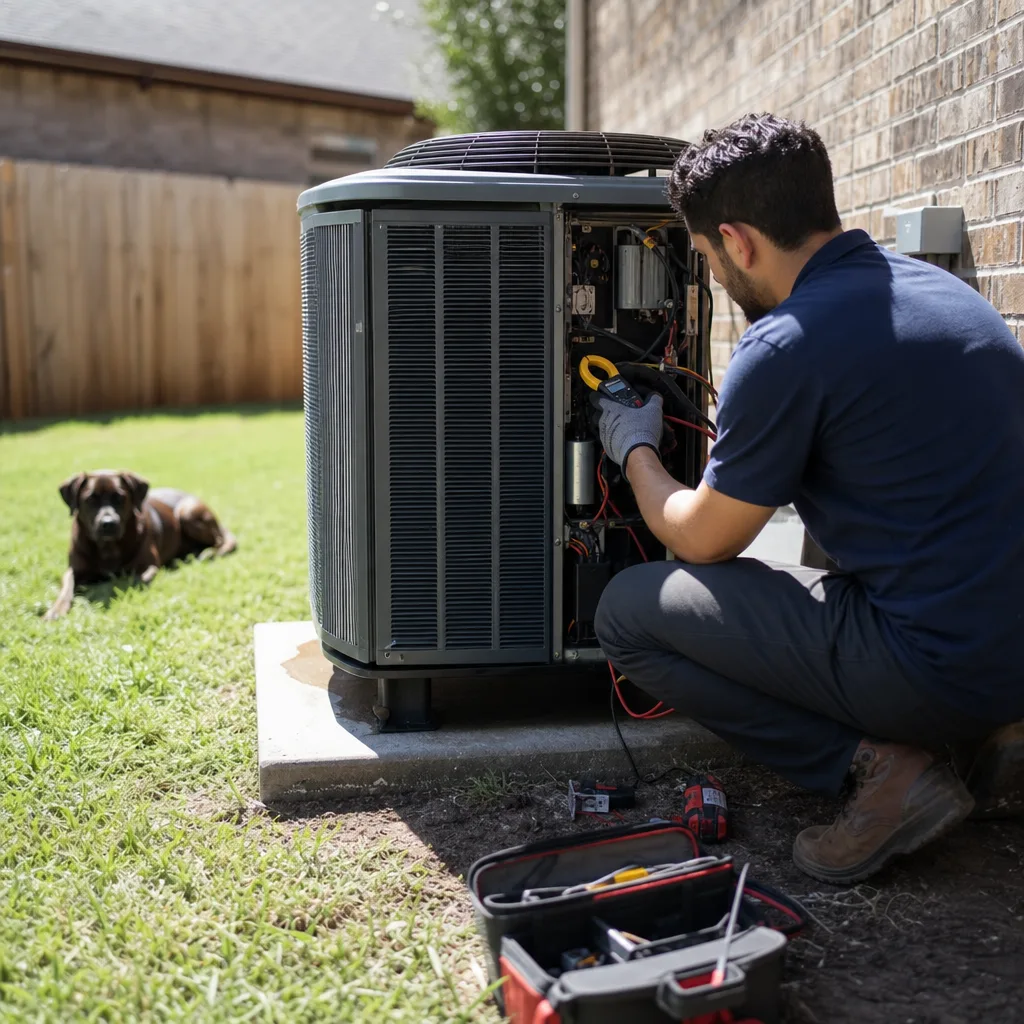
A good repair visit has one job: find the part that failed, fix it, and prove your system cools again before anyone leaves. Here’s how that should go, so you know what to expect and what to ask.
First, someone you can trust shows up at your door. Licensed and insured technicians will ask what you noticed. The notes you jotted down before calling help a lot here, because they point the tech toward the likely cause before any tools come out.
Next comes the diagnosis, and this is where a repair is won or lost. A careful tech doesn’t stop at the first thing that looks wrong. A thorough check usually covers:
- Testing electrical parts like the capacitor and contactor with a meter, not just eyeballing them
- Checking refrigerant pressures to see if the system is low, which points to a leak
- Looking at airflow, the filter, and the indoor coil for dirt or ice
- Checking the drain line, the drain pan, and the safety switch, especially if your unit sits in the attic
- Listening to the motors and looking at wiring for heat damage
Remember the frozen coil from earlier? This is where you find out whether it froze from a dirty filter or a refrigerant leak. Those are two very different repairs. Knowing which one you have is what keeps you from calling again next week.
Then you get the price, before any work starts. Upfront flat-rate pricing means you approve the number first, and there’s no meter running while the tech works. The price covers the diagnosis, labor, the standard replacement part, testing, and cleanup. The service-call fee runs $26-$99, and it’s credited toward the repair if you go ahead. If you decide not to, that’s your call to make.
Sometimes the diagnosis turns up more than one problem. Say the capacitor failed, but the compressor is also showing wear from straining against it. Any extra failed parts or major components get quoted separately, so you can see each piece and decide what to fix now. On larger repairs, financing is available if that helps you plan.
Once you say yes, the tech makes the repair. Most calls come down to a single common failure that’s fixed on the first visit, so in many cases you’re cooling again the same day.
The last step matters as much as the first: checking that the system runs correctly. A proper test means letting the AC run, confirming the outdoor fan and compressor start cleanly, and making sure the air from your vents is noticeably cooler than the air going into the return. Feel the vents yourself. You should notice the difference.
Finally, the work area gets cleaned up, and you should hear a plain-English explanation of what failed and why. If you don’t understand something, ask. A good technician is glad to show you the old part and walk you through it, because a repair you understand is one you can trust.
Watch Our Video
See How We Handle A/C system repair in Irving
Xtreme Air Services — Irving
What Drives the Cost of an AC Repair
Most AC repairs fall between $150 and $700. The most common job is finding the one failed part, fixing or replacing it, and making sure the system runs right. That job usually runs $150-$400. Where your repair lands depends on a few things, and none of them should be a mystery.
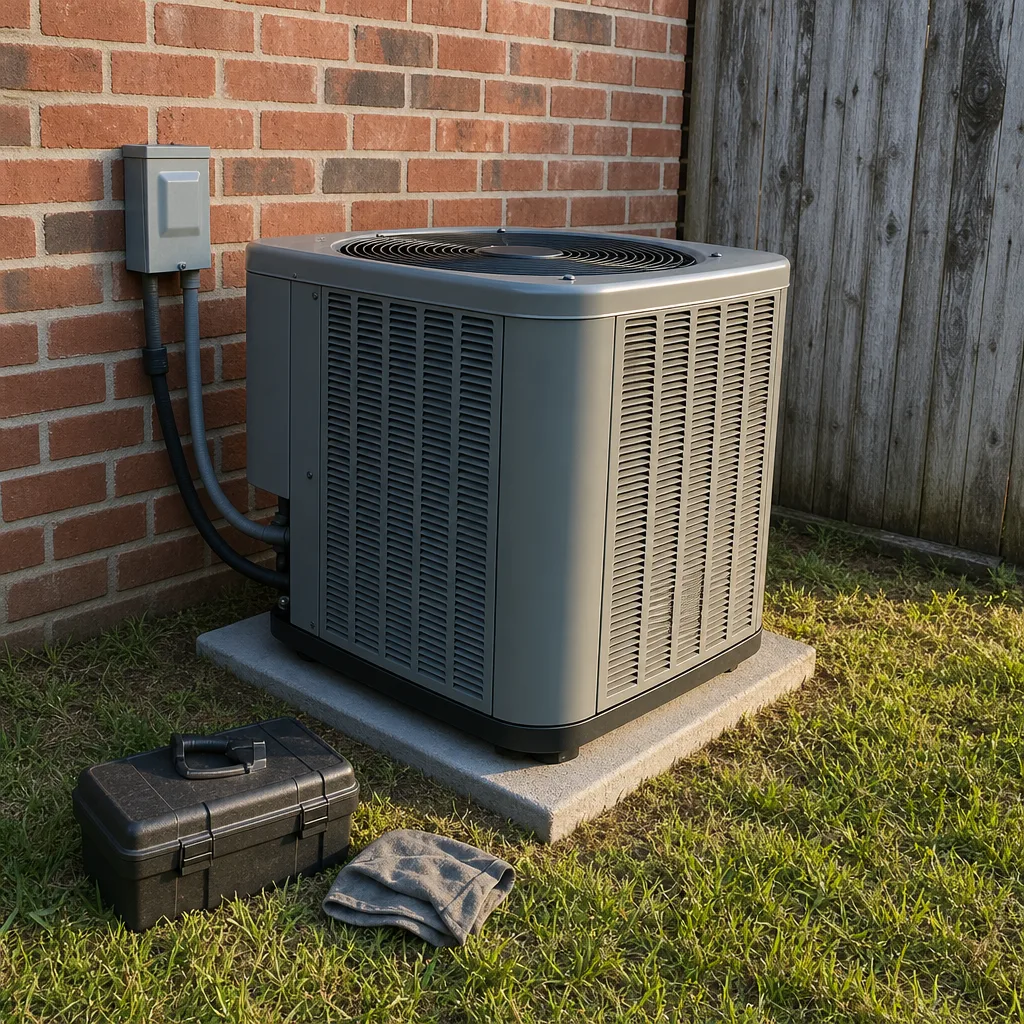
Here’s what moves the price up or down:
- How much failed. A worn capacitor or a clogged drain line is a small, quick fix. A refrigerant leak takes more time to find and seal. The bigger the failure, the bigger the job.
- The part itself. Some parts cost more than others, and some are easier to get. If a part has to be ordered, that can affect both the price and how fast you’re cooling again.
- Your system’s age and brand. Parts for newer, common systems are usually easy to find. Older units can need parts that are harder to track down, and that can raise the cost.
- Whether more than one part is involved. One weak part can strain the ones around it. When a capacitor has been failing for a while, the fan motor or compressor may need work too. Each extra failed part adds to the bill.
- When you call. With a lot of companies, a night or weekend call costs more. A Sunday evening repair can cost the same as a Wednesday morning, so ask before you book.
A few things sit outside a standard repair price. Major components, code upgrades, and permits get quoted separately if your job needs them. You’ll see those as their own line items, so you can decide what makes sense for your home.
This is why a careful diagnosis saves you money. Say your house got warm and the indoor coil iced over. If the cause is a dirty filter and poor airflow, you’re looking at a small repair. If it’s a slow refrigerant leak, the job is bigger. A tech who guesses might charge you for the wrong fix and leave the real problem in place. Then you pay twice. Finding the real cause the first time is what keeps most repairs in that $150-$400 range.
Waiting can cost you too. A unit that’s been humming and straining for a week has had more time to wear down the parts around the one that failed. Calling when you first notice warm air or a new noise gives you the best shot at a one-part repair.
Whoever you call, ask a few questions before you hire them:
- Will I get a set price before any work starts, or are you billing by the hour?
- Do you charge more for nights or weekends?
- Is the service-call fee credited toward the repair?
- Can you show me the failed part and explain why it failed?
A company you can trust will answer all four without hesitating. Ask for a price before work starts, confirm the service-call fee counts toward the repair, and ask to see the old part once the job is done.
Frequently Asked Questions
Common questions about A/C system repair
Can my air conditioner be repaired, or do I need a new system?
Most of the time, yes, it can be repaired. Most AC breakdowns trace back to one worn part, like a capacitor, a clogged drain line, or a tired fan motor, not a dead system. A trained tech tests the actual parts instead of guessing, so you often get a targeted fix instead of a full swap. Full replacement only makes sense when a major component, like the compressor, has failed along with other parts from strain.
Is it normal for my AC to struggle to keep up only in the afternoon?
Yes, this is one of the most common complaints during hot North Texas summers. If your system runs nonstop but the house still drifts several degrees warmer during peak heat, that points to a real problem rather than just extreme weather. It often means airflow is restricted, refrigerant is low, or a part is starting to wear out. Catching it at this stage usually means a smaller, one-part repair instead of a bigger failure later.
How do I find an AC repair company I can trust?
Ask for a flat price before any work starts, and ask if that price changes for nights or weekends. A trustworthy company will also credit the service-call fee toward your repair if you move forward, and show you the failed part once the job is done. If a company won’t answer those questions clearly, keep looking.
Ready to Get Started?
Call (469) 200-2166 Today, Get Service Today.