


Central Air Conditioning Installation in Irving That Fits Your Home, Not Just Your Budget
Central air sized to your home from day one, with what's included, what isn't, and the permits explained up front.
What’s Covered on This Page
- Know When Replacement Beats Another Repair
- Skip Full Installation If a Single Repair Will Fix It
- What a Standard Central Air Installation Includes
- Sizing the System to Your Home, Not Guessing
- Confirm Licensing and the Required City Permit
- How long does a central air conditioning installation take in Irving?
- Do I need to be home during the city inspection?
- What time of year is best to replace a central AC system in Irving?
Know When Replacement Beats Another Repair
Here’s the honest answer. A lot of AC problems don’t need a new system. If someone tells you to replace a healthy unit because a small part failed, get a second opinion.
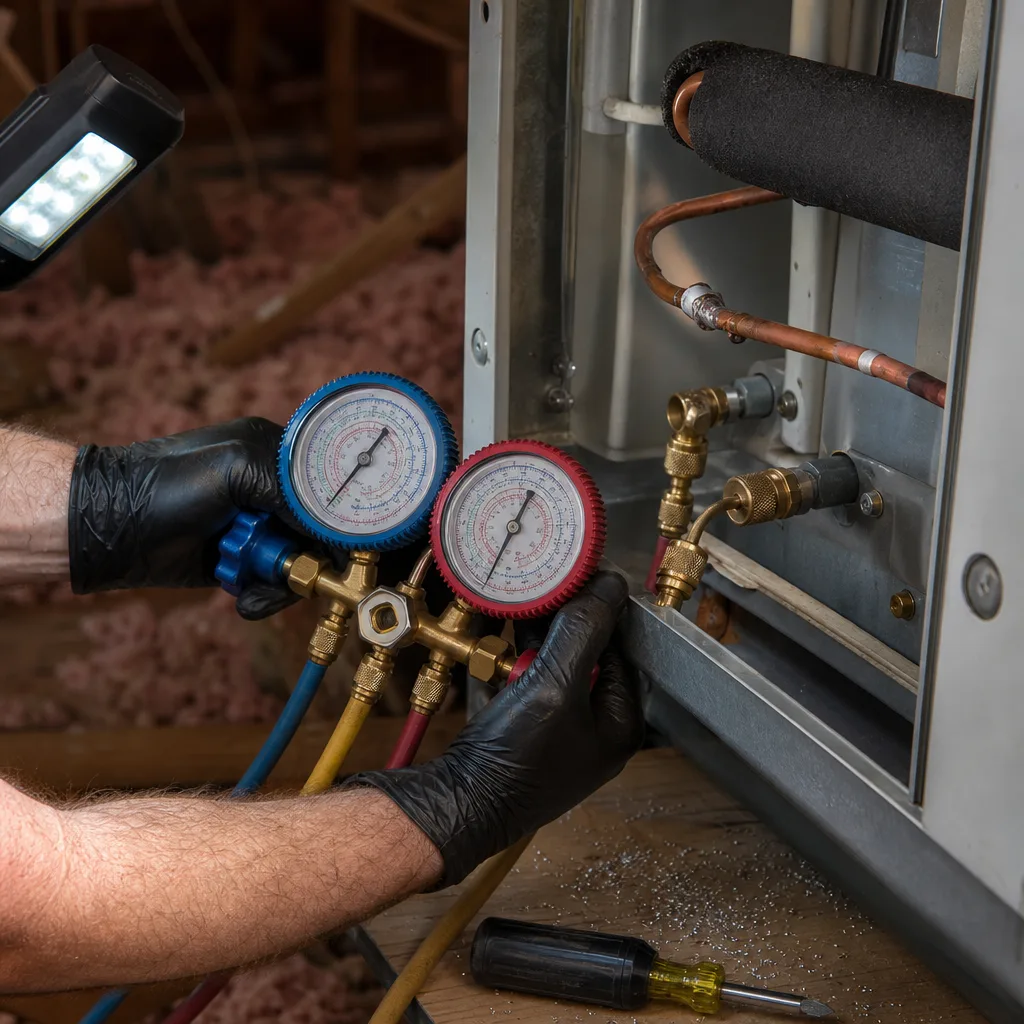
These are usually repairs, not replacements, when the rest of the system is in good shape:
- A bad capacitor. This small part helps the motors start. When it fails, the outdoor unit may hum but won’t run. It’s a quick swap.
- A clogged drain line. Water backs up, a safety switch shuts the system off, or you spot a wet ceiling under the attic unit. Clearing the line usually fixes it.
- A worn contactor, a loose wire, or a failed fan motor. These are common wear parts that can be replaced on their own.
- A thermostat problem. Sometimes the AC is fine and the thermostat is giving it the wrong signal.
- A dirty filter or dirty coils. Poor cooling isn’t always a broken system. Sometimes it just can’t breathe.
If that sounds like your situation, a repair is the right move. Our team will tell you so.
Replacement starts to win when the problem is bigger than one part. Watch for these signs:
- Your system uses R-22 refrigerant. It’s no longer made in the U.S., so every leak gets more expensive to fix, and a recharge only buys you time.
- The compressor has failed on an older unit. The compressor is the heart of the outdoor unit. On an aging system, replacing it often costs close to what a new system would.
- You’re calling for repairs every summer. If you’ve paid for fixes two or three seasons in a row, you’re paying for a new system in pieces without getting the new system.
- The house won’t keep up on hot afternoons. If rooms stay warm and the AC runs nonstop through a North Texas July, the system may be worn out or the wrong size for your home.
- Your bills keep climbing. An older, worn system has to work harder to move the same heat out of your home.
Here’s what that looks like in real life. Say your AC is 15 years old, it’s leaking refrigerant again, and the upstairs bedrooms sit at 80 degrees by late afternoon. You could recharge it and get through August. But you’d likely face the same call next summer, with the same warm rooms. That’s when a properly sized new system is the smarter spend.
Not sure which side of the line you’re on? Start with a diagnosis. We give you upfront flat-rate pricing and you approve it before any work starts, so you can compare repair against replacement with real numbers in front of you. If you go ahead with the repair, the service-call fee is credited toward it. Either way, you decide.
Skip Full Installation If a Single Repair Will Fix It
A new central AC system is a big purchase. It only makes sense when the whole system is the problem. Some comfort problems feel like a dying AC but come from somewhere else. A brand-new unit won’t fix them. Here are the cases where you shouldn’t buy a full installation.
One room or one floor is hot, and the rest of the house is fine. If the downstairs is comfortable and only the upstairs bedroom or bonus room bakes, the AC is probably doing its job. The cool air just isn’t reaching that space. A long duct run, a crushed or loose duct in the attic, or a room that was added later can all cause this. A bigger new system pushing air through the same ducts usually leaves that room just as warm. Depending on the cause, the better fix might be duct repair, a zoning system that sends air where it’s needed, or a ductless mini-split for a garage conversion or addition.
Your ducts are leaking into the attic. In a North Texas summer, an attic gets far hotter than the outdoors. If your ducts have gaps or loose joints up there, you’re paying to cool air that never reaches your rooms. Duct sealing goes after that loss directly. Putting in a new system without fixing the leaks means the new equipment loses air the same way.
The house feels cool but sticky. If the temperature looks right but the air feels damp or clammy, the issue may be humidity, not cooling power. Thermostat fan settings, airflow problems, or an oversized system that shuts off too fast can all leave moisture behind. Sometimes adding a dehumidifier or fixing the setup solves it.
Your system is fairly new and has never worked right. If a newer AC has struggled from day one, the equipment usually isn’t worn out. More often, something was off at the start. The refrigerant charge might be wrong, the airflow might be poor, or the ducts might not match the system. Those are things a technician can check and correct. They don’t call for starting over.
One major part failed on an otherwise healthy system. Hail can bend or damage the outdoor coil. An indoor coil can develop a leak. On a system that isn’t old and doesn’t use outdated refrigerant, replacing the condenser coil, repairing the evaporator coil, or fixing a refrigerant leak can be the right call. It’s worth pricing that part repair before you price a new system.
Your AC is aging but still keeps up. Age alone isn’t a reason to replace it today. If your system still cools the house, isn’t leaking, and your bills are steady, keep running it with regular tune-ups. Use that time to learn your options. That way, you can choose your next system calmly instead of picking one on the hottest day of the year after a breakdown.
If one of these sounds like your home, a new central system isn’t what you need right now. Fix the actual cause and see how the house feels. If you’re still unsure, a diagnosis will show whether the problem is the equipment, the ducts, or the setup.
What a Standard Central Air Installation Includes
Once you know replacement is the right call, the next question is simple: what am I paying for? Here’s what our standard central air installation covers, what it doesn’t, and what moves the price up or down.
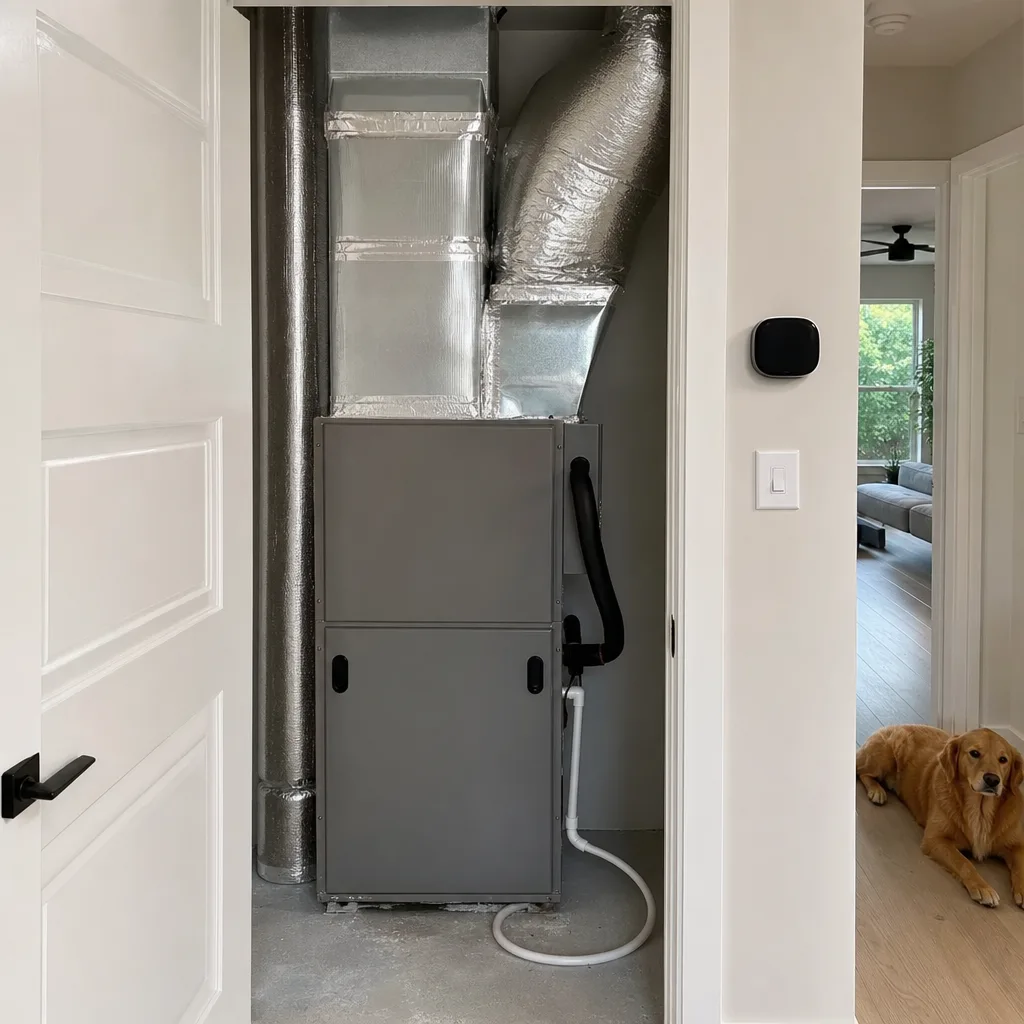
Our most common job is a like-for-like replacement. That means the new system uses your existing connections with no major changes to your home. For that job, our price is $7,000-$10,000. Across all central air installations, our typical range is $5,500-$13,000.
That standard installation includes:
- A new outdoor condenser and a new indoor coil. Replacing both together keeps the two halves of your system matched, so they work as a team instead of a new unit fighting an old part.
- All equipment and materials for the job.
- Professional installation with standard connections.
- Startup and testing, so the system is checked while running before we call it done.
- Haul-away of your old unit, so it isn’t left sitting beside your house.
What’s not included unless your quote says so: duct changes, electrical or plumbing changes, code corrections, and permits. If your home needs any of those, they should be listed as separate line items. You’ll know about them before work starts.
Why the range? A few things push the price one way or the other:
- Size. AC capacity is measured in tons. One ton is the cooling power to remove 12,000 BTUs of heat an hour. A bigger home usually needs more tons, and more tons cost more. Bigger isn’t automatically better, though. The right size matters more than the biggest one.
- Efficiency. SEER2 is the efficiency rating on a new AC. A higher number means the system uses less electricity to cool your home, which matters in a long North Texas summer. Higher-efficiency systems cost more upfront and cost less to run.
- Brand and model. Features like variable-speed operation change the price.
- Ease of access. A unit in a tight attic or a hard-to-reach spot takes more time and care to swap out.
- Condition of what’s already there. Worn ductwork, old wiring, or a drain setup that doesn’t fit the new equipment can add work.
- Code upgrades, permits, and any custom fabrication your home needs.
When you compare quotes, put them side by side and check three things. First, does each quote replace both the outdoor unit and the indoor coil? Second, does it name the size and SEER2 rating? Third, does it spell out what’s excluded? A lower number that leaves out the coil, or leaves permits vague, isn’t really a lower price. It’s just a different job.
If the total is more than you planned to spend at once, flexible financing is available on qualifying installations and larger jobs, on approved credit. You can ask about it when you get your quote and decide whether it makes sense for your budget.
And if you’re not sure whether your home fits the standard job or needs extra work, that’s exactly what an in-home look answers. You’ll get upfront flat-rate pricing that lists what’s in and what’s out, and you approve it before anything gets installed.
Have questions? We’re happy to help.
Call Today, Get Service Today. Xtreme Air Services — Irving is ready to help.
Sizing the System to Your Home, Not Guessing
The old shortcut is to look at your square footage and pick a size from a chart, or just match whatever unit was there before. That’s a guess. Your old system may have been the wrong size for 15 years, and nobody would know unless someone checked. A system sized for your actual home cools evenly, handles humidity, and doesn’t wear itself out early.
Bigger sounds safer on a 105-degree afternoon. It isn’t. An oversized AC cools the air fast, reaches the thermostat setting, and shuts off before it’s had time to pull moisture out. That quick on-off pattern is behind the cool-but-sticky feeling we covered earlier. All those extra starts also wear on the compressor, and you’ve paid for capacity you can’t use.
A system that’s too small has the opposite problem. It runs and runs through a long North Texas afternoon and still loses ground. The upstairs rooms creep warmer by evening, and your electric bill climbs.
The fix is a cooling load calculation. It’s a room-by-room estimate of how much heat your home takes on, so the size comes from your house and not from a rule of thumb. The industry’s standard method for this is Manual J from the Air Conditioning Contractors of America. A proper calculation looks at things like:
- Square footage and ceiling height. A two-story home with vaulted ceilings holds more air than a single-story ranch with the same footprint.
- Insulation in the attic and walls. Many older homes have less of it than today’s newer builds.
- Windows: how many, how big, and which way they face. West-facing glass takes the full hit of the late-afternoon sun.
- Where your ducts run. Ducts in a hot attic pick up heat before the air ever reaches your rooms.
- Air leaks around doors, attic hatches, and older windows.
- How many people live there and how you use the space.
That’s why two houses with the same square footage can need different systems. A home with fresh attic insulation and shaded windows may need less cooling than the house next door with big west windows and thin insulation.
The size also has to fit your ducts. A new system can only cool as well as the air it can move. If the ducts are too small or too leaky for the new equipment, airflow drops, and you lose the comfort and efficiency you paid for. Duct condition belongs in the sizing conversation from the start, not as a surprise after the install.
Before you sign any quote, ask how the contractor picked the size. Did they look at your insulation, windows, and ducts, or did they just copy the label on your old unit? If the answer is “it’s the same as what you had,” ask to see the math. A good contractor won’t mind showing you.
Cooling load calculation is one of the services we offer. You’ll see the recommended size for your home, and why, before you choose a system.
Watch Our Video
See How We Handle Central air conditioning installation in Irving
Xtreme Air Services — Irving
Confirm Licensing and the Required City Permit
Before you sign, check two things: the contractor’s state license and the city permit. Both take a few minutes to confirm. Both protect you long after the new system is running.

In Texas, air conditioning contractors are licensed by the Texas Department of Licensing and Regulation, or TDLR. A licensed contractor should put the license number on the quote and the contract. You can look that number up on the TDLR website and see whose name it’s under and whether it’s active. If a company can’t give you a number, or the name doesn’t match, that’s your answer.
Here’s ours, so you don’t have to ask: HVAC License #TACLA29023C. Look it up any time. We’re licensed and insured, and our team members are background-checked and drug-tested, because you’re letting us into your attic, your yard, and your home.
The technician matters too. Anyone who handles refrigerant has to hold EPA certification. That covers safely recovering the old refrigerant from the unit being removed and charging the new one. It’s fair to ask whether the crew installing your system is certified.
Replacing a central AC system in Irving is permitted work through the City of Irving. The permit means a city inspector looks at the finished job, not just the company that did it. Inspectors typically check the electrical disconnect and wiring at the outdoor unit, the refrigerant lines, the condensate drain from the indoor coil, and safe clearances around the equipment. It’s a second set of eyes on the parts of the job you can’t easily judge yourself.
Skipping the permit can cause trouble later. Unpermitted mechanical work can come up when you sell your home, during a buyer’s inspection, or when you file an insurance claim. A small permit fee now is much easier than sorting that out years from now.
As we covered in the pricing section, permits aren’t part of our standard installation price unless your quote says so. That isn’t a catch. It just means you should see the permit called out in writing. When you review any quote, ours included, ask these questions:
- Is the TDLR license number printed on the quote?
- Is the City of Irving permit listed, and is the fee included or separate?
- Who schedules the inspection, and do I need to be home for it?
- Is the crew EPA certified to handle refrigerant?
- Will the job be finished and tested before the inspection, or after?
A contractor who’s doing it right will answer every one of these without hesitating. If you get vague answers about the permit, or a suggestion that you don’t really need one, keep shopping.
Our Irving office is at 5000 Riverside Drive, so we’re local to the city whose rules your job has to meet. When you’re ready, we’ll size your system, put the license number, the inclusions, and the permit details in writing, and give you upfront flat-rate pricing you approve before any work starts.
Call 469-200-2166
Frequently Asked Questions
Common questions about Central air conditioning installation
How long does a central air conditioning installation take in Irving?
Most like-for-like installations take one day, from removing the old unit to testing the new system. If your home needs duct repairs, electrical upgrades, or other extra work, the job can stretch into a second day. Your contractor should tell you upfront which kind of job yours is before work starts.
Do I need to be home during the city inspection?
That depends on who schedules it, so ask your contractor directly before the install. The inspection checks the electrical disconnect, refrigerant lines, condensate drain, and clearances around your new outdoor unit. A straight answer on scheduling and whether you need to be present is a fair question for any quote you review.
What time of year is best to replace a central AC system in Irving?
Spring or fall is the easiest time, before North Texas summer heat pushes everyone’s AC to the limit. Scheduling outside the hottest months often means less wait and more time to compare quotes calmly. If your system is aging but still cooling fine, that’s a good window to plan ahead instead of replacing it during an August breakdown.
Ready to Get Started?
Call (469) 200-2166 Today, Get Service Today.