


Tankless Water Heater Installation in Irving: Will Your Home Need Extra Work?
Why your home's existing setup decides what tankless really costs, and how to size a unit for your household.
What’s Covered on This Page
- Why Your Home’s Existing Setup Decides the Real Cost
- Signs Your Current Water Heater Needs Replacing Now
- Gas vs. Electric Tankless: What Irving Homes Typically Support
- Sizing a Tankless Unit for Your Household
- What Happens During a Tankless Installation
- How long does a tankless water heater last compared to a tank?
- Can I install a tankless water heater in the same spot as my old tank?
- Will a tankless water heater lower my utility bill?
Why Your Home’s Existing Setup Decides the Real Cost
Two neighbors can buy the same tankless heater and pay very different amounts to have it installed. The difference usually isn’t the box on the wall. It’s what that box has to connect to.
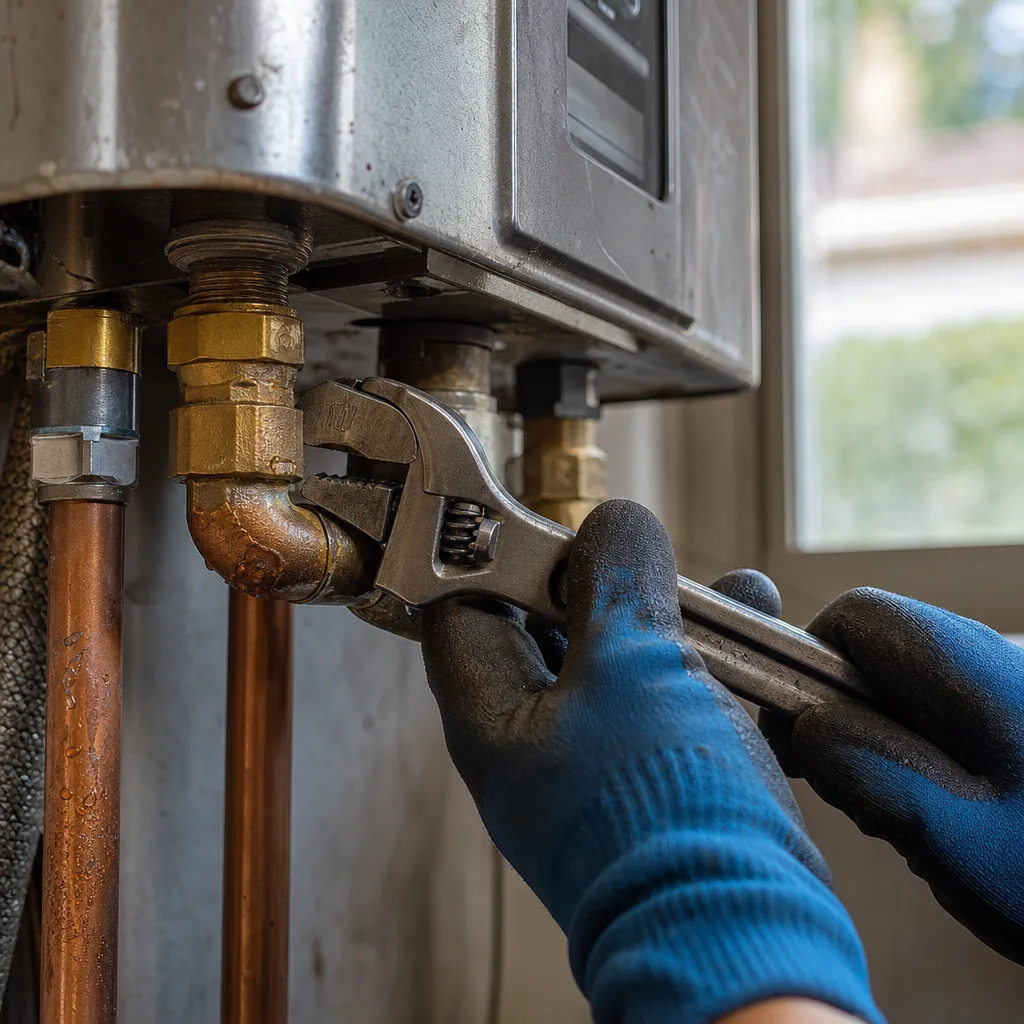
A tank heater warms water slowly and keeps it ready. A tankless unit heats water the moment you turn on a tap, so it needs a lot of energy all at once. If your current gas line, vent, or electrical service was sized for an old tank, it may not keep up. That’s when a simple swap turns into a bigger project.
Here’s what moves the price up or down:
- Size and capacity. A home with several bathrooms running showers at the same time needs a bigger unit than a small house with one bath.
- Brand and model. Efficiency ratings and features change the equipment cost.
- Venting on gas units. Gas tankless heaters need their own venting, and our pricing includes it. If the vent has to take a new path out of your home, that adds labor.
- Ease of access. A heater in an open garage is quicker to replace than one tucked into a tight attic or closet.
- Condition of your existing plumbing, wiring, and gas line. Old or undersized lines may need upgrades before a tankless unit can run safely.
- Code upgrades and permits. Bringing an older setup up to current code adds cost, and so does any permit the job needs.
- Custom fabrication. Some installs need custom mounting or piping to fit the space.
Our most common job is a standard like-for-like swap that uses your existing connections with no major changes. That typically runs $3,700 to $5,100. Across all tankless jobs, our typical range is $3,000 to $6,500, and your home’s setup is what places you inside it.
So you know exactly what you’re paying for, here’s how we break it down. Included: the equipment and materials, professional installation, standard connections, startup and testing, and hauling away your old unit. Not included unless your quote says so: duct, electrical, or plumbing changes, code corrections, and permits. If your home needs any of those, you’ll see them listed before work begins.
That’s why we look at your setup in person instead of guessing over the phone. There’s a $26 to $99 service-call fee, and it’s credited toward the job if you go ahead with Xtreme Air Services. You’ll get upfront flat-rate pricing that you approve before any work starts, so the number won’t climb halfway through.
If your home lands toward the higher end because of gas, venting, or wiring upgrades, flexible financing is available on qualifying installations and larger jobs, on approved credit. That way the upgrades your home needs don’t have to wait.
Signs Your Current Water Heater Needs Replacing Now
Your old tank usually tells you it’s getting tired before it quits. If you catch those signs early, you get to plan a tankless switch on your schedule instead of scrambling after a cold shower or a wet floor.
Here’s what to look and listen for:
- Water pooling around the base of the tank. A slow drip from the bottom often means the tank itself is wearing through. A leaking tank usually can’t be patched.
- Rusty or brown hot water. If only the hot side looks off, rust may be building up inside the tank.
- Popping, rumbling, or banging when the heater runs. That’s often sediment that has settled on the bottom and is getting cooked by the burner.
- Running out of hot water sooner than you used to. Sediment takes up room in the tank, so there’s less hot water to go around.
- An older unit with no clear service history. The label on the side shows when it was made. If the tank is getting up there in age and has never been flushed, it’s worth having it looked at.
Hard water plays a big part here in North Texas. The minerals in it settle out when water heats up, so homes in Irving can build sediment faster than you’d expect. That’s a lot of what’s behind the popping sounds and the shrinking hot water supply. It’s also one reason some homeowners pair a new heater with a water softener, which you can ask us about if scale keeps showing up on your faucets and fixtures.
Where your heater sits matters too. Many homes have the water heater in a garage, but some have it in a closet or attic. A small leak in the garage is a mess. A small leak in a closet or attic can reach your ceiling or floors before you notice it. If your tank is tucked away like that and showing any of the signs above, check on it more often.
Here’s why timing matters for a tankless upgrade. When a tank fails without warning, most people just want hot water back fast. That pressure pushes you toward whatever can go in today. When you plan ahead, there’s time to check your gas line, venting, and wiring properly, which is exactly what decides where your job lands in the price range covered above. You can sort out any upgrades your home needs, look at financing if it helps, and pick the right size unit for your family without rushing.
So if you’re seeing one or two of these signs, you don’t need to panic. You do have a good reason to start planning now, while the old tank still works and you have time to choose.
Gas vs. Electric Tankless: What Irving Homes Typically Support
The first question isn’t which tankless heater you want. It’s what fuel your home already has. That usually decides which type makes sense, and it’s the biggest reason one job stays simple while another needs upgrades.
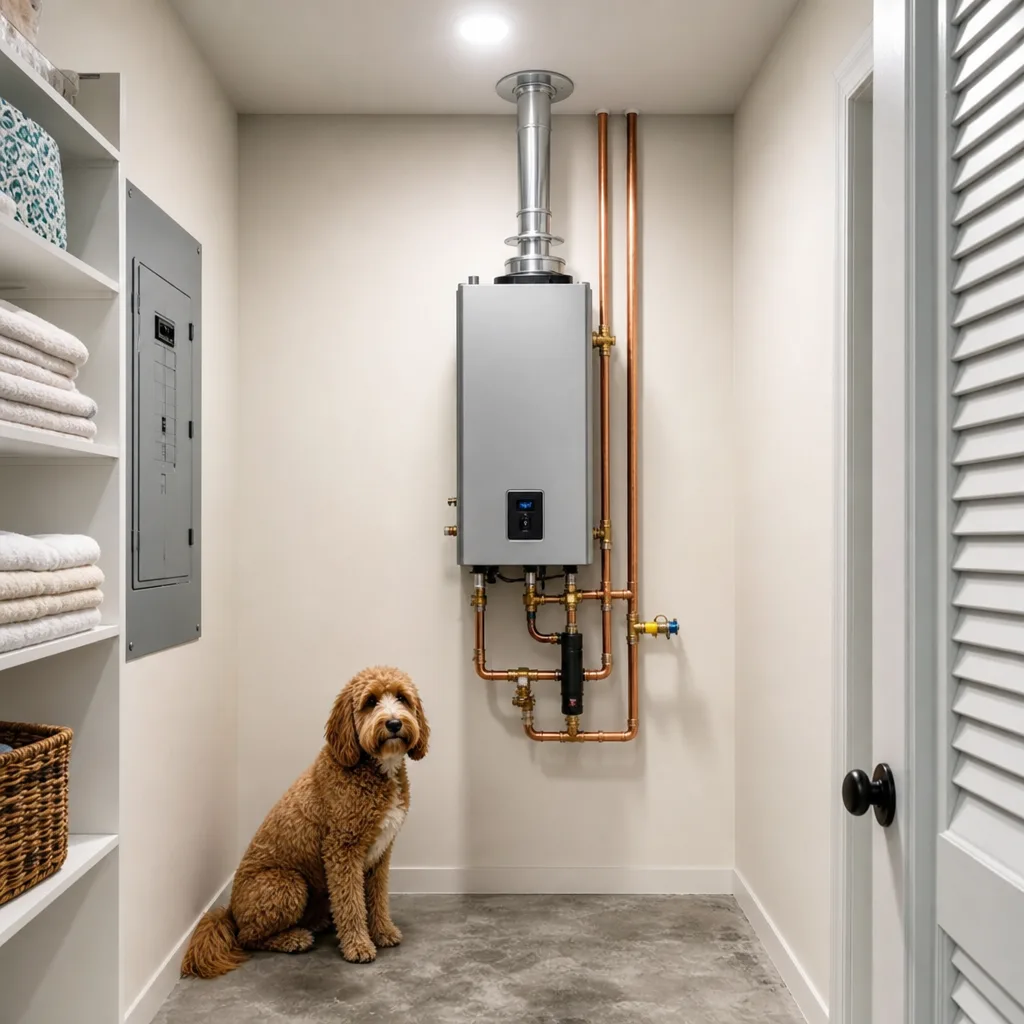
Not sure what you have now? Take a look at your current water heater. A gas unit has a metal vent pipe coming out of the top and a gas line with a shutoff valve running into it. An electric unit has no vent pipe, just a heavy wire connected near the top. Your electrical panel matters too. The main breaker is usually marked with your home’s total service size.
If your home already has gas, a gas tankless heater is usually the natural choice. You’re working with a fuel source that’s already there. The catch is that a tankless gas unit burns a lot more gas at once than an old tank does. The line feeding your old heater may be too small to keep up, especially if your furnace, stove, and dryer share it. Venting is the other piece, which we covered in the pricing section above. If your line needs to be bigger, our team also handles gas line installation.
Electric tankless units skip the vent, but they pull a huge amount of power the moment you turn on hot water. A unit big enough for a whole house often needs several large dedicated circuits. Plenty of older homes don’t have the room in the panel for that. Newer homes may have more capacity, but it still needs to be checked, not assumed. When the panel comes up short, an electrical panel upgrade can come first, and our licensed electricians do that work too.
Here’s a part people miss. A tankless heater works hardest in winter. When a North Texas cold front moves through, the water coming into your home gets colder. The heater has to raise it more degrees to reach shower temperature, so it can deliver less hot water at once. A unit that feels fine in August can come up short in January. That’s why sizing should be based on your coldest months, not your mildest.
So how does this play out for your home?
- You have gas and a gas tank heater now: gas tankless is usually the straightest path. The main checks are gas line size and the vent route.
- You’re all electric with plenty of panel space: whole-home electric tankless can work once your circuits are confirmed.
- You’re all electric with a full or older panel: you’ll need a panel upgrade, a new gas line, or a different plan.
- You only want faster hot water at one far-off sink: a small electric unit at that spot can make sense even if the rest of your home stays on a tank.
Sometimes the honest answer is that tankless isn’t worth it for your home right now. If you’re all electric, your panel is maxed out, and the upgrades would cost more than you’d ever save, a new standard electric tank may be the smarter buy. We install those too, and we’d rather tell you that up front than sell you a project your home doesn’t need.
Ready when you are – get in touch today.
Call Today, Get Service Today. Xtreme Air Services — Irving is ready to help.
Sizing a Tankless Unit for Your Household
A tank heater is sized by how many gallons it holds. A tankless heater is sized by how much hot water it can make at the same moment. That’s measured in gallons per minute, or GPM. Get it right and you’ll have hot water at every tap you use. Get it wrong and someone’s shower turns lukewarm the second the dishwasher kicks on.
The number that matters isn’t the size of your house or how big your old tank was. It’s your busiest few minutes of the day.
Picture a weekday morning. One person is in the main shower, a teenager is in the hall bath, and the washing machine is filling on warm. All three are pulling hot water at once. Your tankless unit has to keep up with that moment, not with a quiet Sunday afternoon.
Here’s how to think it through for your home:
- Count what runs at the same time. Think about showers, tubs, the dishwasher, the washer, and kitchen sinks during your busiest hour.
- Add up their flow. Each fixture uses a certain amount of water per minute. A rain shower head or a big soaking tub uses a lot more than a standard shower head or a bathroom sink.
- Check the unit’s output on a cold day. Every tankless heater makes less hot water when the incoming water is colder. Because of the winter effect covered above, look at what the unit delivers in January, not what the box says on its best day.
- Leave a little room. If your family is growing, or you’re planning to add a bathroom, size for where you’ll be in a few years.
Two sizing mistakes come up a lot. The first is going too small to save money up front. That’s the one that leaves you with cold showers, and it’s hard to fix later without replacing the unit. The second is going far bigger than you need. You pay more for equipment you won’t use, and a larger gas unit can also need a bigger gas line, which adds to the job.
There’s one more thing to know so you aren’t surprised. A tankless heater makes hot water fast, but it doesn’t make that water reach your faucet any faster. If your far bathroom takes a while to get hot today, it’ll still take about that long, because the cold water sitting in the pipe has to clear out first. Very low flows, like barely cracking a faucet, may not be enough to turn the heater on at all.
Some homes don’t fit neatly into one unit. A big house with bathrooms at opposite ends might do better with two units, or with one whole-home unit plus a small point-of-use heater at a far sink.
Before you sign off on any quote, ask the installer a few simple questions. How many fixtures did you size this for? What will it deliver in winter? Why this size and not the next one down? A good installer should be able to answer all three in plain English. If they sized your heater without asking how your family uses hot water, that’s a reason to ask more.
Watch Our Video
See How We Handle Tankless water heater installation in Irving
Xtreme Air Services — Irving
What Happens During a Tankless Installation
Once your quote is approved, the install itself is pretty simple to follow. Knowing the steps helps you plan your day. It also helps you spot a job that was rushed.
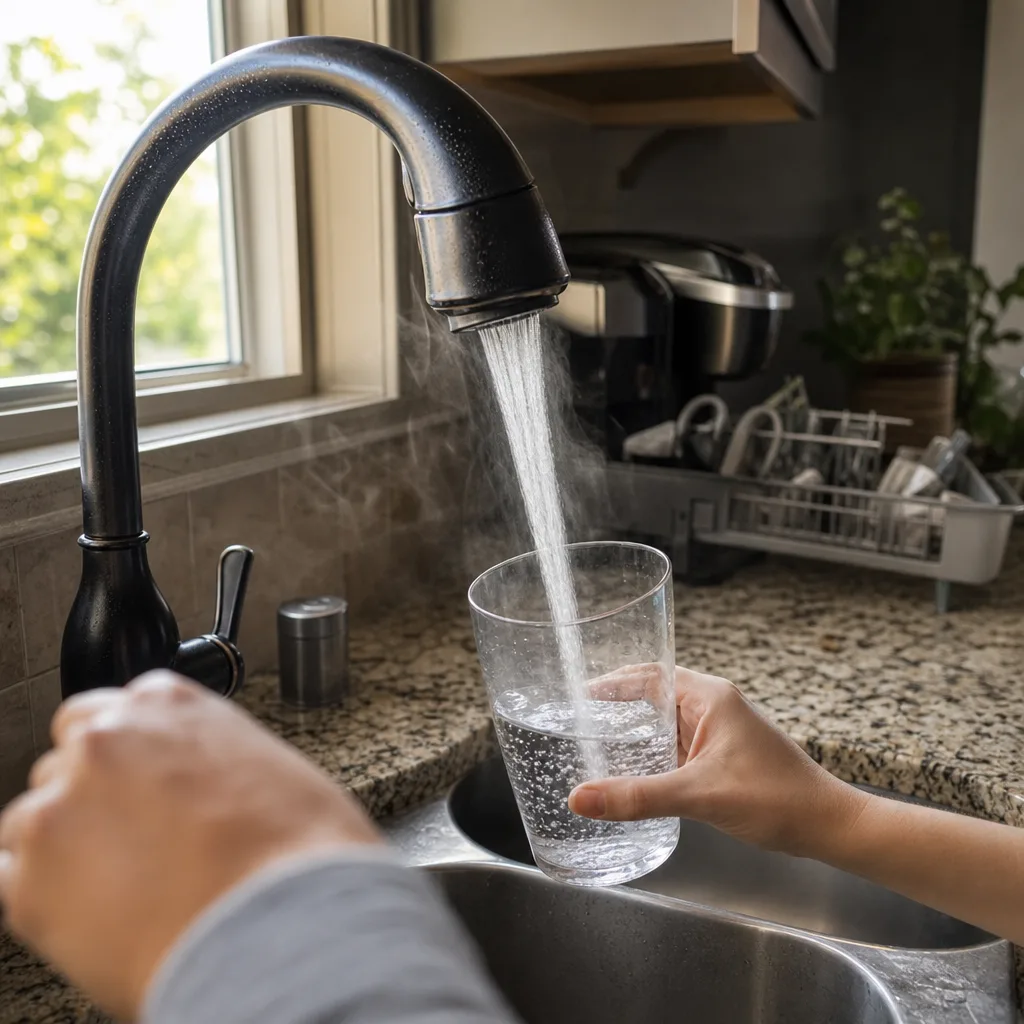
Before anything starts, you’ll have upfront flat-rate pricing that you’ve already signed off on. Any gas, venting, or electrical upgrades your home needs should be listed there, so nothing gets added once the old tank is out.
On install day, a proper job usually goes like this:
- Shut everything off. The water supply gets closed. The gas or power to the old heater gets turned off before anyone touches a line.
- Drain and remove the old tank. A full tank holds a lot of water and sediment, so it gets drained first, then disconnected and carried out. Haul-away of your old unit is part of our standard install.
- Mount the new unit. Tankless heaters hang on the wall instead of sitting on the floor. That often frees up space in a garage or closet. The mounting spot needs to be solid and close to the gas, vent, or power it’ll connect to.
- Connect the water lines. Hot and cold lines get tied in. Many installers add service valves here so the unit can be flushed later without cutting pipe. That matters with North Texas hard water, since minerals build up inside a tankless heater too.
- Connect the fuel. A gas unit gets its gas line and venting hooked up. An electric unit gets wired to its dedicated circuits. If your line or panel needed upgrades, that work happens before this step.
- Check for leaks. Every water and gas joint should be tested before the unit runs. A gas connection should never be left to chance.
Startup and testing come last, and they’re included in our standard installation. This is the step worth paying attention to. The heater gets fired up and the water temperature gets checked at your taps. The best test is running more than one fixture at once, like a shower and the kitchen sink together. That’s how you see whether the unit keeps up with the busy moments it was sized for.
Before the installer leaves, ask them to show you a few things. Where’s the water shutoff for the unit? How do you change the temperature setting? Where are the service valves for flushing? A good installer won’t mind taking five minutes to walk you through it.
If your job needs a permit, a city inspection may follow after the install. That’s normal and good for you. It means someone besides the installer has checked the gas, venting, and electrical work on a heater that runs every day in your home.
Frequently Asked Questions
Common questions about Tankless water heater installation
How long does a tankless water heater last compared to a tank?
Tankless units typically last longer than tank heaters because they aren’t holding standing water around the clock, which cuts down on internal corrosion. In Irving, hard water is still the main thing that shortens a unit’s life, since minerals build up inside the heat exchanger over time. Flushing the unit on a regular schedule, using the service valves installed during setup, keeps that buildup in check and protects your investment.
Can I install a tankless water heater in the same spot as my old tank?
Often yes, but not always, and that’s part of what we check before quoting your job. A tankless unit mounts on the wall instead of sitting on the floor, so the spot needs solid wall backing and easy access to the gas line, vent, or electrical connection it will use. If your old tank was in a tight closet or attic, that location may limit your options or need extra work to make the connections reach.
Will a tankless water heater lower my utility bill?
Most homeowners see some savings because a tankless unit only heats water when you need it, instead of keeping a full tank hot all day. How much you save depends on your household’s hot water use and what fuel your home runs on. The bigger financial factor for most Irving homes is whether your gas line, venting, or electrical panel already supports the new unit, since that decides your upfront installation cost.
Ready to Get Started?
Call (469) 200-2166 Today, Get Service Today.