


Home Rewiring in Dallas: Know When You Need It and What Drives the Price
A straight answer on whether your house needs rewiring or a smaller repair, and what a full project involves.
What’s Covered on This Page
- Signs Your Wiring Needs a Full Rewire, Not a Small Repair
- When You Don’t Need a Full Home Rewire
- What Happens During a Home Rewiring Project
- Why a Permit Can Expand Your Project’s Scope
- What Drives Home Rewiring Cost Up or Down
- How long does it take to rewire a 2000 sq ft house?
- Can you rewire an old house without removing drywall?
Signs Your Wiring Needs a Full Rewire, Not a Small Repair
Most wiring problems don’t need a rewire. A loose connection, a worn-out outlet, or a bad breaker can be fixed in an afternoon. A full rewire is a different job. You’re replacing the wire running through your walls and attic, and you only need it when the wire itself is the problem.
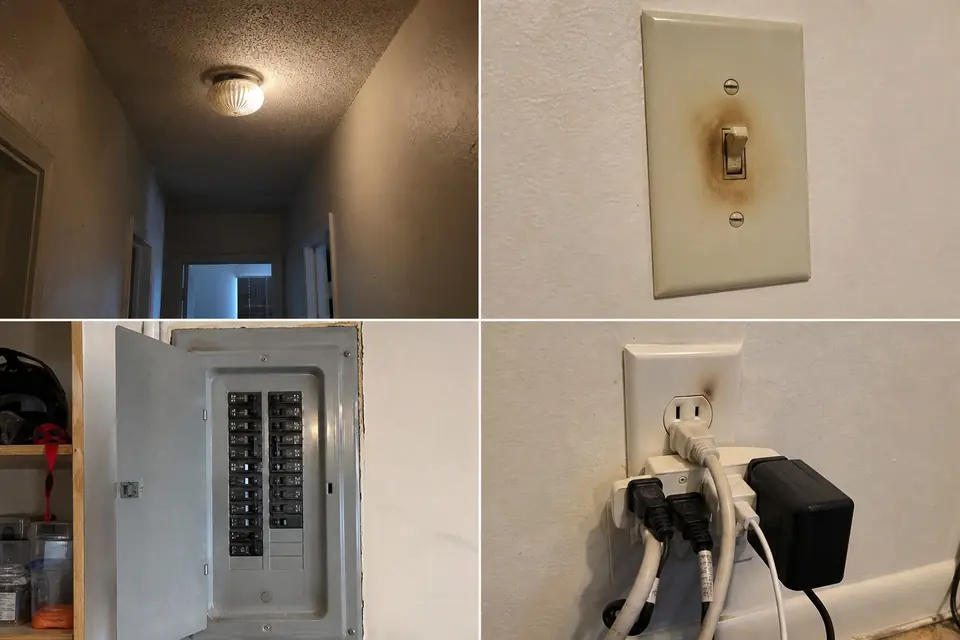
These signs point toward the whole system:
- Problems in many rooms at once. Lights flicker in the kitchen, outlets go dead in a bedroom, and a breaker trips in the living room. When trouble keeps showing up in different places, the wiring as a whole is often worn out.
- Outlets or switch plates that feel warm, look scorched, or smell like burning plastic, especially in more than one spot.
- Two-prong outlets throughout the house. That usually means the home was wired without a ground wire. Swapping in three-prong outlets doesn’t fix that.
- Wire that’s brittle, cracked, or crumbling when an electrician opens a box. Old insulation breaks down with age and heat.
- An outdated wire type. Knob-and-tube wiring and the aluminum branch wiring used in some homes from the 1960s and 1970s were common in their day, but they don’t hold up well to how you use power now.
- Repairs that keep leading to more repairs. If every fix uncovers another bad splice or burned connection, you’re paying again and again for a system that’s near the end of its life.
Age is part of the picture in Dallas. A lot of the homes here are slab-on-grade ranch houses built between the 1950s and 1990s. Many of them still have the original wiring, put in for a house with one TV and no central air. Add today’s window units, space heaters, home offices, and big kitchen appliances, and that old wire is carrying loads it was never planned for. Hot Texas attics, where much of that wire runs, don’t make it any easier on aging insulation.
Now the honest side. You probably don’t need a rewire if only one outlet is acting up, if a single breaker trips only when you run the microwave and toaster together, or if a light flickers because the bulb is loose. Those are small repairs or simple load issues. A newer home with modern grounded wiring and one isolated problem almost never needs a rewire either.
If you’re not sure which side of the line you’re on, an electrical safety inspection is the step that settles it. A licensed electrician looks at the panel, opens up boxes in several rooms, and checks the condition and type of wire. That way you decide based on what’s in your walls, not on a guess. Sometimes the answer is a targeted fix, like aluminum wiring replacement or knob-and-tube replacement in part of the house. Sometimes it’s the whole home. Either way, you’ll know what you’re paying for and why.
When You Don’t Need a Full Home Rewire
A full rewire is a big job. If the wire inside your walls is still in good shape, you don’t need to replace it. A smaller, cheaper fix is often the right call, even when your problem feels big.
Here are the most common cases where something else is the real fix:
- The panel is the weak spot, not the wire. An old breaker panel with no open spaces, or breakers that won’t stay set, can make the whole house feel underpowered. If the wire checks out, an electrical panel replacement or upgrade fixes the capacity problem without opening your walls.
- You need more power in one spot. A new home office, a second fridge in the garage, or a window unit in a back bedroom can overload the circuit it’s plugged into. A dedicated circuit for that one load solves it. The rest of the house doesn’t need to change.
- You have two-prong outlets, but the wire is sound. Old ungrounded wire isn’t always failing wire. Depending on the outlet and what you plug into it, a GFCI outlet may be an accepted way to add shock protection, or an electrician can run a ground wire to the few outlets where you need one, like an office or entertainment center. A GFCI doesn’t create a ground, so ask which option fits each room.
- Only part of the house has old wire. Many older Dallas ranch homes have been updated in pieces. One addition might have new wire while an original bedroom wing still has the old type. Replacing just that section can cost far less than redoing the whole home.
- The whole house dims at once. If every light dips when your AC kicks on, the cause may be a loose connection at the panel or where power comes into the house, not the wire in your walls. Electrical troubleshooting finds that kind of fault fast.
There’s also a good reason to wait. Say your wiring is old but showing none of the heat or damage signs above, and you’re planning a kitchen remodel or an addition in the next year or two. It often makes sense to rewire when the walls are already open. Cutting and patching drywall is one of the things that drives rewiring cost up, so doing both jobs together can save you money and mess.
Waiting only works if nothing is getting hot. Scorched plates, warm switches, or a burning smell aren’t things to plan around. Have those checked now, even if the fix turns out to be small.
One last piece of advice, whoever you call. If an electrician recommends a full rewire, ask them to show you the wire that’s failing. Ask to see the brittle insulation, the burned connection, or the outdated wire type in an open box. A good electrician will gladly show you, and will tell you when a smaller job will do.
What Happens During a Home Rewiring Project
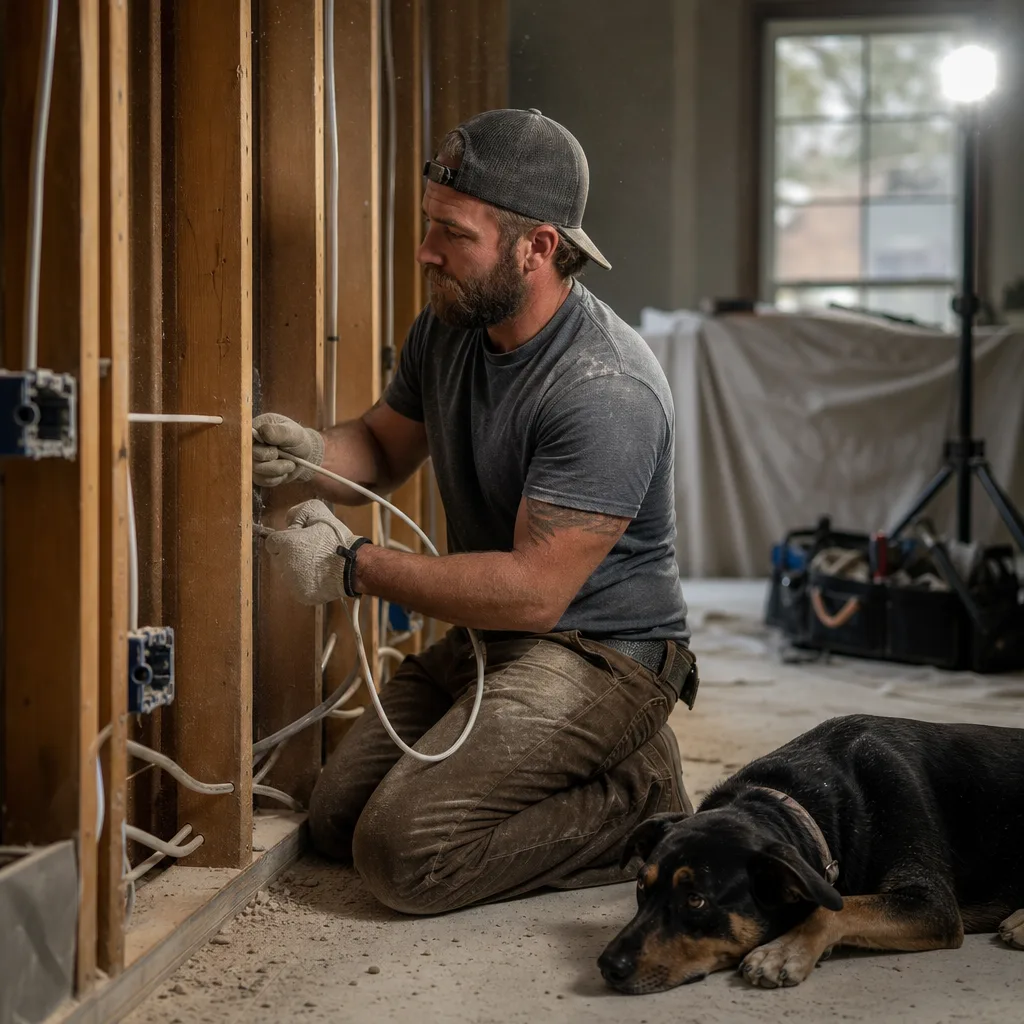
Most people picture a rewire as tearing every wall down to the studs. That’s not how it usually goes. In a finished home, electricians fish new wire through the walls from above, so the work leaves small openings, not gutted rooms. Here’s what the job looks like from start to finish.

It starts with a plan. An electrician walks your home, maps which outlets and lights belong to which circuit, and checks the panel. This is where you find out whether the panel can handle the new circuits or needs an upgrade too. It’s also when you can add things you’ve wanted, like more kitchen outlets or a circuit for a home office, while the work is already happening.
Next comes the permit. A whole-home rewire usually needs a permit and an inspection from the city. Ask up front who pulls it and whether it’s part of the price. With Xtreme Air Services, permits aren’t included unless your estimate says so.
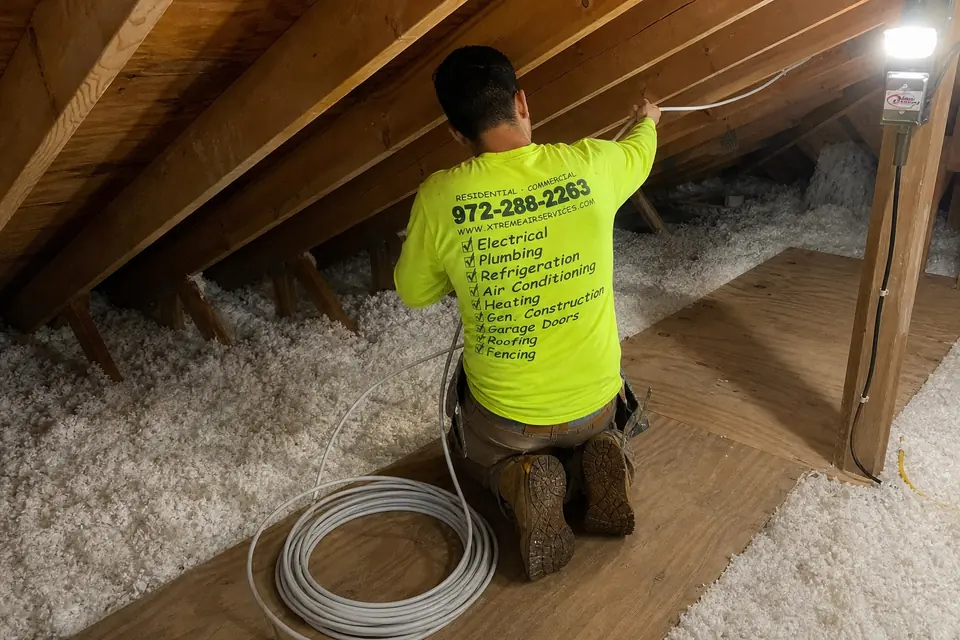
Then the wire goes in. Most Dallas ranch homes sit on a slab, so there’s no crawlspace below to work from. The new wire runs through the attic and drops down inside the walls to each outlet, switch, and light. To make that work, the electrician cuts small access holes in the drywall at the boxes and at a few key spots along the way. In a Dallas summer, attic work is hard on people. Hot attics are one reason the job takes steady, careful work instead of a rush.
The old wire is disconnected so it can’t carry power again. Wire that’s easy to reach may come out. Wire buried in a finished wall is often just cut off and left in place, because pulling it out would mean opening a lot more drywall.
- New circuits run back to the panel, each sized for what it powers.
- New outlets and switches go in at every box.
- A ground wire is part of each new circuit, so three-prong outlets are grounded.
- Power is turned on and every circuit is tested before the job is called done.
An inspector often checks the new wire before the walls get closed up, then looks at the finished work. Your power will be off in parts of the house while circuits get switched over. Depending on the size of the job, many families stay at home through a rewire, but ask your electrician how each day will go so you can plan around it.
Last, it helps to know what’s in the job and what isn’t. A home rewiring job from Xtreme Air Services includes the wire and materials, professional installation, new devices, grounding, startup, and testing. It doesn’t include drywall finishing or paint, new light fixtures, code fixes beyond the agreed scope, or permits unless stated. So plan for a drywall finisher, or a free weekend with a putty knife, to close up those small access holes once the inspection passes.
Have questions? We’re happy to help.
Call Today, Get Service Today. Xtreme Air Services — North Dallas is ready to help.
Why a Permit Can Expand Your Project’s Scope
A permit doesn’t just add a fee. Once your rewire is on the city’s books, the inspector checks the new work against today’s electrical code, not the code from when your house was built. That can add items to the job that you didn’t plan for. It’s better to know that now than to find out halfway through.
Here’s why it happens. Your old wiring was likely legal when it went in, even if it falls short of today’s rules. A lot of it can stay as it is until someone does major work. A whole-home rewire is major work, so the parts of the system tied to it now have to meet current rules.
These are the kinds of items that can come up:
- Newer safety breakers and outlets. Today’s code calls for extra shock and fire protection in more places than older homes ever had, like kitchens, baths, laundry areas, garages, and outdoor outlets. Those special breakers and outlets cost more than standard ones.
- A panel that can’t keep up. If your old panel has no open spaces, or can’t take the newer style of breakers, the panel may have to be replaced along with the wire.
- The main ground connection. The inspector may look at how your whole system ties to the earth and to your metal water pipes, not just at the new circuits.
- Smoke alarms. Big electrical jobs often bring up whether your home has enough smoke alarms in the right places.
- Changes at the meter. If a new panel means bigger service coming into the house, Oncor has to shut off power and reconnect it, which adds a step to the schedule.
The rules come from whatever city your home is in. Not every home with a Dallas mailing address is inside Dallas city limits, so ask your electrician which city will inspect your home.
None of this is a reason to skip the permit. The inspection is a second set of trained eyes on wire that’ll sit inside your walls for decades. Unpermitted electrical work can also cause problems later, like when you go to sell your home and a buyer’s inspector starts asking questions.
What you want is for these items to show up in the estimate, not as a surprise later. Code upgrades, panel upgrades, and permits are some of the biggest things that move the price of a rewire up or down. With Xtreme Air Services, code corrections beyond the agreed scope and permits aren’t included unless your estimate says so. So before you sign with anyone, ask them to go through it with you:
- Which code updates do you expect the inspector to require in my home?
- Are those in this price, or are they listed as extra?
- Does my panel need to be replaced to pass?
- Who pulls the permit, and is the fee included?
A good electrician has already thought about what the inspector will check before quoting your job. If the answers are clear and in writing, you can plan your budget around the real job, not the hopeful one.
Watch Our Video
See How We Handle Home rewiring in Dallas
Xtreme Air Services — North Dallas
What Drives Home Rewiring Cost Up or Down
Here are real numbers. A home rewiring job with Xtreme Air Services typically runs $8,000 to $20,000. Our most common job, replacing outdated or unsafe wiring throughout the home with new circuits, devices, and grounding, inspected and tested, runs $10,500 to $15,000. We price it by home size and scope, not by the hour, so you know the number before any work starts.
Where your home lands in that range comes down to a few things you can mostly see for yourself.
- Home size and number of circuits. More rooms means more wire, more boxes, and more runs back to the panel. A big kitchen with lots of appliances needs more circuits than a small one.
- How easy it is to reach your walls. This one matters a lot in Dallas. Most ranch homes here sit on a slab, so all the new wire comes down from the attic. A roomy attic with good headroom makes the work faster. A low, tight roofline, vaulted ceilings, or a second story makes every run slower, and slower means more labor.
- The shape your old wiring is in. Wire that’s easy to disconnect and trace is quicker to replace. Burned connections, hidden splices, or old repairs done in odd ways take more time to sort out.
- Whether the panel needs to go. If your panel can’t take the new circuits, replacing it adds real cost to the job.
- Drywall repair. Every access hole gets cut for a reason. Fewer openings cost less, and patching is on you or a drywall finisher, since finishing and paint aren’t part of our price.
- Code upgrades and permits. As covered above, an inspector can require newer safety items once the job is permitted. Those, plus the permit itself, can move the total up.
Some things bring the cost down. Rewiring only the section of the house with old wire, instead of the whole home, costs less. So does timing the rewire with a remodel, when the walls are already open. A single-story home with an easy attic is usually on the lower end of the range.
To get your exact price, it starts with a service call. That fee is $26 to $99, and it’s credited toward the repair if you go ahead with Xtreme Air Services. So if we do the work, you aren’t paying twice just to find out what’s wrong.
If the total is more than you want to pay at once, flexible financing is available on qualifying installations and larger jobs, on approved credit. Ask about it when you get your estimate.
When you compare quotes from anyone, line them up item by item. Check that each one covers the same number of circuits, says who handles the permit, and states whether a panel upgrade is included. A lower number that leaves out the panel or the code work isn’t really lower.
Call 469-213-3107
Frequently Asked Questions
Common questions about Home rewiring
How long does it take to rewire a 2000 sq ft house?
Most whole-home rewires take several days to about a week, depending on how many circuits your home needs and how easy your attic is to work in. A single-story ranch with good attic access moves faster than a home with a tight roofline or a second story. Your power will be off in sections while circuits get switched over, so ask your electrician for a day-by-day plan before work starts.
Can you rewire an old house without removing drywall?
Yes, in most finished homes electricians fish new wire through the attic and drop it down inside the walls, so you get small access holes instead of gutted rooms. Wire that’s easy to reach may be pulled out, but wire buried deep in a finished wall is often just disconnected and left in place to avoid opening more drywall than needed. You’ll still need to patch those small holes once the inspection passes, since drywall finishing isn’t part of the rewiring work itself.
Ready to Get Started?
Call (469) 213-3107 Today, Get Service Today.