


Reverse Osmosis System Installation in Dallas: Under-Sink Scope and Pricing
Find out if reverse osmosis fits your water problem before you buy – then a licensed installation.
What’s Covered on This Page
- Under-Sink RO Is a Different Job Than Whole-House Treatment
- What’s Included in a Dallas Under-Sink RO Installation
- One Licensed Team for Plumbing and Water Treatment
- What Drives Under-Sink RO Installation Cost
- Scale Spots or Bad-Tasting Water: Picking the Right Fix
- How long does an under-sink RO installation take?
- Can I install a reverse osmosis system myself?
- Will an RO system lower my water pressure at the sink?
- How often do RO filters and membranes need to be replaced?
Under-Sink RO Is a Different Job Than Whole-House Treatment
This is the first thing worth sorting out, because a lot of folks call asking for one system when their problem calls for the other. Both are real fixes. They just fix different things.
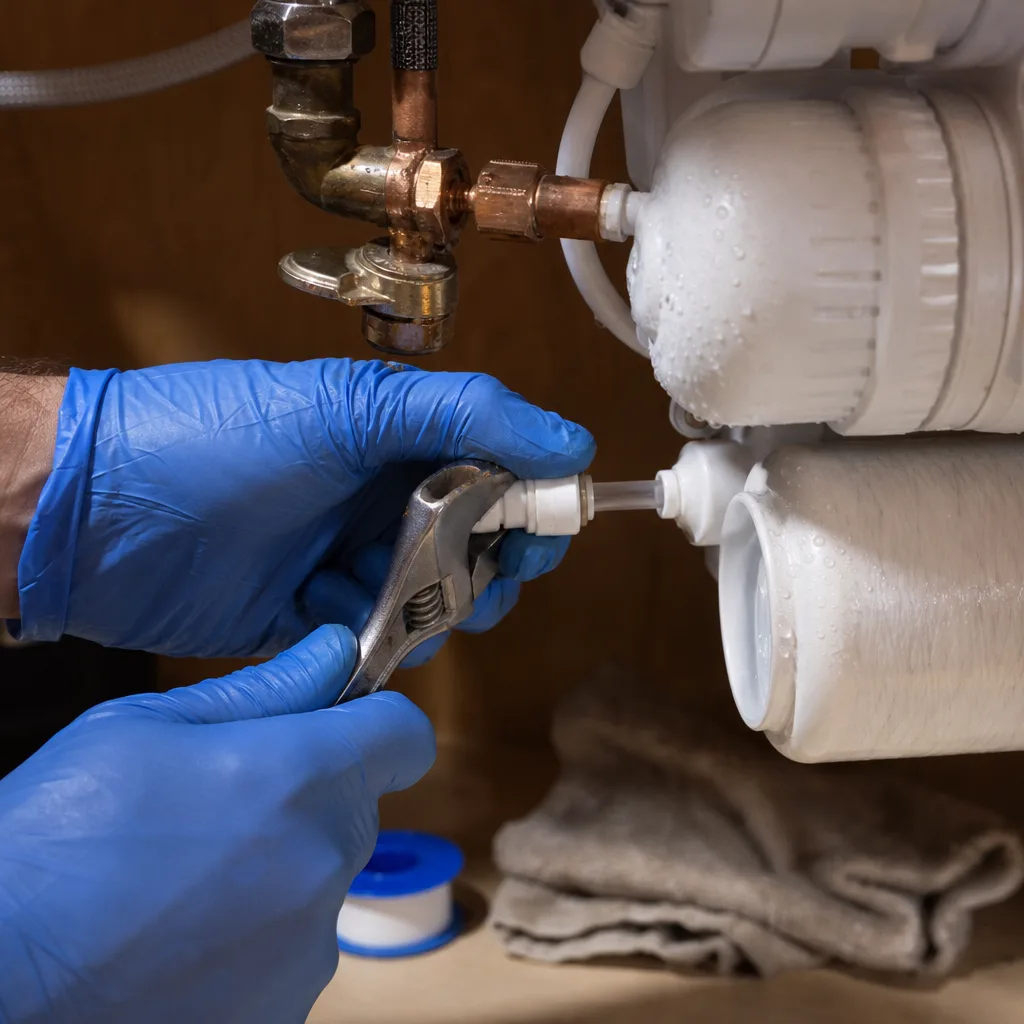
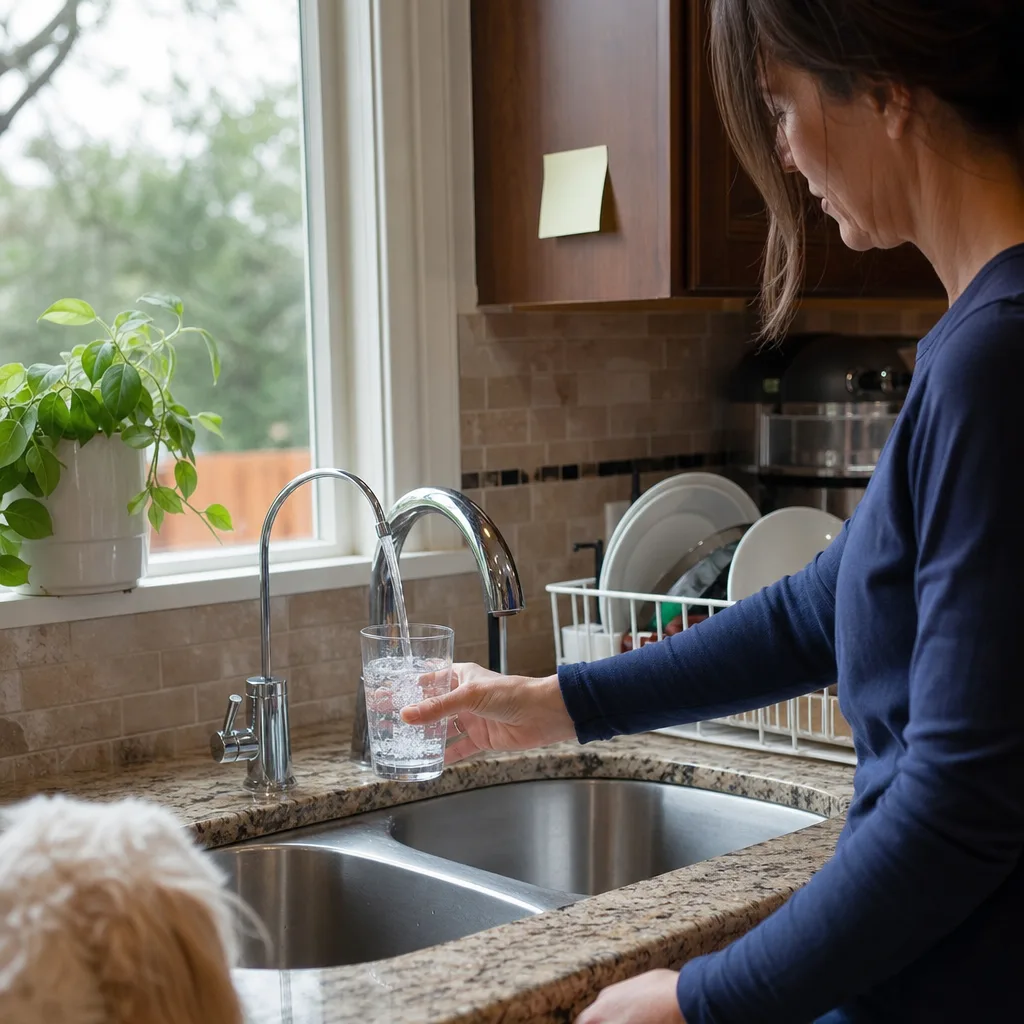
Reverse osmosis is a point-of-use system. It sits in the cabinet under your kitchen sink and pushes water through a very fine membrane, a thin filter sheet that holds back dissolved stuff most filters let slide through. The clean water goes into a small storage tank and comes out of its own little faucet next to your main one. The rest gets rinsed down the drain. That’s why an RO install needs a drain connection, and why it only treats the water you pour into a glass or a pot.
Whole-house treatment works where the water line enters your home. A water softener or whole-home filtration system treats every drop before it reaches your faucets, tubs, appliances, and water heater.
- Choose under-sink RO if you want better-tasting drinking water, clearer ice, and cleaner water for coffee and cooking, and you’re tired of hauling bottled water home.
- Choose whole-house treatment if you’re fighting white spots on dishes, crusty showerheads, stiff laundry, or scale building up inside your water heater.
- Consider both if you want softer water across the whole house and great drinking water at the kitchen sink.
Here’s the honest part. If the only thing bugging you is hard-water spots on your shower glass, an RO system won’t help at all. It isn’t hooked up to your shower. Spending money on one would leave you with nice drinking water and the same scrubbing chore every weekend. Hard water is a common North Texas complaint, and a softener is the tool built for it.
On the flip side, if your water just tastes a little like a swimming pool and nothing else bothers you, a basic carbon filter on the faucet or a pitcher in the fridge may be all you need for now. You don’t have to jump to RO. Go with RO when you want more than taste improved and you’d rather not change pitcher filters every few weeks.
There’s one more reason the two jobs connect. Very hard water can wear out an RO membrane faster. If your home already has scale problems, it can make sense to look at a softener alongside the RO so the membrane lasts longer between changes.
Not sure which camp you’re in? Water testing is a simple way to find out what’s really in your water before you pick a system. We also handle water softener installation and whole-home water filtration installation, so you can get one straight answer from one team instead of being sold whatever a single-product company happens to carry.
What’s Included in a Dallas Under-Sink RO Installation
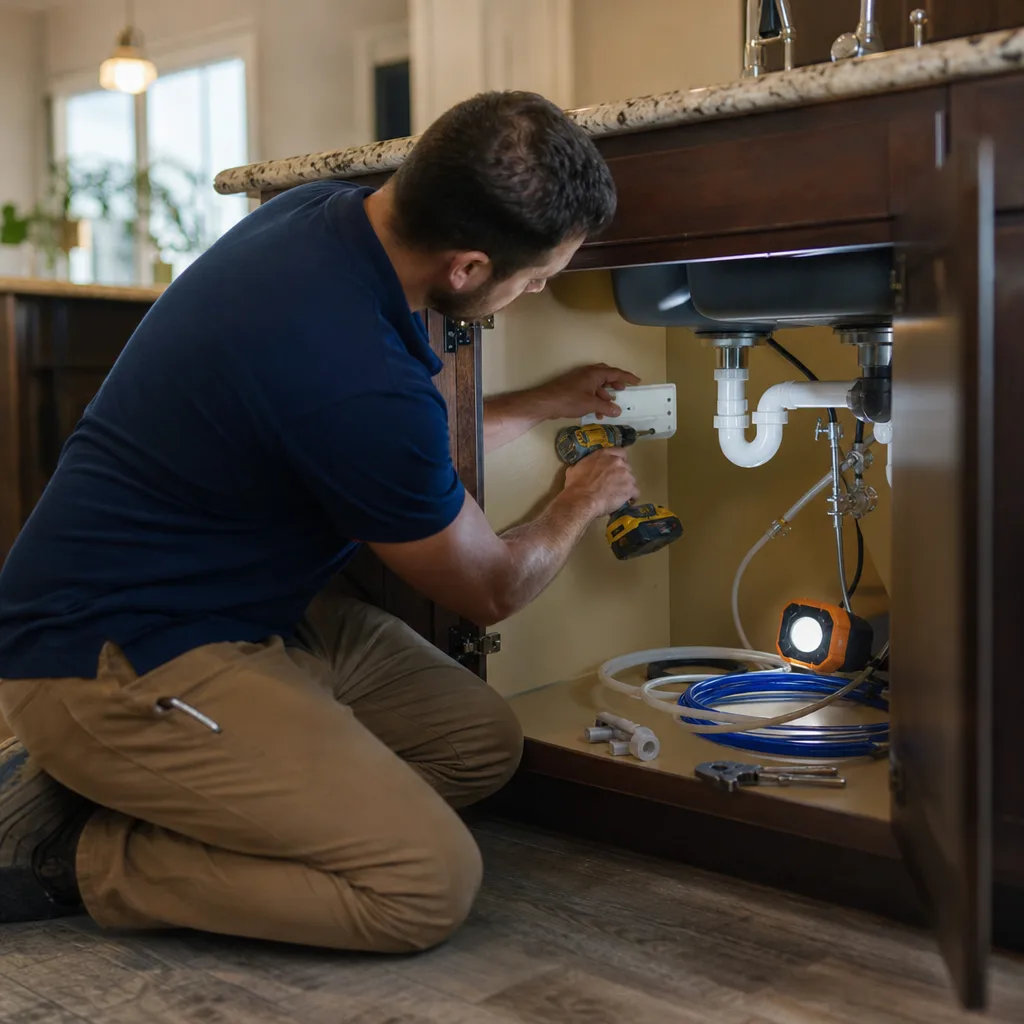
Once you know under-sink RO is the right fit, the next question is simple: what am I paying for? Here’s the straight answer. A typical reverse osmosis job with us runs $300-$1,200. Our most common job is putting in an under-sink RO drinking-water system with its own faucet, the membrane, and the drain connection, then testing it for proper output. That job usually runs $475-$850, and most of them finish the same day.
Here’s what’s included in that price:
- The RO system and the materials to put it in
- Professional installation by our licensed and insured team
- The dedicated drinking-water faucet at your sink
- All the connections: cold water supply, drain, and tank
- Startup and testing, so you know it’s making clean water at the right flow before we leave
You’ll get upfront flat-rate pricing that you approve before any work starts. No meter running while we’re under your sink.
Why the range? A few things push the price up or down, and it helps to know them before you call.
- System stages and capacity. More filter stages and a bigger daily output cost more. A family that cooks a lot or wants water for an ice maker may want more capacity than a couple who just fills a few glasses a day.
- Faucet and tank type. A basic chrome faucet costs less than a designer finish. Tank size and style also change the price.
- Condition of your existing plumbing. If the shutoff valve under your sink is corroded or won’t turn, it may need replacing first. That’s common in Dallas’s older slab-on-grade ranch homes built from the 1950s through the 1990s, where the original valves have sat untouched for decades.
- Drain and supply access. A roomy cabinet with a clear drain line is quick work. A cramped sink base packed with a garbage disposal and cleaning supplies takes more time.
- Added remineralization. RO strips out minerals along with the stuff you don’t want. A remineralization stage puts a little calcium and magnesium back in for taste. It’s optional, and it adds to the cost.
Some things aren’t included, and we’d rather tell you now than surprise you later. If your sink needs an extensive dedicated water line, that’s extra. So are cabinet modifications, like cutting the back panel or reworking shelves to fit the tank. Code corrections on existing plumbing and permits are also not included unless your quote says they are.
There’s a $26-$99 service-call fee to come out. If you go ahead with the job, that fee is credited toward the work, so you aren’t paying twice.
One more thing about budgeting. Financing usually isn’t offered on a smaller job like this one. It’s available on larger repairs and replacements. If you’re pairing your RO system with a bigger project, like a new water softener or water heater, ask us about financing on that part of the work.
One Licensed Team for Plumbing and Water Treatment
An RO system looks like a filter job. Under the cabinet, though, it’s plumbing. Someone has to tap your cold water supply, cut into your sink drain, and make sure every fitting holds tight with water pushing through it all day. If that work is sloppy, you won’t find out at install time. You’ll find out weeks later when the cabinet floor is warped or the drain smells off.
That’s why it matters who’s doing it. Xtreme Air Services is a licensed and insured plumbing contractor, and our plumbing work is done under Master Plumber Larry Breedlove’s license. The technicians who come to your home are background-checked. You’re not handing your kitchen to a filter salesman with a drill.
Here’s where a plumbing background makes a real difference on an RO job:
- The drain connection. RO sends rinse water down your sink drain. Hook it up wrong and you can get gurgling, odors, or dirty water working its way back toward the system. A plumber knows how your trap and drain are supposed to behave.
- Old valves and supply lines. In older Dallas homes, the shutoff under the sink may be stuck or weeping. A plumber can spot that before it becomes your problem instead of cranking on it and hoping.
- Water pressure. RO membranes need decent pressure to make water at a good rate. If your home’s pressure is off, we also handle pressure regulator replacement, so you aren’t stuck with a slow trickle and no answer.
- Leaks you didn’t know about. A slow drip from a trap or faucet line is easy to miss in a crowded cabinet. Someone who works on plumbing every day tends to notice it.
If we find something like that, we’ll tell you what it is and what it costs before we touch it. You get upfront flat-rate pricing you approve first, so a surprise under the sink doesn’t turn into a surprise on the bill. Some of those fixes fall outside the RO price, like the code corrections mentioned above, and we’ll say so plainly.
The other plus is that it’s one team. If your water test points to hard water, we do water softener installation too. If your faucet is worn out or your garbage disposal is crowding the cabinet, we handle faucet installation and garbage disposal repair. And if you find out down the road that your water heater is packed with scale, that’s ours as well. One call, one company that knows your home, instead of three contractors who each only see their piece.
Our office is on Hillcrest Road in North Dallas, and same-day service is available. There’s no extra charge for nights or weekends, so you can book around your schedule, not ours. Your neighbors have given us a 4.8-star rating across more than 2,900 reviews on Google, Angi, and HomeAdvisor, and we work hard to keep it that way by doing it right the first time.
Call 469-213-3107
Need help with Reverse osmosis system installation?
Call Today, Get Service Today. Xtreme Air Services — North Dallas is ready to help.
What Drives Under-Sink RO Installation Cost
You already know the factors that move the price. The useful part is knowing which ones are your call and which ones depend on what’s under your sink. Stages, capacity, faucet style, and remineralization are choices you make. Plumbing condition and cabinet access are things we find when we look. If you know both sides going in, the quote you get will be close to the bill you pay.
Start with the choices. Buy for how your family really uses water, not for the biggest box on the shelf. Say a couple mostly fills a few glasses a day and makes one pot of coffee. They won’t get much from extra capacity. Now say a family of five cooks every night and wants the fridge’s ice maker hooked up too. They may be glad they sized up. A plain faucet makes water just as clean as a fancy one. Remineralization is about taste, so it’s fine to skip it if you like how plain RO water tastes.
Next, take two minutes with a flashlight under your kitchen sink. These quick checks help you get a more accurate price when you call:
- Find the cold-water shutoff valve. Does it turn by hand, or is it crusty and stuck? A stuck valve may need replacing before the system goes in.
- Look at how much open floor space you have for the storage tank. A disposal, a water heater line, or a pile of cleaning supplies can make the work slower.
- Check the top of your sink or countertop for a spare hole, like an old sprayer or soap dispenser spot. If there’s no hole, ask whether your quote covers drilling one, especially through stone.
- If you want RO water at your fridge, notice how far the fridge sits from the sink. A short run is simple. A long run across the kitchen may fall under the extensive dedicated line that’s priced separately.
There’s also a cost that shows up after install day. Every RO system needs new filters on a schedule, and the membrane needs replacing less often. Before you pick a model, ask what its replacement filters cost and how often they’re due. A system that’s cheaper up front can cost you more over time if its filters are pricey or hard to find. As we covered earlier, hard water can wear a membrane out faster, so plan for that too.
Whoever you hire, ask these questions before anyone opens your cabinet:
- Is this a flat price, or are you charging by the hour?
- Does the price include the faucet, all connections, startup, and testing?
- What happens to the price if my shutoff valve or drain needs work?
- Is drilling the countertop or sink included?
- Are permits or code corrections part of this quote, or extra?
- What do replacement filters for this system cost, and how often will I need them?
A straight answer to each one tells you there won’t be surprises. With us, you’ll get those answers in an upfront flat-rate price you approve before any work starts.
Watch Our Video
See How We Handle Reverse osmosis system installation in Dallas
Xtreme Air Services — North Dallas
Scale Spots or Bad-Tasting Water: Picking the Right Fix
The fastest way to pick the right fix is to ask two questions. Where does the problem show up, and does it show up in hot water, cold water, or both? Your answers usually point straight to the right system before anyone opens a cabinet.
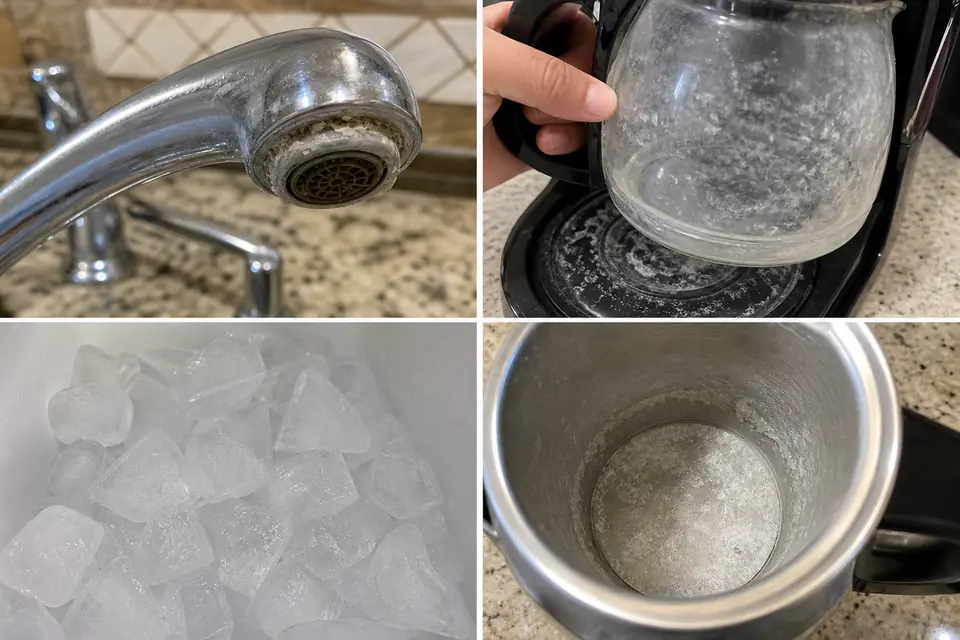
If the problem only bothers you at the kitchen sink, in your glass, your coffee, or your ice, it’s a drinking-water problem. Under-sink RO is built for that. If you see it all over the house, it’s a whole-house water problem, and an RO system under one sink won’t reach it.
Here’s how common signs tend to sort out:
- White crust on faucets in every bathroom, spots on dishes, or chalky buildup inside your kettle. That’s mineral scale, and it points to whole-house treatment.
- Soap that won’t lather well, or towels and shirts that come out of the wash stiff. That’s hard water too, and it’s a whole-house job.
- Water that tastes or smells like a pool, or has a flat, off taste you can’t name. That’s a taste problem at the tap, and it points to under-sink RO or a simpler filter.
- Cloudy ice cubes, or coffee that tastes different than it does at the shop. That’s drinking-water quality, and RO is a good fit.
- You’re buying cases of bottled water every week because you don’t trust the tap. That’s the classic reason people choose RO.
- Both scale around the house and a taste you don’t like at the sink. You’re likely a candidate for both systems.
Pay attention to hot versus cold, too. Say you only notice a rotten-egg smell when you run hot water, and the cold tastes fine. That usually isn’t something an RO system or a softener fixes. It often traces back to the water heater, and that calls for water heater repair, not a new filter. A popping or rumbling sound from the water heater is another clue. It can mean scale has settled in the bottom of the tank, which is a hard-water sign.
You can do a quick check yourself. Fill a clear glass with cold water from the kitchen tap and let it sit for a minute. Smell it, then taste it. Next, look at the faucet aerators in a bathroom and the inside of your kettle. Taste trouble with clean fixtures means drinking water. Crusty fixtures with water that tastes fine means hardness.
Some homes don’t fit neatly in one box. Maybe the taste comes and goes, or you’re not sure whether those spots are hard water or just soap. That’s when water testing earns its keep. It tells you what’s really in your water, so you’re choosing a system based on facts instead of guesses. If the test shows heavy hardness, keep in mind what we said earlier about scale wearing out an RO membrane.
What you don’t want is to spend money on one system and still be stuck with the problem that made you call. Matching the fix to where the problem lives is how you avoid that.
Call 469-213-3107
Frequently Asked Questions
Common questions about Reverse osmosis system installation
How long does an under-sink RO installation take?
Most under-sink RO installs finish the same day. The work involves tapping your cold water line, connecting the drain, mounting the faucet, and testing output, which a licensed plumber can usually complete in one visit unless your cabinet needs extra work first.
Can I install a reverse osmosis system myself?
You can, if you’re comfortable with basic plumbing like supply lines and drain taps. But RO systems need a correct drain connection and steady water pressure to work right, and mistakes there can cause leaks or a slow-filling tank that’s hard to diagnose later.
Will an RO system lower my water pressure at the sink?
A properly sized RO system shouldn’t leave you with a weak trickle, but low household water pressure can slow down how fast the storage tank refills. If your home’s pressure is already low, that’s worth checking before installation so the system performs the way you expect.
How often do RO filters and membranes need to be replaced?
RO filters need regular replacement on a set schedule, and the membrane lasts longer but still wears out eventually, especially with hard water. Ask about replacement filter costs and timing before choosing a system, since cheaper units can cost more over time if filters are pricey or hard to find.
Ready to Get Started?
Call (469) 213-3107 Today, Get Service Today.