


Electrical Panel Replacement / Upgrade in Plano
Panel upgrades for homes that have outgrown their power, done by licensed electricians with the permit pulled.
What’s Covered on This Page
- Signs Your Panel Needs Replacement, Not Just a Repair
- When a Full Panel Upgrade Is Not the Right Fix
- Why Amperage and Household Load Matter in Plano Homes
- Licensing and Permits Required for Panel Work in Plano
- What Happens During a Panel Replacement
- What does it typically cost to go from a 100-amp panel to 200-amp service?
- Is there a federal tax credit for upgrading an electrical panel?
- What is the 80% rule for electrical panels?
Signs Your Panel Needs Replacement, Not Just a Repair
Not every panel problem means a new panel. If one breaker keeps tripping, the cause is often the circuit, not the box. You might have a space heater and a hair dryer sharing the same bathroom circuit, or a breaker that has simply worn out. A worn breaker can be swapped. An overloaded circuit can sometimes be fixed by moving a plug-in appliance or adding a dedicated circuit. Neither needs a whole new panel.
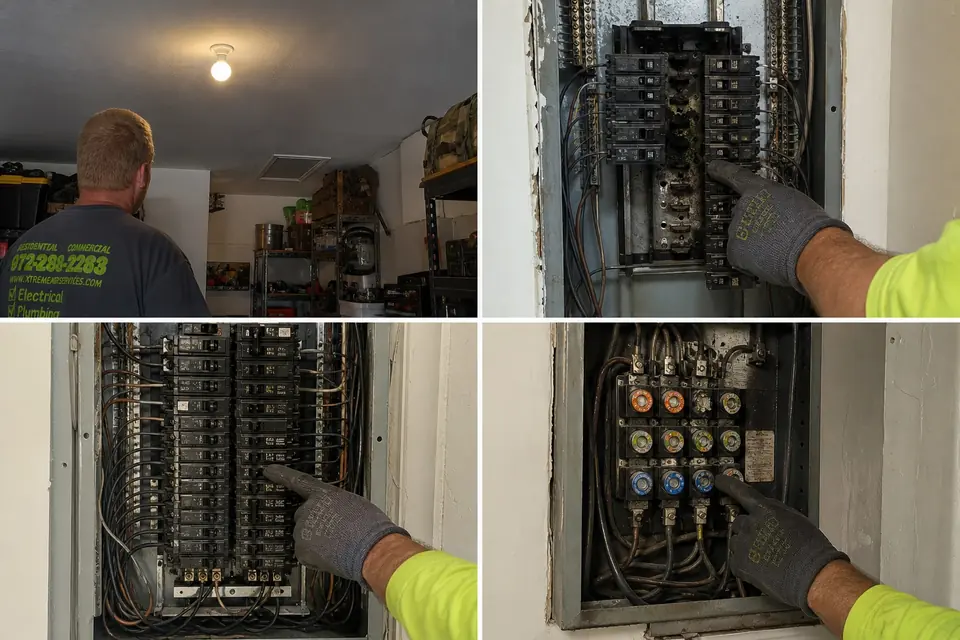
Replacement starts to make sense when the trouble is the panel itself. These are the signs worth paying attention to:
- There’s no room left. Every slot is full, and new circuits have been squeezed in by doubling up wires on one breaker or using skinny tandem breakers wherever they’ll fit.
- Your home has outgrown it. You’ve added a bigger AC system, an EV charger, a hot tub, or a kitchen remodel, and the panel’s amperage was sized for a home that used far less power.
- Breakers trip across several circuits, won’t stay reset, or feel warm to the touch.
- You see scorch marks or melted plastic, or you notice a burning smell near the panel.
- There’s rust or corrosion inside the box, often from water getting in around the service line or from a damp garage wall.
- You still have fuses instead of breakers, or the panel is old enough that matching replacement breakers are hard to find.
Heat and burn marks matter most on that list. They mean connections are getting hot enough to damage the parts around them. Swapping one breaker won’t fix a bus bar, which is the metal strip the breakers clip onto. Once it’s damaged, the whole panel has to go. If you see or smell anything like that, have it checked promptly instead of waiting to see if it gets worse.
Capacity is the sign homeowners miss most often, because nothing looks broken. Many Plano homes still have the panel they were built with. That panel was sized for the appliances of its day, not for today’s larger cooling systems running hard through a North Texas summer, plus an EV charger and a home office. When a panel is undersized, adding one more big load means either a replacement or an upgrade to higher amperage. On most homes, that means moving to a 200-amp service.
Here’s a simple way to think about it. Picture yourself opening the panel door. If you see one problem breaker in an otherwise clean, roomy box, that’s usually a repair. If you see a crowded box with doubled-up wires, discoloration, or rust, or if you’re planning a project the box can’t power, you’re looking at replacement. A good electrician should show you which of those you have, and why, before any work starts.
If you’re not sure which side you’re on, that’s normal. Our licensed electricians can look at the panel, tell you plainly whether a repair will hold, and give you upfront flat-rate pricing on either option so you can decide with the facts in front of you.
When a Full Panel Upgrade Is Not the Right Fix
A new panel is a big job. Sometimes it’s simply the wrong one. Here are the cases where you should hold off, or where a different fix will do more for you.
The problem is outside your house. If lights all over your home dim or flicker at once, or half the house loses power while the other half works, the trouble may be in the utility’s service line or meter, not your panel. In Plano, that equipment belongs to Oncor. A new panel won’t fix a bad connection on their side, and that utility work isn’t part of a panel replacement anyway. An electrician can test what’s coming into the home and tell you whether it’s a call for Oncor first.
The problem is in the walls. A panel only protects the wiring connected to it. If you have aluminum branch wiring, brittle old insulation, or outlets that run hot, swapping the box leaves those problems right where they are. Rewiring is its own job, and a panel upgrade doesn’t include it. Fix the wiring first, or plan both together, so you’re not paying for a shiny panel feeding tired wires.
You have enough power but not enough slots. Sometimes a load calculation shows your service is big enough and you’ve just run out of space. In that case, adding a subpanel can give you the room you need without replacing the main panel. That’s often true for a detached garage, a workshop, or a new addition.
You’re adding one load to a panel that can handle it. Planning an EV charger doesn’t automatically mean a 200-amp upgrade. If your home already has 200-amp service with open space and room to spare on the load calculation, the charger can often go on a new circuit in the panel you have. Ask for that math before you agree to anything bigger.
A bigger project is coming soon. If your panel is working safely today and you’re planning a kitchen remodel, a new AC system, or a pool next year, it can make sense to wait and size the upgrade for everything at once. That way you upgrade once instead of twice. This only applies to a healthy panel. Heat damage, burn marks, or rust are not things to wait on.
There are also a few simple things you can safely check yourself before calling anyone:
- Reset a tripped breaker by pushing it firmly all the way to off, then back to on. If it holds and stays that way, unplug whatever was running when it tripped and see if the problem comes back.
- Press the reset button on any GFCI outlets in the kitchen, bathrooms, garage, and outside. One tripped GFCI can kill power to several outlets down the line, and it often looks like a panel problem when it isn’t.
- Notice which room and which appliance seem to cause the trip. That detail saves time no matter who you call.
Don’t take the panel cover off or touch anything inside the box. If a breaker won’t reset, trips again right away, or you smell something burning, leave it off and have a licensed electrician look at it.
Why Amperage and Household Load Matter in Plano Homes
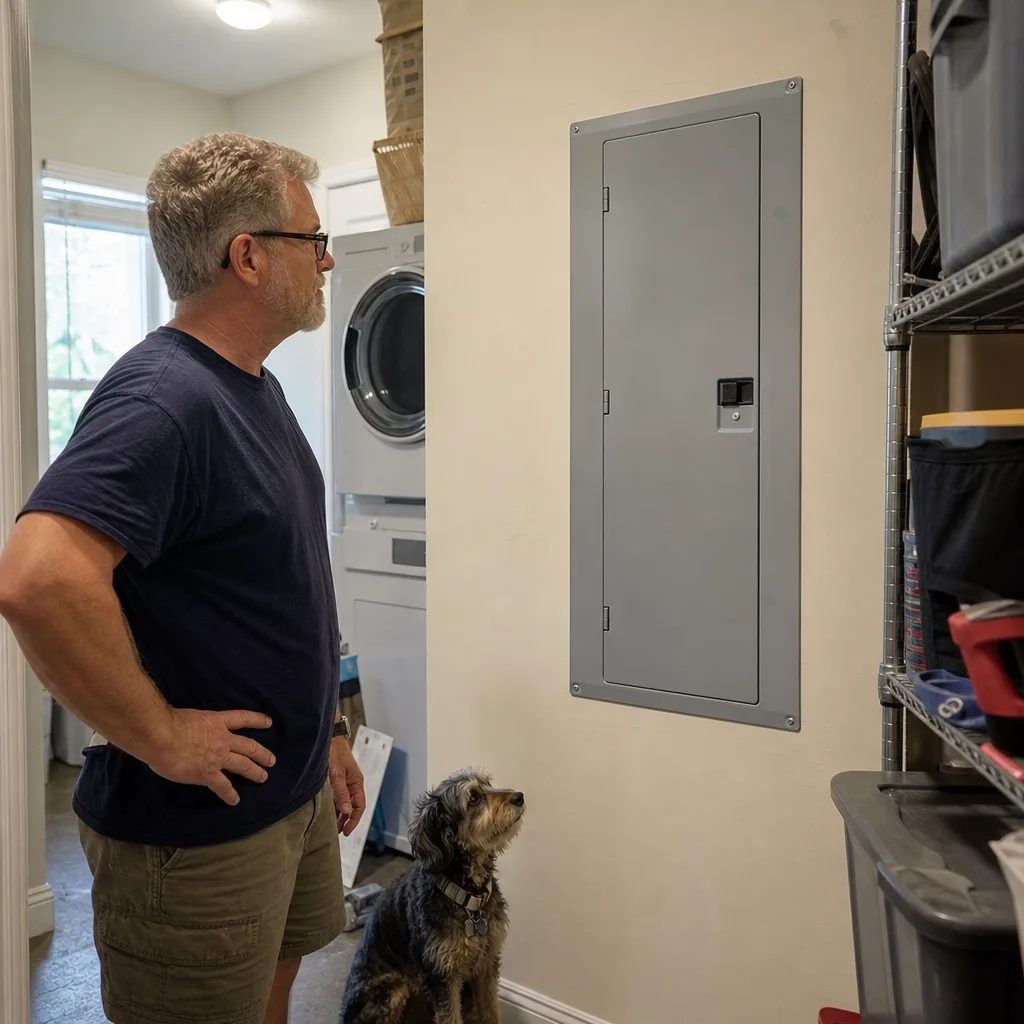
Amperage is the most electricity your panel can safely deliver to your home at one time. You’ll usually find the number printed on the main breaker at the top of the panel. Common sizes are 100, 150, and 200 amps. The number on the box doesn’t tell you whether it’s enough, though. What matters is how close your home runs to that limit on a normal day.
Think of it like a highway. Most of the time traffic moves fine. Trouble shows up at rush hour, when everything is on the road at once. In your home, rush hour is a hot August evening. The AC is running, someone’s cooking, the dryer is going, and the car is charging in the garage. If those loads add up near the panel’s rating, the main breaker and its connections run hot for hours at a time.
That’s why cooling matters so much in Plano. A central AC system or heat pump is often the biggest load in the house. Through a long North Texas summer, it doesn’t just kick on now and then. It can run most of the afternoon and well into the night. A panel that handles a mild spring day without complaint can be working right at its edge in July.
How your home is fueled makes a big difference too. Two houses of the same size can need very different panels:
- A home with a gas furnace, gas water heater, and gas range puts a lot of its heavy work on the gas line, so its electrical load stays lower.
- An all-electric home runs its heat strips or heat pump, water heater, range, and dryer on electricity, and that load climbs fast, especially on a cold winter morning.
- Add-ons like a pool pump, hot tub, shop tools, or a second AC unit for an upstairs or an addition stack on top of whatever the house already uses.
The honest way to size a panel is a load calculation. An electrician lists the big appliances and systems in your home, adds the general lighting and outlet load based on square footage, and works through the standard method electricians use to estimate peak demand. The result tells you whether your current service has room or is already stretched. It also tells you how big the new panel really needs to be.
Bigger isn’t automatically better. For most homes, 200 amps covers today’s needs with room for a project or two. Going larger can mean extra cost and more work with Oncor on the service line and meter, with no real benefit if your home will never use that power. On the other hand, a panel sized to just squeak by today leaves you with no room for the next AC replacement or remodel.
So when someone tells you that you need a bigger panel, ask them to show you the math. You should see what your home draws now, what you’re planning to add, and why the recommended size fits. If the numbers support an upgrade, you’ll know you’re paying for something your home needs.
Have questions? We’re happy to help.
Call Today, Get Service Today. Xtreme Air Services — North Plano is ready to help.
Licensing and Permits Required for Panel Work in Plano
A panel replacement isn’t a weekend project or a job for a handyman. In Texas, electricians are licensed through the Texas Department of Licensing and Regulation, known as TDLR. A panel swap should be done by a licensed electrician, with a permit pulled before work starts and a city inspection when it’s finished. That paperwork isn’t red tape. It’s your proof that someone outside the company checked the work inside your walls.
Here’s why it matters to you. The panel is where all the power coming into your home gets split up and protected. If the grounding is wrong, a breaker is the wrong size for its wire, or a connection is left loose, everything can look fine on day one and still be unsafe. An inspector checks the things you can’t see once the cover goes back on.
Skipping the permit can also come back on you later. When you sell your home, a buyer’s inspector may spot a newer panel with no permit on file and raise questions. If something ever goes wrong, your insurance company may ask whether the work was done by a licensed pro and inspected. A permitted job gives you a clean answer to both.
Most panel upgrades also involve the utility. Because the meter and service line belong to Oncor, as covered above, the power usually has to be shut off at the meter so the old panel can come out safely. Moving up to a bigger service, like 200 amps, can mean more back-and-forth with Oncor. That timing affects your schedule, so it’s worth asking about up front.
Permits also affect your quote. Some contractors include them, some don’t, and some don’t mention them at all until the bill shows up. In our pricing, permits and any service-entrance or meter work by the utility are excluded unless stated. We’d rather tell you that now than surprise you later. You’ll see exactly what’s in your price before you approve anything.
Before you hire anyone for panel work, ask these questions:
- Is the electrician doing the work licensed through TDLR? You can look up a license on the TDLR website in a couple of minutes.
- Are you insured, and can I see proof?
- Who pulls the permit, and is the permit fee in my quote or separate?
- Who schedules the city inspection, and do I need to be home for it?
- Who handles coordination with Oncor, and how long will my power be off?
- If the inspector asks for a correction, who fixes it, and what does it cost?
A contractor who’s doing it right will answer every one of those without hesitating. Be careful with anyone who suggests skipping the permit to save you money or time. That shortcut saves them a trip, not you a risk.
Our team at Xtreme Air Services is licensed and insured, and our technicians are background-checked and drug-tested. When we quote your panel, we’ll walk you through the permit, the inspection, and the utility side, so you know who’s handling each step and what it adds to your total.
Watch Our Video
See How We Handle Electrical panel replacement / upgrade in Plano
Xtreme Air Services — North Plano
What Happens During a Panel Replacement
Once you’ve decided on a new panel, the job itself follows a clear order. Knowing that order helps you plan your day and spot whether the work was done right. Here’s what a typical replacement looks like, from your driveway to the final inspection.
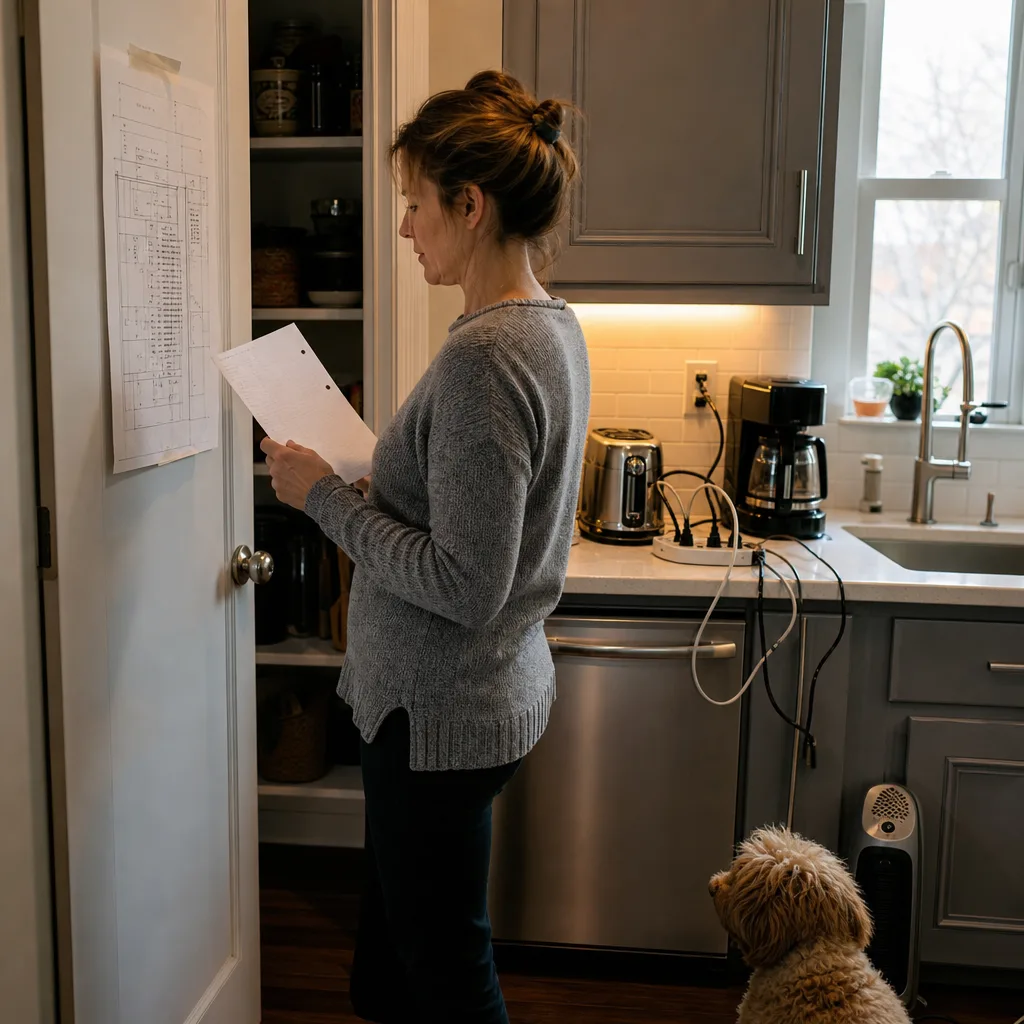
Before the day comes, the panel size should already be settled by a load calculation. The permit should also be in hand. On the day itself, it helps to get a few things ready:
- Clear a path to the panel and a few feet of space around it. In many Plano homes, that means moving boxes, bikes, or shelves in the garage.
- Plan for the power to be off for a good part of the day. Use up or cooler what’s in the fridge, and charge your phones and laptops ahead of time.
- If anyone in your home uses a medical device that needs power, say so when you schedule. That way the timing can be planned around it.
- On a summer day, expect the AC to be off too. Close the blinds early to hold in the cool air you’ve got.
Then the actual work starts. The power is shut off at the meter, which is the utility step mentioned earlier. Before any wire comes loose, each circuit should be traced and labeled, so the kitchen stays the kitchen and the bedrooms stay the bedrooms. After that, the old panel comes off the wall.
Next, the new panel is mounted, and each circuit gets landed on a new breaker. The breaker size has to match the wire it protects. A breaker that’s too big for its wire is one of the mistakes that looks fine on day one but isn’t safe. This is also when grounding gets attention. Grounding gives stray electricity a safe path into the earth instead of through your appliances or you. On an older home, the grounding may need to be improved, not just reconnected.
Sometimes opening the old box turns up something nobody could see from the outside. That might be a wire end that’s been cooked by heat, or a circuit that was added without the right protection. If that happens, you should hear about it before anything extra gets done. In our pricing, rewiring and code corrections are excluded unless stated. So if one of those comes up, we’ll tell you what we found and what it adds before you decide.
With everything connected, power comes back on and the panel gets started up and tested. Every circuit should be checked to make sure it works and holds under load. Before the job is done, you should have:
- A panel directory that clearly says which breaker runs what
- Working power in every room, including the AC, range, and dryer
- The old panel hauled away, not left leaning in your garage
- A scheduled city inspection, or a clear answer on when it’s happening
Our most common panel job is a 200-amp upgrade. It includes the new panel and materials, professional installation, new breakers, grounding, startup and testing, and haul-away of the old panel. The job isn’t fully finished until the inspector signs off. That final check is your confirmation that the work behind the cover was done right the first time.
Frequently Asked Questions
Common questions about Electrical panel replacement / upgrade
What does it typically cost to go from a 100-amp panel to 200-amp service?
The cost depends on your home’s wiring, how far the service line runs, and whether Oncor needs to upgrade the meter or service drop. A load calculation is the only honest way to know what your home needs and what the job involves. Ask your electrician to walk through the math before you compare any quotes, since two homes the same size can need very different work.
Is there a federal tax credit for upgrading an electrical panel?
Some panel upgrades tied to qualifying energy improvements, like certain EV charger installations or home energy upgrades, may qualify for federal tax credits. Rules and eligibility change, so check current IRS guidance or ask your tax preparer before you count on one. Keep your permit, inspection paperwork, and itemized invoice, since you’ll likely need them to claim any credit.
What is the 80% rule for electrical panels?
The 80% rule means a panel should not run continuously at more than 80% of its rated capacity, since breakers are designed for continuous loads at that level for safety. This is why a load calculation matters so much in Plano, where summer AC use pushes panels closer to their limit for hours at a time. A proper calculation checks your home’s draw against that 80% ceiling, not just against the panel’s total rating.
Ready to Get Started?
Call (469) 527-5131 Today, Get Service Today.