


Central Air Conditioning Installation in Dallas, Done Right From the Start
Central air sized to your home from day one, with what's included, what isn't, and the permits explained up front.
What’s Covered on This Page
- What a Standard Central Air Installation Includes
- Sizing Your System With a Cooling Load Calculation, Not Guesswork
- What Drives Installation Cost Up or Down in Dallas Homes
- Signs Your Dallas Home Needs a New System, Not a Repair
- When You Don’t Need a Full Installation
- What’s the best thermostat setting for summer in Dallas?
- What’s the difference between a central air system and a regular air conditioner?
- How much does a new AC unit cost for a smaller home, like 1,400 square feet?
What a Standard Central Air Installation Includes
When you hear a price for a new AC, the first thing to ask is what that price covers. A low number can look great until extra charges show up later. Here’s the plain answer for our most common job.
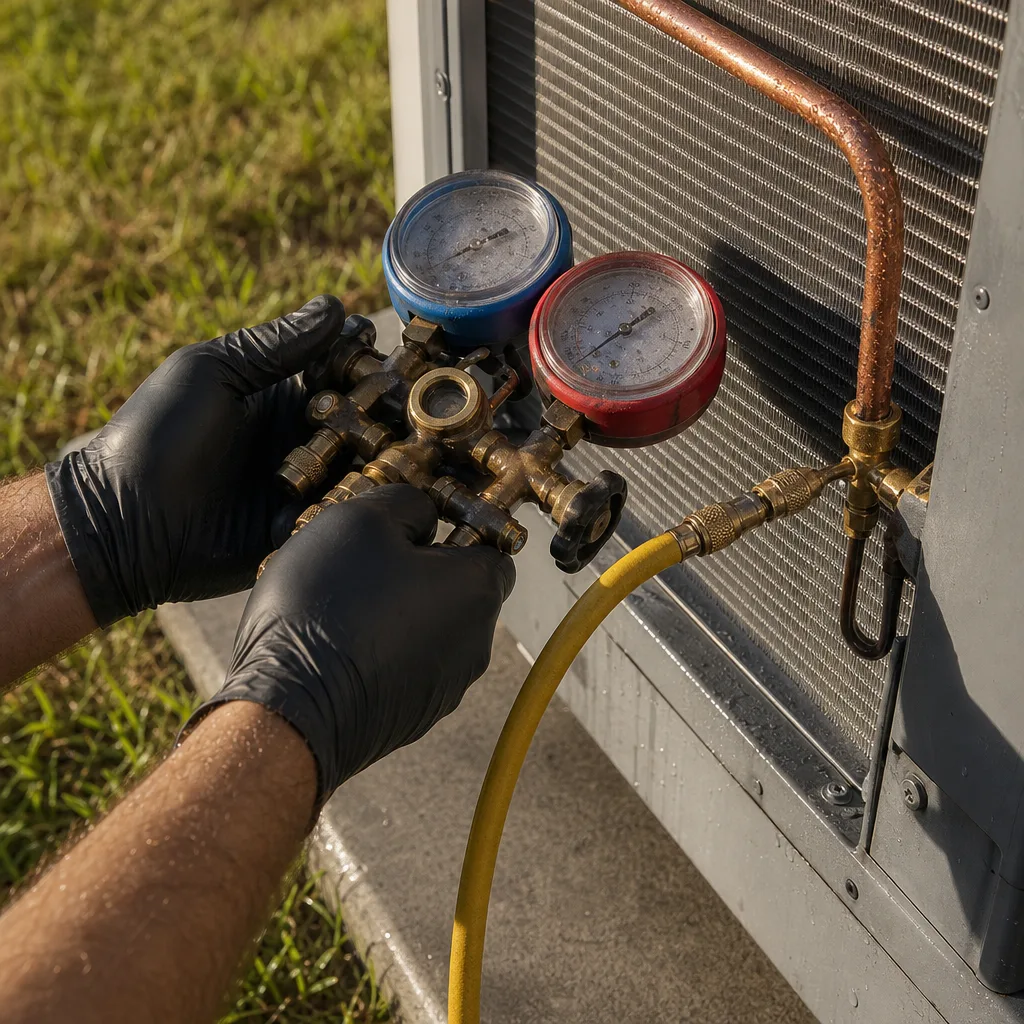
A standard installation is a like-for-like job. The new system goes in where the old one was. It uses the connections your home already has, with no major changes. For this kind of job, our most common price is $7,000 to $10,000.
Here’s what that standard job includes:
- Equipment and materials: a new outdoor condenser plus a new indoor coil. Replacing both together matters, because the outdoor unit and the indoor coil are built to work as a matched pair.
- Professional installation by our licensed and insured technicians.
- Standard connections: hooking the new system up to the lines, power, and drain your home already has.
- Startup and testing: running the new system and checking that it’s cooling the way it should before the job is called done.
- Haul-away of your old unit, so you’re not left with a dead condenser on the side of the house.
And here’s what isn’t included unless your quote says it is:
- Duct modifications
- Electrical modifications
- Plumbing modifications
- Code corrections
- Permits
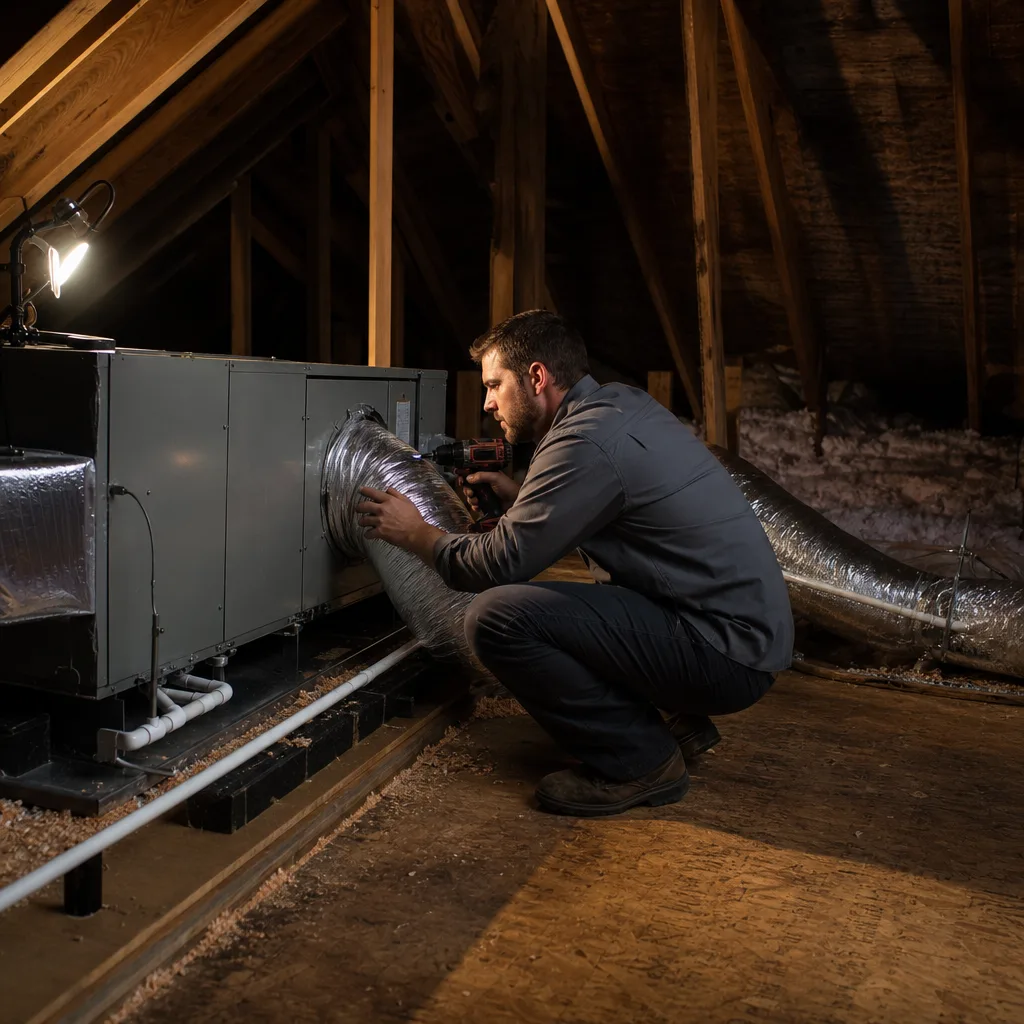
Why spell this out? Not every home in Dallas is a simple swap. A lot of homes around here are older slab-on-grade ranch houses built between the 1950s and 1990s, with the air handler and ductwork up in the attic. Those attics bake in the summer. Ducts that have sat up there for decades can be in rough shape. If your ductwork, wiring, or drain setup needs work to support a new system, that falls outside the standard scope. You deserve to know that before you sign, not after.
The same goes for permits. Ask whether a permit is on your quote. If it isn’t listed, it isn’t included. A clear quote should tell you, line by line, what you’re paying for.
That’s how we handle it. You get upfront flat-rate pricing that you approve before any work starts, with no meter running and no surprises. If we spot something in your home that goes beyond a standard install, like ductwork that’s falling apart or an electrical problem, we’ll explain what it is and why it matters in plain English. Then the decision is yours.
If the total is more than you planned for, flexible financing is available on qualifying installations and larger jobs, on approved credit.
Sizing Your System With a Cooling Load Calculation, Not Guesswork
The right size AC for your home comes from a cooling load calculation. It’s a room-by-room look at how much heat your house takes on during a hot day. The size of your old unit doesn’t tell you that, and neither does your square footage alone.
AC size is measured in tons. A ton has nothing to do with weight. It describes how much heat the system can pull out of your home in an hour. When it comes to tons, bigger isn’t better. You want the size that fits your house.
- Too big: the system cools the air fast, shuts off, and then kicks back on a few minutes later. That short on-and-off cycling wears out parts. It also doesn’t run long enough to pull moisture out of the air, so your home can feel cool but clammy.
- Too small: the system runs and runs on the hottest afternoons and still can’t keep up. Your bills climb, and the back bedroom never gets comfortable.
A real load calculation looks at the things that make your house gain heat:
- Square footage and ceiling height
- How much insulation is in your attic and walls
- Your windows: how many there are, which way they face, and what kind of glass they have
- Air leaks around doors, windows, and the attic
- Where your ductwork runs and what shape it’s in
- How many people live there and how much heat your appliances give off
- The local climate your system has to handle
This matters a lot in Dallas. Our summers are long and hot, and the sun beats on west-facing windows all afternoon. In many older homes here, the ducts run through an attic that gets very hot in July. The cool air picks up heat before it ever reaches your rooms. A good calculation counts all of that.
It’s also why copying the old unit’s size can be a mistake. Your current system may have been the wrong size from day one. Or it may have fit the house 20 years ago, before you added insulation, swapped out the windows, or finished a room over the garage. If the house has changed, the right size may have changed too. Matching the old number just repeats whatever was wrong before.
Sizing affects your wallet, too. Equipment size and capacity are among the biggest things that move the price of a new system. When the size is right, you aren’t paying extra for capacity you don’t need. You’re also not stuck with a system that can’t keep up when it’s 105 outside.
When you’re comparing quotes, ask each installer a few simple questions:
- Will you do a cooling load calculation for my home?
- Can I see what you based the size on?
- Did you check my ductwork and insulation?
If someone names a size after reading the label on your old unit, that’s a guess, not a calculation. Cooling load calculation is one of the services we offer, so you can ask for one before you decide on a new system.
What Drives Installation Cost Up or Down in Dallas Homes
For most homes, a new central air system with us costs between $5,500 and $13,000. Your home’s spot in that range comes down to two things: the equipment you pick and what your house needs to make that equipment work. A simple like-for-like swap, the standard job described above, usually runs $7,000 to $10,000. The price moves from there.
The first set of factors is the equipment itself.
- Size and capacity. More tons means more equipment and a higher price. That’s why the load calculation matters. It keeps you from paying for capacity your home won’t use.
- Efficiency. SEER2 is the efficiency rating on a new AC. A higher number means the system uses less electricity to cool the same house. Higher-rated units cost more up front. Your AC works hard for a big part of the year in Dallas, so a more efficient unit can bring down your monthly bills over time.
- Brand and model. Even within one brand, a basic single-stage unit costs less than a variable-speed model. Variable-speed means the system can run low and steady for long stretches instead of blasting on and off. That gives you more even temperatures and better humidity control. As a Trane Comfort Specialist, we can walk you through those choices in plain English.
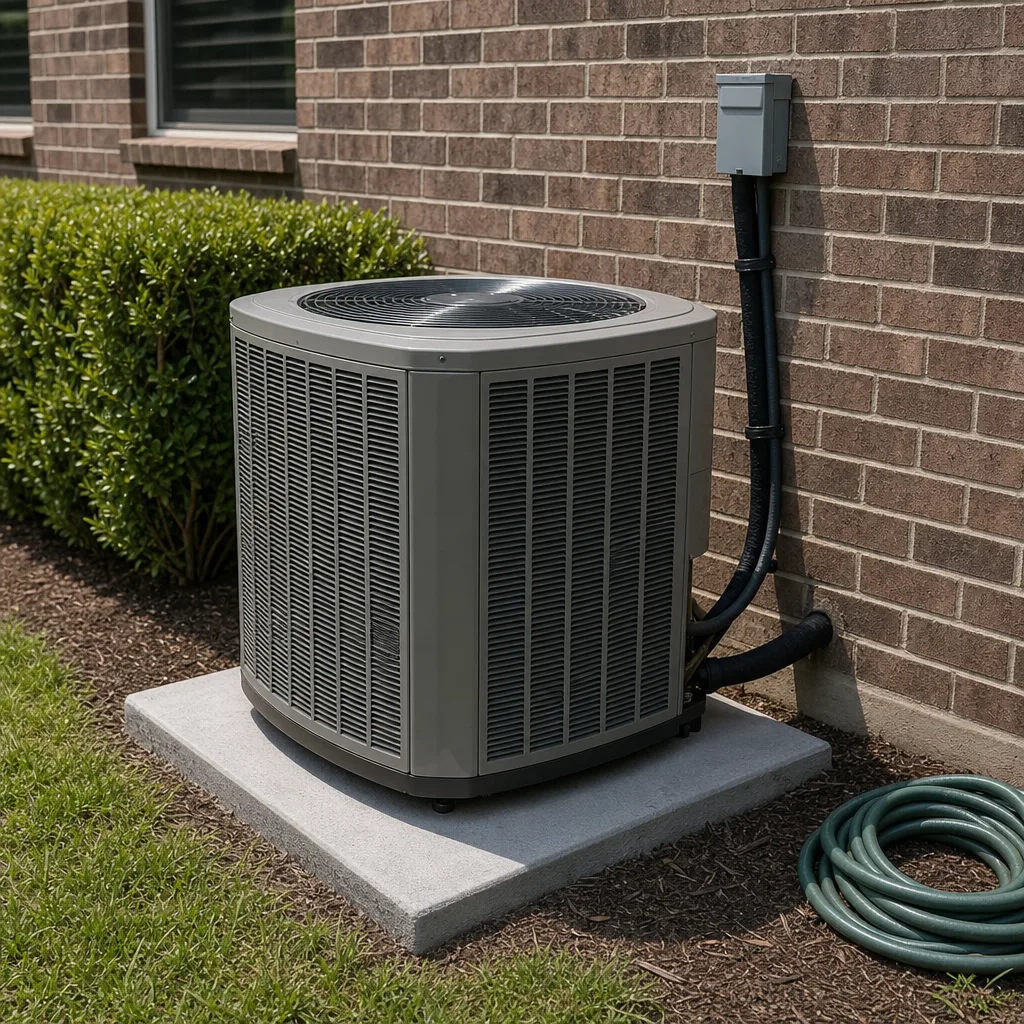
- Ease of access. A condenser sitting on an open pad beside the house is quick to swap. An air handler wedged into a tight, hot attic takes more time and more care to replace.
The second set of factors is your house. These items fall outside a standard install, so they only show up on your quote if your home needs them.
- Ductwork. Many Dallas ranch homes built between the 1950s and 1990s still have their original ducts. If yours are leaking, crushed, or too small for the new system, they may need sealing or repair. Otherwise the cool air you’re paying for won’t reach your rooms.
- Wiring. A new system may need a different breaker or wire size than the old one. In some older homes, the electrical panel itself needs work. Because we handle HVAC, plumbing, and electrical under one roof, you won’t need to bring in and schedule a second company.
- Plumbing. With the air handler in the attic, the condensate drain line has to carry water out cleanly. An old, sagging, or clogged line may need to be redone.
- Code upgrades. When equipment gets replaced, the new setup has to meet today’s code, and the old one may not have. Any corrections add to the cost.
- Permits. Whether a permit is needed, and what it costs, gets added on top of the standard job.
- Custom fabrication. Sometimes a new coil doesn’t line up with the old metal box it sits on. A sheet metal piece has to be built to fit so the system seals tight.
Most of these can’t be judged over the phone. Someone has to get into your attic, look at your ducts and panel, and see where your equipment sits. If we come out to look at your current system, there’s a $26 to $99 service-call fee. That fee is credited toward the job if you go ahead with Xtreme Air Services.
When you compare quotes, hold each one up against this list. Ask which of these items are in the price and which aren’t. Two numbers that look far apart may be pricing two very different jobs. A low number that leaves out your ductwork or wiring won’t stay low for long.
Have questions? We’re happy to help.
Call Today, Get Service Today. Xtreme Air Services — Oak Lawn is ready to help.
Signs Your Dallas Home Needs a New System, Not a Repair
Not every broken AC needs to be replaced. Sometimes a small part fails, and a repair gets you back to cool air for a fraction of what a new system costs. The real question is whether the repair you’re facing is a one-time fix or the start of a pattern.
Here are the signs that point toward a new system:
- A major part fails on an older system. If the compressor or the indoor coil goes out on a unit that’s already well up in years, you’re putting big money into equipment that’s near the end anyway. That’s often the point where the math tips toward replacement.
- The same problem keeps coming back. If you’ve had a refrigerant leak found and fixed, then found again, the system is telling you something. Each recharge buys time, not a cure.
- You’re calling for repairs every summer. One service call is normal. A new breakdown every July, right when Dallas heat is at its worst, means your system is wearing out under the load.
- Your bills keep climbing and nothing changed. If you’re using the house the same way and paying more each summer, the system is likely losing efficiency as it ages.
- Some rooms never get comfortable. The back bedroom stays warm, the house feels damp, or the system runs all afternoon and can’t catch up. That can point to a system that was the wrong size from the start, or one that can’t keep up with how your home has changed.
- Hail did real damage. North Texas storms can flatten the fins on an outdoor condenser. Light damage can sometimes be combed out or cleaned up. A coil that’s badly crushed or leaking after a storm is a different story.
Age alone isn’t a reason to replace. Plenty of older systems still run fine. But age plus a big repair, or age plus repeat problems, is when it makes sense to stop and look at the whole picture.
Now the other side, because you deserve the straight answer. A repair is usually the right call when:
- Your system is fairly new and has been reliable until now.
- The problem is a small, common part, like a capacitor, which helps the motors start, or a clogged condensate drain line in the attic.
- The coil froze up because of a dirty filter or blocked airflow, and the system runs normally once that’s fixed.
- Your home stays comfortable and your bills have stayed steady.
In those cases, replacing the whole system doesn’t make sense, and we’ll tell you that. AC capacitor replacement and AC drain line cleaning are everyday repairs, not reasons to buy new equipment.
If you’re on the fence, ask your technician three things. What failed? What will this repair cost compared to a new system? Is anything else on this unit close to failing? A good technician will answer all three plainly and let you make the call. If the answer points to replacement, the sizing and cost questions covered above are where your decision starts.
Watch Our Video
See How We Handle Central air conditioning installation in Dallas
Xtreme Air Services — Oak Lawn
When You Don’t Need a Full Installation
A new central air system is a big purchase. A lot of comfort problems that feel like ‘we need a new AC’ have a smaller, cheaper answer. Here’s when a full installation isn’t the right fix.

Before anything else, check the easy stuff. Make sure the thermostat is set to cool and the air filter isn’t clogged. A filthy filter can choke airflow enough to make a healthy system seem like it’s failing.
- Only one room is the problem. Say you converted the garage, added a sunroom, or finished a bonus room, and that space never cools while the rest of the house is fine. You probably don’t need a bigger central system. A ductless mini-split can cool just that room on its own, with no new ductwork.
- The system runs fine, but the air doesn’t get where it should. In many older Dallas homes, the ducts in the attic have come loose, been crushed, or started leaking. Your AC can be making plenty of cold air that never reaches the back bedroom. Duct repair or duct sealing fixes that. A new system hooked to the same leaky ducts would have the same weak spots.
- Upstairs is hot and downstairs is cold. In a two-story home, one system often fights to keep both floors even. A zoning system lets you control each area on its own, so the upstairs gets the cooling it needs without freezing out the downstairs.
- Only the indoor side failed. If the outdoor condenser is in good shape and the problem is a worn-out blower motor or air handler, that part can often be replaced by itself.
- The thermostat is the real problem. An old thermostat that reads the temperature wrong can make a good system short-cycle or run too long. Replacing it, or moving up to a smart thermostat, costs far less than new equipment.
- The house feels damp, but it’s cooling. If temperatures are fine and the air just feels sticky, a whole-home dehumidifier may solve it. Ask about this before you assume the AC itself is the issue.
There’s also the question of timing. If your system still cools the house, your bills have stayed steady, and nobody’s told you a major part is failing, you don’t have to replace it now. It’s smart to start thinking about what’s next while it still runs. Then you can compare quotes and ask good questions in the spring, instead of making a rushed call on a 105-degree afternoon with a dead unit. Planning ahead isn’t the same as needing to buy today.
If someone quotes you a full system and you’re dealing with one of the problems above, ask them why a smaller fix won’t work. You should get a clear, specific answer. When the smaller fix is the right one, we’ll tell you so.
Frequently Asked Questions
Common questions about Central air conditioning installation
What’s the best thermostat setting for summer in Dallas?
Most Dallas homeowners find 78°F a good balance between comfort and cost while they’re home, and a few degrees higher when the house is empty. Because our summers are long and hot, every degree lower than 78 can add noticeably to your bill. A system that’s sized correctly through a proper cooling load calculation will hold that setting steady, even on 100-degree afternoons, instead of running nonstop and never catching up.
What’s the difference between a central air system and a regular air conditioner?
Central air cools your whole house through ductwork from one system, while a standalone air conditioner, like a window or portable unit, only cools one room. Central air uses a condenser outside and a coil paired with your air handler, usually in the attic in Dallas homes, to push cooled air through ducts to every room. That’s why sizing and duct condition matter so much here, since attic heat and duct leaks can rob a central system of the cooling it’s producing.
How much does a new AC unit cost for a smaller home, like 1,400 square feet?
Square footage alone doesn’t set the price; what matters is the cooling load for that specific home. A 1,400 square foot home with good insulation and shaded windows may need a smaller system than one with the same square footage but lots of west-facing glass and an attic full of leaky ducts. That’s why we run a room-by-room load calculation instead of pricing off square footage, so you’re not paying for capacity your home doesn’t need or stuck with a system too small to keep up.
Ready to Get Started?
Call (469) 269-6373 Today, Get Service Today.