


Electrical Troubleshooting in Dallas: Find the Fault Before You Pay to Fix It
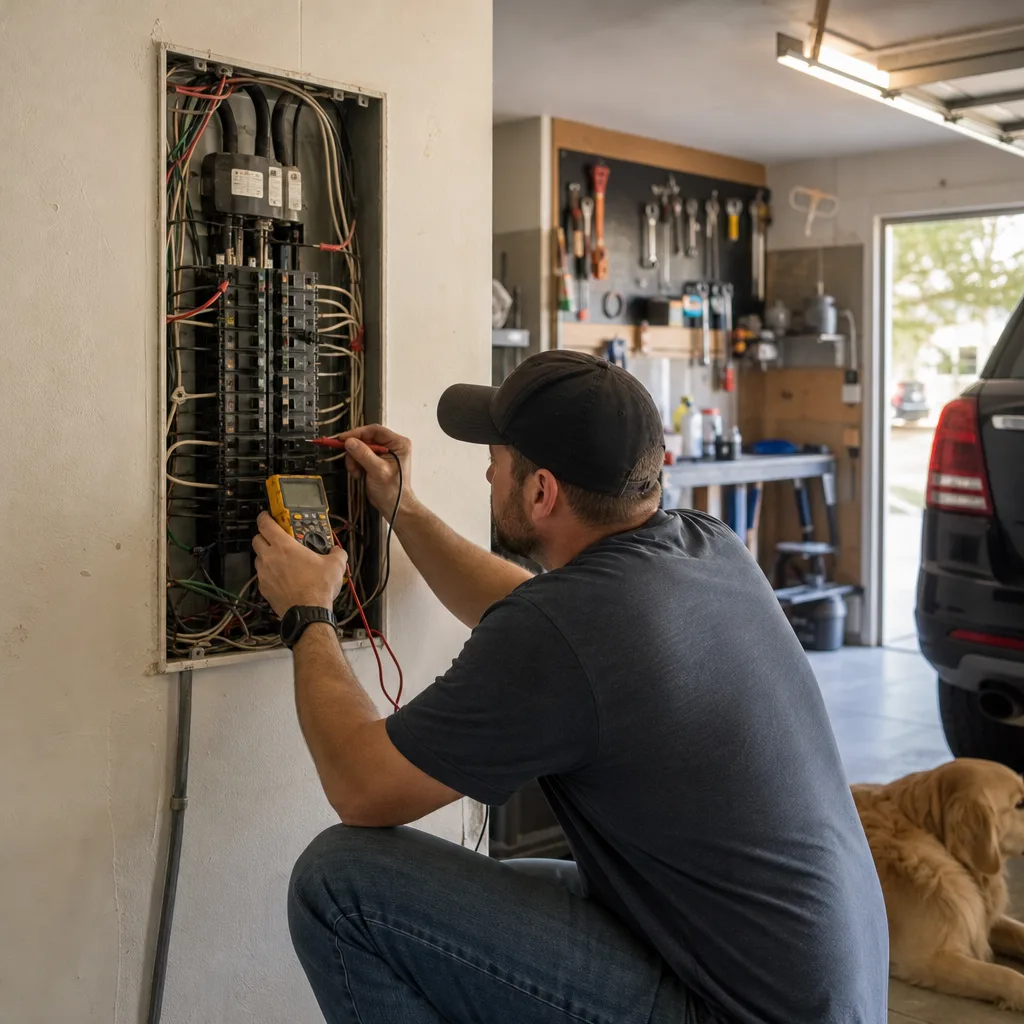
The fault traced to where it starts, with a clear written summary before any repair begins.
What’s Covered on This Page
- What Electrical Troubleshooting Diagnoses
- How the Diagnostic Visit Works
- What Drives the Cost of Finding an Electrical Fault
- When You Don’t Need an Electrician to Fix It
- Signs an Electrical Problem in Dallas Can’t Wait
- How long does an electrical troubleshooting visit usually take?
- Can I troubleshoot an electrical problem myself before calling someone?
- Will the technician need to cut into my walls to find the problem?
- What should I do if I find a damaged outdoor outlet cover after a storm?
What Electrical Troubleshooting Diagnoses
What you notice is rarely where the problem lives. An outlet in the bedroom can go dead because of a loose wire two outlets down the line. A breaker can trip because of a worn breaker, a circuit carrying too much, or a short somewhere inside the wall. From where you stand, those all look the same. Troubleshooting is how you tell them apart.
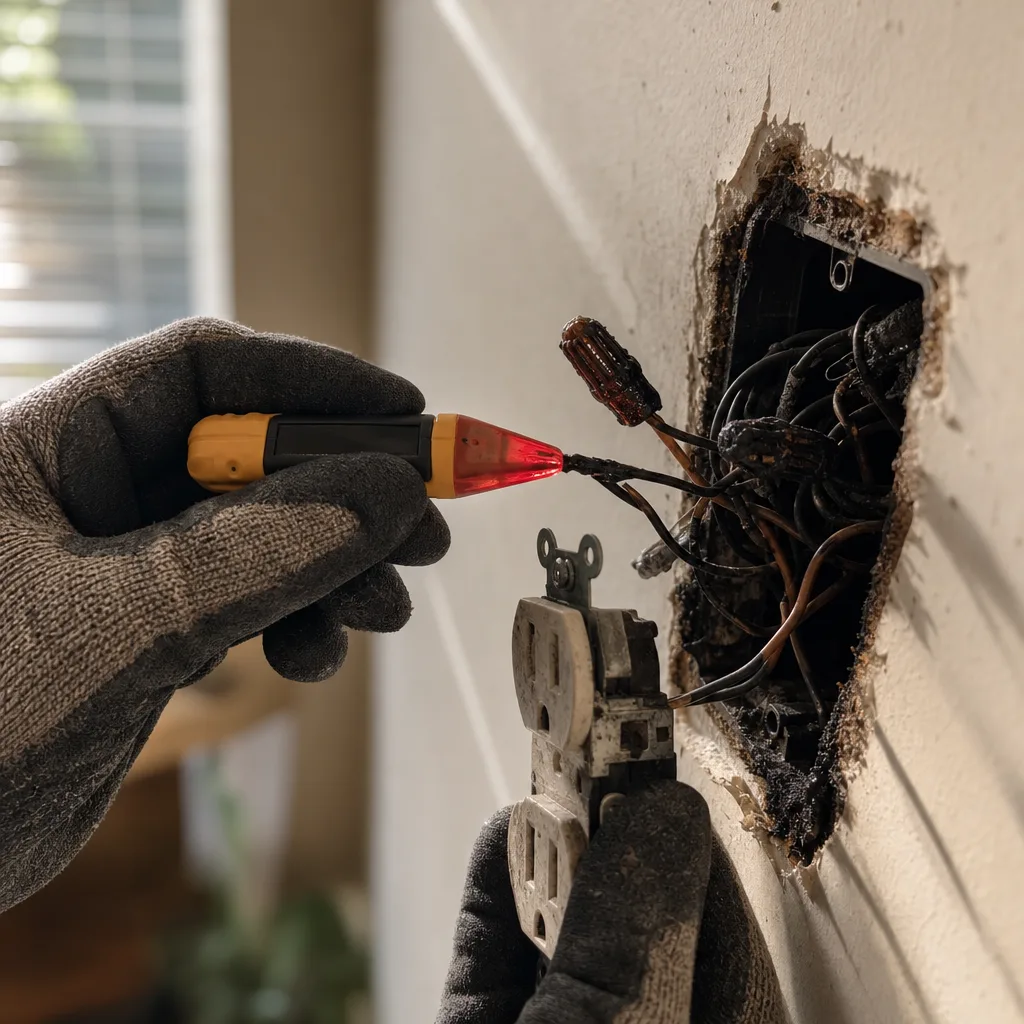
Here are the problems a troubleshooting visit is built to trace:
- Dead outlets. Sometimes a GFCI outlet in another room has tripped and cut power downstream. Sometimes a wire has worked loose from the back of the outlet, or the outlet itself has worn out.
- Breakers that keep tripping. The cause could be too many things running on one circuit, a short between wires, a ground fault, or a breaker that’s simply failing. Each one has a different fix.
- Lights that flicker or dim. This can point to a loose connection at the fixture, the switch, or somewhere further back on the circuit.
- Intermittent faults. These are the hardest ones. Power drops out, then comes back. It works fine when you test it, then quits again an hour later.
- Outlets or switches that feel warm, buzz, or look scorched. These usually mean a connection isn’t tight or a device is wearing out.
Intermittent faults come up a lot in Dallas homes for a plain reason. Much of the housing here is slab-on-grade ranch homes built from the 1950s through the 1990s, and the wiring in those homes has been through decades of North Texas summers. Wire connections in a hot attic heat up and cool down every single day. Over years, that can loosen a splice just enough that it works sometimes and fails other times. Finding that kind of problem takes patient testing, not guessing.
Some older homes also have wiring from an earlier era, like aluminum branch circuits or wiring that’s been added onto by past owners. Troubleshooting doesn’t assume the worst. It checks what’s there so you get a real answer about your home.
What you get at the end matters just as much as the testing. With Xtreme Air Services, the visit includes on-site diagnosis and a written findings and recommendation summary. That summary tells you what’s wrong, where it is, and what the next step should be. Any repairs or corrective work the diagnosis turns up aren’t part of the troubleshooting fee. They’re quoted separately, so you can decide with the facts in hand.
The cost depends on the complexity of the fault, your home’s size and circuit count, how easy the wiring is to reach, and whether specialized test equipment is needed. Our most common troubleshooting job, which covers diagnosing a dead outlet, a tripping breaker, or an intermittent fault, runs $100-$200. The typical range is $100-$350. The service-call fee is $26-$99, and it’s credited toward the repair if you go ahead with Xtreme Air Services.
How the Diagnostic Visit Works
It starts with a phone call, and you’ll talk to a real person. Tell us what’s going on, and we’ll set up a time. Same-day service is available, and there’s no extra charge for nights or weekends. If your breaker quits on a Saturday night, it costs the same as a Tuesday morning.
You can make the visit faster before anyone shows up. You don’t need tools. You just need to pay attention to what you’ve noticed. Jot down a few things:
- Which outlets, lights, or rooms lost power, and which ones still work.
- What was running when the breaker tripped. The microwave, a space heater, or the AC kicking on are all useful clues.
- When it happens. Every time, only in the afternoon, or only when it rains.
- Any recent work, like a new ceiling fan, a remodel, or wiring a past owner added.
- Anything you saw, smelled, or heard, like a buzz, a warm cover plate, or a scorch mark.
Those notes matter most with intermittent problems. A fault that only shows up at 4 p.m. in August is telling you something. Dallas attics get very hot in late afternoon, and a loose splice up there might only fail when it’s hottest. Your notes help narrow the search before testing even begins.
Good troubleshooting follows a pattern. It isn’t about swapping parts until something works. Here’s how it usually goes:
- Start at the panel. Find the breaker that feeds the problem, check its condition, and see if it’s tripped or failing.
- Map the circuit. Figure out which outlets, switches, and fixtures share that circuit. The dead outlet you noticed may not be the one causing it.
- Test, don’t guess. Meters measure voltage and check connections at each device along the line to find where power stops or drops off.
- Test under load. Some faults hide when nothing is plugged in. Running the circuit the way you normally use it can bring the problem out.
- Confirm the cause. Before calling it, check that the problem found explains what you’ve been seeing.
Here’s a common example. Your kitchen outlets keep dying whenever the coffee maker and toaster run together. That could be a circuit carrying more than it should. It could also be a worn breaker, or a loose connection that heats up under load. Each one is a different fix at a different price. Testing tells you which one you’ve got, so you don’t pay to fix the wrong thing.
The person doing this work is a licensed and insured technician. Our team members are background-checked and drug-tested, because you’re letting someone into your home and into your walls.
When testing is done, you get the written findings summary covered above. It explains what’s wrong, where it is, and what to do next. If a repair is needed, you’ll get upfront flat-rate pricing before any work starts. No meter running and no surprises. You can say yes on the spot, take time to think, or get another opinion. The diagnosis is yours either way.
What Drives the Cost of Finding an Electrical Fault
Two homes can have the same dead outlet and get two different bills for finding the cause. That’s not a trick. The price depends on how hard the fault is to find, not on how big the symptom looks. Here’s what moves a job toward the low end or the high end of the ranges covered above.
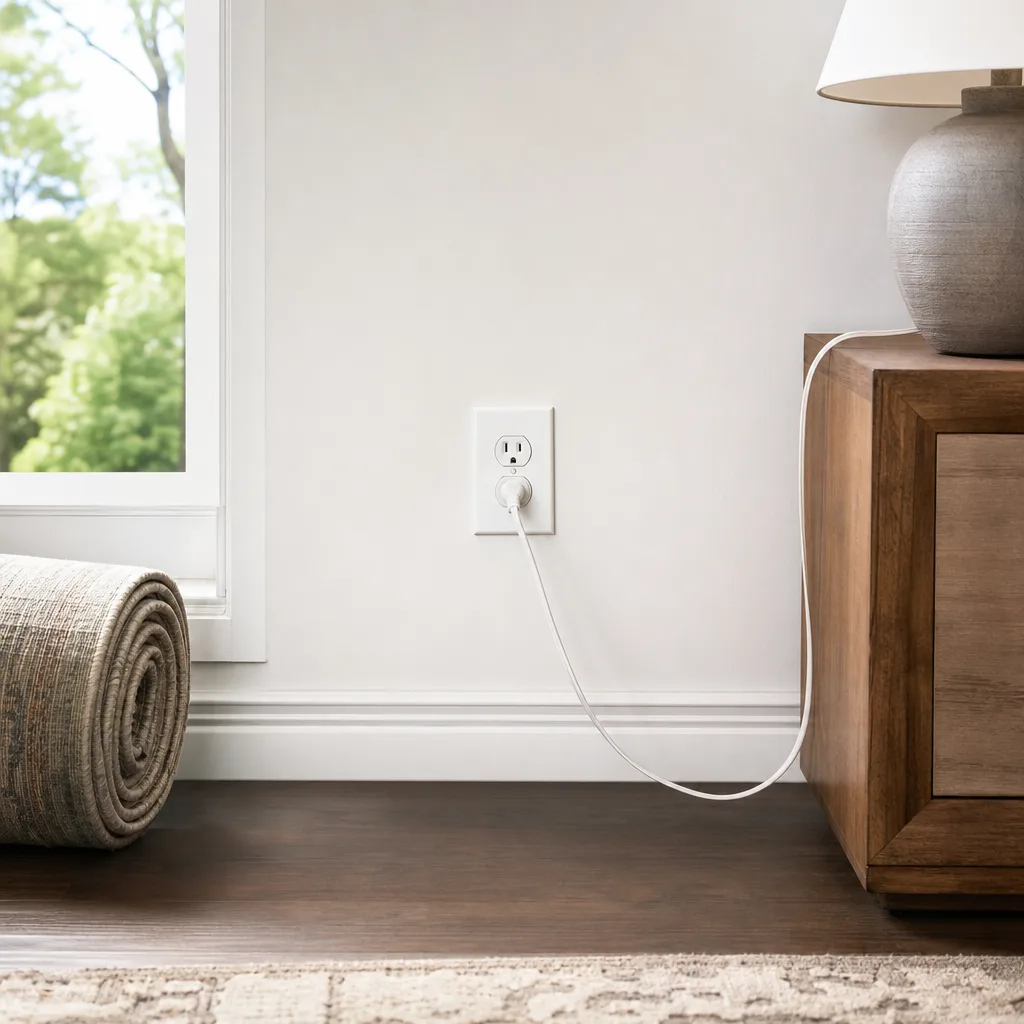
- How the fault behaves. A problem that’s there every time is the easiest kind. Plug in a tester, follow the circuit, and it shows up. An intermittent fault is harder. If it only fails when the circuit is loaded or the attic is hot, it takes more testing to catch it in the act.
- Your home’s size and circuit count. A small house with a well-labeled panel is quick to map. A larger home with many circuits, or a panel where half the labels are wrong or missing, takes longer just to figure out which breaker feeds which room.
- Access. In a lot of Dallas slab-on-grade ranch homes, there’s no crawl space under the floor, so wiring runs overhead through the attic. Reaching a splice up there in a North Texas summer is slower, sweatier work than opening an outlet box. Outlets blocked by built-ins or heavy furniture also add time.
- Special test equipment. Most faults can be found with standard meters. Some need more, like tools that trace a wire hidden behind drywall or test the condition of the wire’s insulation. When a fault calls for that kind of equipment, the cost goes up.
Past work on the house plays into all four. Wiring added by a previous owner often doesn’t follow a clean path. A circuit that should feed one room might jump to another, and that slows down the mapping.
It helps to know how pricing works in this trade, since you may get quotes from more than one company. Some electricians charge by the hour for diagnosis, so the bill grows the longer the search takes. Others charge a set diagnostic fee. Some fold the fee into the repair if you hire them for the fix. That last point is worth asking about with anyone you call, because it changes what you really pay. With Xtreme Air Services, the service-call fee is credited toward the repair if you move forward with us.
Before you hire anyone to find an electrical problem, ask these questions:
- Is the diagnosis priced by the hour or as a set fee?
- Does the diagnostic fee count toward the repair if I hire you?
- Will I get the findings in writing?
- Will I see the repair price before any work starts?
- Do you charge more for nights or weekends?
You can also help keep your cost down. The notes from the last section, like which rooms lost power and what was running at the time, cut down the search before testing begins. Clearing a path to your panel and to the problem outlets saves time too. Every minute your technician isn’t spending hunting for the right circuit is time spent finding the actual fault.
The diagnosis is the smaller bill. Paying a fair price to find the real cause keeps you from paying for a repair that doesn’t fix anything.
Not sure what your Electrical troubleshooting project needs? Ask us.
Call Today, Get Service Today. Xtreme Air Services — Oak Lawn is ready to help.
When You Don’t Need an Electrician to Fix It
Not every dead outlet needs a technician. Some problems take two minutes to fix, and you shouldn’t pay anyone for those. Before you call us or anyone else, try these simple checks.
- Look for a tripped GFCI outlet. These are the outlets with the Test and Reset buttons. One GFCI can protect several other outlets, so check your bathrooms, kitchen, garage, and outdoor outlets, not just the room that went dead. Press Reset firmly until it clicks.
- Check if the outlet is on a switch. Many living rooms and bedrooms have an outlet controlled by a wall switch. If a lamp won’t turn on, flip the nearby switches before you assume the outlet is bad.
- Reset a tripped breaker one time. Open your panel and look for a breaker that sits in the middle or doesn’t line up with the others. Push it all the way to Off, then back to On.
- Change the bulb. A flickering light can just be a loose or dying bulb. Tighten it or swap it out first.
- Unplug something. If a breaker trips when the microwave and toaster run together, that circuit may just be carrying too much. Move one of them to an outlet on a different circuit and see if the problem goes away.
A few North Texas patterns are worth knowing. After a heavy spring thunderstorm, an outdoor or garage GFCI can trip because water got into an outlet cover. Let it dry out, then reset it. During a hard winter freeze, a space heater plugged into the same bedroom circuit as a TV and a lamp can trip a breaker. In that case, the fix is moving the heater, not rewiring the room. In the summer, a window unit or a big fan sharing a circuit with other things can do the same.
If one of these checks fixes it and the problem doesn’t come back, you’re done. You don’t need a diagnosis for a GFCI that tripped once in a storm.
Here’s where to stop and leave it alone:
- The breaker trips again right after you reset it, even with things unplugged.
- You reset the same breaker or GFCI over and over, week after week.
- You smell burning or hot plastic, or you see scorch marks on an outlet or cover plate.
- An outlet, switch, or panel feels warm or makes a buzzing sound.
- The GFCI won’t reset at all, or nothing comes back on after you reset it.
- Lights dim or flicker across several rooms, not just one fixture.
Those signs mean the problem isn’t a simple trip. Something on the circuit is loose, worn, or overloaded in a way a reset can’t fix. Don’t keep flipping the breaker to get power back. A breaker that trips is doing its job, and forcing it back on over and over just hides the real cause.
Also, skip opening outlets or the panel cover yourself unless you know how to work safely with live wiring. Resetting and unplugging are fine. Taking things apart is where homeowners get hurt.
Watch Our Video
See How We Handle Electrical troubleshooting in Dallas
Xtreme Air Services — Oak Lawn
Signs an Electrical Problem in Dallas Can’t Wait
Most electrical problems give you time. A single dead outlet or a breaker that trips once in a while can wait for a regular visit. Some problems can’t wait, though. The warning signs in the last section tell you to stop resetting things. This section tells you how fast to act.
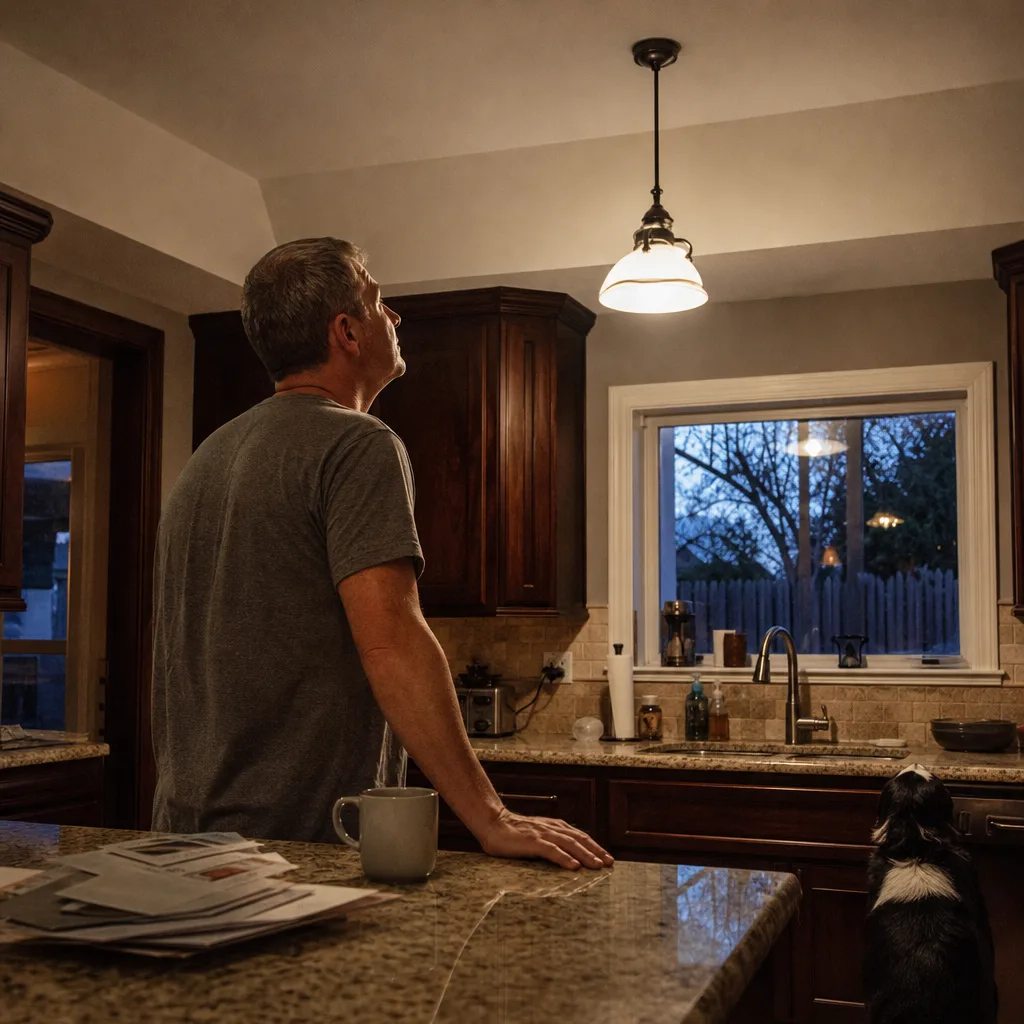
Get everyone out and call 911 if you see any of these:
- Smoke or flames coming from an outlet, switch, fixture, or your panel.
- Sparks that keep going, or a crackling sound inside a wall.
- A panel or breaker that’s too hot to keep your hand on.
If a storm brings down the line running to your house, or leaves it sagging or pulled loose, stay well away from it. Keep kids and pets away too. Call Oncor, because that line belongs to the utility and they handle it first.
These problems need someone today, not next week:
- Part of your house is dead while the rest works fine, and no breaker is tripped.
- Lights get brighter, not just dimmer, when the AC or dryer kicks on.
- An outlet, switch, or appliance gave you a shock, even a small one.
- Water got into your panel, your meter, or an outdoor outlet box after a hail storm or heavy rain.
- You smelled burning once and it went away. A smell that’s gone still has a cause.
The first two on that list are worth explaining. Your home’s power comes in on two separate lines, and different circuits run off each one. If half the house goes dark, or lights surge brighter when a big appliance starts, one of those lines or a shared connection may be loose. That’s not a small problem. It can send the wrong voltage to your electronics and appliances. It’s also more likely to show up on a July afternoon, when your AC is working hardest and everything on the system is carrying its heaviest load.
Dallas storm season adds its own risk. Hail and wind can crack the weatherproof covers on your meter base, outdoor outlets, and AC disconnect. Rain then gets inside. A breaker might hold for days before the moisture causes trouble, so don’t wait for it to fail first.
What can wait for a scheduled visit? A dead outlet that a GFCI reset didn’t fix, with no heat, smell, or buzzing. A breaker that trips now and then when you know a heavy load was running. A single fixture that flickers after you’ve changed the bulb. These still deserve a real diagnosis. You just don’t need to worry about them tonight.
When something does land in the call-today group, timing matters. Same-day service is available, and there’s no extra charge for nights or weekends. If half your house goes dark on a Sunday evening, calling right away costs you the same as calling on a Monday morning.
Call 469-269-6373
Frequently Asked Questions
Common questions about Electrical troubleshooting
How long does an electrical troubleshooting visit usually take?
It depends on how the fault behaves, since a problem that shows up every time is much faster to trace than one that comes and goes. A straightforward dead outlet or a breaker that trips on a clear pattern can often be mapped quickly once a technician checks the panel and follows the circuit. An intermittent fault, like one that only acts up when the circuit is under load or the attic is hot, takes longer because it has to be caught in the act. Clearing access to your panel and the affected outlets ahead of time helps keep the visit moving.
Can I troubleshoot an electrical problem myself before calling someone?
Yes, a few quick checks are worth trying first. Look for a tripped GFCI outlet, check if the dead outlet is controlled by a wall switch, reset a tripped breaker one time, or try a new bulb if a light is flickering. If one of those fixes it and the problem doesn’t come back, you don’t need a diagnosis. But if a breaker trips again right away, or you notice buzzing, warmth, or a burning smell, stop resetting it and have it looked at.
Will the technician need to cut into my walls to find the problem?
Not usually, since most faults are found with meters that test voltage and connections at the panel, outlets, and switches without opening walls. Some harder-to-find faults need extra equipment, like tools that trace a wire hidden behind drywall, and that’s when more access may be needed. Wiring added by a previous owner, which doesn’t always follow a clean path, is a common reason a fault takes more testing to pin down.
What should I do if I find a damaged outdoor outlet cover after a storm?
Stay away from it and don’t plug anything in until it’s checked, since hail and heavy rain can crack weatherproof covers on outdoor outlets, meter bases, and AC disconnects. Water getting inside doesn’t always cause an immediate problem. A breaker can hold for days before the moisture causes trouble, so it’s worth having it checked rather than waiting for it to fail.
Ready to Get Started?
Call (469) 269-6373 Today, Get Service Today.