


Drain Cleaning in Plano: Know What’s Included Before You Book
Clogs cleared, with what's included in the visit and what drives the price explained before we start.
What’s Covered on This Page
- Know the Warning Signs Before Your Drain Fully Clogs
- Decide If This Is Urgent or Can Wait
- Try This Before You Call a Plumber
- What’s Included in a Standard Drain Cleaning Visit
- What to Expect During the Visit
- Is professional drain cleaning worth it, or should I keep snaking it myself?
- How often should I have my home’s drains cleaned?
- Does pouring salt or other home remedies down the drain prevent clogs?
Know the Warning Signs Before Your Drain Fully Clogs
A drain rarely goes from fine to fully blocked overnight. Hair, soap, grease, and food build up a little at a time and narrow the pipe until water can barely get past. If you catch it during that narrowing stage, you’re usually looking at a simpler job. Severity and location are two of the things that drive the cost of clearing a clog, so the earlier and closer to the fixture it is, the better for you.
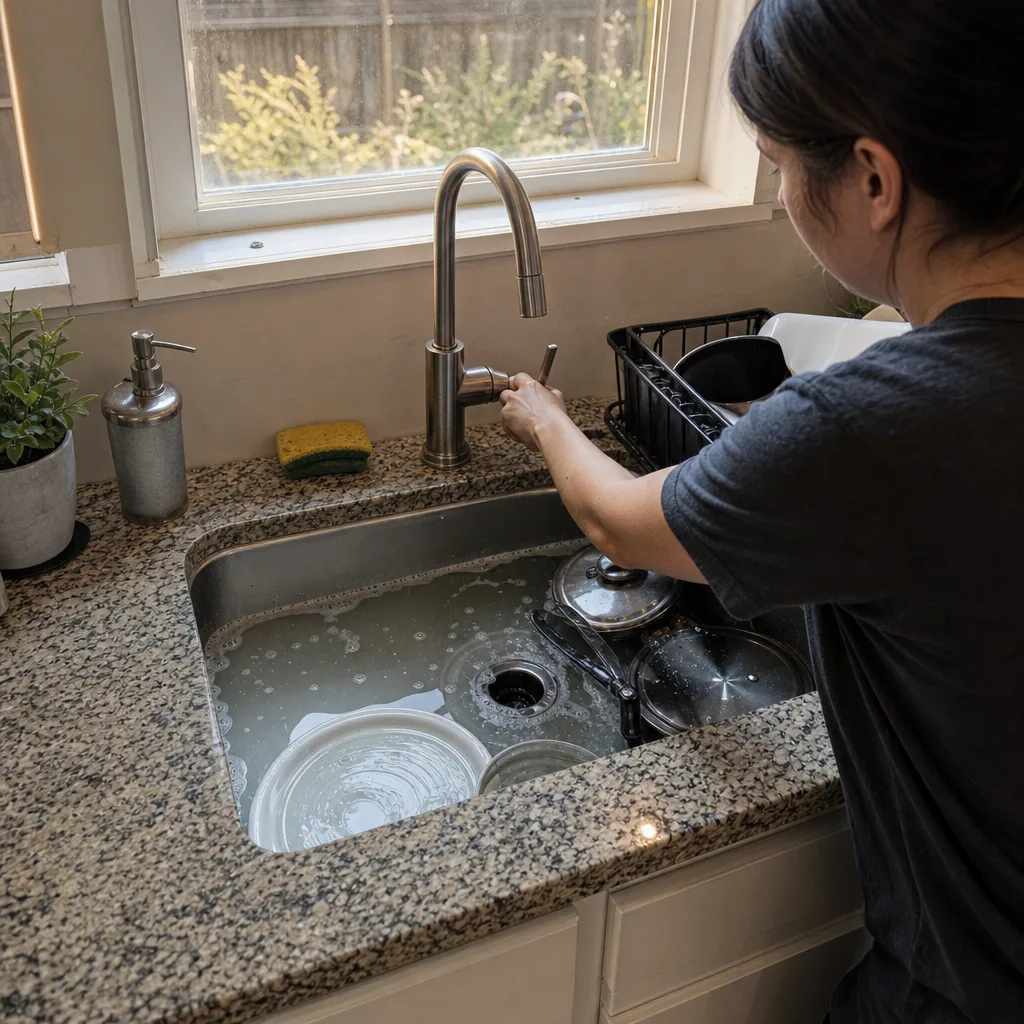
Here’s what to watch for:
- Water that drains slowly. Your sink holds water for a while, or you’re standing in an inch of water by the end of a shower.
- Gurgling or bubbling. Air gets trapped behind a blockage and pushes back up, so you hear a glug from the drain or the toilet after water runs.
- A sewer or rotten smell. Food and gunk stuck in the pipe start to break down, and the smell comes up through the drain.
- Clogs that keep coming back. You plunge it, it works for a week, and then it’s slow again. That usually means something is still stuck farther down the line.
- Water rising in a different fixture. You flush the toilet and the tub fills a little, or the washing machine drains and the kitchen sink backs up.
- Drain flies hanging around a sink or shower. These tiny flies breed in the slimy buildup inside a partly clogged pipe.
The most useful thing you can do is figure out how many drains are acting up. If it’s just one sink or one tub, the clog is probably close to that fixture. That’s the kind of clog a plunger or pulling hair out of the stopper can sometimes handle on your own.
If two or more fixtures are slow at once, especially a toilet plus a tub or shower, the problem is likely in the main line that carries everything out of your home. Water coming up somewhere it shouldn’t is the clearest sign. A main-line clog won’t fix itself, and every flush or load of laundry adds more water with nowhere to go. In that case, cut back on water use until it’s cleared.
Many Plano homes sit on a concrete slab, so the drain lines run under the floor where you can’t see them. That makes these early signs your best clue about what’s happening down there. If a clog keeps returning even after it’s cleared, our team may suggest a sewer camera inspection to see what’s inside the pipe instead of guessing.
Catching a clog early pays off. Clearing the drain and confirming it flows properly is our most common drain job, and most calls are resolved on the first visit.
Decide If This Is Urgent or Can Wait
Not every clog is an emergency. Some need a call today, and some can sit for a day or two while you go about your life. The question isn’t how annoying the drain is. It’s whether water has somewhere safe to go.
Call today if any of these are happening:
- Dirty water or sewage is coming up into a tub, shower, or floor drain.
- A toilet keeps rising toward the rim every time it’s flushed, even after you plunge it.
- Several fixtures are backing up together, which points to the main line covered above.
- Your home has one toilet and it’s clogged.
- Water is pooling on the floor, near a wall, or under a cabinet, where it can soak into flooring and drywall.
- You run a business and a backed-up restroom or kitchen drain means closing doors or turning customers away.
In each of these cases, the water you use keeps adding to the problem. On a slab foundation, which many Plano homes have, a backup has only one way to go, and that’s up into your living space. Getting the line open the same day protects your floors, your cabinets, and your peace of mind.
It can usually wait a day or two if:
- Only one sink, tub, or shower is slow, and every other drain in the house works normally.
- The water still goes down, just slower than it should.
- You have another bathroom or sink you can use in the meantime.
A slow bathroom sink or shower is often hair caught near the drain opening. Pull the stopper, clear what you can reach, and try a plunger. If that fixes it and it stays fixed, you don’t need us. That’s a real answer, and it’s the right one for plenty of clogs.
If the same drain is slow again within a week or two, the blockage is likely farther down the pipe than you can reach. That’s still not an emergency. But it’s worth booking soon, before a slow drain turns into a stopped one on a night you’ve got a full house.
If you’re waiting on a technician, go easy on water. Hold off on laundry, the dishwasher, and long showers, and stop flushing a toilet that isn’t draining. This keeps a partial clog from turning into an overflow before help arrives.
Waiting can feel like the money-smart move, but timing doesn’t change what you pay with us. There’s no extra charge for nights or weekends, so a Saturday evening backup costs the same as a Tuesday morning call. The $26-$99 service-call fee is credited toward the repair if you go ahead with Xtreme Air Services, and you’ll get upfront flat-rate pricing before any work starts. Holding off until Monday doesn’t save you anything, but it does give a main-line backup more time to do damage.
So the simple rule is this. If the clog is limited to one drain and you have a workaround, try the easy fixes and book when it suits you. If water is coming up where it shouldn’t, more than one fixture is affected, or you’ve lost your only toilet, get it handled today.
Try This Before You Call a Plumber
If only one drain is slow and everything else in your home works fine, there’s a good chance you can clear it yourself. These are the same first steps we’d take. They cost little or nothing and usually take less than half an hour.
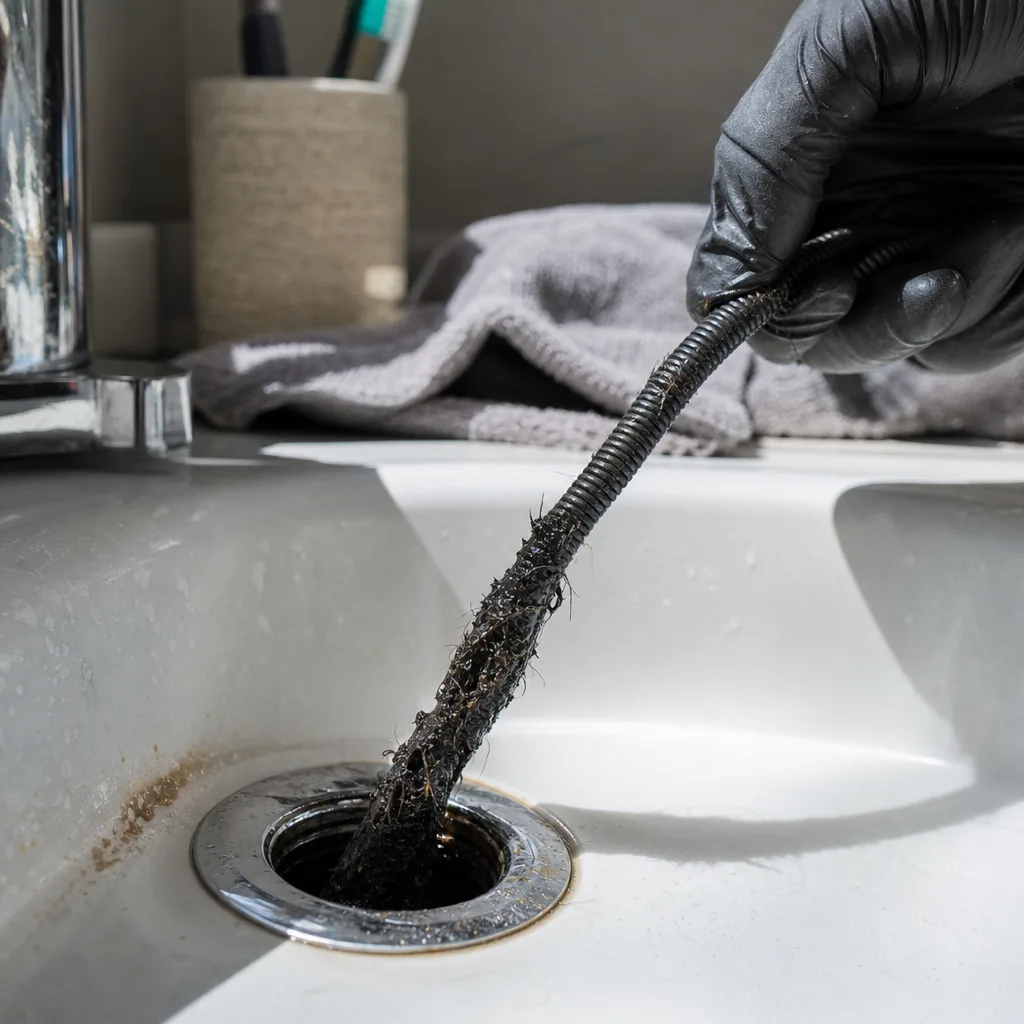
- Clean out the stopper and drain opening. Most bathroom sink stoppers lift straight out or come loose with a quarter turn. Shower covers usually have one or two small screws. A plastic drain snake from any hardware store, the thin barbed strip that costs a few dollars, pulls out hair you can’t see from the top.
- Use the right plunger. A flat cup plunger is made for sinks and tubs. A plunger with a soft flap that folds out of the bottom is made for toilets. Using the wrong one means you’re mostly pushing air.
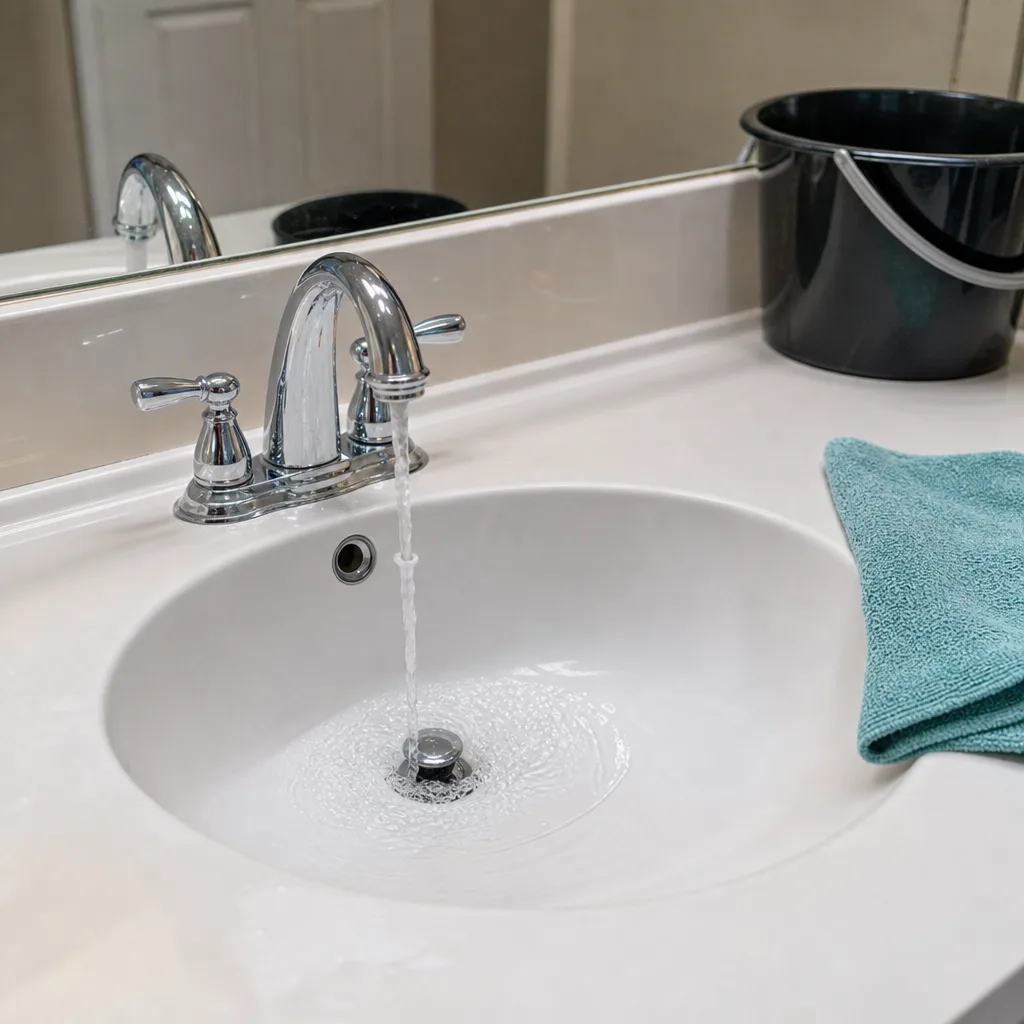
- Plunge so the pressure goes where it counts. Put enough water in the sink or tub to cover the plunger cup. Stuff a wet rag into the overflow hole, the small opening near the top of the basin. On a double kitchen sink, plug the other side. Then give it 15 to 20 firm pushes and pulls before you check.
- Clean the P-trap under the sink. That’s the U-shaped pipe under the basin. Set a bucket underneath, loosen the two large nuts by hand, and dump out what’s inside. You’ll often find the whole clog sitting right there. Put it back hand-tight, run water, and check for drips.
- Flush a greasy kitchen drain with hot tap water and dish soap. This can loosen a soft grease buildup. Skip boiling water in a toilet, because the sudden heat can crack the porcelain.
One thing we’d ask you to leave on the store shelf is chemical drain cleaner. It’s harsh on your skin and eyes, and it can splash back while you plunge. If it doesn’t clear the clog, you’re left with a sink full of caustic water. That makes the next step harder and riskier for whoever has to open the pipe.
Give your fix a few days. If the drain stays clear, you’re done. You don’t need a plumber, and we’re glad you saved the trip.
If you’ve done all of this and the drain is still slow, or it’s back to slow within a week or two, the blockage is past where household tools can reach. That’s the point where professional drain cleaning makes sense. A technician can clear the line at the right spot and confirm the water is flowing properly before calling it fixed. Now you’ll know it’s not something a little more plunging would have solved.
Ready when you are – get in touch today.
Call Today, Get Service Today. Xtreme Air Services — West Plano is ready to help.
What’s Included in a Standard Drain Cleaning Visit
A standard drain cleaning visit covers three things: clearing the clogged drain, testing the flow, and cleaning up afterward. That’s the job most people need when a sink, tub, or toilet won’t drain. You’ll know what’s in it and what isn’t before anyone starts.
- Drain clearing. The blockage gets opened at the spot where it’s stuck, whether that’s just past your sink or farther down the line.
- Flow testing. Water runs through the drain to confirm it flows properly. Water that drains only a little better than before doesn’t pass.
- Cleanup. Whatever comes out of your pipe doesn’t stay in your bathroom or under your sink.
For the most common job, which is clearing one clogged drain and confirming proper flow, the price is $150-$300. Across all drain cleaning calls, the typical range is $150-$500. Where your job lands depends on a few things you can often spot yourself.
- How bad the clog is and where it sits. Hair caught near a shower drain is a smaller job than a main line packed tight enough to back up several fixtures.
- Access to the cleanout. A cleanout is a capped pipe that gives a straight path into your drain line. It’s often outside near the foundation. When your drain lines run under a concrete slab, like they do in many Plano homes, the cleanout is usually the best way in. An easy-to-reach cleanout keeps the work simpler. One buried under mulch or shrubs, or no cleanout at all, takes more effort.
- Whether a camera or hydro-jetting is needed. A sewer camera inspection lets you see inside the pipe instead of guessing. Hydro-jetting uses high-pressure water to scour buildup off the pipe walls.
A few things fall outside a standard visit and get quoted separately. They are hydro-jetting, pipe repair, and root removal. They’re bigger jobs with a different scope, so folding them into a basic clearing price wouldn’t be fair to you.
- Hydro-jetting can make sense when heavy grease or sludge keeps narrowing a line, even after it’s been cleared.
- Root removal comes into play when tree roots have worked their way into a sewer line through joints or small cracks.
- Pipe repair is for a line that’s cracked, broken, or sagging. Clearing that line won’t keep it clear for long.
If any of these come up, you’ll get the price before work starts, just like the drain clearing itself. You decide whether to go ahead. Nothing gets added to your bill without your say.
Financing isn’t typically offered for a standard drain cleaning, since it’s a smaller job. If your clog turns out to be part of a bigger problem, financing is available on larger repairs and replacements, such as sewer line repair.
Here’s a common example. Your kitchen sink is slow, you’ve already cleaned the P-trap, and it’s still sluggish. In most cases like that, a standard visit clears the line, proves it drains, and leaves your cabinet clean. If the clog keeps coming back after that, the conversation turns to a camera or hydro-jetting. You’ll hear why before you pay for either.
Watch Our Video
See How We Handle Drain cleaning in Plano
Xtreme Air Services — West Plano
What to Expect During the Visit
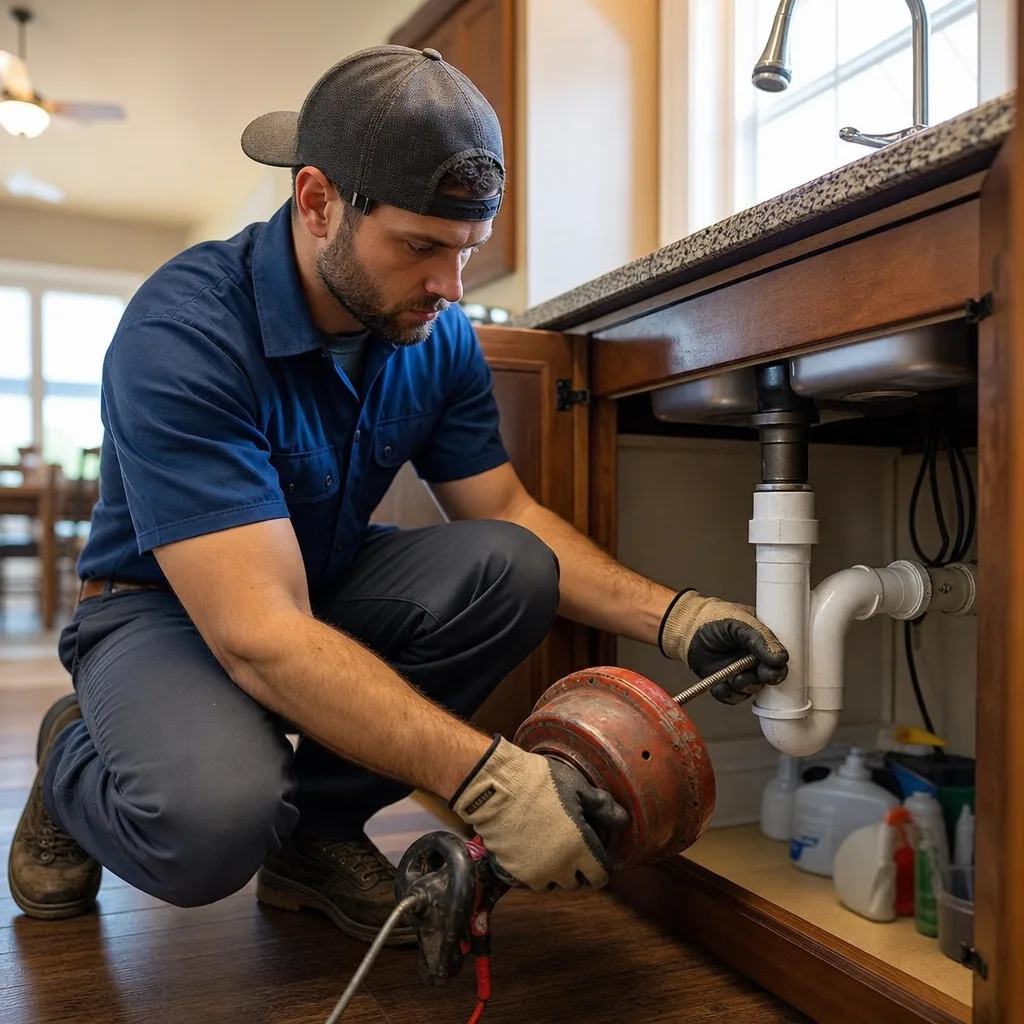
Once you’ve decided the clog needs a pro, the visit itself should feel simple. You call, you talk to a real person, and a licensed, background-checked technician comes to your door the same day. Before anyone touches your pipes, you’ll know what the job is and what it costs. That’s the whole point of this page: get the drain cleared the simplest way that works, with no surprises along the way.
Here’s how a visit usually goes, from your first call to a drain that works again.
- The call. Tell us which drains are acting up and what you’ve already tried. If it’s one slow sink, say so. If the toilet and tub are backing up together, say that too. These details help the technician show up ready for the right kind of job.
- A look before any work. A good drain tech starts by asking questions and checking the fixture, not by pulling out the biggest machine on the truck. The goal is to find where the blockage sits and the best way to reach it, whether that’s through the fixture or through your cleanout.
- Your price, approved by you. You’ll get upfront flat-rate pricing before the work starts. No meter running and no hourly guessing game. If the technician thinks a camera or hydro-jetting makes sense, you’ll hear why and see that price separately. You choose whether to go ahead.
- Clearing the drain. The clog gets opened at the spot where it’s stuck.
- Proving it works. Water runs through the line to confirm it drains properly. If the water only goes down a little faster than it did this morning, the job isn’t finished.
- Cleanup. Whatever came out of your pipe leaves with the technician, not in your tub or under your sink.
A few small things on your end can make the visit go faster. Clear out the cabinet under a clogged kitchen or bathroom sink so there’s room to work. If you know where your outdoor cleanout is, check that it isn’t hidden under mulch or behind a shrub. Many Plano homes sit on a slab, so that capped pipe outside is often the easiest way into the line. Also keep pets in another room, and tell the technician right away if you poured any chemical drain cleaner down the drain. That water can burn skin, and whoever opens the pipe needs to know it’s there.
Timing doesn’t change the price. There’s no extra charge for nights or weekends, so a backup on a Sunday evening costs the same as one on a Tuesday morning. The service-call fee is credited toward the repair if you go ahead with us, so you’re not paying twice to get started.
Most calls are resolved on the first visit. When a drain needs more than a standard clearing, like a camera look at a clog that keeps coming back, you’ll get the reason and the price first. The decision stays with you.
Call now
Frequently Asked Questions
Common questions about Drain cleaning
Is professional drain cleaning worth it, or should I keep snaking it myself?
It’s worth it once a drain keeps clogging after you’ve already tried a plunger and cleaned the P-trap. A one-time clog near the fixture is often something you can clear yourself. But if the same sink or tub goes slow again within a week or two, the blockage sits farther down the pipe than household tools can reach, and clearing it professionally stops the cycle instead of masking it.
How often should I have my home’s drains cleaned?
Most homes don’t need drains cleaned on a set schedule, since clogs usually come from a buildup problem in one specific line, not the whole system. Watch for the warning signs instead: slow draining, gurgling, bad smells, or a clog that keeps coming back. If a drain clears easily with a plunger and stays clear, you’re fine. If it’s slow again soon after, that’s your signal to get it looked at.
Does pouring salt or other home remedies down the drain prevent clogs?
Home remedies like salt or baking soda can help with mild buildup, but they won’t clear hair, grease, or a blockage that’s already formed farther down the line. Hot water and dish soap flushed through a greasy kitchen drain can loosen soft grease buildup, which is a step worth trying. Skip chemical drain cleaners altogether, since they’re harsh on skin and eyes and can make the next step riskier if they don’t work.
Ready to Get Started?
Call (469) 217-9095 Today, Get Service Today.