


Tankless Water Heater Installation in Plano: What Your Quote Should Include
What a tankless quote should include – venting, gas work and haul-off – so you can compare prices fairly.
What’s Covered on This Page
- What a Tankless Water Heater Installation Quote Should Include
- Signs Your Water Heater Needs Replacing, Not Just Repair
- Gas Line and Venting Work: Why It Changes the Job
- When a Tank Water Heater Still Makes Sense
- How Long a Tankless Water Heater Lasts and What Upkeep It Needs
- How hard is it to install a tankless water heater?
- Is it worth replacing a tank water heater with a tankless?
- How much does your electric bill go up with a tankless water heater?
What a Tankless Water Heater Installation Quote Should Include
Here’s the honest truth about tankless quotes. Two numbers can look far apart and still be for different jobs. One might include the venting, the gas work, and hauling off your old tank. The other might leave all of that out. You can’t compare them until you know what each one covers.
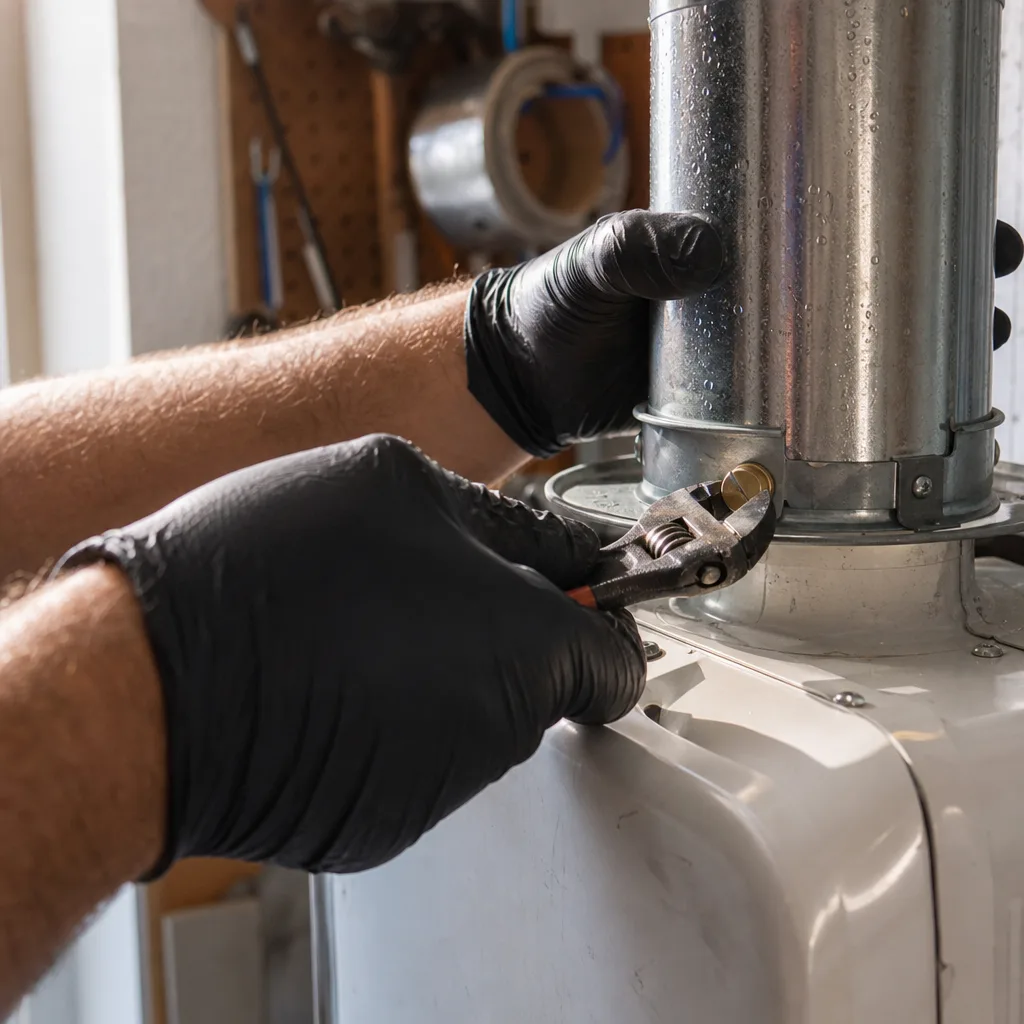
So let’s walk through what our quotes look like, and what you should ask any company you’re talking to.
- Typical price range: $3,000-$6,500 for a tankless water heater installation.
- Most common job: $3,700-$5,100. That’s a standard like-for-like job using your existing connections with no major changes. It covers the equipment and materials plus professional installation, startup, and testing.
- Included: equipment and materials, professional installation, standard connections, startup and testing, and haul-away of your old unit.
- Not included unless the quote says so: duct, electrical, or plumbing changes, code corrections, and permits.
That last line matters most. If your quote doesn’t say whether permits or code fixes are covered, ask. You don’t want to find out halfway through the job.
A few things can move your price up or down. Your quote should name the ones that apply to your home.
- Size and capacity. A unit that keeps up with two showers and a dishwasher at once costs more than a smaller one.
- Efficiency, brand, and model. Higher-efficiency units cost more up front.
- Ease of access. A heater in a tight attic or closet takes more time than one in an open garage.
- Condition of your existing plumbing and wiring. Old lines that won’t work with the new unit add cost.
- Code upgrades and permits.
- Venting and custom fabrication. With a gas tankless unit, the quote should spell out the venting, because a tankless heater doesn’t vent the same way an old tank does.
If you’re switching from a tank to tankless for the first time, expect a closer look at your gas line, venting, and electrical. A straight swap of one tankless unit for another is usually simpler, and that’s often where the $3,700-$5,100 range fits.
There’s also a $26-$99 service-call fee for the visit. If you go ahead with Xtreme Air Services, that fee is credited toward the job, so you’re not paying twice.
If the total is more than you planned for, flexible financing is available on qualifying installations and larger jobs, on approved credit. Ask about it when you get your quote. It’s better to know your options before you decide than after.
One more thing to watch for. A quote that’s just one number with no breakdown isn’t really a quote. You should be able to see what you’re paying for and point to anything that could change. That’s how we do upfront flat-rate pricing. You see it, you approve it, and that’s the price.
Signs Your Water Heater Needs Replacing, Not Just Repair
Not every water heater problem means it’s time for a new one. Some fixes are small and worth doing. Others are your heater telling you it’s near the end. Here’s how to tell the difference before you spend a dime.
These signs usually point to replacement:
- Water is leaking from the tank itself. If the metal tank is wet or there’s a puddle under it and it’s not coming from a pipe or valve, the tank has likely failed inside. A tank can’t be patched.
- Your hot water looks rusty or brown, but only on the hot side. That can mean the inside of the tank is rusting through.
- You hear rumbling, popping, or cracking when it heats. That’s usually built-up sediment at the bottom of the tank. Flushing can help early on, but once it’s heavy, the heater works harder and wears out faster.
- You run out of hot water a lot sooner than you used to, even though nothing in your home has changed.
- It’s old. Look at the sticker on the side of the tank. The serial number often includes the year it was made. If it’s well past its expected life and acting up, putting money into it rarely pays off.
- You keep calling for repairs. One fix is normal. Three fixes in a couple of years is a pattern.
Hard water plays a big part here in North Texas. Minerals in the water settle in the bottom of a tank over time. That’s where a lot of the rumbling and lost capacity comes from. If you’ve got white crust on your faucets and shower heads, your water heater is dealing with the same buildup on the inside.
Now for the other side. These problems can often be fixed without replacing anything big:
- A leak at a fitting, a supply line, or the drain valve, not the tank body.
- A gas heater with a pilot that won’t stay lit. That’s often a small part, like a thermocouple, not the whole heater.
- An electric heater that gives you lukewarm water or none at all. A bad heating element or thermostat is a common cause, and both can be replaced.
- Water that’s too hot or not hot enough, which may just need a thermostat adjustment.
If your heater is fairly young and the problem is one of these, a repair is usually the smart move. We’d rather tell you that straight than sell you a tankless unit you don’t need yet. Xtreme Air Services handles water heater repair too, so you’re not stuck choosing between a company that only fixes and one that only replaces.
Here’s a simple way to think about it. Picture a tank that’s getting up there in years, rumbles every morning, and just started leaving a small puddle on the garage floor. Fixing it buys you a little time on something that’s already wearing out. That’s the moment when looking at tankless makes sense, because you’re paying for a new heater either way. The real question is which kind fits your home.
And if you’re not sure which group your problem falls into, that’s fine. A technician can look at it and tell you plainly whether it’s a repair or a replacement, and why.
Gas Line and Venting Work: Why It Changes the Job
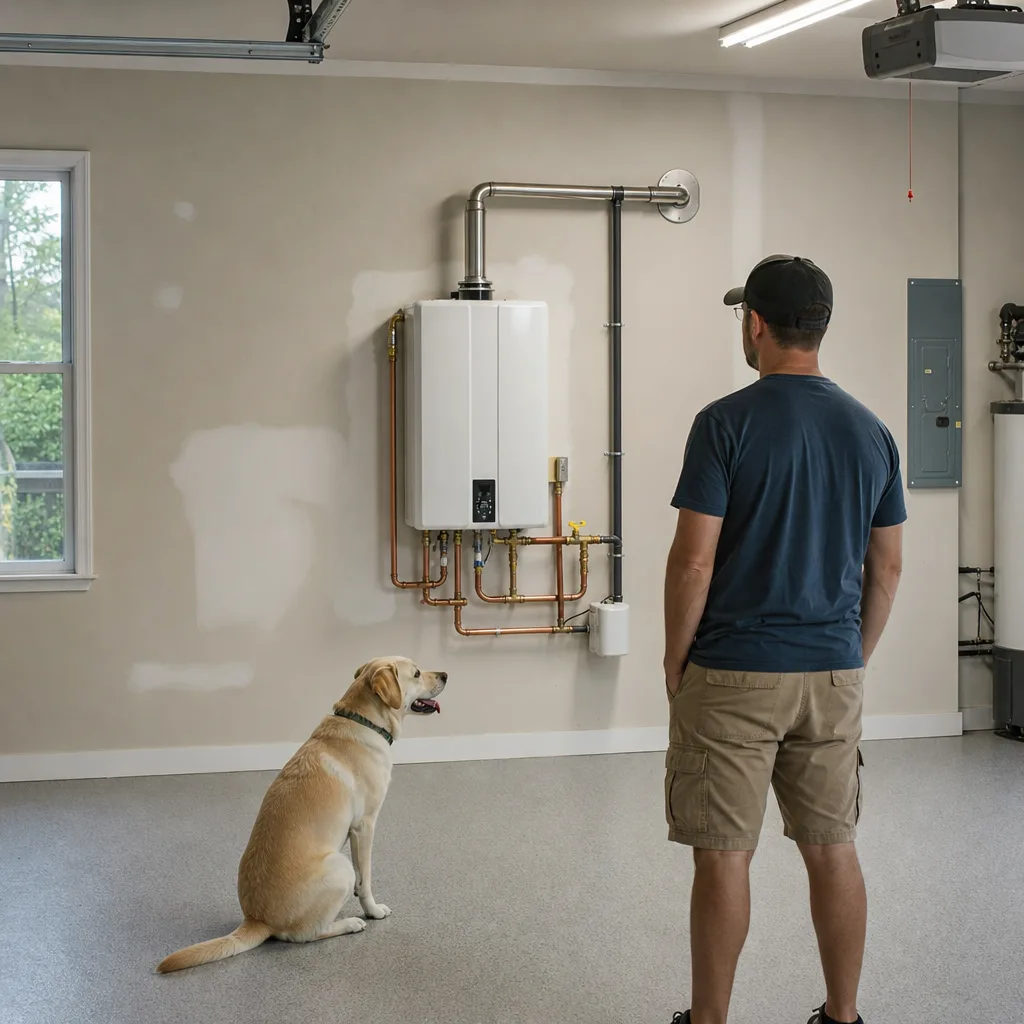
When you swap one tank for another, the new heater usually connects right where the old one was. Going from a tank to a gas tankless unit is different. The gas line, the vent, and sometimes the power have to be checked and often changed. That’s the main reason two tankless jobs on the same street can cost very different amounts.
A tank heats its water slowly over time. A tankless unit heats water the moment you turn on the tap, so it has to burn a lot of gas very fast. At full power, it can call for several times more gas than your old tank ever did.
Your gas line was sized for the tank, your furnace, your stove, and maybe a dryer. Add a tankless heater, and that same line may not carry enough gas for everything at once. You’d notice it when the shower goes lukewarm while the furnace is running. Fixing it can mean running a larger gas line from the meter to the heater. If your home needs it, Xtreme Air Services also handles gas line installation, so it’s the same team doing the whole job.
Venting is the other big change. Most gas tanks vent through a metal flue that goes up and out the roof, and the hot air rises on its own. A tankless unit uses a fan to push its exhaust out through a sealed vent. That vent has to be the type and size the maker calls for, so the old flue usually can’t be reused. In most homes, a new vent run goes in, often through a side wall or the roof.
Here’s what can come up during a tank-to-tankless switch:
- A bigger gas line, so the heater gets enough gas even when your other gas appliances are running.
- A new sealed vent, with the old flue capped or taken out.
- A condensate drain. High-efficiency condensing units make water as they run, and that water needs somewhere safe to go.
- A standard outlet near the heater. Even gas tankless units need power for the fan and controls.
- A new spot for the unit, if the old tank’s closet or attic space doesn’t work for the vent.
Electric tankless units skip the gas and vent work, but they bring their own big question. They can draw a lot of power, and some homes need heavy new circuits or a panel upgrade to handle that. Our team does electrical panel replacements and upgrades, so you won’t be waiting on a second company.
If the heater goes on an outside wall, North Texas freezes matter too. A hard cold snap can damage an outdoor unit or its water lines if they aren’t protected, so where the heater goes is part of the plan from day one.
None of this means your home needs every item on that list. Some homes already have a big enough gas line, or a spot where the vent is easy. The point is to know before the work starts. A good technician checks your gas line, your vent path, and your power on the first visit, then puts any needed changes in writing on your quote. That way, the price you approve is the price for your actual home.
Ready when you are – get in touch today.
Call Today, Get Service Today. Xtreme Air Services — West Plano is ready to help.
When a Tank Water Heater Still Makes Sense
Tankless isn’t the right call for every home. We install both kinds of water heaters, so we don’t need to push you one way. Here are the times a regular tank is the smarter choice.
- Your budget is tight right now. A tank swapped for a tank usually costs less up front than a first-time tankless switch. If you need hot water back this week and the money isn’t there for gas line or vent changes, a new tank gets you there.
- You plan to move in the next few years. A tankless unit saves money a little at a time, month after month. If you sell the house soon, you may pay for the upgrade and never get the savings back.
- Your home would need a lot of changes. If the gas line, vent path, or electrical panel all need big work, that cost can stack up fast. Sometimes it’s worth it. Sometimes it isn’t, and a tank that drops right into the old spot makes more sense.
- Lots of people use hot water at the same time. One tankless unit can only heat so much water at once. If two showers, the washer, and the dishwasher all run together every morning, you may need a larger unit or even two. A big tank can handle that rush for less money.
- You want hot water when the power’s out. A gas tankless heater needs electricity for its fan and controls. Many standard gas tanks with a pilot light keep heating water even when the power goes out. If winter storms and outages worry you, that counts for something.
There’s also the case we covered earlier. If your tank is fairly young and the problem is a small part, fix it. Don’t replace a heater that still has good years left just because tankless sounds nice.
Upkeep is worth thinking about too. Tankless units do need care. With the hard water we have in North Texas, minerals can build up inside the heater over time, so it needs a regular flush to keep running well. Some homeowners pair it with a water softener to cut down on that buildup. If you’d rather not think about your water heater at all, that’s a fair reason to stay with a tank.
Picture a couple in Plano with a 12-year-old tank that just started leaking. They plan to downsize in two years, and their gas line would need to be replaced to feed a tankless unit. For them, a new tank is the sensible choice. Now picture a family that plans to stay put, already has a big enough gas line, and is tired of cold showers at the end of a busy morning. Tankless starts to look a lot better.
The point is that the right heater depends on your home and your plans, not on what’s newest. A good technician should be willing to tell you when a tank is the better fit. If they won’t, keep looking.
Watch Our Video
See How We Handle Tankless water heater installation in Plano
Xtreme Air Services — West Plano
How Long a Tankless Water Heater Lasts and What Upkeep It Needs
A tankless water heater can last a long time, often around twice as long as a standard tank. Many units keep going for 20 years or more when they’re cared for. A tank usually gives you somewhere around 8 to 12 years. That longer life is a big part of why the higher up-front cost can make sense, but only if you keep up with the care.
The main job is getting rid of mineral buildup. We already talked about hard water and why it matters here. In a tankless unit, the minerals don’t settle in a tank bottom. They coat the small heat exchanger, which is the part that heats your water. A thin layer of scale makes the unit work harder. A thick layer can slow your hot water, trigger error codes, and shorten the heater’s life.
Here’s what regular upkeep looks like:
- A descaling flush. Water and power to the heater are shut off. A small pump then circulates a mild cleaning solution, often plain white vinegar, through the unit for about an hour. Most units are flushed about once a year. Homes with very hard water may need it more often.
- Cleaning the inlet filter. Most units have a small screen where the cold water comes in. It catches grit and can clog over time. Rinsing it is quick and easy.
- Keeping the vent clear. Look at the vent outside now and then. Leaves, nests, or wasp mud can block it.
- Keeping the power on in a freeze. Many units have built-in freeze protection, but it needs electricity to work. If you shut off the breaker during a cold snap, you turn that protection off too.
Here’s the honest part. If your heater has service valves on the water lines, you can do the flush yourself with a cheap pump kit and a couple of buckets. Lots of handy homeowners do. Ask your installer to put in service valves so this stays an easy job. If you’d rather not deal with hoses and vinegar, a technician can do it for you.
A water softener can cut down on how much scale builds up, so you don’t have to flush as often. Xtreme Air Services installs water softeners too, but you don’t need one to own a tankless heater. It just makes the upkeep lighter.
Call for service if you notice any of these:
- Water that swings between hot and cold during a shower
- An error code on the display that comes back after a reset
- Hot water that takes longer to show up than it used to, or comes out slower
- Water dripping from the unit or its condensate line
Most of these come down to scale, a dirty filter, or a single part. A heater that’s looked after can keep giving you endless hot water for many years, and that’s the payoff you’re paying for when you install one.
Call now
Frequently Asked Questions
Common questions about Tankless water heater installation
How hard is it to install a tankless water heater?
It’s more involved than swapping one tank for another, but it’s very doable for a licensed plumber. The gas line, venting, and sometimes the electrical all need to be checked, since a tankless unit burns gas faster and vents differently than a tank. That’s why a technician should look at your gas line, vent path, and power before quoting the job, so there are no surprises once work starts.
Is it worth replacing a tank water heater with a tankless?
It depends on your home and how long you plan to stay in it. A tankless unit can last around 20 years or more with regular care, about twice as long as a typical tank, so the higher upfront cost pays off over time if you’re staying put. If you’re moving in a year or two, or your home would need a lot of gas line and vent changes, a tank may still make more sense.
How much does your electric bill go up with a tankless water heater?
A gas tankless unit uses very little extra electricity, just enough to run its fan and controls, so the change on your electric bill is small. An electric tankless unit is different, since it draws a lot of power to heat water on demand, and some homes need a bigger circuit or even a panel upgrade to handle it. Ask your technician which type fits your home’s wiring before you decide.
Ready to Get Started?
Call (469) 217-9095 Today, Get Service Today.