


One-Stop Commercial HVAC, Plumbing & Electrical Service in Plano
One licensed team for your building's HVAC, refrigeration, plumbing and electrical, instead of juggling four contractors.
What’s Covered on This Page
- What One-Stop Commercial Service Covers
- Signs Your Business Needs a Multi-Trade Vendor Now
- When a Single-Trade Repair Is the Better Fit
- How Pricing Works for Multi-System Commercial Jobs
- What Happens During a Coordinated Service Visit
- Can you work on a building with multiple tenants and a property manager?
- Do you charge extra for emergency calls on nights or weekends?
- What should I have ready before calling for a quote?
What One-Stop Commercial Service Covers
Most businesses don’t run on one system. They run on four, and they all lean on each other. Your rooftop unit needs power. Your walk-in cooler needs power, refrigerant, and a clear drain line. Your restrooms and kitchen need hot water and working drains. When one piece fails, the others often feel it too.
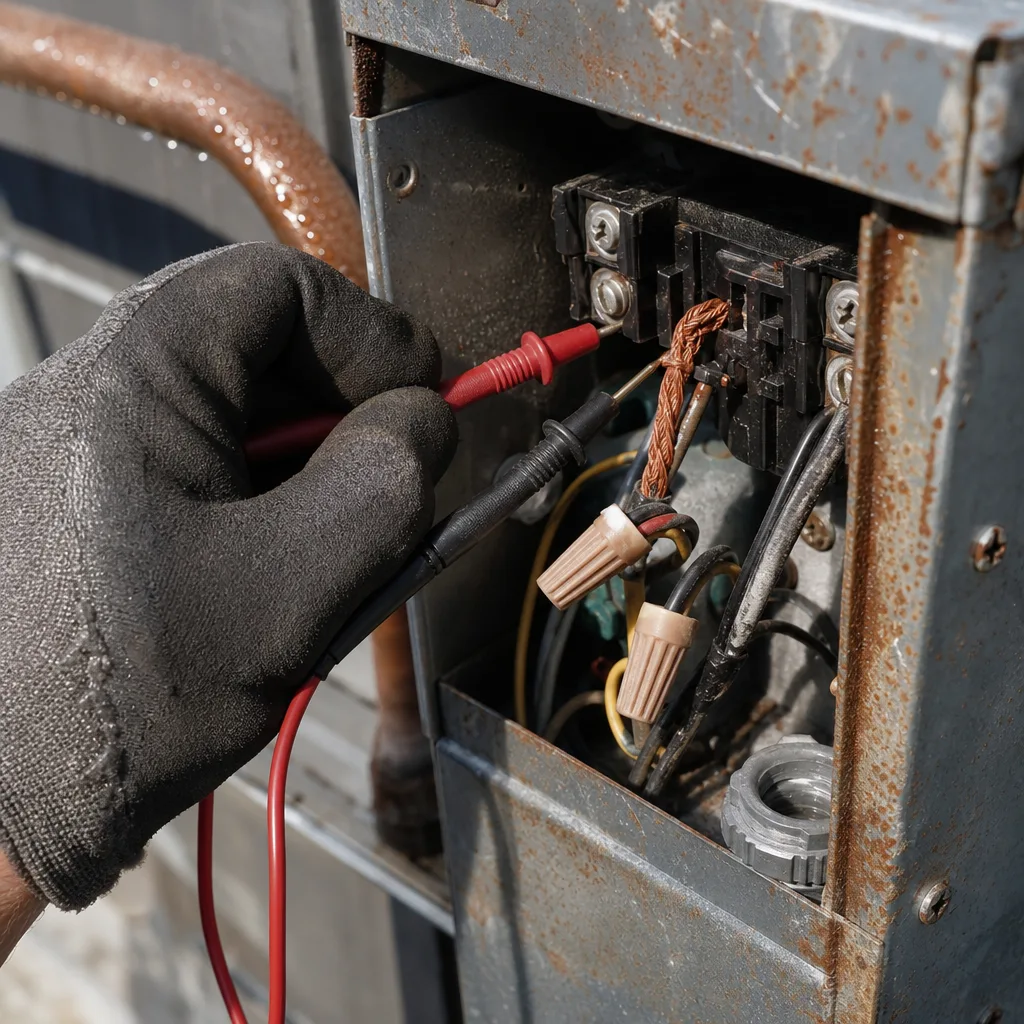
One-stop commercial service means one team covers all four trades for your building. Here’s what that can include:
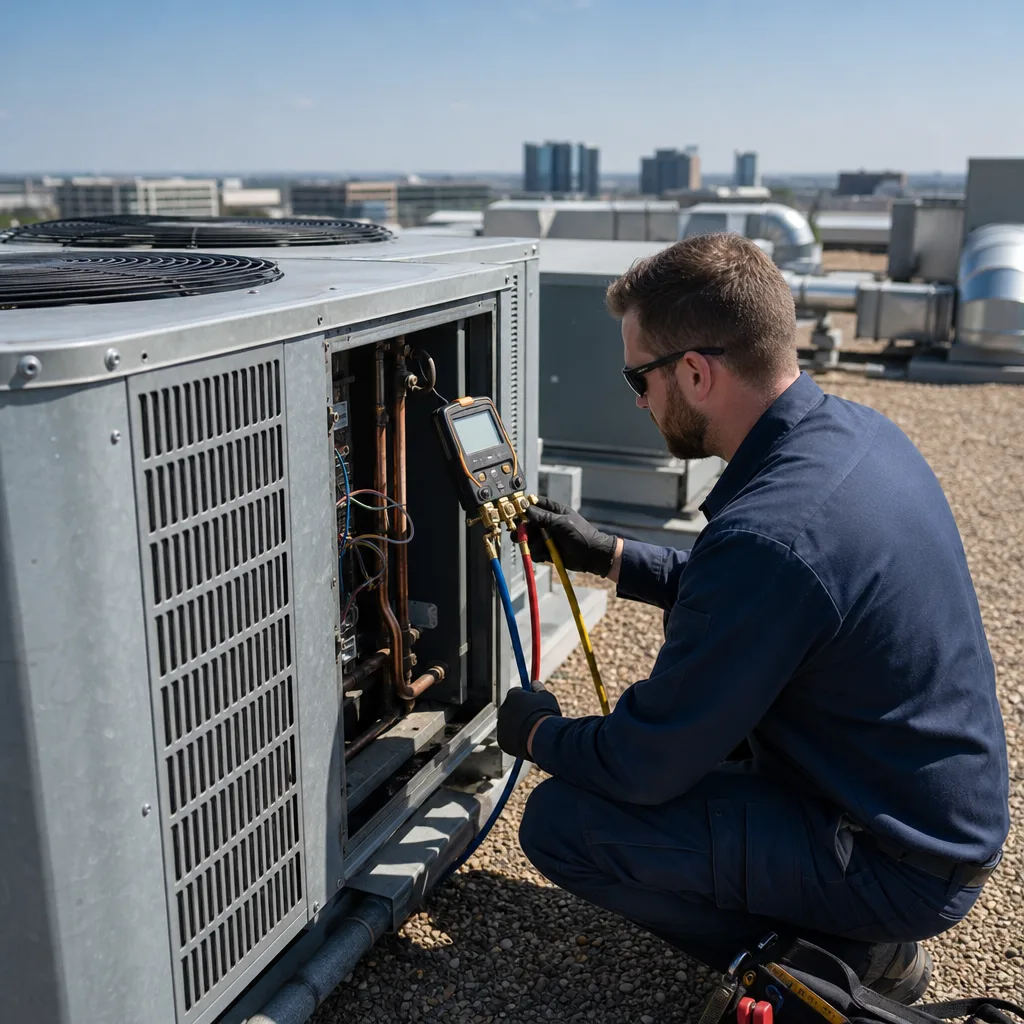
- HVAC: rooftop unit (RTU) service, commercial HVAC repair and maintenance, commercial ductwork, make-up air systems, and building automation and controls.
- Refrigeration: walk-in cooler repair, walk-in freezer repair, ice machine repair, and refrigeration leak detection.
- Plumbing: commercial plumbing, commercial water heaters, backflow testing, and drain and sewer work.
- Electrical: commercial electrical work, electrical troubleshooting, panel repair, dedicated circuits, and lighting.
- Kitchen and air: commercial kitchen ventilation, exhaust hoods, and commercial duct cleaning.
- Ongoing care: commercial preventive maintenance to catch small problems before they shut you down.
You don’t need every item on that list to get value from one vendor. A small office might only need its rooftop units, restrooms, and lighting covered. A restaurant might need almost everything, from the exhaust hood to the ice machine. Scope and pricing are set per building, so your plan matches what’s really on your property.
Here’s where a single team really pays off. Say your walk-in cooler stops holding temperature on a Friday afternoon. The cause could be a refrigeration problem, like a refrigerant leak or a failing compressor. It could be electrical, like a tripped breaker or a bad circuit. It could even be a clogged condensate drain backing up into the box. With separate vendors, you might call the refrigeration company first, only to hear it’s an electrical issue. Then you wait on an electrician while your inventory warms up. With one team covering every trade, nobody gets to say “that’s not our department.” The person looking at your problem is responsible for finding the cause, no matter which trade it lands in.
That matters in North Texas. Long summers push rooftop units and refrigeration hard, often for months at a time. Equipment working that hard for that long tends to show weak spots, and those weak spots don’t always stay inside one trade.
So what’s in and what’s out? Included is coordinated multi-trade service under one vendor. That means one point of contact for HVAC, refrigeration, plumbing, and electrical needs in your building. Anything outside that is itemized in the scope you agree to up front, so you know where the lines are before work starts. Large installs, like a full rooftop unit replacement or a new walk-in freezer, are quoted separately. Financing is available on qualifying installations and larger jobs, on approved credit.
Signs Your Business Needs a Multi-Trade Vendor Now
You don’t need a crisis to make the switch. Most businesses notice a slow pile-up of small headaches first. If a few of these sound like your week, it’s probably time to look at one vendor for your whole building.
- You keep a list of four or five contractor phone numbers, and you have to stop and think about which one to call.
- The same problem keeps coming back. A tech fixes what’s in front of them, but the real cause sits in a different trade, so nobody fully solves it.
- Your staff has to let contractors in on three different days in the same month, and each visit pulls someone away from customers.
- Maintenance only happens after something breaks. Nobody owns the schedule for your rooftop units, water heater, and electrical all at once.
- You can’t easily say what you spend on building upkeep in a year, because the bills come from different companies in different formats.
- You’re planning a change, like adding a cooler, a new kitchen line, or more office space, and it will touch power, plumbing, and air at the same time.
That last one catches a lot of owners off guard. Say you’re adding a second ice machine. It needs a water line, a drain, and its own circuit. It also puts more heat into a room your HVAC was sized for before the machine was there. With separate vendors, you’re the one keeping four schedules in line. With one team, that planning happens on our side.
Weather in North Texas can also show you where the gaps are. A hard freeze can hit your heating, your exposed pipes, and your electrical load in the same night. A long summer stretch works rooftop units and refrigeration at the same time. When several systems are under stress at once, waiting on three companies to show up one after another is how a small problem turns into a closed day.
Keep an eye on the money side too. Separate trip fees, separate minimums, and separate invoices add up, even when each one looks small. One vendor doesn’t promise a lower bill. What it gives you is one clear picture of your building and one place to ask questions about it.
If you counted two or more signs on that list, it’s worth a conversation. Scope and pricing are set per building, so you can see what one vendor would cover for your property before you decide anything.
When a Single-Trade Repair Is the Better Fit
Not every problem needs a bigger plan. Sometimes the right answer is one repair, done right, and then you get back to work. Here’s when a single-trade call makes more sense than setting up a full scope for your building.
The problem is clearly one thing, and it’s isolated. A dripping restroom faucet or a light fixture that quit in the break room is a one-trade job. If nothing else in the building is acting up and the issue isn’t coming back over and over, you don’t need to plan around it. Get it fixed and move on.
Your landlord controls the building systems. If you lease a suite in a multi-tenant building, read your lease before you hire anyone. In many leases, the property owner or manager handles the rooftop units, the main plumbing lines, and the electrical service. Your share might only be what’s inside your walls, like your outlets, your sink, or your thermostat. If that’s your setup, a multi-trade scope for the whole building isn’t yours to buy. Call your property manager first. Then hire out only the pieces the lease says are on you.
You’re about to move or close the space. If your lease ends in a few months or you’re moving to a new location, it doesn’t make sense to set up ongoing service for a building you’re leaving. Handle repairs as they come up, and keep the bigger conversation for your next space. That’s also the best time to plan things like circuits, drains, and airflow, before the build-out is finished.
Your own staff can handle the small stuff. Some tasks don’t need a licensed tech. Swapping a burned-out bulb, keeping trash and boxes away from your outdoor condenser, or making sure floor drains aren’t covered by mats are everyday chores. A good vendor won’t push you to pay for work your team already does well.
There’s one thing to watch for, though. If your staff keeps doing the same fix again and again, like resetting the same tripped breaker or clearing the same slow drain every week, that’s no longer a small chore. It’s a sign something underneath needs a real look. A breaker that keeps tripping should be checked by a licensed electrician, not just reset.
Here’s a quick way to decide. Ask yourself three questions:
- Is this the first time this problem has shown up?
- Does it involve only one trade, with no ripple effect on anything else?
- Am I responsible for this system under my lease?
If you answered yes to all three, a single repair is likely all you need. If you hesitated on any of them, it’s worth looking a little deeper before you decide. Either way, you should be the one making the call, with honest information in front of you.
Not sure what your One-stop commercial service project needs? Ask us.
Call Today, Get Service Today. Xtreme Air Services — West Plano is ready to help.
How Pricing Works for Multi-System Commercial Jobs
There’s no single price tag for one-stop commercial service, and you should be careful with anyone who gives you one before they know your building. Our pricing is quote-based and varies by scope. Your quote is a custom quote, built around the systems you have.
Four things move that number up or down:
- Building size. A 3,000-square-foot office and a 20,000-square-foot retail space need very different amounts of work, even if they have the same types of equipment.
- Number of systems. Two rooftop units cost less to cover than six. One walk-in cooler costs less than a cooler, a freezer, and two ice machines.
- Service frequency. How often you want routine visits changes the scope. A restaurant kitchen running hard all summer may need more frequent attention than a quiet office.
- The mix of trades. Some businesses need all four trades. Others only need HVAC and electrical. You pay for the trades in your scope, not a bundle you’ll never use.
Here’s a quick way to picture it. Say you run a small medical office off Park Boulevard with two rooftop units, a water heater, and standard lighting. Your scope is fairly simple. Now say you run a restaurant with an exhaust hood, a make-up air system, a walk-in freezer, an ice machine, and grease-heavy drains. That’s more systems, more trades, and more frequent care, so the quote reflects that. Both owners get a price built for their own building.
When something breaks and we come out, there’s a $26-$99 service-call fee. If you go ahead with the repair through Xtreme Air Services, that fee is credited toward the repair. You’re not paying twice just to find out what’s wrong.
Large installs work differently. Replacing a rooftop unit or adding cold storage is quoted separately from your regular scope. Financing is available on qualifying jobs like these, on approved credit.
You can speed up your quote by having a few things ready. These include a rough count of your rooftop units, coolers, freezers, ice machines, and water heaters, your building’s square footage, and a short list of the problems that keep coming back. If you lease, have your lease handy so you know which systems are yours to cover.
Before you hire any multi-trade vendor, us included, ask these questions:
- Exactly which systems and trades are in my scope, in writing?
- What’s excluded, and how will I be charged if I need it?
- Is there a service-call fee, and does it count toward the repair?
- Will I see and approve the price before any work starts?
- Are your technicians licensed and insured for every trade you’re covering?
Clear answers to those questions mean you’ll know what you’re paying for and where the lines are. You also won’t get a surprise invoice from a trade you didn’t know was outside the deal.
Call now for your custom quote
Watch Our Video
See How We Handle One-stop commercial service in Plano
Xtreme Air Services — West Plano
What Happens During a Coordinated Service Visit
A coordinated visit starts with the problem you called about. Then it checks the systems tied to that problem, so the fix goes after the real cause and not just the symptom. You shouldn’t have to guess which trade to ask for. You describe what’s going wrong, and the visit follows the problem wherever it leads.

You can help the visit go faster before anyone shows up:
- Tell us everything that’s acting up, not just the worst issue. A warm dining room and a breaker that tripped last week might be the same story.
- Note when the problem happens. It might start at the lunch rush, only on hot afternoons, or right after the dishwasher runs.
- Plan for access to the roof hatch, the electrical room, the water heater closet, and any locked back rooms.
- Let your staff know someone is coming so they aren’t caught off guard in the middle of service.
Here’s how one problem can cross trades. Say your kitchen feels like an oven by mid-afternoon. The back door is hard to pull open, and the cooks say the hood doesn’t seem to clear the smoke like it used to. That pattern often points to the make-up air system, the unit that brings fresh air back in to replace what the exhaust hood pulls out. When it stops keeping up, the hood fights for air and the room gets hot and stuffy.
The cause could be a bad motor or belt on the HVAC side. It could be a tripped breaker or a failed control on the electrical side. It could also be a clogged filter that nobody has changed. A coordinated visit can check all of that in one trip instead of three.
Timing matters as much as the fix. Same-day service is available, and there’s no extra charge for nights or weekends. If the best time to work on your rooftop unit is after you close, or on a Sunday when the dining room is empty, you don’t pay more for that choice. In a North Texas summer, waiting until Monday can mean a weekend of lost sales.
Before any repair starts, you should know exactly what was found and what it costs. With our upfront flat-rate pricing, you see the price and approve it before work begins, so there’s no meter running while you wait. If the fix turns out to be a large install, like replacing a rooftop unit, that gets its own quote. You decide on it separately and nothing gets added in the moment.
The people doing the work are licensed and insured technicians who are background-checked and drug-tested. That matters when they’re walking through your kitchen, your stockroom, or an office full of patient files.
Before the tech leaves, you should be clear on three things. You should know what was fixed, what to keep an eye on, and whether anything else in the building looked like it’s heading toward trouble. If you’re not sure about any of those, ask. A good visit leaves you with answers, not more questions.
Call 469-217-9095
Frequently Asked Questions
Common questions about One-stop commercial service
Can you work on a building with multiple tenants and a property manager?
Yes, but check your lease first before setting up a multi-trade scope. In many multi-tenant buildings, the property owner or manager handles the rooftop units, main plumbing lines, and electrical service, while your scope only covers what’s inside your suite. Call your property manager first, then we can price out only the pieces that are yours to cover.
Do you charge extra for emergency calls on nights or weekends?
No, same-day service is available with no extra charge for nights or weekends. If your rooftop unit needs work after you close, or your walk-in cooler fails on a Sunday, you pay the same rate as a weekday visit. That matters most in summer, when waiting until Monday can mean a weekend of lost inventory or sales.
What should I have ready before calling for a quote?
Have a rough count of your rooftop units, coolers, freezers, ice machines, and water heaters ready, plus your building’s square footage. Also jot down any problems that keep coming back, like a breaker that trips often or a drain that backs up. If you lease your space, pull out your lease so you know which systems are your responsibility to cover.
Ready to Get Started?
Call (469) 217-9095 Today, Get Service Today.