


Whole-Home Standby Generator Installation in Plano
Turnkey standby generators sized to your home's real load – gas line, panel, permits and startup handled as one job.
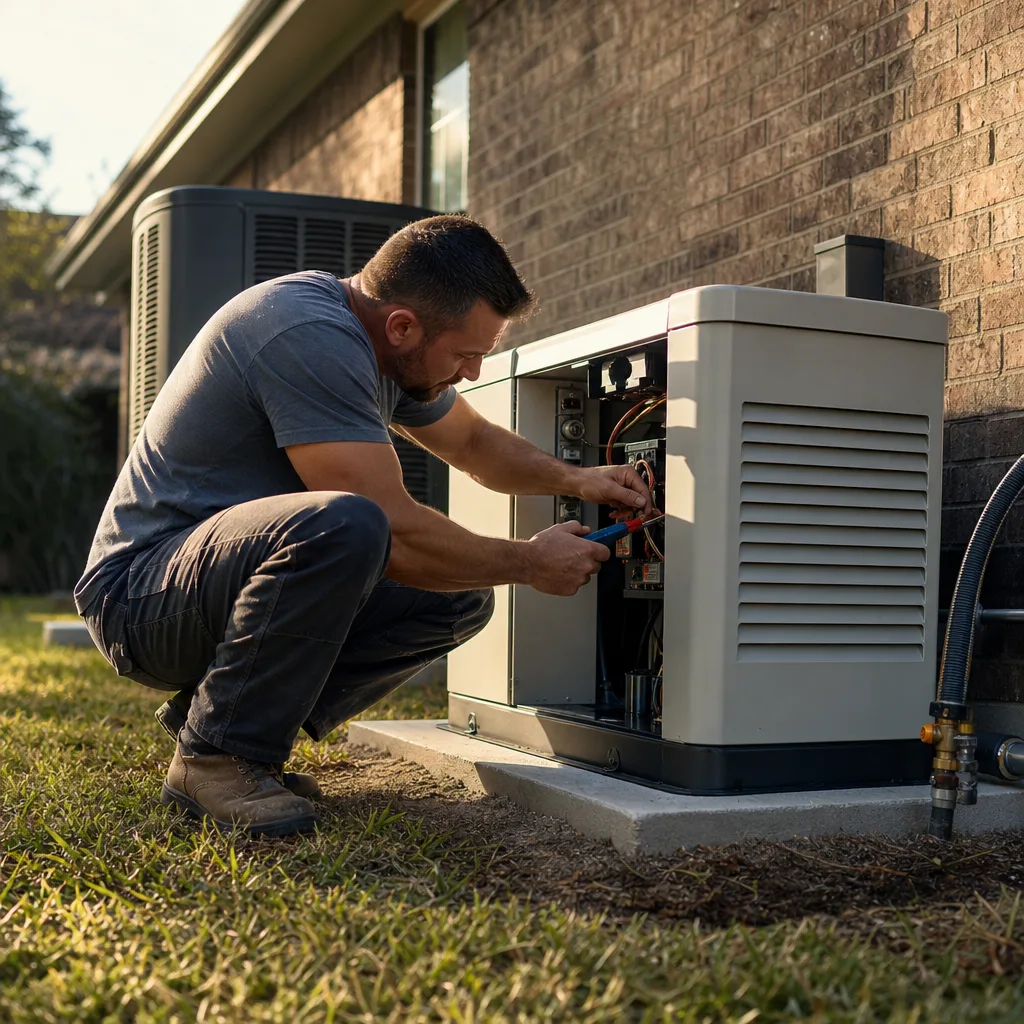
What’s Covered on This Page
- Whole-Home Standby vs. Portable Generators: Picking the Right Fit
- Sizing Your Generator to Your Home’s Electrical Load
- What a Turnkey Installation Includes
- Transfer Switches and Gas or Electrical Panel Work
- Why You Can’t Just Plug a Generator Into an Outlet
- Is a whole-home standby generator a tax write-off?
- Do I need a permit to install a standby generator in Plano?
- What happens during a generator startup and test after installation?
Whole-Home Standby vs. Portable Generators: Picking the Right Fit
Both machines make power. The difference is how much power, for how long, and how much work they ask of you when the lights go out.
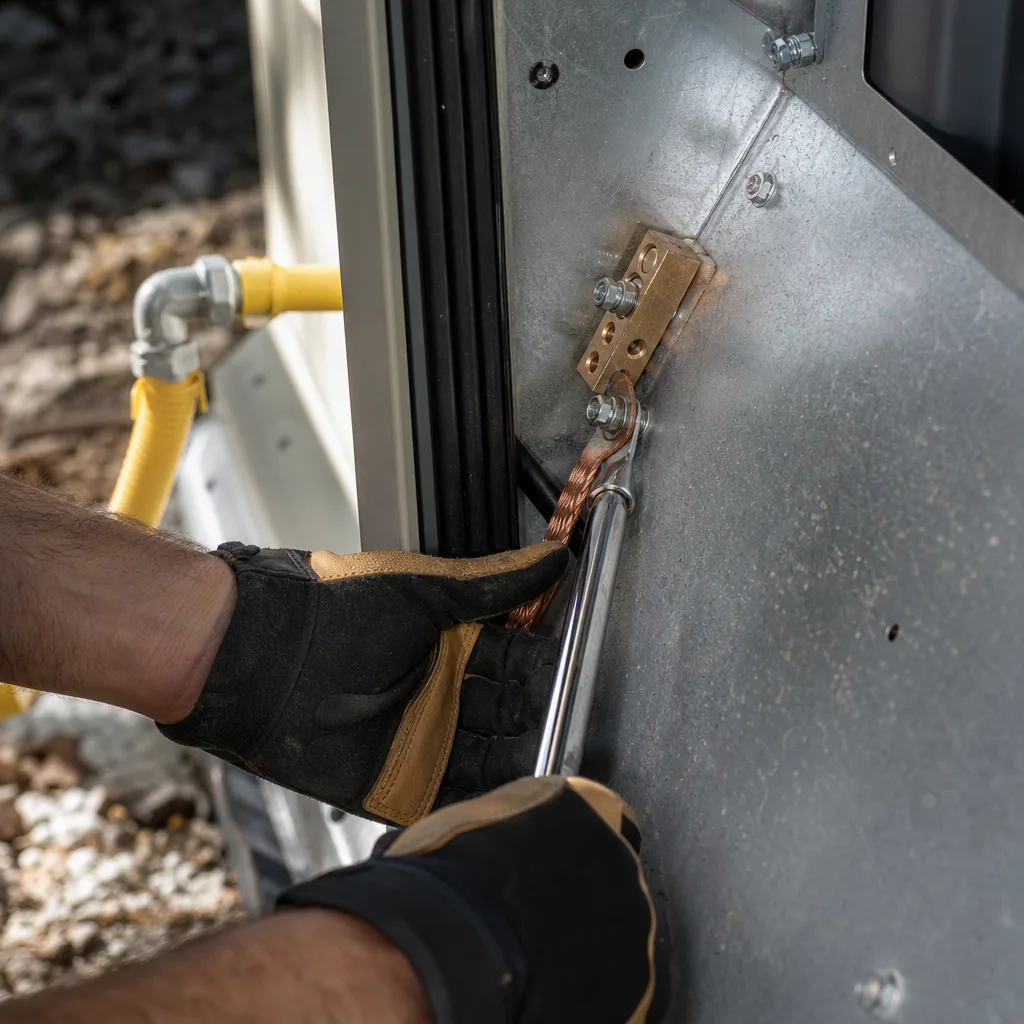
A portable generator might be all you need. That’s true if most of these describe you:
- Your outages usually last a few hours, not days.
- You only want to keep the fridge, a few lights, phone chargers, and maybe a fan going.
- Someone is home and able to set it up, fuel it, and keep it running outside.
- You’re okay storing gasoline and checking on the generator through the night.
If that sounds like you, a standby system may be more than you need. A good portable unit with a safe way to connect it can do the job. We also offer portable generator hookup and transfer switch installation. A transfer switch lets the generator feed the circuits you pick, so you don’t have extension cords running all over the house.
A standby generator works differently. It sits on a pad outside your home, runs on your natural gas line, and is wired to an automatic transfer switch. When Oncor’s power drops, the switch senses it, starts the generator, and moves your home over to backup power. You don’t lift a finger. When the grid comes back, it switches back and shuts itself off.
Standby is usually the better fit if:
- Someone in your home relies on powered medical equipment.
- You work from home and can’t lose your internet or office for a day or two.
- You travel, and a long outage could leave you with a spoiled freezer or frozen pipes while you’re gone.
- You want your central AC or heat running during an outage, not just a box fan.
- You’d rather not be outside refueling a machine during an ice storm or a thunderstorm.
Here in Plano, the outages that hurt most come with the weather. Spring and summer storms bring down limbs on power lines when it’s hot and the AC matters most. Hard winter freezes cut power right when your furnace and pipes need it. Most portable units aren’t sized to run a central AC system, and few people want to pour gasoline into one at 2 a.m. in sleet. If your home already has natural gas service, a standby unit can draw from that supply, so you’re not hunting for open gas stations after a storm.
Here’s the simplest way to decide. Picture the power going out tonight and staying out for three days. What would you need running? If the list is short, a portable generator is a smart, honest choice. If the list includes AC, heat, medical gear, a home office, or your family’s whole routine, a whole-home standby generator is the one that keeps up. If you’re stuck in the middle, a backup power assessment can show you which loads matter and what size system would handle them.
Sizing Your Generator to Your Home’s Electrical Load
The right generator size is the one that can start and run everything you want on at the same time, with a little room to spare. Too small, and it trips or stalls the moment your AC kicks on. Too big, and you’ve paid for power you’ll never use. Getting this right matters more than any other choice you’ll make, because the size sets both how well the system works and a big part of what it costs.
Generators are rated in kilowatts, or kW. That’s just a measure of how much power the unit can put out at once. Your home’s needs add up from every appliance, light, and motor that’s running.
Some loads count more than you’d expect. Anything with a motor, like your AC compressor, well pump, or fridge, pulls a quick burst of extra power when it starts up. That surge only lasts a second, but the generator has to handle it. In a Plano summer, your central AC is often the biggest single load in the house. It’s also the one most people care about keeping on, so it drives the size more than anything else.
These are the things that push the size up or down:
- Central AC: how many systems you have and how large they are. Two systems need a lot more power than one.
- Electric heat: a heat pump with backup heat strips or an electric furnace uses far more power than a gas furnace.
- Electric appliances: an electric range, dryer, or water heater adds a big load. If those run on gas, your needs drop a lot.
- Pool pumps, EV chargers, and shop tools: these add up fast if you want them on during an outage.
- Medical equipment: anything that has to stay on comes first when deciding what the system must cover.
You also have a choice in how you cover your home. A true whole-house setup is sized to run nearly everything at once. Another way is to manage your loads. That means the system briefly holds off a big item, like a second AC or the dryer, until there’s power to spare. Load management can let a smaller generator cover the whole house, as long as you don’t need every big appliance running at the same moment. It’s a fair trade for a lot of families, and it can keep the size and cost down.
Gas supply matters too. A standby generator burns natural gas, and a bigger unit burns more of it. Your gas meter and the line running to the generator need to deliver enough fuel to run it and your other gas appliances at full load. If they can’t, the generator may lose power right when you need it most. Sometimes that means a larger gas line or a meter upgrade, which is part of why gas line run and pressure show up as a cost driver.
Here’s what you should expect from any honest sizing. Someone should look at your electrical panel, ask what you want to run, check your AC and heat, and confirm your gas supply. A size picked from square footage alone is a guess. If you get a number without those questions, ask how they got there.
Generator size is the first thing on our list of what moves the price, followed by transfer switch type, gas line run and pressure, pad and site prep, distance to the panel, code upgrades, and permits. Our generator sizing and consultation service helps you match the unit to your home’s real load, so you’re not paying for more than you need or settling for less than you’ll miss.
What a Turnkey Installation Includes
Turnkey means you end up with a working system, not a box of parts and a list of other people to call. Our most common job is a whole-home standby generator with an automatic transfer switch, gas hookup, and pad, commissioned and tested before we call it finished. Most of those installs run $10,000 to $14,000. Across all the homes we quote, the typical range is $8,000 to $18,000. Where your home falls depends on the same factors from the sizing section above.
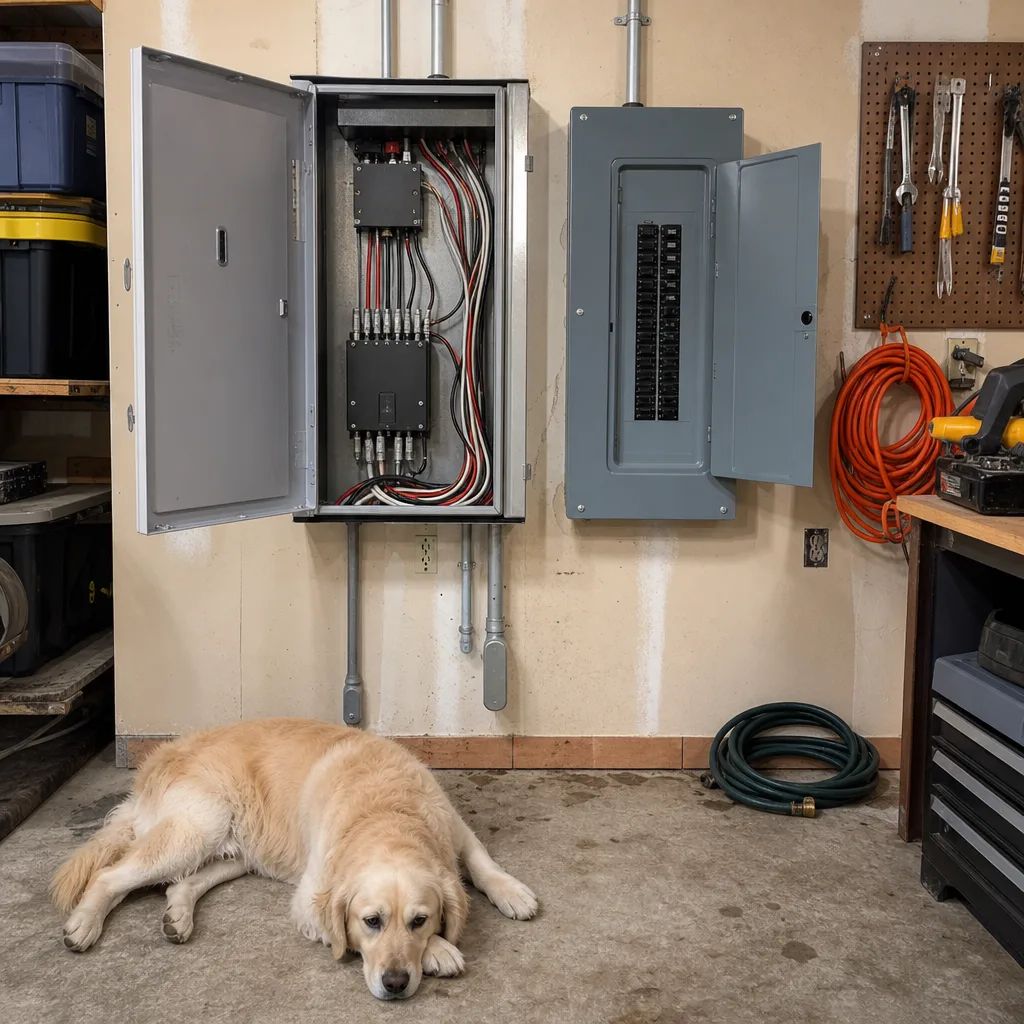
Here’s what’s included in a turnkey install:
- The generator, matched to the load you decided you need covered.
- The transfer switch, the part that moves your home between grid power and generator power.
- Professional installation, including setting the unit on its pad outside your home.
- Gas connections, so the generator draws from your natural gas supply.
- Electrical connections between the generator, the transfer switch, and your panel.
- Startup and testing, so you know the system works before the next storm, not during it.
It’s just as important to know what isn’t in that price. A quote that leaves these out without saying so is how people end up surprised later.
- Extensive gas or electrical service upgrades. If your gas meter or line can’t feed the generator at full load, that’s a separate job.
- Landscaping. If shrubs, beds, or sod need to move to make room for the pad, plan for that on your own or with your landscaper.
- Code corrections beyond the scope of the install. Problems that were already in the house before the generator showed up get priced separately.
- Permits, unless your quote says they’re included.
None of these are tricks. They’re the parts of the job that change a lot from one house to the next. One home might need nothing extra. The house down the street might need a bigger gas line and a few feet of hedges moved. Listing them separately keeps your base price honest instead of padding every quote for the worst case.
When you compare quotes from any installer, ask these questions so you’re comparing the same thing:
- Is the pad included, or is it billed separately?
- Are the gas and electrical connections both in the price?
- Is startup and testing part of the job?
- Who handles the permit, and is it in the number you’re looking at?
- If my gas supply needs an upgrade, how will you price that, and when will I know?
With us, you get upfront flat-rate pricing before any work starts, so you can see what’s in and what’s out while the decision is still yours. Our licensed and insured team handles the gas and electrical sides under one roof, so you’re not juggling a plumber and an electrician on the same project. If the total is more than you’d like to pay at once, flexible financing is available on qualifying installations and larger jobs, on approved credit.
Need help with Whole-home standby generator installation?
Call Today, Get Service Today. Xtreme Air Services — West Plano is ready to help.
Transfer Switches and Gas or Electrical Panel Work
The generator gets the attention, but the transfer switch, your panel, and the gas line decide how well the whole system works. They also explain most of the gap between a $10,000 install and one closer to the top of the range. If you know what to look for in your own home, the quote will make sense before anyone writes it.
Transfer switches come in a few types, and the right one depends on how you want your home covered:
- Whole-house automatic switch: installed between the meter and your main panel, so everything in the house can run on backup power. It pairs well with a generator big enough to carry the full load.
- Load-managed automatic switch: switches the whole house over, but includes controls that hold off big items until power frees up. This is the setup that lets a smaller generator cover more of your home.
- Circuit-level switch: covers only the circuits you pick, like the fridge, furnace, and a few rooms. It costs less, but anything not wired to it stays dark.
Your electrical panel is the next thing to check. A standby system ties into it, so its age and condition matter. Many Plano homes built decades ago still have their original panels. Some of those are full, some are worn, and some are brands that electricians don’t like to build onto. If your panel can’t safely take the new connection, it may need repair or replacement first. That’s a separate job from the generator, and it’s one of the code upgrades that can push a quote up. A newer home in a recent subdivision usually needs less work here, but it’s still worth confirming.
Distance matters more than most people expect. The farther the generator sits from your meter and panel, the longer the wire run between them. Thick copper wire isn’t cheap, and a long run may mean digging a trench across the yard. Plano’s clay soil shrinks and swells with dry summers and wet springs, so buried lines and conduit need to be laid with that movement in mind. Setbacks from windows, doors, and property lines also limit where the unit can go, so the closest spot isn’t always an allowed spot.
The gas side works the same way. Once your meter can supply enough fuel, the pipe from the meter to the generator has to be sized for its length. A longer run needs a wider pipe to keep pressure steady at full load. A generator set a few feet from the meter is a simple hookup. One set across a long side yard can mean larger pipe and more trenching.
Before you get quotes, walk outside and look. Where’s your gas meter? Where’s your electric meter and panel? Is there a flat spot near both that sits clear of windows and doors? Those three answers tell you a lot about whether your install will land near the middle of the range or need extra work.
Because we handle transfer switch installation, gas line installation, and electrical panel replacement or upgrades ourselves, any of this extra work can go on the same upfront quote. You see it before you decide, not halfway through the job.
Watch Our Video
See How We Handle Whole-home standby generator installation in Plano
Xtreme Air Services — West Plano
Why You Can’t Just Plug a Generator Into an Outlet
You can’t plug a generator into a wall outlet because the power doesn’t stay inside your house. It flows backward through your panel, out to your meter, and onto the Oncor lines on your street. This is called backfeeding. It can hurt the people trying to get your power back on, and it can start a fire in your own home.
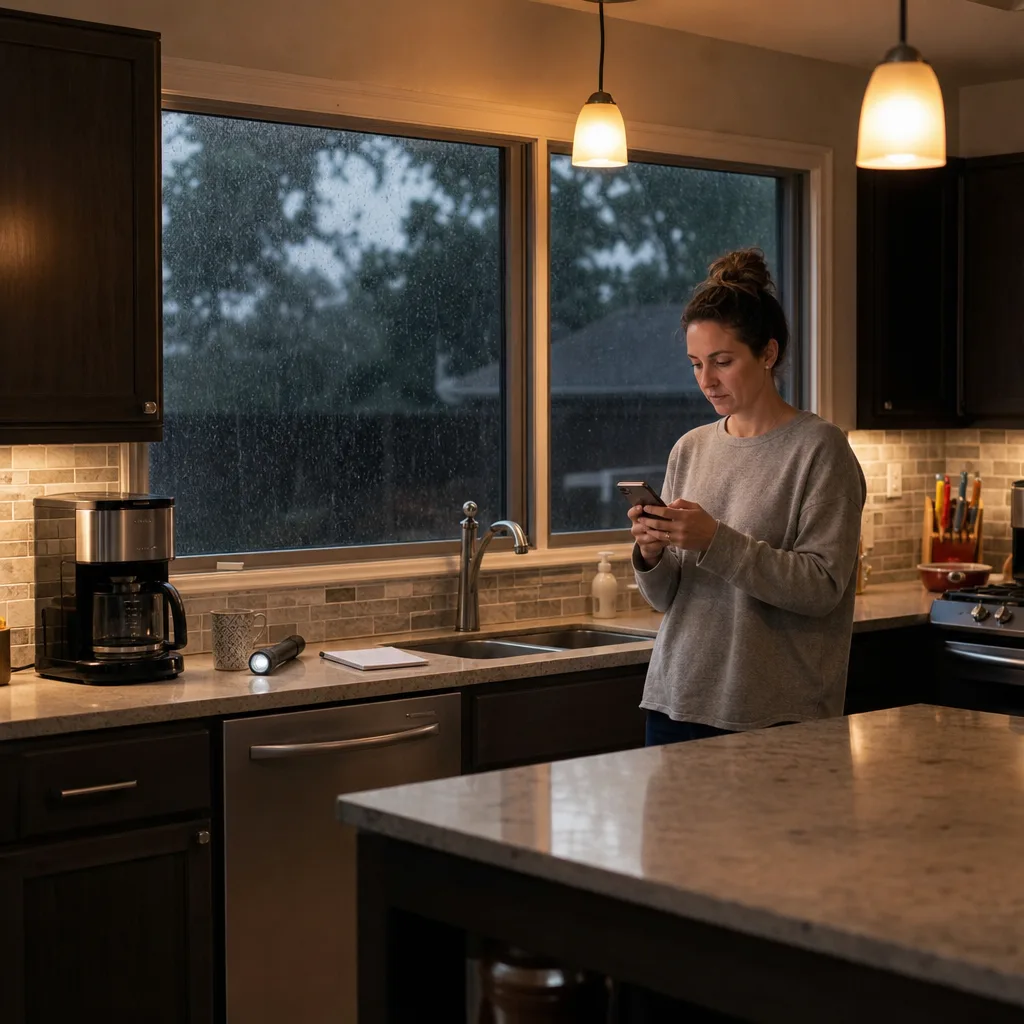
Some people still do it with a homemade cord that has a plug on both ends. It looks like a smart shortcut during a long outage. It’s one of the most dangerous things you can do with a generator, and it’s the main reason a proper connection matters so much.
Here’s what happens when power goes the wrong way:
- Line workers get hurt. The transformer on your pole works both ways. It can take the small amount of power from your generator and boost it to thousands of volts on the line. A crew working on what they think is a dead line after a storm can get shocked.
- Your neighbors are at risk too. That same live line can reach homes and downed wires near yours.
- Your wiring can overheat. A wall outlet and the wire behind it aren’t built to feed a whole house. Push too much power through them and they can melt or catch fire inside the wall.
- Your equipment can be ruined. When the grid comes back while your generator is still connected, the two sources collide. That can wreck the generator and damage things plugged in around the house.
That’s why every safe setup uses a transfer switch or a similar approved device between the generator and your panel. Its job is simple. It makes sure your home is connected to the grid or to the generator, never both at once. With a standby system, the automatic transfer switch does that for you every time the power drops, as we covered above.
This is also why a standby install involves real electrical work and, in most cases, a permit and inspection. Nobody’s adding steps for the sake of paperwork. The point is that a stranger on a pole two streets over stays safe, and that your home doesn’t take on a risk you can’t see.
If you already own a portable generator, you don’t have to choose between safety and using it. A proper portable generator hookup lets you run the circuits you care about without cords through windows or anything plugged into a wall outlet. If you’re moving up to a whole-home standby generator, the safe connection is built into the job from the start.
One more thing worth saying plainly. Any generator, portable or standby, belongs outside your home, never in a garage, porch, or crawl space. The engine makes carbon monoxide, a gas you can’t see or smell. A standby unit is set on its pad outside for that reason, so it can run through a three-day outage without you having to think about where it’s sitting.
Frequently Asked Questions
Common questions about Whole-home standby generator installation
Is a whole-home standby generator a tax write-off?
Usually not as a simple write-off, but it can qualify in special cases. If a doctor documents that the generator is medically necessary for someone in your home, it may count as a deductible medical expense. Talk to a tax professional about your specific situation before you count on any deduction.
Do I need a permit to install a standby generator in Plano?
Yes, a standby generator install needs a permit and inspection because it involves gas and electrical work tied into your home. Inside Plano city limits, the City of Plano handles the permit; if your home is in a neighboring city like Frisco or Carrollton, that city’s office does. A licensed contractor should pull it for you so there are no surprises.
What happens during a generator startup and test after installation?
Startup and testing confirms the generator runs your home before a storm ever hits. The technician checks that the automatic transfer switch correctly moves your home between grid power and generator power, and that the gas and electrical connections are solid. This step is part of a turnkey install, so you know the system works before you need it.
Ready to Get Started?
Call (469) 217-9095 Today, Get Service Today.