


Pool Plumbing Repair in Sunnyvale: Licensed Plumbers Fix Leaks Fast
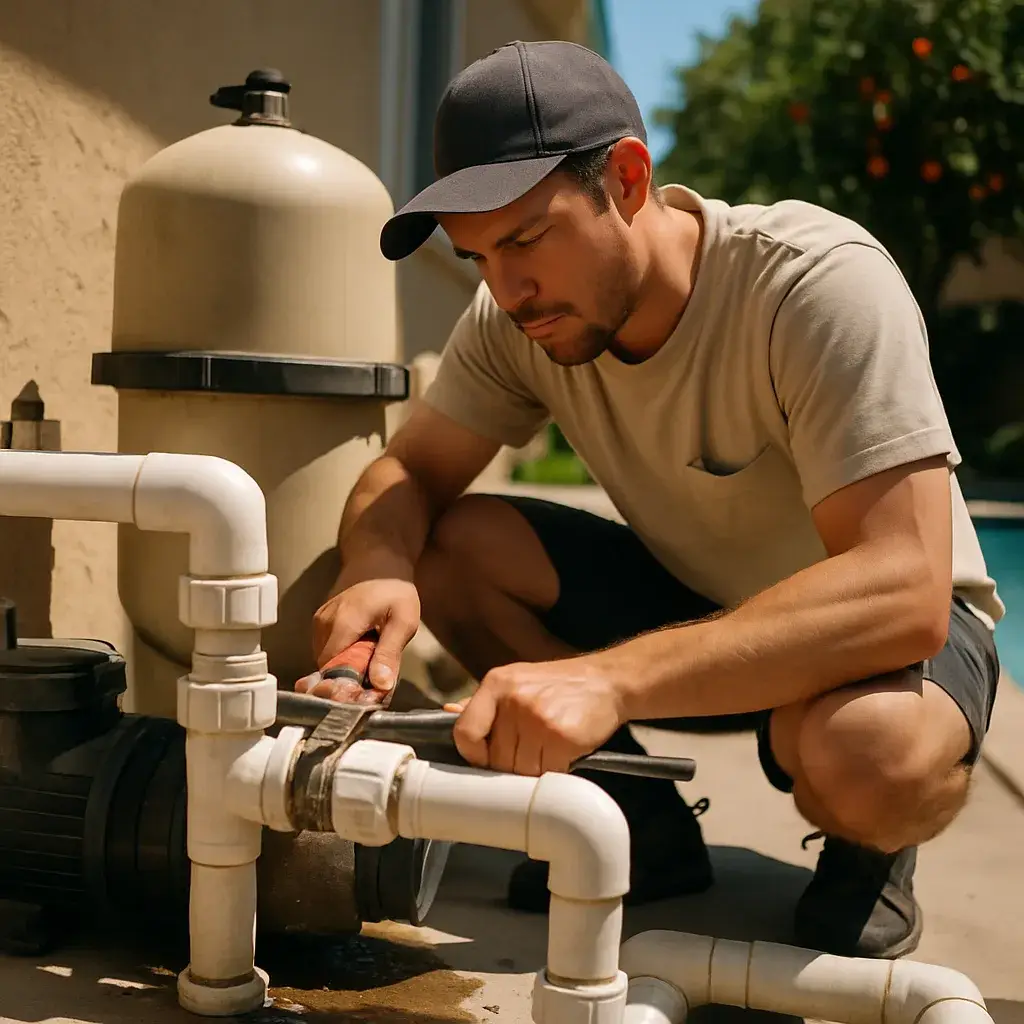
Pool supply lines, returns, and equipment-pad plumbing repaired where leaks hide between the pad and the shell.
What’s Covered on This Page
- Signs Your Pool Plumbing Has a Failed Line
- Licensed Plumbers vs. Pool Maintenance Techs
- When Pool Water Loss Doesn’t Need a Plumbing Repair
- What Happens During a Pool Plumbing Repair Visit
- What Drives Pool Plumbing Repair Costs
- How can I tell if my pool has a real plumbing leak or just normal water loss?
- Do I need a plumber or a pool maintenance tech for my problem?
- What should I expect when a plumber comes out for a pool plumbing repair?
- Why do older Sunnyvale homes seem to have more pool plumbing problems?
- How long does a typical pool plumbing repair take?
Signs Your Pool Plumbing Has a Failed Line
Here’s the thing about pool plumbing, it rarely fails loud. No bang, no flood usually. It leaks quiet, under the decking or behind the equipment pad, and you notice the side effects before you ever see water.
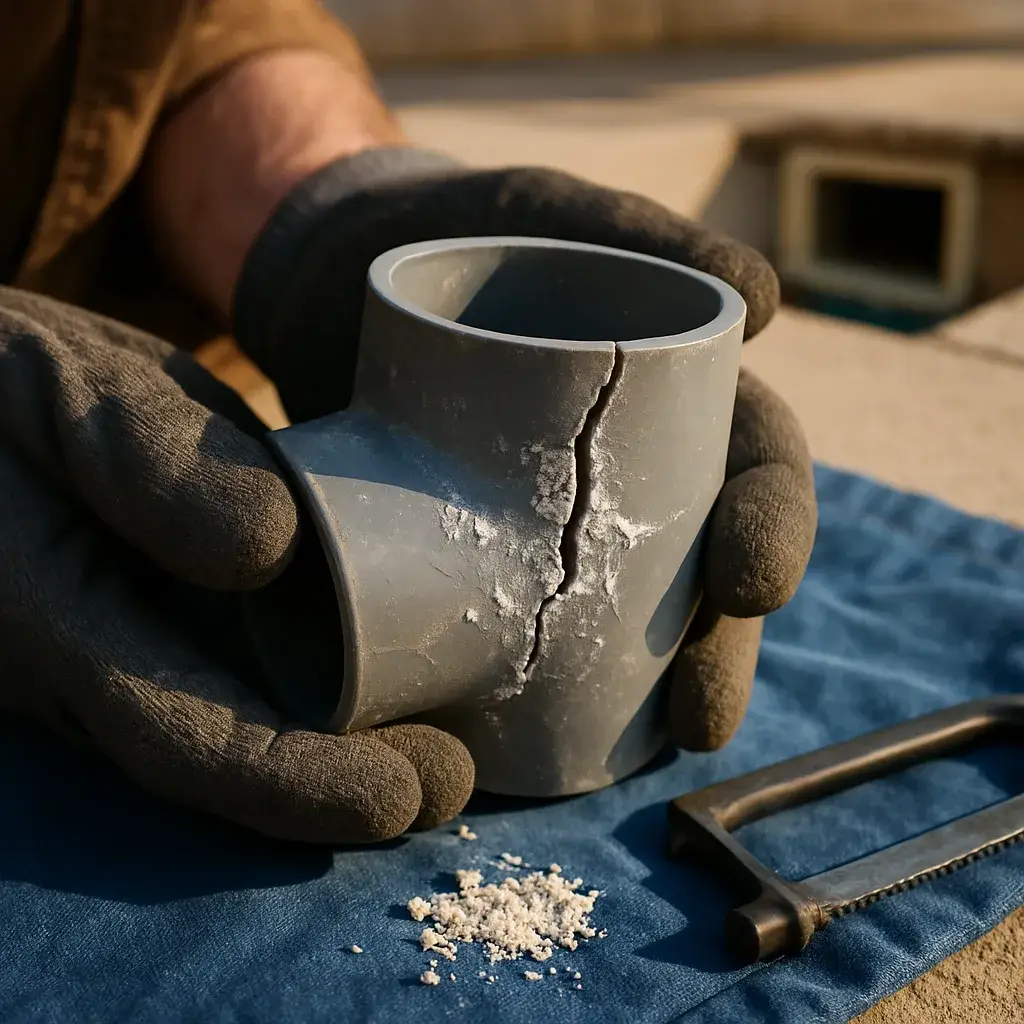
Sunnyvale sits on shifting clay soil, and that ground moves more than most homeowners realize during our hot summers and quick cold fronts. That movement puts stress on rigid PVC lines buried under decking, and it’s a big reason we get called out for cracked fittings and split unions.
- Water level drops more than an inch or two a day with the cover off and no obvious splash-out
- A soggy or unusually green patch of grass near the equipment pad or pool shell
- The pump loses prime often or air bubbles show up at the return jets
- Your pool pump runs longer or louder than it used to just to keep circulation normal
- A hissing sound near a valve or fitting when the pump kicks on
Not every one of these means a broken line. Sometimes it’s just splash-out from wind, sometimes it’s a loose valve handle. But if you’re seeing two or more of these together, that’s usually the pattern of an actual failure, not normal water loss.
We see this every week, someone waters the yard for months thinking it’s just evaporation, then finally notices the same wet spot keeps coming back.
Licensed Plumbers vs. Pool Maintenance Techs
Here’s something we say a lot on the phone: not every pool problem is a pool plumbing repair. A pool maintenance tech handles chemicals, filter cleaning, algae, and skimmer baskets. That’s their world, and they’re good at it. But once the problem is inside the pipe itself, a cracked line, a stuck valve, a fitting that finally gave out after years underground, that’s plumbing work. It calls for a licensed plumber who understands pressure, pipe joints, and how water moves through a closed system.
So how do you know which one you need? If your water looks cloudy or green, call your pool guy first. If you’re topping off the water every few days, hearing air sputter through the jets, or noticing a soggy patch near the equipment pad that wasn’t there last month, that’s a plumbing sign. Pool techs generally won’t cut into a line or replace a fitting, and honestly, most won’t want to. It’s outside their scope and their insurance.
We’re a fully licensed and insured plumbing contractor, with a Master Plumber on staff, which matters here because pool line repairs often mean working near electrical equipment, buried pipe, and sometimes gas lines for a heater. That’s not a spot to guess. That said, once we trace the line and find the failure, it’s a single repair fixed the same visit.
If you’re not sure which camp your problem falls into, just call us and describe what you’re seeing. We’ll tell you straight if it sounds like a plumbing issue or something your pool service can handle first.
When Pool Water Loss Doesn’t Need a Plumbing Repair
Not every drop in your pool level means a broken pipe. Sunnyvale summers are brutal, and a pool can lose a quarter inch of water a day just from evaporation and heat. Add splashing kids, a dog that loves the water, or a pool cover left off during a hot week, and that number climbs fast.
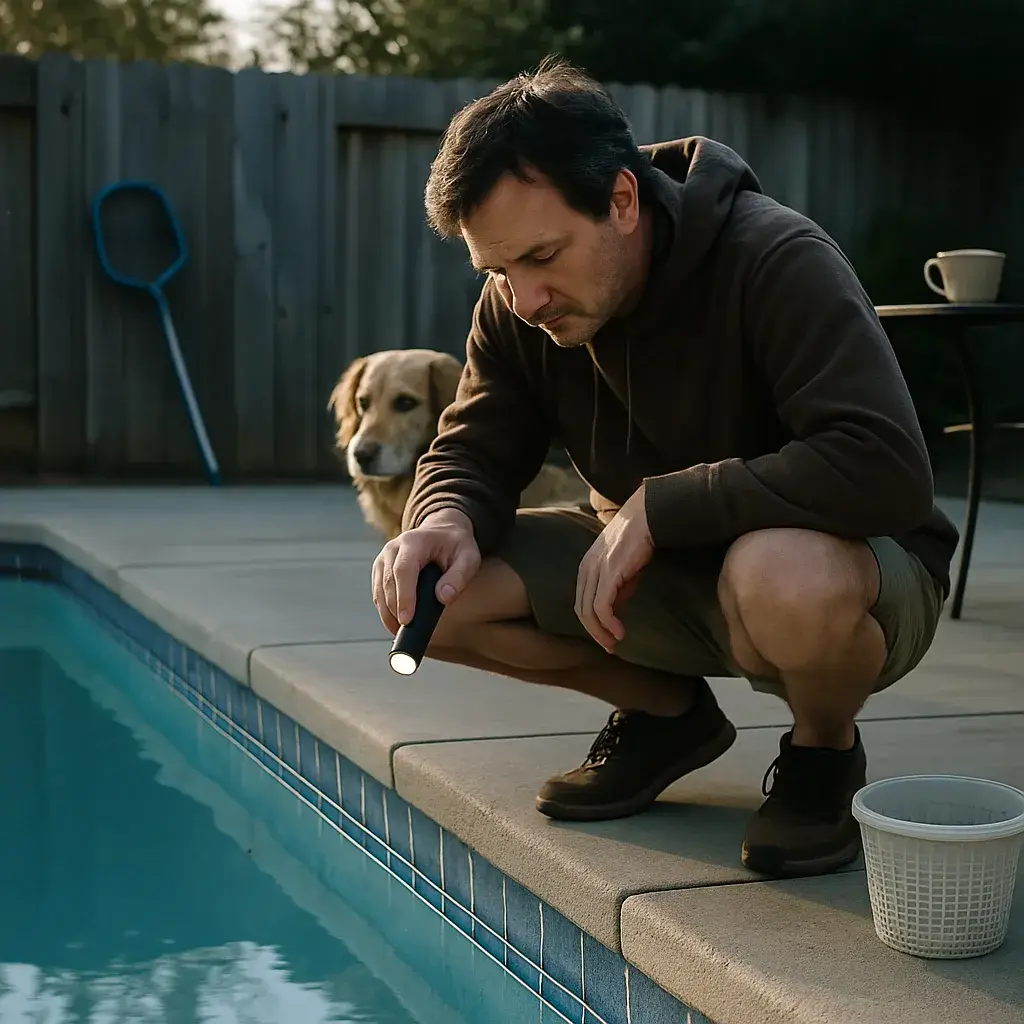
So how do you know the difference? Do the bucket test. Set a bucket on the pool step, fill it to match the pool’s water line, then check both levels after 24 hours. If the pool dropped more than the bucket, you’ve likely got a leak somewhere. If they dropped about the same, that’s just evaporation doing its thing.
We get calls every summer from folks convinced their plumbing failed, and it turns out to be a loose return jet fitting they can hand-tighten themselves, or a skimmer lid not seated right. Cheap fix, five minutes, no technician needed. 80 six days a week.
A cracked pool shell or a torn vinyl liner isn’t a plumbing repair either, even though the water loss looks the same from the deck. That’s a different trade and a different fix altogether.
If the bucket test comes back even and nobody’s had a pool party lately, give it a few more days before you assume the worst.
Thinking about Pool plumbing repair? Let’s talk.
Call Today, Get Service Today. Xtreme Air Services is ready to help.
What Happens During a Pool Plumbing Repair Visit
So what happens once we pull up? Usually, the customer just wants to know the plan before we touch anything. Fair enough.
- We ask what you’ve noticed. Wet spots by the equipment pad, a pump losing prime, water bill jumping. That tells us where to start looking.
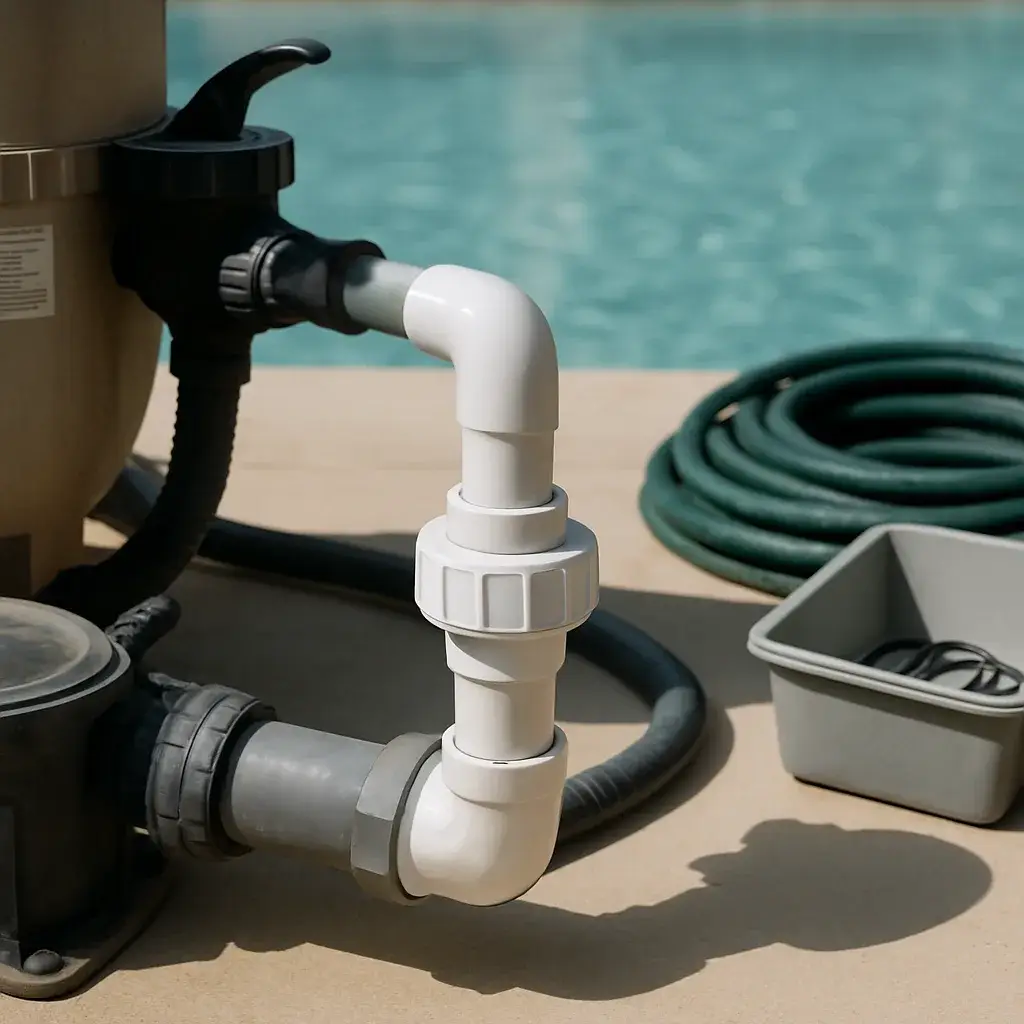
- We check the equipment pad first. It’s the easiest access point and a lot of failures show up right there at the unions and valves.
- If the leak’s underground, we use pressure testing to figure out which line is losing water without tearing up the whole yard.
- Once we find the failed pipe, valve, or fitting, we show you what broke and what fixing it involves before we cut into anything.
- We make the repair, cutting out the bad section, replacing fittings, or resealing a connection depending on what failed.
- We pressurize the system again and watch it. No drop in pressure, no water loss, that’s how we know it held.
- We clean up the work area and make sure your pump and filter are circulating water like they should.
A lot of the pools around Sunnyvale went in during the 80s and 90s subdivisions, and plenty still run on the original copper or PVC lines buried under the decking. Those older lines are exactly the ones we end up cutting into most.
Most visits wrap up the same day, one failure, one fix, water running clear by the time we leave.
What Drives Pool Plumbing Repair Costs
Every pool plumbing repair is a little different, so the price moves with the job. Most calls land between $250 and $800, and the full range we see runs $250 to $1,500. That’s a wide spread, but the reason is simple: where the broken line sits and how bad the failure is changes everything.
So what pushes the number up or down? A few things.
- How hard the pipe is to reach, under decking, behind equipment, or buried deep changes labor time
- Pipe material and depth, older PVC lines behave differently than newer runs
- How bad the failure is, a hairline crack repairs faster than a fitting that’s fully split
- Timing, though this one doesn’t cost you extra with us
That last point matters. We don’t charge more for nights or weekends, ever. A Saturday leak gets the same rate as a Tuesday one.
There’s also a service call fee, $26 to $99, but it gets credited toward the repair if you move forward with us that same visit. Either way, once we’re on site and see the line, we can give you a firm number before any tools come out. No meter running, no guessing.
Heads up: the price covers diagnosis, labor, the repair itself, testing, and cleanup. It doesn’t cover pump or filter equipment, decking repair, or code upgrades, those get quoted separately if they come up.
Frequently Asked Questions
Common questions about Pool plumbing repair
How can I tell if my pool has a real plumbing leak or just normal water loss?
Run the bucket test first. Set a bucket on the pool step, fill it to match the water line, then check both levels after 24 hours. If the pool dropped more than the bucket, you likely have a leak. If they dropped about the same, that’s just evaporation from Sunnyvale’s hot summer days. Many calls we get turn out to be a loose return jet or an unseated skimmer lid, both easy fixes you can often handle yourself before calling a plumber.
Do I need a plumber or a pool maintenance tech for my problem?
It depends on where the problem lives. If your water looks cloudy or green, call your pool service tech first, that’s chemical and filter work. If you’re topping off water every few days, hearing air sputter through the jets, or seeing a wet patch near the equipment pad, that points to a plumbing issue inside the pipe itself. Pool techs generally won’t cut into a line or replace a fitting, since it’s outside their scope. Call us and describe what you’re seeing, and we’ll point you the right direction.
What should I expect when a plumber comes out for a pool plumbing repair?
We start by asking what you’ve noticed, then check the equipment pad first since most failures show up there at the unions and valves. If the leak is underground, we use pressure testing to narrow down which line is losing water without digging up your whole yard. Once we find the broken section, we show you what failed and explain the fix before cutting anything. Most visits wrap up the same day, with one failure found and fixed before we leave.
Why do older Sunnyvale homes seem to have more pool plumbing problems?
A lot of pools in Sunnyvale went in during the 1980s and 90s subdivisions, and many still run on the original copper or PVC lines buried under the decking. Those older lines are exactly the ones we cut into most often. Sunnyvale also sits on clay soil that shifts more than most homeowners realize during hot summers and quick cold fronts. That ground movement puts stress on rigid pipe over the years, leading to cracked fittings and split unions.
How long does a typical pool plumbing repair take?
Most pool plumbing repairs wrap up in a single visit. Once we trace the line and find the failure, whether it’s a cracked pipe, a stuck valve, or a fitting that finally gave out, it’s usually one repair fixed the same day. After the fix, we pressurize the system again and watch for any drop before we call it done. Your pump and filter should be circulating water normally by the time we leave your property.
Ready to Get Started?
Call 972-288-2263 Today, Get Service Today.