


Pressure Regulator Replacement in Sunnyvale: Stop High Water Pressure Before It Damages Your Home
Failed and out-of-spec regulators replaced so house pressure stops hammering your fixtures, water heater, and supply lines.
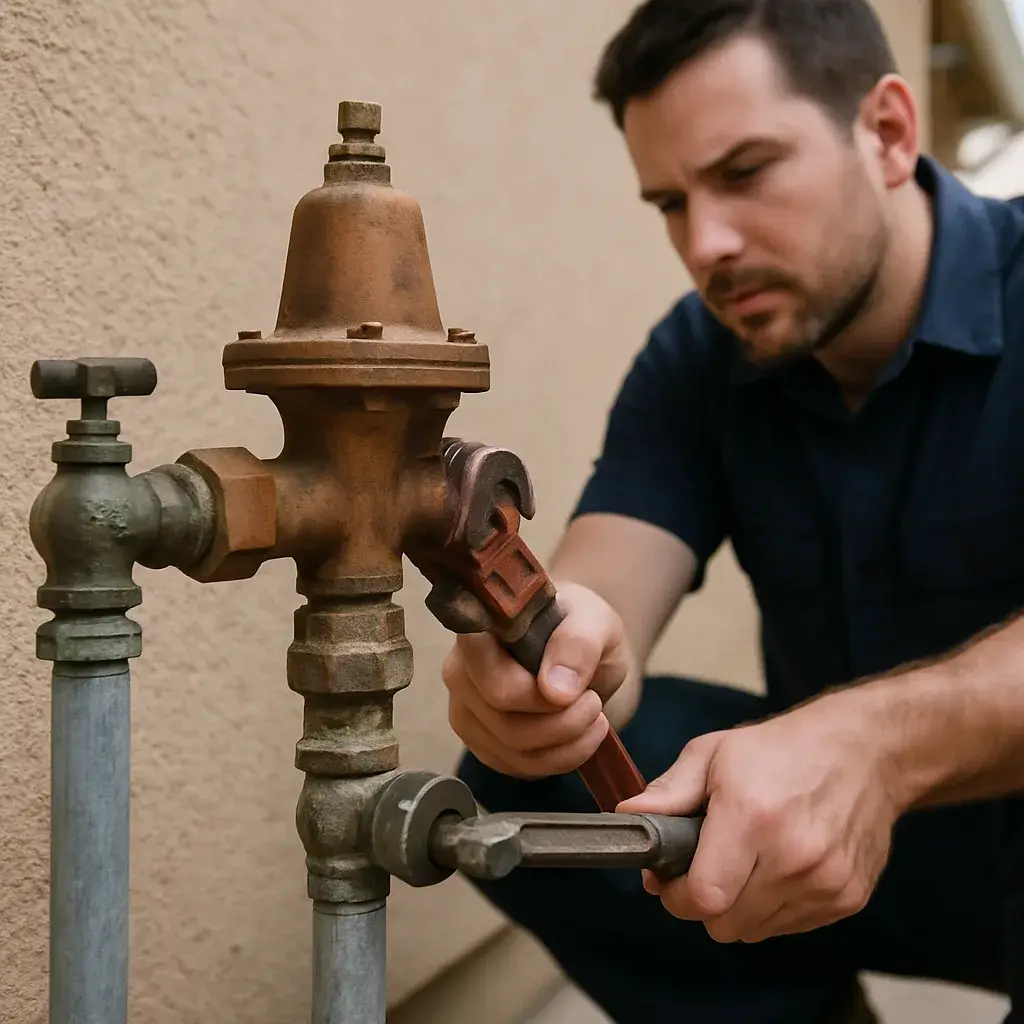
What’s Covered on This Page
- Signs Your Home Needs a New Regulator
- When It’s Not the Regulator
- Why Homes Across Sunnyvale Wear Out Regulators Faster
- What Drives the Cost of a Regulator Swap
- How a Same-Day Regulator Replacement Works
- How fast can you get to my Sunnyvale home to check a bad regulator?
- What happens when a technician checks my regulator?
- Why do regulators wear out faster in Sunnyvale than other places?
- My shower pressure surges up and down. Does that mean I need a new regulator?
- Can a failing regulator damage my water heater or appliances?
Signs Your Home Needs a New Regulator
So how do you know it’s the regulator and not something else? Start with your ears. A knocking or banging noise when you shut off a faucet fast, plumbers call it water hammer, often points to pressure that’s too high for your pipes to handle smoothly. We hear this a lot on older homes with original piping.
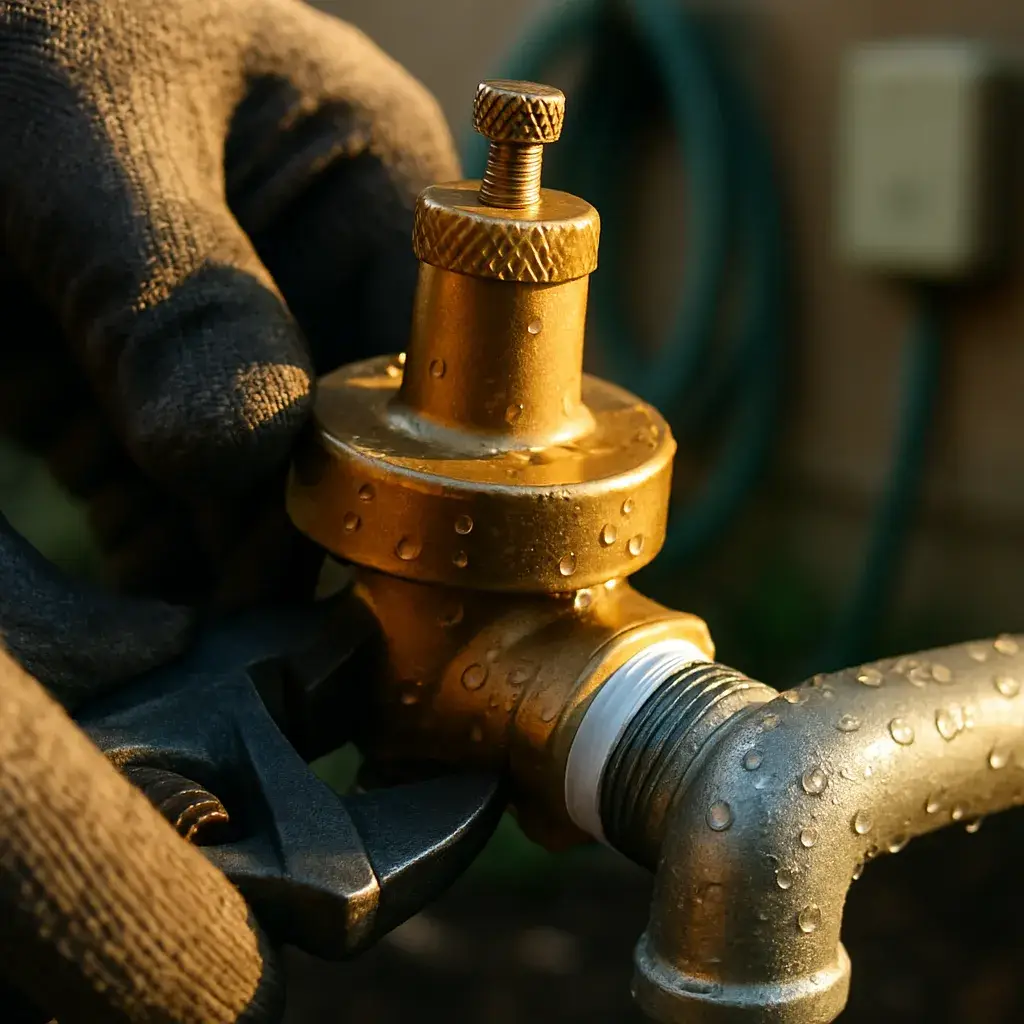
Then there’s the shower test. Water that surges strong, then drops, then surges again isn’t your imagination. That’s a regulator that can’t hold a steady setting anymore. Some homeowners notice it first thing in the morning, others catch it mid-shower and just shrug it off. Don’t.
- Banging or knocking pipes right after you turn off a faucet
- Water that swings between strong and weak with no clear pattern
- A hissing or buzzing sound coming from the pipe near your main shutoff
- Leaks showing up at fitting connections, water heater lines, or the washing machine hose
- A visible gauge reading well above 80 psi if you’ve tested it yourself
One more thing worth mentioning. If your water heater keeps tripping its relief valve, that’s often a downstream symptom of a regulator that’s stopped regulating. It’s not always obvious, and that’s exactly why folks call us to take a look.
When It’s Not the Regulator
Not every complaint about water pressure in a Sunnyvale home points to a failing regulator. If the problem shows up at one sink, one shower, or one hose bib while everything else in the house runs normally, the regulator is almost never the culprit. A single weak fixture is far more likely tied to a clogged aerator, a worn cartridge inside a faucet or shower valve, mineral buildup in an older fixture common in homes around Sunnyvale and Mesquite, or a shutoff valve under the sink that was never fully reopened after a repair.
The simplest way to rule out the regulator is to check pressure at several points in the house rather than trusting the feel of one faucet. A licensed technician will thread a gauge onto an outdoor hose bib or a laundry connection, take a reading, then repeat the test at a second and third location, such as a bathroom tub spout and a kitchen sink with the aerator removed. If every location reads within a normal range of roughly 45 to 75 psi, the regulator is functioning correctly and the issue is local to that one fixture.
- Test at an outdoor spigot first, since it bypasses most indoor fixture restrictions
- Remove the aerator on the affected faucet and run water directly to check for debris or scale
- Check that any nearby shutoff valve is turned fully counterclockwise and not partially closed
- Compare hot and cold side separately if only one temperature is affected
- Inspect the water heater’s expansion tank, since a waterlogged tank can cause fluctuations that mimic a bad regulator
A closed or partially closed valve after recent plumbing work, landscaping, or an irrigation project is another frequent cause we see across Sunnyvale, particularly in homes built before 1980 with older gate valves that stick over time. These situations require a valve adjustment or a fixture repair, not a new regulator, and typically cost far less to resolve.
We walk through this diagnostic process on every service call before recommending a regulator replacement, because installing one when the real issue is a fifteen dollar cartridge or a stuck valve wastes a homeowner’s money and does nothing to fix the actual complaint.
Why Homes Across Sunnyvale Wear Out Regulators Faster
Sunnyvale sits squarely within the North Texas expansive clay belt, a documented regional condition that affects nearly every property across the DFW metroplex. These clay soils swell dramatically after heavy rain and contract just as sharply during dry, hot stretches. That constant expansion and contraction shifts the ground beneath supply lines, meters, and the fittings that connect to a home’s regulator. Over years, this movement stresses threaded connections, loosens brackets, and can even misalign the regulator body itself, accelerating wear far beyond what the appliance’s rated lifespan would suggest in a more geologically stable region.
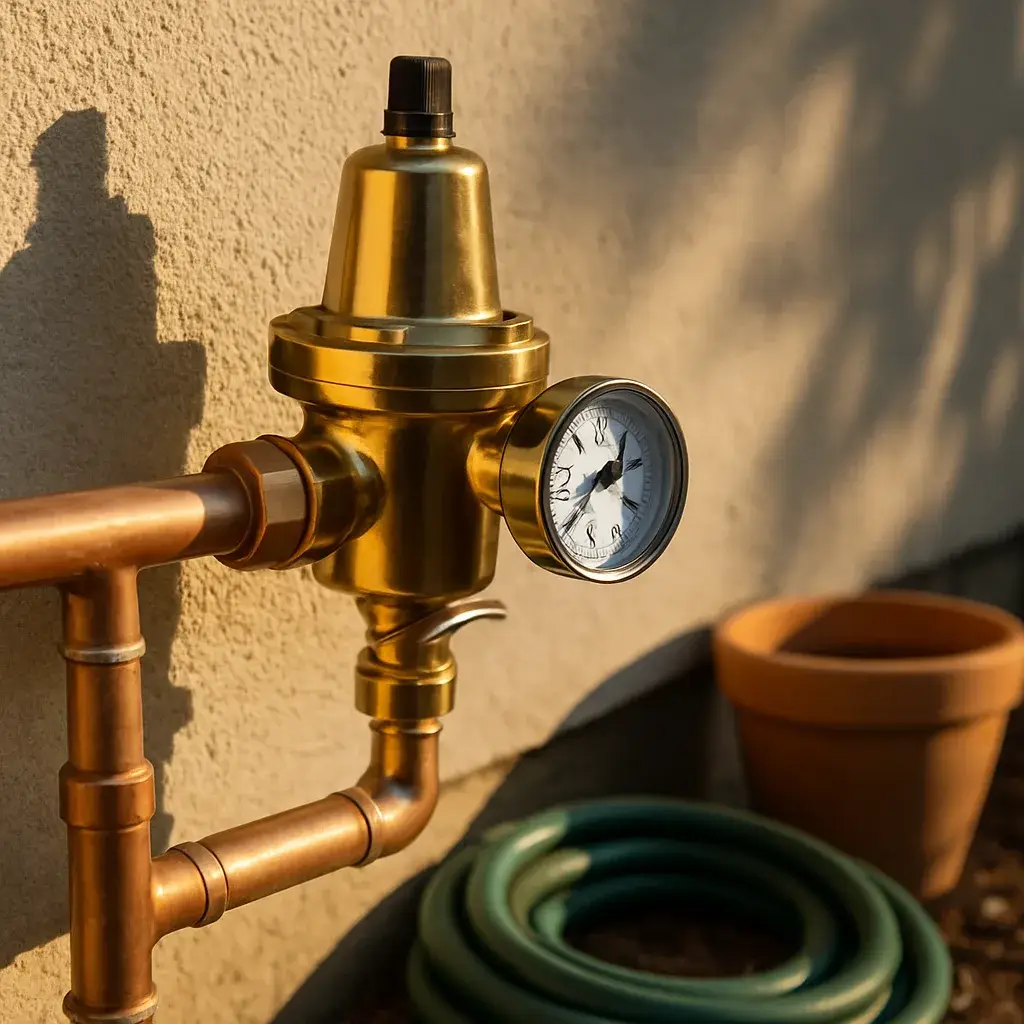
The result is that regulators in Sunnyvale often show symptoms of failure, such as fluctuating water pressure, banging pipes, or visible corrosion, well before a manufacturer’s typical replacement window. Homeowners who assume their regulator simply reached old age are sometimes surprised to learn that soil-driven line stress played a direct role, and that the surrounding fittings may need attention alongside the regulator itself.
Housing stock adds another layer of variability. Sunnyvale’s neighborhoods blend older rural-style homes, many originally built on well systems or with dated plumbing layouts, alongside newer construction developments with modern slab foundations and code-compliant utility rooms. This mix means regulator access points differ from one property to the next. Some homes place the regulator in an accessible crawlspace, others bury the connection near a slab foundation, and still others mount it along an exterior wall exposed to temperature swings and soil contact.
- Crawlspace access: typically faster diagnosis and replacement, but older insulation or moisture can complicate the job
- Slab-adjacent lines: may require careful excavation or rerouting, adding time and material considerations
- Exterior wall mounting: exposed to weather and soil shifting, often showing visible wear sooner
- Mixed-age plumbing: older galvanized fittings paired with newer regulators can create compatibility issues
Because access and soil conditions vary so much block by block, a fair estimate cannot rely on a flat, one-size-fits-all price. A proper assessment accounts for where the regulator sits, how the surrounding fittings have held up against clay soil movement, and how much labor the specific access point demands. That is why a scoped, transparent quote, one that reflects your home’s actual layout and soil exposure rather than a generic average, is the only responsible way to price a Sunnyvale regulator replacement.
Have questions? We’re happy to help.
Call Today, Get Service Today. Xtreme Air Services is ready to help.
What Drives the Cost of a Regulator Swap
Here’s the thing about a regulator swap, no two houses set up the same way. We walk into homes all over Sunnyvale where the old regulator sits in a crawlspace, and a mile down the road it’s bolted right next to the water meter out front. That location alone changes how long the job takes.
So what moves the number? A few things, every time.
- Regulator type and where it sits on your line, tight crawlspaces and buried valves take more time than a spot you can reach standing up
- The condition of the pipe around the old regulator, corroded or brittle fittings need extra care and sometimes extra parts
- How easy the shutoff and access point are to get to, a straightforward setup moves faster than one buried behind landscaping or a slab edge
- Whether the swap triggers a code upgrade, some older homes still have setups that don’t match current plumbing code
- Permit requirements, not every regulator swap needs one, but some cities and some scopes of work do
None of that is guesswork on our end. Our technician looks at your setup first, tells you what’s driving the number, then gives you a flat rate before any tool touches your pipe. You approve it or you don’t, no pressure either way.
That’s really the whole point of upfront pricing. You’re not paying for surprises, you’re paying for the actual job in front of you.
How a Same-Day Regulator Replacement Works
Sunnyvale homes served by the city’s water system often see incoming main pressure well above the 80 psi threshold recommended for household plumbing, which is why a regulator failure shows up quickly as banging pipes, dripping faucets, or a water heater that starts leaking. A same-day regulator replacement is built around a diagnostic-first sequence rather than guesswork, so the technician isn’t swapping parts on a hunch. The process starts before any tools come out, with a static reading taken at an outdoor spigot or directly at the main shutoff to establish a baseline number.

That reading is compared against expected municipal supply pressure for the neighborhood, and if the number is outside the safe range, the regulator is confirmed as the likely cause rather than assumed. This confirmation step matters because it prevents unnecessary replacements when the real issue is a different component, such as a thermal expansion tank or a water heater relief valve.
- Static pressure test performed at an outdoor spigot or the main line to establish an accurate baseline reading
- Regulator confirmed as the cause of the issue before any parts are removed
- Main water supply shut off to isolate the work area and protect the rest of the home’s plumbing
- Old regulator removed and inspected for signs of internal failure, sediment buildup, or worn seals
- New regulator installed and properly set to the target output for the home
- Water supply reopened gradually to check for leaks at every fitting
- Final retest performed to verify the new reading falls within a safe, stable range
Because the scope is defined from the first reading, most jobs are completed in a single visit, and client data from past Sunnyvale service calls shows this same-day completion is the norm rather than the exception. There’s no multi-day teardown and no open-ended timeline: the visit begins with a test, moves through a contained replacement, and ends with a verified reading before the technician leaves.
This work is performed by Master Plumber Larry Breedlove, who holds active TSBPE licensure, meaning the installation follows state-recognized plumbing standards from the initial diagnostic reading through the final retest. Homeowners get a licensed professional handling a clearly bounded job rather than an unlicensed installer working through an undefined scope of repairs.
Frequently Asked Questions
Common questions about Pressure regulator replacement
How fast can you get to my Sunnyvale home to check a bad regulator?
We schedule most regulator checks within a day or two of your call. If you’re hearing banging pipes or seeing a hissing sound near the main shutoff, tell us when you book so we can move you up. Older homes around Sunnyvale and Balch Springs often show these signs first, since original piping reacts faster to high water pressure. We’ll ask a few quick questions on the phone to figure out how urgent your situation is before we arrive.
What happens when a technician checks my regulator?
We test water pressure at several points in your home, not just one faucet. A gauge goes on an outdoor spigot first, then we check a second and third spot like a tub spout or kitchen sink. If every reading falls between 45 and 75 psi, your regulator is working fine and the problem is local to one fixture. This step-by-step check keeps us from recommending a replacement you don’t need.
Why do regulators wear out faster in Sunnyvale than other places?
Sunnyvale sits in the North Texas expansive clay belt, and that soil swells and shrinks with the weather. This constant ground movement stresses the fittings and connections around your regulator, loosening brackets and misaligning parts years before you’d expect. That’s why we see failure signs, like fluctuating water pressure or corrosion, show up earlier here than the appliance’s rated lifespan would suggest. Homes with exterior-mounted regulators feel this the most, since they’re exposed to both soil shifts and temperature swings.
My shower pressure surges up and down. Does that mean I need a new regulator?
Surging water that goes strong, then weak, then strong again usually points to a regulator that can’t hold a steady setting anymore. This is different from one weak fixture, which is more likely a clogged aerator or worn valve cartridge. If the surging happens throughout the house, not just one shower, that’s a strong sign your regulator needs attention. We test multiple locations before confirming, so you’re not paying for a fix you don’t need.
Can a failing regulator damage my water heater or appliances?
Yes, and a water heater that keeps tripping its relief valve is often the first sign of trouble. High water pressure from a bad regulator puts constant strain on your water heater, washing machine hoses, and every fitting in the house. Over time, this stress can cause leaks at connections you’d never think to check. Catching a failing regulator early protects the rest of your plumbing from wear that’s harder to reverse once it starts.
Ready to Get Started?
Call 972-288-2263 Today, Get Service Today.