


Salt Refill / Setup in Sunnyvale: When to DIY and When to Call a Pro
Salt refill and setup for softeners that have run dry, including the plain answer on when this is a DIY job and when it is not.
What’s Covered on This Page
- Signs Your Water Softener Needs a Salt Refill
- DIY Salt Refills vs Calling a Licensed Plumber
- When You Don’t Need a Professional Visit
- Same-Day Salt Refill and Setup in Sunnyvale
- Confirming Your Softener Is Regenerating Correctly
- How fast can you get someone out to refill my water softener in Sunnyvale?
- What does your technician do during a salt refill visit?
- Why does my softener burn through salt so fast here in Sunnyvale?
- How often should I check the salt level in my brine tank?
- What is a salt bridge and how do I know if I have one?
Signs Your Water Softener Needs a Salt Refill
Is your dishwasher leaving spots again? Or does your skin feel dry after a shower like it used to before you got a softener? That’s usually the first clue. North Texas water runs hard. Minerals from the ground and surface supply build up fast. Your softener uses salt to reduce that hardness. No salt, no soft water. It’s that simple.
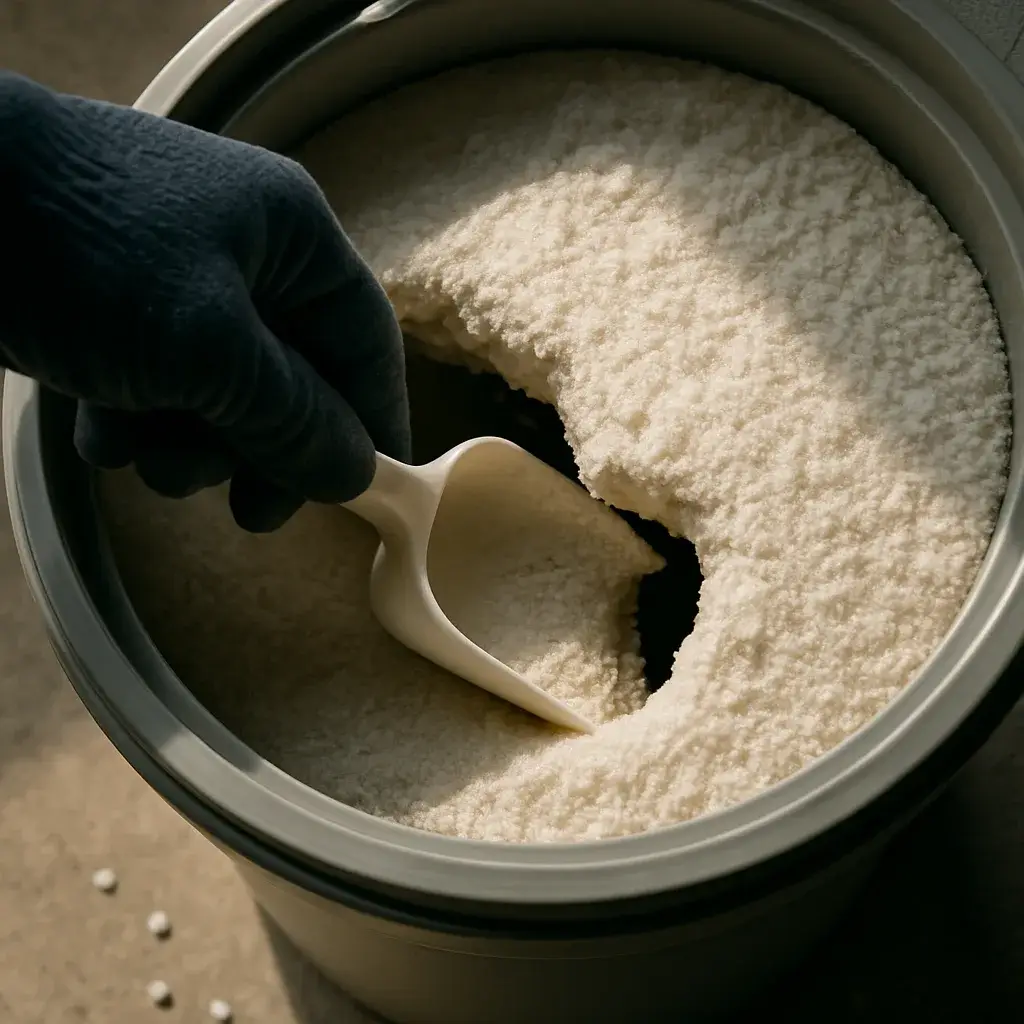
We see this every week out here. Someone calls thinking their whole system died. It turns out the brine tank is just empty. Or the salt formed a hard crust on top, what we call a salt bridge. Water can’t get through it. The softener runs like there’s no salt at all, even when the tank looks half full.
- White spots or film on glasses, dishes, and shower doors
- Soap and shampoo that won’t lather
- Stiff, scratchy laundry even with the same detergent
- A brine tank that looks dry, crusted over, or mushy at the bottom
- Salt levels that seem to never drop, a sign of a bridge or clog
Fixtures around the house tell the story too. Faucet heads with buildup, a water heater working harder than it should, these point back to the same thing. If you’re staring at an empty salt tank right now, you already know the answer.
DIY Salt Refills vs Calling a Licensed Plumber
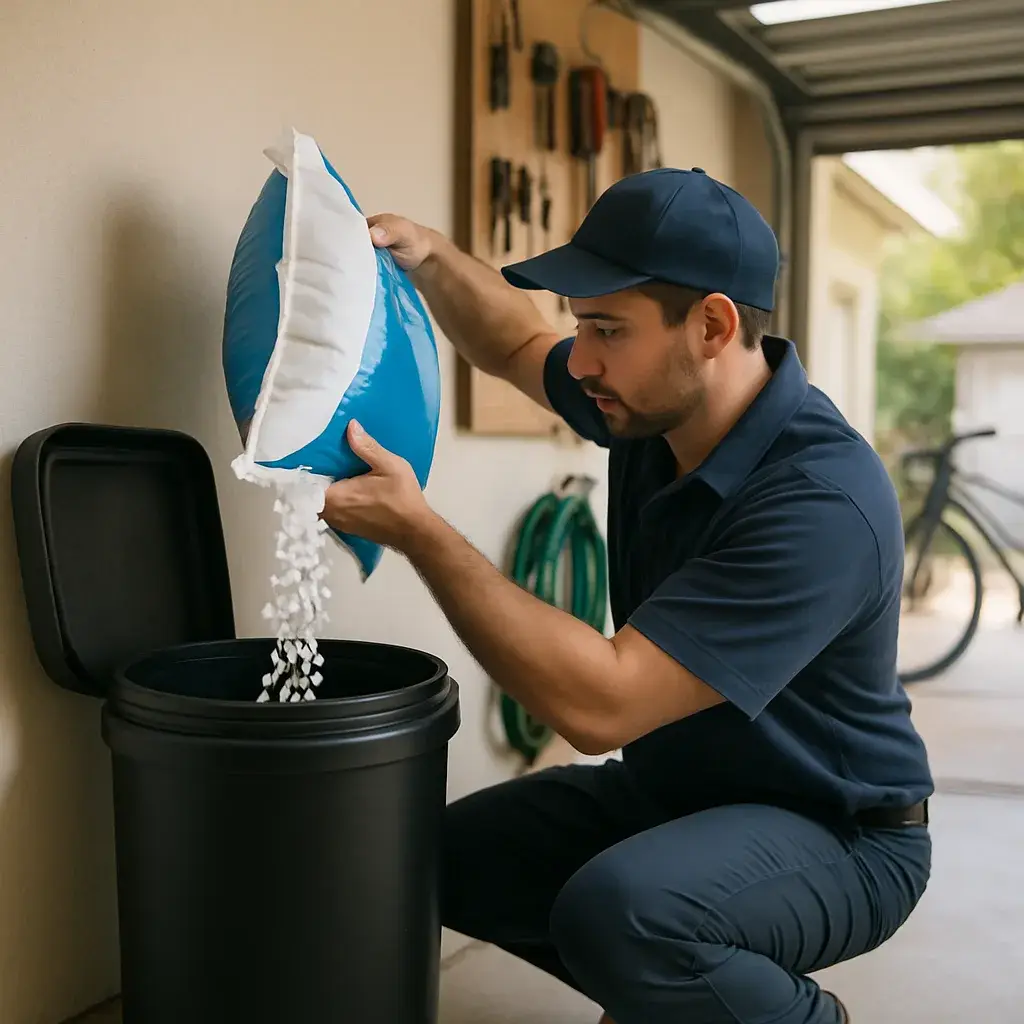
Here’s the truth. Pouring a bag of salt into your brine tank is not hard. If your tank just needs topping off and the softener is already cycling fine, you can do that yourself with a bag from the hardware store. No need to call anyone for that.
So when does it stop being a DIY job? When something’s wrong under the surface, not just low salt. Salt bridging is the big one. A hard crust forms above the water line. The tank looks full, but no salt is dissolving. You can’t always see it from the top.
- You can DIY it if the tank just needs a routine top-off and water is still soft
- You can DIY it if you already know how to break up minor crusting yourself
- Get a pro out if your water’s gone hard again even after adding salt
- Get a pro out if you see a thick salt crust, mushy sludge, or standing water in the tank
- Get a pro out if the softener won’t regenerate or the resin tank sounds off during a cycle
We see this every week around Sunnyvale. Folks with hard well water or municipal supply on the harder side pour salt in for months. The softener quietly stops working because nobody checked for bridging underneath. That’s not a DIY fix. Breaking up a bridge wrong can damage the tank or the resin bed.
If your softener is regenerating on schedule and your water still feels the same, don’t just keep adding salt and hoping. That’s the moment to get a real check on the brine tank, not another bag from the store.
When You Don’t Need a Professional Visit
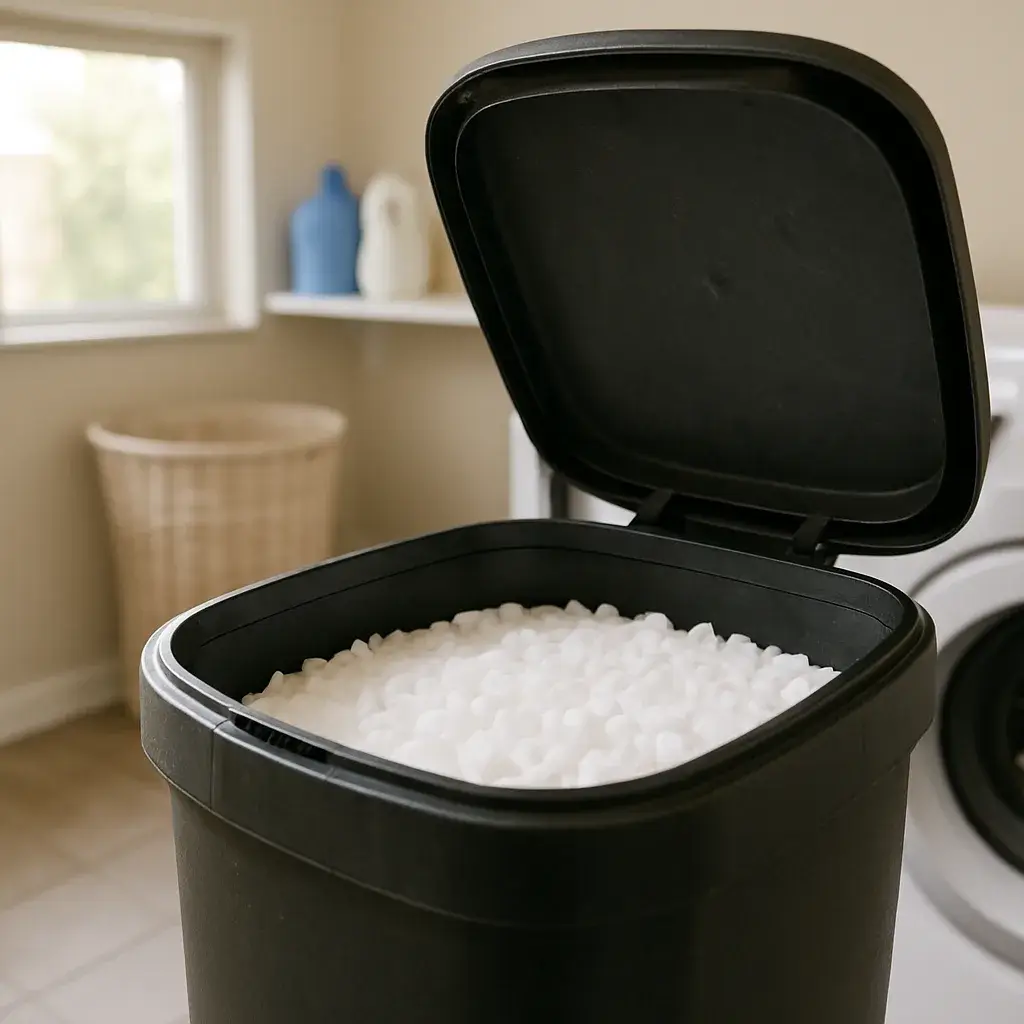
Here’s the truth. If your water softener is working fine, still tastes and feels soft, and you just need to toss in a few bags of salt, you don’t need us for that. Salt refill on a healthy system is something most homeowners can do themselves. Pop the lid, check the salt level, add more if it’s below the halfway mark. That’s it.
We get calls sometimes from folks who just want reassurance they’re doing it right, and that’s fine. A truck roll isn’t always the answer.
- Your water still feels soft and there’s no white residue building up on faucets
- The salt level in the tank looks normal, not crusted over or sitting in standing water
- No error lights or fault codes on the softener’s control panel
- You just moved in and want to top off salt before your first regeneration cycle
- The brine tank is easy to reach and the lid isn’t stuck or cracked
Now, if you’ve been pouring in salt for weeks and your water’s still hard, or you see a hard crust sitting above standing water in the tank, that’s a salt bridge. Same goes for older softeners in a lot of the established homes off U.S. 80. Some of those units are original to the house and the internals just wear out. That’s when a look under the hood matters.
Thinking about Salt refill / setup? Let’s talk.
Call Today, Get Service Today. Xtreme Air Services is ready to help.
Same-Day Salt Refill and Setup in Sunnyvale
Sunnyvale sits on Dallas County water on one side of town and Kaufman County water on the other. Both run hard. This means the softener in your utility closet or garage works overtime. If the brine tank runs low or bridges over, hard water sneaks right back into your pipes. We see it a lot in homes off U.S. 80 and around the older slab-on-grade ranch houses built before the newer subdivisions went in. Give us a call and we can usually get a technician out the same day.
Here’s what happens during the visit. We pop the brine tank lid, check for salt bridging or a hard crust, and see how much salt is left versus what the gauge says. Sometimes a tank that looks full on top is half empty underneath. You can’t catch that by peeking through the lid once a year.
- Refill the brine tank with the right amount and type of salt for your softener
- Break up any bridging or crusting that’s blocking the brine from forming
- Run a regeneration cycle and confirm the softener is pulling brine
- Check tank condition and flag any resin or valve issues we spot along the way
That last part matters. Repair parts, resin replacement, or anything else we find gets quoted separately. We won’t just start fixing things without telling you first. Our technicians are licensed and insured, background-checked. They’ll walk you through what they see before touching anything extra.
Confirming Your Softener Is Regenerating Correctly
Pouring salt in the tank is the easy part. The real test is whether the softener regenerates and pulls hardness out of your water afterward. North Texas water runs hard, full of calcium and magnesium that build up fast in pipes, water heaters, and coffee makers around Sunnyvale homes. If the regeneration cycle isn’t firing right, you’ll pay for salt and get none of the benefit.
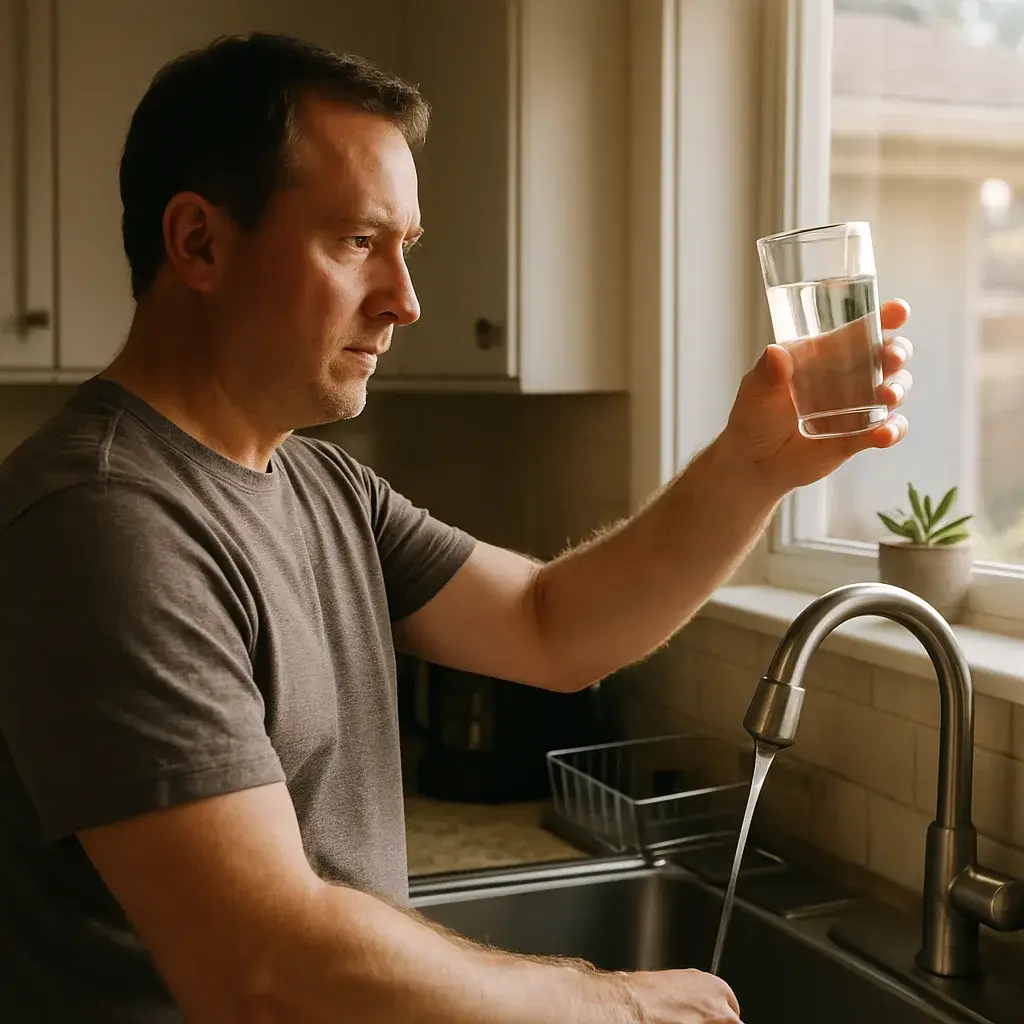
So after we refill and reset your system, we don’t just walk away. We run through a short check to confirm the unit is doing its job.
- Check the brine tank water level after mixing. It should draw down and refill on schedule
- Test water hardness before and after a cycle to confirm the resin bed is softening
- Listen for the motor and valve cycling through backwash, brine draw, and rinse without sticking
- Check the bypass valve position. A softener left in bypass will run hard water through your whole home
- Confirm the timer or meter settings match your household’s actual water use
Most of the time, a softener that seemed dead just needed clean salt and a proper cycle. But if the resin bed’s worn out or a valve’s stuck, refilling salt won’t fix that. We’ll tell you straight rather than let you keep buying salt for nothing.
That’s the whole point of the visit: confirming your water’s getting treated, not just assuming it is.
Frequently Asked Questions
Common questions about Salt refill / setup
How fast can you get someone out to refill my water softener in Sunnyvale?
We can usually get a technician to your home the same day you call. Sunnyvale sits across the Dallas County and Kaufman County line, and both sides deal with hard water, so this is a common call for us. Same-day visits mean you’re not stuck showering in hard water or running a dishwasher that leaves spots for days. Just give us a call and we’ll work you into the schedule.
What does your technician do during a salt refill visit?
Your technician pops the brine tank lid and checks for salt bridging before adding anything. A tank can look full on top but be nearly empty underneath if a hard crust has formed. After clearing any bridging, they refill with the right salt for your unit and run a regeneration cycle to confirm it’s pulling brine correctly. They’ll also point out any resin or valve issues they notice, but they won’t touch anything extra without telling you first.
Why does my softener burn through salt so fast here in Sunnyvale?
Your softener uses more salt because water on both sides of Sunnyvale, Dallas County and Kaufman County, runs hard. Minerals from the ground and surface supply build up quickly, so the resin bed works overtime and needs more salt to regenerate properly. Homes off U.S. 80 and older slab-on-grade ranch houses often have original softeners that struggle even more with this. If your salt usage suddenly jumps, it’s worth having someone check for a bridge or a worn-out unit.
How often should I check the salt level in my brine tank?
Check your brine tank about once a month, and add salt anytime it drops below the halfway mark. Regular checks help you catch a salt bridge early, before your water goes hard again. Homes with heavier water use, more people, more laundry, more dishwasher cycles, may need checks even more often. If you’re ever unsure whether the level looks right or the salt looks crusted, a quick call to us can save you from guessing.
What is a salt bridge and how do I know if I have one?
A salt bridge is a hard crust that forms above the water line in your brine tank, blocking salt from dissolving into the water below. The tank can look full, but the softener runs as if it’s empty. You’ll notice hard water symptoms coming back even though you’ve been adding salt regularly. Breaking up a bridge the wrong way can damage the tank or resin bed, so it’s a good reason to have a professional take a look instead of guessing.
Ready to Get Started?
Call 972-288-2263 Today, Get Service Today.