


What Are the Most Common Sewer Line Repair Problems?
The sewer line problems we see most in Sunnyvale homes, what causes them, and what each one usually takes to fix.
What’s Covered on This Page
- Root Intrusion Is One of the Most Common Sewer Line Issues
- Pipe Offsets and Bellied Sections Cause Backups in the Same Spot
- Corrosion and Aging Pipe Materials Show Up Over Time
- Grease, Debris, and Buildup Clogs Are Different From Structural Problems
- Full or Partial Line Collapse Is the Least Common but Most Involved Problem
Root Intrusion Is One of the Most Common Sewer Line Issues
Most homeowners discover root intrusion the same way. Slow drains get worse over weeks. You might hear gurgling from a toilet after the washing machine runs. Or you smell sewage in the yard near where the line runs. Sometimes it’s just a soggy patch of grass that never dries. These don’t always mean the line is failing. But we’ve noticed they’re a common pattern when a root problem is starting.
Roots naturally grow toward water, and a sewer line is a steady source. Older clay pipe, often found in 1950s through 1990s homes across Sunnyvale and the Dallas-Fort Worth area, has joints every few feet. These joints are where roots usually get in. The expansive clay soil we have here doesn’t help. It shifts with rain and drought, opening small gaps at pipe joints over time. This gives roots an easier path inside.
- Slow or gurgling drains that worsen
- Recurring clogs in the same drain or toilet
- An unusually green or wet patch of grass over the line
- Sewage odor near the yard or a cleanout
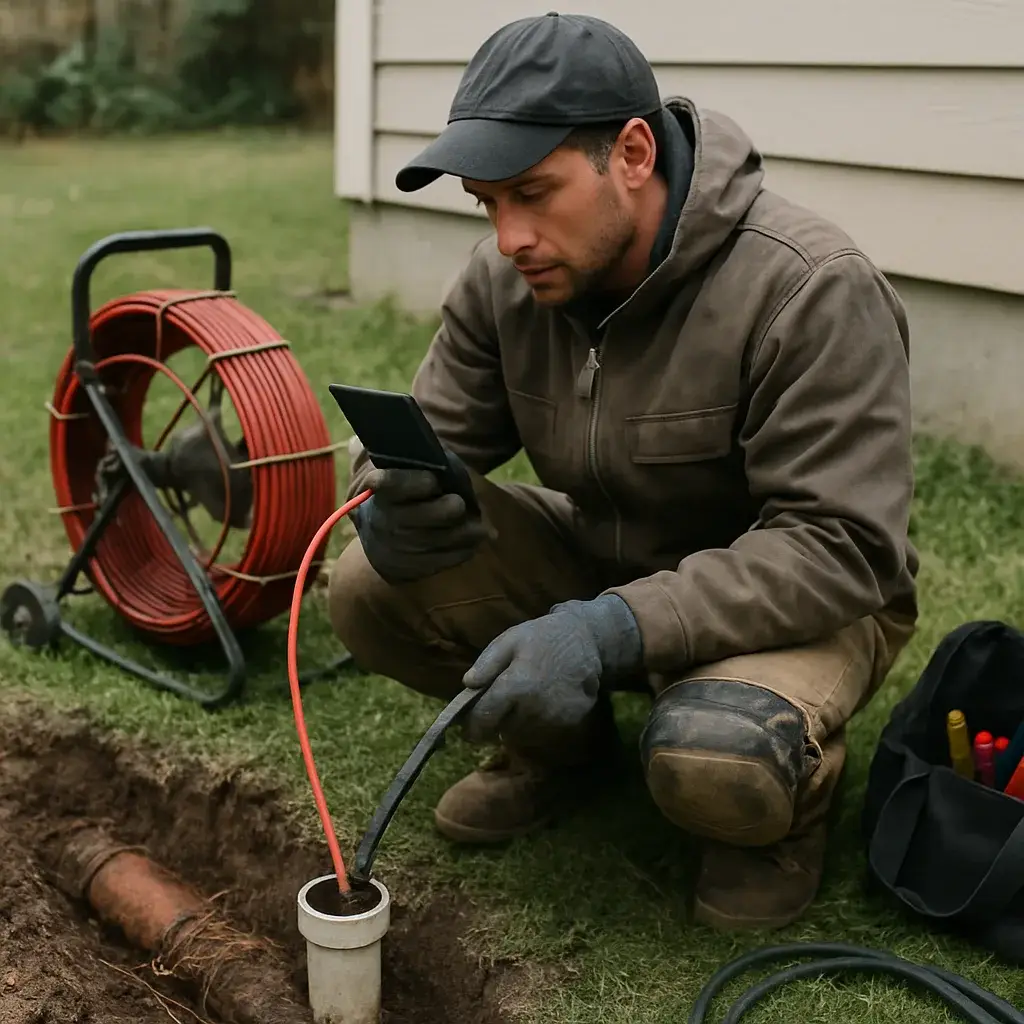
We start with a camera inspection. This shows us the actual condition of your pipe, so we don’t have to guess. That footage tells us if roots have caused a partial blockage that hydro jetting can clear. Or if the pipe itself has cracked or separated at a joint and needs a physical repair. Our approach to sewer line repair gives you those options once the camera shows us what’s there. Trenchless methods are often possible, depending on the depth and length of the damaged run.
Clearing roots with jetting can restore flow. But if the joint that let them in stays open, roots can get back into that spot again. That’s why we always look at the camera footage. This helps us decide if jetting alone is enough or if you need a section repair. Pricing for that decision varies widely. It depends on depth and access. We share the real numbers on our pricing page rather than trying to guess here.
Pipe Offsets and Bellied Sections Cause Backups in the Same Spot
If a drain keeps backing up in the same spot every few months, that’s not just bad luck. It means you probably have a low or shifted section of pipe somewhere along the line.
A bellied section happens when the pipe sags. Water and waste pool there instead of draining through. An offset is a bit different, but it causes the same problem. That’s when a joint between two pipe sections shifts out of line. It leaves a small ledge where paper and debris catch.
In Sunnyvale and the rest of the DFW area, expansive clay soil is often the reason for this. The ground swells when it’s wet, then shrinks hard during our Texas summers. This movement pushes and settles the soil around buried pipes unevenly. We’ve noticed that older slab-on-grade homes from the 1950s through the 1990s often have pipes that have shifted over the years. Newer subdivisions aren’t immune, either, as fresh backfill can settle unevenly after a home is built.
A belly or offset won’t always announce itself immediately. Small ones might just make a drain run a little slower. Bigger ones show up as a gurgling toilet, a slow tub, or the same fixture backing up again and again. That repeating pattern-the same spot, repeatedly-usually tells us there’s a structural issue in the line, not just a one-time clog.
We use a camera inspection to pinpoint the exact location of the low spot or shifted joint. This also tells us how long the affected section is. It’s the only way to tell a belly or offset apart from other causes. Once we have the full picture, we can discuss the fix with you. Sometimes this means trenchless sewer repair, (which is a real time-saver) and other times it means digging up and replacing that one section. It all depends on the depth and how easy it is to access. You can see how those approaches typically compare in cost on our sewer line repair page.
Corrosion and Aging Pipe Materials Show Up Over Time
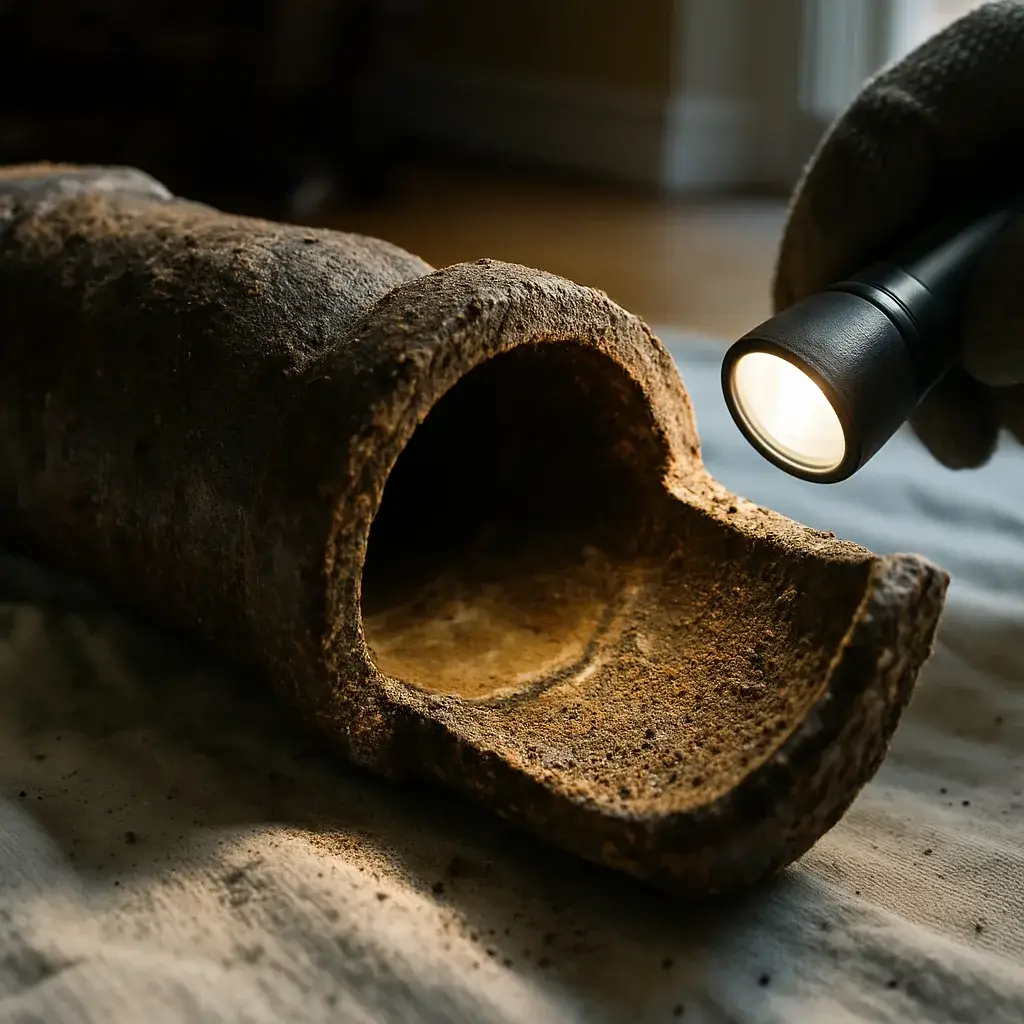
The pipe material and how old it is are usually why we get calls about sewer lines in the DFW area. Homes built years ago, especially between the 1950s and 1970s, often have cast iron or Orangeburg pipe. These run under the slab or in your yard. They both wear out over time. And when they do, you’ll see signs before a full backup ever happens.
Most people first notice slow drains in a few places at once. You might hear gurgling from a toilet or tub. Or you might see a soft, wet patch in the yard that smells like sewage. These things usually point to the main line, not just a simple clog. That’s because all the water from your house goes through that single main pipe.
Cast iron rusts from the inside out. This rough, corroded surface catches paper and waste, slowing things down. Orangeburg pipe, on the other hand, was made from wood pulp and tar. It gets soft and can flatten or collapse underground. Clay pipe, which is common in older parts of North Texas, usually holds up well. But its joints can separate as the ground moves. Our clay soil here in Sunnyvale expands when wet and shrinks when dry. That constant movement puts a lot of stress on those old pipe joints, year after year.
We start with a camera inspection to see the pipe material. This helps us find the exact spot that’s failing. We don’t just guess based on symptoms (that’s important). That video footage tells us if trenchless sewer repair will work for the damaged section. Sometimes, we need to open up the ground to replace the pipe directly. You can read more about how we handle this on our sewer line repair page.
Trenchless methods often work well, but not every line qualifies. If a section has already collapsed, or if the pipe material is crumbling, lining it isn’t an option. We’ll tell you that straight. Then we’ll explain the dig-and-replace approach instead. The cost depends on the depth, how long the damaged section is, and how easy it is to reach. We lay all of that out on our sewer line repair pricing page before any work begins.
We want to be clear about one thing: this kind of pipe wear happens on its own schedule. It’s about the pipe material and the ground it’s in. It has nothing to do with how you use your home day to day.
Need help with Sewer line repair?
Call Today, Get Service Today. Xtreme Air Services is ready to help.
Grease, Debris, and Buildup Clogs Are Different From Structural Problems
A clogged line and a broken line aren’t the same problem. Even so, they can look identical inside your home. Slow drains, gurgling toilets, and backups often come from either one, so symptoms alone don’t tell us much.
Grease, soap scum, hair, and paper buildup make a pipe narrow from the inside. Kitchens are often the main culprits (we see this a lot). Grease goes down warm and liquid, then cools. It hardens against the pipe wall further down the line, catching more debris. This kind of clog builds gradually. Usually, rooter service or hydro jetting clears it. That uses pressurized water to scour the inside of the pipe clean.
Structural problems are different. These are physical changes to the pipe itself, not just buildup. We’ve noticed a few conditions show up again and again in older North Texas neighborhoods with clay soil and shifting slabs:
- Root intrusion, where tree roots find a joint or hairline crack and grow into the line over years.
- Bellies, where a section of pipe has sunk. This holds standing water and waste.
- Offset or separated joints, often from ground movement.
- Collapsed or crushed sections, which usually happens in older clay or cast iron pipe.
You can’t jet or snake your way past a collapsed pipe. Or a root ball that’s grown solid inside a joint – that’s the limit of a cleaning tool. When a camera inspection finds one of these, the fix is repairing or replacing that section. It’s not just another round of cleaning.
This is also where trenchless sewer repair often comes in. It can address certain structural failures without digging up your whole yard. This depends on the pipe’s condition and location, by the way. A camera inspection tells us which situation we’re dealing with. We don’t have to guess based on drain symptoms.
We handle both sides of this. Our sewer line repair work covers routine sewer cleaning up through full line repair. If a clog in your home keeps returning in the same spot every few months, that pattern usually means it’s worth a camera look instead of another round of clearing.
Full or Partial Line Collapse Is the Least Common but Most Involved Problem
A collapsed sewer line is pretty rare. It is also the hardest problem to fix. This means a total backup, no drainage at all. You might see sewage backing up in several fixtures. Or a soggy, sunken spot in your yard, right over the pipe. It’s not just a clog. Water has nowhere to go.
The pipe itself fails structurally. It doesn’t just get blocked. In older parts of Sunnyvale and other DFW towns, this often happens with clay or cast iron pipes. They just give out after decades. North Texas clay soil expands and contracts. Those wet and dry swings put a lot of stress on buried pipes. Tree roots can also weaken a joint. The pipe can cave in around it instead of just cracking.
We always confirm a collapse with a camera inspection. We don’t skip this step. The camera tells us exactly where the problem starts. And how long the damaged section runs. That changes the entire plan. A short, easy-to-reach collapse might work for trenchless repair. But a longer run, tough access, or many failure points usually means we have to dig and replace. That’s the more realistic option.
We’re upfront about the tradeoffs here. Trenchless methods save your landscaping and driveway. But they don’t work in every situation. We won’t say it’s an option just to avoid digging. Not if the pipe isn’t right for it. Digging means more disruption at first. But sometimes it’s the only way to fix the problem for good.
The cost of a collapse depends on depth and how long the damaged run is. Also, which repair method applies. We explain all that pricing on our sewer line repair page. We don’t guess at numbers here.
We also offer camera inspections as a separate service. That way, you can get a clear picture of what’s going on underground. You can decide what to do next.
Ready to Get Started?
Call 972-288-2263 Today, Get Service Today.