


Sewer Line Repair: Should You Repair or Replace the Line?
How we decide between repairing one damaged section and replacing the run, and what changes the cost either way.
What’s Covered on This Page
- Repair or Replace: The Short Answer
- What Decides Repair vs. Replace
- When We’d Recommend a Repair
- When We’d Recommend a Replacement
- What’s Included in a Sewer Line Repair Quote (and What’s Not)
- What happens if you find a second problem once you’re already digging?
- Can the camera tell you everything before you start?
- Is a section repair just delaying a replacement I’ll have to pay for anyway?
- Does figuring out which one I need cost extra on top of the work?
- Why does a replacement cost so much more than a repair?
Repair or Replace: The Short Answer
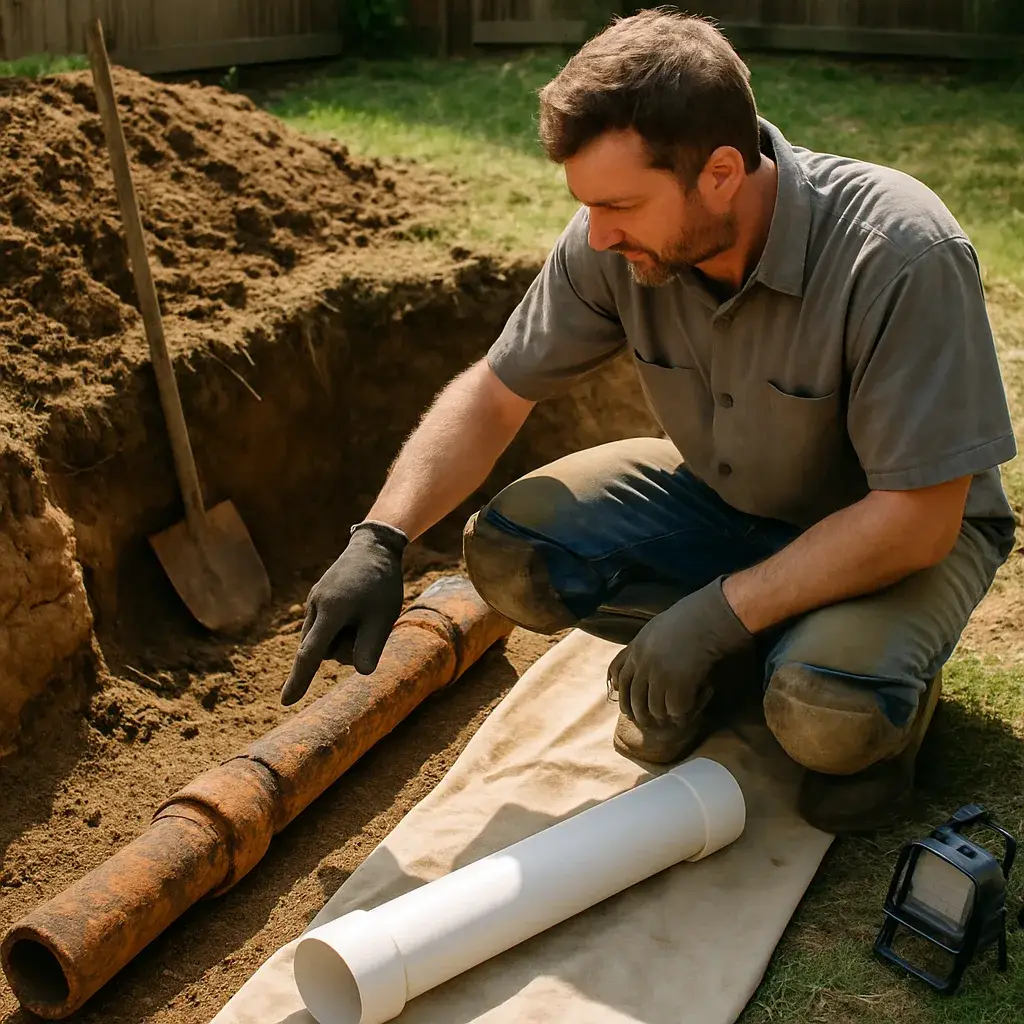
A repair means we locate the damaged section. We dig down or tunnel to it, fix or swap out that one piece, and test the line for flow. A full replacement means the whole run gets swapped, not just the bad stretch. For a typical sewer line repair job, you’re looking at $1,500 to $4,000. Full replacement costs more. You pay for a longer run of pipe, more excavation, and more labor hours.
The camera inspection tells us which one you need. If the damage is contained to a short section (like a cracked pipe from root intrusion or a shifted joint), repair usually makes sense. But if we find multiple failure points along the same run, or the pipe itself is old clay or cast iron that’s crumbling in more than one place, patching one section just buys you a second dig in a year or two. That’s the point where replacement is the better use of your money, even though it costs more up front.
- Depth and length of the damaged run affects cost more than almost anything else.
- Access and excavation (easy yard access costs less than a line running under a driveway or patio).
- Whether trenchless methods are an option instead of a full dig-and-replace.
Our pricing covers locating the problem. It includes the excavation or access needed to reach it. The repair itself and testing the line afterward are also included. It does not cover full line replacement if that’s what you need. It also doesn’t cover landscaping or concrete restoration once we’ve dug down to the pipe. Permits aren’t included either unless we’ve said so up front. We’ll tell you plainly which category your line falls into before any work starts. You get a flat rate, in writing.
We charge a $26 to $99 service-call fee for the visit. That gets credited toward the repair if you move forward with us. If the number comes in higher than you expected (because a replacement is the right call), we offer financing on qualifying jobs so it doesn’t have to hit all at once. You can see how this fits with our sewer line repair work before you decide anything.
What Decides Repair vs. Replace
It comes down to two things: how much of the line is damaged, and how hard it is to get to. A single break in an easy-to-reach spot is usually a repair. Damage running the whole length of the pipe, or one buried deep under a slab or driveway, starts leaning toward replacement.
A camera inspection is what answers the question. Our technicians run a sewer camera inspection down the line. We see the condition of the pipe from end to end, we don’t just guess based on where the yard is soggy. That footage tells us if we’re looking at one damaged section or a pipe that’s failing in more than one place.
- Depth and length of the damaged run.
- Access and how much excavation the repair needs.
- Whether trenchless methods are an option for that spot.
Most sewer line repair jobs (locating the problem and fixing or replacing that one damaged section) run $1,500 to $4,000. Larger jobs with more excavation or a longer damaged run can run up to $7,000 depending on scope. That price includes finding the issue. It covers the excavation or access needed to reach it. The repair itself and testing to confirm it flows right are also included. It does not include a full line replacement, landscaping or concrete restoration, or permits unless we’ve stated those up front.
If your line has one isolated break under a yard with easy access, a repair is usually the right call. It’s the better value. But an older clay line with multiple soft spots along its length shows up a lot. We see this in established slab-on-grade homes around Sunnyvale and the rest of the DFW area. Clay soil shifts and puts pressure on old joints. Patching one spot just moves the next failure further down the pipe. In that case, we’ll tell you replacement is the more sensible long-term move, even though it costs more today.
Where the ground allows it, trenchless sewer repair can cut down on how much yard or driveway gets dug up. It’s worth asking about during your inspection. Our sewer line repair work is covered on our sewer line repair page. The $26 to $99 service call fee gets credited toward the repair if you move forward with us. Financing is available on qualifying jobs if the larger scope changes your timeline.
When We’d Recommend a Repair
We’d recommend a repair when the damage is limited to one section of pipe. The surrounding pipe must still be sound. That’s the short version. A cracked joint, a spot where roots have pushed into a clay pipe, or a short section that’s shifted from soil movement usually doesn’t call for tearing out the whole run.
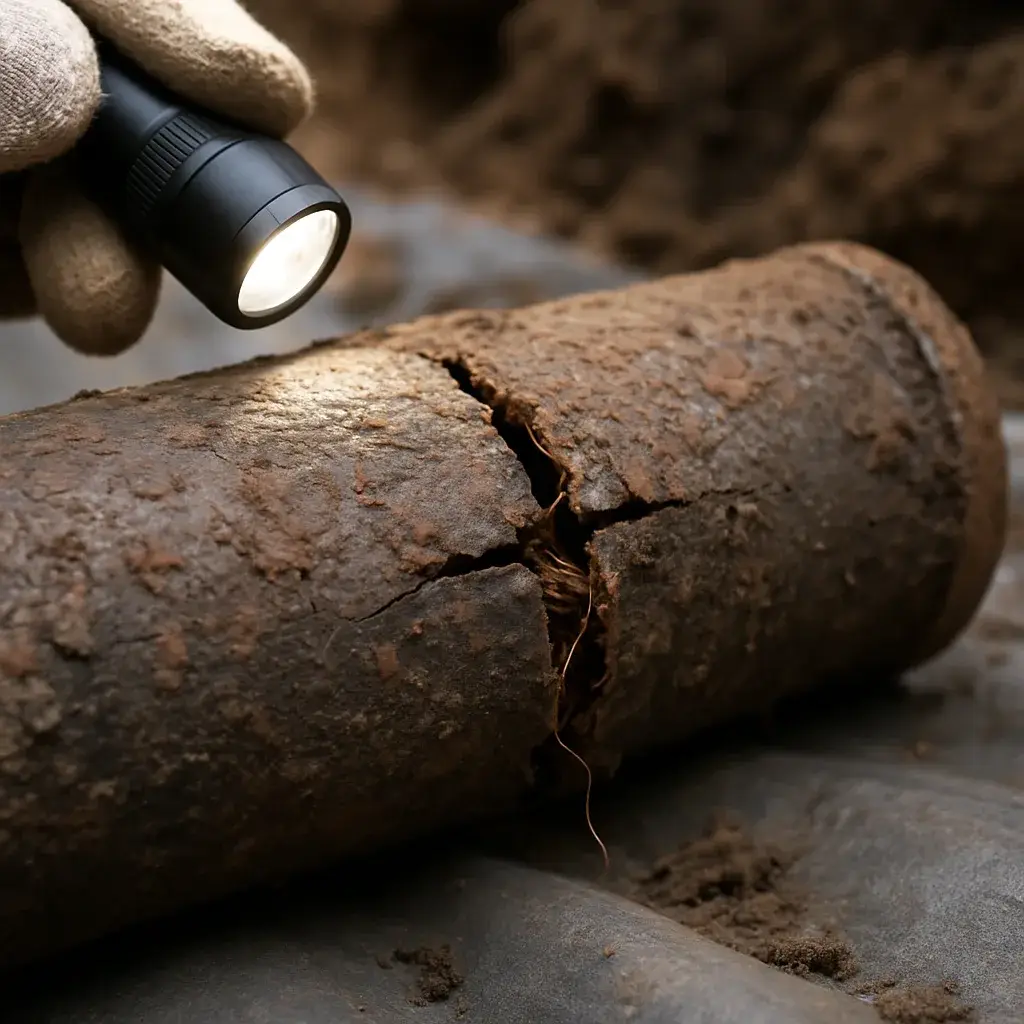
- The damage is contained to a few feet of pipe, not spread across the full run.
- A camera inspection shows the surrounding pipe holding its shape with no widespread cracking or bellies.
- Root intrusion is limited to one joint or section rather than multiple points.
- The pipe material around the damaged spot is still structurally solid.
- Access is straightforward enough that a trenchless spot repair or a small dig-and-replace section gets the job done.
In North Texas, we see this a lot in older slab-on-grade homes. Clay soil expands and contracts through the year. That movement can crack a single joint in an otherwise decent sewer line without touching the rest of it. On a job like that, we typically locate the damaged section. We dig or access it, replace or repair that piece, and test the line to confirm proper flow. A job in this category usually falls between $1,500 and $4,000. It depends on how deep the line sits and whether we can use trenchless methods instead of open excavation. Every visit starts with a $26 to $99 service call fee. That gets credited toward the repair if you move forward with us.
We won’t stretch a repair past what it can reasonably fix. If the camera shows multiple failure points, a bellied section holding standing water, or a pipe that’s collapsed along a long stretch, patching one spot won’t hold up. And we’ll say so plainly. You can see more on how we handle sewer line work on our sewer line repair page.
Need help with Sewer line repair?
Call Today, Get Service Today. Xtreme Air Services is ready to help.
When We’d Recommend a Replacement
We’d point you toward replacement when the damage covers a long stretch of pipe. Or if it sits at a point that’s hard to reach more than once. Or shows up in more than one spot on the same run. A single crack or a joint that’s separated is usually a repair. A pipe that’s collapsed along several feet, or clay pipe with root intrusion in more than one section, is a different conversation.
Depth and length of the damaged run drive most of that decision. That’s along with how much digging or trenchless work it takes to get to it. A shorter, shallower repair usually lands in the $1,500 to $4,000 range. Jobs that need more excavation, deeper access, or a longer section addressed can run up to $7,000. That’s the real spread we see on our sewer line repair work. It’s why we don’t quote a number until we’ve located and looked at the damaged section.
A camera inspection tells us a lot, but it doesn’t always tell us everything until we’re digging. Older clay pipe especially can look fine on camera in one spot and be brittle a few feet further down. If that happens mid-job, we stop and talk it through with you before doing anything past what you approved. We’re not going to expand a repair without telling you first.
The $26 to $99 service-call fee to locate and inspect the line gets credited toward the repair if you move forward with us. Figuring out which category your situation falls into doesn’t cost you extra on top of the actual work. If the number does land on the higher end because it’s a bigger job, financing is available on qualifying work. So it’s not all due at once.
This section covers the repair-or-replace decision specifically. For everything else that falls under our sewer line repair service (from locating the problem to testing flow once it’s fixed), that’s covered on our main sewer line repair page.
What’s Included in a Sewer Line Repair Quote (and What’s Not)
A written quote for sewer line repair covers three things: finding the damaged section, getting to it, and fixing it. That includes locating the problem area. It also covers the excavation or access work needed to reach the pipe. The actual repair itself and a camera test afterward to confirm the line flows right are part of it too. Most sewer line repair jobs run $1,500 to $4,000. The full range we see across North Texas is $1,500 to $7,000 depending on the job.
What moves the price inside that range comes down to three things. How deep and how long the damaged run is matters a lot (a pipe six feet down under a driveway costs more to reach than one three feet under open yard). Access matters too. Whether we can dig straight to it or have to work around a foundation, tree roots, or a slab. And whether the job calls for trenchless repair or a dig-and-replace section changes both the labor and the equipment involved.
A quote does not cover, unless we spell it out separately: full line replacement if the damage turns out to run the length of the pipe instead of one section. Landscaping or concrete restoration after we backfill is also not included. Neither are permits, unless we’ve listed them in writing. If your yard has a paver patio over the dig site or a full sprinkler system in the path, replacing that isn’t part of the repair price. It’s a separate conversation we’ll have with you before we start.
We charge a $26 to $99 service call fee for the visit and camera work needed to find the problem in the first place. If you move forward with the repair, that fee gets credited toward the job. So you’re not paying twice to get started. For bigger sewer line jobs, financing is available on approved credit if the number is more than you want to handle in one shot.
One thing worth saying plainly: some older Sunnyvale and Mesquite-area homes on cast iron or clay pipe have more than one weak spot along the run. If we find a second problem area while we’re already down there, we’ll show you on camera and price it separately. We won’t fold it into the first number without asking. You can read more about how we approach the job on our sewer line repair page before you call.
Frequently Asked Questions
Common questions about Sewer line repair
What happens if you find a second problem once you’re already digging?
We stop and show you on camera before doing anything past what you approved. Older clay and cast iron lines around Sunnyvale and Mesquite often have more than one weak spot along the run. If we find a second problem area while we are already down there, we price it separately rather than folding it into the first number. We are not going to expand a repair without telling you first.
Can the camera tell you everything before you start?
Most of it, but not all of it. A camera inspection shows the condition of the pipe end to end, which is what tells us whether we are looking at one damaged section or a line failing in several places. What it cannot always show is how brittle old clay pipe is a few feet past the damage. That is why we stop and talk it through if the picture changes mid-job.
Is a section repair just delaying a replacement I’ll have to pay for anyway?
Not when the surrounding pipe is sound. A cracked joint or a single spot where roots pushed into the line is a contained problem, and a repair on that is the better value. It is a different story when the camera shows multiple failure points or a bellied section holding standing water. Patching one spot there just moves the next failure further down the pipe and buys you a second dig in a year or two.
Does figuring out which one I need cost extra on top of the work?
No. The $26 to $99 service call fee covers coming out, locating the line and inspecting it, and it gets credited toward the repair if you move forward with us. Working out which category your situation falls into does not cost you anything on top of the actual job.
Why does a replacement cost so much more than a repair?
You are paying for a longer run of pipe, more excavation, and more labor hours. A typical section repair runs $1,500 to $4,000. Bigger jobs with deeper access or a longer damaged section can reach $7,000. If the number lands at the higher end because replacement is genuinely the right call, financing is available on qualifying work so it does not have to hit all at once.
Ready to Get Started?
Call 972-288-2263 Today, Get Service Today.