


Smoke Detector Installation in Sunnyvale That Keeps Your Family Safe
Interconnected smoke and CO alarms installed where code requires them, hard-wired with battery backup, and tested as a system rather than one at a time.
What’s Covered on This Page
- Signs You Need Smoke Detector Installation or Replacement
- Hardwired, Battery, or Interconnected: Choosing the Right System
- When a Battery Swap Is Enough (And When It Isn’t)
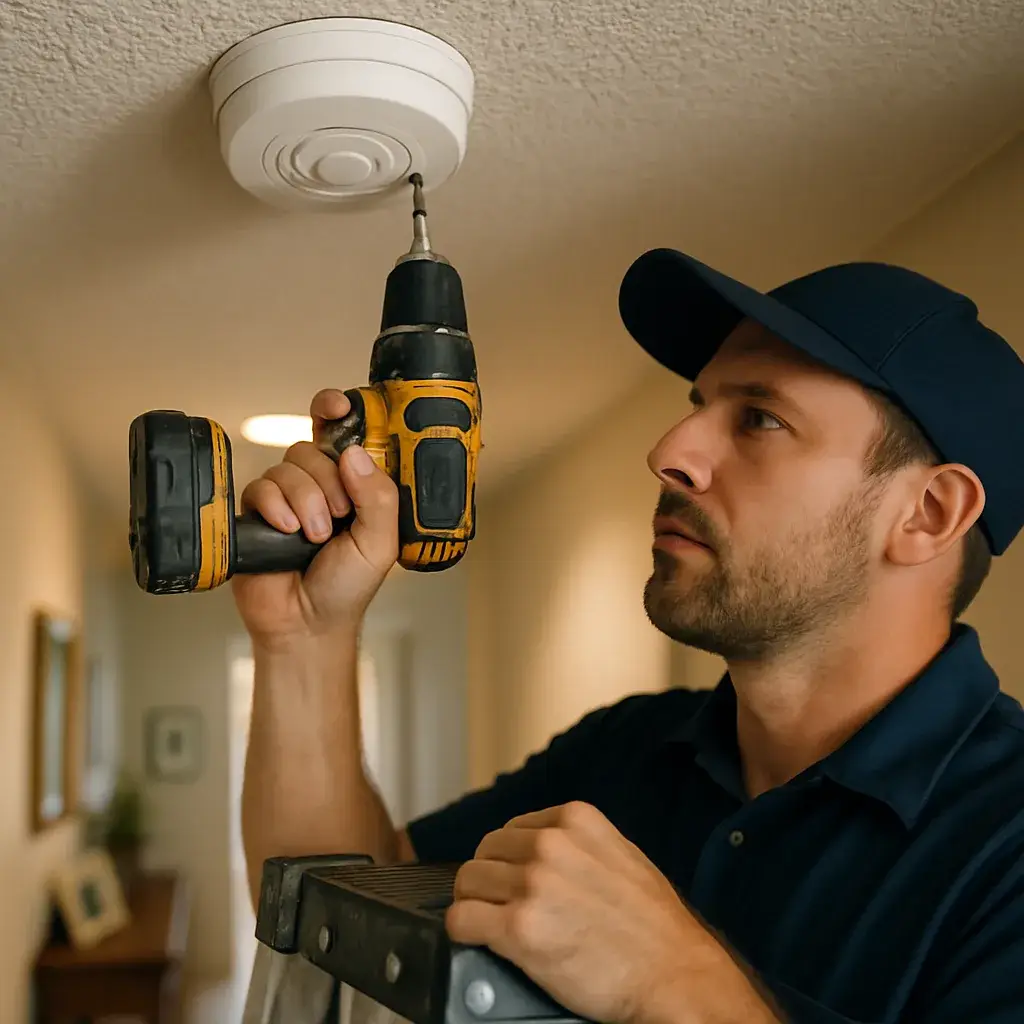
- What to Expect During Professional Installation
- Placement Rules That Prevent False Alarms and Code Violations
- How soon can you come out to install smoke detectors in Sunnyvale?
- What should I expect when your technician arrives at my house?
- Why do older Sunnyvale homes need special attention for smoke detector wiring?
- How do I know if a battery swap will fix my chirping detector?
- Should I install a smoke detector in every bedroom, or just the hallway?
- Can you connect a new smoke detector to my existing interconnected system?
Signs You Need Smoke Detector Installation or Replacement
So how do you know it’s time? Most people wait until the chirping drives them crazy. That’s the alarm telling you something real.
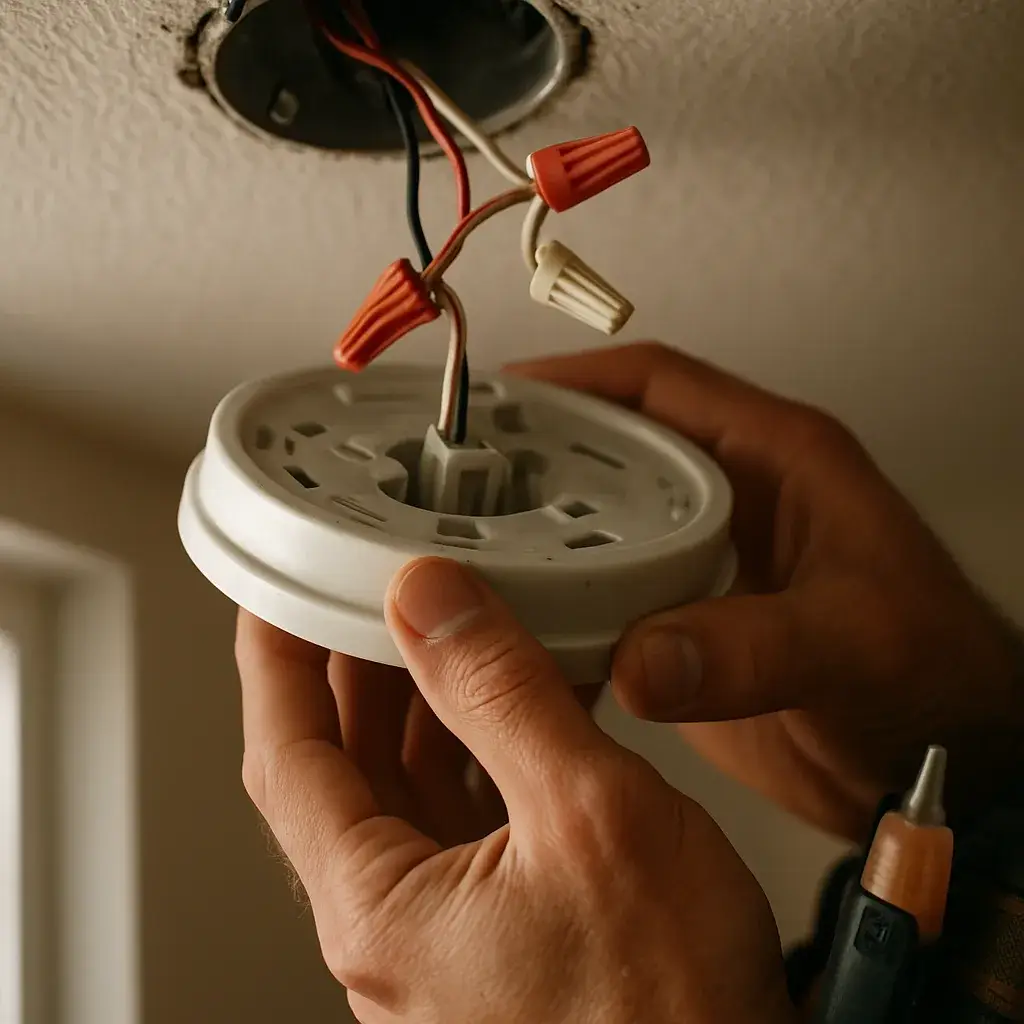
- A detector chirps every 30 to 60 seconds even after you’ve changed the battery
- The unit is more than 10 years old, smoke sensors wear out even if the alarm still beeps during a test
- Bedrooms or hallways have no detector at all, common in older additions or converted rooms
- You’ve never seen a carbon monoxide detector paired with your smoke alarms
- One hardwired unit in an interconnected system fails and the rest won’t sync right
We get calls all the time from folks who just bought a house and found detectors from the previous owner, sometimes older than the roof. Usually, those units are past their sensor life and give a false sense of security. And if you’re remodeling a bedroom or finishing an attic space, that’s the moment to add coverage, not after the drywall’s closed up.
Battery models are simple, but hardwired and interconnected systems mean every alarm sounds together, which matters more than people think in a two-story home where smoke starts far from where you sleep.
Hardwired, Battery, or Interconnected: Choosing the Right System
So which one do you need? Depends on your home. Battery units are the simplest, they run on their own power and don’t need any wiring at all. Good for a rental, a small addition, or a room where running wire just isn’t practical.
Hardwired units tie into your home’s electrical system. They’re more reliable long term since there’s no battery to forget, though most still carry a backup battery for outages. Interconnected systems take it a step further, every detector talks to every other one. One goes off in the kitchen, they all sound upstairs too. That matters a lot in bigger homes or homes with multiple floors.
- Battery-powered: easiest install, no wiring, good for smaller spaces or additions
- Hardwired: pulls from your home’s power, more dependable, needs electrical access
- Interconnected: every unit sounds together, best for multi-story or larger homes
- Mixed setups: some rooms hardwired, others battery, common in older homes with limited wiring
We see this a lot in Sunnyvale’s older established homes, the wiring just wasn’t run for interconnected detectors when the house was built. Newer subdivisions usually have that wiring already in place, which makes hardwired or interconnected setups a much easier install. If your attic access is tight or your ceilings are tall, that changes the job too.
Not sure which setup fits your place? That’s a fair question, and it’s one we answer on almost every visit.
When a Battery Swap Is Enough (And When It Isn’t)
Look, sometimes a chirping detector just needs a new nine-volt battery. That’s it. No call needed, no technician, no charge. If your unit is battery-only, under ten years old, and the chirp stops after a fresh battery, you’re done.
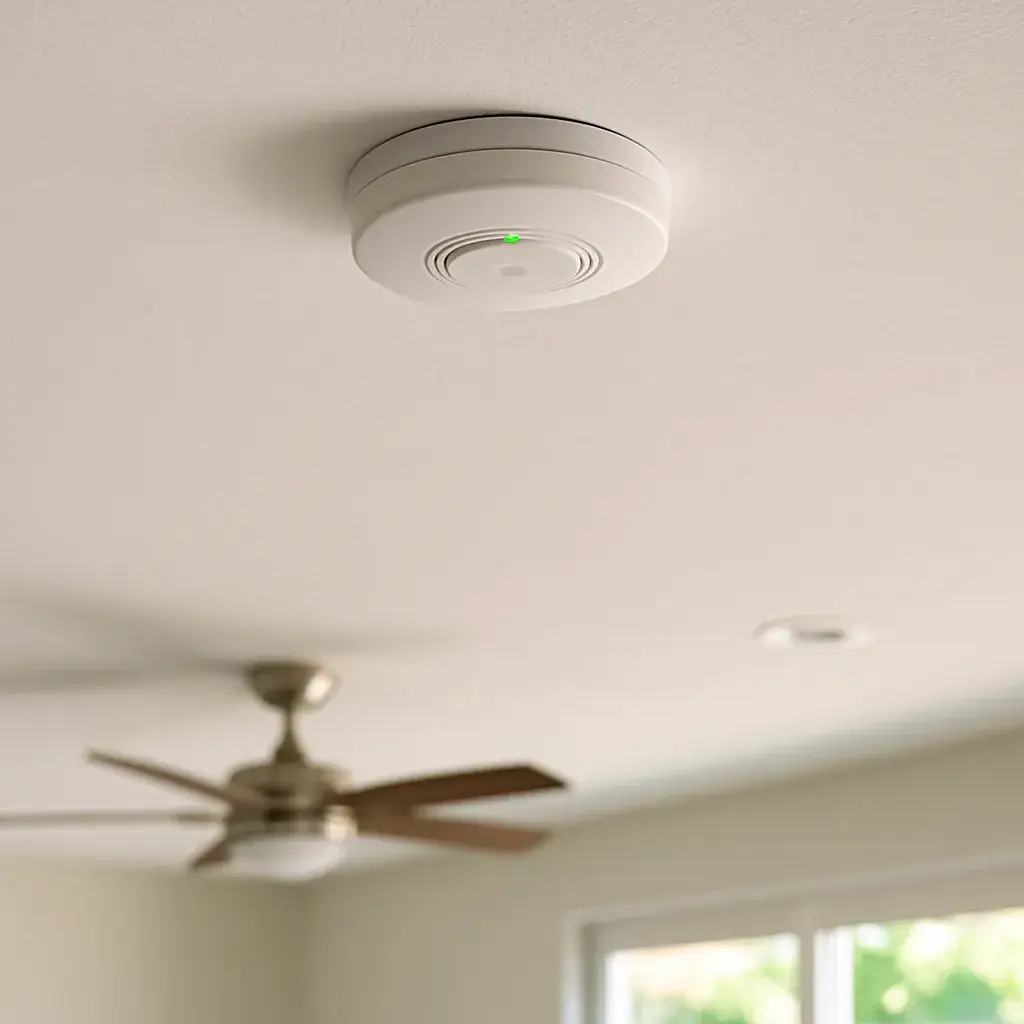
- It’s a standalone battery unit, not wired into your home’s electrical system
- The unit is less than ten years old and the plastic isn’t yellowed or cracked
- Only one detector is chirping, the others test fine
- There’s no smoke or CO combo function tied to a monitored system
- The chirp stops right after the new battery goes in
But here’s where a battery swap won’t fix anything. Hardwired detectors that chirp usually have a wiring issue or a dead backup battery that needs the right replacement part. Interconnected systems, where one detector going off sets off every detector in the house, need to stay matched. Mix brands or models and they can stop talking to each other. So if your detector is hardwired, older than ten years, or part of an interconnected system, a battery isn’t going to solve it.
We see this every single week. Someone swaps the battery, the chirp comes back three days later, and now they’re standing on a ladder at midnight wondering why.
And smoke detectors don’t last forever, most manufacturers rate the sensor itself for about ten years, then it needs full replacement, not just new batteries. Same goes for combo smoke and carbon monoxide units. The sensor wears out, the battery was never the real problem, it just bought you a little more time.
Not sure what your Smoke detector installation project needs? Ask us.
Call Today, Get Service Today. Xtreme Air Services is ready to help.
What to Expect During Professional Installation
Here’s what happens once we’re in your house. We walk the rooms with you first, hallway outside bedrooms, kitchen, near the stairs, and talk through where code wants a detector and where your family needs one. 80 six days a week.
Some Sunnyvale homes we get called to still have a single hardwired unit from the original build, no interconnection, no backup battery that still holds a charge.
- We check your current setup and note which units are outdated, missing, or wired wrong.
- We confirm power at the ceiling or wall box before pulling anything down.
- We mount the new detector, hardwired or battery, depending on what you picked.
- We connect interconnected units so one alarm trips them all.
- We test every unit in the house, not just the new ones.
- We walk you through the test button and battery swap before we leave.
Most jobs move fast. A straightforward swap on an existing wired box doesn’t take long at all. It’s the interconnected setups, or a spot with no existing box, that add time, since we may need to run new wiring or work through an attic run to get power where it needs to be.
You’ll never wonder what we’re doing or why. We explain each step in plain terms, no jargon, and we don’t leave until every alarm in the house tests clean.
Placement Rules That Prevent False Alarms and Code Violations
Here’s something folks don’t think about until it happens. You put a detector too close to the kitchen, and now it screams every time you make toast. Put one too far from a bedroom, and it might not wake anyone up in a real fire. Placement isn’t guesswork, it follows real rules, and getting it wrong causes both false alarms and gaps in coverage.
- Keep detectors at least ten feet from stoves and ovens so cooking smoke doesn’t trigger constant false alarms
- Put one inside every bedroom, one right outside each sleeping area, and one on every floor of the house
- Mount on the ceiling or high on the wall since smoke rises and gets caught fastest up top
- Skip the corners, dead air pockets sit there and slow down how fast smoke reaches the sensor
- Interconnect the units so if one goes off, they all go off, no matter where the smoke starts
We see this every single week. Someone calls us because their detector chirps every time they cook bacon, and it’s mounted too close to the kitchen. Moving it a few feet solves the problem for good.
Interconnection matters more than people realize. If a fire starts in the garage, you want the detector in the upstairs hallway going off too, not just the one closest to the flames. Battery units can be wireless-interconnected in a lot of cases, hardwired units are linked through the wiring itself. Either way, it’s not something you want to eyeball. Get the spacing and wiring wrong, and you either get annoyed at false alarms or, worse, you don’t get warned in time.
Smoke alarms are worth doing as a system rather than one at a time. Interconnection is the point: an alarm triggering in a far bedroom should sound the whole Sunnyvale house, not just the room it sits in. We install hard-wired units with battery backup in the locations code requires, then test the interconnection end to end. In older Sunnyvale homes that sometimes means running interconnect cable for the first time, and we will tell you whether your house has it before quoting the work. Wireless interconnection is a reasonable alternative for a Sunnyvale home where opening ceilings is not practical.
Alarm age is the detail most people miss. Smoke sensors degrade whether or not they have ever gone off, and the manufacture date printed on the back is what matters, not when it was installed. We check dates across the Sunnyvale house during any install and flag the units that are already past their service life, since a mixed-age system is only as good as its oldest alarm.
Frequently Asked Questions
Common questions about Smoke detector installation
How soon can you come out to install smoke detectors in Sunnyvale?
We schedule most Sunnyvale smoke detector installs within a few days of your call. If you’re dealing with a chirping alarm at midnight, we know that’s not fun, so we try to get you on the calendar fast. Straightforward swaps on existing wired boxes move quickly once we’re in the house. Jobs needing new wiring or attic access for interconnected systems take a bit longer, so we’ll tell you upfront what timeline to expect before we start.
What should I expect when your technician arrives at my house?
We walk through your home with you first, checking hallways, bedrooms, and the kitchen for detector coverage before touching anything. We confirm power at the ceiling box, mount the new units, and connect interconnected systems so every alarm trips together. Then we test every detector in the house, not just the new ones, and show you how the test button and battery swap work before we leave. You’ll never wonder what we’re doing or why.
Why do older Sunnyvale homes need special attention for smoke detector wiring?
Many of Sunnyvale’s older established homes were built without wiring run for interconnected smoke detectors, since that wasn’t standard when the houses went up. This means we sometimes need to run new wiring or work through an attic run to get power where it’s needed. Newer subdivisions usually already have that wiring in place, making hardwired or interconnected setups a much easier install. If your home is older, ask us about attic access before we start.
How do I know if a battery swap will fix my chirping detector?
A battery swap works if your unit is standalone, under ten years old, and the chirping stops right after you put in a fresh nine-volt battery. If your detector is hardwired, part of an interconnected system, or older than ten years, a new battery won’t solve it. Most manufacturers rate smoke sensors for about ten years, then the whole unit needs replacing. We see people swap batteries weekly only to have the chirp return days later.
Should I install a smoke detector in every bedroom, or just the hallway?
Every bedroom needs its own detector, not just the hallway outside it. Code calls for coverage in hallways near sleeping areas, but bedrooms and converted rooms often get missed, especially in older additions. We walk each room with you during installation and point out where code requires a detector and where your family needs one for real protection while sleeping.
Can you connect a new smoke detector to my existing interconnected system?
Yes, we can connect new units to your existing interconnected system, but the models need to match so they communicate correctly. If one hardwired unit in an interconnected setup fails, the rest often won’t sync right until it’s replaced with a compatible detector. We test every alarm in the house after installation to confirm the whole system trips together, not just the new unit you called us about.
Ready to Get Started?
Call 972-288-2263 Today, Get Service Today.