


Transfer Switch Installation: Should You Repair or Replace Your Transfer Switch?
How we tell whether your transfer switch needs one part fixed or a full replacement, and what each option costs.
What’s Covered on This Page
- What Decides Whether We Repair or Replace
- When We’d Repair Your Existing Transfer Switch
- When We’d Recommend Replacing It Instead
- What Repair or Replacement Typically Costs
- How We Help You Decide
- How do I know if my transfer switch needs a repair instead of a full replacement?
- What’s the biggest mistake people make when weighing repair versus replacement?
- When would you tell me to replace my transfer switch instead of repairing it?
- Do you charge a fee just to look at my transfer switch before quoting repair or replacement?
- Can I finance a new transfer switch if you recommend replacement?
What Decides Whether We Repair or Replace
The answer usually comes down to three things: the switch type, whether your panel has room, and how many circuits you want running when the power drops. A transfer switch moves your home safely between utility power and your generator, so we never treat it like a part to patch halfway. (That part matters more than people think.) That holds on every Sunnyvale job we quote.
Manual transfer switches are simpler and cost less. They only cover the circuits you picked ahead of time, and someone still has to flip them during an outage. If you already have one and it just needs to cover different circuits now, that is often a rewiring job, not a full replacement. We will tell you that if it fits your setup, because there is no reason to sell new equipment when the old box still does the job. We say that to Sunnyvale homeowners more often than you might expect.
Automatic transfer switches sense the outage and switch over on their own. No one has to run to the garage in a storm to flip a lever. If your panel is older, undersized, or already crowded with double-tapped breakers, the conversation often shifts to panel condition. We will not install a transfer switch on a panel that cannot safely support it. That is how the code and the equipment work together. Sunnyvale inspections hold us to the same standard.
Distance to the generator matters more than most people expect at first. A switch ten feet from the generator pad is a different job than one that has to run wire under a slab or across an older Sunnyvale or Mesquite lot with mature trees and buried lines. That distance changes labor and materials, and it is one of the bigger swings inside our $700-$1,100 typical range for this job. Sunnyvale lots run deeper than most Metroplex suburbs, so that distance matters here.
Code upgrades and permits are the other variable we cannot know until we see your panel. Some homes need a permit pulled. Some need a small code correction at the same time to bring an older panel up to current standards. We handle the permits and inspections when they are required, but we do not fold those costs into a generic quote before we have looked at your actual panel. We do that walkthrough at your Sunnyvale property before quoting.
Here is the part we would rather say now: if you already own a generator and just need it connected safely, this is a same-day job for most homes. If you are buying a generator and a switch at the same time, that is a bigger install we schedule out, and we will walk you through our Whole-Home Standby Generator Installation options during that same visit.
When We’d Repair Your Existing Transfer Switch
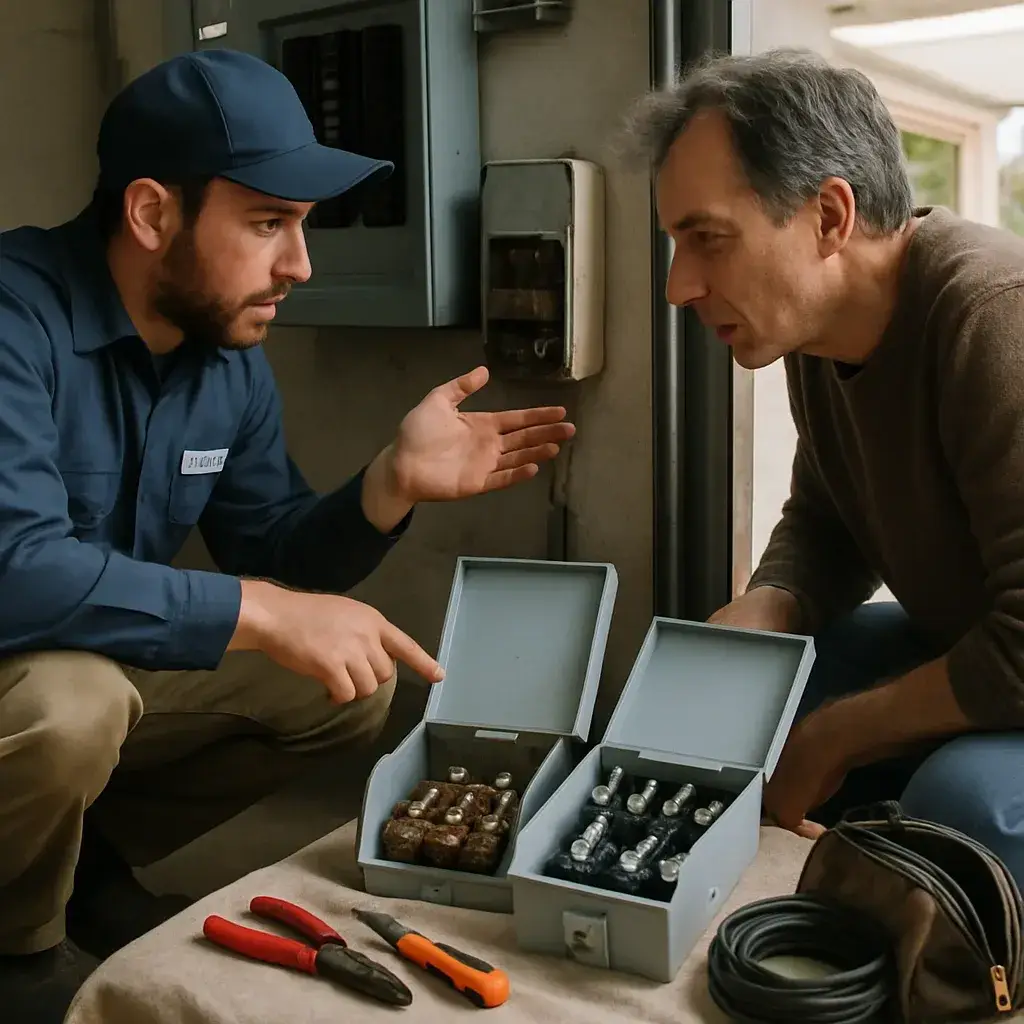
If your transfer switch is working but throwing a fault, sticking, or failing to signal the generator correctly, repair is usually the right call before we talk about replacement. A transfer switch has one job: move your home’s electrical load between utility power and your generator without cross-connecting the two. When that job stops happening cleanly, the cause is often a worn contactor, a failed relay, a loose connection at the lugs, or a control board that has stopped talking to the generator the way it should. Those are parts we can diagnose and swap without pulling the whole switch out of your panel. Most Sunnyvale calls end right there, with one part replaced.
We lean toward repair when the switch is the right size for your generator and panel, the enclosure and wiring are in good shape, and the problem traces to one component instead of the whole assembly. A manual switch with a stiff handle or worn contacts is a good repair candidate almost every time. An automatic switch that is not sensing outages properly can often be fixed by replacing a controller or sensor rather than the entire unit. If you added an automatic standby generator later and it is a newer switch that just needs a wiring correction or a settings fix, that is repair territory too. We see that on newer Sunnyvale installs fairly often.
Some transfer switches are 15 or 20 years old, undersized for a generator you upgraded later, or built to a code standard that has changed since then. In those cases, a repair might get the switch running again for now, but it will not solve the mismatch between your equipment and your home’s needs. We will tell you when that is what we are looking at instead of just patching the immediate symptom. A switch rated for fewer circuits than your panel needs, for example, is not something we would recommend repairing around. That is a case where replacement makes more sense, because a repair there only delays a bigger decision.
We will not recommend a whole new transfer switch when a $150 relay or a tightened connection solves the actual problem. That is part of what a workmanship warranty on our labor is meant to back up: if a repair we did does not hold, we are the ones who address it. Every visit starts with a real inspection of the switch, the wiring, and how it performs under load, not a guess based on the model number alone. You will get a written, flat-rate price before we touch anything, whether the fix ends up being a $700 repair or a full swap. If you are weighing your options before your generator setup is even installed, our Transfer Switch Installation in Sunnyvale page walks through what a new install involves from start to finish.
When We’d Recommend Replacing It Instead
Most of the time, repair is not even on the table for a transfer switch install, because you are usually starting from scratch with a new generator setup. But if you already have a switch in place, whether it is an old manual switch or a first-generation automatic one, and it is not working right, replacement is often the better call.
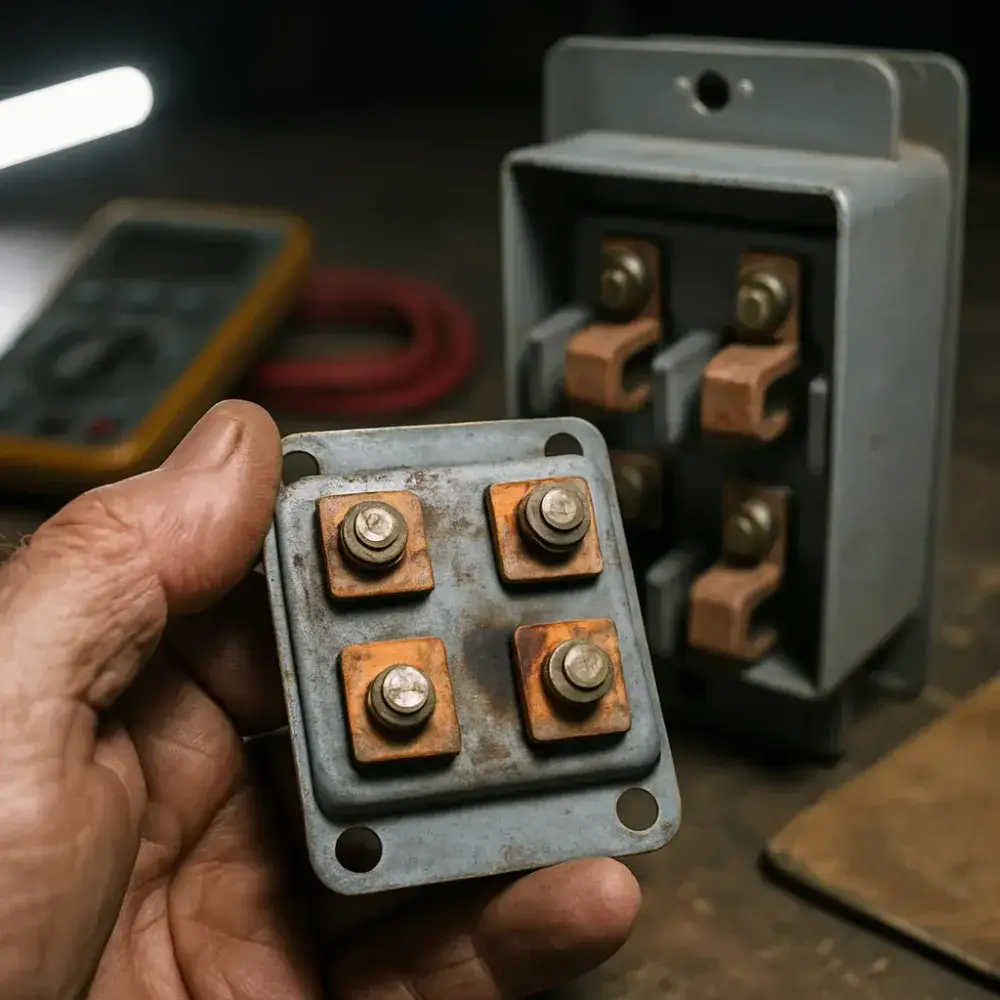
A transfer switch is a simple piece of equipment doing an important job: it keeps generator power and utility power from ever meeting at the same time. When one starts misfiring, sticking, or failing to signal the generator correctly, we do not like patching around that. If the switch itself is the problem, not a loose wire or a bad connection we can tighten and test, we will tell you a new switch is the right move. Trying to nurse along a failing switch to save a few hundred dollars is not worth the risk to your panel or your generator. That holds on a Sunnyvale job the same as any other.
Age and switch type matter too. If you have an old manual switch and you are already paying us to be in the panel, that is usually the moment to talk about upgrading to automatic. A manual switch means someone has to be home to flip it during an outage. An automatic switch senses the outage and switches over on its own, whether you are there or not. For a lot of DFW homeowners, especially anyone who travels or runs a business that cannot sit dark, that upgrade pays for itself the first time the power goes out while nobody is around to flip a lever. Sunnyvale storm outages tend to arrive at inconvenient hours.
Panel condition plays into it as well. If your panel is older, undersized for the circuits you want backed up, or does not have room for a new switch without other work, we will walk you through what that means before we touch anything. That is part of our written, flat-rate quote process: you see the real scope and the real number before any work starts, not after we have opened up your panel. You see the Sunnyvale number before we start, not after.
On the cost side, a typical installation runs $700 to $1,100 for most jobs, with a broader range of $500 to $1,500 depending on switch type, circuit count, panel condition, distance to the generator, and any code upgrades or permits needed. That price covers the switch, materials, installation, connections, and testing. It does not cover the generator itself, panel upgrades, code corrections, or permits unless we have already spelled that out in your quote. Sunnyvale permits get quoted separately for that reason.
One thing we will not do is install a transfer switch you bought somewhere else. Our workmanship warranty only covers equipment we have sourced and can stand behind, so we install what we supply. If replacement is the direction, that is part of the same conversation and the same quote, not a separate sales pitch layered on top. Same conversation, same quote, every Sunnyvale job.
Watch Our Video
See How We Handle Transfer Switch Installation in Sunnyvale
Xtreme Air Services — Serving Sunnyvale and surrounding areas
Need help with Transfer Switch Installation?
Call Today, Get Service Today. Xtreme Air Services is ready to help.
What Repair or Replacement Typically Costs
Installation costs $700 to $1,100 for most homes in the DFW area, with the full range landing between $500 and $1,500 depending on the job. That price covers the transfer switch itself, professional installation, all connections to your panel and generator, and testing before we leave. It does not include the generator, any panel upgrades your home might need, code corrections, or permits, since those depend on your specific setup and are not part of every job. That applies to Sunnyvale homes as much as anywhere in the Metroplex.
The biggest factor is switch type. A manual transfer switch, where you flip it yourself when the power goes out, costs less than an automatic switch that senses an outage and switches over on its own. Automatic switches have more parts, more wiring, and more programming, so labor and materials both run higher. If you are pairing this with a whole-home standby generator, an automatic switch is usually the point. That is the setup most Sunnyvale standby owners end up with.
Number of circuits matters too. A switch that only needs to carry your refrigerator, a few lights, and a window unit is a smaller job than one feeding your whole panel, including central AC and heat. More circuits mean more wiring runs and more time on the panel, which is where a lot of these jobs land at the higher end of the range. Bigger Sunnyvale homes running two systems land there more often.
Panel condition and space play into it as well. We have been into plenty of DFW homes, especially older ones around Dallas and Mesquite, where the panel is already crowded or the wiring inside does not leave much room to work. That can mean extra time to reroute or reorganize before the transfer switch even goes in. Newer subdivisions in places like Frisco or Allen tend to have panels with more breathing room, which usually keeps the job closer to a straightforward install.
Distance from the panel to where your generator sits also adds to the total. A generator placed right next to the electrical panel is a shorter, simpler run. One placed farther out, which is common on bigger lots, means more conduit, more wire, and more labor to connect the two safely. On a deep Sunnyvale lot that run can be the single biggest variable.
Some homes need a code upgrade or a permit pulled before the switch goes in, and that adds its own cost on top of the installation price. We handle permits and inspections when they are required, but we do not fold that cost into our flat-rate number because it varies by property. Sunnyvale sits in Dallas County, and we file there on your behalf.
Every job starts with a $26 to $99 service-call fee, and that fee gets credited toward the job if you move forward with us. You get the full price in writing before we touch anything, so there is no guessing what the final bill looks like. If the cost is more than you want to pay up front, financing is available on qualifying installations, so it does not have to be all at once.
How We Help You Decide
Most homeowners looking at transfer switch installation are not choosing between repair and replace the way you would with an AC unit or a water heater. They are choosing between an automatic transfer switch and a manual one, and that choice drives almost everything else about the job. We will walk you through both during a consultation. An automatic transfer switch senses a power loss and switches your home to generator power on its own, usually within seconds. A manual switch means you flip it yourself when the lights go out. Automatic costs more upfront. Manual asks more of you when a storm hits. Sunnyvale gets enough of those to make the difference real.
For most DFW homes, we install these alongside a whole-home standby generator, and the switch has to match how the generator is set up to run. What moves the price is pretty specific: whether you are going automatic or manual, how many circuits you want backed up, the condition and space in your existing panel, how far the switch has to run to reach the generator, and whether any code upgrades or permits come into play. A small manual switch feeding a handful of circuits sits at the low end. A larger automatic switch tied into a full panel with some rewiring involved lands higher. We price that openly on every Sunnyvale job.
The price we quote includes the transfer switch itself, the materials, the installation, connections, and testing before we leave. It does not include the generator, any panel upgrades your home might need, code corrections, or permits, unless we have spelled those out in your quote ahead of time. We will not hand you a number and then tack on a permit fee later. If your job needs one, it is in the price before we start.
One thing we will tell you plainly: we do not do labor-only installs on transfer switches you have bought somewhere else. Our workmanship guarantee only works if we can stand behind the parts we put in, and we cannot do that with equipment we did not source or verify ourselves. If that is the arrangement you are looking for, we are not the right call for that piece of the job.
We also do not cut corners on the permit side. Every transfer switch we install gets done to code, with permits and inspections pulled when they are required. If a home’s panel is older and cannot safely support the switch you want, we will say so before any work starts, not after.
A $26 to $99 service-call fee applies to the visit, and it is credited toward the job if you move forward with us. You will get a written, flat-rate quote before anything gets touched, and financing is available on qualifying installations if that helps spread out the cost. If you are weighing options, our Generator Installation Service in Sunnyvale page covers how the switch fits with the rest of a standby system.
See our full transfer switch installation service in Sunnyvale for what the complete job involves.
Frequently Asked Questions
Common questions about Transfer Switch Installation in Sunnyvale
How do I know if my transfer switch needs a repair instead of a full replacement?
We look at whether the problem traces to one part or the whole switch. A worn contactor, loose connection, or failed relay usually points to a repair. If the switch is undersized for your generator or panel, or built to an older code standard, replacement makes more sense. We inspect the switch and wiring under load before recommending either option, so you get a real answer, not a guess.
What’s the biggest mistake people make when weighing repair versus replacement?
The biggest mistake is assuming an older switch always needs replacing. Plenty of manual and automatic switches just need one part fixed, like a relay or a control board, and keep working fine afterward. The real question is whether the switch still matches your generator size and circuit needs. If it does, repair is usually the right call before replacement talk starts.
When would you tell me to replace my transfer switch instead of repairing it?
We’d recommend replacement when the switch itself is undersized for your circuits, mismatched to your generator, or built to a code standard that’s since changed. Trying to repair around that only delays a bigger decision. If the switch and panel are the right size and one component failed, repair is what we recommend instead. We won’t sell a new switch when tightening a connection solves the problem.
Do you charge a fee just to look at my transfer switch before quoting repair or replacement?
Yes, we charge a $26-$99 service-call fee for that visit. If you move forward with the repair or installation, we credit that fee toward the job. This covers inspecting the switch, wiring, and how it performs under load before we give you a flat-rate price for either option.
Can I finance a new transfer switch if you recommend replacement?
Yes, we offer financing on qualifying installations and larger jobs, subject to approved credit. This applies whether you’re replacing an existing transfer switch or installing one for the first time alongside a new generator. We can go over financing details once we know whether you need a repair or a replacement.
Ready to Get Started?
Call 972-288-2263 Today, Get Service Today.