


Water Softener Maintenance in Sunnyvale: Keep Your System Running Right
Scheduled softener servicing – resin, valve, brine tank and settings checked – tuned to whether you are on a private well or municipal supply.
What’s Covered on This Page
- Signs Your Softener Needs a Maintenance Visit
- When Salt Refills Are Enough vs. When to Call a Pro
- What a Full Maintenance Visit Covers
- Well Water vs. Municipal Supply in Sunnyvale Homes
- How Often Your System Should Be Serviced
- How often should I schedule water softener maintenance in Sunnyvale?
- What happens when a technician comes out for water softener maintenance?
- How fast can someone get to my house in Sunnyvale for softener maintenance?
- Does well water in Sunnyvale wear out a softener faster than city water?
- How do I know if I just need to add salt or call for a maintenance visit?
- Can hard water damage my water heater if my softener isn’t maintained?
Signs Your Softener Needs a Maintenance Visit
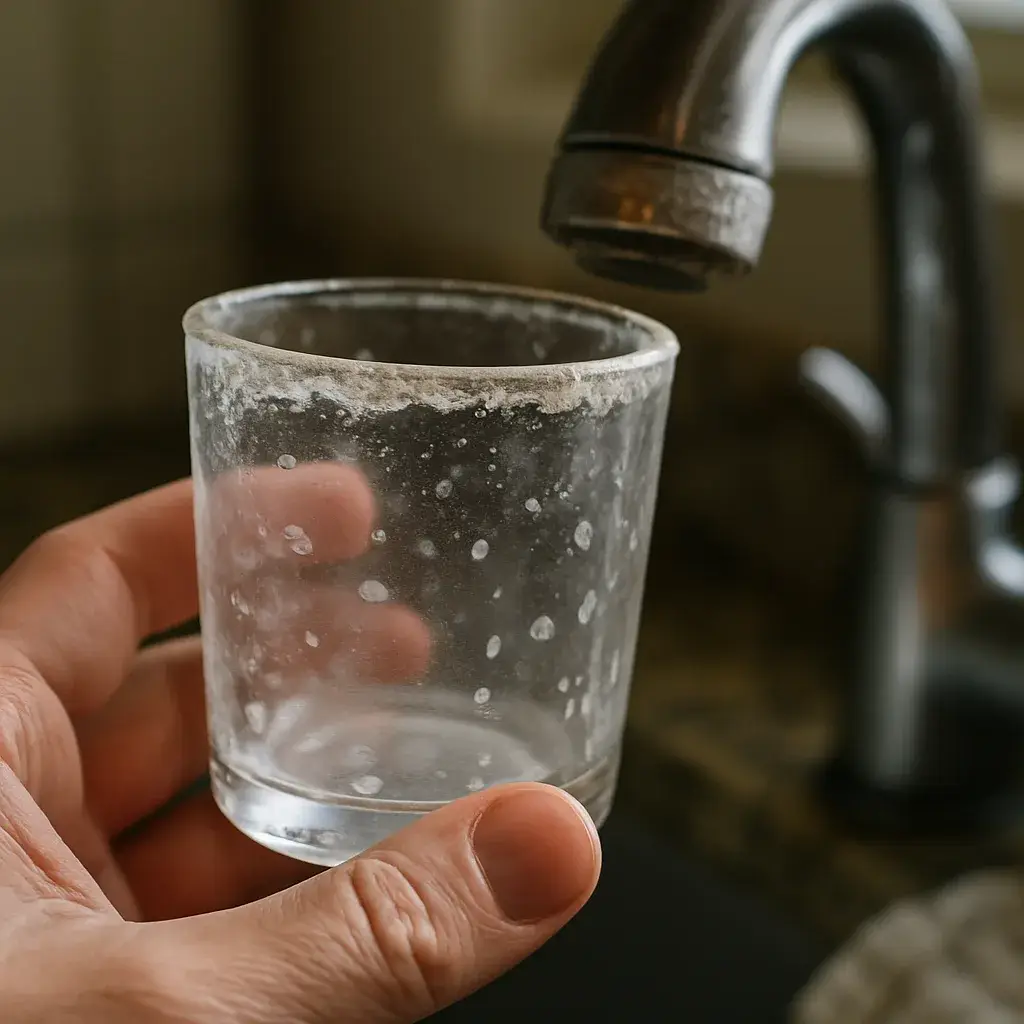
Here’s what we hear most. A homeowner calls and says the softener’s been fine for years. Then suddenly the shower glass is cloudy again, and the coffee maker’s crusting up faster than it used to. That’s usually not the softener failing. It’s just asking for attention.
North Texas water is hard. Sunnyvale sits right on the line between Dallas County and Kaufman County. Some homes pull from municipal supply, while others run on well water with their own mineral load. Either way, the softener’s resin bed and brine tank need regular checking. Otherwise, the system quietly starts losing ground.
- Soap and shampoo won’t lather like they used to, even with plenty of product
- White or chalky spots showing up again on faucets, glassware, and shower doors
- A salty or off taste in your drinking water, or water that feels slick and heavy
- The unit regenerates more often than normal, or you hear it cycling at odd hours
- Salt in the brine tank looks crusted or bridged instead of loose and settled
Any one of those on its own isn’t a big deal. Two or three at once, and we’re usually looking at a resin bed that’s fouled or a valve that’s not cycling right.
When Salt Refills Are Enough vs. When to Call a Pro
Here’s the truth. If your softener is working fine and the salt level in the tank just looks low, pour some in. You don’t need us for that.
When does a bag of salt stop being the fix? Sunnyvale and the towns along U.S. 80 run on water pulled from North Texas surface sources. It’s hard, full of calcium and magnesium that build scale fast in summer when usage spikes. If salt levels look normal but you’re still noticing spots on dishes, stiff towels, or soap that won’t lather, the unit’s cycling or resin bed is the problem, not the salt supply.
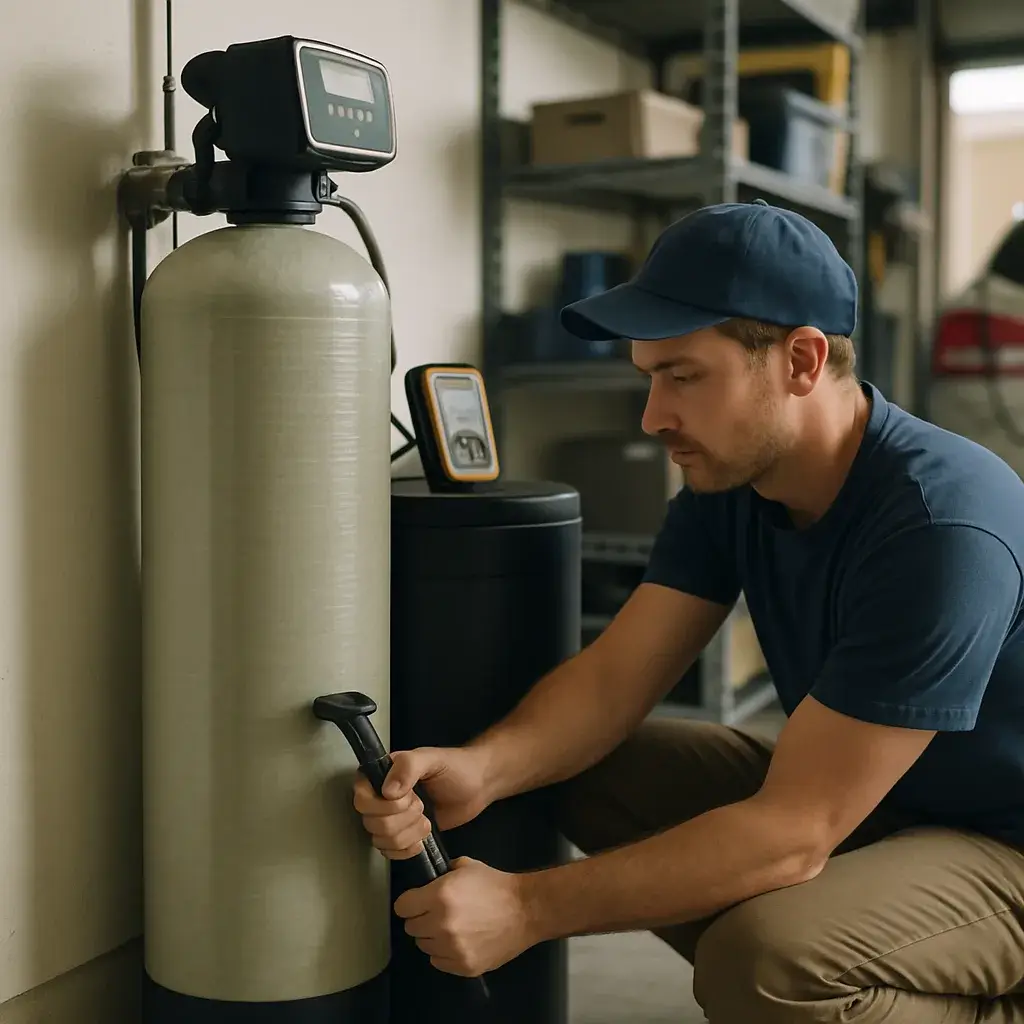
We get calls where the homeowner swears they just filled the tank last month and the water’s still hard. It’s a salt bridge, a hard crust that forms above the water line in the brine tank and stops salt from dissolving into the system at all. You can check for this yourself with a broom handle. Poke down into the tank and see if you hit a hollow crust instead of loose salt.
- Salt looks fine but water still feels hard or leaves spots. That points to a mechanical or resin issue.
- You hear the unit cycling at odd hours or not regenerating at all.
- The brine tank has standing water sitting on top of the salt.
- It’s been longer than a year since anyone checked the valve, resin, and settings.
Any of those, and a simple refill won’t touch it. That’s when it’s worth having someone get inside the valve and resin bed and see what’s really going on.
What a Full Maintenance Visit Covers
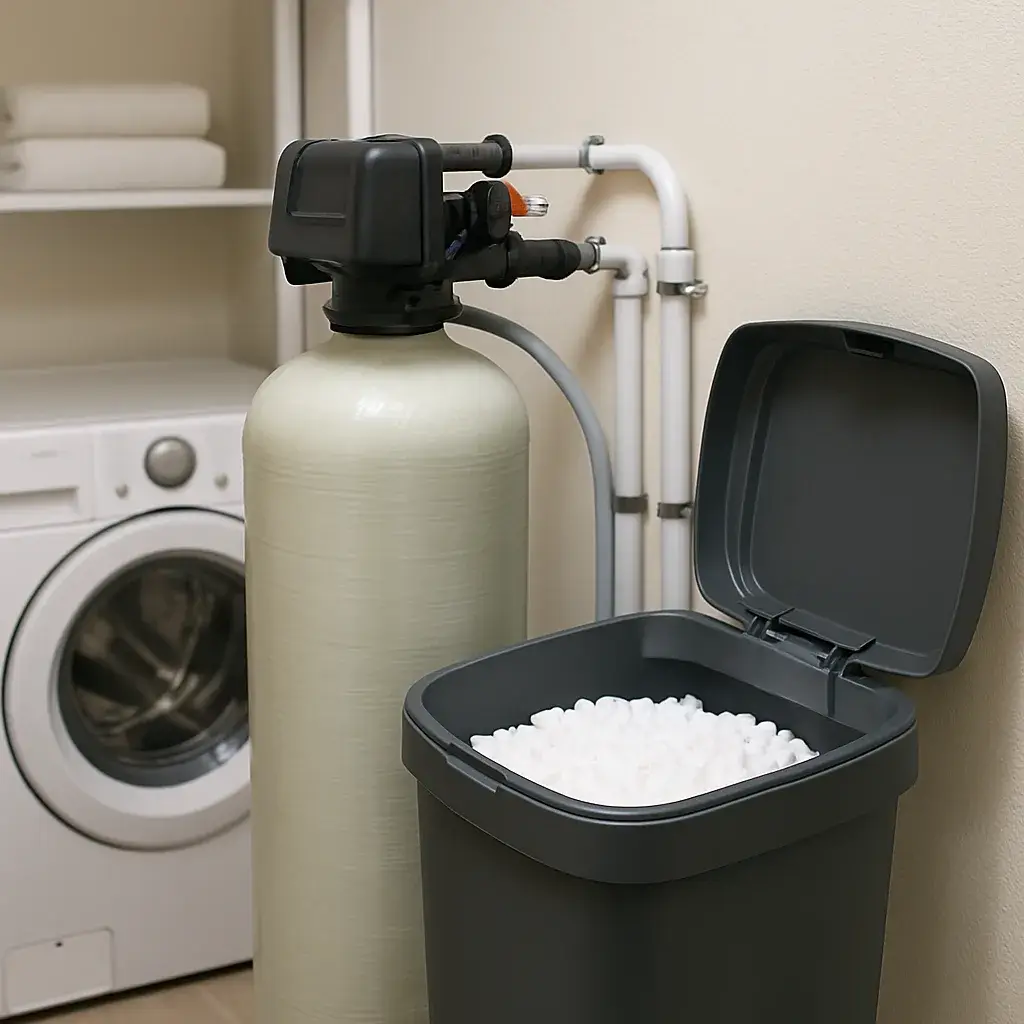
What happens when a tech shows up? First, we look at the whole system before touching a single knob. That means checking the control valve, popping the brine tank lid, and watching how the unit regenerates in real time. The problem is often buildup nobody’s noticed yet, salt mush at the bottom of the tank, or a resin bed that’s lost its punch.
- Inspect the control valve and settings for the right regeneration schedule
- Check the resin bed for wear and hardness bleed-through
- Clean the brine tank and break up any salt bridging or mush
- Test water hardness before and after the cycle
- Watch a full regeneration cycle to confirm timing and draw are correct
A routine visit like this runs $100 to $300. The most common job, a full inspection and clean, usually falls between $100 and $200. That covers the inspection, the cleaning, and the performance check. It doesn’t cover parts, resin replacement, or anything broken we find along the way. We’ll always quote that separately before doing the work.
Sunnyvale’s hot summers push these systems harder than most homeowners expect. More water runs through the house for yard watering and extra showers, so the softener cycles more often, and the resin wears faster. That’s exactly the kind of stress a maintenance visit is built to catch early.
Have questions? We’re happy to help.
Call Today, Get Service Today. Xtreme Air Services is ready to help.
Well Water vs. Municipal Supply in Sunnyvale Homes
Not every home in Sunnyvale gets water the same way. That changes how often your softener needs a look. Homes closer to town pull from municipal supply, treated water that’s still plenty hard by the time it reaches North Texas taps. Head toward the edges near the Dallas and Kaufman county line, and you’ll find more properties on private wells, especially on larger lots. Well water around here often carries iron and sediment along with the calcium and magnesium. That combination wears on a resin bed faster than city water alone.
A softener on well water can look fine on the outside and still be losing capacity underneath. We check the resin condition every visit for exactly this reason. Iron fouling doesn’t always show up as a taste or color problem right away.
- Municipal-supply homes: routine checks catch scale buildup before it hits water heaters and fixtures
- Private well homes: added iron and sediment mean the resin bed and screens need closer attention
- Mixed-source neighborhoods near the county line: maintenance history matters more than guesswork
If you’re not sure which camp your house falls into, that’s a fair question. It’s one we ask before we ever touch the tank. It changes what we check and how often we’d suggest coming back.
How Often Your System Should Be Serviced
Most homes here do fine with a check-up once a year. That’s the general rule we tell folks. Your water use, household size, and how hard your water runs can push that number up or down.
North Texas water is hard, plain and simple. Sunnyvale is no exception. Older slab-on-grade homes from the 70s and 80s often have galvanized or copper lines that show mineral buildup faster than newer subdivision plumbing. That buildup is exactly what routine softener maintenance is there to catch early.
- A family of four with average use: once a year is usually enough
- A bigger household, or one running the softener hard through a hot Texas summer: closer to every six to eight months
- Well water instead of municipal: more frequent checks, since mineral content swings more
- Noticing spots on dishes or stiff laundry sooner than expected: don’t wait for the calendar, call
Summer heat matters more than people think. High attic temps and heavy AC condensate runoff can push extra load onto a softener that’s already working overtime. We see units that got skipped for two summers straight. The resin bed just can’t keep up anymore.
Don’t go by guesswork. If it’s been over a year, or you can’t remember the last check, that’s your answer.
Frequently Asked Questions
Common questions about Water softener maintenance
How often should I schedule water softener maintenance in Sunnyvale?
Most homes here do fine with one check-up a year. Sunnyvale’s hard water and hot summers push softeners harder than owners expect, especially when yard watering and extra showers spike usage. An annual visit catches resin wear and valve issues before they turn into a bigger repair. If your home runs on well water near the Dallas-Kaufman county line, you may want to check twice a year since iron and sediment wear the resin bed faster than city water alone.
What happens when a technician comes out for water softener maintenance?
We check the whole system before touching anything, starting with the control valve and brine tank lid. Then we watch a full regeneration cycle to see how the unit performs, not just how it looks sitting there. We test water hardness before and after, check the resin bed for wear, and clean out any salt bridging or mush in the tank. You’ll know exactly what we found and what, if anything, needs fixing before we do more work.
How fast can someone get to my house in Sunnyvale for softener maintenance?
We offer same-day service six days a week across the Sunnyvale area and the towns along U.S. 80. Softener problems rarely feel urgent until the water’s already spotty or the salt’s bridged, so we keep scheduling flexible for that reason. Whether you’re near the town center or out toward the county line on well water, we work the same visit into our route without making you wait days for someone to look at it.
Does well water in Sunnyvale wear out a softener faster than city water?
Yes, well water usually carries iron and sediment along with the calcium and magnesium found in municipal supply. That extra load fouls the resin bed faster than city water alone, and a softener can look fine on the outside while losing capacity underneath. If you’re on a well, especially on a larger lot near the Dallas-Kaufman county line, closer attention to the resin and screens during each visit helps catch that wear before it shows up in your water.
How do I know if I just need to add salt or call for a maintenance visit?
If the salt level looks low and the water’s still soft, a bag of salt is all you need. But if salt looks fine and you’re still seeing spots on dishes or soap that won’t lather, that points to a mechanical or resin problem, not the salt supply. Check for a salt bridge first by poking a broom handle into the tank. If you hit a hollow crust instead of loose salt, that’s worth a real inspection.
Can hard water damage my water heater if my softener isn’t maintained?
Yes, scale buildup from hard water settles in water heaters and fixtures long before most people notice a problem with their softener. Routine maintenance catches that buildup early, especially in municipal-supply homes where the water stays hard year-round. A neglected softener stops protecting your plumbing the same way it did when it was new, so regular checks matter even if your water still seems fine on the surface.
Ready to Get Started?
Call 972-288-2263 Today, Get Service Today.