


Protect Your Sunnyvale Home with a Whole-House Surge Protector
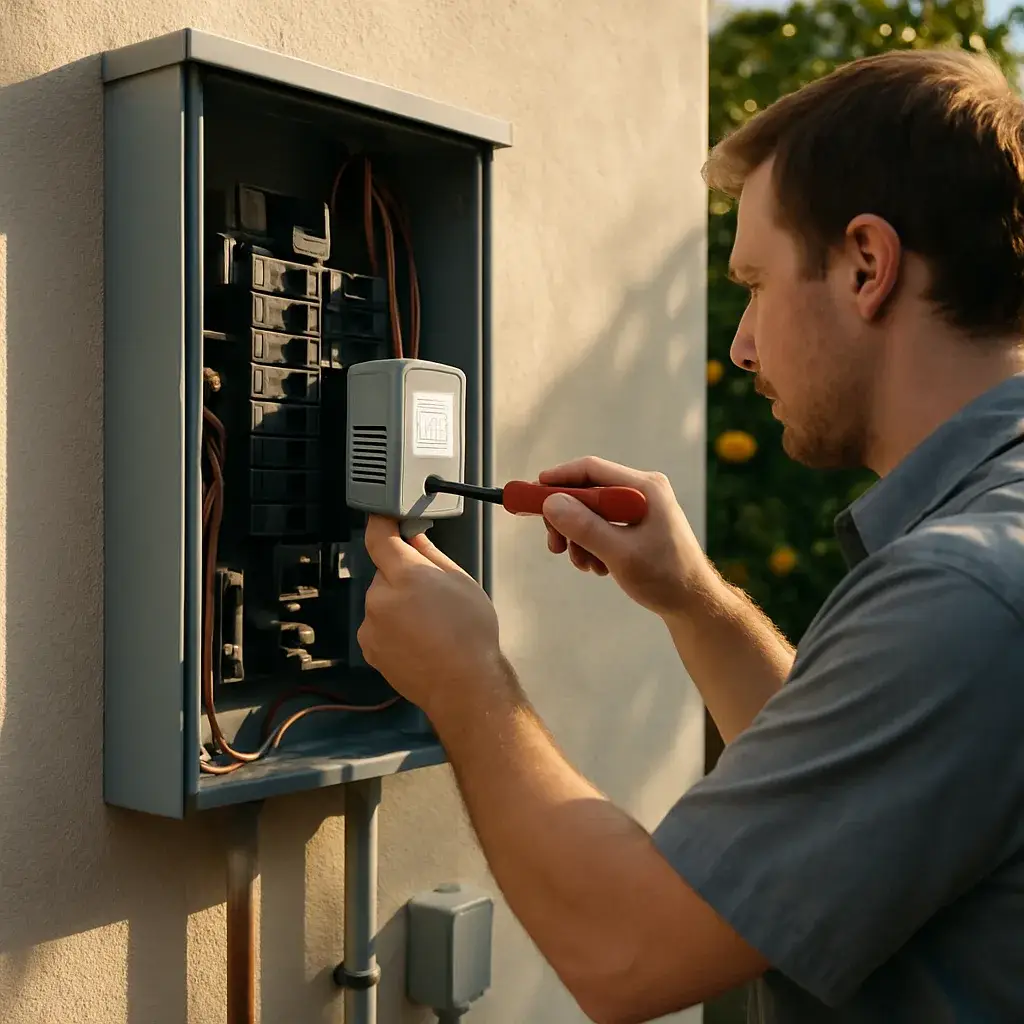
A panel-mounted surge device installed on a dedicated breaker with the ground path tested – the layer that protects everything hard-wired in the house.
What’s Covered on This Page
- How Grid Stress Puts Sunnyvale Circuits at Risk
- Whole-House Protection vs. Plug-In Power Strips
- When a Power Strip Is Enough (and When It Isn’t)
- What Happens During a Panel-Mounted Installation
- Testing, Grounding, and What Comes After Installation
- How fast can you get a whole-house surge protector installed in Sunnyvale?
- What happens when the electrician arrives to install my surge protector?
- Why do older Sunnyvale homes near the town center need extra surge protection?
- Will a whole-house surge protector stop damage from a lightning strike?
- If I already use plug-in power strips, do I still need a whole-house surge protector?
How Grid Stress Puts Sunnyvale Circuits at Risk
Here’s the thing nobody tells you until it’s too late. Every time the grid recovers from an outage, or a transformer nearby switches load, a spike travels down the line into your house. It’s not always the dramatic lightning strike everyone pictures.
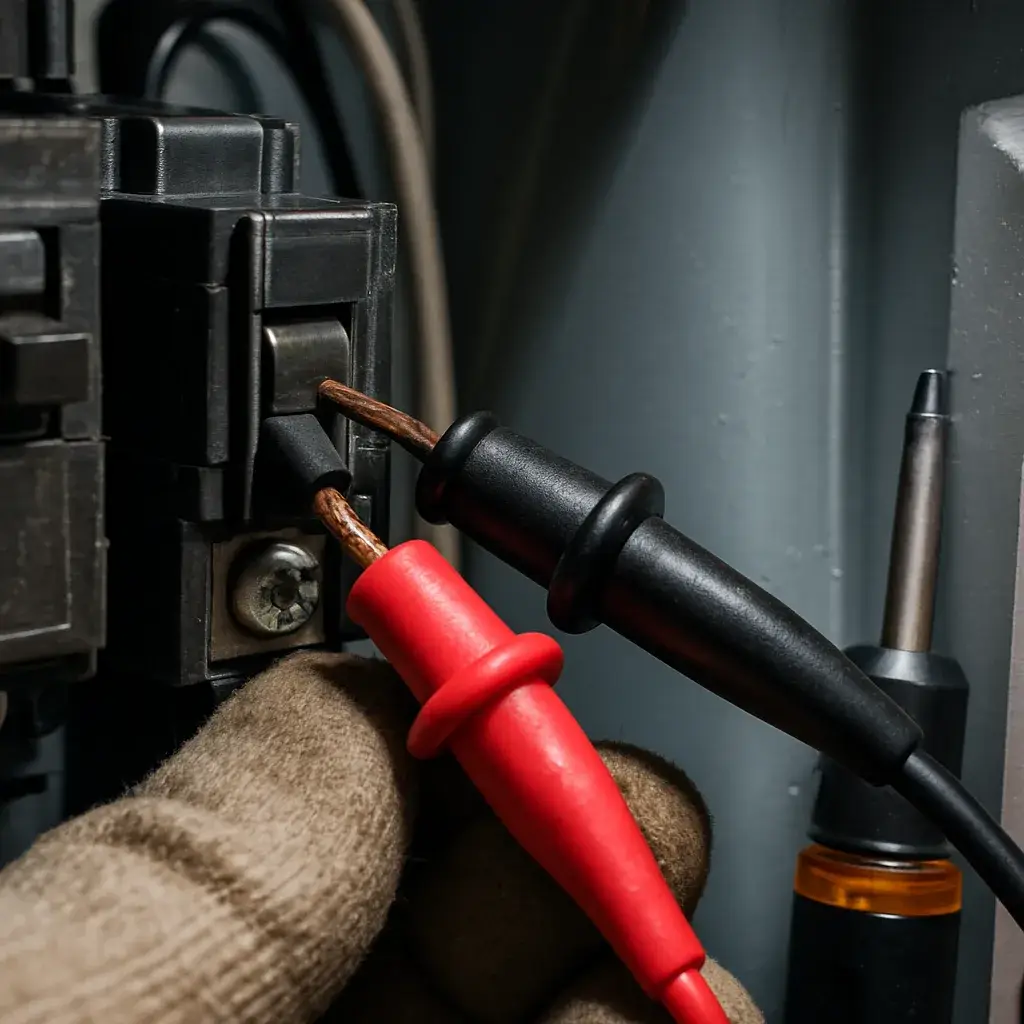
We see this every single week. Sunnyvale has newer subdivisions packed with homes running central AC at the same time on a July afternoon. That kind of demand puts real strain on the local grid, and strain shows up as voltage fluctuation. Older established homes near the town center often still run on panels that were never built with today’s electronics in mind, which makes them more exposed, not less.
- Utility grid switching during peak summer AC demand
- Storm season activity and nearby lightning strikes
- Downed or damaged lines during high wind events
- Large motors cycling on and off, like your own AC compressor
Most of these surges are small. But they’re constant, and they add up. A tankless water heater, a smart thermostat, a home theater system – none of it was built to shrug off years of tiny hits.
Whole-House Protection vs. Plug-In Power Strips
One of the most persistent points of confusion for homeowners is thinking a plug-in power strip does the same job as a whole-house surge protector. It does not, and the difference comes down to scope. A whole-house surge protective device, or SPD, mounts directly at your electrical panel or meter and intercepts surges before they travel through your home’s wiring to any outlet, appliance, or hardwired system. A plug-in power strip, even a good one with a joule rating printed on the box, only protects whatever is plugged directly into it.
This distinction matters more than most people realize because modern homes have far more at risk than a computer or television. HVAC control boards, smart thermostats, garage door openers, water heaters, kitchen appliances, and even hardwired smoke detectors all sit on circuits that a power strip can never reach. A whole-house unit is the only way to shield those components from a surge entering through the utility line.
This confusion is common enough that it shows up regularly in online electrician communities. On Reddit’s r/electricians, threads about dirty power and nuisance surges routinely include someone asking why their new power strip did not stop a surge that damaged an appliance elsewhere in the house. The answer is always the same: the strip was never protecting that circuit in the first place. It only guards the outlet it is plugged into, nothing upstream or downstream.
- Choose a whole-house SPD if you want protection for HVAC systems, appliances, and wiring throughout the entire home
- Choose a plug-in strip only as a supplemental layer for sensitive electronics like computers or home theater equipment
- Understand that plug-in strips do nothing for hardwired systems such as water heaters or garage door openers
- Recognize that whole-house units require panel access and should be installed by a licensed electrician
- Consider layering both: panel-level protection as the primary defense, plug-in strips as backup for high-value electronics
The practical takeaway is that these two products solve different problems and are not interchangeable. If the goal is protection for the electrical system as a whole, a panel-mounted device is the only option that covers every circuit. If the goal is an extra buffer for a specific desk setup or entertainment center, a quality power strip still has a role to play, just not as a substitute for whole-house coverage.
When a Power Strip Is Enough (and When It Isn’t)
Not every outlet in your Sunnyvale home needs enterprise-level protection. If you are plugging in a bedroom lamp, a phone charger, or a basic desk fan, a good quality point-of-use power strip with built-in surge suppression is genuinely enough. These strips are inexpensive, available at any hardware store along U.S. 80, and easy to install yourself in minutes. For low-value electronics that would not cause major financial pain if damaged, spending money on professional-grade protection for that single outlet is overkill.
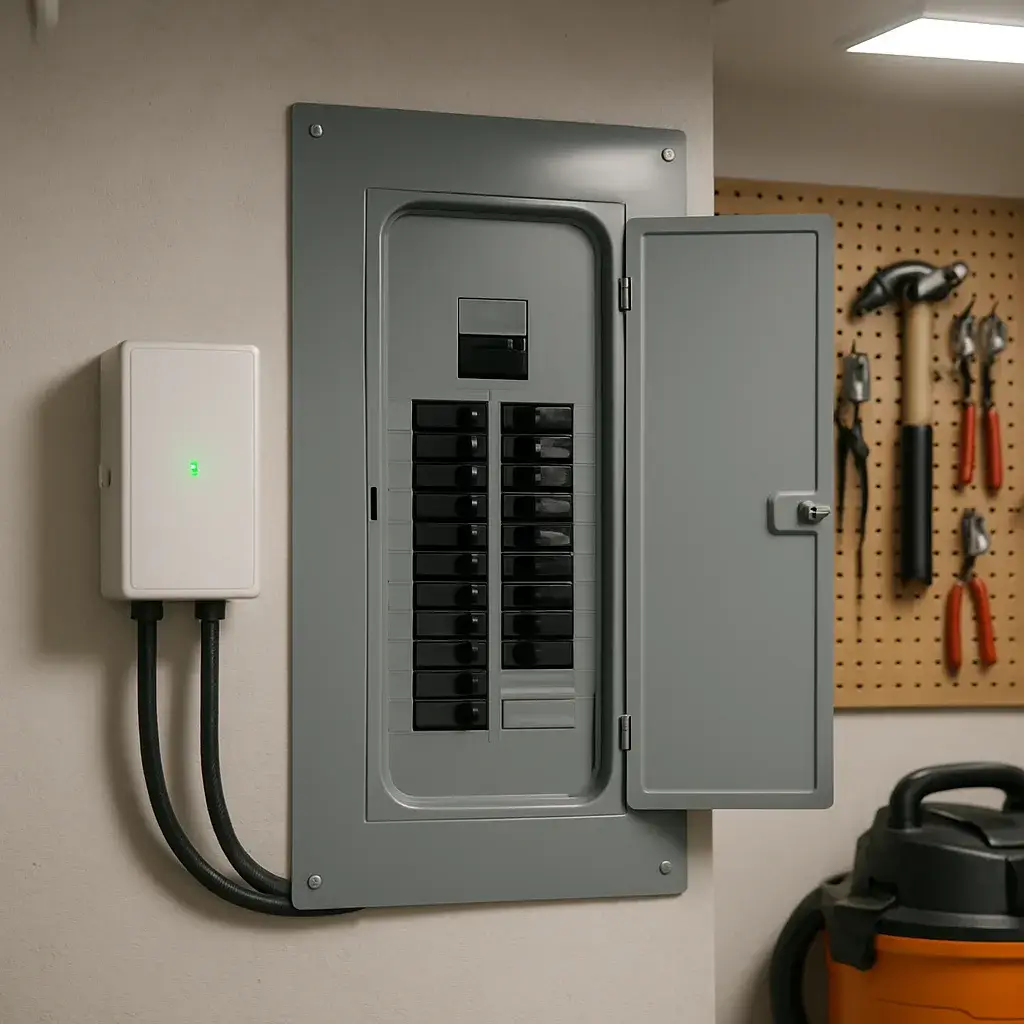
The calculation changes once you are talking about equipment tied to your home’s core systems or expensive appliances. HVAC compressors, smart thermostats, induction ranges, whole-home audio systems, and networked security cameras are all vulnerable to the same voltage spikes that a $15 strip cannot stop, because those spikes often enter through the electrical panel itself rather than a single outlet. A power strip only protects what is plugged into it. It does nothing for your furnace, water heater, or the wiring feeding your kitchen.
- A power strip is fine for lamps, chargers, small kitchen appliances, and other low-cost devices you would not mind replacing.
- Whole-house protection is worth it if you have a home office with networking equipment, a media room, or smart home hubs controlling your entire property.
- If your HVAC system, pool equipment, or major appliances have been damaged by surges more than once, a point-of-use strip has already proven insufficient.
- Homes near Sunnyvale’s older Oncor distribution lines or areas that see frequent utility switching events benefit more from panel-level protection.
- If you are simply trying to protect a single TV or gaming console, a strip rated for surge suppression is a reasonable and honest solution.
We would rather tell you a power strip will do the job than sell you a whole-house system you do not need. But if you have had repeated appliance failures after storms, if your panel has never been upgraded, or if you are protecting six figures worth of smart home and entertainment equipment, a single point of protection at the breaker panel is the only approach that covers everything downstream. That distinction is worth a five-minute conversation before you spend money in either direction.
Not sure what your Whole-house surge protector project needs? Ask us.
Call Today, Get Service Today. Xtreme Air Services is ready to help.
What Happens During a Panel-Mounted Installation
For most Sunnyvale homeowners, a panel-mounted surge protector installation is a single, same-day visit. The same licensed electricians who service breaker panels and standby generators handle this work, which means they already understand your panel brand, your home’s grounding setup, and any quirks common to older Sunnyvale neighborhoods with mixed wiring vintages. There is no need to coordinate a separate specialist or a second appointment.
- Inspect the panel and grounding system to confirm the electrical service is sound and code-compliant before adding new equipment.
- Verify available space inside or beside the panel enclosure and confirm the surge protector’s rating matches your home’s amperage and voltage needs.
- Mount the device securely to the panel or on an adjacent surface, following manufacturer clearance and orientation requirements.
- Connect the surge protector to the appropriate breaker and bonding points, torquing connections to spec.
- Test the installation with diagnostic tools to confirm proper voltage response and verify the indicator lights or alarm function correctly.
- Walk the homeowner through what the device does, what the status lights mean, and when a replacement might be needed after a major surge event.
Most installations are completed in two to three hours, though older panels needing minor upgrades or additional grounding work can extend the visit slightly. Technicians carry common parts and hardware on the truck, so small code corrections rarely require a follow-up trip.
Pricing is typically structured as a flat project rate rather than an hourly rate, so homeowners know the total cost before work begins. The main cost drivers are the type and age of the electrical panel, the amperage rating of the surge protection device, the condition of the existing grounding system, and whether any code upgrades are needed to bring the panel into compliance. Because these variables differ from home to home, exact numbers are best reviewed on our pricing guide, which breaks down typical ranges for Sunnyvale installations.
Testing, Grounding, and What Comes After Installation
Here’s the part a lot of folks don’t think to ask about. A whole-house surge protector bolted to your panel doesn’t mean much if nobody checks that it’s wired right. We test every single one before we leave. Every time.
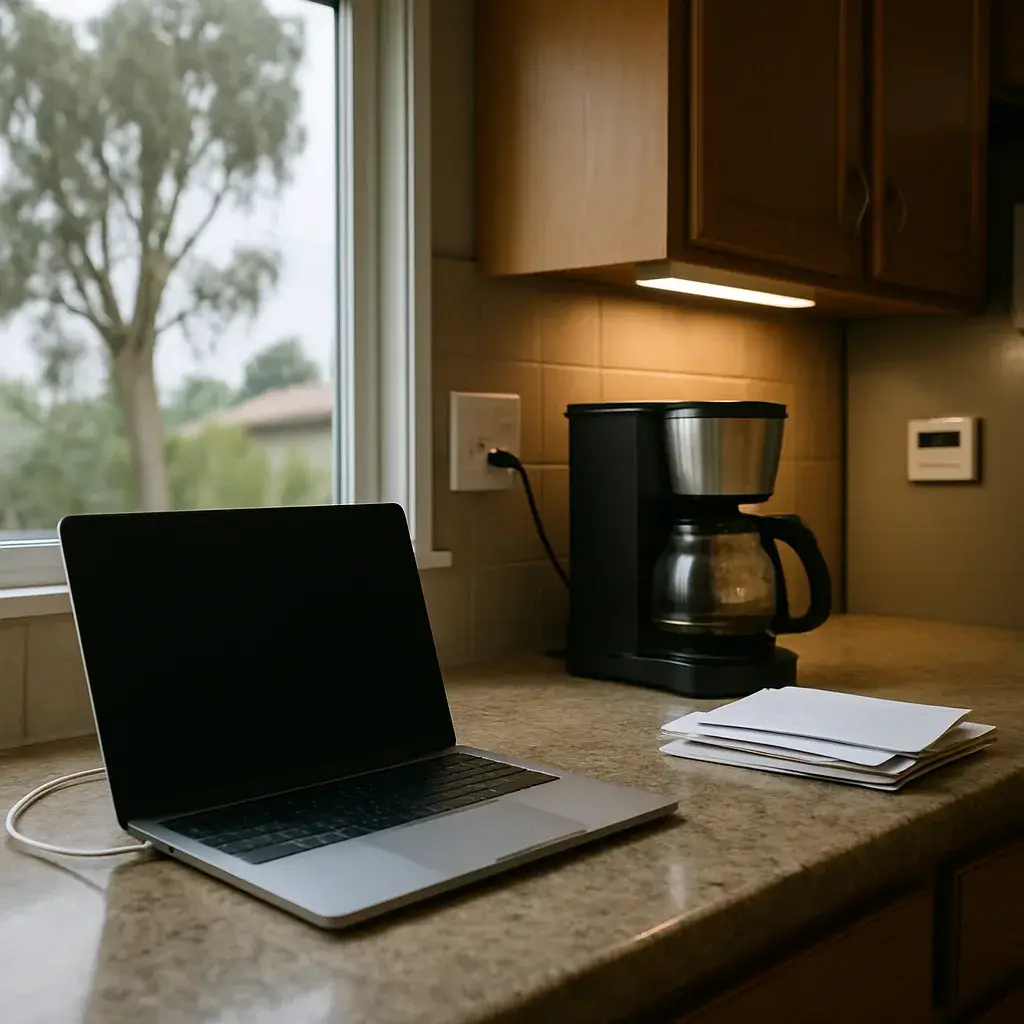
Testing means we confirm the device is reading the panel correctly and responding the way it should, not just sitting there looking installed. And we check your grounding while we’re in there, because a surge protector is only as good as the ground path behind it. If the grounding’s weak or outdated, the device has nowhere to send that extra electricity.
- Voltage readings at the panel before and after the device goes in
- Connection points checked for a solid, tight fit
- Grounding path traced back to confirm it’s carrying a real path to ground
So what happens if grounding’s bad? That’s a separate conversation. Grounding corrections aren’t part of a standard surge protector install, they’re their own fix. Older homes around Sunnyvale, especially ones built before some of the newer subdivisions went in, sometimes have grounding that hasn’t been touched in decades. We’ll tell you flat out if that’s what we’re seeing, before anything gets added to the job.
You won’t get a surprise bill for something we should’ve caught during the walk-through. If your panel needs more than the device itself, we’ll explain what and why, in plain terms, before we touch anything else.
Frequently Asked Questions
Common questions about Whole-house surge protector
How fast can you get a whole-house surge protector installed in Sunnyvale?
Most Sunnyvale homeowners can get scheduled within a few days of calling. We know summer storm season and peak AC months bring more requests, so booking early helps you get a slot before demand picks up. Once we’re on site, the actual installation at your panel usually takes just a couple of hours. You don’t need to clear your whole day. We’ll give you a clear window when we confirm your appointment, so you’re not stuck waiting around.
What happens when the electrician arrives to install my surge protector?
Your electrician will first check your electrical panel to confirm it can safely support a whole-house surge protective device. This means a quick look at your panel’s age, capacity, and wiring condition, especially important in older Sunnyvale homes near the town center. After that, the electrician mounts the device, connects it to your main panel, and tests it to confirm it’s working. You’ll get a walkthrough of what was installed and what it protects before they leave.
Why do older Sunnyvale homes near the town center need extra surge protection?
Older homes near Sunnyvale’s town center often run on panels built decades before today’s electronics existed. These panels weren’t designed to handle smart thermostats, tankless water heaters, or home theater systems, so they’re more exposed to voltage spikes than newer builds. Meanwhile, growing subdivisions push heavy AC demand onto the same grid during summer afternoons, creating fluctuations that travel down the line. A whole-house unit stops those spikes at the panel before they reach your wiring.
Will a whole-house surge protector stop damage from a lightning strike?
Yes, a whole-house surge protector is built to intercept the kind of massive voltage spike a nearby lightning strike sends through your utility line. It mounts at your panel or meter, so it catches the surge before it travels into your home’s wiring and reaches your appliances. Keep in mind most of the surges hitting your home aren’t from lightning at all. They’re smaller, constant hits from grid switching and AC compressors cycling on and off.
If I already use plug-in power strips, do I still need a whole-house surge protector?
Yes, plug-in power strips only protect whatever is plugged directly into them, nothing else. Your HVAC system, water heater, garage door opener, and hardwired smoke detectors all sit on circuits a power strip can never reach. A whole-house surge protector covers your entire electrical system from the panel out. Many Sunnyvale homeowners keep their power strips for desks and entertainment centers while adding panel-level protection for everything else in the house.
Ready to Get Started?
Call 972-288-2263 Today, Get Service Today.