


Electrical Fuse Changing in Sunnyvale: Fast, Safe Fixes for a Blown Fuse
Fuse panels serviced correctly, with the right fuse for the circuit rather than the biggest one that fits – and an honest look at whether the panel should stay.
What’s Covered on This Page
- Signs Your Blown Fuse Needs a Professional Fix
- Fuse Panel or Breaker Panel: Know the Difference First
- Fuse Trouble in Older Homes Along US-80 in Sunnyvale
- What to Expect During a Fuse Changing Visit
- How Fuse Replacement Pricing Works
- How fast can you get to my house if a fuse blows in Sunnyvale?
- What happens when your technician shows up to change a fuse?
- Why do so many older Sunnyvale homes still have fuse panels?
- How do I know if I have a fuse panel or a breaker panel?
- Why does the same fuse keep blowing over and over?
- Is it safe to replace a blown fuse myself?
Signs Your Blown Fuse Needs a Professional Fix
So how do you know if this is a five-minute fix or something that needs a closer look? Start with the obvious one: the lights go out in one room, or the microwave and the TV die at the same time. Usually it’s the same thing, a single fuse gave out under normal load. That’s the easy call.
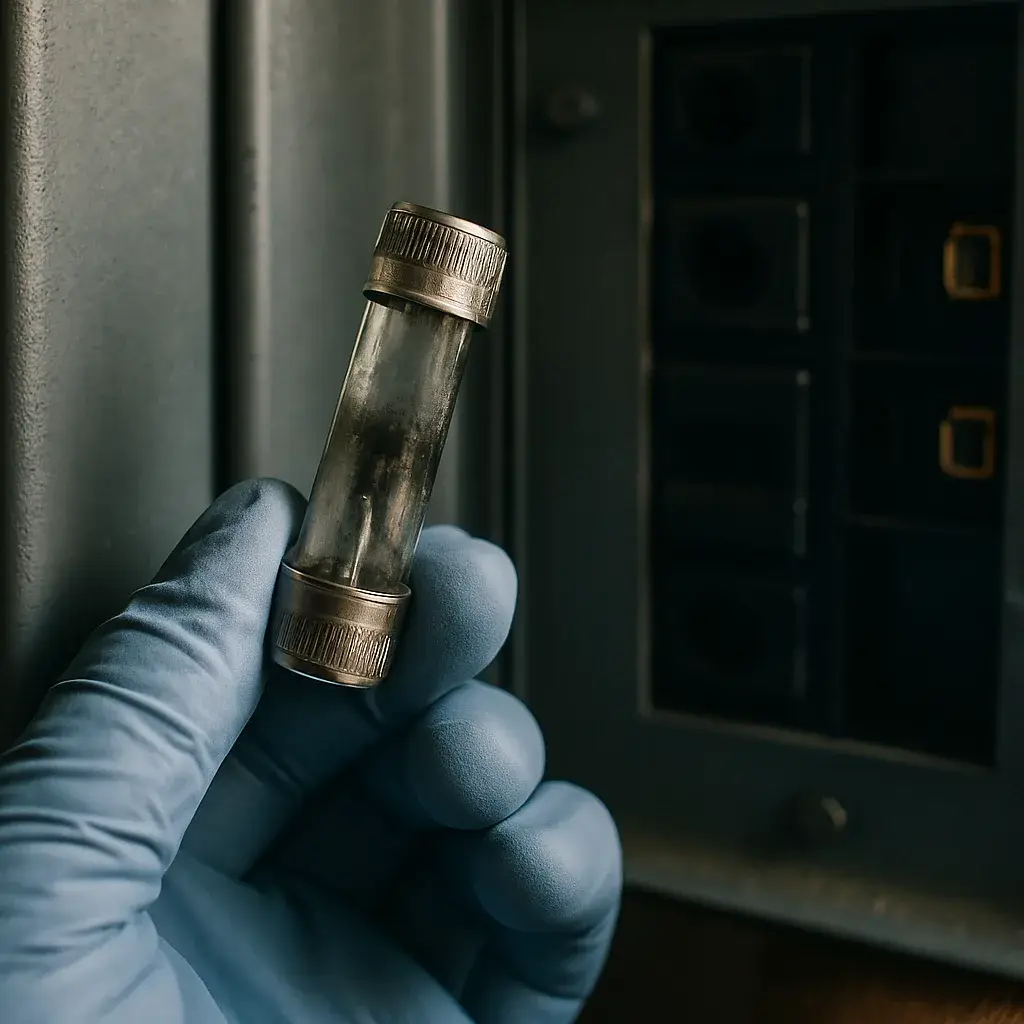
But if that same fuse blows again within a day or two, don’t just swap it and move on. A fuse that keeps failing is telling you something upstream is wrong, too much load on the circuit, a loose connection, or a panel that’s simply worn out.
- The same fuse blows more than once in a short stretch
- You smell something burnt or plastic-like near the panel
- The panel or the wall around it feels warm
- You see scorch marks, soot, or discoloration on the fuse box
- Lights flicker or dim right before a fuse goes
Any one of those means stop guessing. A lot of homes here in Sunnyvale still run on old fuse boxes from decades back, and that older wiring doesn’t always play nice with modern appliance loads. Heat and scorch marks especially are not a wait-and-see situation.
Our licensed and insured technicians can tell the difference fast, a bad fuse from a bad connection, in one visit.
Fuse Panel or Breaker Panel: Know the Difference First
Open your panel door before you dial the phone. That one look tells you almost everything.
A breaker panel has rows of switches you can flip up and down. A fuse panel has round glass or ceramic fuses that screw in like a light bulb, or sometimes cartridge fuses that pull straight out. If your power went out and you’re hunting for a switch that clicks, you’ve probably got breakers, and this isn’t your service. But if you’re staring at little glass windows with a metal strip inside, some clear and some cloudy or scorched, that’s a fuse panel.
- A blown fuse usually shows a dark, smoky, or melted look through the glass window
- The strip inside might be broken clean in half instead of discolored
- You smell a faint burnt or hot-metal odor near the panel when a fuse fails
- One circuit stops working while the rest of the house stays fine
- The panel itself is an older gray or black metal box, often with a pull-out main switch
We run into this a lot in Sunnyvale’s older established homes, the ones built before subdivisions took over, where the original fuse panel is still doing its job decades later. Nothing wrong with that on its own. Fuses just need the right replacement and a careful hand, and that’s the part homeowners tend to get stuck on.
Fuse Trouble in Older Homes Along US-80 in Sunnyvale
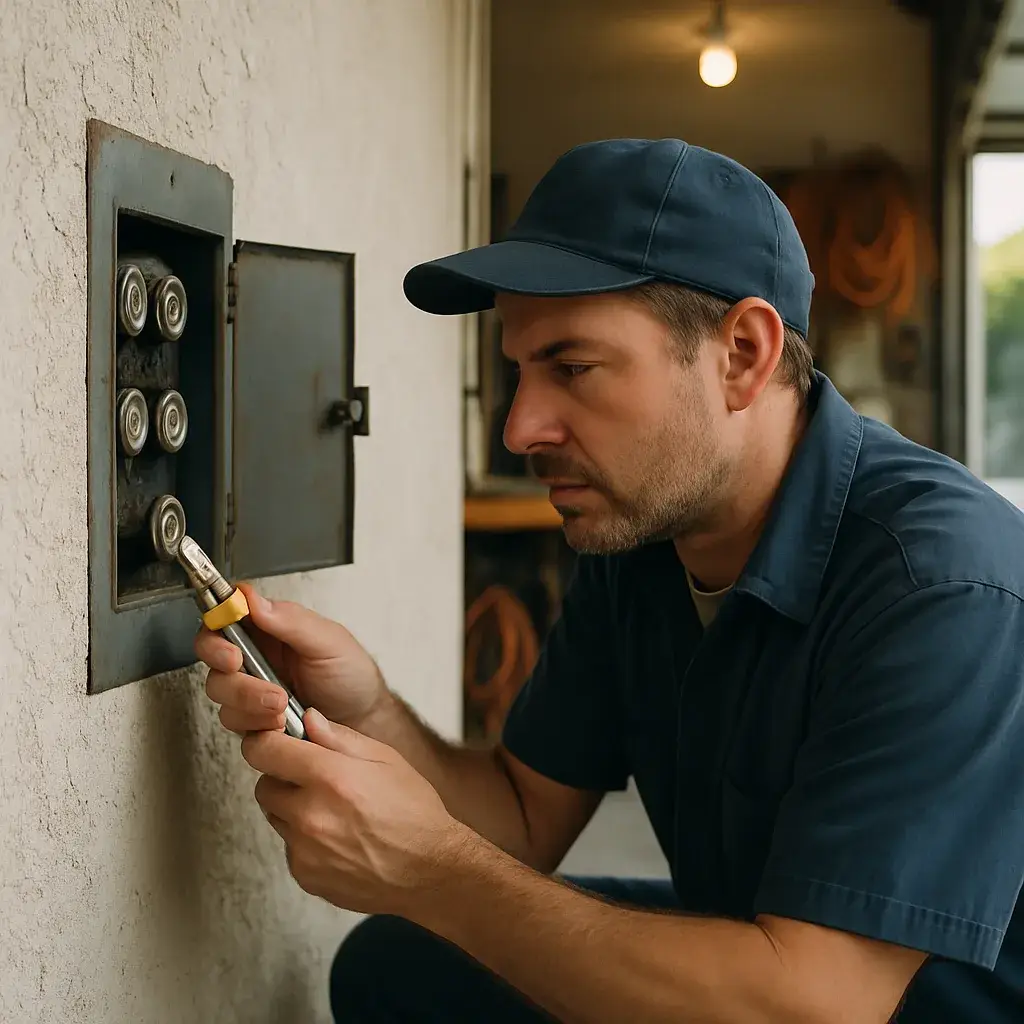
A lot of the older houses near US-80 in Sunnyvale were built before breaker panels became the standard, and plenty of them never got upgraded. So you’ll open that gray metal box and see round fuses staring back at you instead of switches. That’s normal for a house of that age. It’s not automatically a problem, it just means the fix looks different than it would in a newer subdivision.
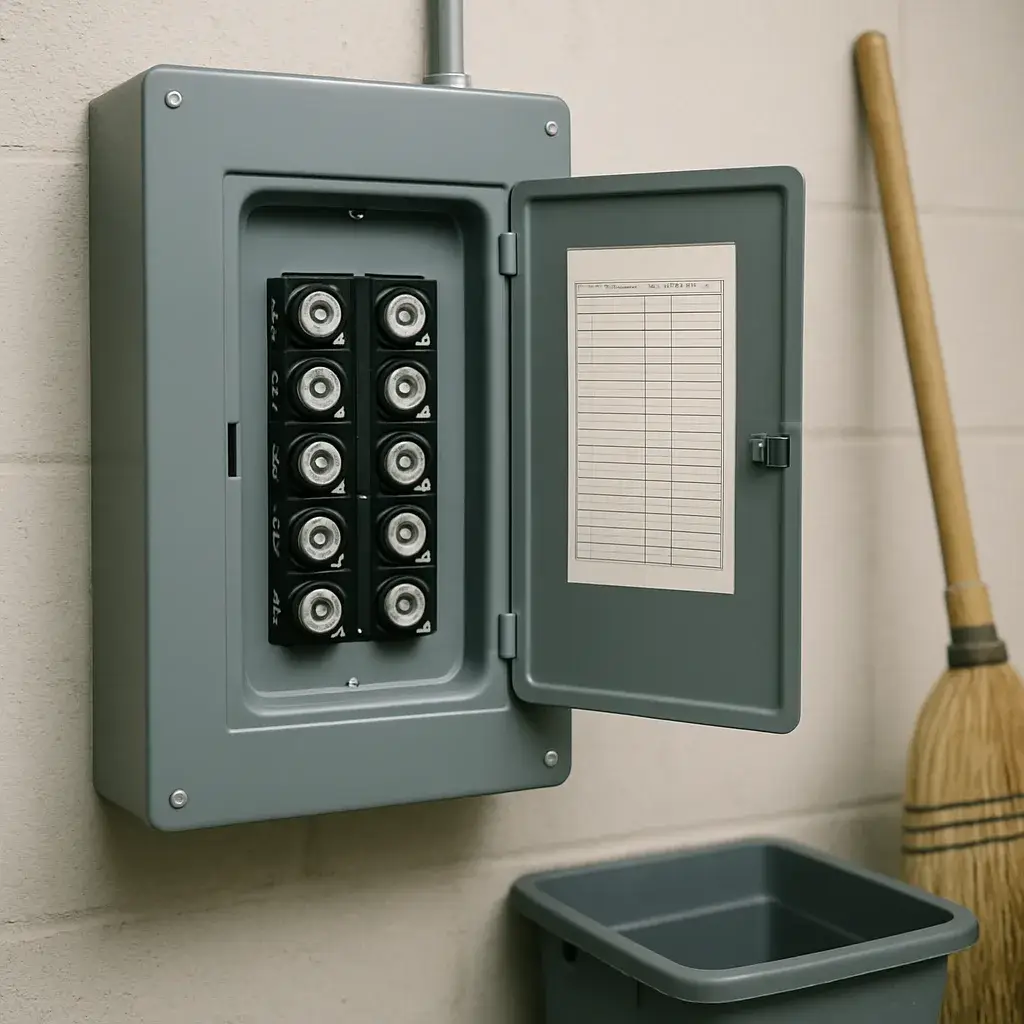
Here’s what we see all the time on these older panels. A fuse blows when you run the window AC and the microwave at once, or the lights in one room dim right before something pops. Usually it’s just a fuse that’s done its job and needs swapping, not a sign your whole panel is failing.
- Lights flicker or dim when a specific appliance kicks on
- The same fuse blows again within days or weeks
- You smell a faint burning odor near the panel
- The fuse box feels warm to the touch
- You’re using foil or a coin instead of a real fuse (please don’t)
That last one worries us more than any other call we get.
Fuse panels on US-80 corridor homes tend to be original to the house, and after 40 or 50 years, the fuse holders themselves can get loose or corroded. That’s still a fuse job in most cases, our licensed and insured techs check the panel condition every time we’re out there. But if we find the panel itself is failing rather than just the fuse, we’ll tell you straight, that’s a different conversation and a different job.
Need help with Electrical fuse changing?
Call Today, Get Service Today. Xtreme Air Services is ready to help.
What to Expect During a Fuse Changing Visit
Here’s what happens once we’re standing in front of your panel. Older homes near the Sunnyvale town center still run on legacy fuse panels from decades back, so we’re not guessing at what we’ll find. And we treat every panel the same way, careful and methodical, because a fuse box holds real electrical current even when the power’s already out.
- We open the panel and check for signs of a blown fuse, burn marks, a broken filament, or a fuse that’s just loose in its socket.
- We match the fuse type and amperage to what your panel needs, not a guess off a shelf.
- We swap the fuse and test the circuit to confirm power’s flowing right and nothing’s overheating.
- We check nearby fuses too, sometimes one blown fuse is a symptom of something else drawing too much load.
- We walk you through what we found before we call it done.
Most calls get fixed on that first visit. You’ll pay a small service call fee up front, and if you go ahead with the repair, that fee gets credited toward the job. No meter running, no second trip charge tacked on later. Our licensed, background-checked technicians handle it the same way whether it’s a Tuesday afternoon or a Saturday night, no extra charge for nights or weekends. Simple as that.
How Fuse Replacement Pricing Works
Let’s talk money, because that’s usually the next question. Most fuse changing calls we run land in the $100 to $300 range. The most common job, swapping out a blown or failing fuse and testing the panel, usually comes in at $100 to $200. Most calls get fixed on the first visit, no return trip needed.
So what pushes a job toward the higher end? A few things matter more than others.
- The type of fuse and whether it’s still easy to find, older panels sometimes take a discontinued size
- The age and condition of the panel itself, corrosion or heat damage slows things down
- How many fuses need replacing, one is quick, several takes longer
- Timing, though this one doesn’t change your price with us
That last point matters. We don’t charge extra for nights or weekends, so a Saturday evening call costs the same as a Tuesday afternoon. There’s a service call fee, $26 to $99, and it gets credited toward the repair if you move forward with us. What’s covered in the repair price: diagnosis, labor, the standard replacement fuse, and testing to confirm the panel’s running safe. What’s not covered: panel replacement or upgrade, rewiring, or any code corrections, those get quoted separately if your home needs one.
Financing isn’t typically part of a job this size, it’s built for the bigger repairs and replacements. For a fuse swap, you’re usually looking at a straightforward bill, not a payment plan.
Frequently Asked Questions
Common questions about Electrical fuse changing
How fast can you get to my house if a fuse blows in Sunnyvale?
We aim to get a technician to your door the same day you call. Most fuse changing calls in Sunnyvale get scheduled and finished within one visit, so you’re not stuck without power in a room overnight. Our licensed and insured techs work the same way on a Tuesday afternoon or a Saturday night, with no extra charge for nights or weekends. If your panel feels warm or you smell burning, tell us right away so we can prioritize your call.
What happens when your technician shows up to change a fuse?
Your technician opens the panel first and checks for burn marks, a broken filament, or a loose fuse before touching anything. They match the fuse type and amperage to your exact panel instead of grabbing one off a shelf. After the swap, they test the circuit and check nearby fuses too, since one blown fuse can point to a bigger load problem. You’ll get a plain explanation of what they found before the visit wraps up.
Why do so many older Sunnyvale homes still have fuse panels?
Homes built before breaker panels became standard, especially near the US-80 corridor and the older Sunnyvale town center, often kept their original fuse boxes for decades. That’s not a problem on its own, but those fuse holders can get loose or corroded after 40 or 50 years. You’ll know you have one if you see round glass or ceramic fuses instead of switches you can flip. It just means the fix looks different than in a newer home.
How do I know if I have a fuse panel or a breaker panel?
Open your panel door and look. A breaker panel has rows of switches you can flip up and down, while a fuse panel has round glass or ceramic fuses that screw in like a light bulb. Some panels use cartridge fuses that pull straight out instead. If you see little glass windows with a metal strip inside, some clear and some cloudy or scorched, you’re dealing with a fuse panel and this is the right service for you.
Why does the same fuse keep blowing over and over?
A fuse that blows repeatedly usually means something upstream is wrong, not that the fuse itself is bad. Common causes include too much load on one circuit, a loose connection, or a panel that’s worn out after decades of use. Running a window AC and a microwave together often triggers this on older Sunnyvale panels. Don’t keep swapping the fuse and hoping. Call so a technician can check the panel condition and find the real cause.
Is it safe to replace a blown fuse myself?
A single fuse that pops once under normal load is often a simple swap, but a fuse panel still carries real electrical current even with the power off. If you ever use foil or a coin instead of a real fuse, stop right away, that’s a fire risk, not a fix. Scorch marks, warmth near the panel, or a burning smell all mean it’s time to call a licensed technician instead of guessing on your own.
Ready to Get Started?
Call 972-288-2263 Today, Get Service Today.