


Knob-and-Tube Replacement in Sunnyvale: Safer Wiring, One Accurate Scope
Original knob-and-tube runs removed and replaced with modern grounded circuits, staged room by room so the house stays livable during the work.
What’s Covered on This Page
- Signs Your Home Needs Knob-and-Tube Wiring Replacement
- Knob-and-Tube Wiring, Insurance, and Cost Factors in Sunnyvale
- When Partial Rewiring Is Enough
- What Happens During a Whole-Home Rewire
- Panel Upgrades That Often Pair With Knob-and-Tube Replacement
- How fast can you get to my Sunnyvale home if I think I have knob-and-tube wiring?
- What happens when your electrician shows up to look at my wiring?
- Why does knob-and-tube wiring cause more problems in older Sunnyvale homes?
- Do I need a full rewire, or can you just replace part of my wiring?
- How long does a whole-home rewire usually take?
Signs Your Home Needs Knob-and-Tube Wiring Replacement
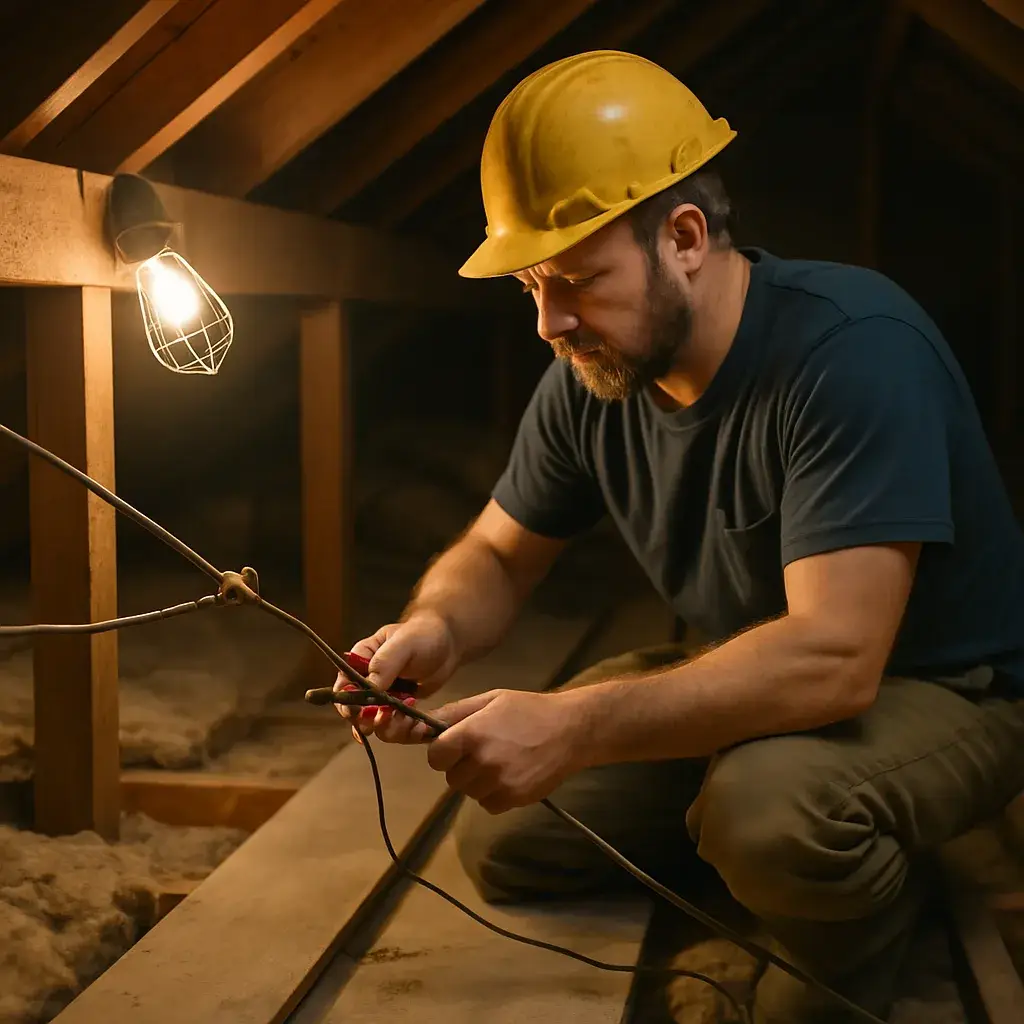
So how do you know it’s knob-and-tube and not just an old panel acting up? A lot of homes built before the 1950s still have some of this wiring tucked into the attic, especially the ones that haven’t had a full remodel. We see this every single week. You flip a light switch and it flickers for no reason, or an outlet feels warm to the touch. That’s not normal, and it’s not something to shrug off.
- Lights that dim or flicker when the AC or a big appliance kicks on
- Outlets or switch plates that feel warm, or smell faintly like burning plastic
- Breakers that trip repeatedly with no obvious cause
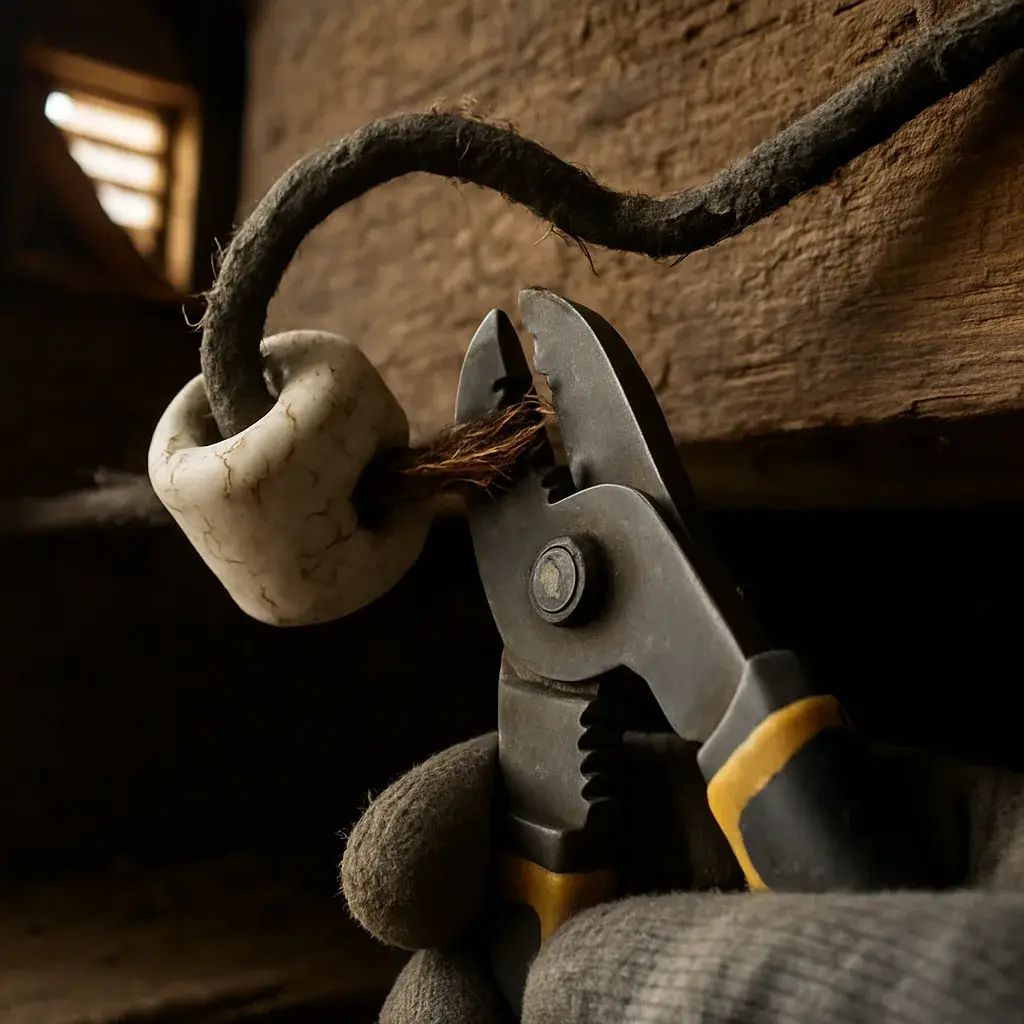
- Cloth-covered wiring visible in the attic, wrapped in a black or gray fabric sheath
- An insurance company asking about your wiring type before renewing your policy
- Rooms with only one or two outlets, a sure sign the home predates modern code
Here’s the thing about knob-and-tube. It wasn’t built for window units, space heaters, or a house full of chargers. The insulation on that old wire gets brittle with age, and once it cracks, you’ve got bare copper sitting close to attic insulation. That’s a real fire risk, not a scare tactic, just how the material behaves after seventy or eighty years.
Knob-and-Tube Wiring, Insurance, and Cost Factors in Sunnyvale
Here’s something a lot of folks don’t know until their agent tells them. Many insurance companies in Texas won’t renew a policy, or they’ll charge more, if they find knob-and-tube wiring in the attic during an inspection. That’s not us trying to scare you into anything, that’s just how underwriting works these days. Old wiring means old risk, and insurers price for risk.
So if you got a letter from your carrier, or your inspector flagged it during a sale, you’re not alone. We get calls about this every single week, usually right after someone’s had an attic inspection or a policy renewal.
Now, cost. There’s no flat number for this kind of job, and anyone who quotes you one over the phone without seeing your home is guessing. A few things move the price up or down.
- Home size and how many circuits need replacing
- How easy or hard it is to reach walls, attic, and crawlspace
- Whether your electrical panel needs an upgrade too
- Drywall repair after the old wiring comes out
- Any code upgrades or permits required for the work
Our team’s most common job is a full knob-and-tube replacement, running $10,500 to $15,000 depending on those factors above, inside a broader typical range of $8,000 to $20,000. That price covers wire, materials, professional installation, devices, grounding, and testing. Drywall finishing, paint, fixture upgrades, and permits aren’t included unless we talk about them upfront.
We charge $26 to $99 for a service call, and it gets credited toward the repair if you move forward with us. Flexible financing’s available too, on approved credit, for the bigger jobs.
When Partial Rewiring Is Enough
Not every home with knob-and-tube wiring needs a full rip-and-replace. We see this a lot in older Sunnyvale homes where a previous owner already updated the kitchen or a bedroom addition, and the old wiring only survives in one attic run or a single unused circuit.
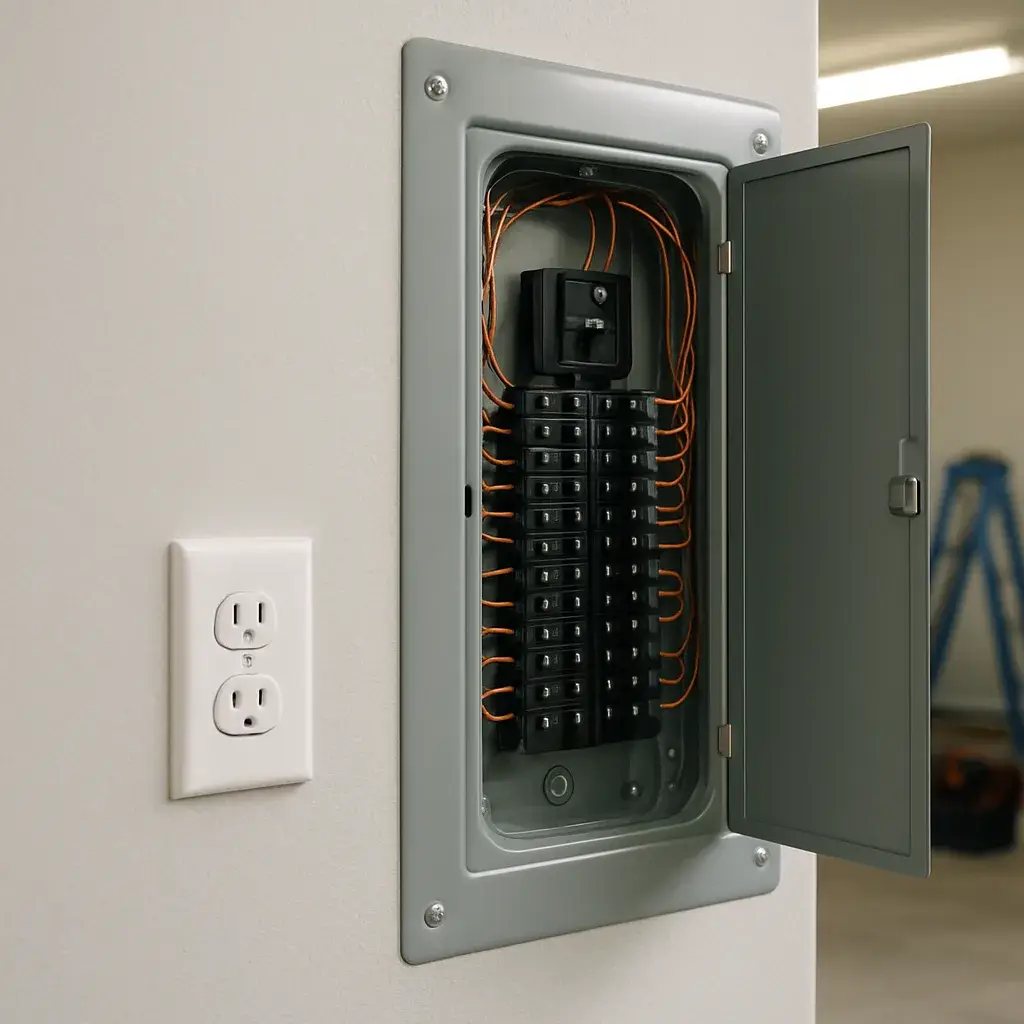
If that’s your situation, a partial rewire can be the honest answer. Here’s what usually points that direction.
- The knob-and-tube segment feeds a low-use area, like a detached garage or a storage room
- It’s not buried under insulation, which is where fire risk climbs fast
- Your panel already has enough capacity and isn’t the original fuse box
- No signs of scorching, brittle insulation, or splices wrapped in old tape
But if the old wiring runs through multiple rooms, touches your attic insulation, or ties into an undersized panel, patching one section doesn’t fix the real problem. It just delays it.
That’s the tough part of this job, telling a homeowner the smaller fix won’t hold. We’d rather say that upfront than let you spend money twice.
So how do you know for sure? An inspection settles it fast, our team traces the circuits, checks the panel, and shows you exactly what’s live and where.
Have questions? We’re happy to help.
Call Today, Get Service Today. Xtreme Air Services is ready to help.
What Happens During a Whole-Home Rewire
So what happens once you say yes? A knob-and-tube replacement isn’t one visit and done. It’s a real construction project, and knowing the order of operations helps you plan around it.
- We walk the home first, checking the attic, crawlspace, and any exposed wall cavities to map where the old wiring runs and how many circuits we’re dealing with.
- We plan the new circuit layout, deciding what needs its own dedicated line and whether your panel has room or needs an upgrade.
- Power gets shut off to the work zones. No exceptions here, this is live wiring inside old walls.
- Old knob-and-tube conductors get pulled out of the attic, crawlspace, or wall cavities as we go, section by section.
- New grounded wire gets run through the same paths, or new ones if the old routes don’t meet current code.
- Every outlet, switch, and fixture gets reconnected to the new wiring, then grounded properly.
- We test every circuit before we call it finished, checking for continuity, grounding, and load.
Access is the wildcard on every job. Sunnyvale has a mix of older established homes and newer builds, and the ones with tight attic clearance or finished crawlspaces take longer to open up. Homes with plaster walls sometimes need small access cuts, which is why drywall repair isn’t included in the base scope, that part’s on you or your contractor of choice.
We’re licensed and insured, and every technician we send is background-checked before they set foot in your home.
Most homeowners are surprised how quiet the process is once the power’s back on. No more flickering lights, no more breaker trips for no reason. That part tends to happen fast.
Panel Upgrades That Often Pair With Knob-and-Tube Replacement
Here’s something we run into a lot. You call about knob-and-tube wiring, but the panel feeding that wiring is just as old. A lot of Sunnyvale homes built decades back still have small fuse boxes or 60-amp panels. Those panels weren’t built for central air, a water heater, and a kitchen full of appliances all pulling power at once.
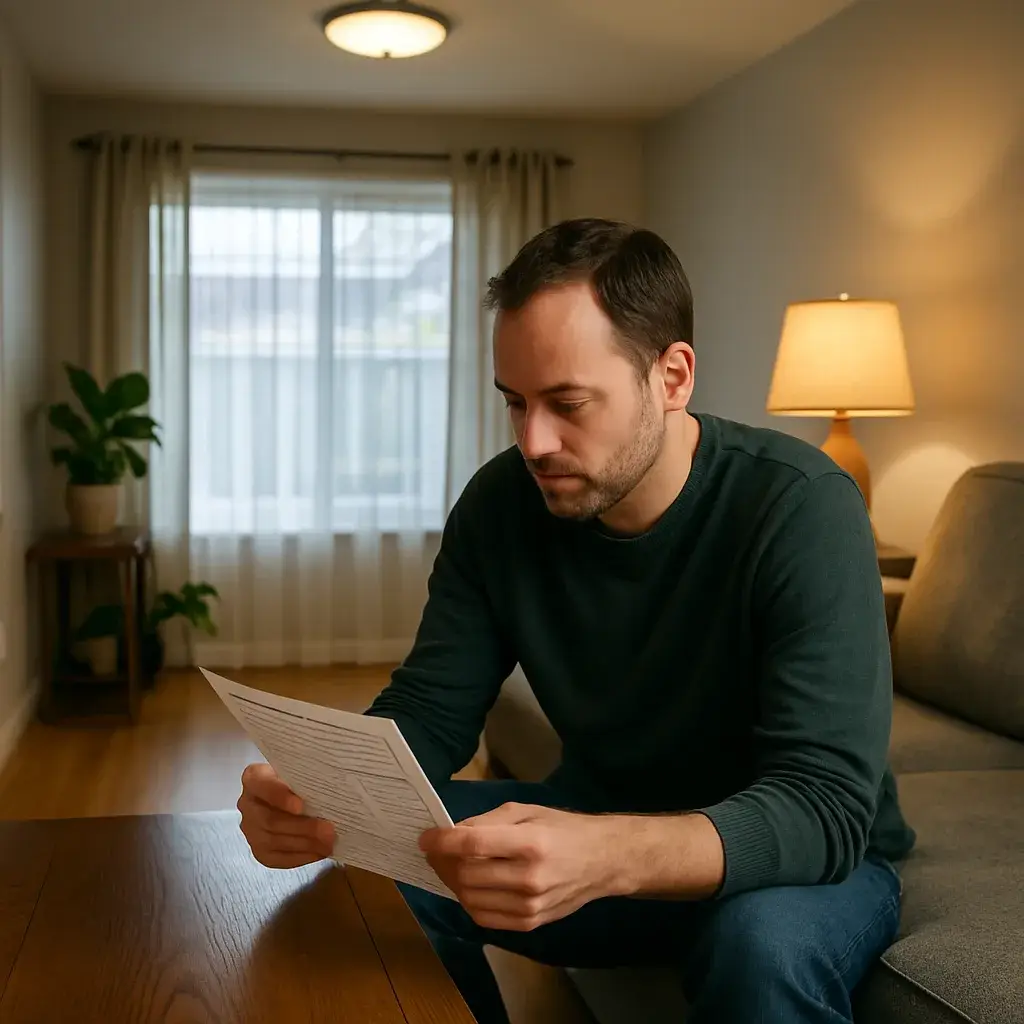
So when we’re already inside your walls replacing old wiring, it makes sense to look at the panel too. Fixing one without checking the other leaves you with new wire running back to an outdated box that still trips, still overheats, still can’t keep up.
- Fuse boxes instead of breakers, which are harder to reset safely and often out of code
- Panels rated below 100 amps in homes with central AC and modern appliances
- Visible rust, burn marks, or a panel that hums or buzzes
- Breakers that trip often even with normal use
- No room for added circuits if you’re finishing an attic or adding a subpanel
Panel upgrades and subpanel installation are two of the biggest factors that move a knob-and-tube job up or down in scope. It’s not an upsell, it’s just what the wiring needs to work right once it’s done.
We’ll tell you straight if your panel’s fine as-is. Plenty are. But if it’s not, you’ll know why before we start, not after.
Frequently Asked Questions
Common questions about Knob-and-tube replacement
How fast can you get to my Sunnyvale home if I think I have knob-and-tube wiring?
We schedule most inspections within a few days of your call. Once we see the wiring in your attic or walls, we can tell you the same day if it’s knob-and-tube and how serious the situation is. Many Sunnyvale homes built before the 1950s still have some of this wiring hidden away, especially if they haven’t been remodeled. Getting a look early means you’re not guessing when your insurance company or a home inspector brings it up.
What happens when your electrician shows up to look at my wiring?
Your electrician walks the attic, crawlspace, and any open wall cavities first to trace where the old wiring runs. They check how many circuits are affected and whether the wiring touches your attic insulation, which raises fire risk. You’ll get a clear picture of what’s live, what’s safe, and what needs to change. This walk-through is what decides whether you need a full rewire or just a partial fix in one area.
Why does knob-and-tube wiring cause more problems in older Sunnyvale homes?
Older Sunnyvale homes often have knob-and-tube wiring buried under attic insulation added decades after the house was built. That insulation traps heat around brittle, cracked wire insulation, and bare copper sitting close to it is a real fire risk. Homes with only one or two outlets per room are another clue the wiring predates modern code. If your house fits that description, it’s worth having someone trace the circuits before a bigger problem shows up.
Do I need a full rewire, or can you just replace part of my wiring?
Not always, a partial rewire can work if the knob-and-tube only feeds a low-use area like a detached garage. It also needs to be clear of attic insulation and your panel needs enough capacity already. If the old wiring runs through multiple rooms or touches insulation, patching one section just delays the real fix. An inspection settles it fast by showing exactly what’s live and where the risk is highest.
How long does a whole-home rewire usually take?
A full knob-and-tube replacement is a multi-day project, not a single visit. Your electrician maps the old wiring, plans new circuit routes, shuts off power to work zones, and pulls the old conductors out section by section before running new grounded wire. Every circuit gets tested for continuity and grounding before the job is called done. Homes with tight attic clearance or finished crawlspaces, common in some Sunnyvale properties, can take longer to open up and access.
Ready to Get Started?
Call 972-288-2263 Today, Get Service Today.