


Electrical Heat Resistor Changing in Sunnyvale: Same-Day Fixes for a Cold Home
Failed heating elements and resistors tested and replaced with parts matched to the equipment, and the circuit checked for what caused the failure.
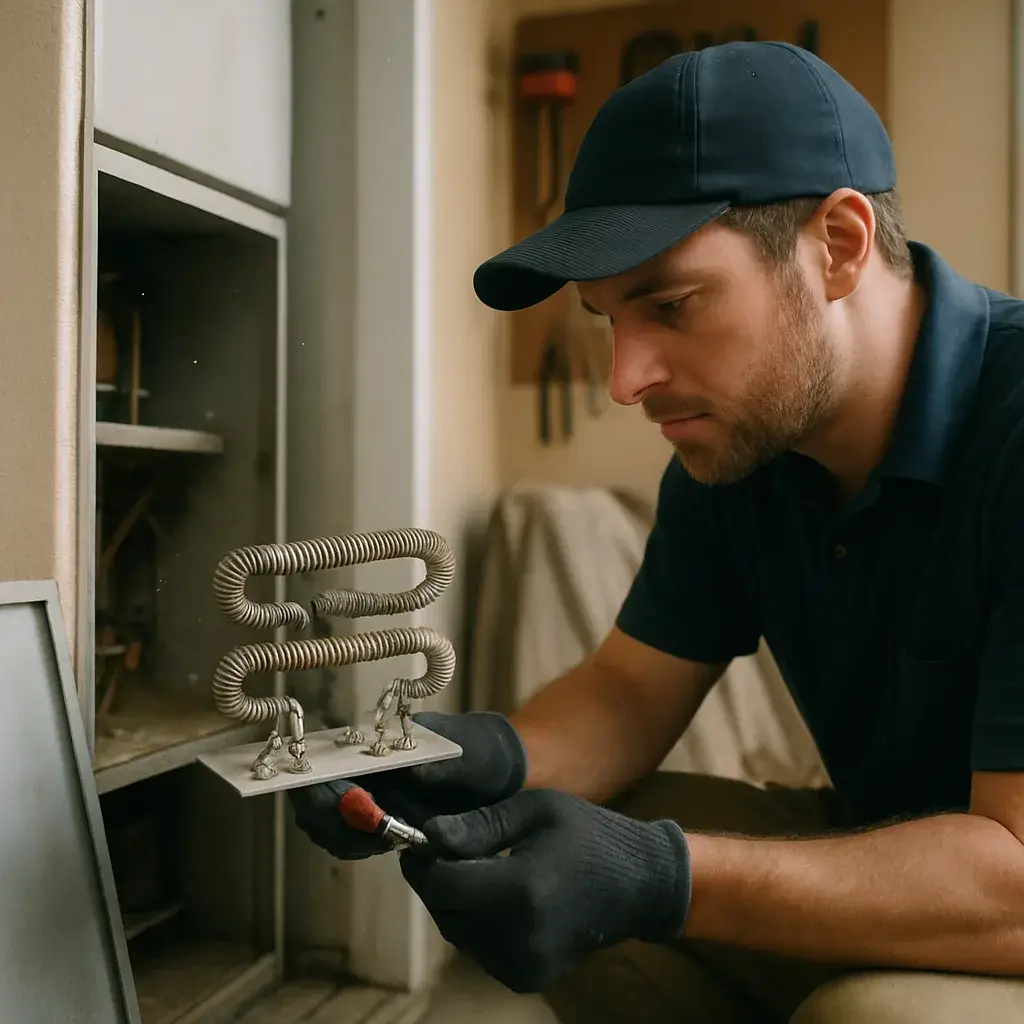
What’s Covered on This Page
- Signs Your Electric Heating Element Has Failed
- When a Tripped Breaker Isn’t a Resistor Problem
- Same-Day Heat Resistor Replacement in Sunnyvale
- How Pricing Works for This Repair
- Protecting Electric Heat Strips Before Winter’s First Freeze
- How fast can you get someone out to fix a heat resistor in Sunnyvale?
- What happens when the technician arrives to check my heating element?
- Why do heat resistors fail so often in Sunnyvale homes?
- My breaker keeps tripping when the heat runs. Is that always the resistor?
- Can I just keep resetting the breaker instead of calling someone?
- How do I know it’s a resistor problem and not something bigger with my furnace?
Signs Your Electric Heating Element Has Failed
So how do you know it’s the resistor and not something bigger? Usually the clues are pretty clear once you know what to look for. The air runs but stays cool, or one room barely warms up while the rest of the house does fine. Sometimes you’ll hear a faint pop or click right as the system tries to heat, then nothing.
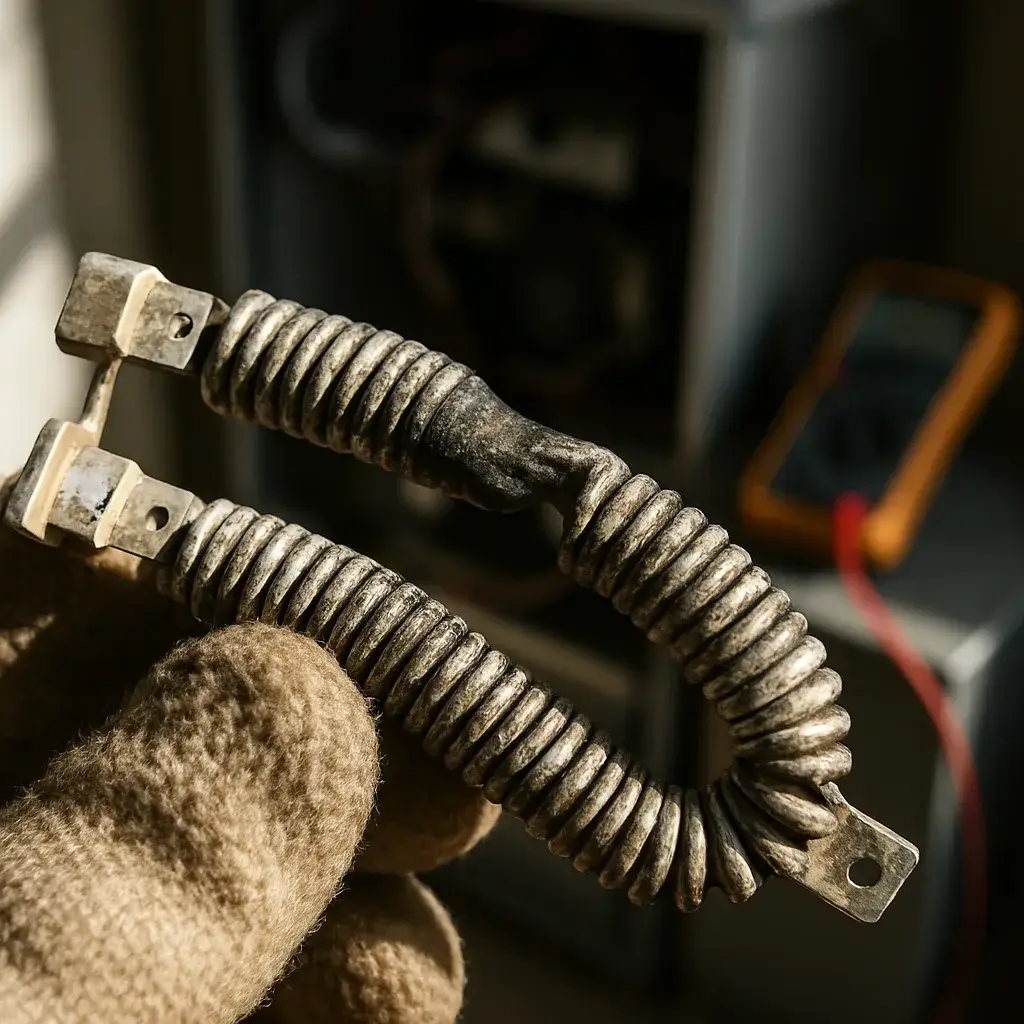
- Air blows but never gets warm, or only lukewarm
- Breaker trips specifically when the heat cycle starts
- A burning or dusty smell coming from the vents
- One zone or room runs cold while others heat fine
- Clicking or popping sound right before heat should start
We see this a lot in Sunnyvale homes with electric furnaces or air handlers tucked up in the attic. Those units take a beating during our sudden cold fronts, the heat strip kicks on hard and often, and that repeated cycling is exactly what wears a resistor down over time.
If your breaker trips every single time the heat runs, don’t just keep resetting it.
That’s your system telling you something’s wrong, and our licensed and insured technicians can confirm it fast so you’re not guessing.
When a Tripped Breaker Isn’t a Resistor Problem
Here’s something we tell folks on the phone a lot. A tripped breaker doesn’t automatically mean your resistor is bad. Sometimes it’s just doing its job.
A resistive heating element pulls a steady, predictable amount of current when it’s working right. When one starts to fail, it usually pulls more current than it should, and the breaker trips as a safety response. That’s the classic pattern we look for. But breakers trip for other reasons too, and none of those need a resistor swap.
- The breaker trips on multiple appliances, not just the one with the heating element – that points to an overloaded circuit or a panel issue, not a resistor.
- The breaker feels loose or won’t stay reset even with everything unplugged – that’s a breaker problem, not a heating element problem.
- It’s a GFCI outlet tripping, not the panel breaker – that’s a ground-fault issue and a completely different repair.
- The unit trips randomly with no pattern tied to when the heating cycle kicks on – could be a loose wire connection somewhere else in the circuit.
So if your breaker’s tripping and you’re not sure why, don’t assume. And don’t just keep flipping it back and hoping. That’s how wiring gets damaged over time. 80 six days a week.
Our technicians check the whole circuit before touching the resistor, current draw, connections, the breaker itself. If it turns out to be a panel or wiring issue instead, we’ll tell you straight, that’s a different job with a different fix.
Same-Day Heat Resistor Replacement in Sunnyvale
Heat resistor problems don’t wait for a convenient day. A breaker trips every time the heat kicks on, or you smell something warm and a little burnt near the vent. Out here in Sunnyvale, a lot of homes along State Highway 205 and the newer subdivisions off FM 1389 run attic-mounted air handlers with electric heat strips, and those resistor elements take a beating from the attic heat swings between summer and winter. We see this every single week once the first cold front rolls through North Texas.
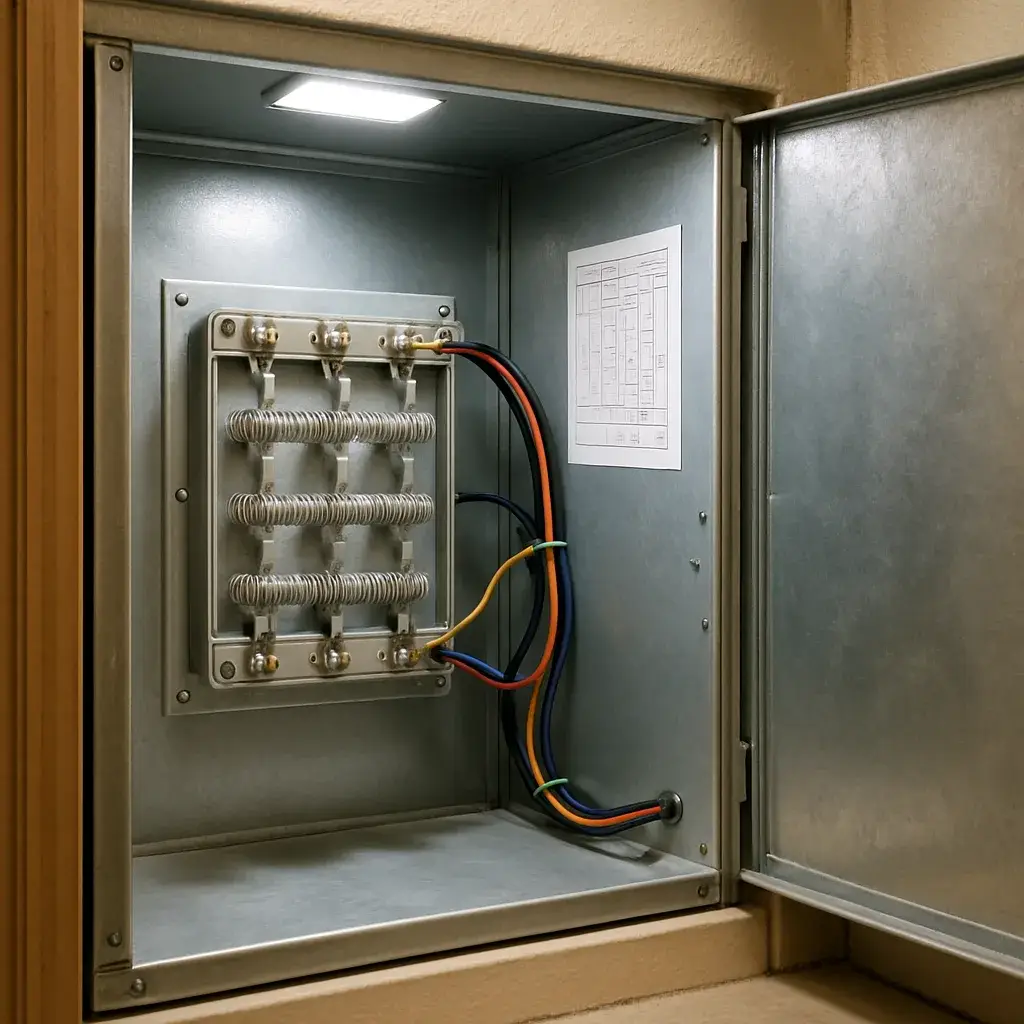
Good news, most calls get fixed the same visit. Usually it’s the same failed element, not a bigger electrical problem.
- We test the circuit and confirm the resistor element failed, not the breaker or the thermostat.
- We pull the failed component and match it to your equipment’s brand and amperage.
- We swap in the standard replacement part and secure the wiring connections.
- We run the system through a full heat cycle to check the fix holds.
- We walk you through what we found before we call the job done.
Not sure if this is what’s wrong with your system? That’s pretty common. If your heat won’t fire at all or the breaker trips right away, a resistor’s a strong suspect. Our licensed and insured technicians carry common replacement elements on the truck, which is why most of these jobs finish in one trip, no waiting on a part to ship in.
Thinking about Electrical heat resistor changing? Let’s talk.
Call Today, Get Service Today. Xtreme Air Services is ready to help.
How Pricing Works for This Repair
Here’s the honest breakdown. Most electrical heat resistor changing calls run between $150 and $400. That’s a wide range. The most common version of this job, swapping out one failed resistive element and testing it, usually lands between $150 and $250. Most of the time, that’s exactly what you’re looking at.
So what pushes a job toward the higher end? A few things.
- The type of resistor and whether it’s a common part or something harder to source
- The age and brand of the equipment it’s tied to
- How easy or hard it is to access the unit
- Nothing extra for after-hours calls, we charge no extra for nights or weekends
There’s a service-call fee too, $26 to $99 depending on the visit. If you move forward with the repair, that fee gets credited toward the job. You’re not paying twice.
What’s covered in that price? Diagnosis, labor, the standard replacement part, and testing to confirm it’s working right. What’s not covered: additional failed components we find once we’re in there, a full unit replacement, or any code upgrades and permits, those get quoted separately if they come up. Financing isn’t typically needed for a job this size, we save that for the bigger installs and replacements.
One more thing worth asking any company before they touch your panel: do they charge extra to come out at 8pm on a Friday? Ask that question first.
Protecting Electric Heat Strips Before Winter’s First Freeze
Sunnyvale doesn’t ease into winter, it flips a switch. One week you’re running the AC, the next a cold front rolls through and your heat pump’s electric heat resistor kicks on for the first time in eight months. That’s exactly when we get the most calls, a strip that sat unused all summer decides to fail the second it’s asked to work. Usually it’s the same story: a hairline crack from age finally lets go under a full electrical load.
So what can you do before that first freeze? A few things matter more than others.
- Run your heat for ten minutes in October, before you need it, so a failing resistor shows up on your schedule and not during a cold snap
- Listen for a burning-dust smell the first time heat kicks on, that’s normal for a few minutes but shouldn’t linger
- Check that your breaker isn’t tripping when heat mode engages, a repeat trip usually points to a resistor pulling too much current
- Have any strip that’s original to a unit older than twelve to fifteen years looked at before winter, not after
None of this requires a full system replacement. And it doesn’t need to cost you a comfortable evening at home with no heat while you wait on parts. A quick check now beats a no-heat call on a 28-degree morning, we’ve seen both ends of that trade plenty of times.
Heat strip resistors fail in Sunnyvale mostly because of where they live. Attic-mounted air handlers swing through a very wide temperature range across a North Texas year, and those cycles are what eventually take out the element. We test the full circuit, the sequencer, and the limit before swapping any part, because replacing a Sunnyvale heat strip without finding what cooked it usually buys you one season rather than ten.
Frequently Asked Questions
Common questions about Electrical heat resistor changing
How fast can you get someone out to fix a heat resistor in Sunnyvale?
Most Sunnyvale calls get a technician out the same day, especially once that first cold front hits and heat strips start failing. Since our trucks carry common replacement elements, we don’t usually need a second trip to source a part. If your breaker trips every time the heat kicks on, call as soon as you notice it. Waiting and resetting the breaker repeatedly can cause more damage to the wiring.
What happens when the technician arrives to check my heating element?
We start by testing your circuit, not swapping parts right away. Our technician checks current draw, wiring connections, and the breaker itself before touching the resistor. This tells us if it’s really the heating element or something else like an overloaded panel. Once we confirm the failed part, we match it to your equipment’s brand and amperage, install the replacement, and run a full heat cycle to make sure the fix holds before we leave.
Why do heat resistors fail so often in Sunnyvale homes?
It’s the attic heat swings. A lot of homes along State Highway 205 and the newer subdivisions off FM 1389 have attic-mounted air handlers with electric heat strips, and those attics see big temperature shifts between summer and winter. When the first cold front rolls through, the heat strip cycles on hard and often, and that repeated stress is what wears a resistor down. We see this pattern every week once the weather turns.
My breaker keeps tripping when the heat runs. Is that always the resistor?
Not always, but it’s the classic sign. A healthy heating element pulls a steady current, and one that’s failing usually pulls too much, which trips the breaker as a safety response. But if other appliances trip the same breaker, or it won’t stay reset even unplugged, that points to a panel or wiring issue instead. We check the whole circuit first so you’re not paying for a resistor swap that won’t fix the real problem.
Can I just keep resetting the breaker instead of calling someone?
You can, but it’s risky and won’t fix the underlying issue. Repeatedly resetting a breaker that trips from a failing resistor puts extra stress on your wiring and can turn a simple part swap into a bigger electrical repair. If your breaker trips specifically when the heat cycle starts, that’s your system telling you something’s wrong. Getting it checked early usually means a faster, simpler fix.
How do I know it’s a resistor problem and not something bigger with my furnace?
A few clear signs point to the resistor. If the air runs but stays cool, one room heats while others don’t, or you hear a pop or click right before the heat should start, the element is a strong suspect. A burning or dusty smell from the vents is another common clue. If you notice any of these, it’s worth having a technician test the circuit before assuming you need a bigger repair.
Ready to Get Started?
Call 972-288-2263 Today, Get Service Today.