Your furnace kicks on, runs for a minute or two, shuts off, then starts again ten minutes later. It feels like the system is working hard. The truth is the opposite. Why home furnace short cycling happens is a question every homeowner should understand, because that rapid start-stop pattern is not your furnace being efficient. It is your furnace struggling. Short cycling stresses mechanical and electrical components, drives up your energy bill, and puts you on a faster path to an expensive breakdown. Here is what is actually going on and what you can do about it. Industry guidance from the Air Conditioning Contractors of America points to airflow restriction and improper sizing as leading causes of this kind of cycling.
Table of Contents
- Key takeaways
- Why home furnace short cycling starts with your airflow
- Thermostat and sensor problems that cause cycling
- Mechanical and electrical failures that drive short cycling
- Repair vs. replacement: what actually makes sense
- My honest take after years of seeing this problem
- Get your furnace diagnosed before winter costs you more
- FAQ
Key takeaways
| Point | Details |
|---|---|
| Short cycling is abnormal | A healthy furnace runs full heat cycles, not brief bursts that repeat every few minutes. |
| Airflow is the most common cause | Clogged filters and blocked vents are the first things to check when your furnace cycles too fast. |
| Sensors and thermostats also trigger cycling | Miscalibrated thermostats and faulty limit switches trick the furnace into shutting off too soon. |
| Mechanical wear raises the stakes | Failing blower motors and ignition problems turn short cycling into a safety concern, not just a comfort issue. |
| Repair vs. replacement depends on age and cost | Use the 50% rule to decide whether fixing the furnace makes financial sense or whether replacement wins. |
Why home furnace short cycling starts with your airflow
The single most common reason furnaces short cycle has nothing to do with complex electronics. It comes down to airflow. When your furnace cannot pull in enough air, it overheats. When it overheats, a safety device called the high limit switch does exactly what it is designed to do: it shuts the system down before anything gets damaged. Once the furnace cools off, it restarts, only to overheat again. The cycle repeats, and your home never actually gets warm.
Clogged air filters are the most frequent culprit. Dust, pet dander, and debris build up on filter surfaces and choke off the air your furnace needs to operate safely. A filter that looks gray and matted is not just a maintenance issue. It is an active cause of short cycling happening right now in your home.
Blocked or closed vents are another piece of the same puzzle. A common mistake homeowners make is closing vents in unused rooms to “save energy.” It does not save energy. Obstructed ducts prevent effective heat distribution, create pressure imbalances, and push your furnace into the same overheating pattern. Furniture sitting over a floor register, a vent blocked by a rug, or a duct that has partially collapsed in the attic can all produce the same result.
Here are the most common airflow-related furnace short cycling causes to check first:
- A filter that has not been replaced in more than 60 days (especially in homes with pets)
- Closed, blocked, or damaged supply and return vents anywhere in the house
- Flex duct that has kinked, collapsed, or disconnected in the attic or crawlspace
- A dirty blower wheel coated in debris that reduces airflow even when the filter is clean
- An undersized return air grille that cannot pull enough air back to the furnace
Pro Tip: If you hear a whistling or sucking sound near your vents or at the furnace cabinet, that noise means your system is starving for air. That is one of the clearest signs of restricted airflow before short cycling becomes a serious problem. Regular filter changes and duct inspections are the simplest, lowest-cost way to prevent this.
Thermostat and sensor problems that cause cycling
Once you have ruled out airflow, the next category to investigate is your thermostat and the sensors inside your furnace. These components are responsible for telling your furnace when to start, how long to run, and when it is safe to shut down. When any of them misfire, your furnace gets bad instructions and responds with erratic cycling.
Thermostat problems are more common than most homeowners expect. Faulty temperature sensors and wiring issues disrupt how the thermostat and furnace communicate. If the thermostat reads the room as warmer than it actually is, it will tell the furnace to shut off before the space is properly heated. A thermostat installed in a poor location, next to a sunny window, above a lamp, or near a drafty door, will read temperatures that do not reflect what the rest of the house actually feels like.
Inside the furnace itself, the high limit switch and the flame sensor are two components that can independently cause short cycling. A flame sensor coated in carbon buildup will fail to detect a flame even when one is present, forcing the furnace to shut down as a safety measure. A high limit switch that has tripped repeatedly from overheating can wear out and start triggering shutdowns even when temperatures are normal.
Here is a simple process to check for thermostat-related cycling before calling a technician:
- Set your thermostat five degrees higher than the current room temperature and watch whether the furnace runs a full cycle of eight to ten minutes or shuts off in under two minutes.
- Check whether your thermostat is located near heat sources like direct sunlight, appliances, or exterior walls with poor insulation that could skew its readings.
- Replace the thermostat batteries if you have not done so in the past year. Weak batteries cause inconsistent signals that mimic wiring faults.
- Turn the thermostat off for a full minute, then restart it. A soft reset sometimes clears a temporary calibration error.
- Look at the display for any error codes. Most programmable and smart thermostats display a code that points directly to the communication fault.
Pro Tip: If your furnace runs full cycles when the thermostat is set high but short cycles at your normal set point, your thermostat is almost certainly reading temperature incorrectly. That is a strong clue to focus on calibration or relocation before replacing expensive furnace components.
Mechanical and electrical failures that drive short cycling
When airflow is fine and the thermostat checks out, the cause of home heating short cycling often lives inside the furnace itself. Mechanical and electrical components wear out over time, and the failure patterns they create can look a lot like sensor or airflow problems on the surface.
The blower motor and its associated parts are frequent contributors. Worn belts, bearings, and blower components cause operational interruptions that reduce airflow even when filters are clean. A blower motor that is struggling to spin at the right speed cannot move heat away from the heat exchanger fast enough, which triggers the same overheating shutdown sequence described earlier.
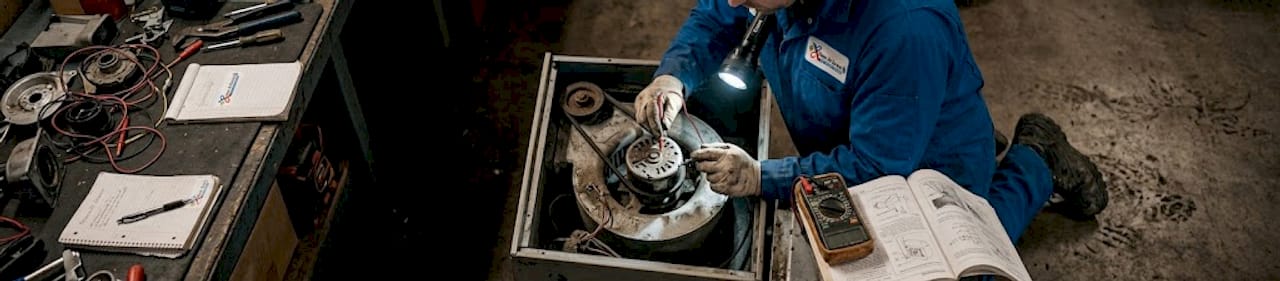
Delayed ignition is a more serious issue. Gas buildup before burners ignite creates a small internal pressure event, often heard as a bang or boom when the furnace starts. This repeated stress eventually causes the safety limit to trip during startup, cutting the cycle short before the furnace ever reaches full operation. If you hear a banging sound at startup followed by a quick shutdown, delayed ignition should be at the top of your list.
The heat exchanger deserves special attention. A cracked heat exchanger will cause the furnace to overheat and short cycle. More critically, a cracked heat exchanger allows combustion gases, including carbon monoxide, to enter your living space. This is not a component to diagnose yourself.
| Component | Symptom | DIY or professional? |
|---|---|---|
| Blower motor | Humming, slow startup, reduced airflow | Professional |
| Flame sensor | Furnace starts then shuts off within seconds | Professional cleaning or replacement |
| High limit switch | Repeated short cycles after overheating | Professional |
| Thermostat wiring | Erratic cycling at normal temperatures | Homeowner check first |
| Delayed ignition | Banging at startup followed by shutdown | Professional immediately |
| Heat exchanger | Short cycling with carbon monoxide smell | Professional immediately |
The key distinction here is urgency. Blower motor wear is a performance problem that gets worse over months. Delayed ignition and a cracked heat exchanger are safety problems that need attention right away.
Here are the signs that mechanical wear is behind your furnace cycling frequently:
- Unusual sounds at startup, including banging, screeching, or grinding
- The furnace runs briefly, under two minutes, and shuts off without the blower ever reaching full speed
- The furnace cycles more frequently in very cold weather but runs normally when temperatures are mild
- You can feel that the air coming from your vents is not as warm as it used to be at the same thermostat setting
- The furnace cabinet feels unusually hot to the touch during operation
Repair vs. replacement: what actually makes sense
At some point, the question stops being “what is wrong with my furnace” and becomes “is it worth fixing.” Furnaces running briefly and cycling frequently are not just inefficient. They accelerate wear on every component inside the system, which means a furnace that is already aging may start failing faster once short cycling begins.
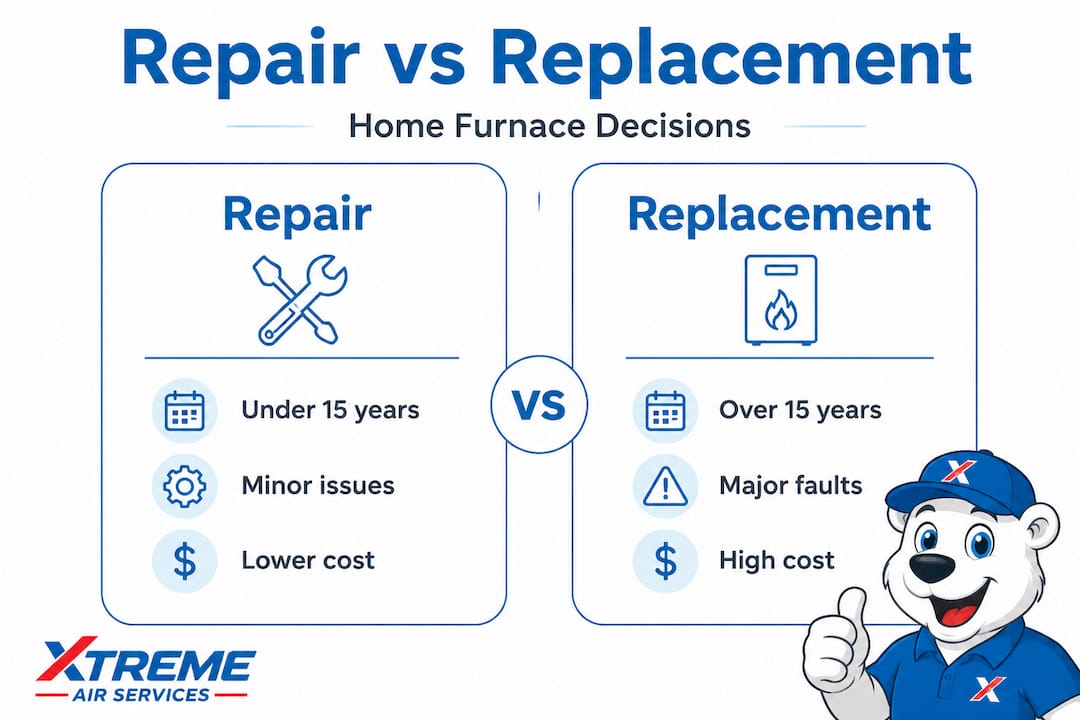
Furnaces typically last 15 to 20 years, and the general rule of thumb in the HVAC industry is straightforward: if the cost to repair exceeds 50% of what a new system would cost, replacement usually makes more financial sense. A new mid-efficiency furnace runs roughly $2,500 to $4,500 installed depending on size and location. That puts the repair threshold at around $1,250 to $2,250. Some short cycling repairs fall well below that number. Others, particularly those involving heat exchangers or blower motor assemblies on older units, do not.
Here is a cost reference for common short cycling repairs to help calibrate your thinking:
| Repair type | Typical cost range | Worth it if furnace age is… |
|---|---|---|
| Filter replacement | $10 to $30 | Any age |
| Thermostat replacement | $150 to $350 installed | Any age |
| Flame sensor cleaning or replacement | $80 to $200 | Under 15 years |
| High limit switch replacement | $150 to $300 | Under 15 years |
| Blower motor replacement | $400 to $800 | Under 12 years |
| Heat exchanger repair | $1,000 to $2,000 or more | Rarely worth it |
A furnace over 15 years old that has required repairs in each of the last two or three seasons is telling you something. Add short cycling to that pattern and the math typically favors replacement, especially when modern two-stage and modulating furnaces are designed specifically to avoid the temperature swings that cause short cycling in the first place. These systems vary their output based on how much heat is actually needed, which means they run longer, quieter cycles at lower intensity rather than blasting on and off repeatedly.
Pro Tip: Before spending money on any repair beyond a filter or thermostat, get a professional diagnosis that includes a written assessment of the heat exchanger. A technician who skips that check is leaving the most expensive and most dangerous component uninspected.
My honest take after years of seeing this problem
I have been in homes where the homeowner had called three different companies over two winters and spent close to $800 on repairs, only to end up replacing the furnace anyway. Every time I ask what the first technician said, the answer is almost always the same: “They fixed the symptom but never looked at the whole system.”
Short cycling is rarely just one thing. In my experience, it is almost always a combination: a slightly clogged filter that pushed an aging blower motor past its threshold, or a marginal thermostat that finally gave out on a furnace that was already overheating occasionally. Treating the symptoms one at a time is how homeowners end up spending more on an old furnace than it is worth.
What I have learned is that the homeowners who come out ahead are the ones who treat their first short cycling episode as a signal to get a full system assessment, not just a quick fix. That means checking the filter and thermostat yourself first. But if the problem continues after those basic steps, you need a technician who will evaluate the blower, the heat exchanger, the limit switch, and the ignition system in one visit.
The other thing most articles never say: regular annual maintenance is the closest thing to a guarantee you have against short cycling. Most of the causes covered in this article are predictable and preventable. Dirty sensors, worn blower parts, marginal limit switches. A technician who services your furnace before every heating season catches these things when they are a $150 fix, not a $1,500 emergency.
Proactive homeowners pay for one tune-up. Reactive homeowners pay for three repairs and then a replacement. The math is not complicated.
— Xtreme
Get your furnace diagnosed before winter costs you more
If your furnace keeps cycling too fast and you have already checked your filter and thermostat, the next step is a professional inspection. Not a guess, not a replacement part ordered from a video. A real diagnosis from a technician who checks every component that causes short cycling.
Xtreme Air Services provides complete furnace inspections and HVAC repairs for homeowners who want the problem solved correctly the first time. Whether it is a sensor issue, a blower problem, or a heat exchanger concern, the team will give you a clear answer and honest guidance on whether repair or replacement makes the most sense for your specific system. Schedule a furnace inspection and stop paying to heat a house your furnace cannot actually warm.
FAQ
What does furnace short cycling mean?
Short cycling is when your furnace turns on, runs for only one to three minutes, shuts off, and then repeats the pattern instead of completing a full heating cycle of eight to twelve minutes or more.
What are the most common furnace short cycling causes?
The most common causes are a clogged air filter restricting airflow, a malfunctioning thermostat sending incorrect temperature signals, a dirty or failing flame sensor, and a worn blower motor that cannot move heat away from the heat exchanger fast enough.
Can I fix furnace short cycling myself?
You can resolve some causes yourself, including replacing the filter, checking and resetting the thermostat, and making sure all vents are open and unobstructed. Anything involving internal components like the flame sensor, limit switch, or heat exchanger requires a licensed technician.
How do I know if my furnace is short cycling due to overheating?
If the furnace runs briefly and the cabinet feels very hot to the touch, or if the high limit switch keeps tripping, overheating is likely the cause. Clogged filters and blocked vents are the most common reasons a furnace overheats and short cycles.
When should I replace a furnace that keeps short cycling?
If your furnace is over 15 years old and repair costs exceed 50% of the cost of a new system, replacement is usually the smarter investment. Frequent short cycling in an aging furnace is often a sign that multiple components are wearing out at the same time.