


What to Expect With Transfer Switch Installation: Common Questions Before You Buy
What homeowners ask before a transfer switch goes in: backfeed safety, automatic versus manual, panel space, permits, and that brief blink.
What’s Covered on This Page
- Backfeed Safety Is the Main Reason a Transfer Switch Is Required
- Automatic and Manual Transfer Switches Work Very Differently Day to Day
- Panel Space and Condition Can Change the Scope of the Job
- Permits and Inspections Are Part of a Code-Compliant Installation
- A Brief Power Interruption During Transfer Is Normal
- Why do I need a transfer switch instead of just plugging the generator in?
- Should I get an automatic or a manual transfer switch?
- Will my electrical panel need work before a transfer switch can go in?
- Do I need a permit for a transfer switch installation?
- Why does the power still blink off when the generator kicks in?
Backfeed Safety Is the Main Reason a Transfer Switch Is Required
A transfer switch stops backfeed. That is the main safety issue here. Backfeed happens when a generator ties into a home’s wiring without a switch separating it from the utility grid, and electricity can flow backward through the meter and onto the power lines. That energized line can reach a utility worker who thinks the grid is dead during an outage. Sunnyvale crews work the same lines during storm season.
People usually hear about this after a storm knocks out power for a few days and someone suggests running a portable generator through the dryer outlet with a makeshift cord. It sounds simple. It isn’t. Without a transfer switch, that setup does not isolate the home from the utility side, and the generator can feed power both directions at once. We get asked about that dryer-outlet trick in Sunnyvale every winter.
Your electrical panel is built to take power from one direction, the utility line coming in. A generator connected without a switch adds a second source into the same wires with nothing to stop the overlap. A transfer switch disconnects the home from the grid before generator power comes in, so only one source feeds the panel at a time. That is the whole job of the device. It works the same on every Sunnyvale panel we touch.
We install both automatic and manual transfer switches, and the right one depends on how you plan to use backup power. An automatic switch senses an outage and switches the load over on its own, usually with a standby generator. A manual switch means someone flips it by hand when the power goes out, which works well for portable generators and keeps the install cost lower. Neither one is better across the board. It depends on the generator, the panel, and how hands-on you want to be during an outage. Most Sunnyvale standby owners end up on automatic.
We connect and test the switch as part of the install, checking that the isolation is complete and the transfer works cleanly before we call the job done. Most transfer switch installs finish in a single day, though the number of circuits being backed up and the condition of the existing panel can add time. A panel that is outdated or already crowded sometimes needs attention before a switch can go in cleanly (that part is not exciting, but it matters). Older Sunnyvale panels are where that comes up most.
One thing worth saying plainly: we do not wire around code requirements to save a step. A permit and inspection are part of a proper transfer switch install in most jurisdictions, and skipping that is not something we will do even if it would make the job faster. The switch exists because backfeed is a real hazard, not a formality, and that is the same reason the inspection matters too. Sunnyvale inspections hold that line as well.
Automatic and Manual Transfer Switches Work Very Differently Day to Day
Once your generator is in and your transfer switch is wired, the type you picked decides what a power outage feels like at your house. An automatic transfer switch senses the moment utility power drops, starts your generator, and shifts your home over to backup power on its own, usually within seconds. You could be at work or asleep, and the switch does not wait for you to notice the lights are out. A manual transfer switch needs you to physically flip breakers or turn a dial to send generator power to the panel, and someone has to start the generator itself unless it is set up to start on its own separately. Both types are covered on our Transfer Switch Installation in Sunnyvale page.
People notice the difference most during storm season. North Texas gets sudden cold fronts and hail that can knock out power for hours, sometimes overnight. With an automatic switch, your fridge, your AC or heat, and your well pump (if you have one) never skip a beat. With a manual switch, someone in the house has to be around to run the transfer. That works fine for a homeowner who is usually home and does not mind the extra step. It leaves a gap if the outage hits while everyone is away. Sunnyvale storm outages do not wait for anyone to be home.
The number of circuits you back up changes the day-to-day experience too. A switch wired to run your whole panel means every outlet and appliance stays live like nothing happened. A switch wired to a handful of dedicated circuits, say the refrigerator, a few lights, and the furnace blower, means you will notice what is not running: the dishwasher, the second AC unit, whatever was not included. We walk through that before we install anything, because panel condition and available space affect how many circuits we can realistically run. We check that at your Sunnyvale panel before quoting.
Cost is part of why people ask about the difference. Manual switches are simpler and cost less to install; automatic switches cost more because of the added switching hardware and controls, and that is reflected on our Transfer Switch Installation Cost page, where we break down what usually drives the price up or down for a given job. We would rather have that conversation up front than let someone find out later that their backup power only kicks on if they are home to flip it. We have that conversation with Sunnyvale homeowners early.
One thing we tell people who are on the fence: if your household includes someone who depends on medical equipment, or if the home is regularly empty during the day, an automatic switch is worth the extra cost. If you are mostly backing up a few key circuits during occasional weather events and you are usually around, a manual switch does the job for less money. Neither one is the right answer across the board. It depends on how your household uses backup power, and that is a fair conversation to have before you commit to either one. Either one gets installed to code in Sunnyvale.
Panel Space and Condition Can Change the Scope of the Job
Your electrical panel is the part of this job that surprises people most. A transfer switch has to tie into your panel, and not every panel has room for it as-is. Older panels in a lot of established DFW neighborhoods, think parts of Dallas, Garland, or Mesquite, were built decades before whole-home backup power was something homeowners planned for. Breaker slots are full, the panel is smaller than what current code and modern equipment call for, or the layout just does not leave a clean path for the new connections. Parts of Sunnyvale have panels in exactly that shape.
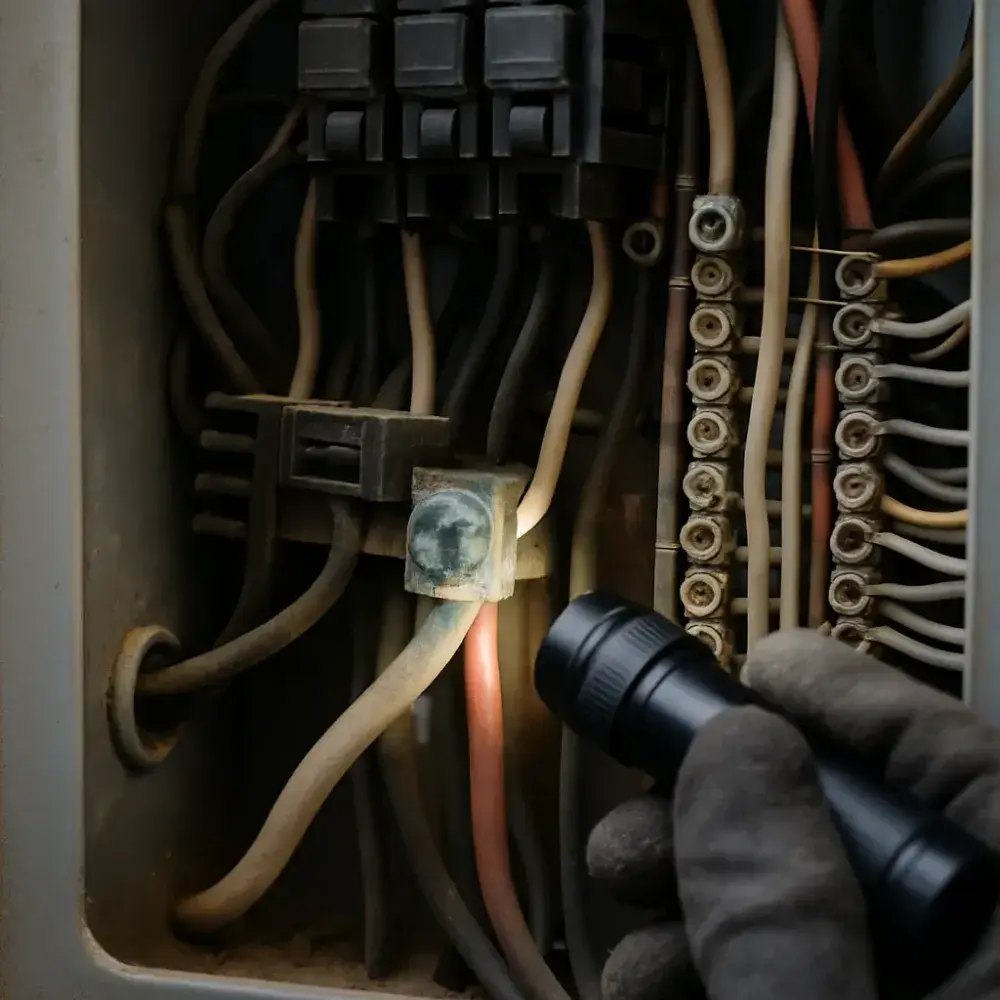
When we get out to your home for the visit, one of the first things our technician does is open that panel and look at what we are working with. We check for open breaker space, the condition of the existing wiring, whether the panel is rated for the added load, and how much room there is to mount a transfer switch nearby. On a newer home with extra panel capacity, this step can take a few minutes. On an older home, it can turn into the biggest factor in your quote. That is true across Sunnyvale as much as anywhere.
Here is the part people do not always expect: if your panel is maxed out or in rough shape, adding a transfer switch is not a simple bolt-on anymore. It can mean a subpanel to create the room you need, or in some cases a full panel upgrade before the transfer switch install makes sense at all. That is not us padding the job. A transfer switch connected to an overloaded or outdated panel is a safety problem waiting to happen, not a shortcut worth taking. We will say that plainly at your Sunnyvale property.
This is also where the number of circuits you want backed up matters. A manual transfer switch covering a handful of essential circuits, your furnace blower, refrigerator, a few lights, takes less panel space and less rewiring than an automatic switch feeding a bigger chunk of your home. The more you want covered during an outage, the more the panel’s condition and capacity come into play. Bigger Sunnyvale homes tend to want more circuits covered.
Distance from the panel to where your generator sits factors in too. A longer run means more conduit, more labor, and sometimes a different wire gauge, all of which we account for once we have seen the site. We do not quote this kind of work over the phone with any real confidence, because two homes with the same square footage can have completely different panels behind the wall. Two Sunnyvale houses on the same street can quote very differently.
What we will not do is install a transfer switch on a panel we do not think can handle it safely, or skip a code-required upgrade to keep the number lower. If your panel needs work first, we will tell you that plainly, walk you through what it adds, and let you decide how to move forward. You can get a sense of typical cost ranges and what drives them on our Transfer Switch Installation page, but the real number comes after we have seen your panel in person.
Watch Our Video
See How We Handle Transfer Switch Installation in Sunnyvale
Xtreme Air Services — Serving Sunnyvale and surrounding areas
Need help with Transfer Switch Installation?
Call Today, Get Service Today. Xtreme Air Services is ready to help.
Permits and Inspections Are Part of a Code-Compliant Installation
A transfer switch ties directly into your home’s electrical panel, so most cities in North Texas require a permit before that work starts. We pull the permit, do the installation to code, and schedule the inspection when one applies. That is part of what done right the first time means to us. It is not an upsell, it is how a transfer switch is supposed to go in. Every Sunnyvale install goes in that way.
People researching this project often ask why a permit matters for something as small as a switch box. The plain answer: a transfer switch controls how power moves between the utility grid and your generator. Wired wrong, it can send power backward into the grid lines, a real safety issue for utility crews working on outages. The permit and inspection process exists to catch that kind of mistake before it happens. Sunnyvale permitting exists for that reason.
Permit rules vary by city. Dallas, Plano, Frisco, Mesquite, and the smaller communities around Sunnyvale do not all handle electrical permits the same way, and some jobs move faster than others depending on the inspector’s schedule that week. We tell customers up front when we expect a permit to add time to the project, so nobody is surprised by a delay that is out of our hands. Sunnyvale falls under Dallas County, and we file there for you.
We will say this plainly: if the goal is to skip the permit step or install off the books, we are not the right contractor for that job. We back every transfer switch we install with a workmanship warranty, and that only works if the installation is documented and inspected the way code requires. A switch installed without a permit is not something we can stand behind the same way, so we pass on that kind of request rather than take the job and cut the corner. That answer does not change for a Sunnyvale address.
For homes with older panels, an inspector may flag something unrelated to the transfer switch itself, an outdated ground, a panel that is near capacity, that sort of thing. When that happens, we explain what the inspector found and what it would take to correct it. That is a separate conversation from the transfer switch, and we do not fold it into the original quote as if it was expected from the start. We keep Sunnyvale quotes honest that way.
None of this is meant to make a straightforward job sound complicated. Most transfer switch installations move through permitting and inspection without any surprises, and the whole project, including the inspection, typically wraps up in a single visit or two. The paperwork is not optional, and a company that treats it as optional is cutting a corner somewhere you cannot see once the panel cover goes back on. Most Sunnyvale installs pass inspection first time.
A Brief Power Interruption During Transfer Is Normal
When the grid goes down and your generator kicks in, your house does not stay lit the entire time without a blink. There is a short gap, usually somewhere between a few seconds and about 20 seconds, where the transfer switch disconnects your home from the utility line and reconnects it to the generator. During that gap, everything goes dark for a moment. That is how a transfer switch is built to work. Sunnyvale homeowners notice it the first storm after install.
An automatic transfer switch has to sense the utility power is gone, wait a beat to confirm it is not just a flicker, signal the generator to start, let the generator get up to a steady voltage and frequency, and then close the connection to your panel. All of that happens in sequence, not at once, because switching too fast can feed generator power back into a grid that is trying to come back online, a real safety concern for utility crews working on the lines outside. A manual transfer switch has its own version of this gap, except you are the one flipping the breakers over once the generator is running, so the pause depends on how quickly you get out there and do it. On a big Sunnyvale lot that walk takes a minute.
What you will notice in the house: clocks resetting, a garage door opener that needs to relearn its code, a modem or router that takes a minute to reboot and reconnect once power is back. None of that means anything failed. It means the load came back on and your electronics did what electronics do after any power blip, generator-related or not. Sunnyvale power blips do the same thing.
We test every switch we install before we consider the job finished, running the transfer both directions, from utility to generator and back, so you see the actual timing with your own system before we leave. That is part of the walkthrough on every install, along with an explanation of what is covered under warranty and how to reach us if anything comes up later. We also size and connect the transfer switch to work with the specific circuits you want backed up, whether that is the whole panel or just the essentials, and that circuit selection affects how the transfer feels in the moment. Fewer critical loads switching over usually means a quicker, less noticeable interruption than a whole-house setup with a lot of motors and compressors all trying to restart at once. Bigger Sunnyvale homes feel that more.
If you are deciding between an automatic and a manual transfer switch, this gap is one of the real differences worth weighing. Automatic switches handle the whole sequence for you, even if you are not home. Manual switches cost less to install but put the timing in your hands. Neither one eliminates the brief interruption, it is built into how a transfer switch protects your home and the grid. We walk through generator sizing and switch type as part of every consultation, and you can see typical installation costs on our Transfer Switch Installation Cost page if you are comparing options before you call.
See our full transfer switch installation service in Sunnyvale for what the complete job involves.
Frequently Asked Questions
Common questions about Transfer Switch Installation in Sunnyvale
Why do I need a transfer switch instead of just plugging the generator in?
Because without one, generator power can flow backward through your meter and onto the utility lines. That is called backfeed, and it can energize a line a utility crew believes is dead during an outage. A transfer switch disconnects your home from the grid before generator power reaches the panel, so only one source feeds the house at a time. That isolation is the whole reason the device exists, and it is why we will not wire a generator in without one.
Should I get an automatic or a manual transfer switch?
It depends on how often the house is empty and how hands-on you want to be. An automatic switch senses the outage and moves your home to generator power on its own, usually within seconds, whether you are home or not. A manual switch costs less to install but someone has to be there to flip it. If a household member depends on medical equipment, or the house sits empty during the day, we would point you toward automatic. If you are usually home and backing up a few key circuits, manual does the job for less.
Will my electrical panel need work before a transfer switch can go in?
Sometimes, and it is the single biggest variable in the quote. We open the panel and check for open breaker space, the condition of the existing wiring, and whether the panel is rated for the added load. Newer homes often have room to spare. Older Sunnyvale homes and other established neighborhoods can be full, undersized, or wired in a way that needs correcting first. If your panel needs a subpanel or an upgrade before the switch, we tell you that plainly and quote it separately rather than folding it into a number that looks smaller than the real job.
Do I need a permit for a transfer switch installation?
Most cities in North Texas require one, since the switch ties directly into your main electrical panel. We pull the permit, do the work to code, and schedule the inspection when one applies. Permit rules and inspector timelines vary between Dallas, Plano, Frisco, Mesquite, and the communities around Sunnyvale, so we tell you up front when we expect that to add time. If the goal is to skip the permit, we are not the right contractor for the job.
Why does the power still blink off when the generator kicks in?
That gap is normal and built into how the switch protects your home. The switch has to confirm the utility is actually down, signal the generator to start, let it reach steady voltage, and only then close the connection to your panel. That sequence usually takes somewhere between a few seconds and about 20 seconds. Clocks resetting and a router rebooting afterward are expected, not a sign anything failed. We run the transfer both directions before we leave so you see your own timing.
Ready to Get Started?
Call 972-288-2263 Today, Get Service Today.