


Portable Generator Hookup: Interlock Kit or Power Inlet Box – How to Choose
How we choose between an interlock kit and a power inlet box at Sunnyvale, TX homes.
What’s Covered on This Page
- What Decides Which Option Fits Your Panel
- When We’d Recommend an Interlock Kit
- When We’d Recommend a Power Inlet Box
- What This Job Costs and What’s Included
- How We Help You Decide (and Where We Draw the Line)
- What’s the biggest mistake homeowners make when choosing between an interlock kit and a power inlet box?
- Can I install an interlock kit now and switch to a power inlet box later?
- Do you offer financing for a portable generator hookup?
- Is a power inlet box always the safer choice since I don’t have to open the panel?
- When would you tell me an interlock kit isn’t a good fit for my home?
What Decides Which Option Fits Your Panel
The panel itself is the first thing we look at. Some panels take an interlock kit right away, because there’s room on the breaker rail and the brand supports it. Others don’t have that clearance, and we end up recommending a power inlet box paired with a transfer switch instead. We won’t know which one fits until we’re standing in front of your panel.
Distance matters more than most homeowners expect. If the spot where you’ll park the generator sits close to the panel, conduit routing stays short and simple. If it’s on the far side of the house, or the panel is tucked in an attic or a tight utility closet, that run gets longer and the labor climbs with it. We’ve seen jobs where panel access alone added an extra hour of work that had nothing to do with the interlock or inlet hardware itself.
Circuit count plays a role too. A hookup meant to run a few dedicated circuits during an outage is a smaller job than one meant to back up most of the house. And an older panel, or one that doesn’t meet current code, means a separate conversation, sometimes a code correction or panel work before the generator hookup even starts.
- Panel type and available space for the kit
- Distance from panel to where the generator sits
- How much conduit routing the run requires
- Number of circuits you want backed up during an outage
- Whether the existing panel needs a code correction first
None of this gets guessed at over the phone. A technician looks at the panel, measures the run, and writes up a flat-rate price before any work starts, the same process we use for every job. That price covers the kit, the installation, the connections, and testing the setup once it’s in. It doesn’t cover the generator itself, a panel upgrade, a long conduit run priced separately, code corrections, or permits unless we’ve said so upfront.
When We’d Recommend an Interlock Kit
We’d point you toward an interlock kit when your main panel has an open slot next to the main breaker and you want the generator to feed your whole panel, not just a few circuits. An interlock is a metal bracket that physically stops the main breaker and a generator breaker from being on at the same time. It’s a mechanical safety piece, not a switch you have to remember to flip correctly under stress.
Jobs like this typically run $700 to $1,100, inside our broader $500 to $1,500 range for portable generator hookup work. What moves the price is whether you’re getting an interlock or an inlet box, the type and space in your panel, how far the run is from the panel to where the generator sits, how many circuits you want powered, and whether anything needs a code upgrade along the way. A panel with no room, or one that’s out of code and needs correcting first, pushes the job toward the higher end.
- Your panel has an open breaker slot the right size for an interlock bracket
- You want the whole panel available, not a handful of pre-selected circuits
- You’d rather flip breakers at the panel than plug in individual cords
- You’re not planning to add a permanent standby unit later
A power inlet box makes more sense when your panel is full, when you only care about a few specific circuits like the fridge and a window unit, or when you want a simpler connection point outside the house. We install both, and we test the connection before we consider the job finished.
If your panel doesn’t have room for an interlock and a subpanel or panel change would be needed to make it work, we’ll tell you that upfront rather than force the smaller job. That’s a separate cost, not something bundled into a standard hookup.
For the full walkthrough of what’s included and what isn’t, our page on Portable Generator Hookup in Sunnyvale covers the whole process from the first call to the final test.
When We’d Recommend a Power Inlet Box
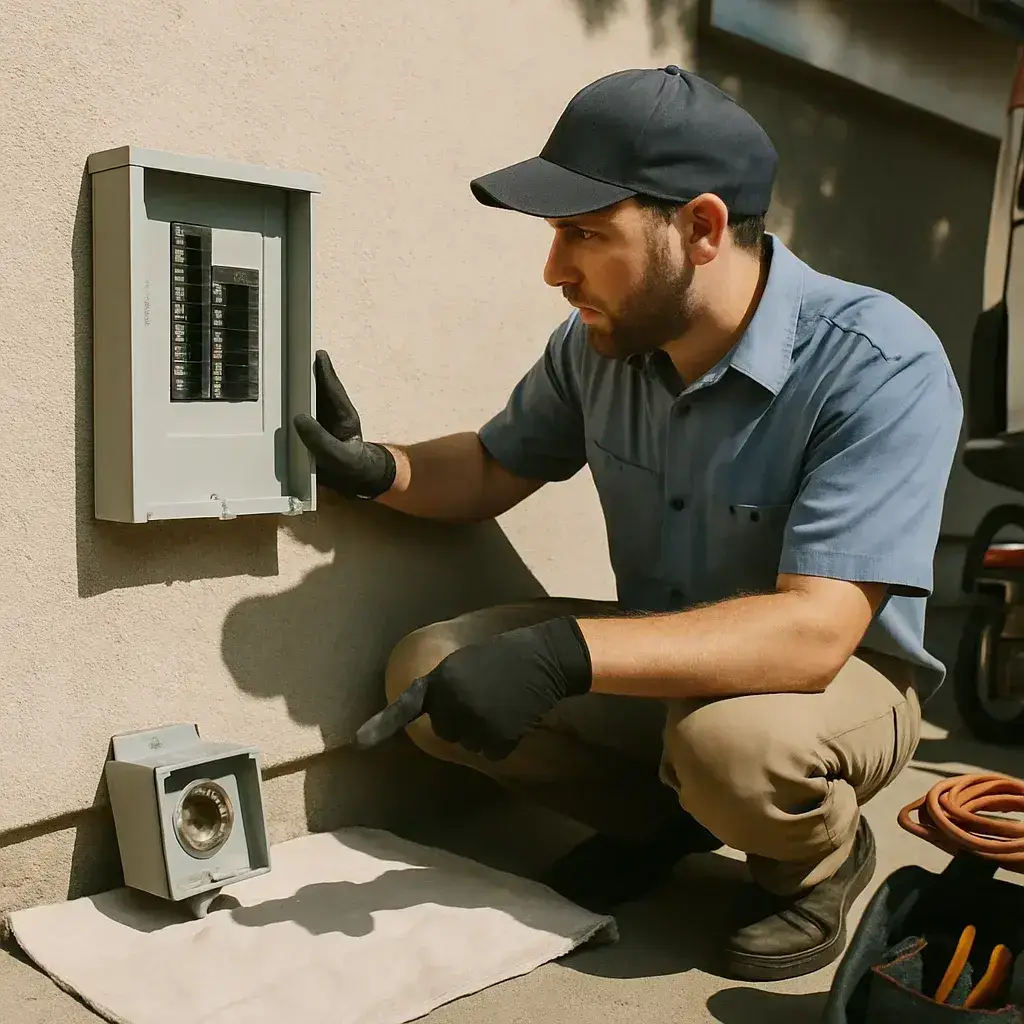
We’d point you toward a power inlet box over an interlock kit when you want to plug in and go without opening your panel every time the power drops. An inlet box mounts on the outside of your home and connects to a manual transfer switch or your interlock setup indoors, so you run one cord from the generator to a fixed connection point instead of feeding cords through a window or door. For folks who lose power a few times a year during North Texas storm season, that convenience matters.
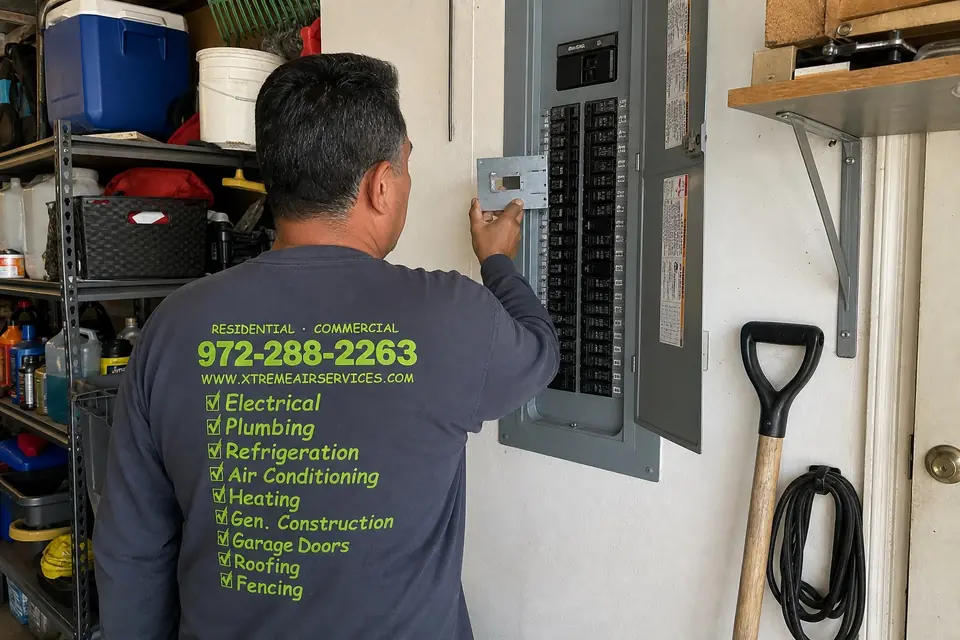
An interlock kit tends to make more sense when your panel has room for the mechanical device and you’re comfortable flipping breakers off before switching over to generator power. It’s usually the lower-cost path of the two, and it gets your whole panel backed up rather than a handful of circuits. A tight or crowded panel changes the math, and we’ll tell you if an interlock won’t fit before we quote anything.
Panel type and available space are the biggest factors, along with how far the generator will sit from the panel and how many circuits you want powered. Longer conduit runs and multiple dedicated circuits add labor and material, and if your panel needs upgrades to accept either option, that’s separate work outside a standard hookup. Most jobs like this run between 700 and 1,100 dollars, with the full range landing between 500 and 1,500 depending on those factors.
Installation, connections, and testing for the interlock or inlet kit are included in that price. The generator itself, panel upgrades, long conduit runs, code corrections, and permits are not included unless we’ve stated them upfront in your quote. We’ll walk you through which category your home falls into before any work starts, in writing, so you’re not guessing at what’s covered.
A service-call fee of 26 to 99 dollars applies if you have us out for a look, and that fee gets credited toward the job if you move forward with us. Financing isn’t typically part of a job this size, but it’s available if a hookup turns into a bigger project like a panel replacement or a transfer switch upgrade.
Thinking about Portable generator hookup? Let’s talk.
Call Today, Get Service Today. Xtreme Air Services is ready to help.
What This Job Costs and What’s Included
A portable generator hookup usually runs between $500 and $1,500, and most jobs land between $700 and $1,100. That price covers installing an interlock kit or a power inlet box so a portable generator can feed your panel safely, plus the connections and testing that go with it. Most of these jobs finish in a single day.
The price moves based on a handful of things. An interlock kit and an inlet box are priced differently, and which one fits your panel depends on the panel type and how much room you’ve got to work with. Distance from the panel to where the generator will sit matters too, since more conduit and wire run up the cost. If you need extra circuits added to the setup, or the job turns up a code issue that needs fixing along the way, that adds to the total as well.
- Included: the interlock or inlet kit itself, professional installation, all wiring connections, and testing before we leave
- Not included: the generator itself
- Not included: panel upgrades if your panel can’t support the hookup as-is
- Not included: long conduit runs beyond a standard distance
- Not included: code corrections found during the job
- Not included: permits, unless we’ve said otherwise for your specific job
We charge a $26 to $99 service-call fee to come out and look at your panel and your setup. If you move forward with the hookup, that fee gets credited toward the job, so you’re not paying twice. Financing isn’t typically set up for a job this size, since it’s a smaller repair category, but we do offer financing on larger repairs and full replacements.
A crowded or aging panel is worth flagging before we quote you. We won’t know for certain what your setup needs until a technician looks at the panel in person, and we’ll give you the flat-rate number in writing before any work starts.
How We Help You Decide (and Where We Draw the Line)
Most portable generator hookups run $700 to $1,100, inside a broader range of $500 to $1,500. The main decision is interlock kit versus power inlet box, and that comes down to your panel type, how much space it has, and how far we have to run conduit to reach it.
An interlock kit is a mechanical part that mounts on your panel and physically blocks the main breaker and a generator breaker from being on at the same time. It’s a good fit when your panel has room for the extra breaker and is easy to access. A power inlet box goes on the outside of your house and gives you a dedicated port to plug the generator cord into, feeding a transfer setup instead. We usually recommend this route when the panel is tight on space or the generator needs to sit farther from the house.
Panel condition matters too. An older panel in one of the established DFW neighborhoods sometimes needs a code upgrade before we can add either option safely, and that’s a separate cost from the hookup itself. The number of circuits you want the generator to carry, and how far the run is from panel to generator pad, both push the price toward the higher end.
- Included: the interlock or inlet kit, installation, connections, and testing before we leave
- Not included: the generator itself, any panel upgrade, long conduit runs, code corrections, or permits unless we’ve already told you they’re part of the job
- Service-call fee is $26 to $99, and it’s credited toward the job if you move forward with us
- Financing isn’t typically set up for a job this size, it’s more for larger repairs and replacements
The plain limitation: if your panel needs real electrical work first, code corrections or a subpanel, that’s priced and scoped separately from the hookup. We’ll tell you that before we start, not after. Most jobs like this finish in one visit, same day, once we’ve confirmed what your panel needs.
If you want to see how this fits with the rest of our generator work, our Portable generator hookup page covers the other services, like transfer switch installation and generator sizing consultation, that sometimes come up in the same conversation.
See our full portable generator hookup service in Sunnyvale for what the complete job involves.
Frequently Asked Questions
Common questions about Portable Generator Hookup in Sunnyvale
What’s the biggest mistake homeowners make when choosing between an interlock kit and a power inlet box?
The biggest mistake is picking based on price alone before checking the panel. An interlock kit usually costs less, but it only works if there’s an open slot on your breaker rail. We’ve seen people request the cheaper option, then find out their panel doesn’t support it once we look. That’s why we quote after seeing the panel, not before.
Can I install an interlock kit now and switch to a power inlet box later?
It’s possible, but it means paying for a second setup rather than adjusting the first one. An interlock kit and a power inlet box use different hardware and connection points, so switching later isn’t a simple upgrade. If there’s a chance you’ll want a permanent connection point down the road, it’s worth mentioning that before we start the first job.
Do you offer financing for a portable generator hookup?
Financing isn’t typically available for this smaller job. It’s available on larger repairs and replacements, but a standard interlock or inlet box install falls outside that range. Most homeowners pay for this job directly once we’ve written up the flat-rate price.
Is a power inlet box always the safer choice since I don’t have to open the panel?
Not always. A power inlet box adds convenience, but it usually costs more once conduit runs get long, and it may only cover a handful of circuits instead of the whole panel. An interlock kit backs up more of your home for less money if your panel has the room. The right choice depends on your panel, your budget, and how many circuits matter to you during an outage.
When would you tell me an interlock kit isn’t a good fit for my home?
We’d tell you an interlock isn’t a fit when your panel has no open slot for the bracket or when the panel needs a code correction before anything else can go in. In those cases, we’d point you toward a power inlet box instead, or explain that panel work has to happen first. We say this before quoting the job, not after.
Ready to Get Started?
Call 972-288-2263 Today, Get Service Today.