


Air Filter Replacement in Sunnyvale: Keep Your AC Breathing Easy
The right MERV rating for your system, changed on a schedule that protects your blower motor instead of choking it.
What’s Covered on This Page
- Warning Signs Your Filter Needs Attention
- When You Can Skip the Service Call
- How North Texas Summers Speed Up Filter Wear
- What Happens During a Professional Filter Visit in Sunnyvale
- How Filter Service Pricing Works
- How fast can you get out to change my air filter in Sunnyvale?
- What should I expect when your technician shows up for a filter swap?
- Why do filters near U.S. 80 or Belt Line Road clog faster?
- How do I know what MERV rating my system needs?
- Can I change my own filter, or should I call a professional?
Warning Signs Your Filter Needs Attention
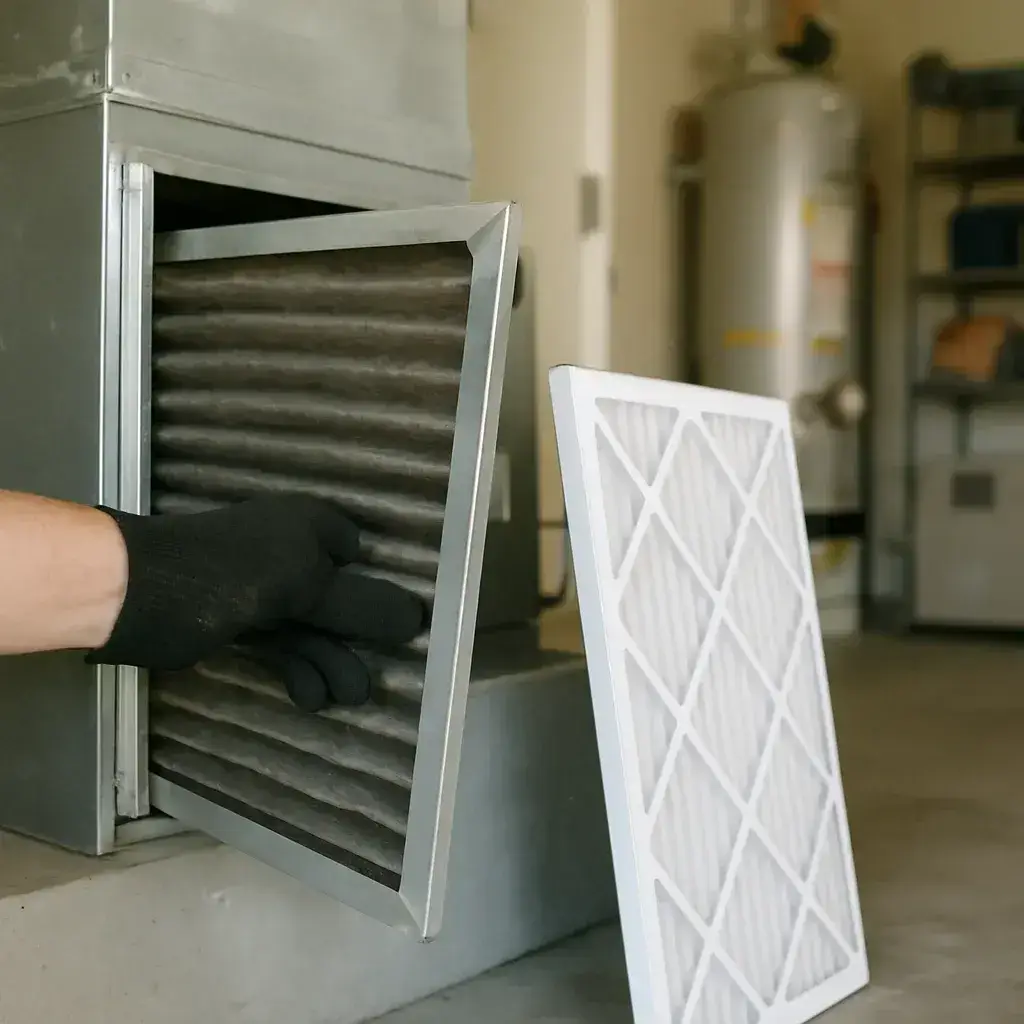
A lot of Sunnyvale homeowners figure their filter is fine as long as it still looks white or just a little gray when they pull it out. That’s usually the wrong read. A filter can look perfectly acceptable while its fibers are already packed with dust, pollen, and pet hair you’d only notice holding it up to a bright light. Local air brings in a steady mix of dry-season dust, cedar and oak pollen, and fine particulate from nearby freeway traffic, and all of it loads into the filter media faster than most people expect, particularly in homes near U.S. 80 or Belt Line Road.
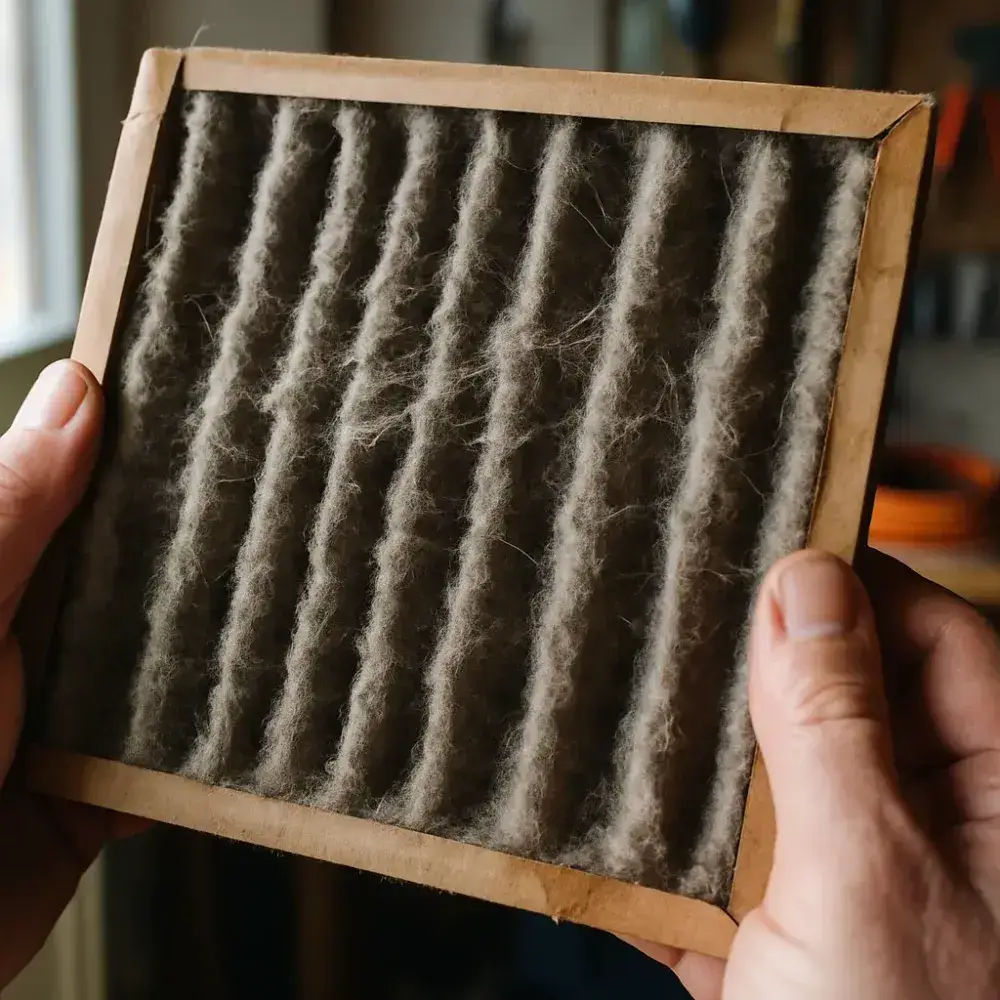
One of the clearest tells is an air conditioner that just takes longer than it used to for the same drop in temperature. If a room used to cool off in fifteen minutes and now takes twenty five or thirty, there’s a good chance the blower is straining to pull air through a clogged filter, which forces the compressor to run harder and longer than it should. That extra runtime shows up on your electric bill, often as a jump that’s easy to spot when you compare it to the same month last year.
- Noticeably weaker airflow from vents in rooms farthest from the air handler
- Dust settling faster than usual on furniture, shelves, or the tops of ceiling fan blades
- AC or furnace cycling on and off more often, or running unusually long cycles
- A musty or stale smell right when the system kicks on
- Electric bills that are higher than normal with no change in thermostat settings
- A whistling or straining sound from the return air grille
Technicians run into this constantly: a homeowner upgrades to a higher MERV filter hoping to trap more allergens, not realizing the blower motor was never built to push air through that much resistance. Drop a MERV 13 filter into a system designed for MERV 8, and it can quietly starve the blower of airflow for months, even while the filter itself still looks brand new. That mismatch is one of the most overlooked reasons blower motors wear out early in older Sunnyvale HVAC systems.
When You Can Skip the Service Call
Not every filter change in a Sunnyvale home requires a technician, and any honest local HVAC company will admit that upfront. If you can reach your return air grille or furnace closet slot without moving furniture, squeezing into a tight attic, or pulling off paneling, and you already know your filter’s exact size and MERV rating from the last box you bought, this is a job most homeowners can knock out in under ten minutes.
Plenty of Sunnyvale houses built between the 1960s and 1980s, particularly in neighborhoods like Tripp Road and Collins Road, use simple 1-inch pleated filters that slide into a bracket near the furnace or behind a hallway ceiling grille. These setups were built with homeowner maintenance in mind, and manufacturers stamp the required size right on the frame edge, so reordering online or from a local hardware store is straightforward.
- You can reach the filter slot without tools, a ladder, or taking apart ductwork
- The current filter frame clearly shows the size, such as 16x20x1 or 20x25x1
- You already know the MERV rating your system needs, usually MERV 8 to 13 for residential use
- The system runs quietly with even airflow at every vent and no strange smells
- There’s no visible mold, water damage, or pest activity around the filter housing
- You’ve swapped the filter before without needing a hand
If all of that matches your situation, a technician visit would mostly be paying for convenience rather than expertise. Sliding a new filter into a properly sized slot, lined up with the airflow arrow printed on the frame, isn’t a specialized skill. Save the service call for situations that actually call for diagnostic judgment, like unclear sizing, tight access, recurring dust buildup, or a system that’s short-cycling.
How North Texas Summers Speed Up Filter Wear
Sunnyvale homeowners hear the generic advice all the time: change your air filter every one to three months. Then they pull theirs out after just a few weeks and find it gray and matted, wondering what went wrong. The real answer is simple: it comes down to how long and how hard North Texas air conditioners actually run. From late April through early October, daytime highs regularly hit the 90s and 100s, and humidity stays thick enough that AC systems cycle almost nonstop instead of kicking on for short bursts. All that extra airflow pulls far more dust, pollen, and fine debris through the filter than a system that only runs a few hours a day would ever see.
The U.S. Department of Energy’s Energy Saver program actually addresses this head-on, advising homeowners to check filters monthly during periods of heavy air conditioner use and replace them every one to three months depending on conditions. In a North Texas summer, heavy use isn’t the exception, it’s the default for nearly half the year. That reality nudges most Sunnyvale households toward the one-month end of the DOE’s range, rather than the three-month mark that might work fine in a milder climate or on a lightly used system.
A few local conditions make things even tougher on filters. Construction dust from new subdivisions, seasonal cedar and oak pollen, and dry spells that stir up loose soil all add extra particulate load to the air an HVAC system pulls in. Add a compressor that’s running most of the day, and a filter that might last ten weeks somewhere else can hit its limit in three or four.
- Check filters monthly from May through September, when AC runs nearly nonstop
- Expect one-month replacement intervals during peak heat rather than the full three-month window
- Watch for visible dust buildup, reduced airflow, or longer cooling cycles as early warning signs
- Factor in pollen season and nearby construction dust, which can shorten filter life further
- Pair DIY checks with a seasonal licensed HVAC inspection to catch wear a visual check might miss
This is exactly why a rigid, one-size-fits-all replacement calendar rarely holds up here. A licensed technician who understands North Texas cooling loads can help you set a realistic, personalized schedule based on your system’s actual runtime, home size, and filter type, rather than leaning on national averages built around much lighter summer use.
Not sure what your Air filter replacement project needs? Ask us.
Call Today, Get Service Today. Xtreme Air Services is ready to help.
What Happens During a Professional Filter Visit in Sunnyvale
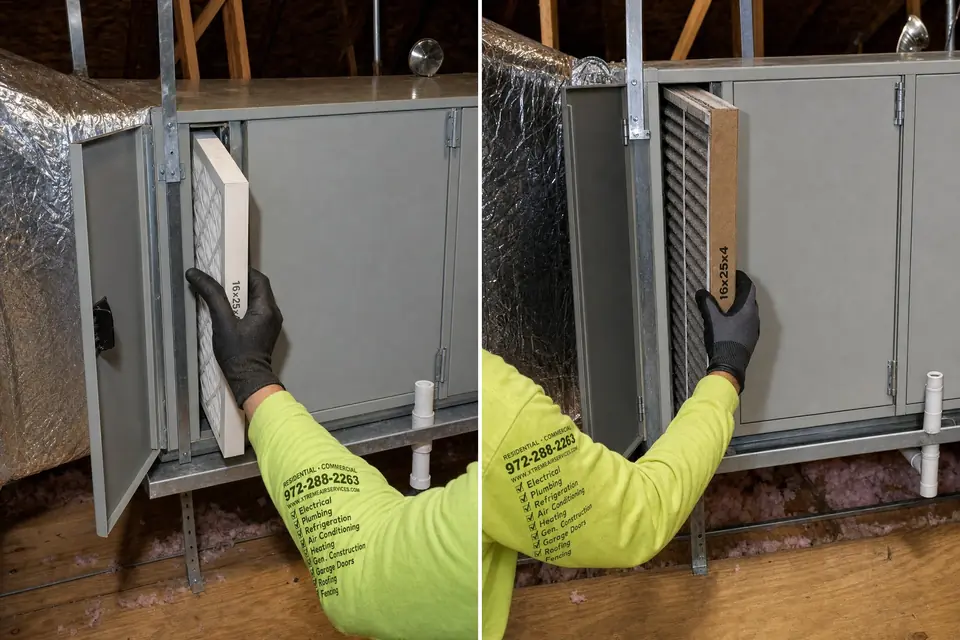
So what actually happens when a tech shows up? It’s more than popping in a new filter and heading out the door. A lot of Sunnyvale homes keep their air handler up in the attic, and that heat bakes dust into the filter fast. So we start by pulling the old one and taking a real look at how bad it’s gotten.
- Pull the existing filter and check its size, direction, and MERV rating against what your system needs.
- Inspect the filter housing and door seal for gaps, warping, or debris buildup around the edges.
- Check airflow and look for signs of strain, like a blower working harder than it should.
- Clean the housing area before the new filter goes in, since there’s no point sealing dust behind a fresh one.
- Seat the new filter correctly, arrow pointing the right way, and confirm the door closes tight.
- Run a quick performance and safety check to make sure air is moving the way it should.
That last step matters more than most people realize. A filter that looks fine but sits crooked can still choke airflow, and you’d never catch it just by glancing at it. We’ve walked into plenty of homes where the filter was brand new, just installed wrong.
If we spot something bigger while we’re in there, a torn duct or a failing blower motor, we’ll tell you straight and quote that separately. The filter visit itself stays focused: inspect, clean, check, done.
How Filter Service Pricing Works
Here’s the honest answer on cost. Air filter replacement across the DFW area typically runs twenty to a hundred fifty dollars. The most common job, one system inspected, cleaned, and checked for performance and safety, usually lands between twenty five and seventy five dollars. That’s the routine visit most Sunnyvale homeowners need.
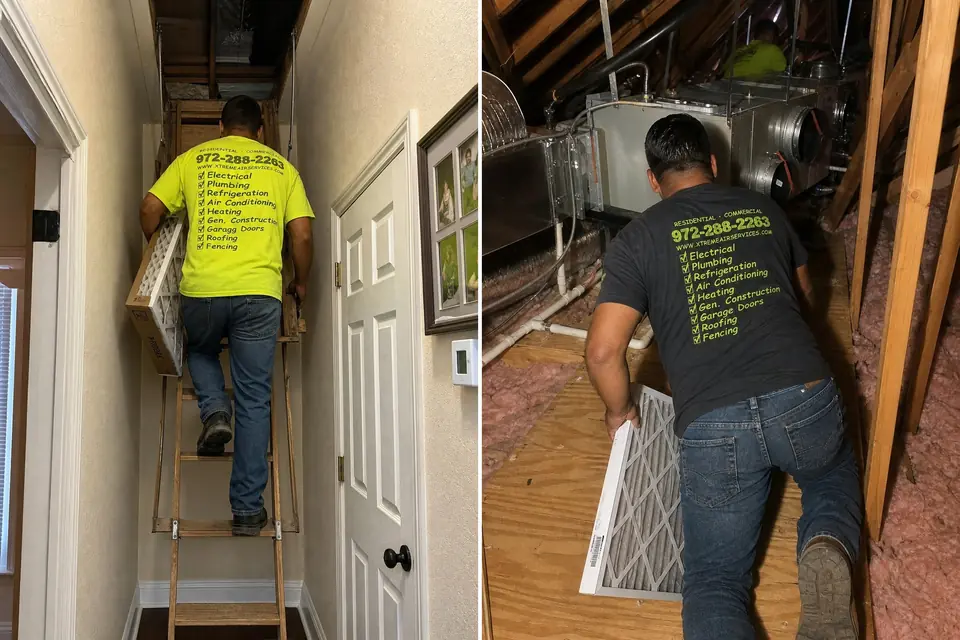
Not every home is the same, though. A one story slab home with a single attic unit is a quick, straightforward visit. A two system house with hard to reach attic access takes longer, and that shows up in the price.
- Number of systems or units in your home
- How easy the filter is to reach, attic units cost more time than a hallway closet
- How much dust and buildup has piled up from being skipped too long
- Whether it’s a one time visit or part of an ongoing maintenance plan
- Filter type, standard filters run lower, media or high MERV filters cost more because they’re built to catch finer particles
There’s also a service call fee, twenty six to ninety nine dollars, and here’s the part folks like: it gets credited toward the work if you move forward with us. No throwing money away just for someone to show up.
Financing isn’t usually offered for a job this size, it’s more for the bigger stuff like full system repairs or replacements. But we’ll always tell you upfront what a visit involves before we start, no guessing games.
Frequently Asked Questions
Common questions about Air filter replacement
How fast can you get out to change my air filter in Sunnyvale?
Most Sunnyvale filter replacement calls get scheduled within a day or two, often sooner if your system is showing signs of strain. We cover homes across Sunnyvale, including older properties near Tripp Road and Collins Road with tight furnace closets. If your AC is short-cycling or you hear whistling from the return grille, tell us when you call so we can prioritize the visit. A fast turnaround matters here because a clogged filter forces your blower motor to work harder every single day it sits unchanged.
What should I expect when your technician shows up for a filter swap?
Your technician will pull the old filter, check the frame for the correct size and airflow direction, and inspect the housing for mold or pest activity before installing the new one. They’ll also check the MERV rating against what your blower motor was built to handle. This matters because a filter that’s rated too high for your system can quietly starve airflow for months. The whole visit usually takes just a few minutes once the filter slot is reached.
Why do filters near U.S. 80 or Belt Line Road clog faster?
Homes close to these busy corridors pull in more fine particulate from traffic, along with Sunnyvale’s usual mix of dry-season dust and cedar or oak pollen. That combination loads filter media faster than homes in quieter pockets of the city. A filter can still look mostly clean from the front while its fibers are already packed underneath. If you’re in one of these areas, checking your filter more often than the standard schedule is a smart habit.
How do I know what MERV rating my system needs?
Check the sticker inside your furnace closet or the owner’s manual, since most Sunnyvale residential systems are built for MERV 8 to 13. Installing a filter rated higher than that, like a MERV 13 in a system designed for MERV 8, can choke airflow even though the filter looks brand new. This mismatch is one of the most common reasons blower motors wear out early in older local systems. When in doubt, a quick technician check can confirm the right rating for your setup.
Can I change my own filter, or should I call a professional?
You can handle it yourself if the filter slot is easy to reach and you already know the exact size and MERV rating your system needs. Plenty of Sunnyvale homes built from the 1960s through the 1980s use simple 1-inch pleated filters that slide in without tools. Call a technician instead if access is tight, sizing is unclear, or your system keeps short-cycling even after a filter change. Those situations usually point to something beyond a simple swap.
Ready to Get Started?
Call 972-288-2263 Today, Get Service Today.