


Condenser Coil Cleaning in Sunnyvale: Restore Your AC’s Cooling Power
Professional condenser coil cleaning in Sunnyvale that restores heat transfer and lowers running costs.
What’s Covered on This Page
- Signs Your Condenser Coil Needs Cleaning
- Condenser Coil vs. Evaporator Coil: Know the Difference
- When You Can Skip Professional Cleaning
- What Happens During Professional Coil Cleaning
- What Drives the Cost of Condenser Coil Cleaning
- How often should I get my condenser coil cleaned in Sunnyvale?
- What happens when your technician arrives to clean my condenser coil?
- Can I clean the condenser coil myself instead of hiring a pro?
- How do I know if it’s my condenser coil or evaporator coil causing problems?
- How long does a condenser coil cleaning appointment take?
Signs Your Condenser Coil Needs Cleaning
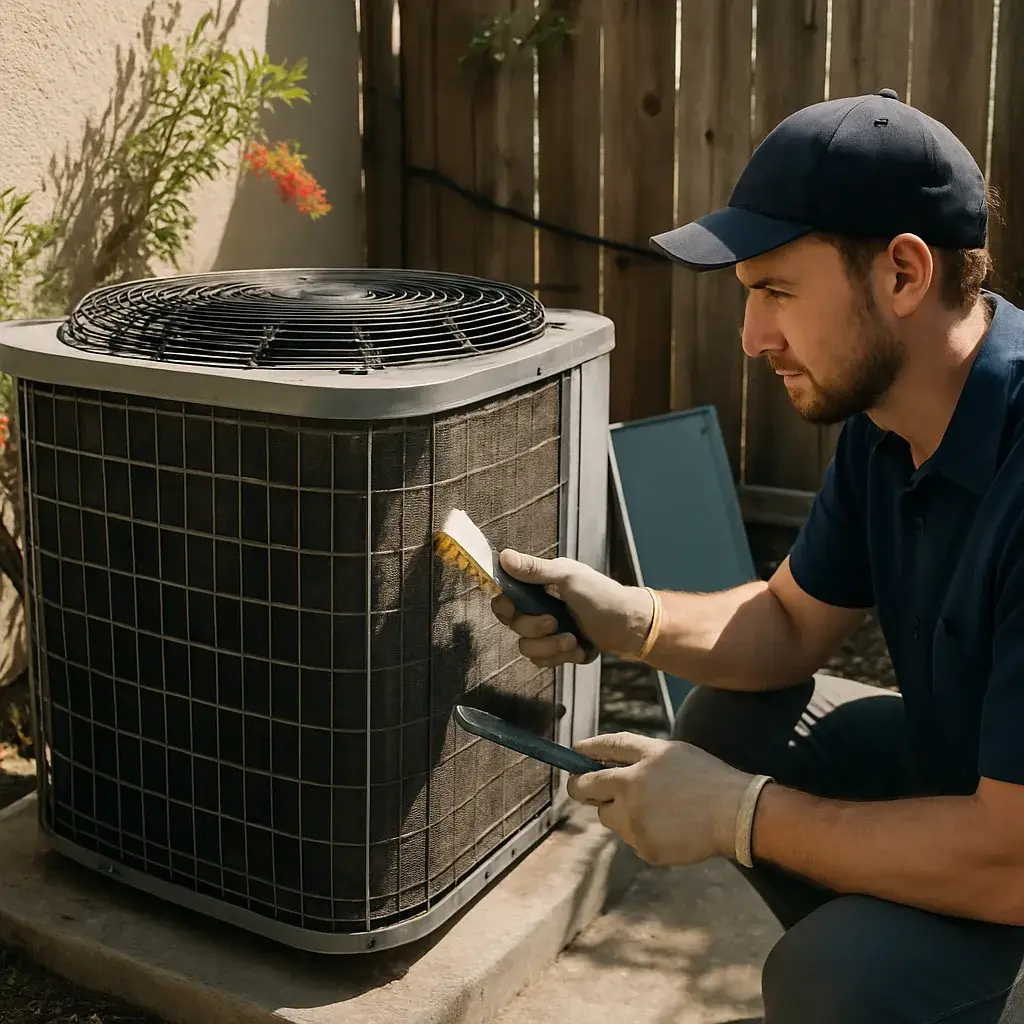
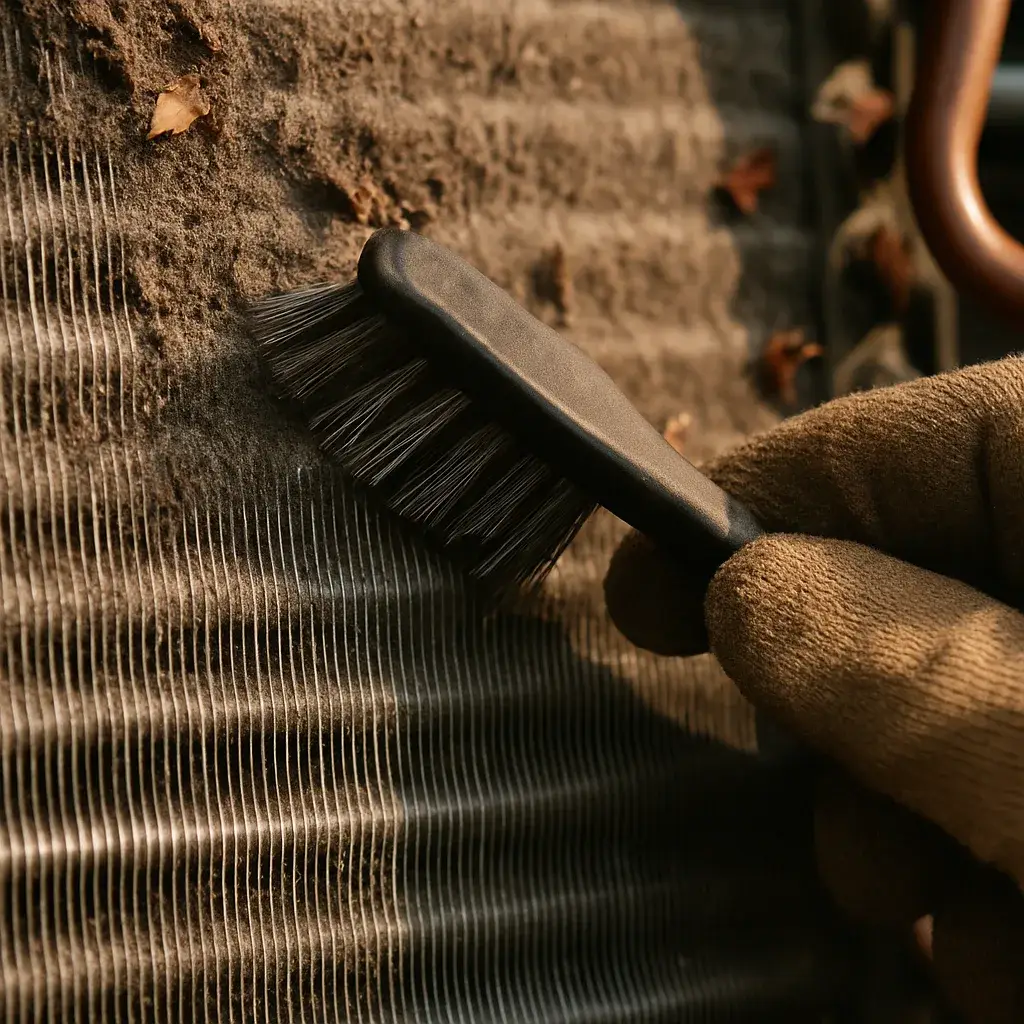
Your condenser coil sits in that outdoor unit, the metal fins wrapped around the cage. Its job is to release the heat your AC pulls out of the house. When it’s coated in dust, grass, or pollen, that heat has nowhere to go. Sunnyvale’s mix of open fields and newer subdivisions means a lot of loose dirt and grass clippings blow straight into outdoor units every summer, and it builds up fast between May and August.
So how do you know it’s the coil and not something else? A few signs show up again and again.
- Your energy bill climbs even though you haven’t changed the thermostat
- The system runs nearly nonstop on hot afternoons but the house still feels warm
- You notice ice or frost on the outdoor unit even in summer
- There’s a hissing or humming sound coming from outside that wasn’t there before
- The breaker trips on the hottest days of the week
Notice your AC running almost nonstop on a 100 degree afternoon but the house still feels sticky? That’s usually a coil that can’t breathe. We see this every summer, once the coil’s caked in dust the compressor can’t keep up, and it starts pulling more power to do less work. The unit runs, the house never quite cools. Left alone long enough, that strain can shorten the life of parts that cost a lot more to fix than a coil cleaning ever would. Sunnyvale yards throw a lot of cottonwood, dust, and grass clippings at an outdoor unit.
Condenser Coil vs. Evaporator Coil: Know the Difference
Here’s where folks get mixed up. Your AC system has two coils, not one. The condenser coil lives outside, in that metal box sitting on a pad by your house. The evaporator coil lives inside, tucked in the air handler or up in the attic. Sunnyvale summers push both of them hard, but they get dirty in different ways.
The outdoor unit sits exposed to grass clippings, cottonwood, and Texas dust storms. Mow your lawn on a Saturday and that fine debris settles right into the coil fins. Give it a season or two, and airflow drops. The system runs longer to hit the same temperature, and your energy bill creeps up. That’s the coil we clean in this service.
- Condenser coil: outside, exposed to yard debris and dust, cleaned from the outdoor unit
- Evaporator coil: inside the air handler or attic, gets dirty from dust and neglected filters
- Frost or ice on indoor lines usually points to the evaporator coil, not the condenser
- Weak airflow with a hot outdoor unit usually points to the condenser coil
Not sure which one you’ve got? That’s a fair question, most homeowners don’t crawl into their attic to check. If you’re seeing ice on the indoor lines or the copper line coming out of the wall, that’s an evaporator coil issue and a different job. If the outdoor unit looks caked with dirt or the system’s running long and loud in the July heat, condenser coil cleaning is your fix. That buildup happens faster in Sunnyvale, where the cooling season runs long and hard.
When You Can Skip Professional Cleaning
Not every dirty-looking unit needs a pro. If your system is under a year or two old and you keep the yard clear around it, a garden hose rinse from the outside, sprayed gently downward through the fins, handles light dust just fine.
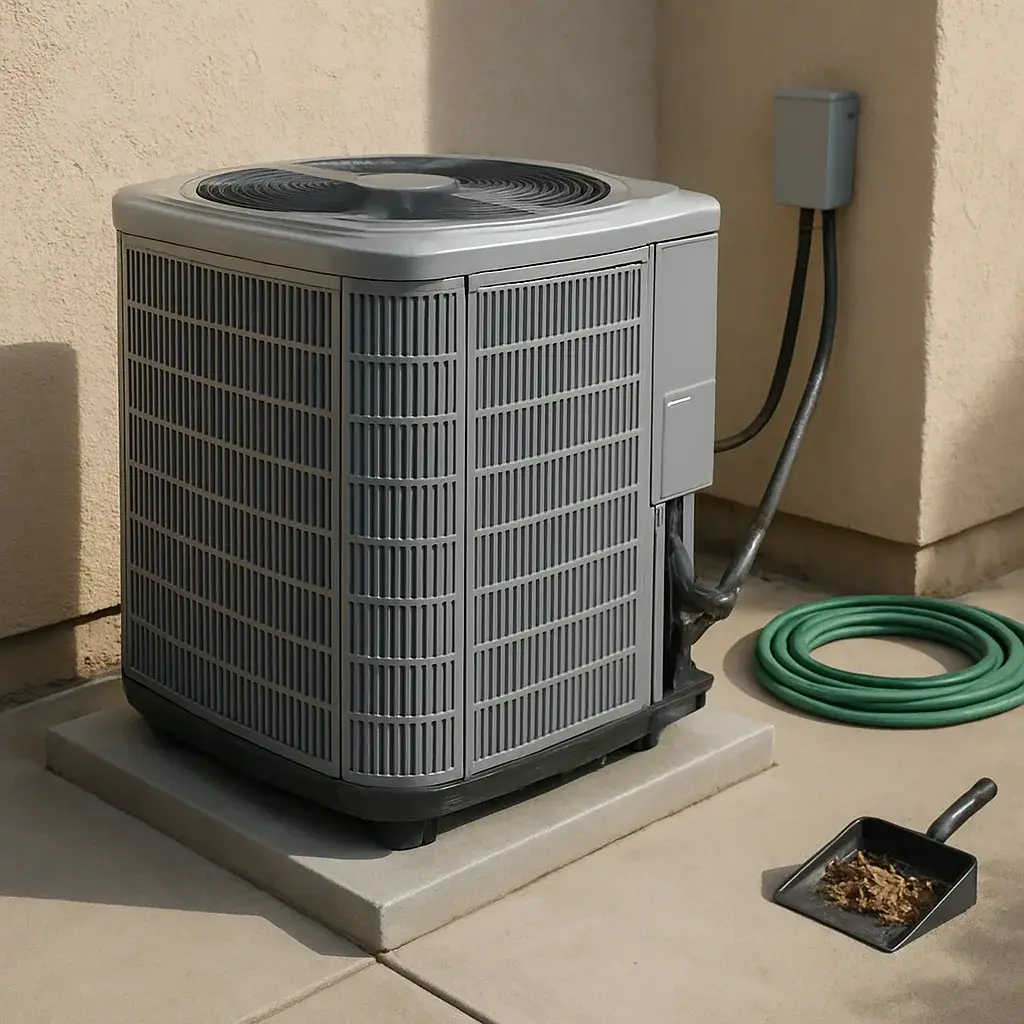
Look at the outdoor unit. Can you see clean metal fins through the grille, no thick gray fuzz, no packed leaves or grass clippings jammed inside? Good. That’s a sign you’re fine for now. We see it constantly on Sunnyvale homes with the condenser tucked along a fence line.
- Cooling still feels normal and the energy bill hasn’t jumped
- No ice on the lines, no odd rattling or grinding sounds
- The outdoor coil looks lightly dusty, not matted or clogged
- You had it cleaned within the last year and don’t run near heavy pollen or construction dust
So skip it, hose it off yourself, check back next season. We’d rather tell you that straight than send someone out for a job the hose can handle.
But if the fins are packed tight, if the unit’s been ignored for a couple summers, or if cooling has gotten weaker even after you bumped the thermostat down, a hose won’t cut it anymore. That buildup traps heat against the coil and the system has to work harder just to keep up – and that’s where a real cleaning starts to matter. A clean coil is one of the cheapest ways to cut a Sunnyvale summer power bill.
One more thing worth knowing: a quick self-check costs you nothing.
Thinking about Condenser coil cleaning? Let’s talk.
Call Today, Get Service Today. Xtreme Air Services is ready to help.
What Happens During Professional Coil Cleaning
So what does a real cleaning look like, not the garden hose version? Our licensed technicians follow the same sequence every time, whether it’s a small condo unit or a three-ton system baking on a Sunnyvale rooftop.
- We shut off power to the unit at the disconnect, no exceptions, safety first.
- We pull the top grille and fan assembly to get full access to the coil fins.
- We inspect the coil, the fins, and the surrounding cabinet for damage or bent metal.
- We brush away loose debris, leaves, cottonwood, grass clippings, whatever’s built up.
- We apply a coil cleaner made for aluminum fins and let it break down grease and grime.
- We rinse from the inside out, so dirt flows away from the coil instead of deeper into it.
- We straighten bent fins where we can and run the unit to check airflow and pressures.
That last step matters more than people think. A clean coil that still can’t move air right hasn’t solved the real problem, it’s just wearing a fresh coat of paint. We check amp draw, head pressure, and temperature split before we call the job done. A unit that was struggling to cool comes right back to life once the coil can breathe again.
This visit covers the inspection, the cleaning, and that final performance check. If we spot a failing capacitor or a refrigerant leak while we’re in there, we’ll tell you straight and quote it separately, no surprise charges tacked onto the bill. Most Sunnyvale systems benefit from this once a year, before the real heat arrives.
What Drives the Cost of Condenser Coil Cleaning
Condenser coil cleaning gets priced by the job, not by the hour. That matters because the number on your invoice depends on what’s going on with your unit, not how long a tech stands in your yard.
Here in Sunnyvale, a typical condenser coil cleaning runs $100 to $400. Most jobs land on the lower end of that. A routine, single-system cleaning, the kind where we inspect the coil, clean it, and run a performance and safety check, usually falls between $100 and $225.
So what pushes a job toward the higher end? A few things.
- How many systems or units need service, one condenser is a different job than three on a commercial rooftop
- How easy the unit is to reach, a side-yard unit is faster than one buried behind a fence or under a deck
- How much buildup has piled up, years of cottonwood and dust take longer to clear than a coil cleaned last spring
- Whether it’s a one-time visit or part of an ongoing maintenance plan, plans tend to catch buildup early, before it turns into a bigger job
There’s a service-call fee of $26 to $99 for the visit itself, and that fee gets credited toward the repair if you move forward with us. Fair is fair, we don’t think you should pay twice to find out what’s wrong. It is routine work for us across Sunnyvale every spring.
The cleaning price covers the full inspection, the cleaning, and the performance check. It doesn’t cover repair parts. If we find a bent fin, a refrigerant leak, or a failing capacitor while we’re in there, we’ll quote that separately before touching anything.
Frequently Asked Questions
Common questions about Condenser coil cleaning
How often should I get my condenser coil cleaned in Sunnyvale?
Most Sunnyvale homes need a coil cleaning once a year, ideally before the May through August stretch when cooling demand peaks. Homes near open fields or newer subdivisions with loose dirt and grass clippings may need it sooner, since that debris blows straight into outdoor units all summer. If your unit sits near a lawn that gets mowed often, check it every few months. Catching buildup early keeps your system cooling well and helps you avoid bigger repairs down the road.
What happens when your technician arrives to clean my condenser coil?
Your technician starts by shutting off power to the unit at the disconnect, no exceptions. From there, they pull the top grille and fan assembly, inspect the coil and cabinet for damage, then brush away loose debris before applying a coil cleaner made for aluminum fins. They rinse from the inside out so dirt flows away from the coil, straighten bent fins where possible, and run the unit to check airflow, amp draw, and pressures before calling the job done.
Can I clean the condenser coil myself instead of hiring a pro?
Yes, if your unit is lightly dusty and less than a year or two old, a gentle garden hose rinse sprayed downward through the fins often does the trick. Check the outdoor unit for clean metal fins with no thick gray fuzz or packed leaves. If cooling still feels normal and your bill hasn’t jumped, you’re fine to wait. But if the fins are matted or the system has been ignored for a couple summers, a hose alone won’t clear it anymore.
How do I know if it’s my condenser coil or evaporator coil causing problems?
Look at where the trouble shows up first. The condenser coil sits outside and gets dirty from yard debris and dust, while the evaporator coil sits inside the air handler or attic and gets dirty from neglected filters. Ice on indoor lines usually points to the evaporator coil, while weak airflow paired with a hot, dirty-looking outdoor unit points to the condenser. If you’re not sure, a technician can check both in one visit.
How long does a condenser coil cleaning appointment take?
Most condenser coil cleanings take under an hour, whether it’s a small condo unit or a larger system on a Sunnyvale rooftop. That covers shutting off power, removing the grille, cleaning the coil, and running a final performance check on airflow and pressures. If a technician spots something extra, like a bent fin needing more work, it may add a bit of time. You’ll know before they leave whether your system is back to cooling the way it should.
Ready to Get Started?
Call 972-288-2263 Today, Get Service Today.