


Condenser Coil Replacement in Sunnyvale: Get Cooling Back Fast
Condenser coil replacement for Sunnyvale homes when cleaning is no longer enough to restore cooling.
What’s Covered on This Page
- Warning Signs Point to a Failing Condenser Coil
- Coil Replacement vs. Full System Replacement: How the Decision Gets Made
- Sometimes a Dirty Coil Just Needs Cleaning, Not Replacement
- What Licensed Technicians Confirm Before Touching Refrigerant
- How a Condenser Coil Replacement Gets Done, Start to Finish
- How fast can you get out to look at a failing condenser coil in Sunnyvale?
- What happens when a technician comes to check my condenser coil?
- Why do condenser coils fail so often in Sunnyvale homes?
- How do I know if my coil needs replacing instead of just cleaning?
- Can I clean or replace my own condenser coil?
Warning Signs Point to a Failing Condenser Coil
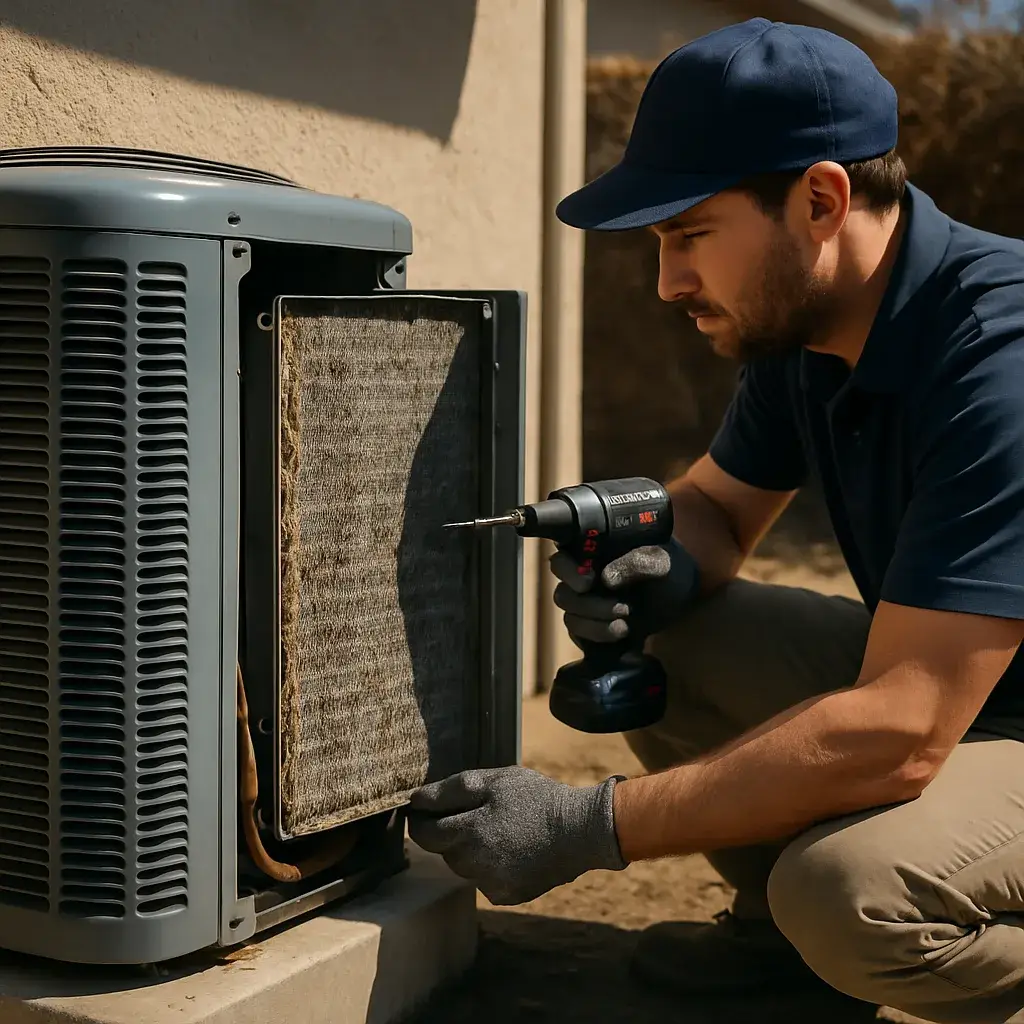
Your outdoor unit is working overtime and the house still feels warm. That’s usually the first clue something’s wrong with the condenser coil. The coil’s job is simple: it releases the heat your system pulls out of the house. When it’s damaged, dirty, or corroded, that heat has nowhere to go.
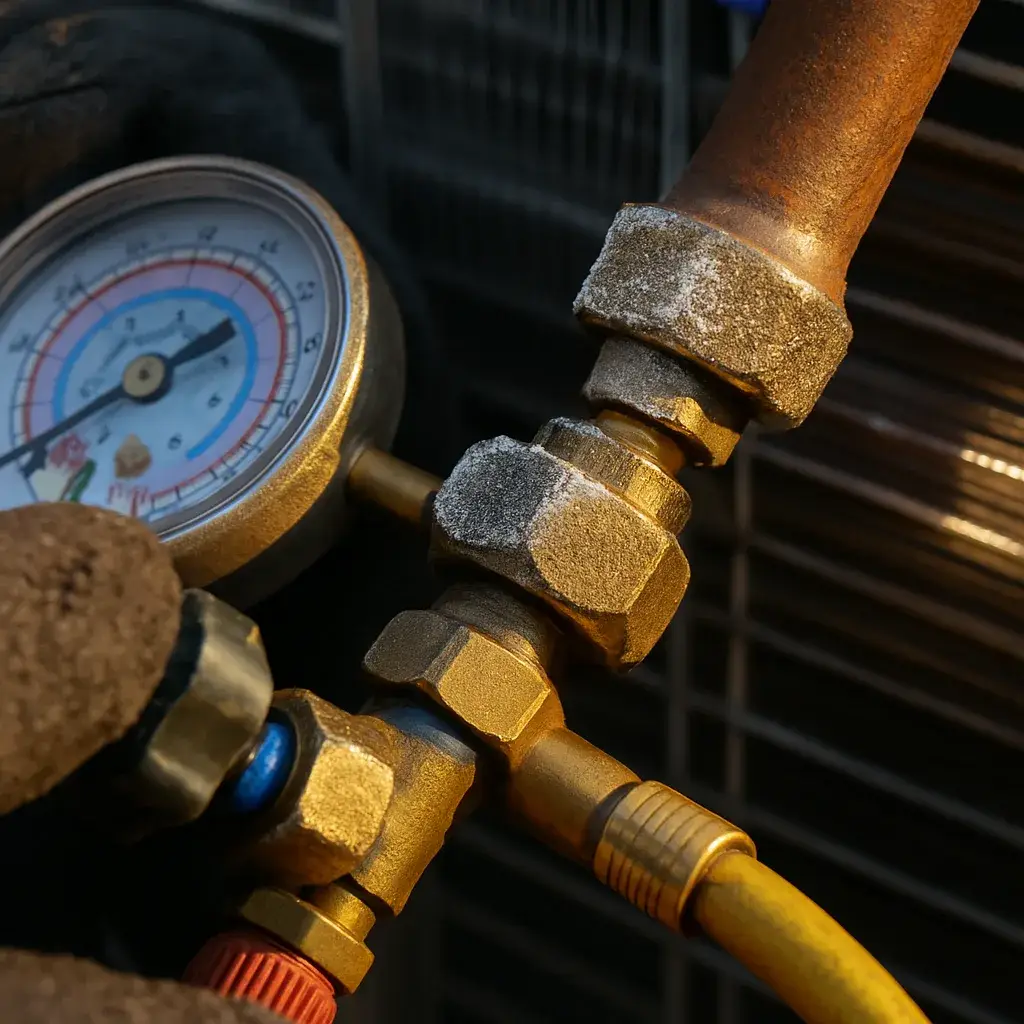
We get calls all summer where the homeowner says the AC runs and runs but the vents barely feel cool. Often we find a coil that’s bent, corroded, or caked in debris from a storm.
- Warm air blowing even though the system runs constantly
- Ice or frost building up on the outdoor unit, even in July
- Hissing or bubbling sounds near the outdoor coil, often refrigerant leaking out
- Bent or crushed fins on the coil after a hailstorm or lawn equipment hit
- Higher electric bills with no real change in how you use the AC
- Visible green or white corrosion on the coil surface
Not every one of these means you need a new coil. But if you’re seeing two or three at once, that’s a coil on its way out.
Coil Replacement vs. Full System Replacement: How the Decision Gets Made
So how do you know if a new coil is the right call, or if you’re better off replacing the whole outdoor unit? That’s the first thing we look at on every job.
Age matters a lot here. A coil failure on a unit that’s five or six years old is usually worth fixing, since the rest of the system still has plenty of life left. But if that unit is pushing twelve to fifteen years, putting a brand new coil on old, tired components can feel like buying new tires for a car that’s about to need an engine.
- Refrigerant type, older systems built for R-22 can be tricky to match with a new coil designed for today’s refrigerant
- Efficiency mismatch, pairing a new coil with an old compressor rarely runs as well as either part alone
- Overall condition of the compressor, fan motor, and wiring, not just the coil that failed
- How the failure happened, a one-time physical strike is different from corrosion that’s spreading
We check all of that before we ever recommend a fix. When it’s a straightforward coil swap, the rest of the unit tests out fine and there’s no reason to replace more than what’s broken.
If your system is older and the compressor’s showing wear too, we’ll tell you straight. And if a new coil is the right call, we’ll say that too, no upselling, no guessing.
Sometimes a Dirty Coil Just Needs Cleaning, Not Replacement
Before anyone talks about condenser coil replacement, it’s worth asking a simpler question: is the coil damaged, or just dirty? In Sunnyvale, outdoor condenser units sit exposed to dry summer dust, oak debris, pollen, and the occasional landscaping overspray from nearby yards. All of that settles on the aluminum fins and coil surface over a season or two. The result looks and behaves a lot like coil failure: weak cooling, higher energy bills, and a system that runs longer than it should. But in many of these cases, the metal underneath is fine. It’s buried under a layer of grime that’s blocking normal heat transfer, not a coil that has physically broken down.
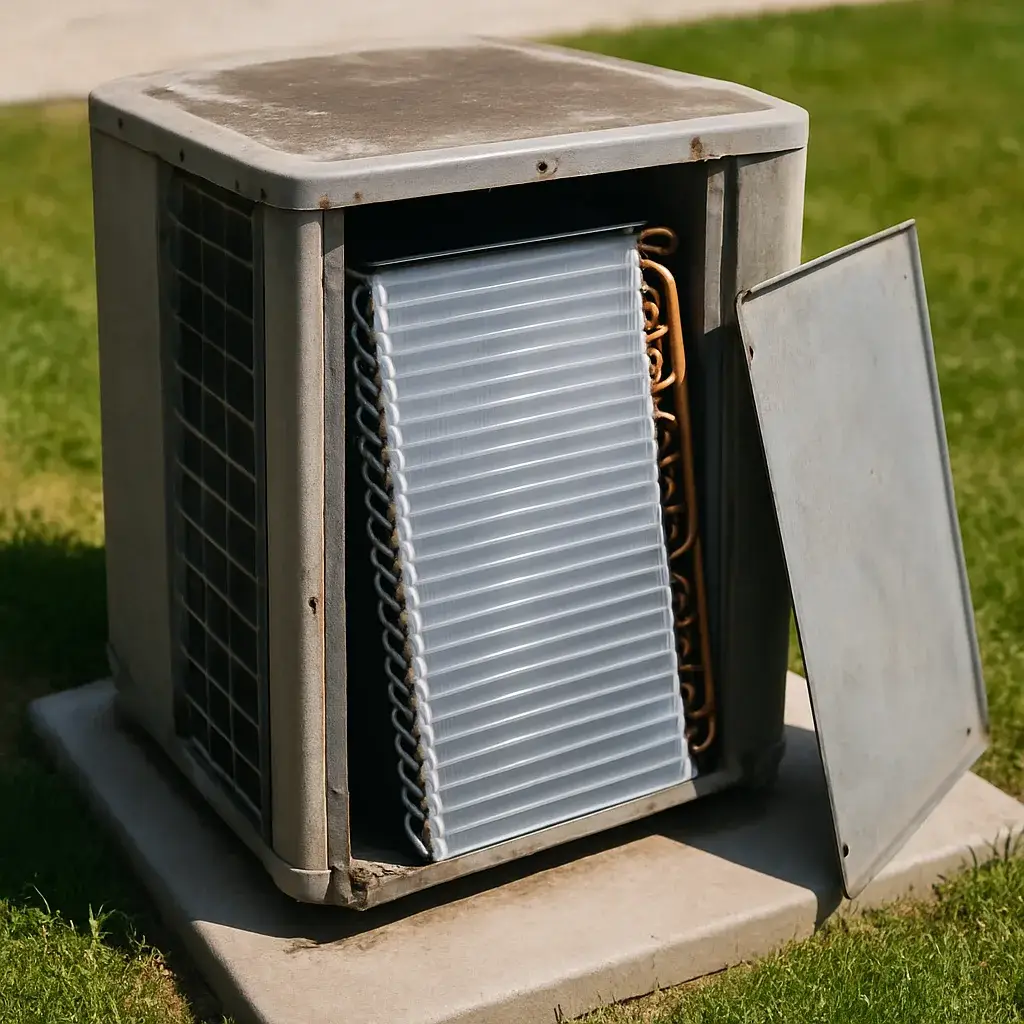
This is why coil cleaning exists as its own service, separate from replacement. A trained technician can degrease and rinse the coil fins, clear out compacted debris between the fin rows, and restore airflow without touching anything inside the sealed refrigerant circuit. If a full inspection shows no physical damage, no refrigerant leak, and no corrosion eating through the coil, cleaning is the honest recommendation, even though a replacement job pays more. A reputable Sunnyvale HVAC company will tell you when cleaning is enough instead of steering every service call toward a new coil.
Homeowners can also help themselves between professional visits. Rinsing the exterior fins with a garden hose on a gentle setting, spraying from the inside out where possible, is safe basic upkeep any Sunnyvale homeowner can do a few times a year, especially after windy weeks or nearby landscaping work. This kind of light maintenance keeps surface buildup from turning into the caked-on grime that reduces efficiency over time.
If a technician tells you cleaning won’t solve the problem, the next step is a straightforward diagnostic conversation about whether replacement is truly necessary, not a sales pitch built on guesswork.
Need help with Condenser coil replacement?
Call Today, Get Service Today. Xtreme Air Services is ready to help.
What Licensed Technicians Confirm Before Touching Refrigerant
Condenser coil replacement means breaking into a sealed refrigerant circuit, and that’s not a task for a general handyman. In Texas, anyone performing air conditioning and refrigeration work must hold an ACR license issued under Texas Occupations Code Chapter 1302, regulated by the Texas Department of Licensing and Regulation. Separately, federal law under EPA Section 608 requires anyone who recovers, handles, or releases refrigerant to carry a valid certification card. Sunnyvale homeowners should treat both credentials as non-negotiable before a single fitting is loosened.
A licensed, background-checked crew like the technicians at Xtreme Air Services will expect these questions and answer them without hesitation. If a contractor is vague about license numbers or certification status, that hesitation is itself a warning sign worth walking away from.
- What is your TDLR ACR license number, and can I verify it on the state’s public license lookup before work begins?
- Which technician on site holds current EPA Section 608 refrigerant certification, and what type (Type II or Universal) applies to this system?
- How will you confirm the new coil matches my system’s tonnage and SEER2 rating so the compressor isn’t mismatched or overworked?
- What is explicitly included in the quoted price: refrigerant charge, disposal of the old coil, line flushing, leak testing, and warranty registration?
- What’s excluded: electrical repairs, ductwork modifications, permit fees, or condenser pad replacement if it’s cracked or unlevel?
- Will the crew members entering my home have passed a background check, and can I see documentation of that screening?
Coil-to-system compatibility deserves special attention in Sunnyvale’s climate, where mismatched tonnage or SEER2 ratings can cause short cycling, elevated humidity indoors, and premature compressor failure. A qualified technician measures the existing system, checks the manufacturer’s specification sheet, and confirms the replacement coil aligns in both capacity and efficiency rating rather than simply swapping in whatever unit is on the truck. Ask to see this comparison in writing, not just hear it verbally.
How a Condenser Coil Replacement Gets Done, Start to Finish
A condenser coil replacement in a Sunnyvale home follows a defined sequence, not a guessing game. Because the outdoor unit sits exposed to Texas heat, dust, and storm debris, coils here often show pinhole leaks or corrosion patterns that a trained tech can distinguish from other failure points like a bad capacitor or a refrigerant leak elsewhere in the line set. Before any part is ordered or any refrigerant is touched, the technician confirms the coil itself is the source of the problem, using readings, visual inspection, and sometimes a UV dye check to rule out a cheaper fix.
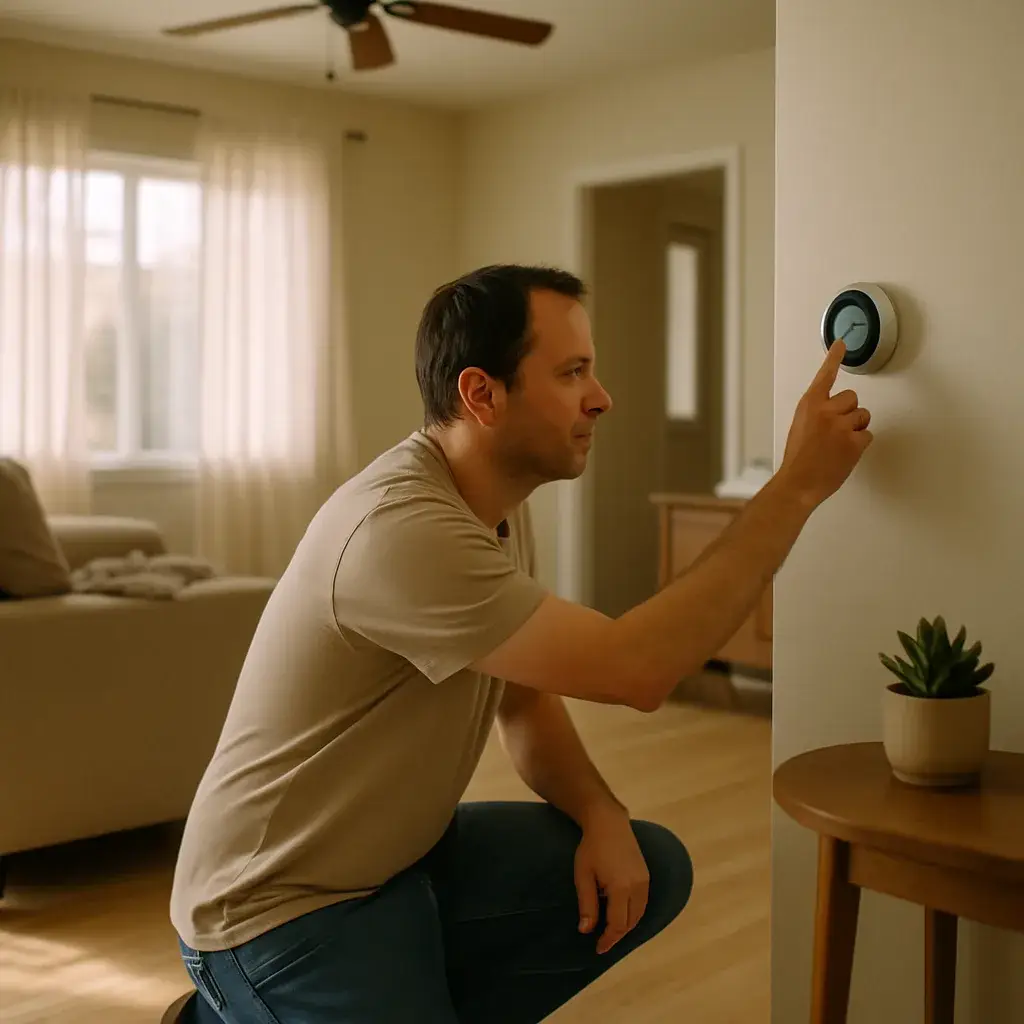
- Diagnose and confirm the coil is the failure point, not the compressor, capacitor, or a line set leak
- Recover the remaining refrigerant using EPA-mandated recovery equipment, as venting it into the air is illegal and harmful
- Disconnect electrical and refrigerant lines, then remove the old coil from the outdoor cabinet
- Install a compatible replacement coil matched to the system’s tonnage, refrigerant type, and cabinet design
- Braze all refrigerant line connections and pressure-test the sealed system to check for leaks before charging
- Recharge the system with the correct refrigerant type and amount per manufacturer specifications
- Run a startup and performance test, checking subcooling, superheat, airflow, and cycling behavior
Most of this happens in a single visit, though homeowners should expect the outdoor unit to be down for several hours while brazing, leak-testing, and recharging take place. Indoor comfort isn’t typically affected until the AC would normally run, so scheduling the work earlier in the day gives the system time to be back online before the afternoon heat sets in. Haul-away of the old coil is standard scope, not an add-on fee sprung on the invoice afterward, which keeps the pricing upfront rather than full of surprises.
This structured approach matters because it removes ambiguity from a repair that can otherwise feel like a black box. When each step is explained in advance, from EPA-mandated refrigerant handling to the final performance test, homeowners can verify the job was done right instead of just trusting that it was.
Frequently Asked Questions
Common questions about Condenser coil replacement
How fast can you get out to look at a failing condenser coil in Sunnyvale?
Most Sunnyvale calls get a same-day or next-day visit, especially during peak summer heat when coils fail more often. A technician checks the outdoor unit first, since that’s where coil problems show up fastest. If your system is blowing warm air or icing over, don’t wait. A short delay can turn a coil repair into bigger compressor damage. Call as soon as you notice weak cooling or strange noises outside.
What happens when a technician comes to check my condenser coil?
The technician inspects the outdoor unit for corrosion, bent fins, and refrigerant leaks before touching anything. You’ll get a straight answer on whether the coil is dirty, damaged, or fine. They’ll test the compressor, fan motor, and wiring too, not just the coil. This full check tells you whether cleaning solves the problem or replacement is the honest next step. No guesswork, no upselling.
Why do condenser coils fail so often in Sunnyvale homes?
Sunnyvale’s dry summer dust, pollen, and oak debris settle on outdoor units and cake onto the coil fins over time. This buildup blocks heat transfer and mimics real coil failure, even when the metal underneath is still fine. Storms and nearby landscaping work add more debris and can bend fins too. Rinsing the exterior fins with a garden hose a few times a year helps cut down on this buildup between visits.
How do I know if my coil needs replacing instead of just cleaning?
A full inspection is the only reliable way to tell the difference. If there’s no physical damage, no leak, and no corrosion eating through the metal, cleaning usually fixes weak cooling and high bills. Replacement only makes sense when the coil is bent, corroded, or leaking refrigerant. A technician should check age, refrigerant type, and overall system condition before recommending either option.
Can I clean or replace my own condenser coil?
Rinsing the exterior fins with a garden hose is safe and something any Sunnyvale homeowner can do. Opening the refrigerant circuit is not something you can legally do yourself. Under EPA Section 608, only certified technicians can handle refrigerant lines and components, and in Texas, ACR-licensed technicians are required for this work. Always ask for license and certification numbers before hiring anyone for coil work.
Ready to Get Started?
Call 972-288-2263 Today, Get Service Today.