


Evaporator Coil Cleaning in Sunnyvale: Get Cool Air Flowing Again
Indoor evaporator coil cleaning for Sunnyvale homes, clearing the buildup that chokes airflow and cooling.
What’s Covered on This Page
- Signs Your Evaporator Coil Is Blocking Cool Air
- When a Simple Filter Swap Solves the Problem
- What Happens During a Professional Coil Cleaning Visit
- Frozen Coil vs. Dirty Coil: Two Different Repairs
- How Often Coils Need Cleaning in Sunnyvale’s Humid Cooling Season
- How fast can I get an evaporator coil cleaning scheduled in Sunnyvale?
- What should I expect when a technician arrives to clean my evaporator coil?
- Why do Sunnyvale homes with attic AC units get dirty coils so often?
- Can I clean the evaporator coil myself before calling a professional?
- How do I know if my coil is frozen instead of just dirty?
Signs Your Evaporator Coil Is Blocking Cool Air
Your evaporator coil sits inside the indoor unit, and it’s the part that pulls heat and moisture out of your air. When it’s coated in dust, pet hair, or a thin layer of grime, air can’t move across it right. That’s when you start noticing the house just feels off.
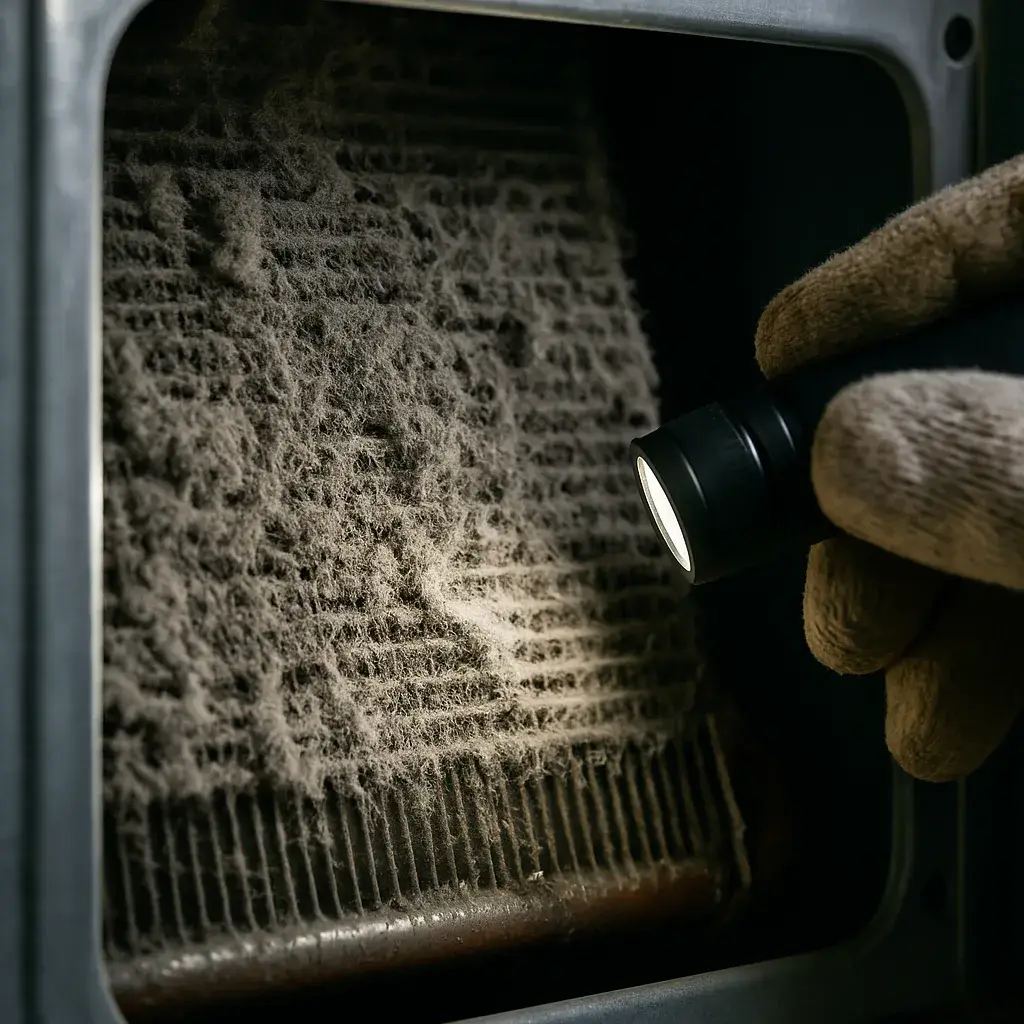
We get calls that sound almost identical every summer. The vents are blowing, but it’s not cold air, more like room temperature air pushed around. Or one bedroom stays warm no matter what the thermostat says. Sometimes it’s a musty smell when the system kicks on. That’s usually moisture sitting on a dirty coil instead of draining off like it should.
- Airflow feels weak from the vents even on a fresh filter
- System runs long cycles but the house never quite hits the set temperature
- Higher electric bills with no other change in habits
- A musty or sour smell right when the AC starts up
- Ice forming on the indoor coil or the refrigerant line
A lot of these signs overlap with other AC problems too. Low refrigerant can freeze a coil. So can a bad blower motor. That overlap is why a real inspection matters more than guessing from the internet.
When a Simple Filter Swap Solves the Problem
Not every airflow problem is a coil problem. Sometimes it’s just a filter.
We get calls where folks are sure the coil is caked up, and then we pull the filter and it’s gray and packed solid. That’s usually the culprit, not the coil behind it. A clogged filter chokes airflow before it ever reaches the evaporator coil, so the system runs weaker, the air feels less cold, and your energy bill creeps up. That’s pretty common, especially in homes running the system hard through a Texas summer.
Here’s a quick check you can do yourself before calling anyone. Pull your filter and hold it up to a light.
- If light passes through easily, the filter’s fine, look elsewhere for the issue.
- If it’s dark, matted, or you can’t see light at all, swap it. That alone might fix your airflow.
- Standard 1 inch filters usually need changing every 30 to 90 days, sooner if you’ve got pets or run the AC constantly.
- After a fresh filter, give it a day. If airflow and cooling bounce back, you were never dealing with a coil issue.
If you swap the filter and things still feel off, weak airflow, ice on the lines, musty smell, that’s a different story. A dirty filter is a five minute fix. A dirty coil is not something you can see or clean yourself, since it sits inside the unit and often needs to come apart to reach it. Know the difference before you spend money on the wrong fix.
What Happens During a Professional Coil Cleaning Visit
Here’s what happens once a technician is standing in front of your system. It’s not mysterious, and it shouldn’t take all day for one unit.
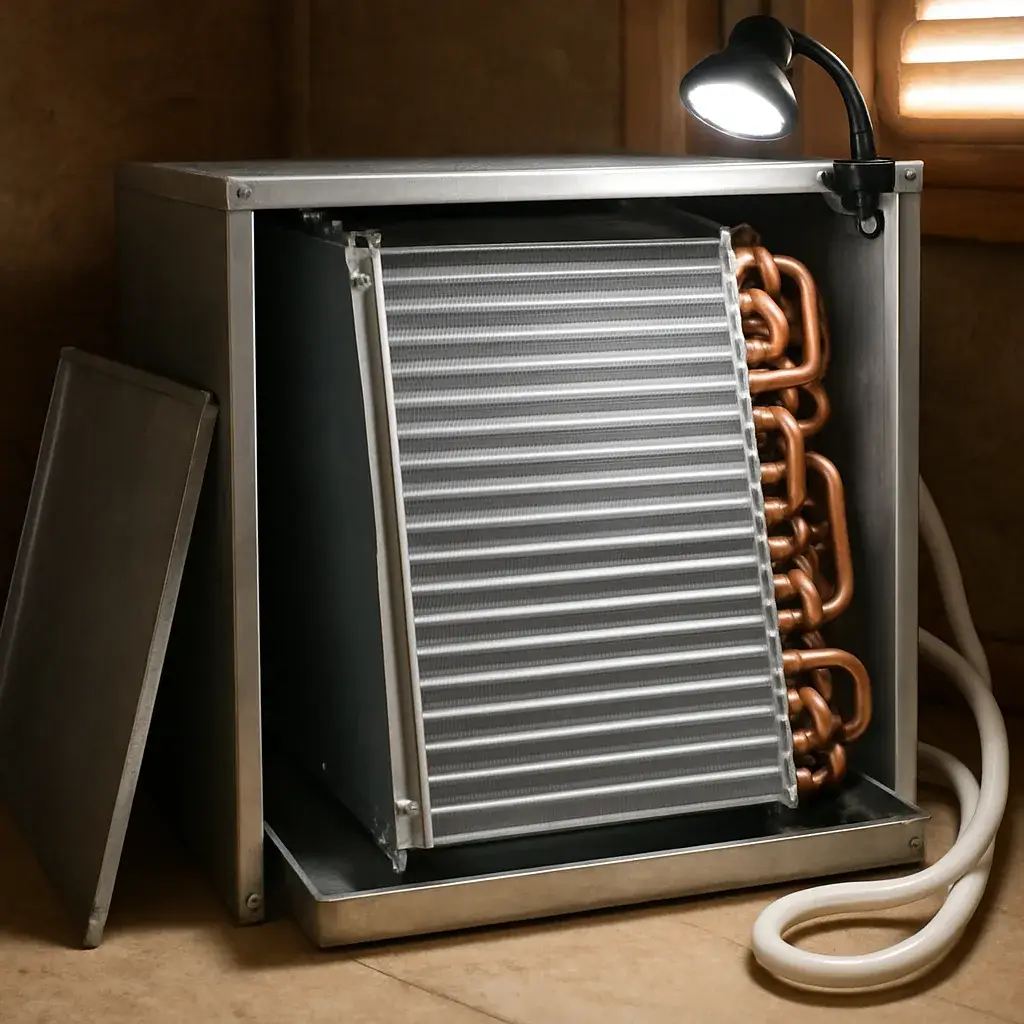
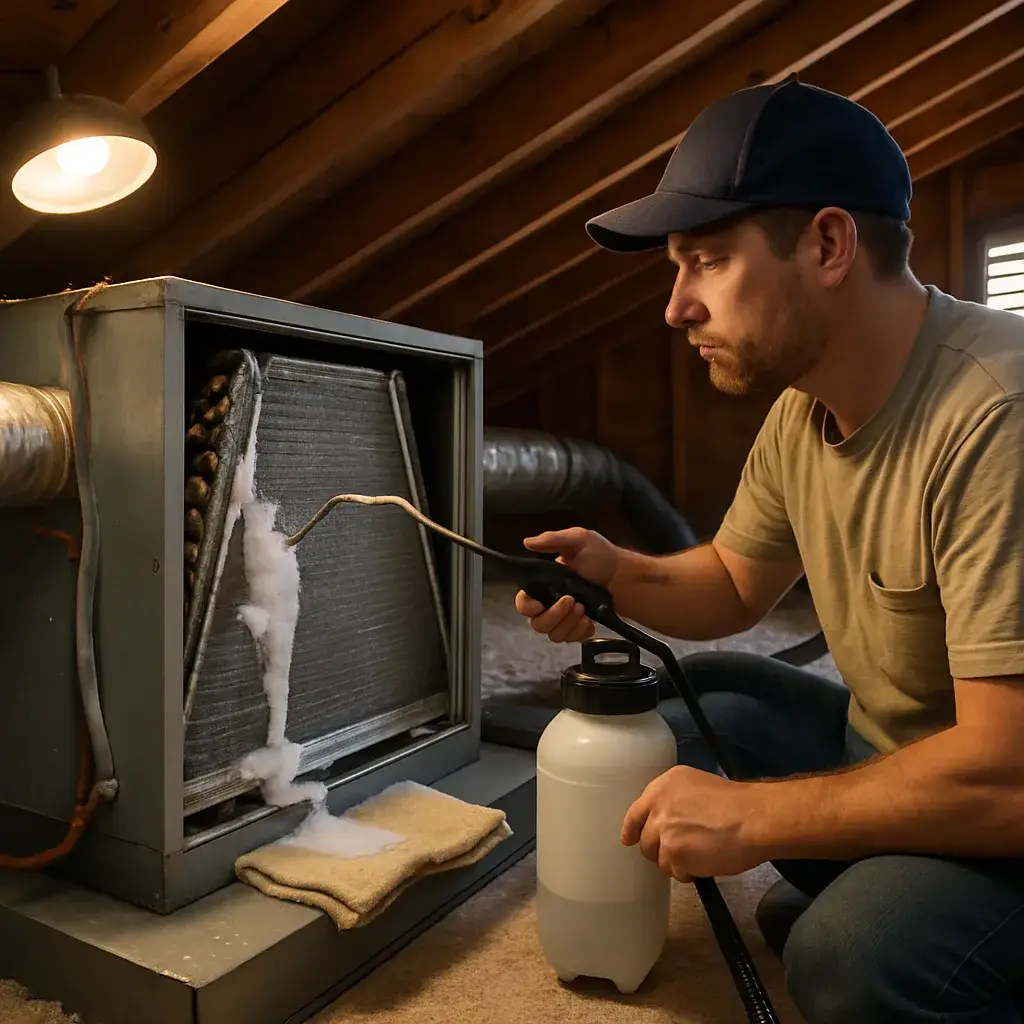
In a lot of Sunnyvale homes, the evaporator coil sits inside an attic air handler. Attic access means more time getting to the coil. Sometimes a panel or a few screws come off before we ever touch the coil itself.
- We check the system’s airflow and temperature split first, to see how bad the buildup really is before we start.
- We pull the access panel and inspect the coil face for dust, mold, or that gray fuzzy buildup that chokes off airflow.
- We apply a coil cleaner made for indoor coils and let it work, this isn’t the same stuff you’d use outside on a condenser.
- We rinse and wipe down the coil and drain pan, then clear the drain line so water isn’t backing up.
- We button the panel back up and run the system, checking temperature drop and airflow to confirm it’s working better.
That inspection and safety check is part of the visit, not an upsell. If we spot something broken, a cracked drain pan or a failing capacitor, we’ll tell you and quote that separately. We won’t just start fixing things you didn’t ask for.
Most one-system jobs wrap up in under two hours.
Ready when you are – get in touch today.
Call Today, Get Service Today. Xtreme Air Services is ready to help.
Frozen Coil vs. Dirty Coil: Two Different Repairs
Here’s where folks get confused, and we get it. A dirty coil and a frozen coil can look almost the same from where you’re standing, both mean weak or warm air coming out of the vents. But they’re not the same problem, and they don’t get fixed the same way.
A dirty coil is just buildup, dust, pet hair, and grime coating the fins so heat can’t transfer the way it should. Evaporator coil cleaning handles that directly. A frozen coil is different. Ice on the coil usually means something is starving it of airflow or refrigerant. A dirty coil can be the cause, but so can a clogged filter, a failing blower motor, or a low refrigerant charge.
- Coil covered in a thin gray or black film, airflow still decent: usually just needs cleaning
- Visible ice or frost on the coil or lines: turn the system off and let it thaw before anyone touches it
- Warm air plus a hissing sound: could point to a refrigerant leak, not a cleaning issue
- Weak airflow across the whole house: check the filter first, that’s a common culprit in attic-mounted systems common around Sunnyvale
If your coil’s frozen, we can’t clean it until it thaws, that’s just physics, not a sales tactic. Once it’s thawed, our technician checks whether buildup was the root cause or whether something else is choking the airflow. Don’t assume ice means a bigger repair automatically. Sometimes it really is just a dirty coil that finally caught up with a clogged filter.
How Often Coils Need Cleaning in Sunnyvale’s Humid Cooling Season
So how often does an evaporator coil need cleaning? For most Sunnyvale homes, once a year does the job. But that answer changes fast once you factor in how long your system runs.
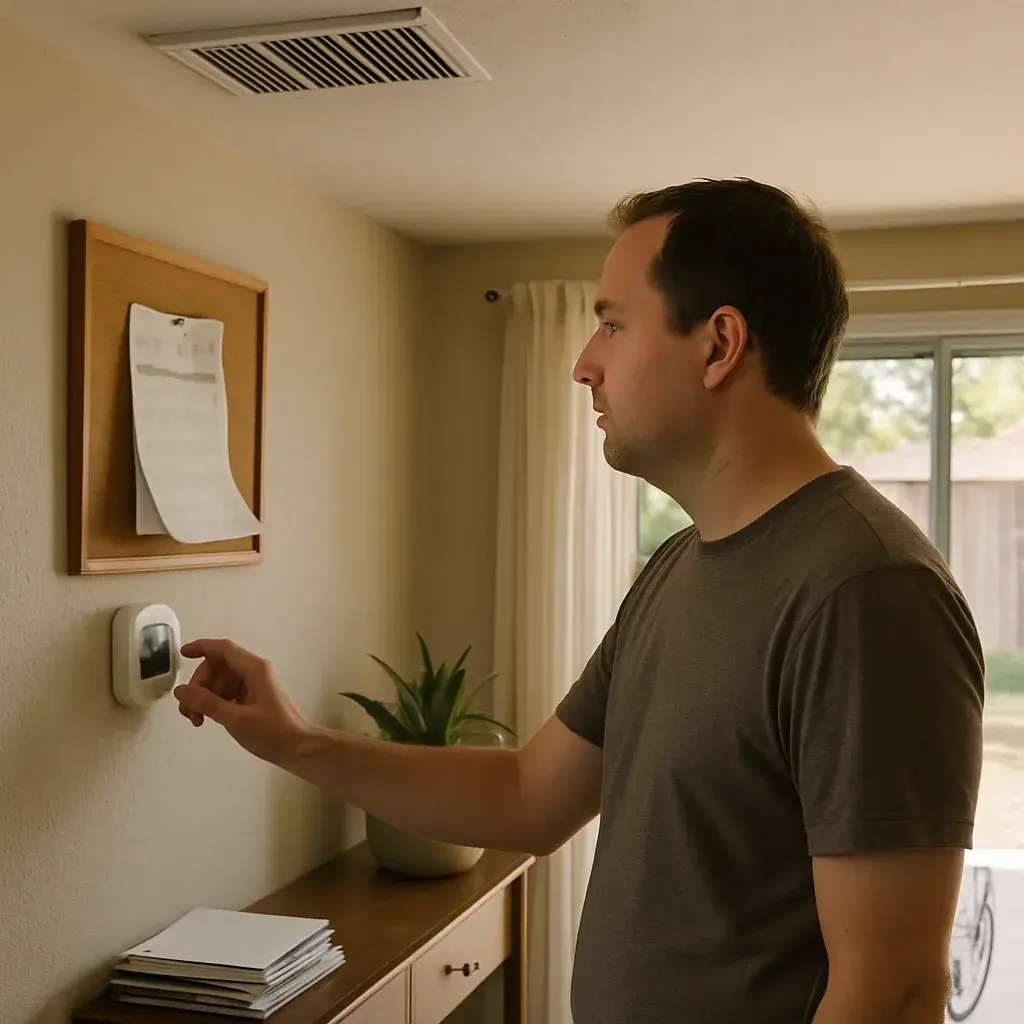
Sunnyvale’s cooling season stretches from April clear through October some years. That’s six or seven months of nearly nonstop airflow pulling in humid North Texas air, dust, and pollen. Every bit of it passes over that indoor coil. Homes with pets shed more, and that fur mixes with moisture on the coil and builds up quicker than most people expect.
Newer, tightly sealed homes in the area tend to stay cleaner longer between cleanings. Older homes with attic-mounted air handlers, common across a lot of Sunnyvale’s established neighborhoods, see more debris pulled through the system simply because attics run dusty and hot.
- You run the AC nearly every day from spring through fall
- You’ve got pets shedding indoors year-round
- Your system sits in an attic or garage with more dust exposure
- You skipped cleaning last cooling season and noticed weaker airflow by August
- You’re on a maintenance plan versus calling only when something feels off
Once a year is the baseline. Twice a year makes sense for heavy pet households or systems that barely get a break between March and November. Skip a season entirely, and that light dust film turns into caked buildup that’s a lot tougher to clean off and starts costing you comfort long before it costs you a repair bill.
Frequently Asked Questions
Common questions about Evaporator coil cleaning
How fast can I get an evaporator coil cleaning scheduled in Sunnyvale?
Most Sunnyvale homes can get a technician out within a day or two, especially during peak cooling months. We know a warm house isn’t something you want to wait on. When you call, tell us what you’re noticing, weak airflow, a musty smell, or higher bills, so we can bring the right tools for attic access. Since many Sunnyvale systems have the coil tucked in the attic, we plan extra time for that setup rather than rushing and missing buildup.
What should I expect when a technician arrives to clean my evaporator coil?
You can expect a check of your system’s airflow and temperature split before any cleaning starts. We pull the access panel, inspect the coil face for dust or mold, apply a coil-safe cleaner, and rinse it down along with the drain pan. We also clear the drain line so water doesn’t back up later. Most one-system jobs finish in under two hours. If we spot a broken part along the way, we’ll tell you and quote it separately instead of just fixing it.
Why do Sunnyvale homes with attic AC units get dirty coils so often?
Attic-mounted air handlers, common in many Sunnyvale homes, run harder and longer during the stretched-out cooling season. That extra runtime pulls more dust and grime across the coil over time. Attic access also means buildup can go unnoticed longer, since nobody’s checking that space regularly. By the time you notice warm spots or weak airflow, the coil has usually been collecting grime for months. That’s why we recommend a yearly check, even if your system seems to be running fine.
Can I clean the evaporator coil myself before calling a professional?
You can check your filter yourself, but the coil itself isn’t a DIY job. Pull the filter and hold it to a light. If it’s dark or matted, swap it and give the system a day to recover. If airflow is still weak after that, the coil likely needs attention. The coil sits inside the unit and often requires taking apart panels to reach safely, so cleaning it yourself risks bending fins or damaging the drain pan.
How do I know if my coil is frozen instead of just dirty?
A frozen coil usually shows visible ice or frost on the coil or refrigerant lines, while a dirty coil just looks coated in gray or black film with decent airflow still coming through. If you see ice, turn the system off and let it thaw before anyone touches it. Warm air paired with a hissing sound can point to a refrigerant leak instead. Once thawed, a technician can check whether buildup caused the freeze or something else was choking the airflow.
Ready to Get Started?
Call 972-288-2263 Today, Get Service Today.