


Evaporator Coil Repair in Sunnyvale: Get Cool Air Back Fast
Evaporator coil leak diagnosis and repair in Sunnyvale, with honest repair-or-replace guidance.
What’s Covered on This Page
- Signs Your Evaporator Coil Needs Repair
- Check Your Filter and Airflow Before You Call
- Repair or Replace: Making the Right Call
- What Happens During a Coil Repair Visit
- How Coil Repair Pricing Works
- How fast can you get someone out to look at my evaporator coil in Sunnyvale?
- What happens when your technician shows up for a coil repair?
- Why do Sunnyvale homes with attic AC units have more coil trouble?
- Can a dirty filter really cause ice on my evaporator coil?
- How do I know if my evaporator coil should be repaired or replaced?
Signs Your Evaporator Coil Needs Repair
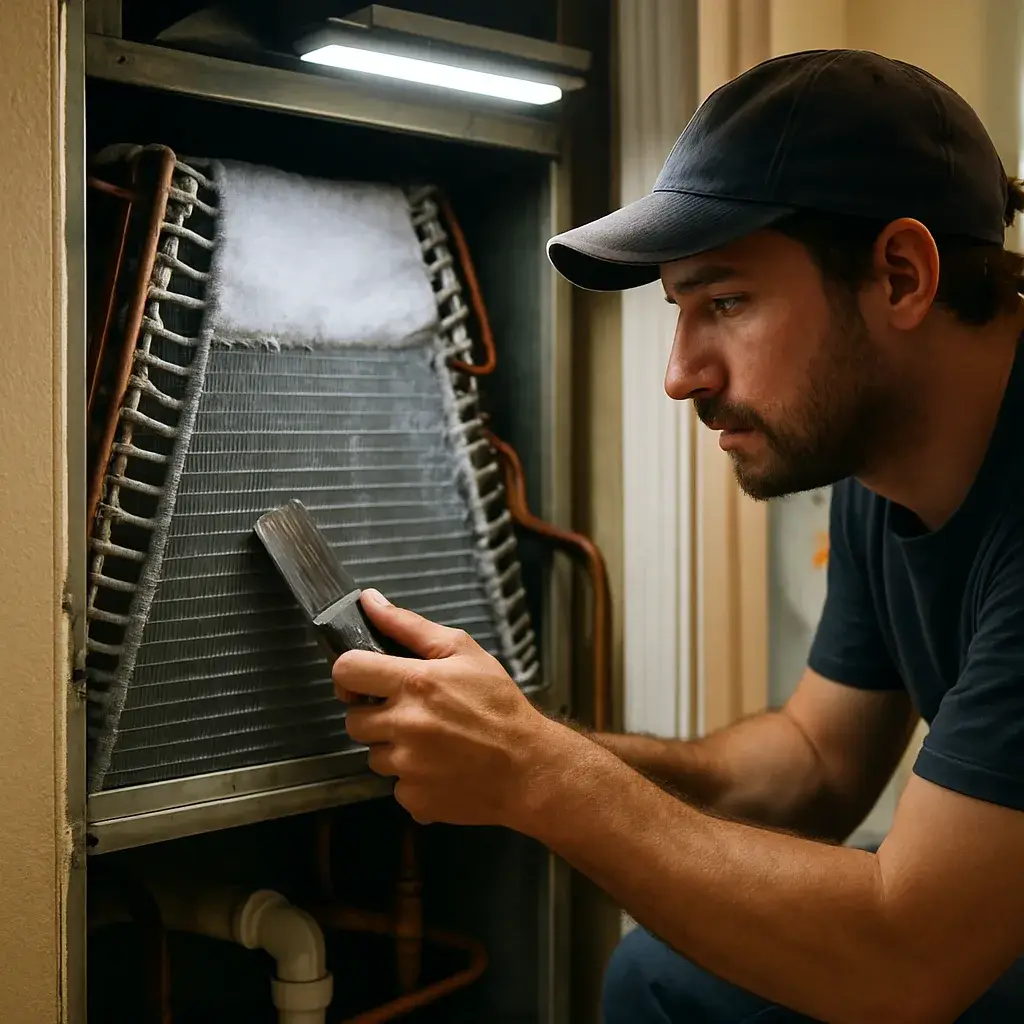
Your evaporator coil sits inside the indoor unit and pulls heat and humidity out of the air before it reaches your vents. When something’s wrong with it, your whole system feels off, not just warm. We see this every summer once the heat sets in. In Sunnyvale, a lot of homes run their AC unit out of the attic, and that coil works overtime when it’s 100 degrees outside for weeks straight.
Here’s a scenario we hear a lot. You crank the thermostat down, the system runs and runs, and the air coming out feels barely cool. Sometimes there’s a hiss near the indoor unit or a puddle by the air handler. That’s your coil trying to tell you something. In Sunnyvale, a slow leak usually shows up first as a system that runs constantly without cooling.
- Warm or weak airflow from the vents even when the system runs constantly
- Ice forming on the refrigerant lines or the coil itself
- A hissing or bubbling sound near the indoor unit
- Water pooling around the air handler or dripping from the ceiling below an attic unit
- A noticeable jump in your energy bill with no other explanation
Not sure if what you’re hearing is a coil problem or something else? That’s pretty common, a lot of these symptoms overlap with other AC issues. But if you’re seeing more than one of these at once, it’s worth having someone look before the system stops cooling altogether.
Check Your Filter and Airflow Before You Call
Here’s something we tell folks all the time: before you call anybody, go check your filter. A clogged filter chokes off airflow across the coil, and a coil that can’t breathe turns into a block of ice fast. We see this constantly in Sunnyvale homes with attic-mounted systems, the filter gets forgotten because nobody wants to climb up there every month.
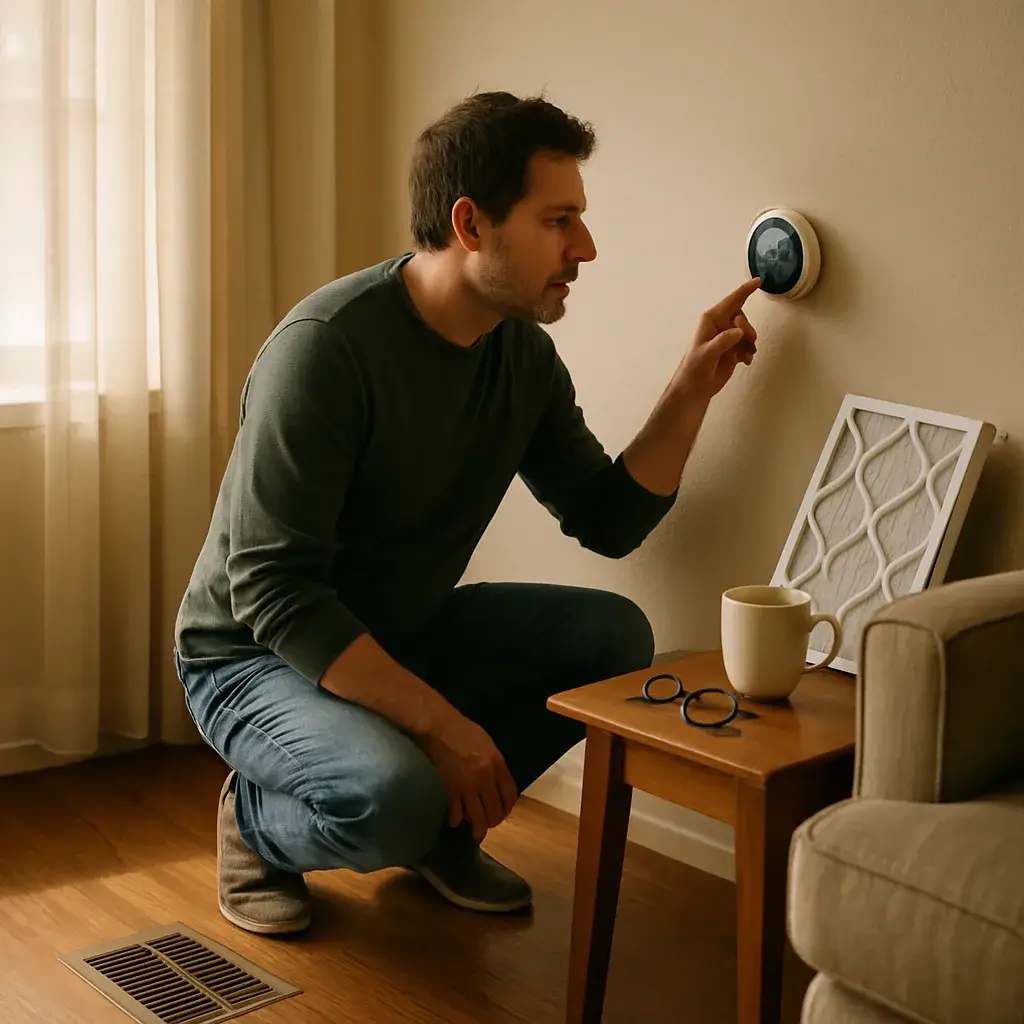
So how do you tell the difference? Pull the filter and hold it up to a light. Can’t see through it? That’s your problem, not the coil. Swap it, set the thermostat to cool, and let the system run for an hour.
- Filter is gray, packed, or you can’t see light through it
- Return air vents are blocked by furniture or closed doors
- Ice forms on the copper line outside but the indoor coil looks clean
- System runs fine after a fresh filter and an hour of cooling
A dirty filter is not a coil repair. Neither is a closed vent in the guest room nobody uses.
But if the ice keeps coming back after a clean filter and open vents, or you hear a hissing sound near the unit, that’s not airflow anymore. That’s usually a refrigerant leak at the coil itself, and no amount of filter swapping fixes that. That’s the point where it’s worth having a technician look at it instead of guessing further. Sunnyvale attics make coil access harder, which is exactly why the diagnosis comes before the quote.
Repair or Replace: Making the Right Call
Here’s the real question. Is this coil worth fixing, or is it time to talk replacement?
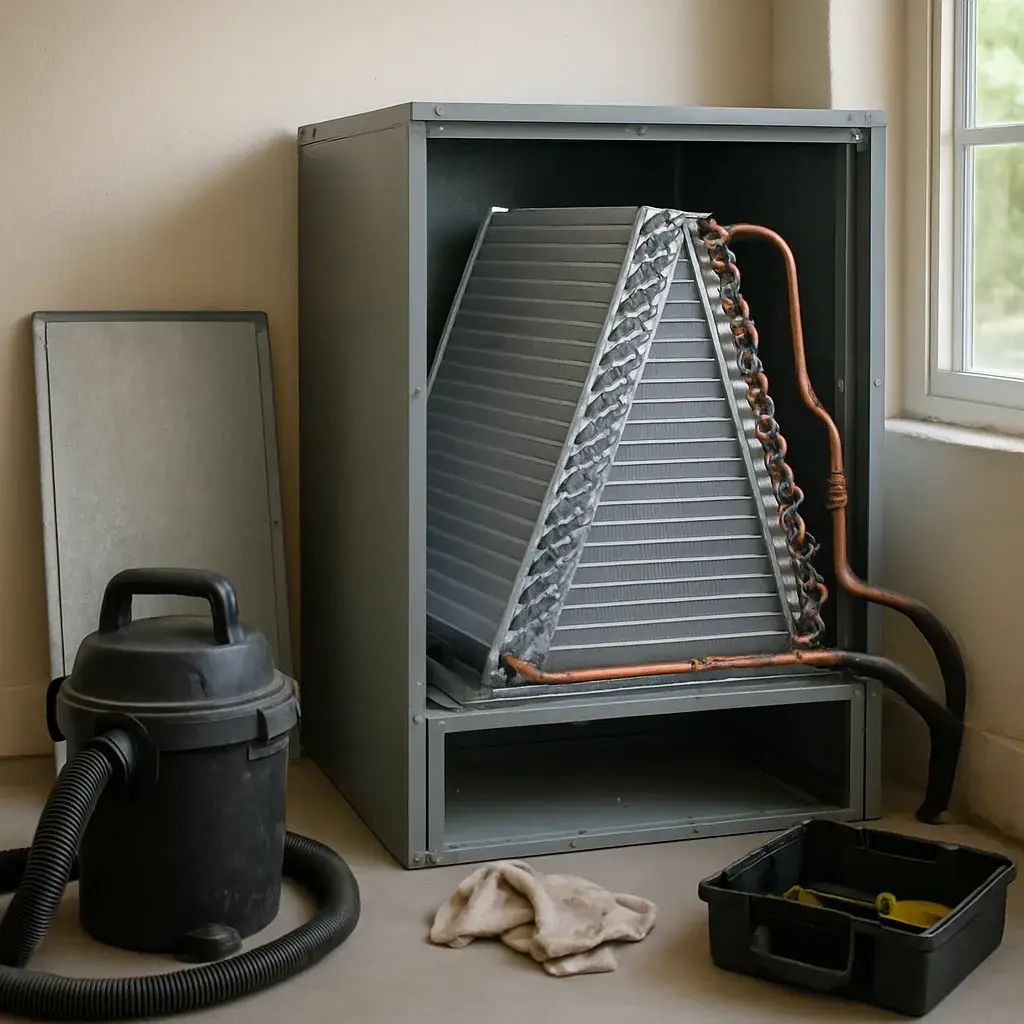
Most of the time, a coil problem is one failed part, not a dying system. A leak at a joint, a corroded fin section, a clogged drain backing water into the coil. We find it, fix it, test it, and you’re back to cool air the same visit. That’s the common outcome, and it’s why most coil calls stay on the smaller end of the repair range.
But there are times we’ll tell you straight, repair isn’t the smart move. If the coil has multiple leak points, if the unit is old and the manufacturer barely stocks parts for it anymore, or if a second major component failed alongside the coil, throwing money at a repair just delays the same conversation. If your system is already running on borrowed refrigerant charge every season, a coil fix on top of that is a patch, not a solution.
What swings the decision is a short list: part cost and availability, how far the damage has spread, the age and brand of your equipment, and whether more than one component failed at once. We handle these across Sunnyvale every summer, and the honest answer is not always to replace.
So how do you know which side you’re on without guessing? You don’t have to. A tech can look at the coil, check refrigerant levels, and give you a straight answer before any work starts, either direction.
Have questions? We’re happy to help.
Call Today, Get Service Today. Xtreme Air Services is ready to help.
What Happens During a Coil Repair Visit
Here’s what happens once we’re standing at your unit. First, we ask you a few quick questions. When did you notice the warm air? Any strange noise before it quit? Then we get hands on the equipment.
Most of the time it’s the same handful of failures: a leaking coil, a corroded fin, a clogged line freezing things up. Our technician runs through a set order so nothing gets missed. A Sunnyvale home with an aging system deserves a straight repair-or-replace conversation.
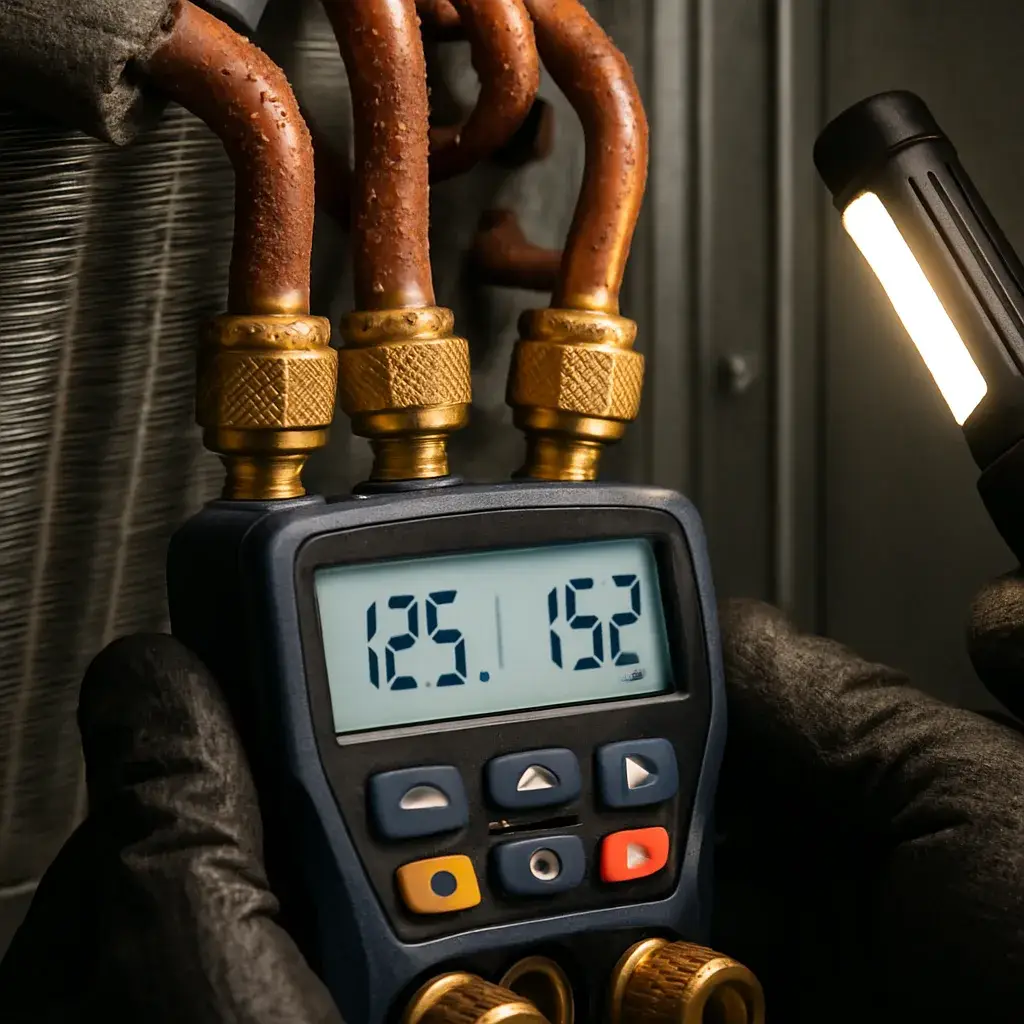
- Check refrigerant levels and readings on the system
- Inspect the evaporator coil for leaks, frost buildup, or corrosion
- Pinpoint the failed part and confirm it’s the actual cause, not a symptom
- Repair or replace the failed component with the standard part
- Recharge the system and test airflow and temperature at the vents
- Clean up the work area and walk you through what was fixed
Most calls wrap up on that first visit. We don’t leave until the system’s cooling, not just running.
And if something bigger turns up mid-repair, a second failed part, an aging compressor, we’ll stop and explain it before touching another thing. No surprise charges, no work you didn’t approve. That’s upfront flat-rate pricing, plain and simple.
How Coil Repair Pricing Works
Most evaporator coil repairs run somewhere between $300 and $1,000, and the most common job, finding the one failed part and swapping it, usually lands between $300 and $625. That’s not a random guess. It’s what we see over and over on these calls.
You get a flat number before anyone touches your system.
A tech comes out, finds the problem, and quotes you the fix in plain English, no meter running while you wait for a surprise total at the end. That judgment call comes up often on older Sunnyvale systems.
- How bad the failure is, a small leak repairs faster and cheaper than a coil that’s corroded through
- Whether the part is common or has to be tracked down for an older or less common brand
- How old the system is, coils on units past 12 to 15 years can be pickier about matching parts
- Whether more than one component failed at the same time, that changes the whole job
- What time you call, though that one won’t move the number since we don’t charge extra for nights or weekends
There’s a $26 to $99 service call fee to get a technician out, and if you move forward with the repair, that fee gets credited toward the job. So checking the coil doesn’t cost you twice.
Financing usually isn’t part of this conversation, this is a smaller repair, not a full system swap, and most folks just pay for it outright. If your coil turns out to need a bigger fix, that’s a different conversation, and we’ll have it with you before anything gets ordered.
Frequently Asked Questions
Common questions about Evaporator coil repair
How fast can you get someone out to look at my evaporator coil in Sunnyvale?
We aim to get a technician to your home the same day you call, especially during the peak summer heat. Sunnyvale sees a rush of coil calls once temperatures hit the 90s and stay there for weeks. If your air is running warm or you hear hissing near the indoor unit, call early in the day. That gives us the best shot at fitting you in before your system stops cooling completely.
What happens when your technician shows up for a coil repair?
Your technician starts by asking a few quick questions, like when you first noticed warm air or any strange noises. Then they check refrigerant levels and inspect the coil for leaks, frost, or corrosion. Most visits find one failed part, a leak, a corroded fin, or a clogged drain line. They fix it, recharge the system, and test the airflow before leaving. You’ll get a plain explanation of what broke and what was done to fix it.
Why do Sunnyvale homes with attic AC units have more coil trouble?
Attic-mounted systems in Sunnyvale take a harder hit because attic temperatures climb well past 100 degrees during long summer stretches. That heat forces the evaporator coil to work overtime, and it also means filters get skipped since nobody wants to climb up there monthly. A dirty filter chokes airflow across the coil, which leads to ice buildup and eventually leaks. If you have an attic unit, check that filter more often than you think you need to.
Can a dirty filter really cause ice on my evaporator coil?
Yes, a clogged filter is one of the most common reasons coils freeze up. When airflow gets choked off, the coil gets too cold and ice forms on it fast. Pull your filter and hold it to a light. If you can’t see through it, that’s likely your problem, not a coil failure. Swap it, run the system for an hour, and see if the ice comes back. If it does, that points to a real coil issue.
How do I know if my evaporator coil should be repaired or replaced?
Most coil problems are a single failed part, like a leak at a joint or a clogged drain, and those repair quickly in one visit. Replacement makes more sense when the coil has multiple leak points, the unit is older with hard-to-find parts, or another major component failed at the same time. A technician can check refrigerant levels and the coil condition to give you a straight answer before any work starts.
Ready to Get Started?
Call 972-288-2263 Today, Get Service Today.