


Frozen Coil Repair in Sunnyvale: Fix the Ice, Fix the Cause
Clearing the ice and fixing what caused it, so a Sunnyvale system stops freezing up again.
What’s Covered on This Page
- Why Sunnyvale’s Long Cooling Season Freezes AC Coils
- Spotting the Difference Between Ice and Everyday Condensation
- When a Dirty Filter-Not a Broken Coil-Is the Real Fix
- What Happens During a Frozen Coil Repair Visit
- How Frozen Coil Repair Pricing Works
- How fast can you get someone out for a frozen coil in Sunnyvale?
- What happens when your technician shows up for a frozen coil repair?
- Why do Sunnyvale homes get frozen coils so often in summer?
- Can I fix a frozen coil myself before calling anyone?
- How do I know if it’s ice or just normal condensation on my AC?
- Will a frozen coil fix itself if I just turn off the AC?
Why Sunnyvale’s Long Cooling Season Freezes AC Coils
You walk past the vent and it’s blowing warm, weak air. Or worse, you open the closet and there’s ice creeping down the copper line. That’s a frozen coil, and around here, we see it constantly.
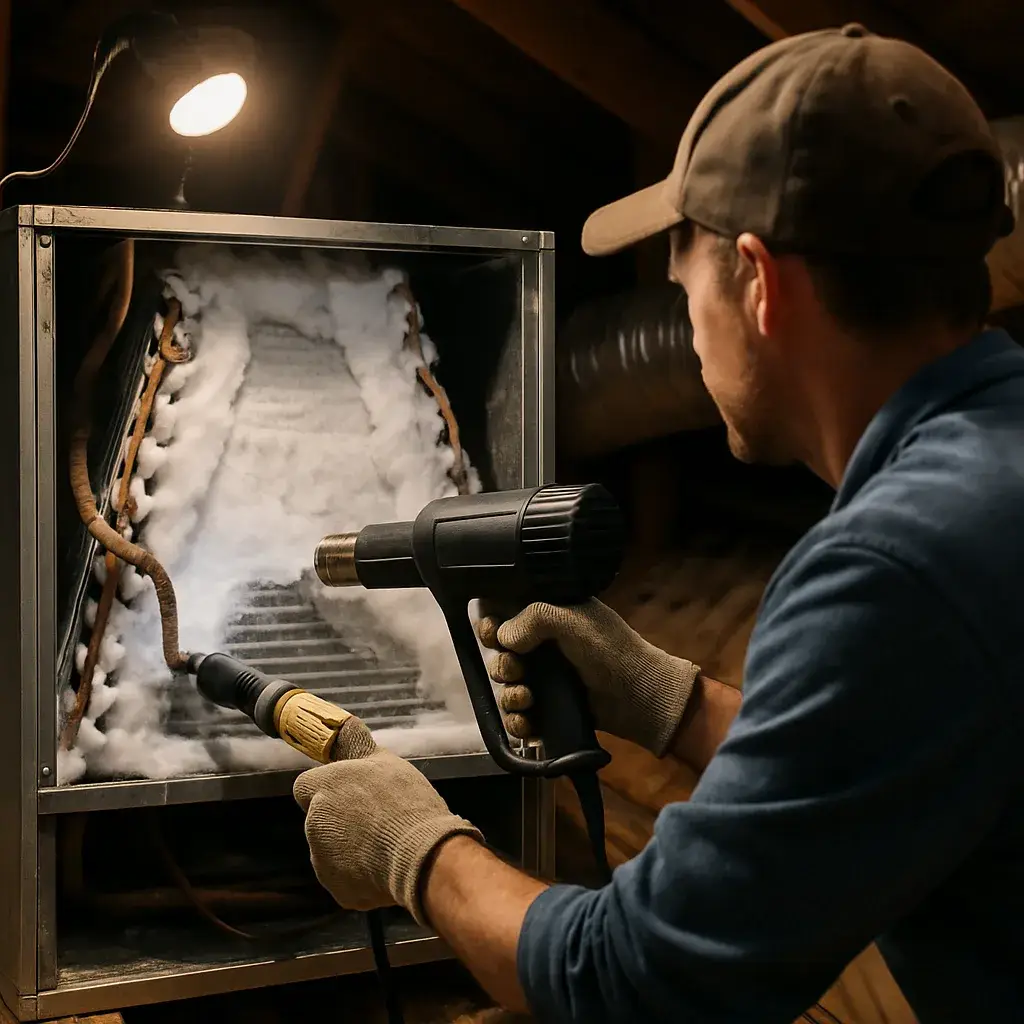
Sunnyvale’s cooling season stretches from April clear into October some years. Your system runs longer hours, more days in a row, than homes up north ever deal with. Most Sunnyvale houses run the AC unit up in the attic, and attic temps in July can push past 130 degrees. That heat load never really lets up, so any small airflow problem gets worse fast instead of fixing itself overnight.
Most of the time, it’s airflow. Something is blocking the air the coil needs to stay warm enough not to freeze.
- A dirty air filter choking off airflow to the coil
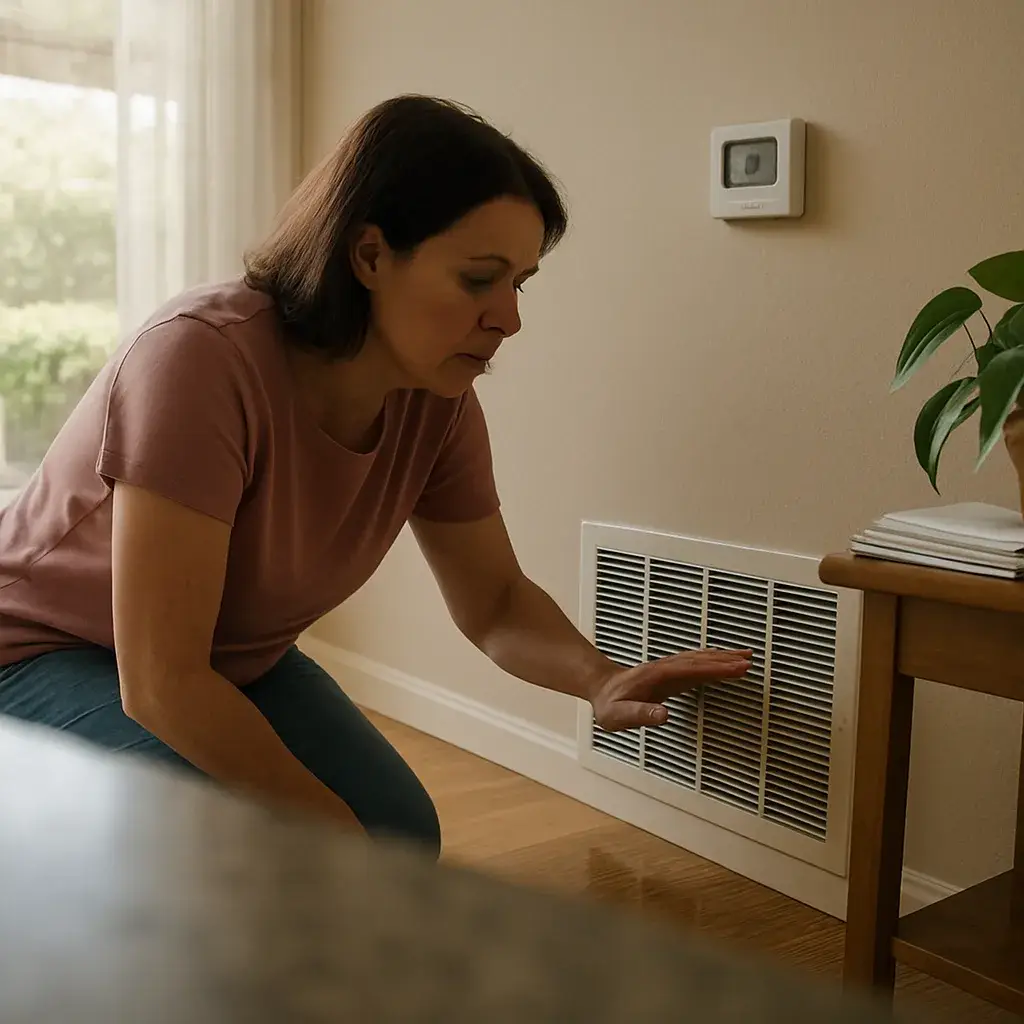
- Closed or blocked return vents in a bedroom or hallway
- Low refrigerant charge from a slow leak
- A weak or failing blower motor not pushing enough air
- Running the system too hard overnight on a low thermostat setting
Here’s the good part. Most of these calls come down to one failed part, not a dying system. We locate what’s restricting the airflow or dropping the charge, fix that one thing, and get you running cold again the same visit.
Spotting the Difference Between Ice and Everyday Condensation
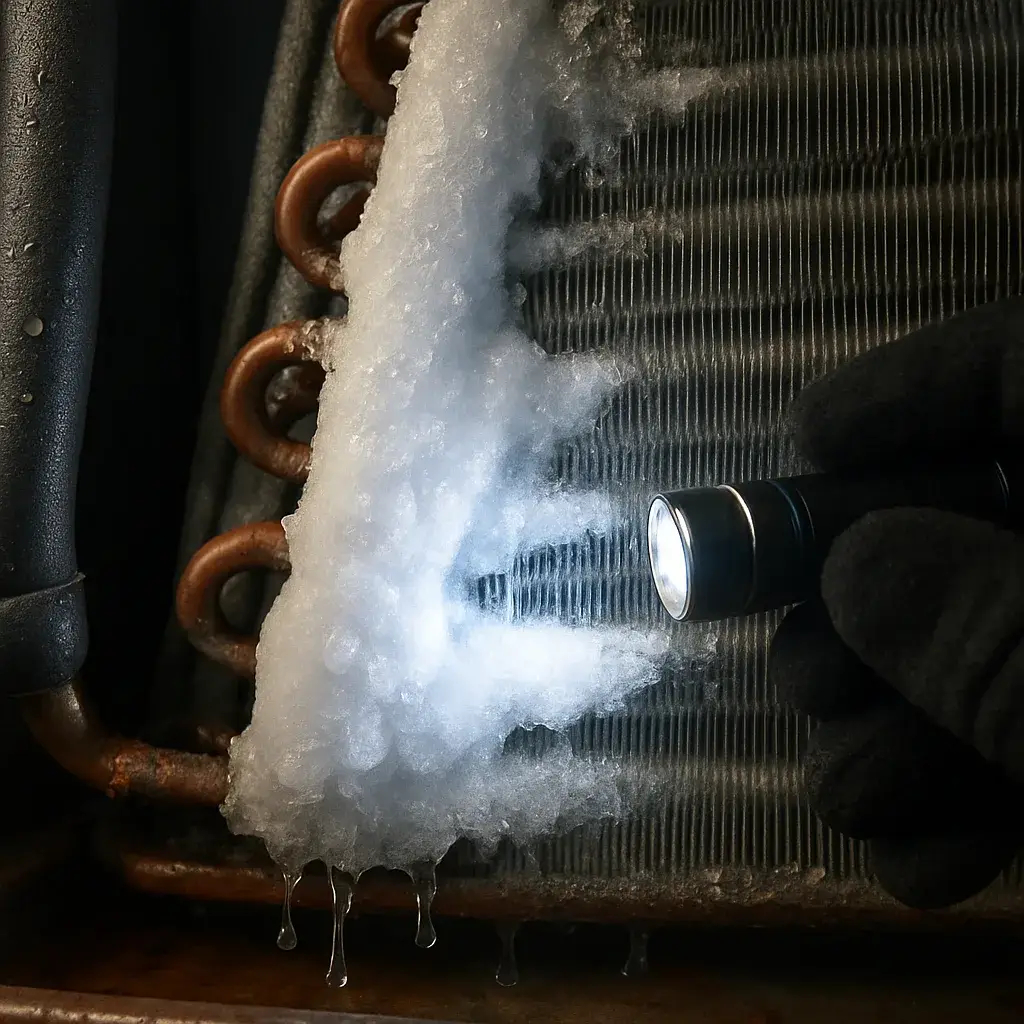
Here’s where a lot of folks get confused. Your AC sweats a little on a hot day, that’s normal. A thin layer of moisture on the copper line outside your unit? Nothing to worry about. But a solid chunk of ice wrapped around the coil or the line itself is a different animal, and it usually means airflow or refrigerant trouble underneath.
So how do you tell them apart? Condensation looks wet, feels wet, and dries up once the system cycles off. Ice looks white or frosty, feels hard, and doesn’t go anywhere on its own. If you can see actual ice buildup, especially on the indoor coil or the thicker refrigerant line, you’re not dealing with condensation anymore.
- Frost or ice you can see and touch, not just dampness
- Warm air blowing from vents even though the unit is running
- A hissing or gurgling sound near the indoor unit
- Water pooling well beyond the normal drain pan area
- The system short cycling, turning off and on more than usual
We get calls where someone describes water dripping from the attic access panel and swears it’s a leak. Often it’s ice melting off a frozen evaporator coil overhead. That’s a coil problem wearing a plumbing disguise – worth knowing before you call the wrong trade.
Not sure which one you’ve got? That’s a fair question, and a normal one to ask before calling anyone.
When a Dirty Filter-Not a Broken Coil-Is the Real Fix
Not every frozen coil means you need us out there.
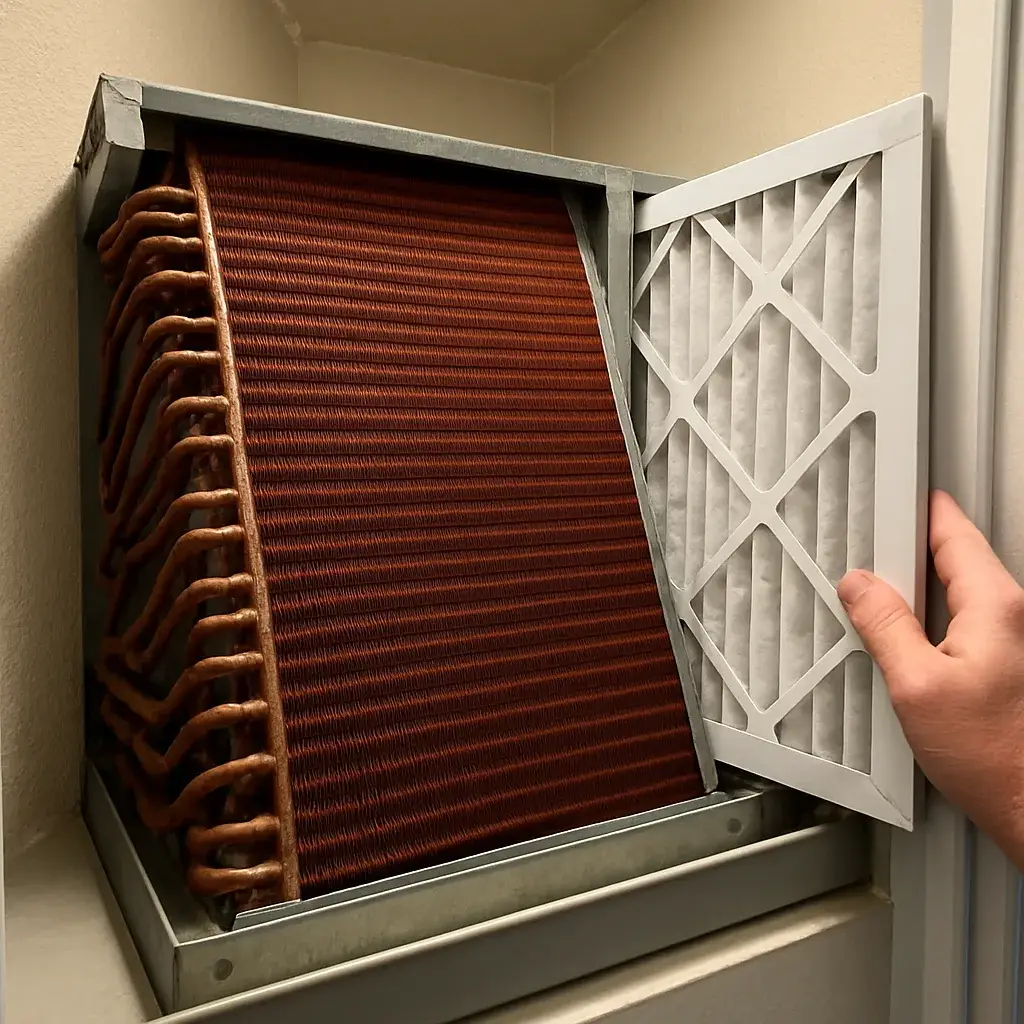
Most of the time, the culprit sitting behind a frozen coil is airflow, not a broken part. A clogged filter chokes the air moving across the coil. The coil gets too cold, moisture on it freezes, and ice builds up fast. You open the closet or attic panel, see a block of ice where the coil should be, and figure the whole system’s dying. It might not be.
Here’s the honest test before you pick up the phone.
- Turn the system off completely, including the fan, and let the coil thaw. This can take a few hours.
- Pull the filter and hold it up to a light. If you can’t see light through it, that’s your problem.
- Replace it with a new filter, the right size, seated snug in the slot.
- Wait for the coil to fully thaw and dry before running the system again.
- Run the AC and watch it for a day. If it cools fine and stays frost-free, you were right, it was the filter.
So if a fresh filter and a thaw fixes it, great, you saved yourself a call. But if the coil freezes again within a day or two, something deeper is going on, low refrigerant, a failing blower motor, or a duct restriction you can’t see. That’s not a filter problem anymore, that’s a diagnosis job.
Thinking about Frozen coil repair? Let’s talk.
Call Today, Get Service Today. Xtreme Air Services is ready to help.
What Happens During a Frozen Coil Repair Visit
So what happens once one of our techs pulls up? First, we look at the outdoor and indoor units together. A frozen coil almost never shows up alone, it’s a symptom, and we’re hunting for the real cause before we touch a wrench.
- We inspect the coil, the air filter, and the return vents for blockage or ice buildup.
- We shut the system down safely and let the coil thaw, forcing it can crack the fins.
- We check airflow and refrigerant charge to find out which one caused the freeze.
- We repair or replace the failed part, most often a filter, blower part, or a refrigerant issue.
- We run the system, check temperatures at the vents, and confirm it’s cooling right before we leave.
In a lot of Sunnyvale homes with the air handler up in the attic, restricted attic airflow around the unit is a repeat cause of icing, we see it every summer. Once we find the cause, most repairs get finished on that same visit.
We’re licensed and insured, and every tech who walks up your driveway is background checked.
You don’t need to be home for the whole thing, but we’ll walk you through what we found before we start any repair.
How Frozen Coil Repair Pricing Works
Most frozen coil calls follow the same pattern. A technician shows up, finds the one part that failed, and fixes it on the spot. That’s why most jobs land in the one hundred fifty to three hundred fifty dollar range. The wider range you’ll see quoted, one hundred fifty to six hundred dollars, covers the harder cases where more than one thing went wrong.
So what pushes a job toward the higher end? A few things.
- How far the failure has spread, a coil that’s been frozen for days can damage nearby parts
- Part cost and whether it’s sitting on the truck or needs to be sourced
- The age and brand of your equipment, older systems sometimes use harder-to-find parts
- Whether more than one component failed at the same time
- Nothing extra for after-hours, we don’t charge more nights or weekends
Here’s what’s included in that number: the diagnosis, the labor, the standard replacement part, testing, and cleanup before we leave. What’s not included: extra parts that fail down the line, major components, or code upgrades and permits, those get quoted separately if they come up.
There’s a service call fee too, twenty six to ninety nine dollars, but it gets credited toward the repair if you move forward with us. You’re not paying twice.
One thing we won’t do is guess over the phone. Every quote comes after a technician looks at your system, so the number you hear is the number you pay, no surprises once the work starts.
Frequently Asked Questions
Common questions about Frozen coil repair
How fast can you get someone out for a frozen coil in Sunnyvale?
We aim to get a tech to your door the same day you call, since a frozen coil only gets worse the longer it sits. Ice left on the coil for days can spread damage to nearby parts, so quick service saves you money later. We cover Sunnyvale and nearby areas, and most calls get fit into that day’s schedule. You don’t need to wait around all day, either. We’ll give you a real window before we head out.
What happens when your technician shows up for a frozen coil repair?
Your technician checks the outdoor and indoor units together before touching anything. A frozen coil is almost always a symptom, so we hunt for the real cause first. We shut the system down, let the coil thaw safely, then check the filter, return vents, and refrigerant charge. Once we find the failed part, we fix it, run the system, and check vent temperatures before we leave. Most repairs finish in that same visit. You don’t have to stay home the whole time.
Why do Sunnyvale homes get frozen coils so often in summer?
Sunnyvale’s cooling season runs long, often from April into October, so your system runs harder and longer than homes up north ever do. Most Sunnyvale houses also keep the AC unit up in the attic, where July temps can top 130 degrees. That heat load never really lets up, so a small airflow problem turns into a frozen coil fast instead of working itself out. Restricted attic airflow around the unit is a repeat cause we see every summer.
Can I fix a frozen coil myself before calling anyone?
Sometimes, yes, if a dirty filter is the cause. Turn the system off completely, including the fan, and let the coil thaw fully, which can take a few hours. Pull the filter and check it against a light. If you can’t see light through it, replace it, then let the coil dry before running the AC again. If it stays frost-free for a day, you fixed it yourself. If it freezes again within a day or two, something deeper is going on and it’s time to call.
How do I know if it’s ice or just normal condensation on my AC?
Condensation looks wet, feels wet, and dries up once the system cycles off, while ice looks frosty, feels hard, and stays put. If you see a solid chunk of ice wrapped around the coil or the refrigerant line, that’s not condensation anymore. Watch for warm air from vents, hissing near the indoor unit, or water pooling past the drain pan, too. Water dripping from an attic access panel is often ice melting off a frozen coil, not a plumbing leak.
Will a frozen coil fix itself if I just turn off the AC?
Turning the system off lets the ice thaw, but it doesn’t fix what caused the freeze in the first place. If the real problem is low refrigerant, a weak blower motor, or a blocked return vent, the coil will just freeze again once you turn the AC back on. Thawing it out is a good first step and part of any honest test at home. But if it refreezes within a day or two, you’re looking at a repair, not a reset.
Ready to Get Started?
Call 972-288-2263 Today, Get Service Today.