


Heating System Maintenance in Sunnyvale: Get Your Furnace Ready Before the First Freeze
Pre-winter furnace maintenance that catches worn ignitors, dirty flame sensors, and airflow problems before the first freeze finds them.
What’s Covered on This Page
- Signs a Furnace Needs a Maintenance Visit
- When You Can Skip the Service Call
- What Happens During a Professional Heating Tune-Up
- Why Fall Is the Right Time to Service a Furnace in Sunnyvale
- What Drives Heating Maintenance Costs
- How quickly can someone come out for heating system maintenance in Sunnyvale?
- What should I expect when the technician arrives for a tune-up?
- Why do older Sunnyvale homes need more frequent furnace attention?
- How often should I schedule furnace maintenance?
- Do I need a maintenance visit if my furnace is brand new?
- Can I handle any furnace upkeep myself before calling for maintenance?
Signs a Furnace Needs a Maintenance Visit
A furnace does not usually fail out of nowhere. It typically sends signals for weeks or months before it finally stops producing heat, and most of those signals are easy to miss if you are not paying attention. Recognizing the early warning signs and scheduling a maintenance visit before the system fully breaks down is the difference between a routine tune-up and an emergency repair call on a freezing night.
- No professional service in the past 12 months, which allows dust, worn parts, and minor sensor drift to accumulate unnoticed
- Uneven heat from room to room, often pointing to duct leaks, a failing blower, or a thermostat sensing problem
- An odd or burning smell when the furnace first kicks on, which can indicate dust burn-off, but may also signal a wiring or component issue if it lingers
- Short-cycling, where the furnace turns on and off repeatedly instead of running a full heating cycle
- Rising utility bills without a matching increase in usage, suggesting the system is working harder to produce the same amount of heat
- The first cold-weather startup of the season, when a furnace that sat idle all summer is asked to perform under real load for the first time
Each of these signs points to a different underlying issue, but they all share one thing in common: they are easier and cheaper to fix during a scheduled maintenance visit than during an emergency service call. A licensed technician checks the ignition system, heat exchanger, blower motor, electrical connections, and airflow during a routine visit, catching small problems like a cracked heat exchanger, a failing capacitor, or a clogged filter before they turn into a complete system shutdown.
The first startup after a long idle period deserves particular attention. A furnace that has not run since last winter can develop issues that only show up under load, such as a weak igniter or a blower motor bearing that has stiffened up. Scheduling a maintenance check before that first cold snap, rather than waiting for a no-heat emergency, keeps the household comfortable and avoids the premium pricing that often comes with after-hours repair calls.
When You Can Skip the Service Call
Not every furnace question requires a technician standing in your hallway. Some tasks are simple enough that any homeowner can handle them without tools, training, or an appointment. Chief among these is the air filter. Swapping a one-inch filter every one to three months is basic upkeep, not a maintenance event, and doing it yourself costs a few dollars and five minutes. If your only concern is a filter that looks dusty, you do not need to call anyone.
- Filter replacement on a standard 1-3 month cycle, especially in homes with pets or during high-pollen stretches
- Resetting a tripped breaker or a thermostat that simply needs new batteries
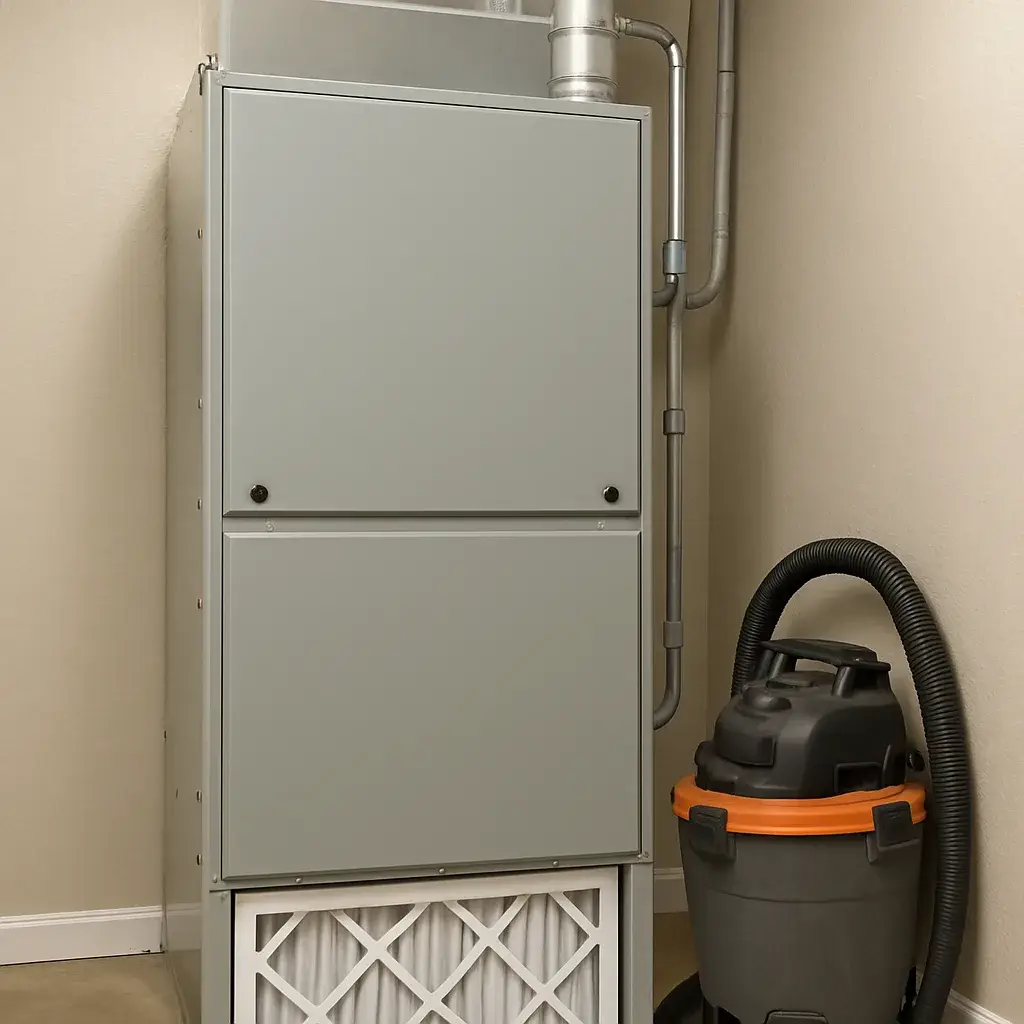
- Vacuuming visible dust from vents and returns
- Checking that nothing is blocking supply or return vents around furniture
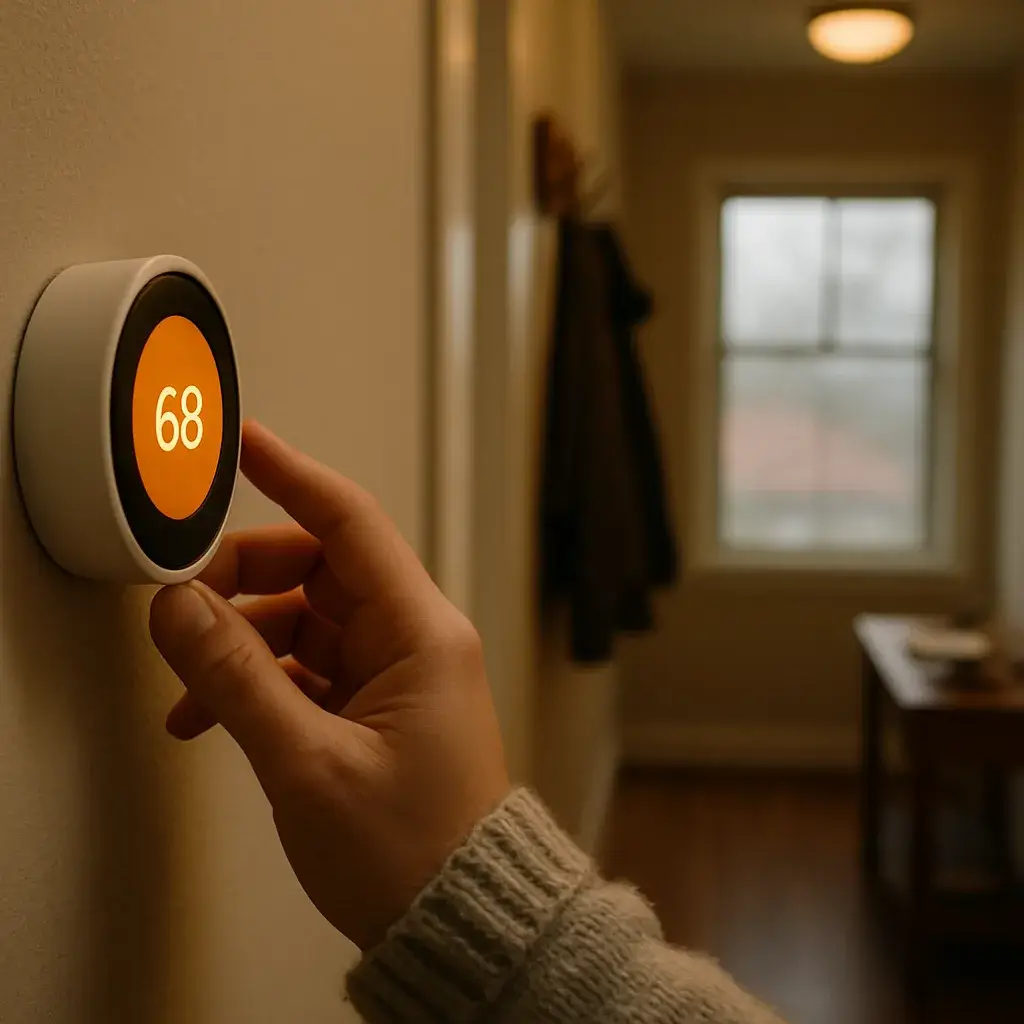
- Confirming the thermostat is set to heat mode and the temperature is adjusted
Age matters too. If your heating system is less than a year old and running without strange noises, odd smells, or uneven heating, there is usually no reason to schedule a maintenance visit yet. New equipment is typically still under manufacturer warranty and has not had time to accumulate the wear that maintenance is designed to catch. Calling too early just adds an unnecessary expense for a system that has nothing to fix.
This is where straightforward pricing and honest guidance work together. A technician who tells you upfront that your issue does not warrant a paid visit, before you book anything, is building the kind of trust that matters more than a single service ticket. It also means that when a visit is recommended, the pricing quoted over the phone should match what shows up on the invoice, with no vague diagnostic fees disguised as maintenance.
If you are ever unsure whether your situation falls into the do-it-yourself category or genuinely needs a professional look, a quick phone conversation can usually sort that out before any technician is dispatched. 80 six days a week.
What Happens During a Professional Heating Tune-Up
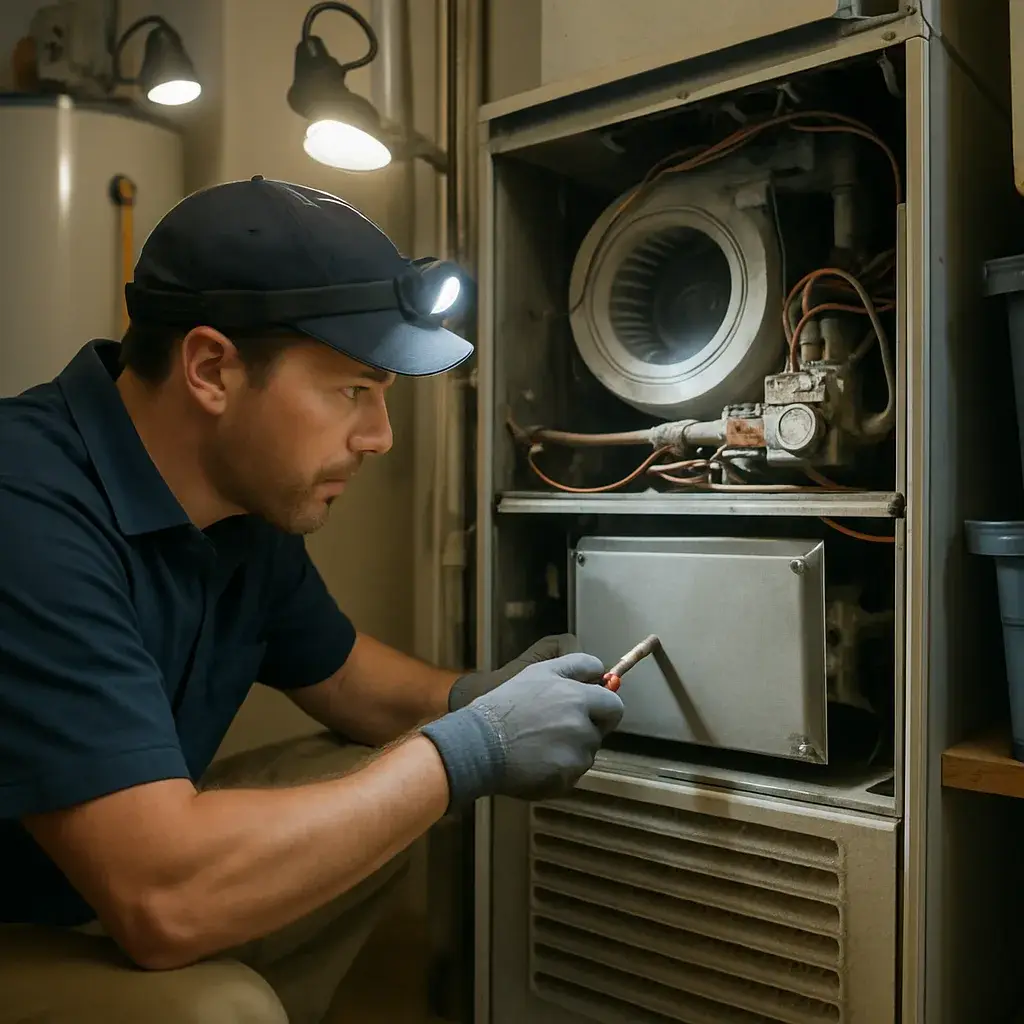
A professional heating tune-up in Sunnyvale follows a consistent sequence designed to catch small problems before they become expensive repairs or, worse, safety hazards. Because many homes here rely on furnaces installed decades ago, technicians pay close attention to wear patterns that show up after years of Texas humidity swings and seasonal on-off cycling. Here is what a thorough visit typically includes.
- Full system inspection, including the thermostat, ductwork connections, filter condition, and cabinet for signs of rust, soot, or moisture damage.
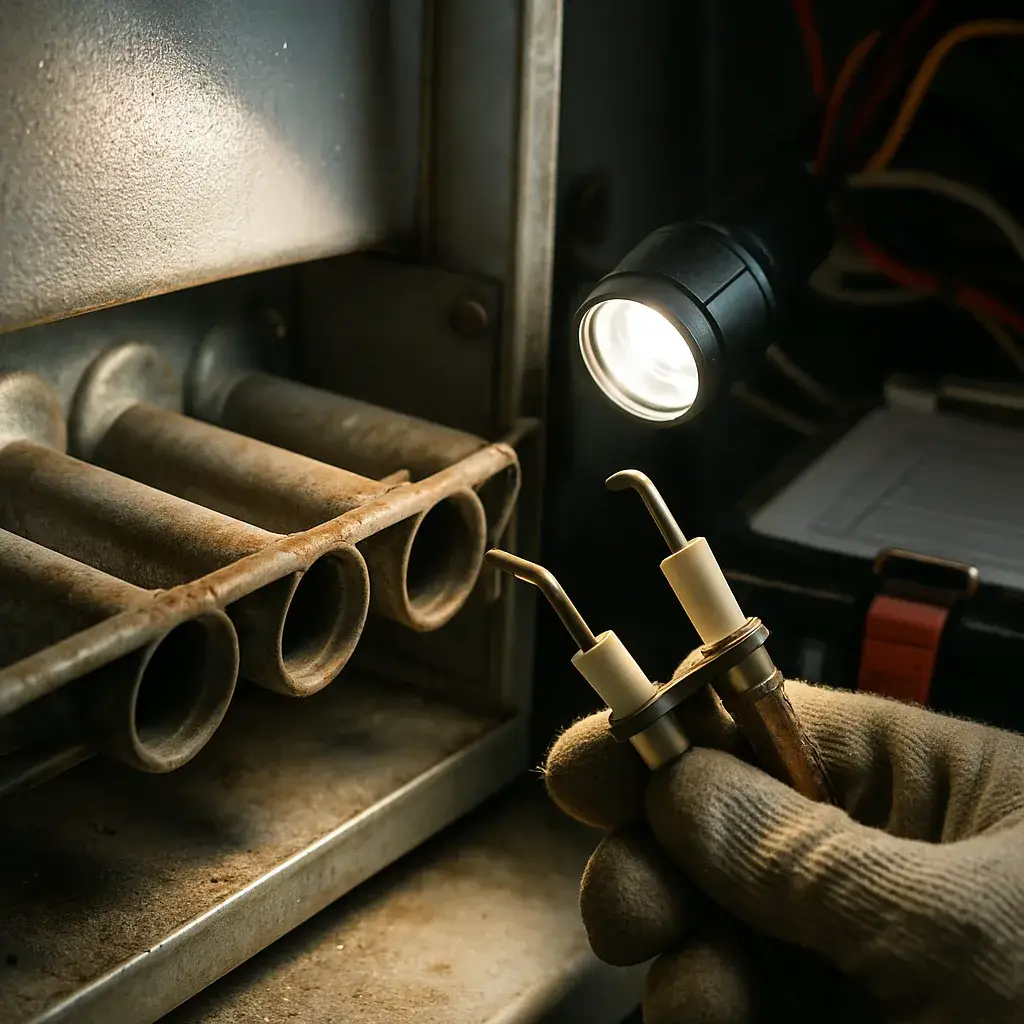
- Cleaning of the burners, flame sensor, and blower assembly, since dust and corrosion on these parts are among the most common causes of uneven heating and unexpected shutdowns.
- Ignition system testing to confirm the furnace lights consistently and burns with a stable, properly colored flame rather than flickering or delayed ignition.
- Safety component checks, including the heat exchanger, gas connections, and carbon monoxide-related parts, since a cracked exchanger or faulty venting can allow dangerous gas into living spaces.
- Verification that the technician performing the work is properly licensed, which matters both for safety and for legal compliance in rental and owner-occupied homes alike.
- A written summary of findings, including any parts nearing failure, so homeowners can make informed decisions rather than being surprised by a mid-winter breakdown.
Carbon monoxide safety deserves special attention. Texas Property Code Section 92.259 outlines landlord responsibilities around carbon monoxide detection and alarm installation in rental properties, and a tune-up that checks combustion venting and detector placement directly supports compliance with that standard. Landlords and property managers in Sunnyvale should treat this portion of the inspection as non-negotiable, not optional.
Licensing is the other piece homeowners should never skip. Heating and air conditioning technicians in Texas are regulated under the Texas Occupations Code Chapter 1302, administered by the Texas Department of Licensing and Regulation, commonly known as TDLR. Before scheduling service, ask for the technician’s TDLR license number and confirm it is active. A reputable company will provide this without hesitation, and it gives homeowners a verifiable way to confirm they are hiring someone qualified to work on gas-fired equipment inside their home.
At the end of the visit, a good technician walks through their findings in plain language, explains any recommended repairs with clear reasoning, and leaves behind documentation useful for warranty claims or future service calls.
Need help with Heating system maintenance?
Call Today, Get Service Today. Xtreme Air Services is ready to help.
Why Fall Is the Right Time to Service a Furnace in Sunnyvale
Texas heat has a way of hanging around into October, so it’s easy to forget your furnace exists. Then a cold front rolls through overnight and drops the temperature 20 or 30 degrees before breakfast. That’s the moment a furnace that’s been sitting quiet since March gets asked to fire up cold, and honestly, that’s when we get the no-heat calls.
Fall is the window to catch small problems before that first hard freeze turns them into a family standing in a cold living room at 6 a.m.
A lot of homes in Sunnyvale have the furnace tucked up in the attic, which means dust and debris settle on the flame sensor and blower wheel all summer with nobody the wiser. That buildup is one of the most common reasons a furnace won’t light on the first try, and it’s exactly what a fall inspection catches before it becomes an emergency call on the coldest night of the year.
Scheduling service in September or October also beats the rush. Once the first real cold snap hits North Texas, every heating company in the area gets slammed with no-heat calls at once. Booking ahead means you get a technician on your schedule, not whenever one’s free.
And there’s a safety piece too. A furnace that hasn’t run in months can develop a cracked heat exchanger or a carbon monoxide issue you’d never notice just looking at it. Catching that in October, calmly, beats discovering it in January when the furnace is the only thing standing between your family and the cold.
What Drives Heating Maintenance Costs
Heating system maintenance pricing isn’t a flat number, and honestly, it shouldn’t be. Two homes on the same street can have two very different jobs. One furnace is easy to reach and clean. The other’s been ignored for three winters and buried behind attic insulation.
- Number of systems or units – one furnace costs less time than a two-zone setup.
- Accessibility – a closet furnace is quick, an attic unit takes longer to reach safely.
- Level of buildup or neglect – dust, dirt, and corrosion add cleaning time.
- Whether it’s a one-time visit or part of a maintenance plan.
A lot of the newer subdivisions around Sunnyvale build the furnace right into the attic to save floor space. That’s fine for the builder, tough on a technician working in July heat with a flashlight. Accessibility like that is a real cost factor, not a made-up one.
For most homes with one system, typical maintenance runs $75 to $125, and the full range across different jobs is $75 to $200. That covers the inspection, cleaning, and safety check. It does not cover repair parts, we always quote those separately once we know what’s needed. If we come out and you decide not to move forward, there’s a $26 to $99 service call fee, and it gets credited toward the repair if you go with us that same visit. Our technicians cover Sunnyvale and the surrounding North Texas neighbourhoods.
Frequently Asked Questions
Common questions about Heating system maintenance
How quickly can someone come out for heating system maintenance in Sunnyvale?
Most maintenance visits can be scheduled within a day or two, and sooner if your furnace is already showing warning signs. We ask a few quick questions over the phone first, like whether you’re hearing short-cycling or smelling something odd on startup, so the technician arrives ready for what your system needs. Booking before the first cold snap of the season means you avoid the rush that hits every heating company once temperatures drop and no-heat calls pile up.
What should I expect when the technician arrives for a tune-up?
You can expect a full walk-through of your furnace, starting with the thermostat and ending with a written summary of what was found. The technician checks the burners, flame sensor, blower assembly, ignition system, and safety components like the heat exchanger and gas connections. This usually takes under an hour for a standard system. Before leaving, they’ll tell you about any parts nearing failure so you can plan ahead instead of getting surprised by a breakdown later.
Why do older Sunnyvale homes need more frequent furnace attention?
Homes with furnaces installed decades ago tend to show more wear from years of seasonal on-off cycling, which is why annual maintenance matters more as equipment ages. Rust, soot buildup, and corrosion on burners and flame sensors show up more often in these older systems. If your furnace hasn’t had a professional look in the last 12 months, dust and minor sensor drift can quietly build up until the first hard freeze forces the issue.
How often should I schedule furnace maintenance?
Once a year is the standard, ideally scheduled before your first cold-weather startup of the season. That first run after months of sitting idle is when weak igniters and stiff blower motor bearings tend to reveal themselves under real load. Annual service catches these small issues while they’re still cheap fixes, rather than letting them turn into a no-heat emergency on a night when every other furnace in the area is having the same problem.
Do I need a maintenance visit if my furnace is brand new?
No, not usually. If your system is less than a year old and running quietly without strange noises, odd smells, or uneven heating, there’s typically nothing for a maintenance visit to catch yet. New equipment hasn’t had time to accumulate the wear that a tune-up is designed to find. Save the appointment for closer to the one-year mark, or sooner only if you notice one of the warning signs like short-cycling or rising utility bills.
Can I handle any furnace upkeep myself before calling for maintenance?
Yes, filter replacement is the one task every homeowner can do without a technician. Swapping a one-inch filter every one to three months takes five minutes and costs a few dollars, and it’s basic upkeep rather than a maintenance event. You can also reset a tripped breaker, check the thermostat batteries, and clear anything blocking your vents. If those steps don’t solve the problem, that’s your sign to schedule a professional visit.
Ready to Get Started?
Call 972-288-2263 Today, Get Service Today.