
Rooftop Unit (RTU) Service in Sunnyvale: Fast, Honest Fixes for Commercial Buildings
Repair and maintenance for rooftop units on the sun-exposed flat roofs around Sunnyvale – same-day diagnosis of the heat-driven capacitor and contactor failures that strand a building in July.
What’s Covered on This Page
- Signs Your Rooftop Unit Needs Service
- Repair Or Replace: What Really Decides
- When You Don’t Need a Technician Yet
- What Happens During a Commercial RTU Service Call
- How Commercial Rooftop Unit Pricing Works
- How fast can you get someone out to fix our rooftop unit in Sunnyvale?
- What happens when your technician arrives to service our RTU?
- Why do rooftop units fail so often on Sunnyvale’s flat-roofed buildings?
- How do I know if my rooftop unit needs repair or replacement?
- Are there any quick checks I can do before calling for RTU service?
- How often should a commercial rooftop unit be serviced to avoid breakdowns?
Signs Your Rooftop Unit Needs Service
Your rooftop unit usually doesn’t fail all at once. It gives you clues first, but most business owners don’t know what to look for. Here’s what to watch.
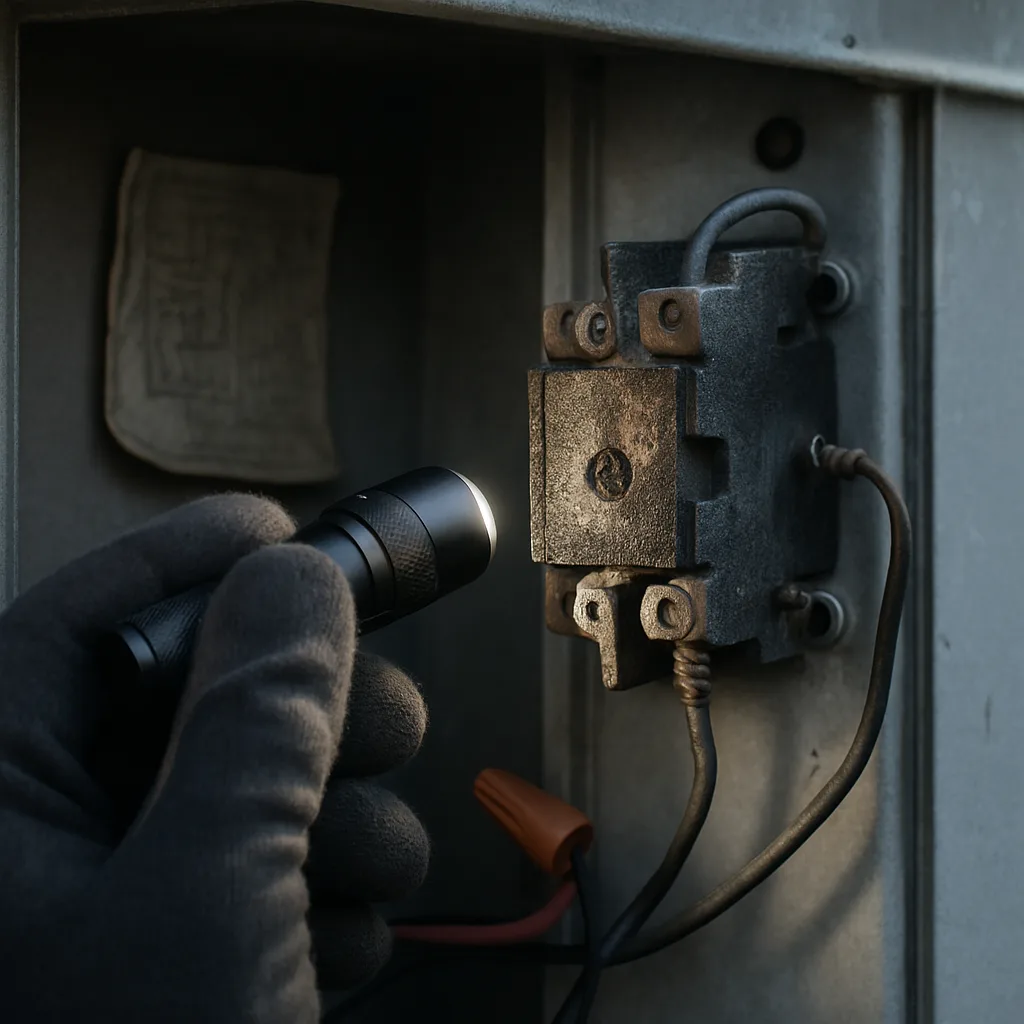
Sunnyvale has many flat-roofed retail buildings and light industrial spaces. RTUs on those roofs take a beating from direct sun most of the year. That constant heat stresses capacitors and contactors faster than shade would. We see the same handful of symptoms on service calls.
- Air blowing but not cold, or barely cool, even with the thermostat set low
- The unit short cycling, or turning on and off every few minutes instead of running a full cycle
- A new rattle, squeal, or clunk coming from the rooftop cabinet
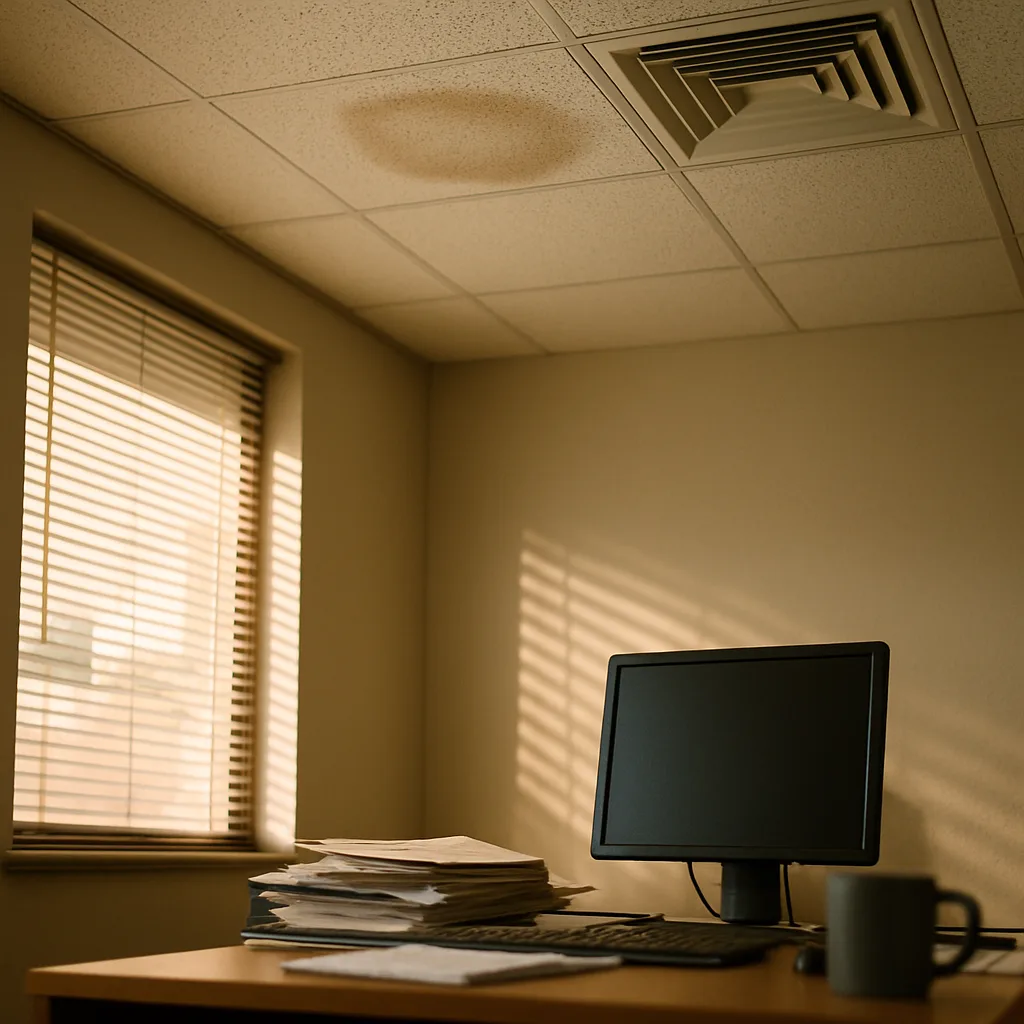
- Water stains on ceiling tiles below the unit, often from a backed-up drain line or pan
- Breakers tripping more than once, usually pointing to a failing motor or electrical component
- Higher utility bills with no real change in how the building is being used
It’s usually one part, not the whole unit. The cause may be a bad capacitor, a stuck contactor, or a clogged drain line. These are specific, fixable problems. If you notice any of these signs, don’t wait for the unit to quit during business hours.
Repair Or Replace: What Really Decides
Most rooftop unit calls end with a repair, not a replacement. We find the failed part, fix it, and get the unit running. Sometimes we’re standing on a roof with a unit that’s failed three times this year. At that point, another repair may not be the smart move.
How do you know which side of that line you’re on? A few factors matter more than the rest.
- Age of the unit. Most RTUs are built for 15 to 20 years of service. Units past that mark tend to fail more often.
- How many parts have failed at once. One bad capacitor is a repair. A bad compressor and a dying blower motor on the same call require a different conversation.
- Part availability. Older or discontinued equipment can mean longer waits and higher part costs. That changes the math fast.
- Failure pattern. A unit that’s needed two service calls this season for different problems is telling you something.
None of that means we’re pushing you toward a new unit. Plenty of the rooftop equipment we service across Sunnyvale is 10 or even 12 years old. A repair still makes sense for many of those units. Age alone doesn’t disqualify a unit, but repeated failures often do.
Here’s the honest version. If this is the unit’s first issue in years, fix it and move on. If your maintenance log reads like a repeat customer list, have a real conversation before spending more money on the same problem.
When You Don’t Need a Technician Yet
Not every rooftop unit problem needs a technician on the roof. Some calls have fixes that take thirty seconds. We’d rather tell you that up front than send someone out for nothing. 80 six days a week.
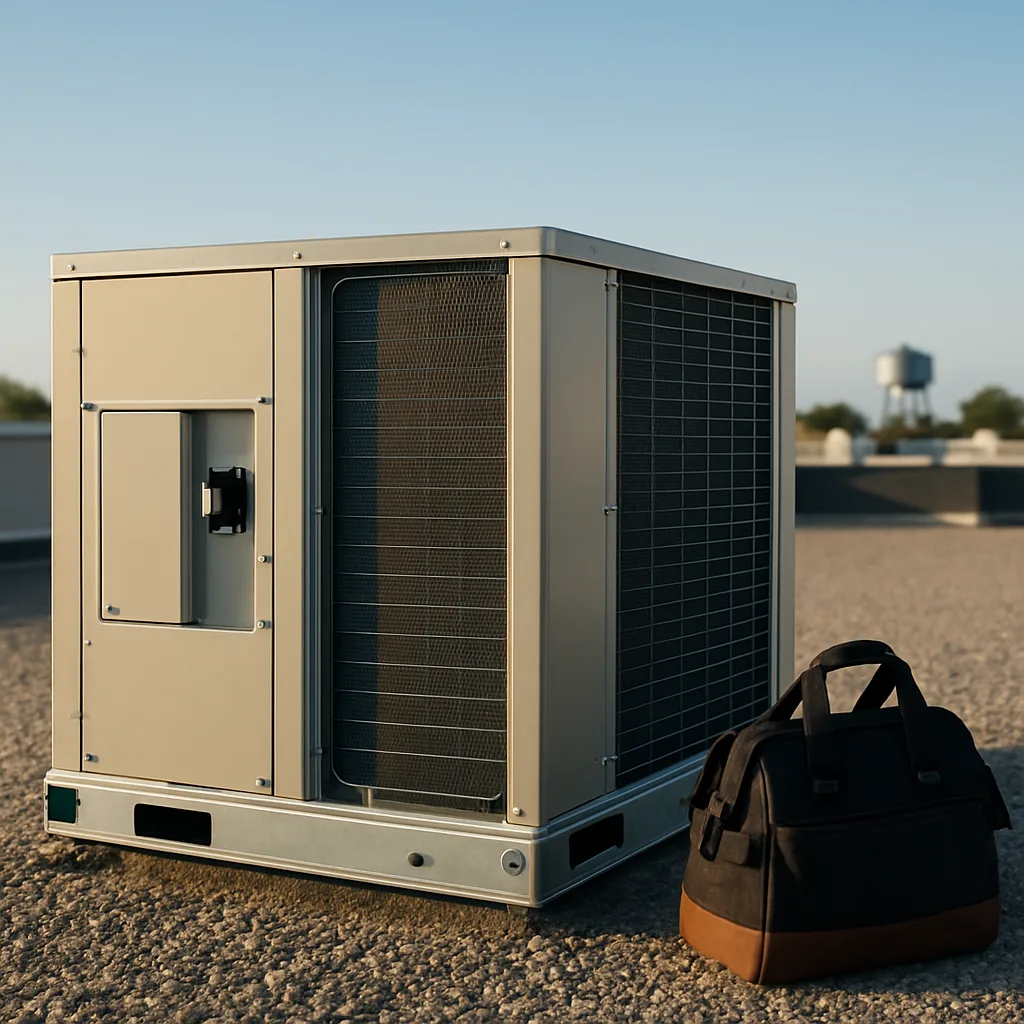
Before you pick up the phone, check a few things. The problem may be one of these.
- Check the breaker at the electrical panel and the disconnect switch near the unit on the roof or wall. Storms and power blips trip these more often than people expect.
- Swap the air filter if it’s been more than a couple of months. A clogged filter chokes airflow and can trip the safety switch that shuts down the unit.
- Look at the thermostat. Dead batteries, a wrong schedule, or an accidental setting change cause many no-cool calls in Sunnyvale offices and small shops.
- Check for a tripped condensate overflow float switch, usually near the drain pan. A backed-up pan can trip the float and shut off the unit for safety.
- If the unit sat idle for a season, wait a few minutes after adjusting the thermostat. Some units have a short startup delay.
Did you change the filter, reset the breaker, and check the thermostat, but the unit still isn’t running right? That’s your sign. You’re probably dealing with a failed part inside the unit, not a simple reset. That job needs a technician with a meter and ladder.
We’d rather you save the time and trip fee when the fix is something you can do from the ground.
Need help with Rooftop unit (RTU) service?
Call Today, Get Service Today. Xtreme Air Services is ready to help.
What Happens During a Commercial RTU Service Call
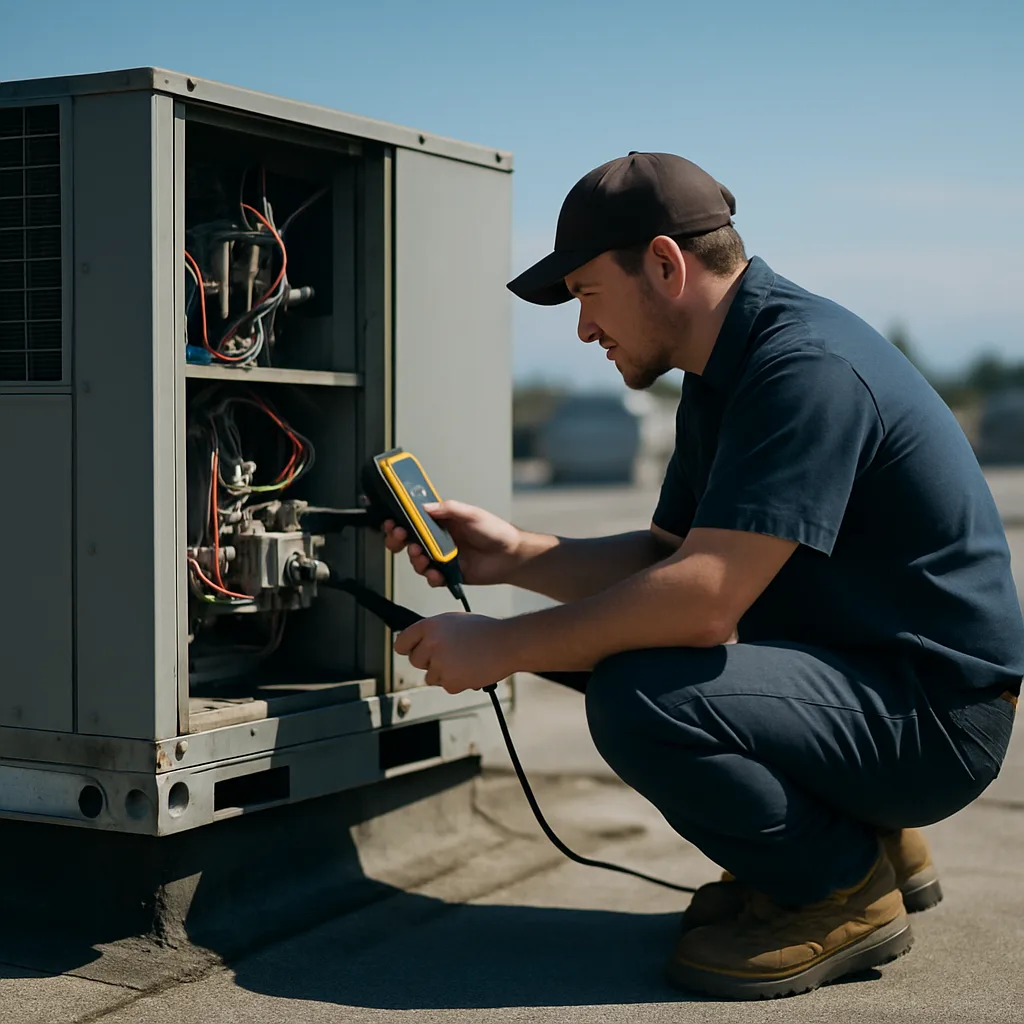
What happens when we arrive to service your rooftop unit? It’s a straightforward visit, not a teardown. A technician climbs up and connects gauges and a meter. Then the technician checks the system in order until the failed part shows itself. Most Rooftop unit (RTU) service calls in Sunnyvale follow this path. That applies to a strip mall unit on Miles Road or a back-office system behind a warehouse.
- We check the thermostat or control signal first. A bad call to the unit can look like a bigger failure.
- We inspect the electrical side, including contactors, capacitors, and wiring. These parts fail more often than others on an RTU.
- We check refrigerant pressures and airflow across the coil. This tells us whether the problem is related to cooling or electricity.
- Once we find the failed part, we quote the flat-rate repair before touching anything else. You approve the price up front.
- We make the repair and run the unit through a full cycle. This confirms that it’s holding temperature and cycling normally.
That last step matters. We’ve seen units look fixed after five minutes, then trip again once the compressor fully loads. We don’t leave until the repair is proven.
If it’s a weekend call because your rooftop unit or walk-in cooler quit on Saturday, the price doesn’t change based on the calendar.
How Commercial Rooftop Unit Pricing Works
Most rooftop unit calls follow the same pattern. We find the failed part and repair or replace it. Then we run the unit to confirm it’s cooling or heating properly. It’s usually one common failure, not a system-wide mess. That’s why most jobs land on the lower end of the range and finish in one visit.
What moves the price? A few things, and none of them are mysterious.
- How far the failure has spread. One bad capacitor is a quick fix, while a failed compressor is a bigger job.
- Part cost and whether the part is on the truck or needs to be sourced
- The age and brand of the equipment. Older units sometimes need parts that take longer to track down.
- Whether multiple components failed at the same time. This happens more often on units past year twelve.
- Timing, although nights and weekends never cost extra with us
Sunnyvale has many flat-roof strip centers and small commercial buildings. Rooftop units on those buildings take a beating from direct sun most of the year. That heat shortens the life of capacitors and contactors compared with shaded ground units.
Every visit starts with a service call fee. That fee is credited toward the repair if you move forward with us. Diagnosis, labor, and the standard replacement part are included in the repair. Additional failed parts, major components, or work needing a permit are quoted separately before we start. You won’t see surprise line items afterward. Financing usually isn’t needed for this type of job. It is available if a bigger repair or replacement comes up later.
Frequently Asked Questions
Common questions about Rooftop unit (RTU) service
How fast can you get someone out to fix our rooftop unit in Sunnyvale?
We can usually get a technician to your building the same day you call. Rooftop units rarely wait for a good time to fail, so we keep our schedule flexible for urgent no-cool calls. When you call, tell us the symptoms you’re seeing, like warm air or a tripped breaker. That helps us bring the right parts on the truck. Fast response matters most for retail spaces and offices that can’t stay open without working air.
What happens when your technician arrives to service our RTU?
Your technician climbs up to the unit and connects gauges and a meter to check it in order. First we look at the thermostat signal, then the electrical parts like contactors and capacitors, since these fail most often. Next we check refrigerant pressure and airflow. Once we find the failed part, we quote the repair price before doing any work, so you approve it first. We finish by running the unit through a full cycle to confirm it’s holding temperature.
Why do rooftop units fail so often on Sunnyvale’s flat-roofed buildings?
Direct sun exposure is the biggest reason. Sunnyvale has many flat-roofed retail and light industrial buildings, and RTUs on those roofs sit in full sun most of the year. That constant heat stresses capacitors and contactors faster than units in shaded spots. This is why we see the same handful of failures on service calls: bad capacitors, stuck contactors, and clogged drain lines. Catching these early keeps a small, fixable problem from turning into a bigger breakdown.
How do I know if my rooftop unit needs repair or replacement?
Most calls end in a repair, not a replacement, because it’s usually one failed part. Age matters too. RTUs are built for 15 to 20 years, so units past that mark tend to fail more often. The bigger warning sign is a pattern. If your unit has needed two service calls this season for different problems, that’s telling you something. A single issue after years of trouble-free running is almost always worth fixing.
Are there any quick checks I can do before calling for RTU service?
Yes, a few checks take thirty seconds and can save you a trip fee. Check the breaker at your electrical panel and the disconnect switch near the unit. Swap the air filter if it’s been more than a couple of months, since a clogged filter can trip the safety switch. Check the thermostat for dead batteries or a wrong schedule. If you’ve tried all three and the unit still isn’t working, you’re likely dealing with a failed part that needs a technician.
How often should a commercial rooftop unit be serviced to avoid breakdowns?
Regular checks catch small problems, like a weak capacitor or a slow drain clog, before they cause a shutdown. Units running through Sunnyvale’s long, sunny season put extra strain on electrical parts, so a checkup before peak heat helps them handle the load. Businesses that never fall behind on filters and basic checks tend to call us for repairs, not emergencies. Staying ahead of small issues keeps your building comfortable and avoids surprise downtime during business hours.
Ready to Get Started?
Call 972-288-2263 Today, Get Service Today.