


Ceiling Fan Installation in Sunnyvale: Stay Cool Without Guesswork
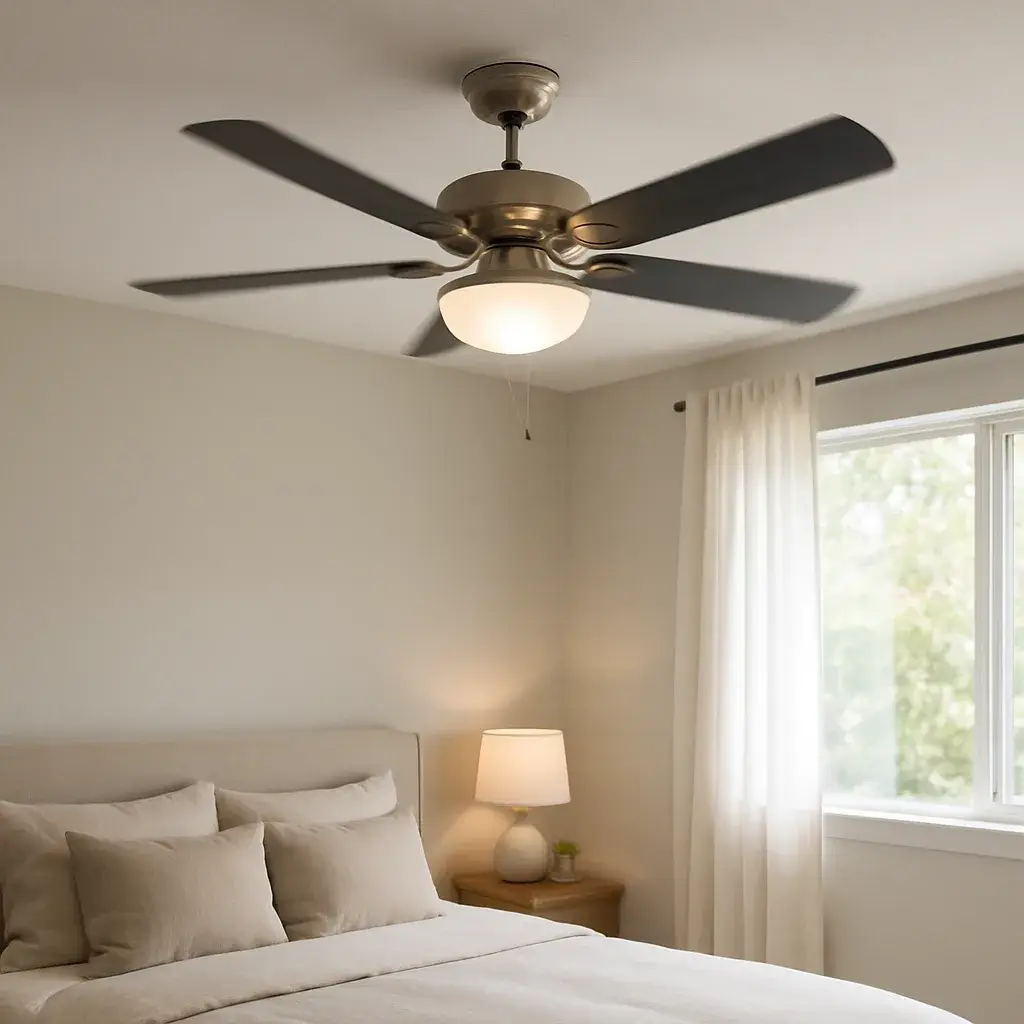
Fans mounted on fan-rated boxes and bracing that will actually hold them, balanced and wired for the switch or remote you want to use.
What’s Covered on This Page
- What Sunnyvale Homes Need Before Installing a Ceiling Fan
- Vaulted and High Ceilings Change the Installation Job
- When You Don’t Need an Electrician for a Fan Swap
- How Ceiling Fan Installation Pricing Works
- What Happens During Professional Installation and Testing
- How long does ceiling fan installation take in Sunnyvale?
- What should I expect when your technician arrives?
- Do I need an electrician to install a ceiling fan myself?
- What if my Sunnyvale home doesn’t have a fan-rated ceiling box?
- Can you install a ceiling fan on a vaulted or high ceiling?
- How is ceiling fan installation priced?
What Sunnyvale Homes Need Before Installing a Ceiling Fan
A lot of Sunnyvale homes were built before ceiling fans were the default. So the light fixture box up there was made to hold a light, not thirty pounds of spinning fan. That’s the first thing our technician checks. A fan-rated box is built to handle the weight and the motion. A plain electrical box isn’t, and running a fan off one is a real safety problem, not a small one.
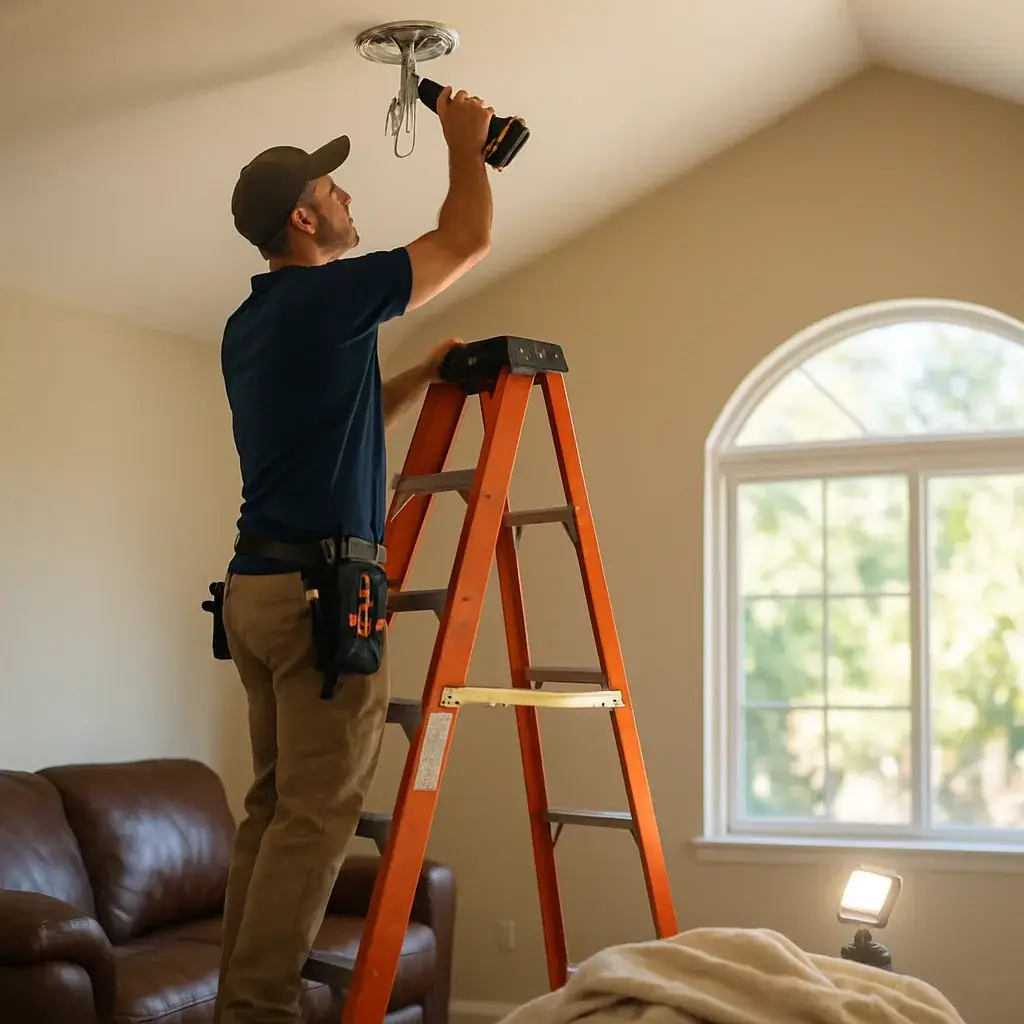
Ceiling height matters too. Single-story homes with standard eight or nine foot ceilings are the easy jobs. Vaulted ceilings or anything above ten feet needs a longer down rod and sometimes a lift or extra ladder work just to reach the spot safely.
- Is there already a fan-rated box, or does one need to go in
- How high is the ceiling, and is there attic access above it
- Is there a wall switch already run, or do you want a remote
- How much does the fan weigh, and does it have a light kit
- Any drywall patching needed from a swapped-out fixture
We ask these questions on the phone before we ever show up. Often, older Sunnyvale homes need that fan-rated box swap. Newer builds usually already have one, which keeps the job simple.
Vaulted and High Ceilings Change the Installation Job
A flat eight-foot ceiling is the easy job. Vaulted ceilings, two-story entries, and the steep rooflines you see on a lot of newer Sunnyvale builds are a different story.
Here’s the thing about a vaulted ceiling, the pitch changes how the fan hangs. A fan mounted flush against a sloped surface will wobble no matter how well it’s balanced, so we use an angled mounting kit that lets the fan hang straight down even when the ceiling isn’t level. Skip that step and you’ll hear it every time the fan runs.
Height is the other piece. Standard fans hang best around eight to nine feet off the floor. Go higher than that and the fan just moves air around the rafters instead of cooling the room where you’re sitting.
- Ceilings under 10 feet: standard downrod, usually no extra hardware needed
- Ceilings 10 to 15 feet: longer downrod to bring the fan down to a useful height
- Vaulted or cathedral ceilings: angled mount adapter plus a matched downrod length
- Two-story entries or great rooms: extension ladder or lift access, and extra time on site
We measure before we ever pull out a drill, because guessing on downrod length means a second trip. And access matters too, a fan over a stairwell or a two-story foyer takes real equipment to reach safely, not just a stepladder from the garage. That’s part of why ceiling height and access is one of the things that moves the cost of a job up or down. So if your living room ceiling climbs higher than a standard room, mention it when you call. We’ll ask a few questions and know what we’re walking into before we show up.
When You Don’t Need an Electrician for a Fan Swap
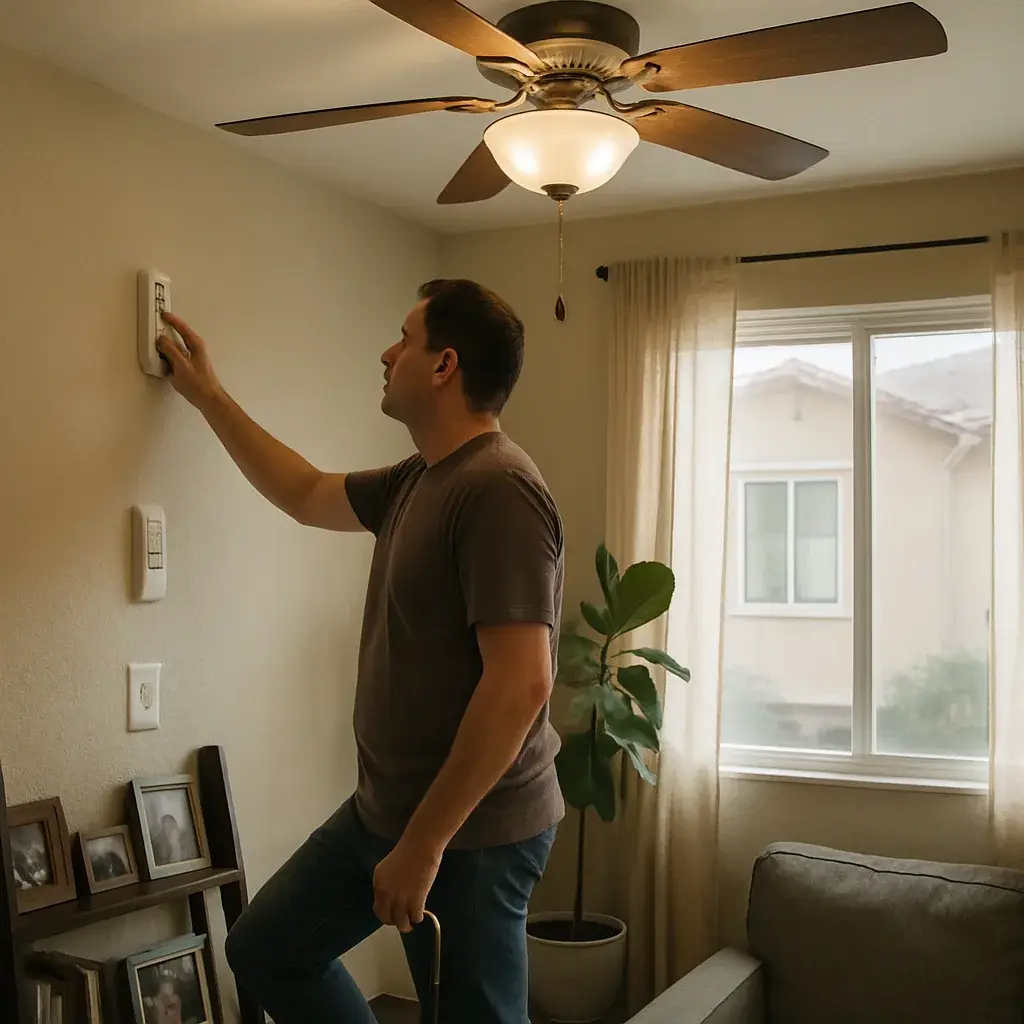
Look, we’re not going to tell you every fan swap needs a licensed electrician. If your new fan is going up on the exact same fan-rated box as the old one, same switch, same wiring, you can probably do that on a Saturday afternoon.
- It’s a straight swap. Old fan comes down, new fan goes up on the same existing fan-rated box, no new wire runs needed.
- The fan uses a normal wall switch, not a remote kit or smart control that adds extra low-voltage wiring.
- Ceiling height is normal, you’re steady on a ladder, and the new fan weighs about the same as the old one.
- You’ve killed the breaker and can tell the black, white, and ground wires apart without guessing.
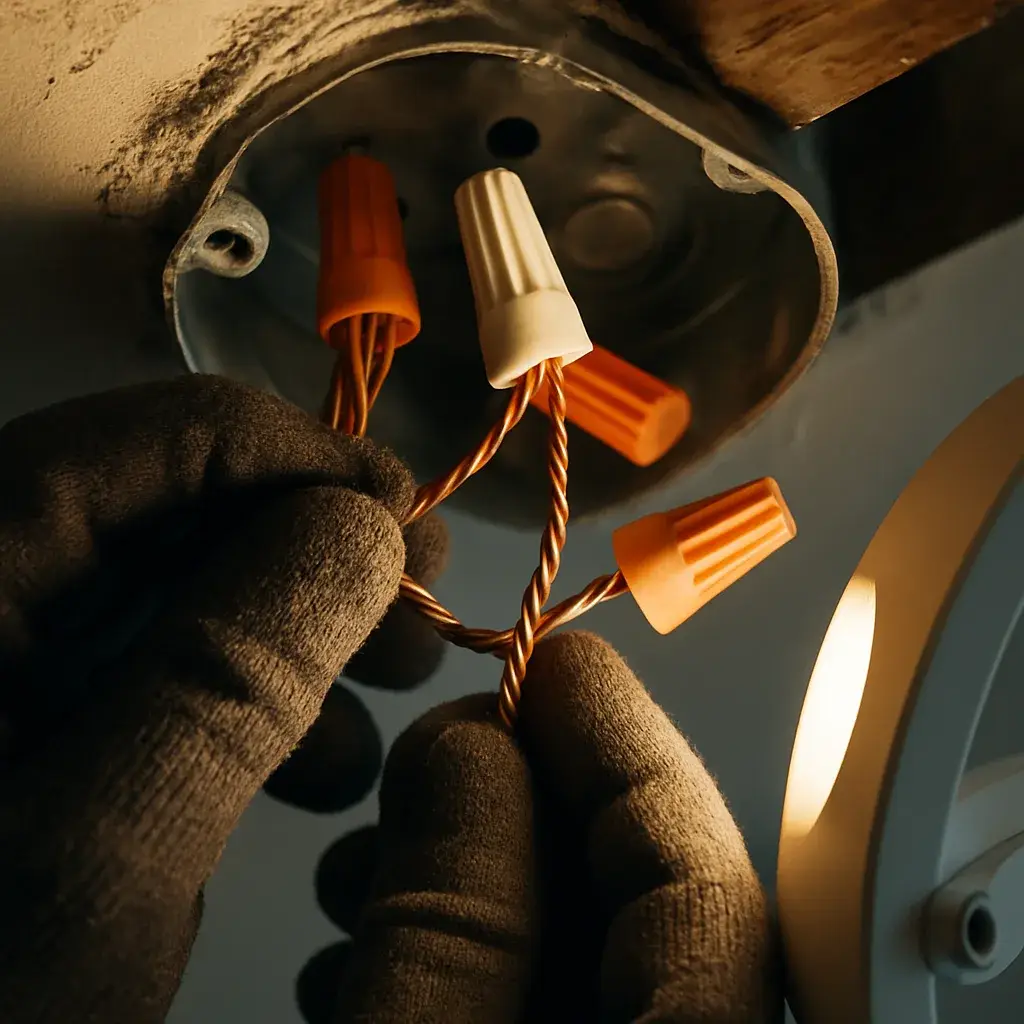
Here’s where it stops being a weekend job. Older Sunnyvale homes, especially ones built before the 1990s, often have a plain junction box up there instead of a fan-rated one. A ceiling fan spins, it wobbles, it pulls on that box every single day it runs.
A wobbling fan hanging from the wrong box isn’t a small thing, it’s a fire risk waiting on a windy night.
So if you’re dealing with a vaulted ceiling, a heavy fan with light kits and remotes, a spot with no existing switch, or wiring that looks older than you’d like, that’s not a DIY afternoon anymore. That’s a job where the wrong guess costs a lot more than the fan did.
Have questions? We’re happy to help.
Call Today, Get Service Today. Xtreme Air Services is ready to help.
How Ceiling Fan Installation Pricing Works
Most homeowners want one number before they call. We get it. But ceiling fan installation pricing depends on what’s already in your ceiling, not just the fan you picked out.
Typical jobs in this trade run $150 to $500. The most common one, mounting and wiring a fan on a box that’s already fan-rated, balanced and tested, usually lands between $225 and $350. That number climbs fast if there’s no fan-rated box up there, or if the room needs a new circuit run from the panel.
- Whether a fan-rated box already exists in the ceiling
- Ceiling height and how hard the spot is to reach
- Fan weight and whether it has remote or wall controls
- Need for a new circuit or dedicated switch
- Any code corrections required before we can hook it up
Standard installs include mounting, wiring, balancing, and testing. They don’t include the fan itself if you’re supplying your own, a new box or circuit, drywall repair, code corrections, or permits unless we’ve talked about that upfront.
We charge a $26 to $99 service call fee, and it gets credited toward the job if you move forward with us. No surprise math on the invoice.
Ask any electrician one question before they start: is my existing box fan-rated. That single answer tells you which end of the range you’re looking at.
What Happens During Professional Installation and Testing
Here’s what our team does once we’re standing in your living room with the fan box open on the floor.
- We check the box first. If it’s fan rated, great, we move straight to mounting. If it’s not, we tell you before touching anything else.
- We shut off power at the breaker and test the wires dead. No shortcuts here, ever.
- We mount the bracket, hang the fan, and connect the wiring to match your switches and any remote or wall control you bought.
- We balance the blades. A fan that wobbles at low speed will shake the whole fixture at high speed, so we check this by hand and adjust the blade arms if needed.
- We test every speed setting and any light kit, then run it for a few minutes to watch for wobble or noise before we call it done.
That last step matters more than people think. We’ve had fans come out of the box with a bent blade arm from shipping, you’d never catch that until it’s spinning at full speed and thumping against the ceiling. Testing before we leave catches it on our time, not yours.
In older Sunnyvale homes near the town’s original lots, attic access can be tight, and that adds a few extra minutes for routing wire cleanly instead of just running it exposed. Newer subdivision homes usually have more room to work with up top.
We clean up the box, sweep up any debris, and walk you through the controls before we leave. Simple as that.
Frequently Asked Questions
Common questions about Ceiling fan installation
How long does ceiling fan installation take in Sunnyvale?
Most ceiling fan installations take one to two hours once we’re on site. A straight swap onto an existing fan-rated box is the fastest job. It takes longer if your ceiling doesn’t have a fan-rated box yet, if the room needs a new switch, or if the fan is going up on a vaulted ceiling that needs an angled mount and extension ladder work. We ask a few questions on the phone first, so we show up knowing what kind of job we’re walking into.
What should I expect when your technician arrives?
Your technician checks the electrical box first, before touching the fan. If it’s already fan-rated, we move straight to mounting, wiring, balancing, and testing. If it’s not, we walk you through what swapping it involves before any drilling starts. We kill the breaker, confirm the wiring, and test the fan on all speeds before we call the job done. You’ll know exactly what was done and why before we leave.
Do I need an electrician to install a ceiling fan myself?
Not always. If your new fan is going up on the same fan-rated box, same wall switch, same wiring as the old one, that’s often a job you can handle on a Saturday. But many older Sunnyvale homes, especially ones built before the 1990s, have a plain junction box up there instead of a fan-rated one. A fan spins and pulls on that box every day it runs, and that’s a real fire risk, not a small detail to skip.
What if my Sunnyvale home doesn’t have a fan-rated ceiling box?
You’ll need that box swapped before a fan goes up, and this is common in older Sunnyvale homes built before ceiling fans were standard. A plain light fixture box isn’t built to handle the weight and motion of a spinning fan. Newer builds in Sunnyvale usually already have a fan-rated box, which keeps the job simple. We check this on the phone before we ever show up, so there’s no surprise once we’re standing under your fixture.
Can you install a ceiling fan on a vaulted or high ceiling?
Yes, but it takes different hardware than a standard flat ceiling. A vaulted ceiling needs an angled mounting kit so the fan hangs straight down instead of wobbling against the slope. Ceilings above ten feet also need a longer downrod, since a fan mounted too high just moves air around the rafters instead of cooling the room. We measure the pitch and height before we start, since guessing on downrod length means a second trip out.
How is ceiling fan installation priced?
Pricing depends on what’s already in your ceiling, not just the fan you picked out. The biggest factor is whether a fan-rated box already exists, since that’s the difference between a straightforward mount and a bigger electrical job. Ceiling height, fan weight, and whether you want a remote or wall switch also move the price. Ask about your existing box when you call. That one detail tells you which end of the range your job falls into.
Ready to Get Started?
Call 972-288-2263 Today, Get Service Today.