


Fan Repair in Sunnyvale: Get Your Ceiling Fan Spinning Again
Wobbling, humming, and dead fans repaired at the motor, capacitor, mount, or switch before you spend money replacing a fixture that still has life in it.
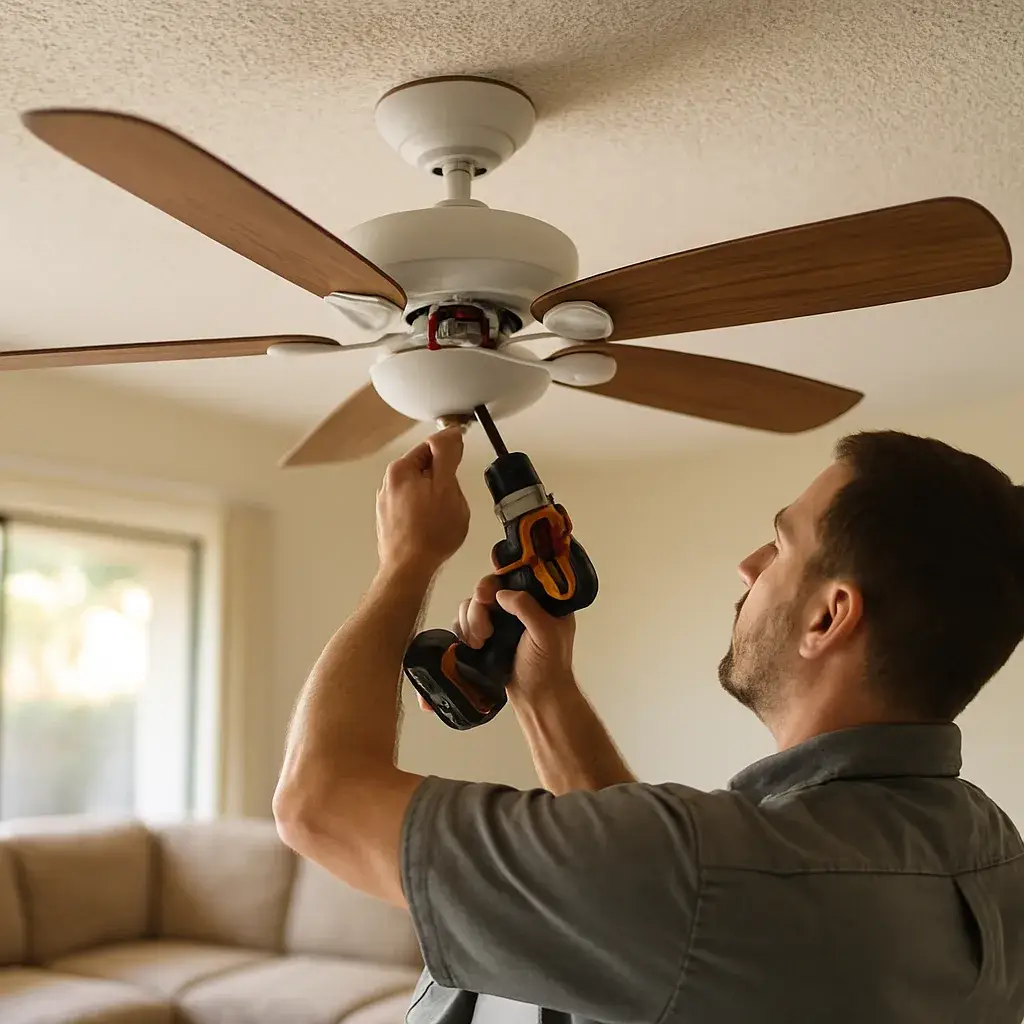
What’s Covered on This Page
- Signs Your Fan Needs Repair, Not Replacement
- Normal Canopy Play vs. a Fan That Needs a Repair Call
- What Happens During a Fan Repair Visit
- Fan-Rated Electrical Boxes and Why They Matter
- Preventing Fan Motor Failures in Sunnyvale’s Summer Heat
- How fast can you get to my house for a fan repair in Sunnyvale?
- What should I expect when the technician arrives to fix my fan?
- Why does my ceiling fan wobble even after I tighten the mounting screws?
- My fan hums but the blades won’t spin. Does it need to be replaced?
- Why do exhaust fans and AC condenser fans fail so often in Sunnyvale summers?
Signs Your Fan Needs Repair, Not Replacement
So how do you know which one you’ve got? Listen first. A grinding or clicking sound usually points to a bearing or motor issue we can fix on the spot. A fan that hums but the blades don’t turn, that’s almost always a stuck motor or a bad capacitor, not a reason to rip it out.
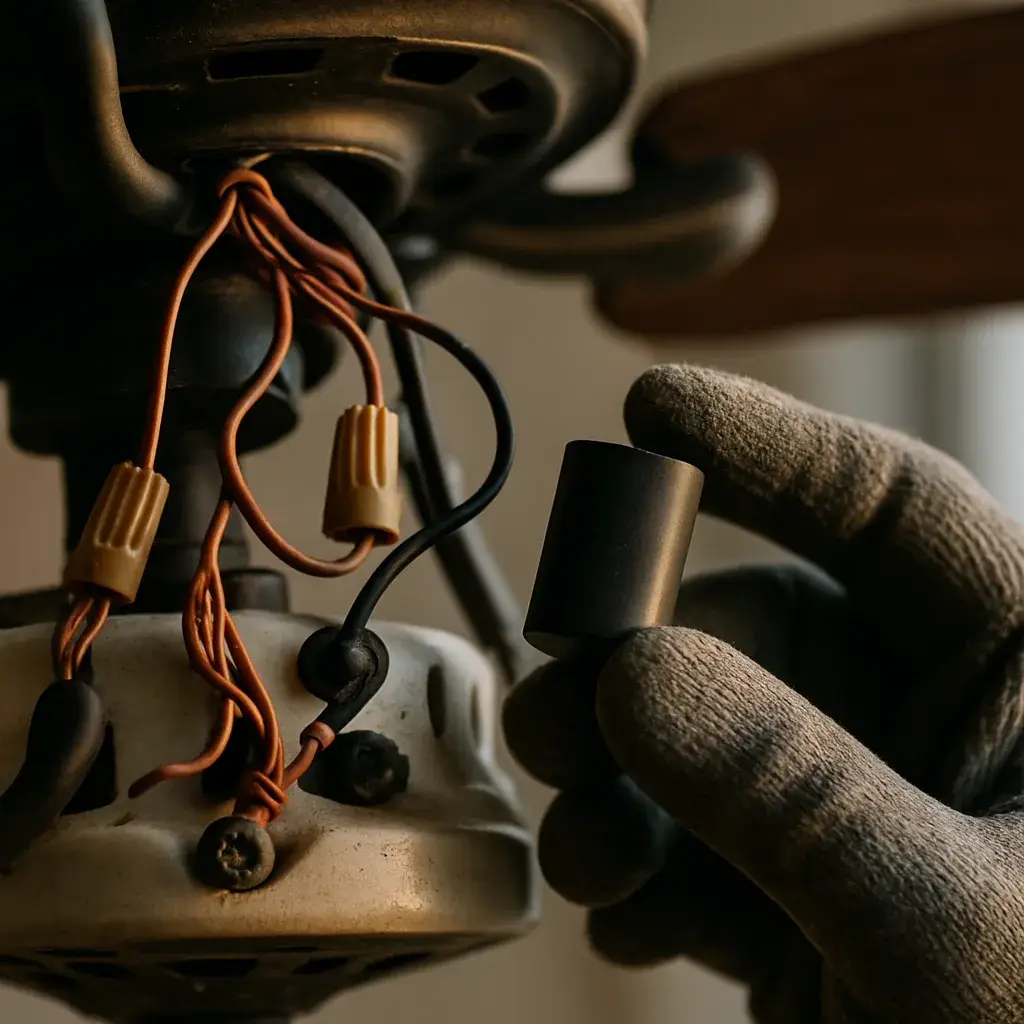
- Wobbling ceiling fan even after tightening the mounting screws, often a bent blade bracket or worn motor bearing
- Bathroom or kitchen exhaust fan running but pulling weak or no air, usually a failing motor or blocked vent
- Fan that only works on one speed, a classic sign of a failed switch
- Clicking, grinding, or squealing noise that changes with fan speed
- Fan that trips a breaker or smells hot when running, needs a look before it gets worse
Now, when should you skip the repair call and think replacement instead? If the fan housing is cracked or melted, if it’s an old fan with no available parts, or if you’ve already had it fixed twice for the same failure, that’s a different conversation. We’ll tell you straight if we think a fan’s on its last leg, we’re not going to squeeze a repair fee out of something that’s done.
But for the vast majority of calls we get, from a wobbly bedroom ceiling fan to a bathroom exhaust fan that’s gone quiet, it’s a fixable problem.
Normal Canopy Play vs. a Fan That Needs a Repair Call
Not every noisy fan is broken. A little wobble on a ceiling fan is normal, especially in older Sunnyvale homes where the box wasn’t rated for a fan and the blades shift slightly at high speed. Same with a soft hum from the motor. That’s usually just the sound of the windings, not a warning sign.
So how do you know when it’s more than that? Ask yourself if the sound is new or if it’s gotten worse in the last week or two. A fan that used to run quiet and now clicks, grinds, or squeals every time it spins is telling you something inside has worn out.
Here’s what we’d tell a neighbor. If the fan wobbles so hard you can see the light fixture shake, that’s a mounting or balance issue, worth a look before a blade comes loose. If it’s dead, doesn’t turn on at all, or the switch does nothing, that’s almost always electrical, a bad switch, a failed capacitor, or a motor that’s finally given out.
We see this every single week, folks who wait months on a squeak because the fan still spins fine. Usually it’s the same worn bearing, and it doesn’t fix itself.
If your fan runs fine and it’s just a little dusty or slightly off-balance, you don’t need us yet, a quick cleaning and a balance kit from the hardware store might do it. But if it’s making new noise, running weak, or not turning on, that’s your sign to call.
What Happens During a Fan Repair Visit
Your ceiling fan is wobbling. Your attic exhaust fan hums but the blades won’t turn. Maybe a bathroom fan just gone dead quiet. So what happens when we show up?
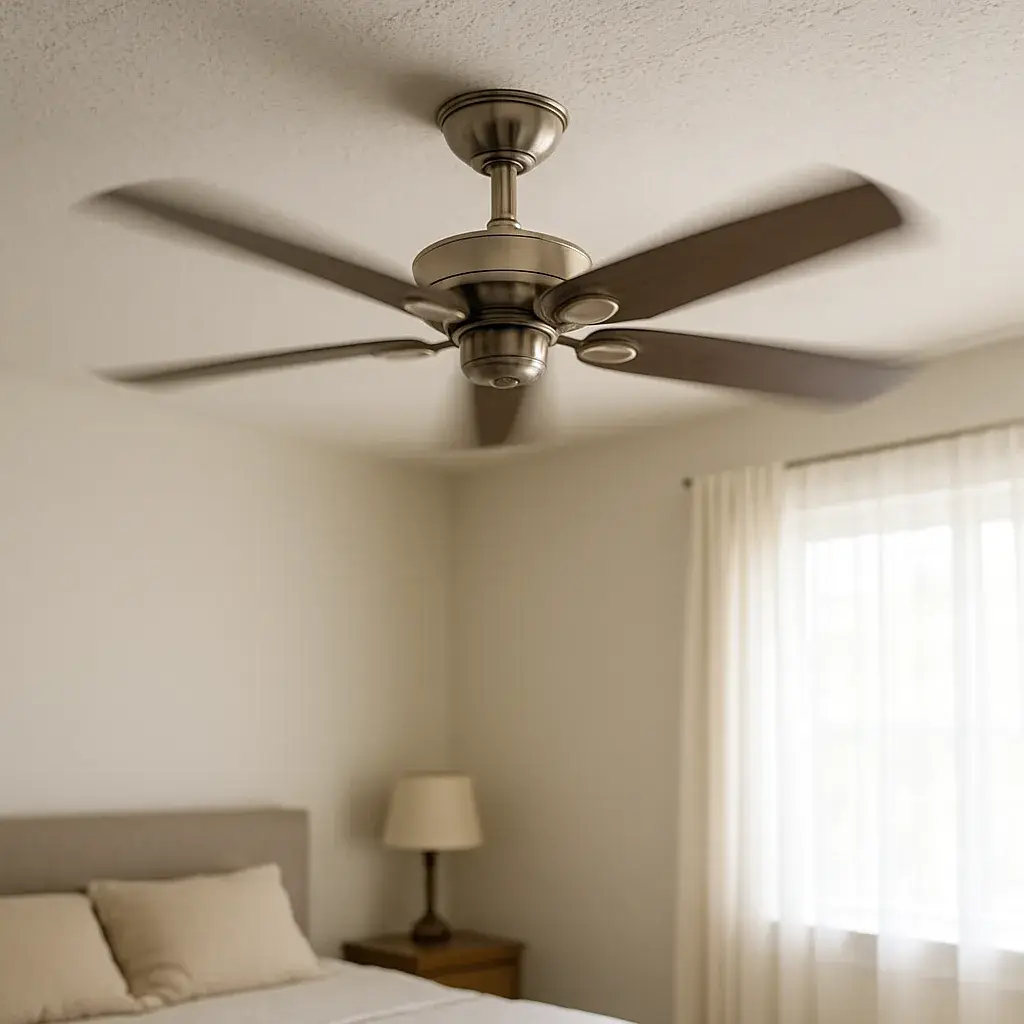
- We ask what you noticed first, noise, smell, or the fan just stopping cold.
- We check the switch, the wiring, and the motor before touching anything else.
- We identify whether it’s the motor, the switch, or a worn bearing.
- We replace the failed part with a standard replacement part and test the fan under real load.
- We walk you through what we found and what we did before we leave.
In older Sunnyvale homes with attic-mounted exhaust fans, access matters a lot. A fan tucked in tight framing takes longer to pull than one on an open ceiling. That’s part of what can move the price around, along with the parts on hand that day.
Most fan repair calls run $100 to $200. There’s a $26 to $99 service call fee, and it gets credited toward the repair if you move forward with us. Nights and weekends cost the same as any weekday, no extra charge either way.
Our technicians are licensed and insured, and they’ll leave the work area clean.
Have questions? We’re happy to help.
Call Today, Get Service Today. Xtreme Air Services is ready to help.
Fan-Rated Electrical Boxes and Why They Matter
Here’s something a lot of folks don’t think about. That box in your ceiling holding the fan up has to be built for the job. A regular light fixture box isn’t rated to carry a spinning fan, the constant motion puts stress on it that a light fixture never would. We see this every single week in older Sunnyvale homes built before fan-rated boxes were standard, the box is fine for a light, but not strong enough for a fan.
So what happens when the box isn’t right for the job? The fan wobbles. It creaks. Sometimes it feels like it’s going to come loose from the ceiling, and honestly, sometimes it will. That’s not a motor problem, that’s a mounting problem, and no amount of new bearings or a fresh switch fixes it.
- A fan that sways or dips when it’s running, even a little
- Cracking or popping sounds coming from the ceiling, not the fan itself
- Visible gaps between the fan’s mounting plate and the ceiling
- A box that flexes or moves when you push gently on the fan
Not sure if this is your situation? That’s pretty common, and it’s an easy thing to check. Our team looks at the box every time we’re diagnosing a fan that’s acting up, not just the fan itself. Skipping that step is how people end up replacing parts that were never broken.
A fan-rated box is stamped or marked for fan use, you can usually find it printed right on the box if you can see it. If yours isn’t rated for a fan, that’s a separate fix from a standard fan repair call, and it’s worth knowing about before anyone starts turning wrenches up there.
Preventing Fan Motor Failures in Sunnyvale’s Summer Heat
Heat is the real enemy here. Attic fans and AC condenser fans in Sunnyvale run almost nonstop from May through September, and that constant cycling wears down bearings and capacitors faster than in cooler climates. So when we see a fan motor fail in July or August, heat stress is part of the story.
So what can you do about it? A few small habits go a long way toward keeping your fan running through another North Texas summer.
- Keep attic vents clear of insulation so the fan isn’t fighting trapped heat
- Have your outdoor condenser fan checked before peak season, not after it quits
- Listen for grinding or humming, that’s the bearing telling you it’s tired
- Don’t ignore a fan that runs hot to the touch, that’s an early warning sign
- Change AC filters on schedule, a clogged filter makes the fan work harder than it should
Homes with attic-mounted systems, common across a lot of Sunnyvale’s newer subdivisions, take an extra beating because attic temperatures can climb past 130 degrees in summer. That heat shortens the life of any motor sitting up there. Older established homes with older duct fans face a different problem, worn bushings from decades of use.
We’re not going to tell you every fan failure is preventable. Some parts just wear out. But catching the early signs, a hum, a wobble, a fan that cycles on and off, saves you from a dead fan on the hottest day of the year.
Frequently Asked Questions
Common questions about Fan repair
How fast can you get to my house for a fan repair in Sunnyvale?
We schedule most fan repair calls within a day or two of your call. Nights and weekends cost the same as weekdays, so you don’t have to wait for a “regular” appointment slot. When you call, tell us what you’re hearing or seeing, grinding, humming, or a fan that won’t turn on. That helps us bring the right parts on the first visit, especially for older Sunnyvale homes with attic-mounted exhaust fans that take longer to access.
What should I expect when the technician arrives to fix my fan?
First, we ask what you noticed, noise, smell, or the fan just stopping. Then we check the switch, wiring, and motor before touching anything else. Once we find the cause, a worn bearing, a bad switch, or a failed capacitor, we replace the part and test the fan under real load. We walk you through what we found before we leave, and we always clean up the work area.
Why does my ceiling fan wobble even after I tighten the mounting screws?
A wobble that won’t go away after tightening usually means the electrical box behind it isn’t rated for a fan. Many older Sunnyvale homes have boxes built for light fixtures, not the constant motion of a spinning fan. That mismatch causes swaying, creaking, or gaps between the mounting plate and ceiling. No new bearing or switch fixes that problem. We check the box every time we diagnose a wobbly fan, not just the fan itself.
My fan hums but the blades won’t spin. Does it need to be replaced?
Almost never. A humming fan with blades that won’t turn is usually a stuck motor or a bad capacitor, both easy fixes. Replacement only makes sense if the housing is cracked, the wiring is fried, or the unit is decades old with no parts available. If you’ve already had the same failure fixed twice, that’s a different conversation. Otherwise, this is one of the most common calls we get and it’s almost always a simple repair.
Why do exhaust fans and AC condenser fans fail so often in Sunnyvale summers?
Heat wears out fan motors faster because these fans run almost nonstop from May through September in Sunnyvale. Attic exhaust fans especially take a beating, sitting in tight, hot framing with little airflow around the motor. That constant heat stress shortens bearing and capacitor life. If your fan pulls weak air or makes a new noise heading into summer, it’s worth a check before the heat season pushes it the rest of the way.
Ready to Get Started?
Call 972-288-2263 Today, Get Service Today.