


Outdoor Lighting Installation in Sunnyvale Built to Handle Texas Heat and Clay Soil
Landscape, security, and architectural lighting installed with weather-rated fixtures, buried runs, and transformers sized for the load they carry.
What’s Covered on This Page
- Signs Your Property Needs New Outdoor Lighting
- Low-Voltage Landscape Lighting vs. Line-Voltage Security Lighting
- Simple Solar Stake Lights Don’t Need a Licensed Electrician
- What Happens During a Professional Installation
- How Outdoor Lighting Pricing Works and What Drives Cost
- How soon can you get outdoor lighting installed at my Sunnyvale home?
- What should I expect when your team shows up to install my lighting?
- Does Sunnyvale’s clay soil affect how outdoor lighting gets installed?
- Do I need low-voltage or line-voltage lighting for my yard?
- Do solar stake lights count as a real outdoor lighting installation?
Signs Your Property Needs New Outdoor Lighting
Dark spots around the house aren’t just annoying. They’re a signal. Maybe it’s the walkway to your front door, maybe it’s the side gate you use to take the trash out. Either way, if you’re using your phone flashlight to get around your own yard, something’s wrong with the setup.
- Walkways, steps, or driveways that go completely dark once the sun sets
- Fixtures that flicker, buzz, or take a long time to turn on
- A photocell or timer that no longer switches the lights on automatically
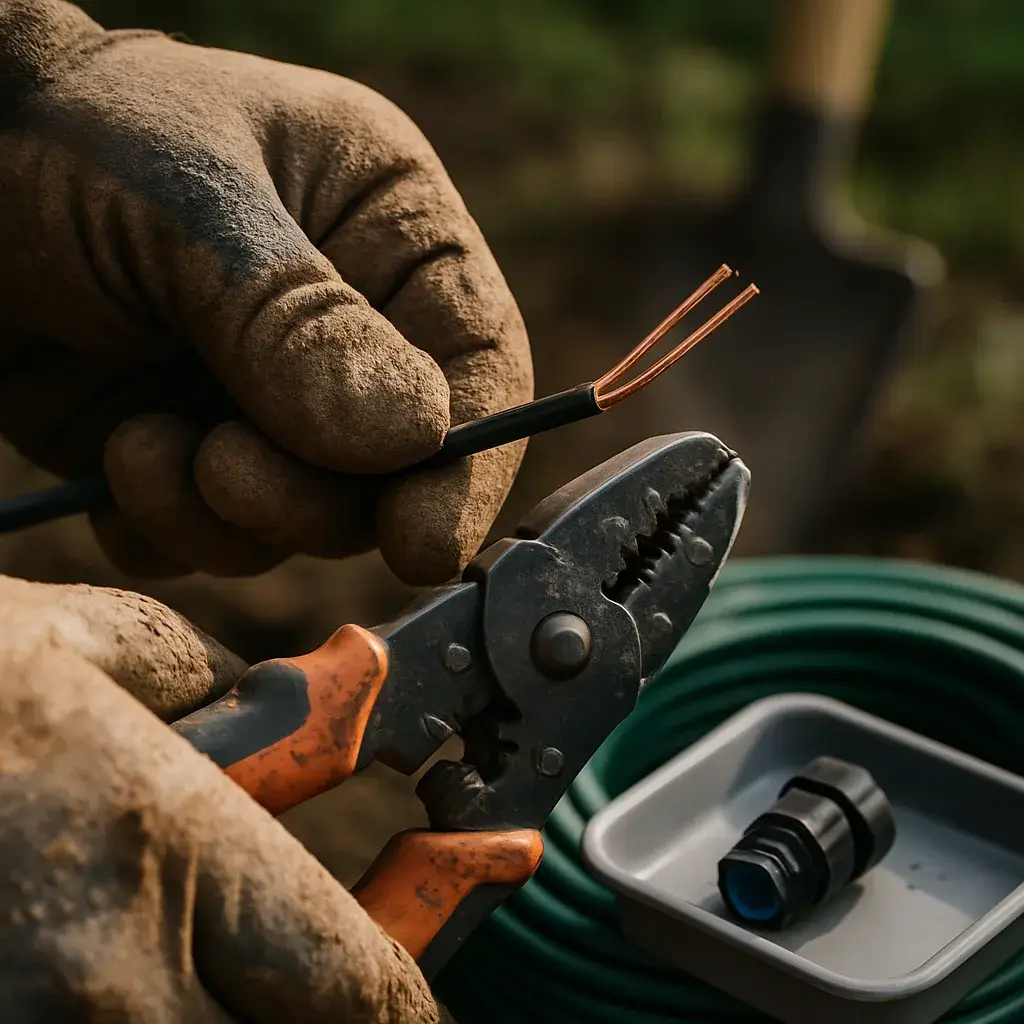
- Wiring you can see poking out of the ground or a fixture with a cracked housing
- One dead zone in an otherwise lit yard, usually a sign of a bad connection or a failed run
- Bulbs that burn out fast or fixtures that look mismatched from one being replaced piecemeal over the years
Out along FM 550 and the larger lots in Sunnyvale, we run into this a lot. Bigger properties mean longer stretches between the house and the road, and without municipal streetlights out there, your own fixtures are doing all the work. When one section goes dark, you notice fast.
We see this every week, someone had a security light installed years ago and it’s just been dying a slow death since. A flickering fixture isn’t a lighting problem so much as an electrical one. Usually it’s a failing photocell or a wiring connection that’s corroded from being outside through a few Texas summers.
Low-Voltage Landscape Lighting vs. Line-Voltage Security Lighting
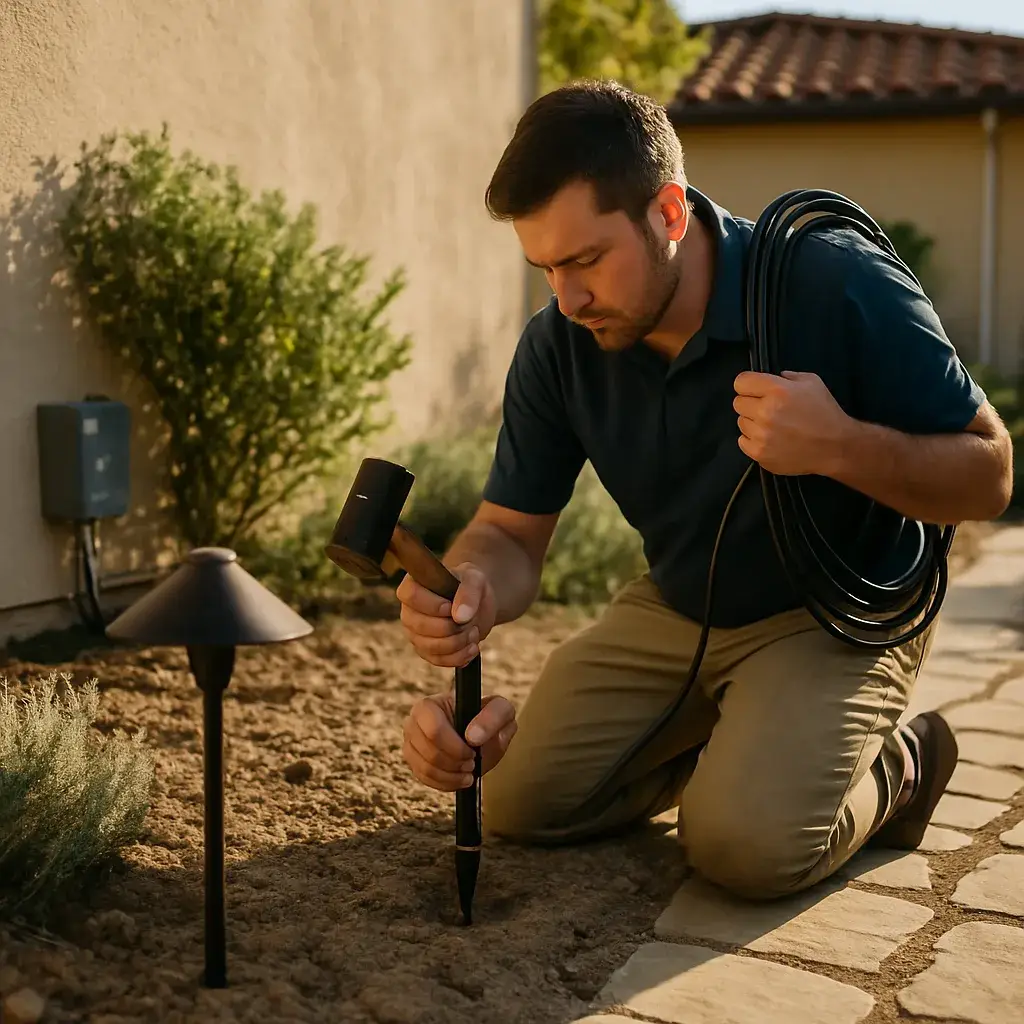
Here’s the thing most folks don’t know until they ask. Not all outdoor lighting runs the same way. Low-voltage landscape lighting uses a transformer to step your home’s power down to about 12 volts. That makes it safer to install closer to the ground, along walkways, up a tree trunk, or tucked into a flower bed. Line-voltage security lighting is different. It runs on full household power, 120 volts, and it’s what you want for floodlights over a garage door or a bright fixture aimed at a side yard.
So which one do you need? Depends on the job. Want soft path lighting so you don’t trip on the way to the mailbox, low-voltage is the answer. Want something bright enough to deter someone poking around your backyard at 2 a.m, that’s line-voltage territory, usually wired to a switch or a photocell so it kicks on at dusk without you touching anything.
- Low-voltage: safer around kids and pets, flexible placement, good for accent and path lighting
- Line-voltage: higher output, better for security floods and entryways, ties into your home’s electrical circuit
- Controls matter for both, a timer, photocell, or motion sensor changes how the fixture behaves and adds to the job
- Mounting height and access affect labor either way, a fixture on a two story eave takes longer than one on a fence post
One thing we run into a lot around Sunnyvale, the clay soil here shifts with the seasons, and that affects how deep and how carefully a wiring run needs to sit for landscape lighting near beds or walkways. Our team accounts for that on every install.
Simple Solar Stake Lights Don’t Need a Licensed Electrician
Not every outdoor light needs us. Grabbed a pack of solar stake lights at the hardware store for the front walkway? You don’t need a licensed electrician for that. Push them into the dirt, angle the little panel toward the sun, done. 80 six days a week.
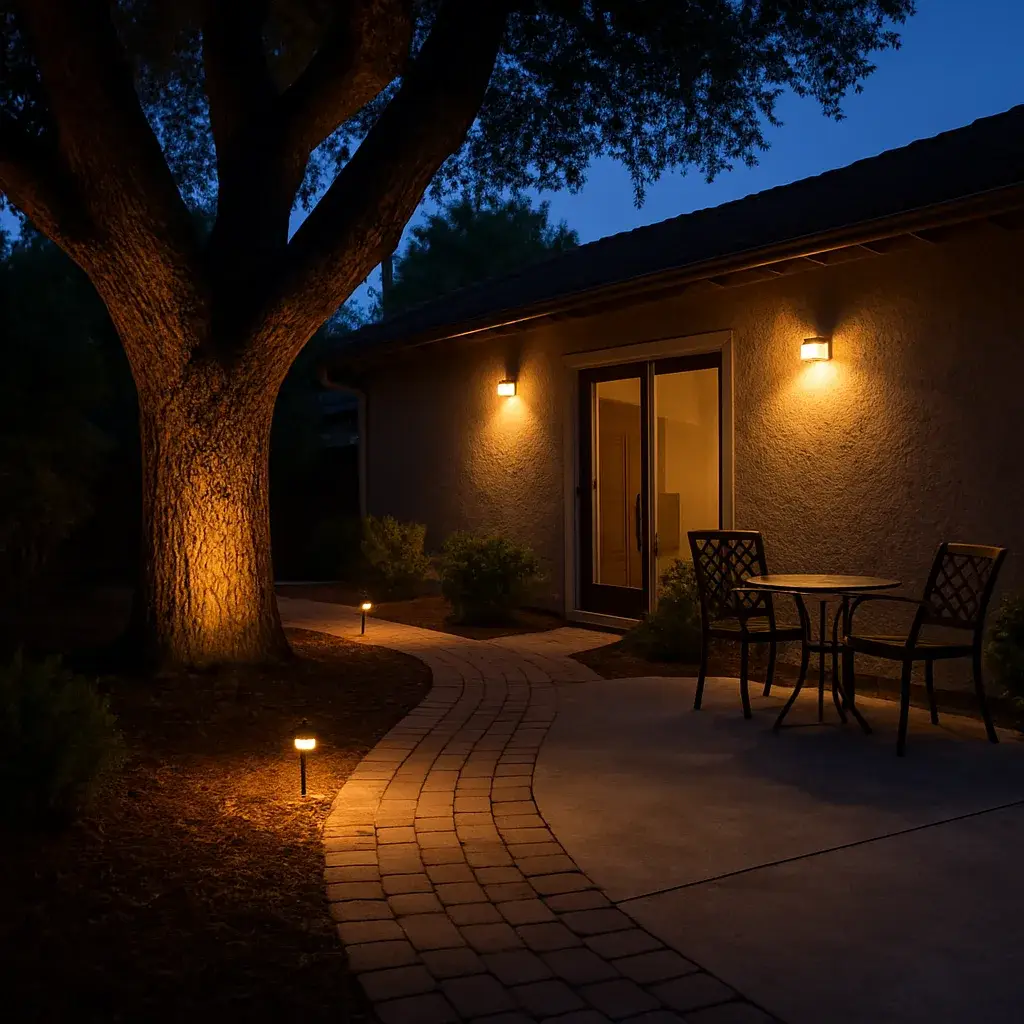
Same goes for battery-powered puck lights under a deck railing, or a plug-in string of bistro lights on a covered patio outlet that already works. No wiring, no circuit, no code question. If it doesn’t connect to your home’s electrical system, it’s a weekend project, not a service call.
We get asked about this more than you’d think. Somebody’s got a mixed job, a few solar stakes plus a hardwired flood on the garage, and they’re not sure which part counts. Fair question.
Here’s the line. Anything running off batteries or the sun stays a DIY job every time. Anything tied into your panel, run through a switch, or needing a new circuit crosses into licensed electrical work, and that’s where things like water intrusion, breaker sizing, and outdoor-rated wiring start to matter.
So don’t call us for the solar stakes.
Save the call for the fixtures that plug into your house, not the sun.
Ready when you are – get in touch today.
Call Today, Get Service Today. Xtreme Air Services is ready to help.
What Happens During a Professional Installation
So what happens once we show up? Nothing mysterious. Here’s the real order of operations.
- We walk the property with you and mark where each fixture, flood, or security light will go.
- We figure out the wiring path. Many Sunnyvale homes sit on slab foundations, so we usually run wiring through the attic or along the fascia instead of trenching through concrete.
- We mount the fixtures at the height and angle you approved, checking for solid attachment points on siding, brick, or trim.
- We wire everything back to a switch, photocell, or motion sensor, whichever you picked for that spot.
- We test every fixture, at dusk if needed, to confirm it triggers correctly and throws light where you want it.
- We clean up the work area and walk you through how to operate the new controls.
That’s it. No guessing, no half-finished wiring left behind a light box.
Our licensed and insured technicians handle the electrical side the right way, tied into a proper switch leg or photocell instead of some loose extension cord solution. And we test in real conditions, not just with a multimeter in daylight. A floodlight that looks fine at noon can point the wrong direction once the sun drops.
Most jobs wrap up in a single visit. Bigger layouts with several fixtures or a longer wiring run take a bit more time, but you’ll know that going in, not halfway through the job.
How Outdoor Lighting Pricing Works and What Drives Cost
Let’s talk money, because you deserve a straight answer before you ever pick up the phone.
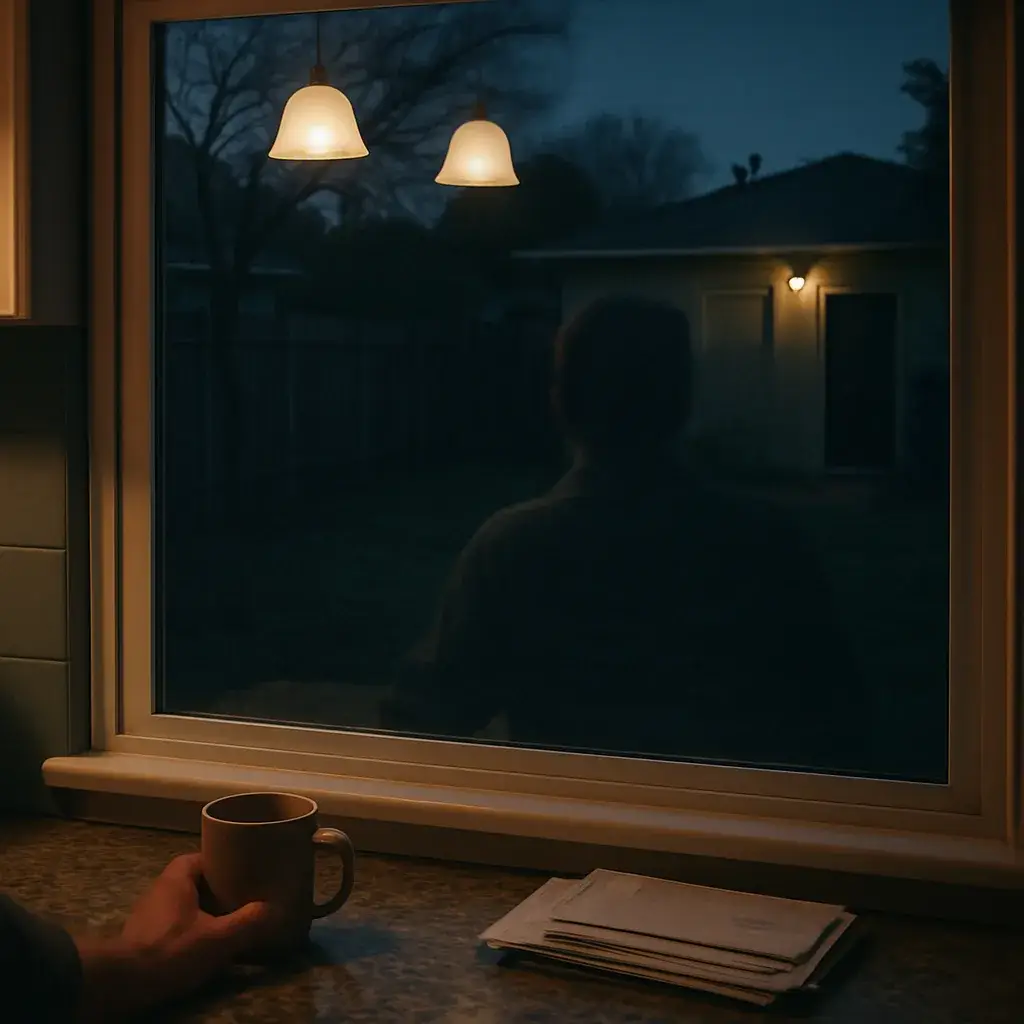
Outdoor lighting installation in Sunnyvale typically runs between $200 and $1,500. The most common job we do, installing exterior fixtures, floods, or security lighting wired to a switch or photocell and tested for proper operation, usually lands between $450 and $975. That’s not a random number. It reflects the fixtures, the labor, and the testing that goes into doing it right the first time.
So why the wide range? A few things push the price one way or the other.
- Number of fixtures. Two floodlights cost less to install than eight scattered across your yard.
- Wiring runs and trenching. A fixture near an existing circuit is simple, one on the far side of the property means more cable and more labor.
- Mounting height and access. A ladder job on a single-story eave is quick, a two-story soffit takes more time and care.
- Controls. A basic switch is straightforward, a timer, photocell, or motion sensor adds a step but pays off in convenience.
- Code upgrades. Older homes sometimes need extra work to bring wiring up to current standards.
Here’s what’s included every time: the fixtures and materials, the professional installation, the wiring, and the testing before we leave your driveway. What’s not included, extensive trenching, brand new circuits beyond the job’s scope, hardscape restoration, code corrections, or permits unless we’ve talked about it upfront. There’s a service-call fee of $26 to $99, and it gets credited toward your repair if you move forward with us. We also offer flexible financing on qualifying installations, on approved credit, so a bigger lighting project doesn’t have to wait.
Outdoor lighting in Sunnyvale has to survive two things that finish off cheaper systems early: summer heat and expansive clay soil that moves with the seasons. Buried runs need proper depth and conduit where they cross drives and walks, and fixtures need gaskets that still seal after a few North Texas summers. We size the transformer to the actual run length rather than the fixture count, because voltage drop across a long Sunnyvale yard is what makes the far end of a run look dim within a year.
Control is worth deciding early. A Sunnyvale system on a photocell and timer behaves very differently from one on an app, and retrofitting the second onto the first usually means pulling the transformer back out. We ask how you actually want the lighting to run before anything goes in the ground.
Frequently Asked Questions
Common questions about Outdoor lighting installation
How soon can you get outdoor lighting installed at my Sunnyvale home?
Most outdoor lighting jobs get scheduled within the same week you call. Once we walk your property and confirm what you need, a single fixture or small security light usually wraps up in one visit. Larger jobs with several fixtures or a longer wiring run take more planning, especially on bigger lots out along FM 550 where the distance between the house and the road means more cable to run. We’ll give you a realistic timeline before we start, not after.
What should I expect when your team shows up to install my lighting?
We start by walking the property with you to mark exactly where each fixture goes. From there, we figure out the wiring path, since many Sunnyvale homes sit on slab foundations, we usually run wiring through the attic or along the fascia instead of trenching through concrete. Fixtures get mounted, wired to your chosen switch or photocell, and tested at dusk to confirm they trigger right. We clean up before we leave and show you how the new controls work.
Does Sunnyvale’s clay soil affect how outdoor lighting gets installed?
Yes, it does. Clay soil around Sunnyvale shifts with the seasons, which changes how deep and how carefully we need to place wiring runs near flower beds and walkways. If a run sits too shallow or gets disturbed by soil movement, you can end up with a dead zone in your lighting a year or two later. We account for that shift on every install so your low-voltage runs stay protected and your fixtures keep working through hot summers and wetter stretches.
Do I need low-voltage or line-voltage lighting for my yard?
It depends on the job. Low-voltage landscape lighting runs through a transformer at about 12 volts, making it safer for path lights, flower beds, and accent lighting up a tree trunk. Line-voltage runs on full household power and is what you want for floodlights over a garage door or a bright fixture aimed at a side yard for security. If you’re lighting a walkway, go low-voltage. If you want something bright enough to deter someone poking around at 2 a.m., that’s line-voltage.
Do solar stake lights count as a real outdoor lighting installation?
No, solar stake lights are a weekend project, not a service call. If a light runs on batteries or solar power and doesn’t connect to your home’s electrical system, you can install it yourself, just push it into the dirt and angle the panel. The line crosses into licensed electrical work once a fixture ties into your panel, runs through a switch, or needs a new circuit. That’s when things like breaker sizing and outdoor-rated wiring start to matter, and that’s the part worth calling us for.
Ready to Get Started?
Call 972-288-2263 Today, Get Service Today.