


Home Rewiring: Repair or Full Rewire – How to Tell Which One You Need
How we decide between repairing a circuit and rewiring the house – what the existing wiring tells us, and what each route costs.
What’s Covered on This Page
- Repair or Rewire: The Short Answer
- What Decides Between a Repair and a Full Rewire
- When We’d Recommend a Repair
- When We’d Recommend a Full Rewire
- What’s Included in a Rewire Price – and What Isn’t
- Related Links
- How long does a full rewire take compared to a repair?
- We’re in Rowlett – who pulls the permit, and what gets inspected?
- If we replace the panel, does that take care of the old wiring too?
- How do I know I’m not being talked into a rewire I don’t need?
- Most of our outlets are two-prong. Does that mean the whole house needs rewiring?
- What if you start a repair and find the wiring is worse than expected?
Repair or Rewire: The Short Answer
If you’ve got one bad outlet, a flickering light, or a breaker that trips now and then, that’s usually a repair. Our electricians handle outlet and switch repair, circuit troubleshooting, and single-circuit fixes as standalone visits. We can often do this the same day. A rewire is a different conversation. We recommend a rewire when the wiring throughout the home is old, damaged, or undersized for today’s electrical demand. This also applies if it’s built with materials that don’t meet current code (like aluminum branch wiring or knob-and-tube from an older Dallas County home, for example).
The price moves with a few things. This includes the size of the home and how many circuits it needs. It also depends on how easy or hard it is to get behind the walls, attic, and crawlspace. The condition of what’s already there matters, too. And whether the panel needs a matching upgrade, and any drywall or code work the job pulls in. Included in our pricing is the wire and materials, the installation itself, devices, grounding, and startup testing once the new circuits are live. Not included: drywall finishing or paint, upgrading fixtures, code corrections outside the original scope, and permits unless we’ve spelled that out up front.
- Repair fits when the problem is isolated to a device, a circuit, or a section of wiring you can point to.
- Rewire fits when the home’s wiring is aluminum, knob-and-tube, or old enough that the insulation and connections are failing in more than one place.
- Rewire fits when you’re adding load (an EV charger, a shop, a big kitchen remodel) that the existing circuits weren’t built to carry.
- Sometimes a partial rewire of just the affected rooms is the right call instead of a whole-house job. We’ll say so if that’s what we find.
We charge a service-call fee of $26 to $99 for the diagnostic visit. That fee gets credited toward the job if you move forward with us. Financing is available on qualifying installations if the number is bigger than you’d planned for. You can read more about what’s covered on our home rewiring service page, but the visit itself is where we look at your panel, your attic access, and your actual wiring before telling you which side of that line your home falls on.
What Decides Between a Repair and a Full Rewire
Most homes we look at don’t need every wire pulled out. They need specific circuits, devices, or sections addressed, and the rest left alone. A full rewire only makes sense when the wiring itself, not just one bad outlet or breaker, is the actual problem across the house.
A few signs point us toward a repair or partial upgrade. Maybe it’s one or two rooms with outdated outlets. Or a single circuit that keeps tripping. Sometimes grounding is missing in a specific area. A panel might be sound otherwise. But other signs point the other way, toward a full rewire. The wiring type throughout the home may be outdated. Insulation might be cracked or brittle in multiple rooms. A panel could be too small for the home’s actual electrical load. Or a house has had additions and updates layered on for decades without the wiring keeping pace.
- Home size and the number of circuits involved
- How much of the wiring runs through walls, attic, or crawlspace versus open access
- The condition of the existing wiring, not just its age
- Whether a panel upgrade is part of the scope
- Drywall repair after the work is done
- Code upgrades required to bring the home current
- Permits, which are required for this kind of work
A full home rewire here runs $8,000 to $20,000. Most jobs land between $10,500 and $15,000. That price covers wire and materials, professional installation, devices, grounding, startup, and testing. It doesn’t cover drywall finishing or paint, fixture upgrades, code corrections outside the agreed scope, or permits unless we’ve stated otherwise up front. We’re specific about that split. Drywall and paint costs vary a lot depending on how a home is finished. We’d rather quote it separately than bury it in a number that doesn’t hold up.
There’s a service-call fee of $26 to $99 for a technician to come look at the wiring and give you the real scope. That fee gets credited toward the job if you move forward with us. So you’re not paying twice to get an answer. Financing is available on qualifying jobs if the full rewire number is more than you want to handle in one payment.
If you want the fuller picture of what a rewire involves room by room, our main service page walks through it in more detail.
Sometimes a homeowner wants a partial fix because it costs less up front, and that’s a fair call if the underlying wiring is genuinely sound. But if the panel or the wiring type is the real issue, a partial repair just delays the bigger job and adds cost later. We’ll tell you which situation you’re in before you spend anything.
When We’d Recommend a Repair
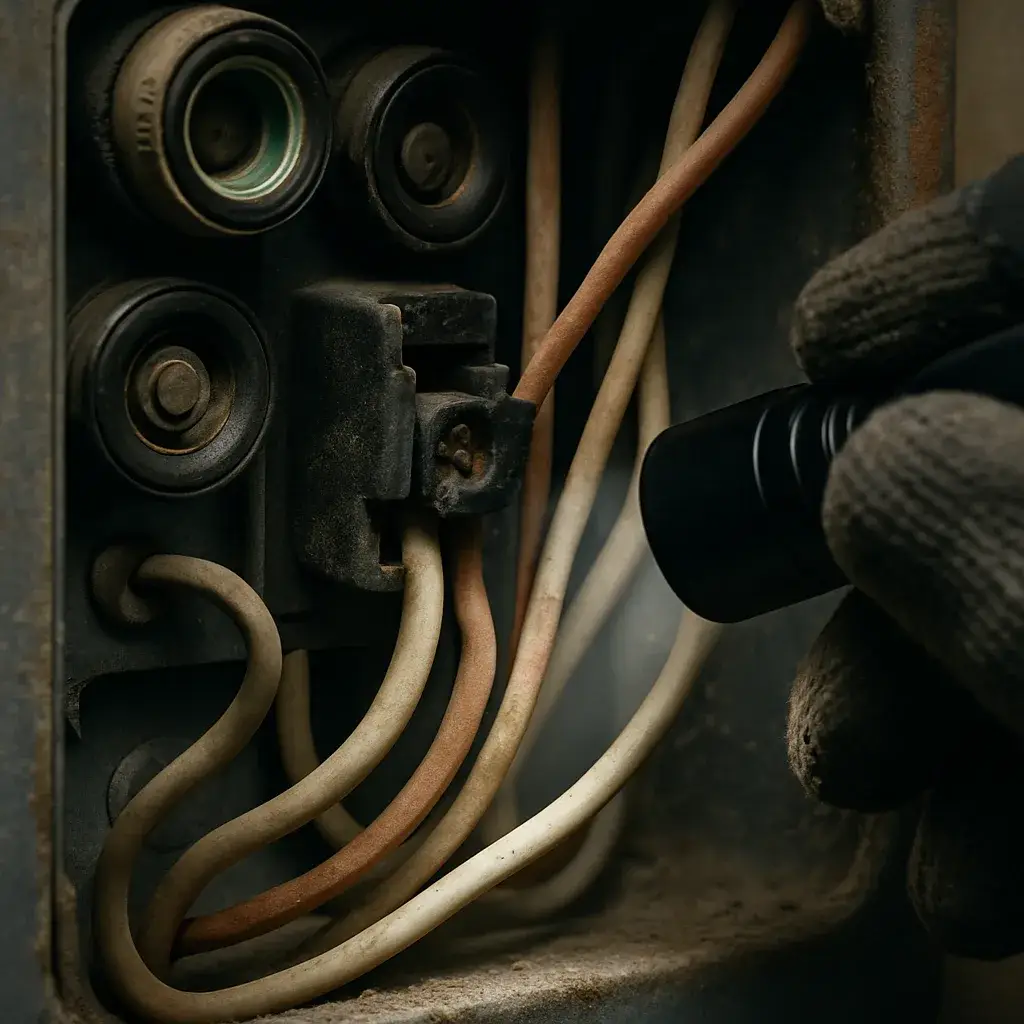
We recommend a repair when your electrical problem stays in just a few outlets, one circuit, or one section of wiring. It’s not the whole house. A tripped breaker or a dead outlet usually doesn’t mean your entire electrical system is failing. Full rewiring only makes sense when the wiring itself, throughout your home, is old, unsafe, or can’t support what you need now.
- Electrical wiring repair on a specific run or junction, not the whole house.
- Outlet and switch repair where the fixture or connection has failed.
- Code correction for a single area flagged during an inspection.
- Dedicated circuit installation for one appliance, like a range or AC unit.
- Electrical panel repair when the panel itself is sound but a breaker or connection isn’t.
Our technician traces the wiring, checks your panel, and tests the affected outlets. We do this before saying which option works best. We’d rather tell you plainly it’s a repair than sell you a bigger job you don’t need. That diagnostic visit runs a service call fee of $26 to $99, and we credit it toward your repair if you move forward with us.
Some homes land in between. A 1970s ranch might have sound copper wiring through most of the house but a run of aluminum wiring in one addition, for example. Or maybe a garage was wired off the books years ago. In a case like that, we might replace wiring in just that one section. We repair or leave the rest, rather than pulling wire through your whole structure. It depends on what we find, not on a standard answer we give everyone. (Every home is different here in Sunnyvale, so we tailor our approach.)
But if the issue keeps showing up in different spots, or your home still has knob-and-tube or ungrounded circuits behind the walls, that’s usually a sign the wiring itself has reached the end of its service life. Not just one weak point in it. That’s when a repair stops being the more practical option. You can read more about the full scope of the job on our Home rewiring service page.
Have questions? We’re happy to help.
Call Today, Get Service Today. Xtreme Air Services is ready to help.
When We’d Recommend a Full Rewire
We’d recommend a full rewire when the wiring itself is the problem. It’s more than just one bad connection. This usually means aluminum wiring, knob-and-tube, or a home where the panel, grounding, and most circuits are past their working life at the same time. A full home rewire replaces the outdated or unsafe wiring throughout your house with new circuits, devices, and proper grounding. We test it all before we call it done.
Many homes we work on around Sunnyvale, Mesquite, and older neighborhoods east of Dallas were built decades ago. The wiring inside the walls hasn’t been touched since. If a home still has aluminum branch wiring or old knob-and-tube runs (often in the attic), patching one bad splice doesn’t fix the underlying issue. The rest of the wiring is the same age, made the same way.
A full rewire on a typical home runs $8,000 to $20,000. Most jobs land between $10,500 and $15,000. What changes the number is the size of the house, how many circuits it needs, and how easy it is to get behind walls, in the attic, or under the crawlspace. The condition of what’s already there makes a difference. Also, whether the job includes a panel upgrade or code corrections beyond just the wiring. Drywall repair and permits can add cost too, depending on what your job requires.
- Included: wire and materials, professional installation, devices, grounding, startup and testing
- Not included: drywall finishing or paint, fixture upgrades, code corrections beyond the agreed scope, and permits unless stated up front
Where it’s less clear is a home with copper wiring in generally sound shape. Maybe it has one or two problem circuits. An overloaded outlet, a tripped breaker that keeps tripping- that’s usually a repair conversation, not a rewire. We’ll say so. We don’t push a full rewire on a house that doesn’t need one.
If you’re weighing the decision, our home rewiring page walks through the process in more detail. A service call runs $26 to $99. That fee gets credited toward the job if you move forward with the repair or rewire. Financing is available on qualifying installations for homeowners who’d rather spread out the cost of a larger project.
What’s Included in a Rewire Price – and What Isn’t
A full home rewire in the DFW area runs $8,000 to $20,000. Most jobs land between $10,500 and $15,000. That covers replacing old or unsafe wiring throughout your home with new circuits, devices, and grounding. Then we inspect and test everything before we call it done. Where you fall in that range isn’t guesswork.
- Home size and how many circuits the job requires
- How easy it is to get into your walls, attic, or crawlspace
- The condition of your existing wiring (older homes with aluminum wiring or knob-and-tube often need more work)
- Whether a panel upgrade is part of the scope
- Drywall repair needed to close up walls after the work
- Code upgrades required to bring the home current
- Permit costs where they apply
A quote from us includes the wire and materials. It also covers installation labor, new devices like outlets and switches, grounding, and startup and testing on every circuit we touch. That’s the core of the job, done to code, and checked before we leave.
What a quote doesn’t include matters just as much. Drywall finishing and paint are on you or your contractor. We cut and patch access points, but we’re not painters. Fixture upgrades, new light fixtures, or ceiling fans are priced separately if you want them added. Code corrections beyond the original scope of the rewire aren’t automatically bundled in. And permits are only included if we’ve stated that upfront in your quote.
If you call us out to look at a wiring problem first, the service call runs $26 to $99. That fee gets credited toward the repair if you move forward with us. For larger rewiring jobs, financing is available on approved credit. This matters for a job in this price range.
The price swings more on access and condition than almost anything else. A single-story slab home with an open attic is a different job than a two-story with finished walls and tight crawlspaces, even at the same square footage. That’s why we walk the home before putting a number on paper. We don’t quote off a phone call. If you want the details on how we scope a job before we ever touch a wire, our home rewiring service page walks through the process.
Frequently Asked Questions
Common questions about home rewiring
How long does a full rewire take compared to a repair?
A repair is usually a single visit – one circuit, one device, one bad splice. A full rewire is measured in days, not hours, and what drives the number is square footage, attic and crawlspace access, and how many walls have to be opened to reach the old runs. Plaster walls and blown-in insulation slow a job down more than square footage does. A house on pier-and-beam with a walkable attic moves faster than a slab house with a low roof pitch. Ask for the day count in writing with the quote, before you commit to either path.
We’re in Rowlett – who pulls the permit, and what gets inspected?
We pull it. Rewiring is permitted work everywhere we serve, and the permit goes in our name with whichever authority has jurisdiction – the Town of Sunnyvale, the city itself in Rowlett or Mesquite, or Dallas County and Kaufman County outside city limits. Budget time for two inspections: a rough-in before any drywall closes, and a final once devices and covers are on. Nothing gets sealed until the rough-in passes. If the service entrance changes, Oncor schedules the disconnect and reconnect. A repair inside one existing circuit still gets filed – call 972-288-2263 if a bidder tells you otherwise.
If we replace the panel, does that take care of the old wiring too?
No. The panel is the distribution point – new breakers, new bus, sometimes a new service and meter base. The wire running from it out to your outlets and lights is untouched. If the branch wiring is cloth-insulated, knob-and-tube or aluminum, a new panel doesn’t change any of that, and it can make a bad circuit trip more often, because modern breakers catch faults the old ones ignored. A panel swap on its own is the right call when the branch wiring tests fine and the panel is the failure point: a burned lug, a pitted bus, or no room left to add circuits.
How do I know I’m not being talked into a rewire I don’t need?
Ask what they physically found and where. A real rewire recommendation names the wiring type and the locations – cloth-insulated conductors in the attic, knob-and-tube behind plaster, aluminum branch circuits at the receptacles, ungrounded two-prong outlets through most of the house. If the answer is only that it’s old, that’s not a finding. Get the scope in writing before anyone opens a wall, including circuit count and whether drywall repair is inside the number. Photos and locations should come out of any diagnostic visit – without them you can’t line two quotes up against each other.
Most of our outlets are two-prong. Does that mean the whole house needs rewiring?
Not by itself. Two-prong outlets mean there’s no equipment ground at those boxes, and there are two ways to deal with it. Running new grounded cable to every location is the rewire path. The cheaper path is protecting those circuits with GFCIs and labeling the outlets as having no equipment ground, which is an accepted fix in a lot of situations. It doesn’t create a real ground, so surge protectors and sensitive electronics still want new wire. Which one you get depends on what the technician finds in the boxes and how the circuits test, not on how many outlets you count.
What if you start a repair and find the wiring is worse than expected?
That happens, usually once the first ceiling boxes and wall cavities are open. We stop, show you what’s actually in there, and price the larger scope before doing anything else. Nothing changes on your invoice without your approval. It runs the other direction too – a panel that looked like a teardown turns out to be one burned lug and two failed breakers, and you pay for a repair instead. The $26 to $99 diagnostic fee is credited toward whichever path you choose, so the visit that sorts it out isn’t wasted money.
Ready to Get Started?
Call 972-288-2263 Today, Get Service Today.